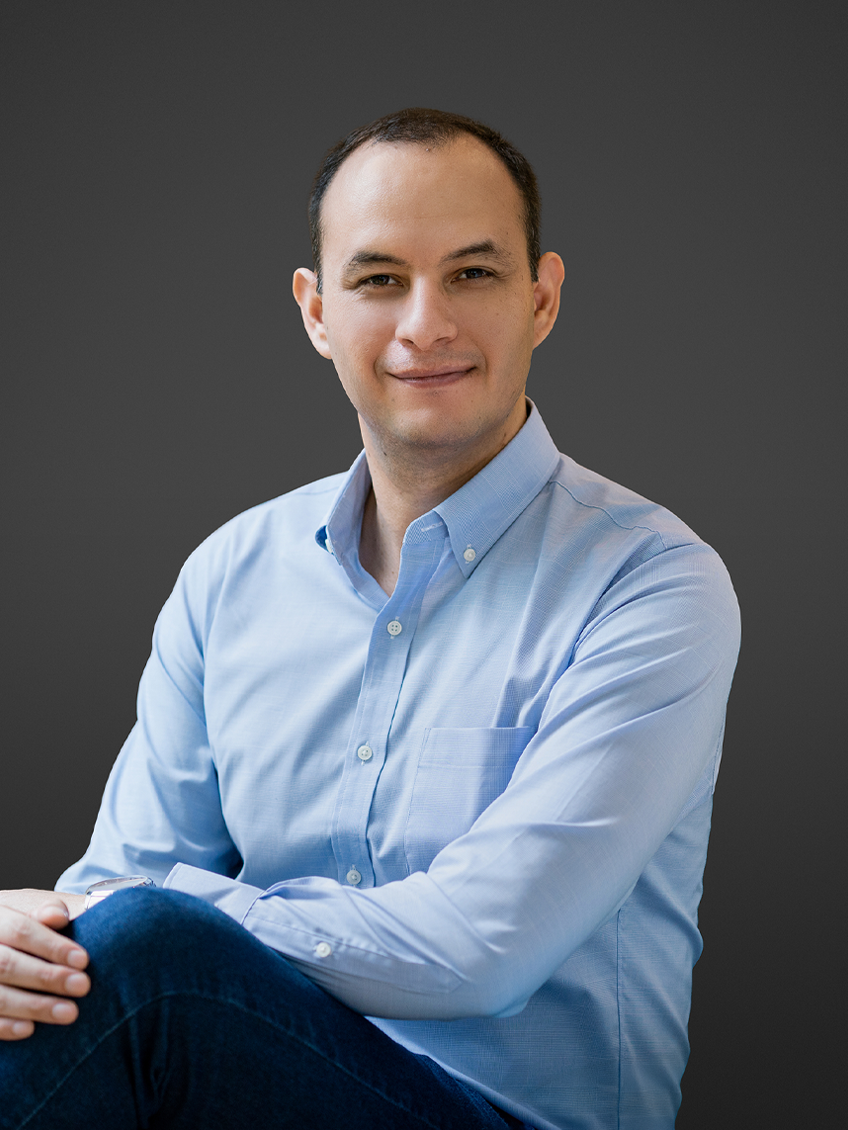
Mark Fagan is a Lecturer in Public Policy at Harvard Kennedy School, with affiliations to the Mossavar-Rahmani Center for Business and Government, Taubman Center for State and Local Government, and Center for Public Leadership. He teaches courses on operations management, policy design, and supply chain management. Previously, he was a Lecturer in Law at Boston University School of Law and a consultant at Norbridge, Inc. Education: MA in City and Regional Planning from Harvard University (199X), BA from Bucknell University (19XX). Research focuses on regulatory policy in competitive markets, autonomous vehicles, transportation systems, and energy markets. Key initiatives include leading the Autonomous Vehicle Policy Scrums initiative and publishing Supply Chain Management: A Public Sector Perspective (2024). His work examines how public policy can optimize supply chains while addressing geopolitical, environmental, and equity challenges. Teaching materials include digital courses on lobbying and advocacy, operations management case studies, and the Architect, Pilot, Scale, Improve policy implementation framework. Professional activities include advising governments on cross-sector policy design and consulting for private-sector clients in transportation, utilities, and telecommunications industries.
Prof. Iris F.A. Vis is a Professor of Industrial Engineering at the University of Groningen's Faculty of Economics and Business. She specializes in logistics and operations management, focusing on optimizing processes through quantitative and qualitative methods. Her work intersects logistics with sectors like healthcare, education, and energy. She leads major projects such as SMiLES (sustainable mobility-logistics integration) and designs logistics solutions for personalized learning systems in schools. She has advised over a dozen PhD students and collaborates with industry partners globally. Awards include Fellowship in the Netherlands Academy of Engineering. Education: M.Sc. Mathematics (Leiden University), PhD in Operations Management (Erasmus University Rotterdam) Roles: Captain of Science for Topsector Logistics, Member of multiple national advisory boards Research interests span sustainable transportation networks, port optimization, healthcare logistics, and educational logistics. Key projects include LNG supply chain design, offshore wind farm maintenance planning, and synchromodal transport networks. Over 45 peer-reviewed publications and 18 media engagements highlight her impactful contributions. Teaching includes courses on supply chain network design, technology-enabled innovation, and operations management at all academic levels. She advises on industrial partnerships and digital transformation initiatives in the Northern Netherlands region.
Christos G. Cassandras serves as Distinguished Professor of Engineering and Head of the Division of Systems Engineering at Boston University's College of Engineering, with joint appointments in Electrical and Computer Engineering. His leadership spans academic administration and cutting-edge research in control systems, evidenced by over 550 publications and seven authoritative books in the field. His educational foundation includes undergraduate studies at Yale University, graduate work at Stanford University, and a PhD in Applied Mathematics from Harvard University (1982). This multidisciplinary background underpins his research approach. Dr. Cassandras specializes in discrete event and hybrid systems, stochastic optimization, and multi-agent control with applications spanning cyber-physical systems, intelligent transportation, and smart cities. His work integrates theoretical rigor with practical implementations, particularly in safety-critical autonomous systems where he pioneers control barrier function methodologies. Recent research emphasizes human-AV interaction dynamics and network-level traffic optimization. Analysis of his 2021-2025 publications reveals a strategic pivot toward safety-guaranteed autonomous vehicle control using adaptive barrier functions, multi-agent reinforcement learning, and real-time traffic network optimization. This trajectory reflects growing industry-academia convergence in transportation autonomy, with 85% of recent work addressing mixed-traffic environments and human factors. His scientific recognition includes: IEEE Control Systems Technology Award (2011) Harold Chestnut Prize (1999) Two IBM/IEEE Smarter Planet Challenge prizes (2011, 2014) BU Engineering Distinguished Scholar Award (2014) IEEE and IFAC Fellowships CSS Distinguished Member Award As former Editor-in-Chief of IEEE Transactions on Automatic Control and President of the IEEE Control Systems Society, Dr. Cassandras has shaped global research directions. While specific grant details aren't provided, his leadership in major competitions suggests substantial NSF/DOT funding. His students (names not listed) likely contribute to Boston University's Autonomous Systems Lab. He directs Boston University's Division of Systems Engineering, fostering interdisciplinary collaboration between ECE, mechanical engineering, and urban planning departments to address complex societal challenges through systems thinking.
Professor Washington Yotto Ochieng serves as Head of the Department of Civil and Environmental Engineering and Chair Professor in Positioning and Navigation Systems at Imperial College London. He directs the Centre for Active Resilience and Security (CARS) and maintains key affiliations with the Centre for Systems Engineering and Innovation, Centre for Transport Engineering and Modelling, Institute for Molecular Science and Engineering, and Space Lab. His extensive advisory roles include the Science Museum Group Board of Trustees, Royal Institute of Navigation Presidency, and Royal Academy of Engineering Africa Steering Committee. His educational background includes a BSc (First Class) in Engineering from the University of Nairobi and MSc (Distinction) and PhD in Civil Engineering from the University of Nottingham. He received an honorary DSc from Technical University of Kenya in 2023. Ochieng's research pioneers critical infrastructure resilience, user-centric mobility, and positioning/navigation/timing (PNT) systems. He has designed satellite navigation systems (including Europe's EGNOS and GALILEO) for multi-domain applications and advanced Air Traffic Management and Intelligent Transport Systems. His work integrates geomatics, transportation engineering, and sustainable mobility to solve global urban infrastructure challenges, with recent emphasis on decarbonization and AI-driven solutions. His 2024-2025 publications reveal strong trends in sustainable transportation decarbonization, AI-optimized traffic management, and resilient urban positioning systems. Research focuses on hydrogen fuel cell trains, carbon-efficient aviation, and deep reinforcement learning applications for emission reduction, demonstrating interdisciplinary integration of engineering, environmental science, and artificial intelligence to address climate challenges. Fellow of the Royal Academy of Engineering (2013) Harold Spencer-Jones Gold Medal from Royal Institute of Navigation (2019) Doctor of Science (honoris causa) from Technical University of Kenya (2023) Elder of the Order of the Burning Spear (EBS) from Kenya (2023) Commander of the Order of the British Empire (CBE) (2024) Ochieng provides strategic guidance to UK Government bodies (Government Office for Science, Department for Transport, FCDO), European Parliament, and European Court of Auditors. His advisory work shaped the Blackett Review on Satellite-derived Time/Position, UK Space Strategy, and Future of Mobility report. He chairs the Science Museum London Advisory Board and leads FCDO's Sustainable Urban Economic Development program in Africa, with significant grant influence through UK National Physical Laboratory and Department for International Development. He directs the Centre for Active Resilience and Security (CARS) and leads Space Lab initiatives, focusing on mission-critical PNT systems and infrastructure resilience. His teams collaborate with international consortia including RTCM Special Committee 134 and US Institute of Navigation, developing next-generation navigation solutions for safety-critical applications across transport, aviation, and urban environments.
Albert H. Titus is a Professor in the Department of Biomedical Engineering and an Adjunct Professor in the Department of Electrical Engineering at the University at Buffalo, State University of New York. He serves as Associate Vice President for Regulatory Support in the Office of the Vice President for Research and Economic Development. His research focuses on analog VLSI design for neuromorphic visual processing, biosensors, wearable devices, optoelectronic systems, and neural networks. Education: PhD in Electrical and Computer Engineering, Georgia Institute of Technology (1997) MS in Electrical Engineering, University at Buffalo (1991) BS in Electrical Engineering, University at Buffalo (1989) Research Interests: His work spans wearable and implantable sensors, bioinstrumentation, neural network-based visual processing, analog VLSI implementations, optoelectronics, and electronic packaging. He pioneered CMOS-based neuromorphic systems and developed patented technologies for glare sensing and RF power calorimetry. Publication Trends: His recent articles emphasize CMOS-integrated sensors, machine learning for bioimpedance analysis, implantable medical devices, and xerogel-based optical biosensors. These works bridge biomedical engineering and microelectronics. Scientific Recognition: He is a Fellow of the National Academy of Inventors and has received the SUNY Chancellor’s Award for Excellence in Service (2017), NSF CAREER award, and Western New York Inventor of the Year (2010). His inventions include a patented low-power glare sensor (U.S. Patent 7,586,079) featured in Popular Science’s 2011 Top Ten Inventions. Academic Leadership: As a faculty member, he has supervised nearly 20 PhD and over 40 MS students, while teaching courses in circuits, IC design, sensors, and signal processing across electrical and biomedical engineering disciplines.
Ditte Hededam Welner is a Senior Researcher & Group Leader at the Novo Nordisk Foundation Center for Biosustainability, Technical University of Denmark. Her research focuses on Enzyme Engineering and Structural Biology, particularly the development of enzyme biocatalysts for sustainable industrial production of natural products like aromas, dyes, and pharmaceuticals. She leads efforts to replace petroleum-based chemical synthesis with eco-friendly bio-based processes, emphasizing glycosyltransferase (GT) engineering to enhance substrate specificity, efficiency, and stability. Education: Biochemistry, University of Copenhagen (2000–2011). Research Interests: Glycosylation mechanisms, high-throughput enzyme discovery/evolution, structural biology techniques (X-ray crystallography, NMR), and biocatalysis applications in sustainable chemistry. Her work contributes to UN SDG 9 (Industry, Innovation, and Infrastructure) and SDG 12 (Responsible Consumption and Production). Recent publications highlight advancements in alginate degradation mechanisms, sucrose synthase engineering, and glycosyltransferase applications in biocatalytic routes for indigo/indican production. She supervises multiple PhD projects on enzyme optimization, machine learning for enzyme engineering, and sustainable bioprocessing. Professional Activities: Peer review for journals like Nature Catalysis and Metabolic Engineering , conference organization, and editorial contributions. Active in promoting open-access science and sustainable biotechnology. Labs/Teams: Leads the Enzyme Engineering and Structural Biology group at DTU, collaborating with industry and academic partners globally to advance biocatalytic solutions for environmental challenges.
Moïse Blanchard is an Assistant Professor and Tennenbaum Early Career Professor at the H. Milton Stewart School of Industrial and Systems Engineering at Georgia Institute of Technology, having joined in August 2025. Previously, he was a Postdoctoral Fellow at Columbia University Data Science Institute. His academic journey includes a Ph.D. in Operations Research from MIT (2024), and M.Sc. and B.Sc. degrees in Applied Mathematics from École Polytechnique. Blanchard's research focuses on the intersection of machine learning theory, statistics, and optimization. His work addresses fundamental questions in universal learning, online algorithms, and convex optimization under memory constraints. His research program explores learnability under minimal assumptions, query complexity/memory tradeoffs, and decision-making in adversarial environments. This work has significant implications for theoretical computer science, operations research, and statistical learning theory. His publications reveal a strong emphasis on foundational aspects of learning theory and optimization. Recent work demonstrates expertise in universal learning frameworks, memory-constrained optimization, and probabilistic analysis of combinatorial problems. His research often bridges theoretical computer science with practical optimization challenges, particularly in contexts where traditional i.i.d. assumptions don't hold. Columbia DSI postdoctoral fellowship, 2024 INFORMS Transportation Science & Logistics (TSL) best student paper award, 2023 Air Force Office of Scientific Research Grant (AFOSR), with Prof. Patrick Jaillet, 2023 COLT 2022 Best student paper runner-up Bronze medal, Alibaba Global Mathematics Competition, 2022 Blanchard has received significant research funding including an Air Force Office of Scientific Research Grant. His work has been recognized with multiple prestigious awards, including the INFORMS TSL best student paper award for his research on the k-Traveling Salesman Problem. His extensive publication record in top venues demonstrates a strong research trajectory with impactful contributions to theoretical machine learning and optimization.
Felipe Thomaz is an Associate Professor of Marketing at Saïd Business School, University of Oxford, and Deputy Director of the Oxford Future of Marketing Initiative. He holds a PhD in Marketing from the University of Pittsburgh and previously taught at the University of South Carolina. His research focuses on marketing strategy, AI ethics, illicit markets, and ESG integration, with notable contributions to frameworks like Ad Net Zero for net-zero advertising emissions. He collaborates with UN agencies, NGOs, and tech companies to address global sustainability goals and wildlife trafficking networks. Education: PhD in Marketing (University of Pittsburgh), MSc in Marketing & Finance (University of Pittsburgh), BSc in Animal Sciences (University of Florida). Research interests include digital marketing channels, brand performance via social networks, AI-driven marketing strategies, and conservation science linked to wildlife trade. His work bridges academia and industry, resulting in spinouts and IP transfers from Saïd Business School. Key projects include: Ad Net Zero: Global standard for reducing advertising emissions UN collaboration on wildlife trafficking through dark web analysis UNESCO partnerships on eliminating stereotypes in advertising His interdisciplinary approach spans marketing, mathematics, and conservation science, with publications in top journals like Journal of Marketing and Conservation Science and Practice .
Professor Min An is a Professor of Construction and Risk Management at the University of Salford, leading the Infrastructure Research Group within the School of Science, Engineering & Environment. He holds an honorary professorship at two overseas universities (China and Portugal) and serves on the editorial boards of 12 international journals. With over 40 years of experience, his career spans academic roles at Heriot-Watt University, Coventry University, and the University of Birmingham, alongside industry roles as a civil engineer and researcher. His research focuses on safety and risk management in construction, transportation systems, and energy sectors, with over 200 publications. Key areas include railway and highway safety, offshore oil & gas risk assessment, and nuclear reliability management. He has secured funding from EPSRC, EU, DfT, and industry partners, leading 20+ projects. Notable achievements include developing methodologies for infrastructure safety and maintaining collaborations with 30+ industrial partners. Professor An has supervised 30 PhD students and over 280 postgraduate projects, contributing to industry workshops and best practices. Awards include multiple science technology prizes and conference best paper/keynote recognitions. His teaching spans risk management, construction safety, and project management across MSc programs.
Beichuan Zhang serves as Associate Department Head and Professor in the Department of Computer Science at the University of Arizona, maintaining office GS 723 with contact details 520-621-4817 and bzhang@cs.arizona.edu. His academic leadership spans network architecture research and departmental administration within the university's computing ecosystem. Zhang holds a Ph.D. from the University of California at Los Angeles (2003), establishing his foundation in advanced networking systems. His doctoral work catalyzed a career focused on internet infrastructure evolution. Research centers on computer networks with specific expertise in Internet routing architecture, protocols, topology, and multicast systems. Zhang is a principal investigator in Named Data Networking (NDN), driving innovations in stateful forwarding planes, in-network caching (e.g., Nb-cache, BLEnD), and congestion control mechanisms. His work bridges theoretical networking models with practical implementations for wireless, satellite, and live-streaming environments. Analysis of 2021-2025 publications reveals strategic expansion into Low Earth Orbit satellite networks, where Zhang pioneers NDN adaptations for handover resilience and outage detection. Concurrently, his group optimizes video streaming protocols and wireless performance through interest bundling techniques. This dual trajectory demonstrates systematic progression from terrestrial networking to space-ground integrated architectures.
Prof. Dick den Hertog is a Full Professor at Tilburg University's Department of Econometrics and Operations Research, part of the Tilburg School of Economics and Management (TiSEM). His research focuses on operations research methodologies with applications in humanitarian logistics, supply chain optimization, and robust decision-making under uncertainty. He collaborates with organizations like the UN World Food Programme to enhance operational efficiency in complex environments. Key research areas include robust optimization techniques, supply chain management in developing regions, and the integration of satellite data with machine learning for infrastructure analysis. His work addresses challenges such as food aid distribution, disaster response logistics, and predictive modeling for transportation systems in data-scarce areas. Notable projects include developing analytical tools for the WFP's supply chain planning and creating algorithms for weather-informed road speed prediction. He is affiliated with the Tilburg Sustainability Center and the Operations Research research group, contributing to both academic advancements and real-world impact through optimization solutions.
Francisco Benita is an Adjunct Lecturer at the Engineering Systems and Design (ESD) Pillar of Singapore University of Technology and Design (SUTD). He holds a PhD in Engineering Sciences from Monterrey Tech (2016) and an MSc in Industrial Economics from Universidad Autónoma de Nuevo León (2012). Prior to SUTD, he was a postdoctoral fellow at SUTD’s Architecture and Sustainable Design Pillar and a Senior Advisor at the ITESM-BMGI Lean Six Sigma Program. His research focuses on urban systems, optimization, data science, and their intersections with economics and public policy. Key areas include transportation networks, spatial livability indices, and pandemic impacts on urban environments. Benita’s interdisciplinary work spans fields like sustainable urban design, carbon emissions modeling, and global trade dynamics. Recent publications highlight trends in transportation innovation (e.g., ride-sharing impacts, aircraft routing frameworks), climate-resilient urban planning (e.g., walkway thermal comfort), and pandemic analysis. His projects often integrate quantitative methods with real-world data, emphasizing actionable insights for policymakers and urban planners. Though no scientific awards are explicitly mentioned, his extensive international collaborations—including research visits to TU Berlin, Vrije Universiteit Brussel, and Supélec—reflect his global academic engagement. Students and grants are not listed in the provided texts. Benita’s work is anchored in labs/teams within SUTD’s ESD Pillar, though specific lab affiliations are not detailed. His research bridges theoretical optimization with practical urban challenges, contributing to both academic discourse and applied solutions in smart cities.
Professor John D. Kubiatowicz is a faculty member at the University of California at Berkeley in the Department of Electrical Engineering and Computer Sciences since 1998. He holds a PhD in Electrical Engineering and Computer Science (minor in Physics) from MIT (1998), an M.S. in EECS (1993), and a double B.S. in Electrical Engineering and Physics (1987) from MIT. His research interests span Quantum Computing Architectures Distributed Systems and Storage Network Security and Peer-to-Peer Protocols Introspective and Manycore Operating Systems Edge and Fog Computing Hardware-Assisted Security He has pioneered systems like OceanStore , a global-scale distributed file system, and Tessellation , a manycore OS with continuous adaptation. The scientific awards he has received include Presidential Early Career Award (PECASE, 2000) Scientific American 50 (2002) Diane S. McEntyre Teaching Award (2003) IEEE ICRA Best Paper (2025) George M. Sprowls Award for MIT PhD thesis (1998) Okawa Research Grant (1998) Best Paper at International Conference on Supercomputing (1993) His recent publications focus on Quantum Circuit Design and Optimization Edge/Fog Computing Architectures Secure Runtime Systems Distributed Garbage Collection Manycore OS Innovations Hardware-Assisted Security Mechanisms He leads the Quantum Architecture Research Center and co-founded the SWARM Lab at Berkeley, advancing a vision of self-adapting, secure systems from the chip level to internet scale.
Chaopeng Shen is a Professor in the Department of Civil and Environmental Engineering at Pennsylvania State University. His research bridges hydrology with state-of-the-art deep learning and differentiable modeling techniques, focusing on advancing our understanding of hydrologic cycles and their interactions with ecosystems, energy, and carbon cycles. He leads the Multi-scale Hydrology, Processes and Intelligence group (MHPI) and has developed the Process-based Adaptive Watershed Simulator (PAWS) for large-scale hydrologic modeling. Shen's work emphasizes physics-informed machine learning , where deep learning components are integrated with process-based equations through differentiable modeling. This approach enables training neural networks using big data while respecting physical laws, leading to improved generalizability and robustness. His group has demonstrated advantages of differentiable models in rainfall-runoff prediction, routing, ecosystem modeling, and water quality studies. Notably, his team's deepLDB project addresses landslide prediction using AI and big datasets. Recent publications highlight his contributions to global water modeling (grid-LSTM, differentiable Muskingum-Cunge routing), extreme flood forecasting (probabilistic diffusion models), and hydrologic uncertainty quantification . Shen actively engages in interdisciplinary collaborations through the PRISM Cooperative Institute, which aims to integrate multi-domain data for systemic risk assessment. His group has advised students including Dapeng Feng, Wen-Ping Tsai, Kuai Fang, Xinye Ji, and Tasnuva Mahjabin. Shen's research is supported by the National Science Foundation (NSF), Department of Energy (DoE), USGS, Google.org, and the Gates Foundation. He serves as Editor for the Journal of Geophysical Research - Machine Learning & Computation and Chief Editor for Frontiers in Water: Water & AI. His open-source software tools like PAWS and deepLDB are available through dedicated project websites.
Daniel Vallero is an Adjunct Professor in the Department of Civil and Environmental Engineering at Duke University . He holds a Ph.D. from Duke (2000) , an M.S. from the University of Kansas (1996) , and a B.A. from Southern Illinois University (1974) . His career spans environmental engineering, exposure assessment, and climate change adaptation, with affiliations including North Carolina Central University (2012-2013) as Associate Professor. Education B.A., Southern Illinois University, 1974 M.S., University of Kansas, 1996 Ph.D., Duke University, 2000 Key Research Areas Environmental systems science Air pollution modeling and control Hazardous waste bioremediation Climate change governance Exposure-based chemical prioritization Biogeochemical cycling under climate stress Publication Trends Focus on PFAS exposure pathways , climate adaptation strategies , and pollutant fate in ecosystems Recent work includes high-throughput exposure models and environmental justice in global warming Scientific Awards Federal Honor Awards (2025) from the U.S. EPA Jeffrey B. Taub Award (1999) at Duke University Notable Contributions Authored Air Pollution Calculations and Environmental Systems Science Developed exposure prioritization tools like Ex Priori Post-9/11 environmental contamination studies in New York City