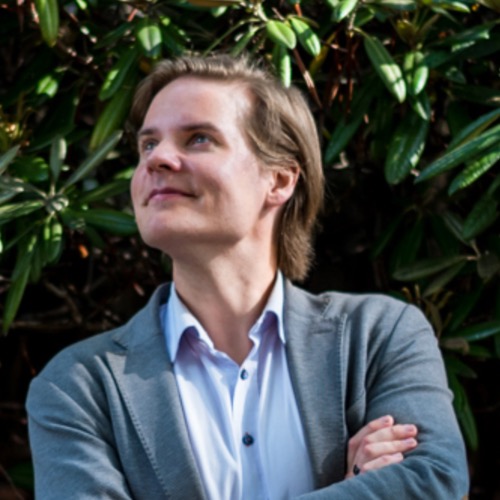
Professor Ida Koivisto from the Faculty of Law at the University of Helsinki specializes in administrative law, constitutional law, and global administrative law. Her research focuses on transparency in digital governance, automated decision-making in public administration, and the intersection of law with digital technology. Key research themes: Digital transparency, legal automation, EU administrative law Active in multidisciplinary projects like DARE (Digital Administration Redesigned for Everyone) and AlgoT (Algorithmic Transparency) Recent publications explore ethical dimensions of AI in governance, legal personhood in digital systems, and paradoxes of transparency. Her work appears in journals like Artificial Intelligence, Humans and the Law and Critical Analysis of Law . International collaborations include academic visits to the University of Toronto, University of Hong Kong, and European University Institute. She contributes to policy through expert statements for Finland's Constitutional Law Committee and other public institutions.
Hanna Mattila serves as Visiting Professor at Aalto University's Department of Built Environment and Associate Professor at Aalborg University's Department of Architecture, Design, and Media Technology, leading the Academy of Finland-funded TRANAPLAN research consortium on democratic planning transformations. Her expertise spans planning theory, urban design, land use systems, and regional development with emphasis on Finnish and international contexts. Her research critically examines communicative and agonistic planning theories, strategic policy rationalities, and governance of marginalized regions through interdisciplinary lenses integrating political science, sociology, and ethics. Current work addresses populism's impact on urban processes, sustainable transformation frameworks, and superdiversity challenges in city development, reflecting deep engagement with democratic theory and spatial justice. Recent publications (2022-2025) reveal consistent focus on democratic planning innovations, analyzing legitimacy structures in strategic policy, agonistic practices in peripheral regions, and ethical dimensions of urban transformation. Her scholarship demonstrates strong Finnish contextual grounding while contributing to global debates on deliberative governance, planning theory evolution, and equitable spatial development through high-impact journal articles and book reviews. Hanna Mattila's scientific recognition includes: Aalto University School of Engineering Award for Best Doctoral Dissertation 2017 Vuoden kaupunkikirjoitus 2003 -palkinto from Yhdyskuntasuunnittelun seura and Alue- ja ympäristötutkimuksen seura She directs the Academy of Finland-funded TRANAPLAN consortium exploring democratic planning anatomies while contributing to Aalto's Planning and Transportation research group. Her collaborative publications indicate extensive international partnerships, though specific student advisement details remain unreported in source materials. Active within Aalto's Planning and Transportation research ecosystem, Mattila drives the TRANAPLAN project through cross-institutional collaboration with Finnish and global scholars, evidenced by co-authored works on regional governance, planning theory, and urban transformation frameworks.
Suvi Sankari is a University Researcher at the University of Helsinki Faculty of Law and holds the Title of Docent (Adjunct Professorship) in European Law. She serves as the Research Coordinator for the University of Helsinki Legal Tech Lab and is the Principal Investigator (PI) for the Academy of Finland-funded project 'Is this Public or Private?' (2019-2023). Her work bridges law and technology, fostering interdisciplinary collaborations across faculties and universities. University of Helsinki Faculty of Law Helsinki Institute of Sustainability Science (HELSUS) Suvi's research focuses on European Law , Legal Reasoning , and Constitutional Pluralism , with a methodology combining legal doctrinal studies, socio-legal analysis, and empirical research. She explores topics such as country-of-origin indications , consumer information , and standardisation in the context of global market dynamics and sustainability. Her publications span theoretical and applied aspects of EU law, including contributions to journals like European Law Journal and edited volumes. She is also engaged in projects like ADM-Gov (governance of automated decision-making) and DARE (digital administration redesign). Scientific Award: Idman Prize 2016 As an educator, Suvi has taught EU law to Master's students since 2004, employing diverse assessment methods. She collaborates with networks such as No-Les-Law and the InterTran Research Group , focusing on sustainable law and business.
Heikki Pihlajamäki is a distinguished Academy Professor at the Faculty of Law, University of Helsinki , with a secondary title as Professor of Comparative Legal History and Docent in the same field. His research focuses on the evolution of early modern colonial laws across England, the Netherlands, Spain, and Portugal, contextualizing these within medieval and early modern European empires (Sweden, Germany, Russia). Education: Master of Laws (University of Helsinki, 1987) Licentiate of Laws (University of Helsinki, 1991) Doctor of Laws (University of Helsinki, 1996) His work employs culturally contextualized comparative methods , examining how colonial legal orders interacted with indigenous systems and evolved through trade, governance, and religious influence . Recent publications analyze legal transplants , colonial police ordinances , and commercial law development in Ibero-American contexts. Scientific Awards: Erwin C. Surrency Prize (2008, 2009) Gad Rausing Prize (2024) Medals from Ghent University (2013) and Francqui Foundation (2013) Oikeuskulttuuri-palkinto (2023) Teacher of the Year (1999, 2002) He has supervised doctoral candidates including Marju Luts , Martti Lehti , and Juan Benito Cañizares Navarro , while serving on editorial boards for journals like Retfærd , Oikeus , and Journal of Baltic Studies . His current project, CoCoLaw , investigates legal interactions in early modern colonial powers.
Kirsikka Riekkinen is an Assistant Professor at Aalto University in the Built Environment domain, specializing in land administration , cadastral systems , and property rights . Her research bridges technological innovation with policy analysis, focusing on digitalization , security implications , and climate impacts of land governance frameworks. Research Focus Development of holistic cadastral frameworks for mature systems Land consolidation in Finland and Africa, including climate effects Security-based property restrictions in Northern Europe Integration of blockchain , text mining , and 3D modeling into land administration Comparative analysis of Nordic and African land policies Scientific Trends in Publications Her article corpus (2012-2025) reveals a sustained focus on land consolidation (with climate implications), cadastral modernization (digitalization, blockchain), and cross-national policy analysis (Finland, Nigeria, Rwanda). Recent works emphasize public value perspectives and security challenges in cadastral systems. Teaching & Professional Role As an Assistant Professor, she contributes to academic discourse in land governance. Contact: kirsikka.riekkinen@aalto.fi
Lauri Rapeli is a Professor at Abo Akademi University's Faculty of Social Sciences, Business and Economics, and Law. His research focuses on political behavior, democracy studies, and future-oriented governance. He leads projects such as STRONG (Implementing democratic innovations) and FIRIPO (Finnish Research Infrastructure for Public Opinion). Key research areas include citizen participation, electoral systems, and the intersection of health and politics. Notable contributions include studies on policy preferences through conjoint experiments, the impact of health on political engagement, and future-oriented policymaking. Rapeli has received the Finnish National Election Study Prize 2004 (2024) and contributes actively to peer-reviewing journals like Political Behavior and Government and Opposition . His projects emphasize democratic innovations, elite-mass linkages, and foresight in law-making. Rapeli collaborates internationally, including visits to Stanford University and the University of Westminster. His work bridges theoretical frameworks with practical policy analysis, addressing modern challenges in governance and civic engagement.
Minna van Gerven is a Professor in Social Policy at the University of Helsinki, Faculty of Social Sciences, and a key member of the Helsinki Inequality Initiative (INEQ). Her work focuses on social policy analysis, digitalization of welfare systems, and comparative studies of European and global welfare states. She leads doctoral programs and participates in multidisciplinary research projects. Affiliation: University of Helsinki, Faculty of Social Sciences Academic Role: Professor in Social Policy Research Networks: Helsinki Inequality Initiative, DEFEN-CE project, REPAIR project Her research explores the political economy of social policy , with emphasis on digitalization , labor market reforms , and welfare state sustainability . Recent projects investigate algorithmic governance in social assistance and innovative working time arrangements in low-wage sectors. The 15 most recent articles highlight themes such as digital welfare implementation , EU policy coordination , and social inequality . Key subfields include algorithmic systems, activation policies, cross-cultural policy transfer, and post-pandemic labor market transitions. Minna actively contributes to policy debates through invited talks , media commentary , and EU-level project deliverables . She supervises doctoral candidates and collaborates with international researchers on topics like social investment, governance of integrated activation, and sociotechnical limits of digitalization. Projects: DEFEN-CE, REPAIR, INNOVAWORKING International Collaboration: EU, China, Vietnam, Netherlands
Niko Soininen is Professor of Environmental Law at the University of Eastern Finland's Law School and a leading researcher at the Center for Climate Change, Energy and Environmental Law (CCEEL). His work focuses on the intersection of law, sustainability transitions, and complex systems, with specializations in water law, marine environmental law, and adaptive governance frameworks. Primary Affiliation: University of Eastern Finland, Law School Research Groups: CCEEL, Sustainability Law, Water and Marine Environmental Law Key Projects: RELIEF (2023-2026), SusHydro (2020-2024) His research synthesizes legal theory with practical governance challenges, particularly in: Sustainability law and transformation Hydropower and offshore wind regulation Marine spatial planning Legal interpretation in environmental contexts Resilience of legal systems His recent publications analyze the tension between renewable energy expansion and ecological protection in EU law, with a focus on hydropower's legal trade-offs (2024), adaptive governance models (2023), and water-security frameworks (2023). He has contributed extensively to journals like Environmental Innovation and Societal Transitions , Transnational Environmental Law , and Science of the Total Environment .
Riku Neuvonen is a Professor in Administrative Studies at Tampere University's Faculty of Management and Business. Previously, he worked as a senior lecturer of public law at the Faculty of Law, University of Helsinki, and held expert positions at the Ministry of Justice and Ministry of Education and Culture. He currently teaches a graduate seminar on administrative law and supervises doctoral students, focusing on public law, constitutional law, and media law. Research Interests: Riku's research spans media law, constitutional law, legal theory, legal history, tax law, and legal geography. His work is highly interdisciplinary, involving collaborations with communication scholars and literature researchers. He is particularly interested in the regulation of internet platforms, public sphere dynamics, and the rule of law in digital contexts. Recent Publications: His latest work examines public service media challenges (2024), freedom of association doctrine (2024), and epistemic rights in digital disruption (2024). He explores themes like platform accountability, media policy, and digital governance through empirical and theoretical lenses. Projects: He is a principal investigator in the Strategic Research Council's DECA project and contributes to GDHRNet and PONTE initiatives. His projects address democratic epistemic capacities, global digital rights, and cultural regulation.
Sam Grönholm is a University Lecturer in the Faculty of Social Sciences, Business and Law at Åbo Akademi University, specializing in Social Sciences with a focus on sea and shipping governance. His work is deeply embedded in urban climate governance, experimentalist governance models, and EU policy impacts on the Baltic Sea Region. He actively contributes to interdisciplinary research and public discourse on climate action and sustainability. University: Åbo Akademi University School: Faculty of Social Sciences, Business and Law Department: Social Sciences Academic Rank: Lecturer Email: sam.gronholm@abo.fi Sam Grönholm’s research centers on urban climate action, particularly in mid-sized cities like Turku. His work explores the paradoxes of mainstreaming climate governance, the role of experimentalist policy approaches, and the dynamics of multilevel governance in the Baltic Sea Region. He investigates how cities act as key agents in global climate efforts, often in the absence of binding national support, and how transnational learning can enhance local policy innovation. His recent publications and projects reveal a strong trend in comparative urban climate governance, especially through the 'Matching Forerunner Cities' initiative, which analyzes climate policies in Turku, Groningen, Rostock, and Potsdam. His 2023 book chapter examines EU influences on Baltic Sea governance, while his 2022 article in Current Research in Environmental Sustainability discusses the paradox of mainstreaming experimental governance. These works, along with multiple reports and media contributions, show a consistent focus on policy implementation, urban resilience, and sustainability transitions. Sam Grönholm has not received any explicitly mentioned scientific awards in the provided text. He has supervised or collaborated with multiple researchers and is currently a Co-Investigator in the 'Heat-Pioneer' project, funded by the City of Turku, which explores integrating heat pumps into renewable energy infrastructure. His academic activities include invited talks, public presentations, and media engagements, highlighting his role in bridging research and policy. He has presented on topics ranging from Baltic Sea governance to climate challenges in Nordic cities, demonstrating strong engagement with both academic and public audiences. Sam Grönholm is involved in a research team analyzing urban climate governance, particularly through the 'Matching Forerunner Cities' project. His work is collaborative, involving scholars from multiple institutions, and is closely tied to municipal policy development in Turku and other Nordic and European cities.
Béatrice Schütte serves as a University Lecturer at the Faculty of Law, University of Helsinki, where she supervises doctoral candidates in the Doctoral Programme in Law. Her current teaching responsibilities include a writing seminar on product liability within the International Business Law (IBL) programme, a course on Nordic contract law, and contributions to master's thesis writing groups. Her research spans interdisciplinary legal domains at the intersection of emerging technologies and traditional legal frameworks. Primary focus areas include Artificial Intelligence regulation in EU law , maritime law applications for autonomous systems , and environmental liability frameworks . She examines how digital transformation impacts product liability regimes, particularly regarding AI-driven systems in maritime contexts and environmental contamination cases. Her work consistently addresses the tension between technological innovation and established legal principles in private international law. Analysis of her recent publications (2021-2025) reveals a clear trajectory toward adaptive regulatory frameworks for AI governance, with increasing emphasis on sustainability implications. Her scholarship demonstrates methodological rigor in comparative legal analysis, particularly regarding EU regulatory approaches versus international standards. Key thematic clusters include liability for autonomous systems (45% of output), digital market regulation (30%), and environmental torts in technological contexts (25%). She actively participates in major research initiatives including: PREST (Private Enforcement, Sustainability & Technology): Ongoing project since 2024 examining AI liability frameworks ADM-Gov : Analyzing algorithmic decision-making in governance (2022-2026) Legal Tech Lab : Long-running research initiative since 2016 How to Regulate AI-Related Damages Liability : Academy of Finland-funded project (2019-2024) Schütte maintains significant external engagement through 29 recorded activities (2020-2025), including 15 invited talks at international forums and participation in EU policy discussions. Her work demonstrates strong institutional collaboration across Nordic and European academic networks, particularly with Lund University and European regulatory bodies.
Pauli Rautiainen is a University Lecturer in Social Law at the University of Eastern Finland's Department of Social Sciences within the Faculty of Social Sciences and Business Administration. He holds additional roles as an Associate Professor of Public Law at the University of Helsinki and Constitutional Law at the University of Turku. His expertise spans public law, fundamental/human rights, equality, disability rights, and crisis management in healthcare systems. He has contributed to projects like the 'Disability and human dignity' initiative, focusing on societal hierarchies of disability and inclusive policies. Rautiainen's research emphasizes legal frameworks for marginalized groups, pandemic preparedness, and institutional resilience. Key publications include analyses of disability rights, healthcare crisis management, and historical injustices against deaf communities. His work bridges legal theory with practical policy, addressing issues such as employment equity for people with disabilities and the ethical dimensions of public health measures during crises. He is affiliated with the Welfare Law Center and Social Law Research Group, collaborating on interdisciplinary studies like the exploration of Finland's health system resilience. His recent articles highlight the intersection of law, policy, and societal challenges, advocating for equitable and transparent governance in both routine and crisis contexts.
Kimmo Nuotio is a Professor of Criminal Law at the University of Helsinki's Faculty of Law, where he serves as Director of the Institute of Criminology and Legal Policy. He has held significant leadership positions including Dean of the Faculty of Law (2010-2017), director of the nation-wide doctoral programme "Law in a Changing World" (2007-2015), and currently chairs the Board of the Research Council of Finland (2025-2027). He maintains active roles in the Rule of Law Center and the Center of Chinese Law and Chinese Legal Culture. Professor Nuotio's research focuses on theoretical foundations of criminal law, with particular expertise in Nordic, European, and international criminal law. His work explores critical intersections between criminal law and contemporary societal challenges including: Theoretical foundations of penal liability and modernization of criminal law Transnationalization of criminal law and European legal integration Rule of law, sustainable criminal law, and security in risk society Criminal law in cultural diversity contexts and global legal development Chinese law and comparative legal systems His recent scholarly output demonstrates a strong focus on freedom of expression, hate speech regulation, and the philosophical underpinnings of criminal law. Nuotio frequently examines the boundaries of criminalization in modern society, particularly regarding hate speech, terrorism, and the challenges of regulating expression in democratic societies. His work shows increasing engagement with comparative perspectives, especially Nordic approaches to criminal law and Chinese legal development. Professor Nuotio has received recognition through numerous research projects funded by the Academy of Finland and Ministry of Education and Culture. He has directed significant initiatives including the Finnish Center of Chinese Law and Chinese Legal Culture (2013-2025) and the "Kiinan oikeus ja oikeuskulttuuri" project (2024-2028). His international collaborations span across Europe, North America, and Asia. As Director of the Institute of Criminology and Legal Policy (Krimo Institute), Nuotio leads research on criminology and criminal justice policy. The institute serves as a hub for theoretical criminal law research and engages with practical criminal justice issues through its connections with the Rule of Law Center and other research organizations.
Laura Tammenlehto is a Senior Lecturer in Commercial Law and Project Researcher at the University of Eastern Finland's Law School, part of the Faculty of Social Sciences and Business Studies. Her research focuses on intellectual property rights and criminal law, particularly copyright and trademark infringements, food fraud, and technological challenges in legal enforcement. She contributes to research groups in Commercial and Trade Law, and Civil Law. Research Interests: Intellectual Property Rights (IPR) criminalization and enforcement Cybercrime and digital technology's legal implications Comparative analysis of Nordic and international legal systems Legal ethics and professional conduct Parole supervision and penal policy Key Projects: Translation and Interpreting in the Criminal Process (2025–2026) Artificial Intelligence's impact on criminal infringement analysis Grants & Advising: No student advisees listed. Active in research projects addressing digital and transnational legal challenges. Labs/Teams: Collaborates with interdisciplinary teams in the Commercial and Trade Law Research Group and Civil Law Research Group.
Kirsi-Maria Halonen is a Professor at the University of Lapland's Faculty of Law, specializing in Welfare Law, Markets, and the Environment. She holds leadership roles in major research consortia including the WaterFall Safe Water For All (2025-2030) and HILMARI (2021-2023) projects. Her research focuses on public procurement law, administrative law, and environmental policy, with emphasis on sustainability, crisis preparedness, and corruption prevention. She is a Principal Investigator in projects funded by the Finnish Strategic Research Council and the Ministry of Agriculture and Forestry. Halonen serves on editorial boards for The Journal of Public Procurement and Edilex , and chairs the European Procurement Law Group. She advises the Finnish Ministry of Finance and has contributed to policy reports like the 2023 Public Procurement Savings Report. Her work bridges law and economics, addressing topics such as carbon sink policies, judicial remedies in procurement disputes, and security of supply in EU law. Education: Not explicitly stated, but holds a Docent title and doctoral qualifications implied by her research leadership. Labs/Teams: Leads legal research in multidisciplinary teams involving economists and ecologists. Key awards include the Viggo Hagstrøms Nordic Prize for Young Private Law Researchers (2022). Her recent publications analyze transparency challenges, contract modifications, and the role of public procurement in achieving climate goals. She actively participates in international conferences and has over 55 research outputs since 2016.