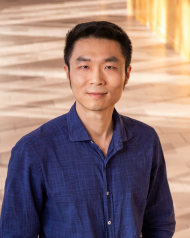
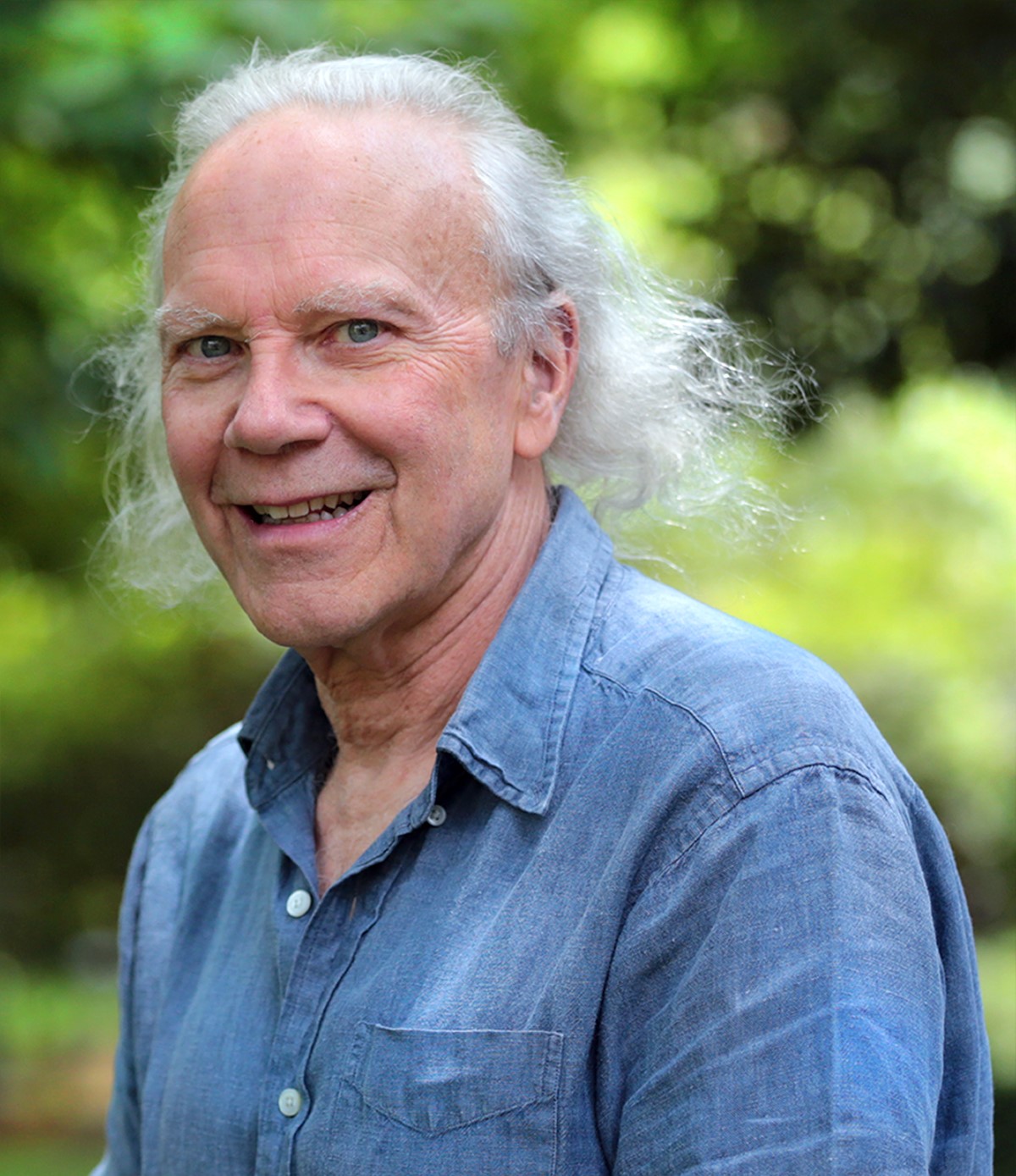
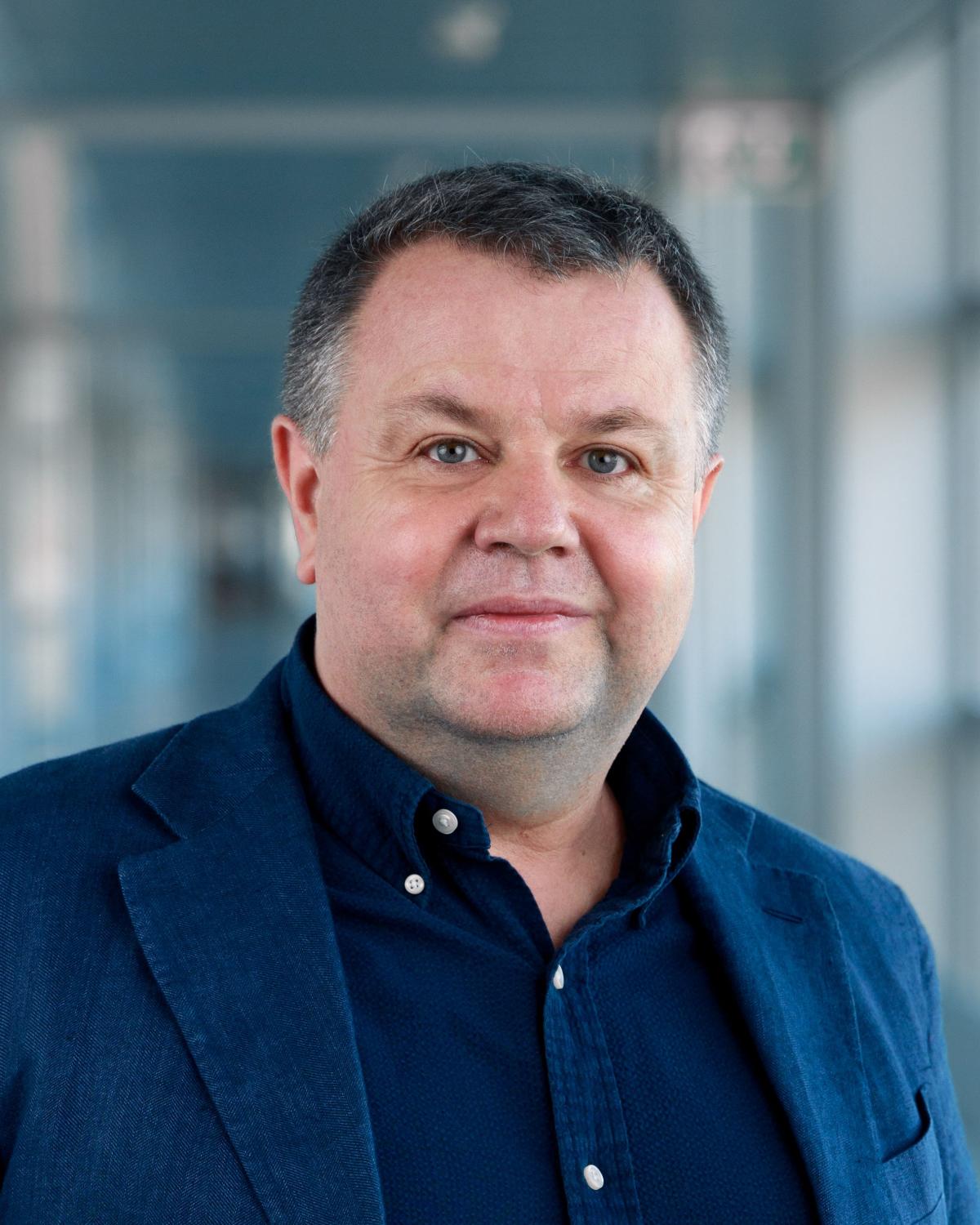
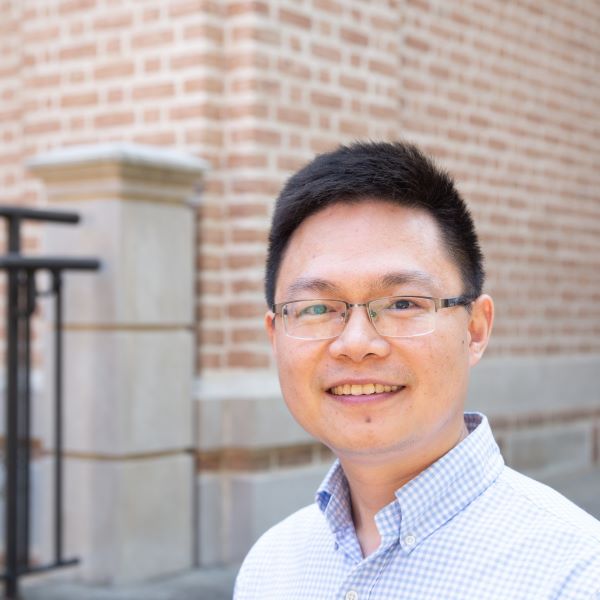
Jia Deng is a Professor of Computer Science at Princeton University and directs the Princeton Vision & Learning Lab. His research focuses on computer vision, machine learning, and robotics, with an emphasis on advancing 3D vision and synthetic data generation. Ph.D., Princeton University, 2012 B.Eng., Tsinghua University, Computer Science His work spans optical flow, depth estimation, and visual reasoning, leveraging procedural scene generation and robust neural architectures. Recent publications highlight advancements in multi-layer depth estimation, stereo matching, and simulation environments for embodied AI. Alfred P. Sloan Research Fellowship, 2018 NSF CAREER Award, 2020 ONR Young Investigator Award, 2020 Multiple Best Paper Awards (ECCV, ICCV, 3DV) Deng leads the Princeton Vision & Learning Lab, which develops foundational tools for computer vision and machine learning. His mentorship extends to advising students and collaborating on interdisciplinary projects.
Tomas Palacios is a Professor of Electrical Engineering at the Massachusetts Institute of Technology (MIT) , where he directs the Center for Graphene Devices and 2D Systems and leads the Microsystems Technology Laboratories (MTL). His research focuses on pushing the boundaries of microelectronics through novel semiconductor materials and device architectures, including Gallium Nitride (GaN) and 2D materials like graphene and molybdenum disulfide (MoS2). Professor, MIT Electrical Engineering and Computer Science Director, MIT Center for Graphene Devices and 2D Systems Clarence J. LeBel Professor, MIT Faculty Director, Northeast Microelectronics Internship Program (NMIP) Research Interests span multiple cutting-edge domains: High-frequency electronics (>300 GHz) for 6G and quantum applications High-voltage power devices (600V–10kV) for energy conversion Post-silicon logic devices using 2D materials High-temperature electronics (e.g., Venus rover applications) Distributed neural networks on large-area 2D materials Graphene-based biosensors and chemical detection systems Scientific Contributions include: Double recipient of the IEEE George Smith Award for groundbreaking GaN transistor work Co-invented first MoS2 electronic circuits Developed world’s first Wi-Fi-to-electricity conversion antenna Led MIT’s Microsystems Technology Laboratories since 2021 Advising Philosophy emphasizes cross-layer expertise, with students gaining experience from materials synthesis to system-level prototyping. His lab has incubated startups like Vertical Horizons , focused on GaN power devices for AI and EVs.
Panos Ipeirotis is a Professor at the Leonard N. Stern School of Business at New York University, affiliated with the Department of Technology, Operations, and Statistics. He also serves as the George A. Kellner Faculty Fellow and is associated with the Center for Data Science and Computer Science departments at NYU. PhD in Computer Science (Columbia University, 2004) MSc in Computer Science (Columbia University, 2001) BSc in Computer Engineering & Informatics (University of Patras, 1999) His research spans crowdsourcing, machine learning, human-AI collaboration, online labor markets, and social media analytics. He pioneered human-machine loop systems that combine human and machine intelligence to achieve superior outcomes. His work has applications in data quality assurance, visual media search (e.g., Google Project Glass), and economic valuation of user-generated content. Recent publications focus on algorithmic fairness in hiring systems, occupational segregation analysis, and theoretical advancements in crowdsourcing consensus mechanisms. Earlier work includes foundational studies on data quality in crowdsourcing platforms, economic impacts of product reviews, and query optimization for text-centric tasks. 2015 Lagrange Prize in Complex Systems NSF CAREER Award SIGKDD Test of Time Award (2020) Multiple Best Paper awards (WWW 2011, KDD 2008, SIGMOD 2006) He has received significant grants, including a $1.5 million Google Research Grant (2013) for integrating crowdsourcing with machine learning algorithms. His work bridges computer science, economics, and social psychology, with implications for policy-making and business strategy.
Gary Pielak is a Kenan Distinguished Professor of Chemistry, Biochemistry, and Biophysics at the University of North Carolina at Chapel Hill, with a joint appointment in the School of Medicine. His research focuses on high-resolution protein NMR studies in living cells and the biophysics of tardigrade desiccation-tolerance proteins, bridging structural biology and molecular biophysics. Education: BS in Chemistry from Bradley University (1977), PhD in Biochemistry from Washington State University (1983), Postdoc at the University of British Columbia (1983-1986), Postdoc at Oxford University (1986-1988). Research Interests center on understanding protein structure, stability, and function in physiologically relevant environments. Key areas include: In-Cell NMR: Quantifying protein behavior in living cells using advanced NMR techniques. Macromolecular Crowding: Studying synthetic polymers and proteins as crowding agents to mimic cellular environments. Tardigrade Biology: Exploring desiccation-tolerance mechanisms in intrinsically disordered proteins from water bears. Recent Publications highlight interdisciplinary trends, combining AI-driven stability prediction, solid-state NMR for dry protein analysis, and molecular glass/gel applications for preservation. His Scientific Awards include: NIH Pioneer Award DuPont and Morrow Young Faculty Awards Multiple UNC Mentorship Awards Mentorship is a cornerstone, with a focus on training graduate students and advancing NMR methodologies. His group employs Research Methods : 19F, 1H, 15N, and 13C NMR Circular Dichroism and Calorimetry Protein Expression in E. coli
Michael McAlpine is a Professor in the Mechanical Engineering department at the University of Minnesota . He also holds affiliations with the Biomedical Engineering and Electrical and Computer Engineering departments. His research focuses on 3D printing functional materials & devices , Nanoscale inks , Biomedical devices , Bioelectronics , and Flexible Microsystems . Research Interests : 3D Printing, Biomedical Engineering, Nanotechnology, Flexible Electronics, Microfluidics Labs : ME 361/363 Contact : mcalpine@umn.edu , (612) 626-3303, ME 117 Recent Research Trends include 3D Printed Biomedical Devices , Flexible Electronics , and Bioprinting Applications . His work spans from Spinal Organoid Formation to Programmable Drug Release Capsules . Scientific Award : Circulation Research 2020 Best Manuscript Award
George Danezis is a Professor of Security and Privacy Engineering at University College London (UCL), affiliated with the Information Security Group. He is also a faculty fellow at the Turing Institute and has held part-time roles since 2018 to focus on commercialization. His research spans systems security, privacy, anonymous communications, and blockchain technologies. Danezis co-founded Chainspace (acquired by Facebook in 2019) and Mysten Labs, where he serves as Chief Scientist. He holds a PhD from the University of Cambridge (2004) and has held positions at Microsoft Research, K.U.Leuven, and the University of Cambridge. Education: PhD (Computer Laboratory, University of Cambridge, 2004), B.A. (Hons) in Computer Science (Queens' College, Cambridge, 2000). Research interests include blockchain consensus, decentralized systems, privacy-preserving technologies, and machine learning applications in security. He has advised numerous doctoral students and led projects funded by EU Horizon 2020, EPSRC, and industry partnerships. His work emphasizes practical solutions for privacy, such as Loopix (anonymity system), Narwhal/Tusk (blockchain consensus), and Coconut (privacy credentials). Danezis has received awards for best papers (PET 2002/2018), is a Fellow of the British Computing Society, and advises organizations like Privacy International and DeepMind. Publications focus on blockchain, anonymity, and privacy, with over 100 peer-reviewed papers. Grants include leadership in projects like DECODE (EU), PANORAMIX, and Glass Houses. Teaching includes courses on computer security and privacy technologies at UCL.
Jörg F. Löffler is a Full Professor of Metal Physics and Technology at the Department of Materials, ETH Zürich , where he has been since 2003. He previously served as Chairman of the Department (2010–2013) and holds Adjunct Professor positions at Tohoku University (Japan) and a Visiting Faculty role at Caltech. His research focuses on bulk metallic glasses , metallic biomaterials , and magnetic materials , combining synthesis, characterization, and applications in biomedical and structural contexts. Educations : Studied Physics and Materials Science at Saarland University (Germany), earned his doctorate at ETH Zurich and Paul Scherrer Institute on magnetism and neutron scattering (1997). Research Trends : Recent work explores additive manufacturing (e.g., laser powder bed fusion), biodegradable magnesium alloys for implants, and magneto-structural coupling in metallic glasses. Collaborative efforts integrate in situ analysis with computational modeling. Scientific Awards : International Magnesium Science and Technology Award (2023) MRS Fellow (2021) DGM 'Breakthrough' Prize (2016) Masing Memorial Prize (2005) ETH Zurich Medal (1998) Alexander von Humboldt Fellowship (1998-2001) Löffler advises the Department of Materials Science and Engineering at UC Davis and serves on editorial boards. His group at ETH Zürich investigates advanced metallic materials using synchrotron radiation and neutron scattering facilities.
Katherine T. Faber is the Simon Ramo Professor of Materials Science at the California Institute of Technology, part of the Division of Engineering and Applied Science. She leads the Faber Research Group, focusing on mechanical behavior of brittle materials, ceramics for extreme environments, porous solids, and cultural heritage science. Her work bridges engineering, art conservation, and space technology. Education: B.S., Alfred University, 1975; M.S., Penn State, 1978; Ph.D., UC Berkeley, 1982. Academic roles include Ramo Professor since 2014 and leadership in the American Ceramic Society. She collaborates with NASA, JPL, and institutions like the Art Institute of Chicago for cultural heritage projects. Research interests span energy materials (thermal barrier coatings, lunar regolith electrolysis), functional porous ceramics (battery separators, biomedical filters), and art conservation (nanoparticle analysis in historical artifacts). Recent projects include shape-memory ceramics and fracture mechanics studied via synchrotron X-rays. Publications highlight innovations in freeze-casting, environmental barrier coatings, and interdisciplinary studies. Awards include the W. David Kingery Award (2024) and American Academy of Arts and Sciences membership. Her group emphasizes sustainability, with a Platinum Green Lab certification. Advises numerous graduate and undergraduate students, including those in SURF and WAVE programs. Grants and collaborations span NASA, NSF, and industry partnerships. Labs focus on ceramic processing, advanced characterization, and additive manufacturing.
Dr. Kai Gong is an Assistant Professor of Civil and Environmental Engineering at Rice University, with affiliations at the Rice Advanced Materials Institute and Ken Kennedy Institute. His research focuses on sustainable infrastructure materials, environmental sustainability, and materials science. He holds a Ph.D. in Civil & Environmental Engineering and Materials Science from Princeton University, an MEngSci from Monash University (Australia), and dual B.S. degrees from Monash University and Central South University (China). Research Interests: Development of durable, sustainable infrastructure materials Waste encapsulation and conversion to value-added products Carbon mineralization and utilization Advanced characterization techniques (synchrotron/neutron scattering) Data-driven modeling and atomistic simulations Notable Awards: 2023 Le Chatelier Medal (Cement and Concrete Research) 2024 Giatec Award for Best Paper in Sustainability Walbridge Fund Graduate Award (2019) His work integrates computational methods (e.g., molecular dynamics) with experimental techniques to address decarbonization challenges in infrastructure. The Gong Research Group actively seeks motivated researchers for opportunities in sustainable materials innovation.
Takeshi Ikenaga is a Professor at Waseda University’s School of Fundamental Science and Engineering and Graduate School of Information, Production and Systems . He earned his Ph.D. in Information & Computer Science from Waseda University in 2001, following B.E. and M.E. degrees in Electrical Engineering (1988–1990). His career spans roles at NTT LSI Laboratories (1990–2002), Kitakyushu Foundation for Advancement of Industry, Science and Technology (FAIS) (1999–2002), and visiting researcher at the University of Massachusetts (1999–2000). Research Interests : Application-specific SoCs for video/image processing, including compression (H.264/AVC, H.265/HEVC), filters (super-resolution, noise reduction), recognition systems (feature detection, object tracking), and communication (UWB, LDPC). He also works on many-core processor design, ultra-low-delay vision systems, and sports analytics (volleyball, figure skating) with real-time 3D pose estimation and ball tracking. Awards : Recipient of the Furukawa Sansui Award (Waseda University, 1988) IEICE Research Encouragement Award (1992) Multiple Best Paper/Presentation Awards (2006–2022) at conferences including DAC/ISSCC, LSI IP Design, ISOCC, ISPACS, and CVIT APSIPA Distinguished Lecturer Certificate (2015) Waseda University Presidential Teaching Award (2020)
Dr. Ling Yin is an Associate Professor in the School of Electrical and Mechanical Engineering at the University of Adelaide, Faculty of Sciences, Engineering and Technology. She joined the University of Adelaide in 2018 as an Associate Professor in manufacturing and served as Faculty Research Theme Leader in Advanced Manufacturing from 2019 to 2022. Dr. Yin leads multi-institutional projects on advanced manufacturing funded by Defence SA (2024-2025) and the National Health and Medical Research Council (NHMRC) (2025-2028). Dr. Yin's educational background includes B.Sc., M.Sc., and Ph.D. degrees in mechanical engineering from Huazhong University of Science & Technology in Wuhan, China. Her academic career spans five countries across three continents, including positions at Tianjin University in China, Kumamoto University in Japan, Kansas State University in the USA, the Australian National University and James Cook University in Australia, the National Institute of Standards & Technology (NIST) in the USA, and A*STAR Singapore Institute of Manufacturing Technology (SIMTech) in Singapore. Dr. Yin's research focuses on manufacturing and mechanical characterization of advanced materials with applications in optics, semiconductors, mechanical structures, dental restorations, osteoporosis/osteoarthritis studies, and marine/animal sciences. Her work involves extensive collaborations across multiple disciplines. Her recent publications demonstrate expertise in ultrasonic vibration-assisted machining of dental ceramics, particularly zirconia and lithium silicate glass-ceramics, as well as advanced characterization techniques like micro-CT and in-situ SEM testing for understanding material behavior at micro and nano scales. JSPS Invitation Fellowship from the Japan Society for the Promotion of Science Japanese Government Scholarship from the Ministry of Education, Culture, Sports, Science and Technology, Japan Supervisor for a PhD Thesis cum laude with a Medal of Excellence awarded by James Cook University in 2017 Supervisor for a Best Honours Project in Mechanical Engineering at Ingenuity awarded by the University of Adelaide in 2023 Dr. Yin is actively involved in supervising higher degree research students and has available PhD projects in 2025 focused on ultrasonic-vibration assisted manufacturing techniques for dental applications. She has successfully led international academic delegations through the New Colombo Plan to manufacturing facilities in Singapore and Japan. Dr. Yin is a senior member of the North American Manufacturing Research Institution (NAMRI) and the Society of Manufacturing Engineers (SME), and also a member of several professional organizations including ASME, OSA, American Ceramic Society, ASM International, and SPIE.
James Glass is a Senior Research Scientist at the Massachusetts Institute of Technology (MIT) and heads the Spoken Language Systems Group within MIT's Computer Science and Artificial Intelligence Laboratory (CSAIL). He is also affiliated with the Harvard-MIT Division of Health Sciences and Technology. His research spans automatic speech recognition, multimodal learning, and spoken language understanding, with applications in healthcare and video analysis. Education: SM and PhD in Electrical Engineering and Computer Science from MIT His work focuses on paralinguistic speech analysis, health markers in speech, and the intersection of speech and natural language processing. Recent trends emphasize audio-visual alignment, recursive reasoning, and AI applications in cognitive disorder diagnosis. Scientific awards include IEEE Fellow, ISCA Fellow, and Associate Editor for IEEE Transactions on Pattern Analysis and Machine Intelligence. His group explores unsupervised learning, speaker verification, and social text analysis. James leads the Spoken Language Systems Group at CSAIL, collaborating with institutions like IBM and Harvard-MIT Division of Health Sciences and Technology. His research integrates vision-language models, neural audio codecs, and self-supervised frameworks.
Prof. Dr. Frank Pollmann is a Full Professor (W3) at the Department of Physics PH-I, Technical University of Munich (TUM), leading the Chair of Theoretical Solid-State Physics since 2022. His research focuses on condensed matter theory and quantum information concepts , particularly in systems of correlated electrons and quantum many-body dynamics . PhD: Max Planck Institute for the Physics of Complex Systems / TU Ilmenau (2006) Postdoc: UC Berkeley (2008-2010) Group Leader: MPIPKS Dresden (2011-2016) Associate Professor: TUM (2017-2022) His work spans topological phases , frustrated spin systems , and non-equilibrium quantum dynamics , utilizing tensor network methods and quantum information theory to study phenomena like many-body localization and Hilbert space fragmentation . His publications demonstrate trends in quantum scar states , Kardar-Parisi-Zhang hydrodynamics , and quantum transport anomalies . Scientific Awards : ERC Consolidator Grant (2017) Walter Schottky Prize (2015) Otto-Hahn Medal (2007) He teaches courses including Advanced Methods in Quantum Many-Body Theory , Solid State Theory , and Topology in Condensed Matter , while leading the Pollmann Group under the TUM School of Natural Sciences.
Ralph H. Colby serves as Professor of Materials Science and Engineering and Chemical Engineering at Pennsylvania State University's College of Earth and Mineral Sciences, holding the Corning Faculty Fellowship. His research focuses on molecular-level dynamics in complex fluids, particularly polymers, ionomers, and liquid crystalline systems. With over 130 publications and authorship of the textbook Polymer Physics (2003), he directs an active research program examining structure-property relationships in soft matter. B.S. in Materials Science and Engineering, Cornell University (1979) M.S. in Chemical Engineering, Northwestern University (1983) Ph.D. in Chemical Engineering, Northwestern University (1985) Professor Colby's research spans polymer physics, rheology, and materials for energy applications. His group employs mechanical rheology, dielectric spectroscopy, and scattering techniques to investigate ion transport in single-ion conductors for batteries, dynamics of glass-forming liquids, and self-assembly in polyelectrolyte systems. Current work emphasizes structure-property relationships in ionomers, liquid crystalline polymers, and branched architectures. Analysis of recent publications reveals consistent focus on ionomer membranes for energy applications, processing-structure relationships in advanced polymers, and fundamental dynamics of complex fluids. Key trends include increasing integration of computational modeling with experimental characterization, expansion into sustainable materials processing, and growing emphasis on applications in battery technology and biomedical materials. Penn State Faculty Scholar Medal for Outstanding Achievement (2022) Bingham Medal, Society of Rheology (2012) American Chemical Society Fellowship Corning Faculty Fellowship in Materials Science and Engineering Professor Colby leads multiple federally funded projects including NSF's 'Fundamental Studies of Flow-Induced Polymer Crystallization' and DOE's 'Conduction mechanisms and structure of ionomeric single-ion conductors'. His group maintains strong industry partnerships with Corning Incorporated and participates in interdisciplinary initiatives like the Penn State Intercollege Graduate Degree Program in Materials Science and Engineering. Current research includes collaborations on breast cancer adherence interventions in Rwanda and conjugated polymer development for flexible electronics. The Colby Research Group operates specialized facilities for rheological characterization, dielectric spectroscopy, and X-ray scattering at Penn State's Materials Research Institute. The team maintains active collaborations with national laboratories and international research groups, focusing on translating fundamental polymer physics discoveries into practical applications for energy storage and advanced manufacturing.
Abbas Milani is a tenured Professor of Mechanical Engineering at the University of British Columbia's Okanagan campus, where he holds the Tier 1 Principal's Research Chair in Sustainable & Smart Manufacturing and serves as Director of the Materials and Manufacturing Research Institute (MMRI). He also serves as Technical Director of the Composites Research Network (CRN), Lead of the Canadian-International Biocomposites Research Network, and leads multiple major initiatives including the UBC-Pacific Economic Development Canada-Advancing Circular Economy (ACE) program and the UBC-NRC IRAP National Circular Economy CtO Program. Dr. Milani's primary research focuses on advanced modeling, simulation, and multi-criteria design optimization of composite and biocomposite materials, structures, and manufacturing processes. His expertise spans Textile Composites/Biocomposites, Materials Constitutive Relations, Finite Element Modeling, Robust Inverse Methods, Material Selection for End-of-Life Design Strategies, Multiple Criteria Decision Making, and Industry 5.0 applications. His interdisciplinary research bridges mechanical engineering, sustainable materials science, and smart manufacturing technologies. Analysis of his recent publication record reveals a strong emphasis on sustainable materials development, with particular focus on biocomposites, life cycle assessment methodologies, and optimization of manufacturing processes. His work integrates computational modeling with experimental validation across diverse application areas including medical devices, sustainable packaging, and circular economy strategies. The publications demonstrate increasing integration of artificial intelligence and machine learning approaches with traditional engineering methods. 2015 UBC Okanagan Researcher of the Year Award Killam Faculty Research Award (2016) Inducted into Royal Society of Canada - College of New Scholars (2020) Gold Medal Service Contribution Award by Academics World Reviewer Contribution Award by ASM International Multiple teaching excellence awards from UBC Dr. Milani has successfully mentored over 100 students and postdoctoral fellows who have secured positions in both industry and academia. His research program has been supported by more than $15 million in funding from government and industrial organizations. He leads the NSERC CREATE in Immersive Technologies (CITech) program and co-leads the Advanced Materials and Fabrication Core Competency within the Survive and Thrive Applied Research (STAR) program, demonstrating his commitment to training the next generation of engineers and advancing applied research.