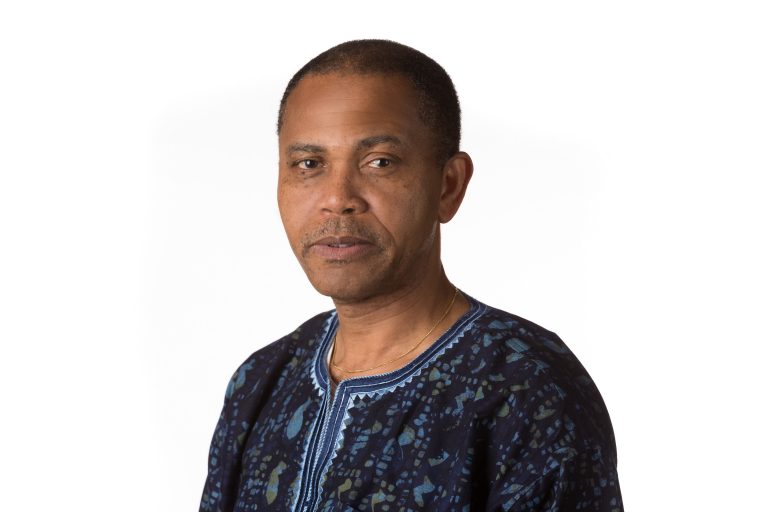
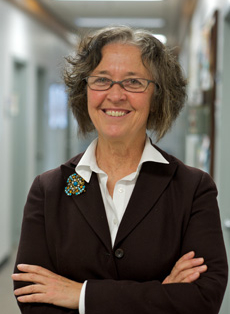
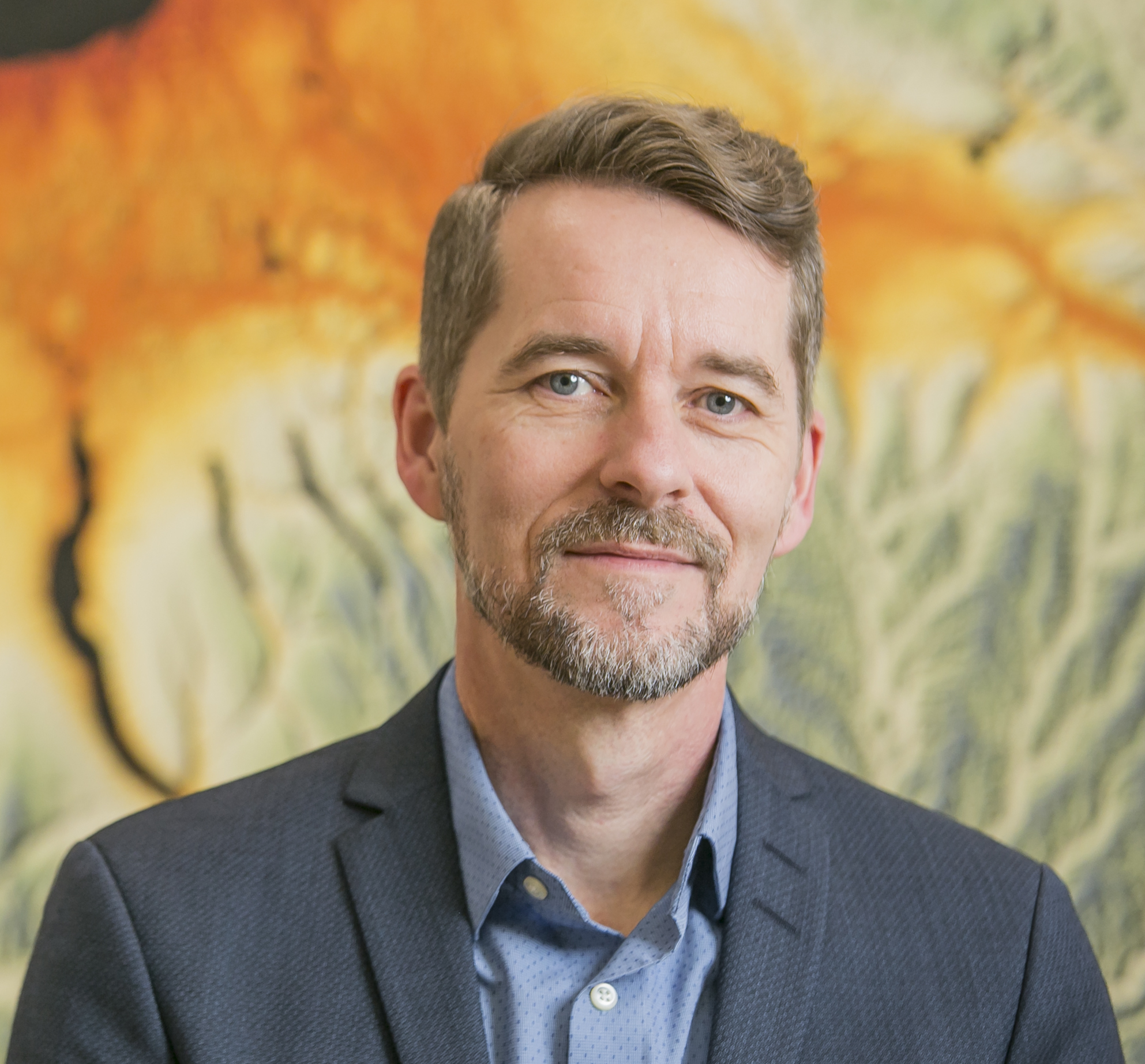
Claire Bowern is Professor of Linguistics at Yale University specializing in historical linguistics, language documentation, and Australian Indigenous languages. Her research employs computational phylogenetics to study language evolution and supports language revitalization through digital archives and fieldwork methodologies. Recent publications address: Phylogenetic signal in lexical evolution across language families Digital infrastructure for endangered language documentation (FLEx software analysis) Decolonizing linguistics pedagogy and research practices Her work consistently integrates linguistic, anthropological, and computational approaches to analyze language diversity and change. She contributes to global databases including Grambank and D-PLACE, examining links between linguistic, cultural, and environmental patterns.
John Kingston is a Professor of Linguistics and Director of the Phonetics Lab at the University of Massachusetts Amherst, where he has been since 1990. He holds a BA and MA from the University of Chicago (1976–1977) and a PhD from UC Berkeley (1985). His research focuses on the interplay between phonetics and phonology, particularly speech perception and its influence on phonological representations. He co-founded the Laboratory Phonology Conference series in 1987 and has conducted fieldwork on Otomanguean languages. His work emphasizes experimental methods to study phonological questions, including studies on vowel perception, tone systems, and cross-linguistic phonetic patterns. Kingston’s academic journey includes roles at the University of Texas, Austin (1984–1986) and Cornell University (1986–1990). His research explores how auditory processing and linguistic knowledge shape speech perception, with notable contributions to understanding tonogenesis, perceptual contrast effects, and vowel category learning in second languages. He collaborates on grants examining Ganong effects and phonological inventories, advocating for theories that bridge perceptual and structural aspects of language. His lab, the Phonetics Lab, supports experimental work on speech perception and production. Kingston is also the Honors Program Coordinator, mentoring students in linguistics and related fields. Despite no explicit awards listed, his extensive publications and conference leadership reflect his scholarly impact.
James Essegbey is a Professor of African Languages and Linguistics in the Department of Languages, Literatures & Cultures at the University of Florida (Gainesville), affiliated with the Center for African Studies, Center for Latin American Studies, and African American Studies. His research focuses on language endangerment documentation, syntax-semantics interfaces, and West African languages like Ewe, Akan, and Nyangbo. He holds a PhD from Leiden University (1999) and has held postdoctoral fellowships in the Netherlands and Germany. Key research areas include: Documentation of endangered languages (e.g., Nyangbo, Tutrugbu) Syntax of Kwa languages and Atlantic creoles Cultural influences on linguistic structures (e.g., left-hand taboos in Ghana) Creole genesis and trans-Atlantic language contacts Award-winning scholar with over 20 years of grant-funded projects, including: NSF grants for CoLang and documentary linguistics training programs NSEP funding for African languages summer institutes Leadership in language revitalization initiatives Teaching includes courses on Akan language, African elements in the Americas, and methods of language documentation. Active in professional organizations like the African Studies Association and Society for Pidgin and Creole Languages.
Joyce M. McDonough is a faculty member at the University of Rochester specializing in Linguistics, with a focus on the mental lexicon and complex morphologies in Dene (Athabaskan) languages. She collaborates extensively with the Auditory Neuroscience Lab led by PI Laurel Carney (BME) to model neural representations of speech. Research Interests: Phonetics, Phonology, Morphology, Laboratory Phonology, Dene Linguistics, Neural Coding of Vowels Courses: LING 107, LING 210/410, BME/LING 216/416, LING 227/427, LING 237/437, LING 527, LING 529, LING 537 Her recent work explores the intersection of auditory neuroscience and linguistic theory, particularly in speech coding and vowel representation. She contributes to language documentation through projects like the Dene Speech Atlas (2013, updated 2017), which provides interactive resources for preserving speech patterns in under-resourced communities.
Morten H. Christiansen is the William R. Kenan, Jr. Professor of Psychology at Cornell University and holds a concurrent position as Professor of Cognitive Science at Aarhus University's School of Communication and Culture and the Interacting Minds Centre. His research focuses on the interplay between biological and environmental factors in language evolution, acquisition, and processing. Key methodologies include computational modeling, neuroimaging, and experimental psychology. He is an elected member of Denmark’s and Norway’s Royal Academies of Sciences and a Fellow of the Association for Psychological Science and Cognitive Science Society. His work spans over 250 papers and four edited volumes, with his monograph The Language Game (2022) proposing a novel theory of language emergence through improvisation. Research interests emphasize multiword chunking, statistical learning, and individual differences in language processing. Current projects explore Danish language challenges, computational models of cultural evolution, and the impact of large language models (LLMs) on human cognition. Christiansen directs the Cognitive Science of Language Lab, teaches undergraduate and graduate courses (e.g., PSYCH 2150: Psychology of Language), and collaborates internationally on projects like the Danish Gigaword Corpus. His recent work highlights language as an emergent system shaped by interactive and ecological pressures.
University of North Carolina at Chapel HillUnited States
Caitlin Smith is a Teaching Professor in the Department of Linguistics at the University of North Carolina at Chapel Hill. Previously, she held positions as a lecturer at the University of California Davis and a postdoctoral fellow at Johns Hopkins University. She earned her Ph.D. in Linguistics from the University of Southern California in 2018. Her research focuses on phonology, particularly exploring gestural representations and their application to phenomena like vowel harmony, opacity, and phonological exceptionality. Key areas include computational modeling of gestural harmony, typological asymmetries in phonological patterns, and speech production analysis using real-time MRI data. She collaborates with researchers in computational linguistics and speech production, including work with Microsoft Research AI on integrating structured representations into neural networks. Her recent work emphasizes the learnability of phonological patterns through computational models and the reanalysis of traditional phonological puzzles within a gestural framework. She has developed the Grammar + Gesture Gradual Learning Algorithm (GGGLA) to model the acquisition of gestural parameters, demonstrating how derivationally opaque patterns emerge naturally in the Gestural Harmony Model. Her contributions span both theoretical and experimental phonology, with notable publications in venues like The Oxford Handbook of Vowel Harmony , Proceedings of NELS , and Scientific Data . She actively engages in interdisciplinary research, bridging formal phonology with computational methods and articulatory phonetics.
Norma Mendoza Denton is a Professor of Anthropology at the University of California, Los Angeles (UCLA), specializing in linguistic anthropology. Her research explores youth culture, language practices, migration, and political discourse, with a focus on marginalized communities such as Latina/o gangs and immigrant populations. She has held academic positions at institutions including the University of Arizona and The Ohio State University, where she directed the Interactional Sociolinguistics Laboratory. Denton’s work integrates sociolinguistics, ethnography, and political analysis, addressing topics like identity formation, media representation, and language variation in global contexts. Education includes a B.A. with Honors in Languages and Linguistics from Grinnell College (1991), an M.A. (1994) and Ph.D. (1997) in Linguistics from Stanford University. Her doctoral dissertation focused on Chicana/Mexicana identity and linguistic variation among urban high school students. Notable awards include the Mellon Foundation Grant (co-PI) for inclusive graduate admissions and the Rockefeller Foundation Bellagio Residency. Denton has also contributed to public outreach through media consultations, including work on bilingual Miranda rights cases and NPR interviews about California accents and Chicano English. Her research has been published in journals like Journal of Linguistic Anthropology and Annual Review of Anthropology . Recent projects include investigations into digital ethnography, police encounters with non-native speakers, and the sociolinguistic impact of political rhetoric in the Trump era.
Dr. Jami Fisher serves as Senior Lecturer and Director of the American Sign Language (ASL) Program at the University of Pennsylvania's Department of Linguistics. Affiliated with the College of Arts & Sciences, their work focuses on documenting Philadelphia-area ASL variation, global deaf community collaborations (especially with Italian communities), and integrating sign language studies into broader linguistic curricula. Education includes an Ed.D. in Higher Education from UPenn (2014), M.S.Ed. (2002) and B.A. in Linguistics (1997). Their pedagogical innovations emphasize Academically Based Community Service (ABCS) partnerships with local organizations like the Pennsylvania School for the Deaf and Deaf-Hearing Communication Centre. Research interests bridge sociolinguistics and community engagement, analyzing the linguistic landscape's visual representation of sign languages and exploring how signed languages reflect cultural values. They co-lead the ASL/Deaf Studies minor program, integrating interdisciplinary coursework with field-based capstone projects. Program leadership includes developing UPenn's longest-running Ivy League ASL program, offering advanced courses in Deaf History, Culture, and Linguistics. Collaborative projects emphasize mutually beneficial partnerships with Deaf communities to ensure culturally responsive research and education.
Rachel Mayberry's Academic Profile Rachel I. Mayberry is a Professor in the Department of Linguistics at the University of California San Diego (UCSD), where she holds affiliations with the Center for Research on Language, Cognitive Science Program, and the Center for Academic Research and Training in Anthropogeny (CARTA). She holds a Ph.D. from McGill University, M.Sc. from Washington University, and B.A. from Drake University. Her work focuses on the critical period for language acquisition through sign language and deafness studies. Her research integrates psycholinguistic and neuroimaging methods to explore how delayed language exposure impacts syntactic processing, brain development, and reading proficiency in deaf individuals. Key areas include neurolinguistic processing differences between early and late first-language learners of ASL, the role of modality in syntactic comprehension, and the relationship between gesture and language development. Mayberry teaches courses such as Sign Language and Its Culture (Lign 7), Child Language Acquisition (Lign 171), and Biology and Environment in Language Acquisition (Lign 282). She has received grants from NIH, the Kavli Foundation, and the National Science Foundation. Her work has been published in high-impact journals like Developmental Science , Proceedings of the National Academy of Sciences , and Brain and Language . Notable contributions include demonstrating that critical period effects are stronger for first-language acquisition than second-language learning, and revealing how early language deprivation alters neural language pathways in adulthood. Her lab collaborates with institutions like the Salk Institute and UCSD's Neuroscience Program to bridge cognitive science and linguistics.
Michael Barlow is an Associate Professor in the Department of Applied Language Studies and Linguistics at the University of Auckland. His research focuses on corpus linguistics, cognitive linguistics, and computational tools for language analysis. He develops software like Collocate, MonoConc Pro, and ParaConc for linguistic research and teaching. His work spans areas including phrasal verbs, academic writing conventions, and individual language variation. Barlow regularly presents at international conferences such as AAAL and AILA and collaborates on projects like the Asia Pacific Corpus Linguistics Association (APCLA). Research Interests: Corpus Linguistics Language Variation & Usage-Based Models Translation and Contrastive Analysis Computational Linguistics Tools Recent Articles: His 2022 study on research article macrostructures and 2021 paper on L2 speech performance via gestures highlight his corpus-driven methods. Earlier work includes foundational studies on idiolects and parallel corpora. Advising: Supervises PhD students in areas like academic discourse analysis and metaphor in economic language. Notable advisees include Vaclav Brezina (now at Lancaster University) and Thi Ngoc Phuong Le (author of The Academic Discourse of Mechanical Engineering ). Labs/Projects: Leads CorpusLAB for discipline-specific writing guides and WordSkew software linking corpus data with discourse structure. Active in software development for language teaching and research.
Sandra Waxman is a Professor of Cognitive Psychology and holds the Louis W. Menk Chair in Psychology at Northwestern University. She is an IPR Fellow, leading research at the intersection of developmental science, cognitive psychology, and cultural studies. Her work focuses on how infants and young children acquire language and conceptual knowledge across linguistic and cultural contexts. She directs the Infant and Child Development Center, exploring cross-linguistic development in languages like English, Mandarin, and Spanish, as well as cultural influences on understanding human-nature relationships. Her research bridges disciplines, emphasizing the interplay between language and cognition. Collaborations include projects with Native American communities and Argentina’s CONICET. Waxman’s studies reveal how early language shapes cognitive development and how cultural frameworks influence children’s reasoning about the natural world. She also investigates how infants integrate sensory and linguistic information to form concepts, with implications for education and policy. Waxman’s contributions span over 200 publications, addressing topics like infant categorization, bilingualism, and the role of context in learning. Her work underscores the universality and diversity of developmental processes, advocating for interdisciplinary approaches to understand childhood cognition. She actively engages with policymakers through IPR, translating research into strategies that support early childhood development.
Patricia J. Brooks is a Professor in the Department of Psychology at the College of Staten Island, City University of New York (CUNY). She serves as Director of the Language Learning Laboratory and is an active member of the Doctoral Faculty at The Graduate Center, CUNY, contributing to PhD programs in Psychology, Educational Psychology, and Speech-Language-Hearing Sciences. Education: PhD, New York University MA, New York University BA, Johns Hopkins University Her research focuses on individual differences in language learning across the lifespan, with an emphasis on adult second language acquisition and child language development. She employs experimental methods and computer-based games to study speech perception and production in both typical and atypical development. She also has a strong interest in pedagogy, particularly active learning, mentoring, and the use of technology in education. Her recent publications span diverse areas including statistical learning in developmental disorders, narrative evaluation in children, phonological processing, and innovative teaching practices such as Wikipedia editing in the classroom. These works reflect a consistent theme of understanding cognitive and social mechanisms in language development and applying that knowledge to educational contexts. Scientific Service and Leadership: Faculty Advisor, Graduate Student Teaching Association, American Psychological Association (Division 2) She has authored and edited key academic texts such as Language Development (2012), Encyclopedia of Language Development (2014), and Cognitive Development in Digital Contexts (2017). Her work bridges experimental psychology, linguistics, and educational practice. She is actively involved in research mentorship and graduate training, contributing to the development of future scholars in psychology and education. Her laboratory supports interdisciplinary research on language and cognition, and she collaborates widely across institutions and disciplines.
Liang Tao is a Professor of Linguistics and the Chinese Coordinator at the College of Arts and Sciences, Ohio University. He is affiliated with the Department of Linguistics and contributes significantly to the fields of Chinese linguistics, discourse analysis, and psycholinguistics. Education: Ph.D. in Linguistics, University of Colorado, Boulder, 1993 Cognitive Science Certificate, Institute of Cognitive Science, University of Colorado, Boulder, 1993 Liang Tao’s research focuses on interactional linguistics and discourse analysis of Mandarin Chinese, with an emphasis on usage-based models of language and grammaticalization. His work explores second language learning, particularly the cognitive mechanisms of memory and their pedagogical implications. He investigates the grammar of Chinese and English, psycholinguistic processing, and the interplay between language, culture, and cognition. His recent publications highlight self-repair in conversation, tone perception, and metalinguistic awareness in language learners. The 15 most recent articles reflect a strong trend in discourse processing, particularly in Mandarin Chinese conversation, with subfields including self-repair, tone perception, usage-based change, and bilingual processing. Keywords span psycholinguistics, cognitive science, and language acquisition, indicating an interdisciplinary approach grounded in empirical and theoretical linguistics. Scientific Awards: Fellow, Psychonomic Society Liang Tao has been involved in research grants, including serving as Principal Investigator on the Ohio University 1804 Grant for improving pronunciation in Chinese learners using speech recognition strategies. He has collaborated extensively with researchers such as Chao-Yang Lee, Alice F. Healy, and Zinny Bond on projects related to speech perception and cognitive processing. Though a grant proposal to the US Department of Education was denied, his ongoing research activity is evident through regular presentations at national and international conferences. While no specific lab or research team is named, his frequent collaborations and focus on experimental psycholinguistics suggest an active research group or network, particularly in speech processing and second language acquisition at Ohio University.
Danny Law serves as an Associate Professor in the College of Liberal Arts at the University of Texas at Austin. His academic focus lies at the intersection of historical linguistics, language contact phenomena, and the study of Mayan languages and writing systems, where he has established a significant research presence. His educational qualifications include: Ph.D. from the University of Texas at Austin Dr. Law's primary research interests encompass Historical Linguistics, Language Contact, Mayan Languages, and Writing Systems. He also investigates Language Variation, Constructed Languages in Popular Media, Iconicity, Historical Phonology, and Maya Hieroglyphics. His scholarly work frequently addresses the historical development of Mayan languages, contact-induced changes, and the evolution of writing systems, with particular attention to ancient Mesoamerican scripts. An examination of his recent publications (2017-2024) indicates a sustained focus on Mayan linguistics, including studies on language contact, historical change, and the structure of Classic Mayan. He has also contributed to the field of signed language linguistics and explored innovative approaches to ancient language pedagogy using open educational resources. A recurring theme is the application of historical linguistic methods to endangered languages and writing systems. No scientific awards or honors were documented in the provided materials. Dr. Law mentors students through advanced coursework such as Research in Documentary and Descriptive Linguistics (LIN 389D), though specific graduate advisees and grant-funded research projects are not enumerated in the available information. Details regarding research laboratories or collaborative teams were not provided in the source material.
Dr. D. Kimbrough Oller is a Professor and Plough Chair of Excellence at the University of Memphis's School of Communication Sciences and Disorders. He holds affiliations with the Konrad Lorenz Institute for Evolution and Cognition Research (External Faculty Member since 2008) and the Scientific Advisory Board of the LENA Foundation (since 2005). His research focuses on infant vocal development, bilingualism, child phonology, and the evolution of language. Education: Ph.D. in Psycholinguistics (University of Texas at Austin, 1971); B.A. in Romance Languages (University of California, Berkeley, 1968). Experience: Directed projects on vocal development and language evolution since the 1970s; NIH-funded research totaling over $6 million. Research Interests: Bridging infant vocal behavior, evolutionary linguistics, and clinical applications in speech disorders (e.g., autism, Down syndrome). Key topics include the emergence of speech capacity and bilingual language acquisition in children. Grants: Recent funding includes NIH awards for 'Infant Vocal Communication: Typical Development and Autism Risk' ($3.2 million, 2015–2020) and 'Vocal Exploration and Interaction in the Emergence of Speech' ($2.9 million, 2011–2016). Awards: Notable honors include the Honors of the American Speech-Language-Hearing Association (2013) and the University of Memphis Presidential Lifetime Achievement Award (2018). Elected as a AAAS Fellow in 2023. Labs/Teams: Leads the Infant Vocal Communication Lab and collaborates with interdisciplinary teams on projects involving neurodevelopmental disorders and language evolution.