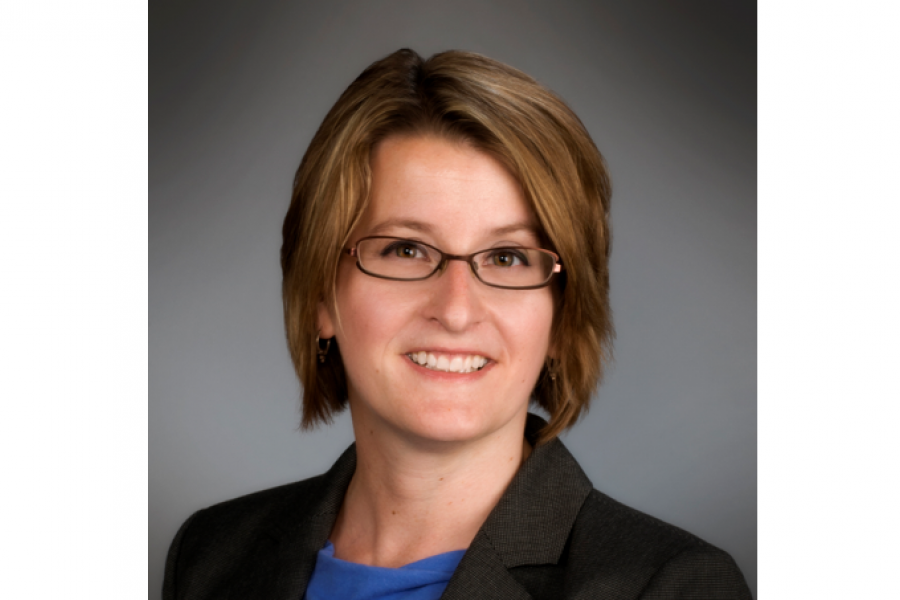
Professor Lisa Strohschein holds dual roles as a Professor in the Sociology Department and Director of Undergraduate Programs at the University of Alberta's Faculty of Arts. Her research focuses on family dynamics and health inequalities, employing longitudinal methodologies to analyze large datasets. She teaches courses on health sociology, mental illness, and socialization, emphasizing sociological perspectives on health distribution and care systems. Her research interests include the interplay between socioeconomic factors and mental health, gender disparities in marital outcomes, and generational shifts in parenting practices. She has published extensively on topics like teen pregnancy correlates, poverty dynamics, and the mental health implications of family structures. Strohschein has received the 2019-20 Killam Annual Professorship and serves as Editor-in-Chief of Canadian Studies in Population, a peer-reviewed journal focusing on demographic research. She also contributes to policy through roles like membership in Statistics Canada's Demographic Statistics Advisory Committee and past presidency of the Canadian Population Society. Her scholarly work bridges theoretical frameworks (life course, stress process theory) with methodological rigor, often using growth curve models and competing risks analysis. Current research trends emphasize cross-national comparisons and applied policy relevance, particularly in understanding how family transitions impact health across the life course.
Jino Distasio is a Professor and Acting Dean of Science at The University of Winnipeg, Department of Geography. He teaches Urban Geography, Cultural Geography, and Social Geography, with courses like GEOG-3413 Urban Revitalization and GEOG-3430 Housing and Neighbourhood Planning . His research focuses on housing and neighborhood development, city planning, urban revitalization, homelessness, mental health, and urban transportation. Teaching Areas : Urban Geography, Cultural Geography, Social Geography Key Collaborations : Institute of Urban Studies (U. of Winnipeg), Housing First initiatives, interdisciplinary teams in public health and social policy His recent publications highlight Housing First interventions, urban policy impacts on homelessness, and social determinants of health. Scientific awards and honors were not explicitly mentioned in the provided text.
Dr. Daniel Dutton is an Associate Professor in the Department of Community Health and Epidemiology at Dalhousie University's Faculty of Medicine, based at the Dalhousie Medicine New Brunswick campus in Saint John. His research focuses on how social environments influence health outcomes and the role of government policies in mitigating these impacts, particularly in areas like poverty, homelessness, and health economics. He holds adjunct roles at the University of New Brunswick (Sociology) and is the Scientific Director of APPTA, a hub bridging aging research and policy. He teaches courses in epidemiology, population health, and statistics. Education: PhD in Community Health Sciences (University of Calgary) MA in Economics (University of Calgary) BA Honours in Economics (Queen’s University) Research Interests: Dr. Dutton examines population-level health determinants, government policy effectiveness, and socioeconomic disparities. His work employs large datasets and econometric models to analyze topics such as homelessness incidence, healthcare cost savings through preventive measures, and the distributional impacts of public spending. Key Contributions: Scientific Director of the APPTA aging and technology hub. Co-founder of the IMPART research collaborative. Author of influential studies on Housing First programs, opioid prescribing patterns, and the fiscal benefits of guaranteed annual income policies. Advising & Grants: Supervises multiple MSc students and has collaborated on grants analyzing healthcare utilization in New Brunswick and Alberta. His work often intersects with policy-making, emphasizing actionable insights from quantitative research. Labs & Teams: Leads the Dutton Research Group, which uses mascot Odin the Saint Bernard to foster team cohesion. Active in interdisciplinary collaborations across public health, sociology, and economics.
Milos Popovic is a Professor and Director at the Institute of Biomedical Engineering, University of Toronto, and serves as Senior Scientist and Director of Research at the Toronto Rehabilitation Institute (KITE), University Health Network. He holds the Toronto Rehab Chair in Spinal Cord Injury Research and Neural Engineering and co-leads the Centre for Research in Advanced Neural Implant Applications (CRANIA). His leadership spans academic, clinical, and translational research domains in neuroengineering and rehabilitation. His research focuses on neurorehabilitation, neuroprosthetics, functional electrical stimulation (FES), brain-machine interfaces, and assistive technologies . He develops physiological control systems and therapeutic robotics to restore motor function after spinal cord injury and stroke. His work integrates biomechanics, signal processing, and human-machine interfaces to innovate rehabilitative solutions. Dr. Popovic's recent publications emphasize electrical neuromodulation, FES therapy for motor recovery, deep brain stimulation for cognitive deficits, and wearable/implantable technologies . The articles reflect a strong trend toward closed-loop systems, translational research, and interdisciplinary innovation in neuroengineering and rehabilitation. Swiss National Science Foundation Technology Transfer Award - 1st place (1997) Engineering Medal for Research and Development, Professional Engineers of Ontario (2008) Elected to the College of Fellows, American Institute of Medical and Biological Engineering (2011) 1st Prize and Best Intellectual Property Award, TiEQuest Business Venture Competition (2012) Morris (Mickey) Milner Award for Assistive Technologies (2013) University of Toronto Inventor of the Year Award (2013) University Health Network’s Inventor of the Year Award (2015) Dr. Popovic has secured significant research funding and leads the Neural Engineering and Therapeutics team at KITE. He co-founded MyndTec Inc. and the Canadian National Spinal Cord Injury Conference, demonstrating strong mentorship, innovation, and national impact. He advises graduate students and postdoctoral fellows in biomedical engineering and rehabilitation sciences. He leads the Rehabilitation Engineering Laboratory and the Neural Engineering and Therapeutics Team at KITE, fostering collaboration across engineering, neuroscience, and clinical rehabilitation. His lab develops advanced neurotechnologies with a focus on clinical translation and commercialization.
Anita Hubley is a Professor at the University of British Columbia's Faculty of Education, Department of Educational and Counselling Psychology, and Special Education (ECPS). She serves as MERM Program Coordinator and directs the Adult Development and Psychometrics Lab. Her work focuses on psychometric test development/validation and quality of life research across adult populations. Education: Ph.D. in Psychology (Human Assessment specialization), Carleton University (1995) M.A. in Psychology (Lifespan Development and Aging), University of Victoria (1991) Pre-doctoral training at Geriatric Assessment Unit (Ottawa) and Neuropsychological Assessment Unit (Ottawa) Her research integrates psychometric theory with practical applications in aging populations, homeless/vulnerably housed individuals, and neuropsychological assessment tools. Key contributions include developing the Memory Test for Older Adults (MTOA), Hubley Depression Scale for Older Adults (HDS-OA), Quality of Life in Homeless and Hard-to-House Individuals (QoLHHI), and Subjective Age Identity Scale (SAIS). Scientific Awards: Killam Teaching Prize (2017) Distinguished Reviewer, Buros Institute of Mental Measurements (2013) She has taught graduate courses in Psychological Assessment, Measurement Principles, Scale Development, and Applied Neuropsychology, emphasizing ethical testing practices and response process research. Her lab's work on test adaptation for marginalized populations has informed international measurement standards.
Raza M. Mirza is an Assistant Professor (Status) at the University of Toronto’s Factor-Inwentash Faculty of Social Work and the Institute for Life Course and Aging. He also serves as the Director of National Partnerships and Knowledge Mobilization at HelpAge Canada, where he contributes to national aging initiatives and policy engagement. His research expertise spans several key areas related to aging, including: Socio-behavioral determinants of health in older adults Aging with chronic illness Barriers and facilitators to aging-in-place The impact of social isolation and loneliness on late-life mental and physical health Medical decision-making processes among older populations Research methods and program evaluation in social work and public health Dr. Mirza has been invited to speak at numerous national and international gerontology and geriatrics conferences, workshops, and symposiums. He has also provided expert consultation to various levels of government on issues concerning the aging population. His work is increasingly focused on knowledge mobilization and intergenerational solutions, as seen in his involvement with initiatives such as Canada HomeShare and a new University of Toronto course designed to build intergenerational connections. He holds a PhD and MSc from the Graduate Department of Pharmaceutical Sciences at the University of Toronto’s Leslie Dan Faculty of Pharmacy, grounding his interdisciplinary approach in both health sciences and social work. While no formal advising or grant details are listed in the provided text, his leadership in national partnerships indicates active engagement in applied research and community-based innovation in aging. His work bridges academic research, public policy, and community practice to improve the well-being of older adults. Dr. Mirza is affiliated with the following entities: Factor-Inwentash Faculty of Social Work, University of Toronto Institute for Life Course and Aging, University of Toronto HelpAge Canada (as Director of National Partnerships and Knowledge Mobilization)
Ying MacNab is an Associate Professor in the Department of Statistics at the University of British Columbia (UBC), Vancouver Campus. She holds an additional affiliation as an Associate Member in the School of Population and Public Health (SPPH). Her research focuses on Bayesian hierarchical modeling, spatial epidemiology, and disease mapping with applications to public health surveillance and aging populations. She has contributed extensively to methodological advancements in Gaussian Markov random fields and spatiotemporal modeling frameworks. Her work bridges statistical theory and practical health challenges, including pandemic-related stress in older adults, opioid treatment outcomes, and infectious disease forecasting. MacNab has collaborated on projects involving mental health assessments (e.g., sleep dysfunction, anxiety/depression in iOAT patients) and has developed novel statistical tools for analyzing spatially and temporally correlated health data. Her research also addresses methodological gaps in coregionalized multivariate models and constrained Bayesian estimation. MacNab's publications reflect a multidisciplinary approach, integrating epidemiological theory with advanced computational methods. Recent trends in her work emphasize dynamic modeling of infection risks, mediation analysis in aging populations, and validation of psychometric scales for health-related stress. She has maintained an active research agenda since the early 2000s, with notable contributions to neonatal health outcomes, injury surveillance, and healthcare quality improvement.
Dr. Nancy L. Sin is an Associate Professor in the Department of Psychology within the Faculty of Arts at the University of British Columbia. She teaches undergraduate and graduate courses in health psychology and supervises students at multiple levels. She is Co-Chair of the Antiracism Task Force for the Society for Biopsychosocial Science and Medicine and a member of the Steering Committee at the UBC Edwin S.H. Leong Centre for Healthy Aging. Previously, she served on the Executive Committee for the American Psychological Association's Division on Adult Development and Aging and established the Diversity Mentorship Program. PhD, University of California, Riverside, 2012 Dr. Sin's research focuses on biological and behavioural pathways linking daily well-being and stress to health. Her work demonstrates that emotional responses to daily stressors are associated with inflammatory, neuroendocrine, and autonomic mechanisms implicated in aging-related conditions like cardiovascular disease. She investigates daily positive events as protective factors for stress processes and health, with particular interest in emotional well-being and aging, stress-sleep cycles, and health equity. Her research spans multiple disciplines including health psychology, gerontology, and social psychology. Analysis of Dr. Sin's recent publications reveals consistent focus on daily stress processes, positive emotions, and health outcomes across the lifespan. Her work increasingly examines pandemic-related stressors, social determinants of health, and health disparities, with strong emphasis on methodological rigor through daily diary and longitudinal approaches. The publications demonstrate interdisciplinary collaboration across psychology, public health, and medicine, with growing attention to diversity, equity, and inclusion in health research. Distinguished Alumni Award, Department of Psychology, University of California, Riverside (2025) Fellow, Gerontological Society of America (2025) Innovative Research on Aging Award (Bronze Award) from the Mather Institute (2021) Michael Smith Foundation for Health Research Scholar (2020) Springer Early Career Achievement Award in Research on Adult Development and Aging (2019) Gerontological Society of America's Behavioral and Social Sciences Student Research Award Editor's Choice article at Annals of Behavioral Medicine Dr. Sin actively supervises undergraduate, MA, and PhD students, with a current focus on Health Psychology graduate students specializing in adult development and aging, stress, and health equity/disparities. Her research has been supported by significant grants as PI or Co-I from the U.S. National Institute on Aging, Social Sciences and Humanities Research Council of Canada, Canadian Institutes of Health Research, Canada Foundation for Innovation, and the Michael Smith Foundation for Health Research. She has established a strong research program examining daily experiences and their health implications across adulthood. Dr. Sin directs the UPLIFT Health Lab (Understanding Pathways Linking Inter- and Intraindividual Factors To Health), which explores psychosocial well-being and biobehavioural mechanisms underlying healthy aging. The lab investigates how daily positive events promote health through lower inflammation, adaptive cortisol profiles, and better health behaviors, with particular attention to how positive emotions buffer stress processes. The lab actively recruits community participants for studies on daily experiences and health, contributing to intervention development for promoting psychological and physical well-being across adulthood.
Professor Laura Funk is a Professor in the Department of Sociology and Criminology at the University of Manitoba, located within the Faculty of Arts. Her work focuses on social and critical gerontology, examining care work, family caregiving, and palliative care policy. She has led multiple SSHRC-funded research teams and participated in Tri-Council grants addressing aging, home care, and family care work. Funk’s research explores how care practices engage broader societal discourses on age, responsibility, and care in contexts of eroding formal supports. Education: PhD in Sociology, University of Victoria (2008) MA in Sociology, University of Victoria (2002) Post-Baccalaureate Diploma in Gerontology, Simon Fraser University (2000) BA (Honours) in Sociology, University of British Columbia (1997) Research Interests: Care work, family/friend caregiving, palliative care policy, service-integrated housing for older adults, and aging in the context of systemic and policy changes. Her work bridges academic inquiry with public advocacy, including op-eds and consultations with Manitoba’s Seniors and Healthy Aging Secretariat. Key Contributions: Funk’s research addresses structural barriers for older adults, including housing access, navigation of formal supports, and the emotional labor of care workers. She has published widely on topics like aggression in care settings, dying at home preferences, and feminist care activism. Recent projects include SSHRC-funded studies on care mobilization and a community-based inquiry into low-income housing supports for older adults. Awards: 2019 Canadian Association of Gerontology Recognition Award 2015 Rh Institute Outstanding Contributions Award 2010 Anselm Strauss Award Teaching & Outreach: Funk teaches courses on aging, qualitative research, and end-of-life care. She is known for mentorship and received a 2023 teaching award from the Arts Student Body Council. Her outreach includes collaborations with Manitoba’s Public Interest Law Centre and community-based projects like Lions Place and Indigenous Seniors Research initiatives.
Dr. Laura Pacheco is an Assistant Professor at the School of Social Work at Memorial University. She holds a BSW and MSW from McGill University and a PhD in Rehabilitation Medicine from the University of Alberta. Her research focuses on reproductive justice, intellectual disability and parenting, structural violence against women with disabilities, neurodiversity in aging, and social justice within health and social service systems. She has conducted post-doctoral work on support needs for parents with intellectual disabilities and has been a clinician, advocate, and program coordinator in parenting services for over 14 years. She teaches courses emphasizing critical social work practice, anti-oppression, and disability studies. Her funded research includes studies on neurodiverse aging (2020–2023) and service pathways for parents with intellectual impairments (2018–2021). She is an executive member of the International Association on the Scientific Study of Intellectual Disability (IASSIDD) and has contributed to international workshops and conferences. Her work bridges academic research with community engagement, advocating for systemic equity and inclusive policies.
Ross Otto is an Associate Professor in the Department of Psychology at McGill University. He holds an office at 2001 McGill College, 711, and can be reached via email at ross.otto@mcgill.ca. His research focuses on understanding the mechanisms underlying reflective versus reflexive decision-making, particularly how cognitive resources, stress, and contextual factors influence effort-based choices. He employs computational modeling, behavioral experiments, and neuroimaging techniques. Notable contributions include studies on stress-induced cognitive avoidance and the neural correlates of effort evaluation. His work is affiliated with the Otto Lab, and he collaborates widely across disciplines such as neuroscience and behavioral economics.
Dr. Zahra Abbasi is an Assistant Professor at the Department of Electrical and Software Engineering, University of Calgary (since 2021), with expertise in designing passive and active RF/microwave sensors for non-invasive real-time detection and monitoring. She holds a PhD in Nanosystems and Microsystems from the University of Alberta (2020) and a postdoctoral fellowship at the Waterloo Microfluidics Lab (University of Waterloo). Her research focuses on sensor systems for environmental, biomedical, and industrial applications, including microfluidic sensing, chipless tags, and wearable devices. Dr. Abbasi’s educational background includes degrees from Iran University of Science & Technology (BSc 2014, MSc 2016) and advanced training in Canada. She chairs IEEE MTT-S/AP committees in Alberta and has received notable awards such as the ASTech Finalist (2024) and Alberta Immigrant Impact Award (2023). Her work emphasizes collaboration across disciplines to address challenges in precision agriculture, healthcare, and environmental monitoring. Her sensor research spans diverse fields: microplastic detection in water, hydrocarbon contamination monitoring, real-time medical diagnostics (e.g., fibrinogen levels), and nutrient assessment in agriculture. Recent advancements include disposable sensors for medical implants and non-invasive hydration tracking for aging populations. Awards Finalist: ASTech Early Career Academic Change Maker (2024) Early Research Excellence Award (Schulich School of Engineering, 2023/2024) Alberta Immigrant Impact Award (2023) Advising & Labs Dr. Abbasi leads the Calgary Sensor Laboratory, fostering innovation in microwave and microfluidic sensor technologies. Her team collaborates on industrial and biomedical projects, emphasizing practical applications of novel sensor designs. While no named advisees are listed, her research group actively engages in multidisciplinary projects.
Frank Russo is a Professor in the Department of Psychology at Toronto Metropolitan University, where he holds the NSERC-Sonova Senior Research Chair in Auditory Cognitive Neuroscience. He leads the Science of Music Auditory Research and Technology (SMART) Lab and holds affiliate and adjunct positions at the University Health Network and the University of Toronto, respectively. Research Interests: Dr. Russo's work lies at the intersection of auditory cognitive neuroscience, music psychology, and rehabilitation. His research explores how humans perceive music and speech, particularly under challenging conditions such as hearing loss or non-native accents. He investigates the cognitive and neural mechanisms of listening effort, emotional speech processing, and the social and therapeutic benefits of music, especially through community choirs and digital interventions. Publication Trends: His recent publications emphasize objective measurement of listening effort using functional near-infrared spectroscopy (fNIRS), music-based interventions for Parkinson’s disease and dementia, vocal and emotional responses to singing, and multisensory integration in beat perception. The work is highly translational, bridging basic cognitive neuroscience with clinical and community applications. Scientific Awards and Honors: NSERC-Sonova Senior Research Chair in Auditory Cognitive Neuroscience Fellow of the Canadian Psychological Association Fellow of Massey College Fellow of the Canadian Society for Brain, Behavior and Cognitive Science Past President of the Canadian Acoustical Association Advising and Grants: Dr. Russo actively mentors students and researchers, as evidenced by his co-authorship with numerous junior colleagues. He has secured major funding through NSERC and industry partnerships, enabling the development of impactful technologies such as hearing aid algorithms, sensory substitution systems, and digital therapeutics. His SingWell project fosters collaboration across academic, clinical, and community sectors. Labs and Teams: He directs the SMART Lab at Toronto Metropolitan University, a hub for interdisciplinary research on music, hearing, and cognition. The lab collaborates extensively with KITE Research Institute, Rehabilitation Sciences at the University of Toronto, and various community organizations focused on aging, hearing loss, and neurodegenerative conditions.
Maria Cherba is an Assistant Professor in Communication at the Faculty of Arts, University of Ottawa. Her work bridges health communication, telemedicine, and Indigenous health equity. Ph.D. in Communication from Université de Montréal (2020) Research Interests span: Cultural and Health Telemedicine and Digital Health Patient Experience and Interpersonal Communication Indigenous Health Advocacy Organizational Communication in Healthcare Psychosocial Support Systems Publication Trends focus on telemedicine implementation, Indigenous health representation in policy, patient-physician interactions in chronic care, and pandemic impacts on end-of-life preferences. Her methodological emphasis lies in qualitative interaction analysis.
Andréanne Sharp, PhD, is Assistant Professor at Université Laval’s Faculty of Medicine, Department of Rehabilitation, where she leads the Clinical and Cognitive Neuroscience research axis. Her program explores auditory and multisensory processing across the lifespan, with emphasis on music perception, hearing loss, cochlear implants and vibrotactile technologies. Research interests: Auditory-vibrotactile interactions and sensory substitution Music cognition and neural plasticity in musicians Aging, hearing impairment and rehabilitation Temporal processing and EEG correlates of perception Clinical translation toward improved prosthetic and therapeutic devices Recent work (2023-2025) combines psychophysics, electrophysiology and qualitative methods to understand how musical experience protects perceptual skills in older adults with hearing loss, how frequency cues modulate auditory illusions, and how COVID-19 public-health measures affected communication in the hearing-impaired community. Sharp’s output appears in high-impact journals including Brain Research , Cerebral Cortex , Ear & Hearing , JSLHR and Psychological Research , demonstrating a trajectory that bridges basic cognitive neuroscience and clinical audiology. She maintains an active interdisciplinary laboratory, mentoring numerous graduate students and collaborating with engineering and rehabilitation teams to develop vibrotactile gloves and other sensory-augmentation devices. Grant and funding details are not disclosed in the supplied text.