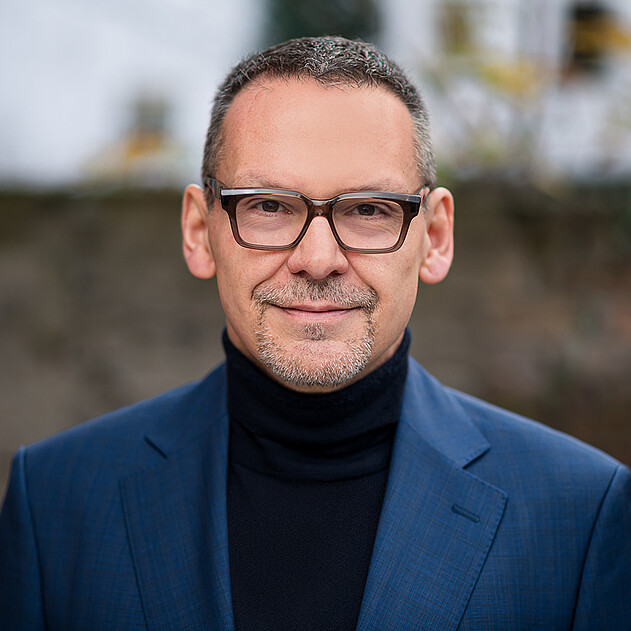
Wolfgang R. Mann is a Professor of Philosophy and Director of Undergraduate Studies at Columbia University. He joined the Philosophy Department in 1992 and holds degrees from Princeton University (A.B., 1978; Ph.D., 1987). His research spans Ancient Philosophy, German Idealism, and Metaphysics, with a focus on theories of argumentation (logic/rhetoric), metaphysical contrasts in antiquity, and ethical concepts of freedom. He also explores English/German Romanticism (Wordsworth, Hölderlin) and the reception of classical antiquity in 19th-century thought. His work frequently bridges philosophical analysis with historical and literary methodologies. Professor Mann’s publications include The Discovery of Things: Aristotle’s Categories and Their Context (2000) and co-edited volumes like Oxford Studies in Ancient Philosophy (2011). His articles address topics such as Stoic paradoxes, Seneca’s ethical writings, and the intersection of ancient philosophy with political figures like Helvidius Priscus. His research emphasizes interdisciplinary approaches, blending metaphysics, ethics, and classical textual analysis. Though no specific awards are listed, his contributions to ancient philosophy and historiography reflect sustained scholarly engagement. His advising and grants focus on mentoring students in these areas, though specific grant details are not provided. His work contributes to both academic philosophy and the broader humanities through its rigorous historical contextualization.
Martin Hägglund is the Birgit Baldwin Professor of Comparative Literature and Humanities at Yale University, with a secondary appointment in the Department of Philosophy. He holds a Ph.D. in Comparative Literature from Cornell University (2011) and Philosophy from Leipzig University (expected 2026). His work bridges Post-Kantian philosophy, critical theory, and modernist literature, with notable books including This Life: Secular Faith and Spiritual Freedom (2019), which won the René Wellek Prize, and Dying for Time: Proust, Woolf, Nabokov (2012). Research focuses on temporality, mortality, and freedom, engaging thinkers like Heidegger, Marx, and Hegel. His writing explores secular ethics, political Marxism, and the interplay between philosophy and literature. Hägglund has held global appointments, including at Sorbonne University and invited professorships in Bonn and Cornell. Awards include the Guggenheim Fellowship (2018) and Myrdal Grand Prize (2024). Publications span over 60 articles and essays, addressing topics from Kierkegaard’s existentialism to Knausgaard’s secular confession. His current projects include The Mortality of the Soul and I Care, Therefore I Am . Teaching emphasizes Heideggerian thought, narrative temporality, and literary theory. Awards and fellowships include Harvard Society of Fellows membership (2009–2012), Berlin Prize (2024), and multiple honorary distinctions. His interdisciplinary approach unites philosophy, literature, and political theory, influencing debates on secularism, capitalism, and freedom’s material conditions.
Matthew Charles is a Senior Lecturer in Cultural and Critical Theory at the University of Westminster's School of Humanities, where he has taught since 2010. He serves as Senior Tutor for the School of Humanities and is a Senior Fellow of The Higher Education Academy. His academic journey includes previous positions at Kingston University's Centre for Modern European Philosophy and Middlesex University's Department of Philosophy. Charles earned his BA and MA in Philosophy and Literature from the University of Warwick and completed his PhD at Middlesex University's Centre for Research in Modern European Philosophy (CRMEP). His scholarly trajectory reflects deep engagement with Critical Theory, particularly the work of Walter Benjamin and the Frankfurt School. His research bridges philosophical inquiry with educational practice, focusing on how Benjamin's thought informs contemporary pedagogical theory and resistance to neoliberal tendencies in higher education. Charles' extensive publication record reveals a consistent exploration of Walter Benjamin across multiple dimensions. His work demonstrates how Benjamin's early writings on youth and education connect to his later materialist historical concepts. A dominant theme across his scholarship is the application of Benjamin's critical theory to contemporary educational challenges, particularly in developing radical approaches to teaching and learning within the current academic landscape. His research shows particular concern with the impact of market-driven reforms on higher education, as evidenced by his influential 2018 article 'Teaching, In Spite of Excellence: Recovering a Practice of Teaching-led Research.' As an academic leader, Charles has served as Course Leader for the MA in Cultural and Critical Studies at Westminster and as External Examiner for various MA programs at the University of Brighton and University of Nottingham. He has supervised multiple PhD students to completion on topics related to modernist literature and philosophy, and has examined doctoral work at several institutions. He actively participates in the Institute for Modern and Contemporary Culture and Literary Studies research groups at Westminster, maintaining an influential presence in critical theory circles through his website benjaminpedagogy.wordpress.com and ongoing conference participation.
Andrew Cutrofello is a Professor of Philosophy at Loyola University Chicago since 1994. He holds a PhD from Northwestern University, where he studied under John McCumber. His work focuses on Kantian philosophy, the analytic-continental divide, and the philosophical interpretation of Shakespeare. He has served as editor of the Continental section of Philosophy Compass and held roles in professional philosophical societies. Education: PhD in Philosophy from Northwestern University. Research expertise includes metaphysics, existentialism, and continental traditions. Notable publications explore Plato’s Parmenides , Hamlet’s existential themes, and bridging philosophical divides. Active in research groups like the History of Philosophy Roundtable and Phenomenology Research Group. Publications span monographs and edited volumes addressing core philosophical debates. His approach emphasizes historical context, comparative analysis, and interdisciplinary engagement. No specific awards listed, but significant contributions to continental philosophy pedagogy and scholarly discourse.
Julia Gelshorn is a full professor of modern and contemporary art history at the University of Fribourg , Switzerland, since 2013. She specializes in strategies of appropriation, repetition, and translation in art, with a focus on 21st-century practices and 18th-century French art theory. Her research explores artistic subjectivity, realism, and the intersection of art, politics, and economy. Education: Art History, Theater Science, and Italian Literature at the Universities of Cologne and Bern. Key Roles: Post-doctoral fellow at the German Center for Art History (2006-2008); visiting professor at HfG Karlsruhe (2008-2010); professor at Universities of Vienna (2010-2011) and Hamburg (2011-2013). Research Interests center on: (1) artistic appropriation as a critical and affective tool; (2) realisms across historical contexts; (3) artist interviews as legible texts; (4) art’s engagement with political and economic systems; (5) theoretical frameworks for visual culture. Her current Real Abstractions project (2023-2027) rethinks realism through social abstractions like financialization and digital networks. Scientific Contributions include the Lazarus Prize from the University of Bern’s Faculty of Humanities (2003) for her dissertation on Richter and Polke. Her publications span books like Aneignung und Wiederholung (2012) and edited volumes on artists such as Jean Tinguely (2016), while her recent articles address Martin Kippenberger, Rosemarie Trockel, and Benjamin Buchloh’s historiography. Notable Projects include the completed SNSF-funded Cinema in Art and Literature (2016) and the ongoing Real Abstractions initiative, which also involves a traveling exhibition and interdisciplinary workshops.
Estelle Ferrarese is a Professor of Moral and Political Philosophy at the Department of Philosophy, University of Picardy Jules Verne, and a Senior Member of the Institut Universitaire de France (class of 2022). She is the principal investigator of the International Research Network (IRN) 'The Norms of Life,' a collaborative project involving institutions such as Harvard University, Johns Hopkins University, and the University of Cape Town. Her academic affiliations reflect a strong international presence, with visiting positions at the New School, Humboldt-Universität, and Goethe-Universität. Professor of Moral and Political Philosophy, University of Picardy Jules Verne (2016–present) Senior Member, Institut Universitaire de France (2022–) Principal Investigator, IRN 'The Norms of Life' (2023–2027) Former Researcher, Marc Bloch Center, Berlin (2014–2016) Former Professor, University of Strasbourg (2012–2016) Her research lies at the intersection of critical theory, feminist philosophy, and political theory, with a focus on vulnerability, public space, forms of life, and ethical consumption. She critically engages with thinkers such as Adorno, Habermas, Nancy Fraser, and Agamben, exploring how subjectivity, recognition, and care are shaped within capitalist and democratic frameworks. Her methodological approach combines continental philosophy with social theory to interrogate normative structures in contemporary society. The trend in her recent publications reveals a deepening exploration of emotional and bodily expressions—such as sobs, gémissements (moans), and physical vulnerability—as political acts and ethical responses. Her work bridges philosophical abstraction with lived experience, particularly in contexts of care, gender, and democratic participation. Themes of reification, micrology, and the commodification of virtue recur across her writings, signaling a sustained critique of neoliberal rationality. Senior Member, Institut Universitaire de France (2022) Alexander von Humboldt-Stiftung Fellow (multiple appointments: 2003–2006, 2008, 2013, 2017, 2024) Hoover Fellow, University of Louvain-La-Neuve (2006) Writing Grant, National Book Centre (2006) Lavoisier Scholarship (2002–2003) Gastprofessur, Goethe-Universität Frankfurt (2015) Visiting Professor, New School for Social Research (2006–2007) Ferrarese has supervised and collaborated with numerous scholars, though specific advisees are not listed in the provided text. She has secured significant research funding through fellowships and institutional grants, including support from the Alexander von Humboldt Foundation and the French CNRS. Her editorial work includes directing special issues on 'The Politics of Vulnerability' and 'Forms of Life,' as well as co-editing volumes with leading philosophers like Sandra Laugier. She is actively involved in shaping contemporary debates in critical theory and feminist philosophy through publications, international collaborations, and leadership in transnational research networks. She leads the International Research Network 'The Norms of Life,' which brings together scholars from North America, Europe, and Africa to examine the normative dimensions of everyday life forms. This project reflects her commitment to interdisciplinary and globally engaged philosophy. She has also been affiliated with research centers such as CURAPP-ESS and has collaborated with institutions including the Maison Française d’Oxford and CUNY.
Sebastian Truskolaski is a Lecturer in German Cultural Studies at the University of Manchester since 2021, previously teaching at Trinity College Dublin and King's College London. He holds a PhD from Goldsmiths, University of London (2016) and a fellowship from the Alexander von Humboldt Foundation. His research focuses on intersections between modern art, literature, and philosophy, particularly Kant to Derrida, Frankfurt School aesthetics, and translation theory. Notable works include *Adorno and the Ban on Images* (2021), translations of Benjamin's *The Storyteller* (2023), and co-edited volumes on Walter Benjamin's philosophy. Currently developing a monograph on Hölderlin and communal theory. Teaches across German Studies and related disciplines, supervising PhDs in critical theory, philosophy, and literature. Editor for *New Benjamin Studies* (Brill-Fink) and guest editor of *Anthropology & Materialism* (2017). Media contributions include BBC interviews and podcasts discussing Adorno and Benjamin.
Jürgen Spitzmüller is a Professor and Deputy Head of the Department of Linguistics at the University of Vienna. His academic work focuses on sociolinguistics, metapragmatics, and language ideologies, with a particular emphasis on discursive practices in digital and institutional contexts. Current role: Deputy Head, Department of Linguistics Teaching: Applied Linguistics, Theory of Science, Yiddish Studies Email: juergen.spitzmueller@univie.ac.at His research explores the intersection of language ideologies, social positioning, and discursive practices. Key areas include typographic variation as a social phenomenon, the role of multimodal elements in communication, and the construction of public spheres in digital contexts. Recent publications highlight trends in analyzing graphic variation, the socio-political implications of text design, and the interplay between language and cultural identity. His work often bridges theoretical frameworks from sociolinguistics, discourse analysis, and media studies. Spitzmüller’s teaching includes courses such as Introduction to Applied Linguistics , Methods of Applied Linguistics , and specialized seminars on Yiddish and language ideologies. He has also contributed to academic discourse through editorial work and collaborative research projects.
Anders Kristian Strand is an Associate Professor at the University of Bergen's Department of Linguistic, Literary and Aesthetic Studies, part of the Faculty of Art, Music, and Design. His research focuses on literary theory, German and classical literature, translation studies, and modernist thought. He holds a PhD from the University of Bergen (2008) and has supervised doctoral theses such as *With His Blood He Wrote* (2017). Strand’s work explores motifs like decay, memory, and nature across authors like Wordsworth, Proust, Adorno, and Hölderlin. He frequently publishes in journals like *Norwegian Journal of Literary Studies* and contributes to academic editing, including leadership roles in journal editions. Strand also engages in public lectures and media appearances, such as his 2024 podcast on Joseph Conrad’s *Heart of Darkness*. His research spans interdisciplinary areas including cultural theory, aesthetic philosophy, and the history of literary criticism. Key areas of expertise include the Faustian motif, romanticism, and the intersection of emotion and literature in works by Rilke and Woolf. Strand’s publications analyze textual action in Williams’ *Paterson*, Adorno’s hermeneutical approaches, and the role of rivers in classical and modern texts. He collaborates with institutions like the Arkadia Project and has presented at venues ranging from academic colloquia to the Bergen Public Library’s literary events.
Christa de Kleine is a Professor in the School of Education at Notre Dame of Maryland University. She has been a faculty member since 1998 and served as the coordinator of the university’s M.A in TESOL program since its development in the late 1990s. Her teaching encompasses language acquisition and linguistic diversity in both the MA TESOL program and the Ph.D. program for Instructional Leadership for Changing Populations. Education: Ph.D., M.Phil, and M.A. in Linguistics from the Graduate Center of the City University of New York (CUNY); M.A. in English Language and Linguistics from the University of Groningen, the Netherlands. Her research focuses on Creole English speakers in ESL programs, linguistic diversity in education, and the impact of standard language ideology. She has collaborated extensively with Dr. Rachele Lawton on studies of Generation 1.5 students and community college writing instruction. She is principal investigator on a grant-funded project examining English language teaching practices in Panama, informed by its postcolonial context. Notable scientific awards include the 2020 Maryland TESOL Teacher of the Year, multiple Faculty Research and Development Awards from Notre Dame of Maryland University (2016, 2013), NIH grant funding (2007), and Sociological Initiatives Foundation support (2004). She has presented nationally and internationally on topics related to language acquisition and linguistic diversity.
Dr. Edyta Frelik is a Senior Lecturer at the Department of American Studies, Faculty of Languages, Literatures and Cultures, Maria Curie-Skłodowska University. Her academic career spans research and teaching in American art history, visual culture, and interdisciplinary intersections between literature and visual arts. She holds a PhD in Humanities (UMCS, 2013) and has been recognized with prestigious awards including the Terra Foundation Award (2013) and Georgia O’Keeffe Museum nomination (2018). Her research focuses on: Modernist artists' intellectual engagements Interactions between textual and visual media Anti-intellectualism in American art and culture Gender dynamics in avant-garde practice Relationships between science/technology and artistic expression Recent publications highlight her expertise in artists like Georgia O’Keeffe, Ad Reinhardt, and Frank Lloyd Wright, with thematic clusters in: American cultural identity formation Artistic self-representation strategies Transatlantic modernist dialogues Architectural language theory Visual epistemology Post-historical cultural analysis Scientific recognitions include: 2013 : Terra Foundation Award for Best Essay by International Scholar 2018 : Georgia O’Keeffe Museum Book Prize Nomination 2022 : NCN MINIATURA 5 Grant Dr. Frelik has organized international conferences like Wordstruck (2015) and actively participates in academic exchanges across Europe and North America.
Prof. Dr. Markus Hilgert is currently serving as President of the Berlin University of the Arts (since April 2025). Prior to this role, he was the Executive Director and Secretary General of the Cultural Foundation of the German Federal States (2018–2025) and Director of the Museum of the Ancient Near East at the Pergamon Museum (2014–2018). He held a professorship in Ancient Near Eastern Studies at Heidelberg University (2007–2014) and has been an honorary professor at Heidelberg, Marburg, and Freie Universität Berlin since 2014, 2015, and 2017 respectively. Additionally, he has served on the board of the German Commission for UNESCO since 2018. Research Interests : Hilgert's work bridges Ancient Near Eastern Studies , Cuneiform Studies , and Epistemology , focusing on the materiality of writing, cultural heritage, and interdisciplinary approaches to understanding ancient knowledge systems. He explores the intersection of objects, science, and politics, particularly in museum contexts and cultural property management. Publication Trends : His scholarly output spans the analysis of Ur III administrative texts, theoretical frameworks for material culture, and critical reflections on museum practices. Key themes include epistemology of ancient writing , cultural heritage responsibilities , and interdisciplinary methodologies .
Samuel Weber (b. 1940) is a distinguished American philosopher, literary theorist, and psychoanalyst. He holds the Paul de Man Chair at The European Graduate School / EGS and the Avalon Foundation Professor of Humanities at Northwestern University , where he co-directs the Paris Program in Critical Theory. His interdisciplinary work spans psychoanalysis , media studies , theatre theory , and deconstruction , with a focus on the Frankfurt School and French poststructuralism . Weber’s research interrogates the politics of institutions (e.g., University and Discipline Formation ), media’s role in identity construction , and theatricality as a structural metaphor for understanding modernity. His seminal works include Return to Freud , Institution and Interpretation , and Benjamin’s Abilities , where he explores iterability and Benjamin’s conceptual style . He has translated foundational texts by Jacques Derrida ( Limited Inc ) and Theodor Adorno ( Prisms ), and co-founded the journal Glyph , instrumental in introducing the Bakhtin circle to the West. His career bridges academia and practice, having worked extensively as a dramaturge in German opera houses.
Jeroen Dewulf holds the Queen Beatrix Professorship in Dutch Studies at the University of California, Berkeley, within the Department of German. He is also a Professor at Berkeley’s Folklore Program and serves as Faculty Academic Director of Berkeley Study Abroad. Director of Center for Portuguese Studies Director of Austrian Studies Program Director of BENELUX Program at UC Berkeley Chair of UCEAP Faculty Directors group Member, UC Berkeley International Activities Coordination Education: PhD in German Literature (University of Bern, Switzerland), MA in Portuguese Studies (University of Porto, Portugal), BA in Germanic Philology (University of Ghent, Belgium). Research Interests: Focus on Dutch and Portuguese colonial/postcolonial history, literature, and culture; transatlantic slave trade; Black cultural and religious traditions in the Americas; German literature with emphasis on Swiss authors. Publications span Atlantic Studies, African diaspora, and Lusophone/Dutch connections. Scientific Awards: Hellman Family Faculty Fund (2010) Robert O. Collins Award in African Studies (2012) John Gilmary Shea Prize (2023) He has served as visiting professor at LMU Munich, University of São Paulo, and UCL London. Affiliated with UC Berkeley’s Center for African Studies and Center for Latin American Studies, as well as University of Lisbon’s Center of History.
Arne Ziegler is a full Professor at the Institute of German Studies within the Faculty of Humanities at the University of Graz, Austria. His academic career spans over two decades, with current leadership of the Austrian Science Fund (FWF)-supported Special Research Programme 'German in Austria' (DiÖ), running from 2016 to 2026. He maintains active roles in international academic governance and editorial boards. Professor Ziegler's research centers on grammatical variation in Standard German , with particular emphasis on Austrian German dialects, urban sociolinguistics, and youth language phenomena. His work bridges theoretical linguistics and practical applications, examining how regional, social, and historical factors shape language structures. Key contributions include the development of the 'Variant Grammar of Standard German' – a comprehensive digital reference work documenting areal grammatical differences across German-speaking regions. Analysis of his recent publications reveals consistent focus on urban language dynamics, grammatical variation patterns, and reference grammar development. His work demonstrates methodological innovation through quantitative analysis of spoken interaction, spatial distribution mapping of linguistic features, and interdisciplinary approaches combining sociolinguistics with historical text analysis. The 'German in Austria' project represents the cornerstone of his current research, investigating language variation, contact phenomena, and speaker perception across Austria. Professor Ziegler has secured significant competitive funding including three major FWF projects: 'German in Austria' (2016-2026), 'Youth language(s) in Austria' (2013-2016), and 'Variant Grammar of Standard German' (2015-2018). These initiatives involve extensive collaboration with researchers across German-speaking countries and support large-scale empirical investigations into contemporary language use. He holds prominent leadership positions including Chair of the International Association for German Studies (IVG) since 2000, Chair of the Society for German Language History since 2008, and editorial roles for 'Technical language' (International Advisory Board) and 'Contingentia' (Editorial Board). His academic service extends to co-editing six major book series including 'Writings on the German Language in Austria' (Peter Lang) and 'Lingua Historica Germanica' (de Gruyter), significantly shaping publication venues for German linguistic research.