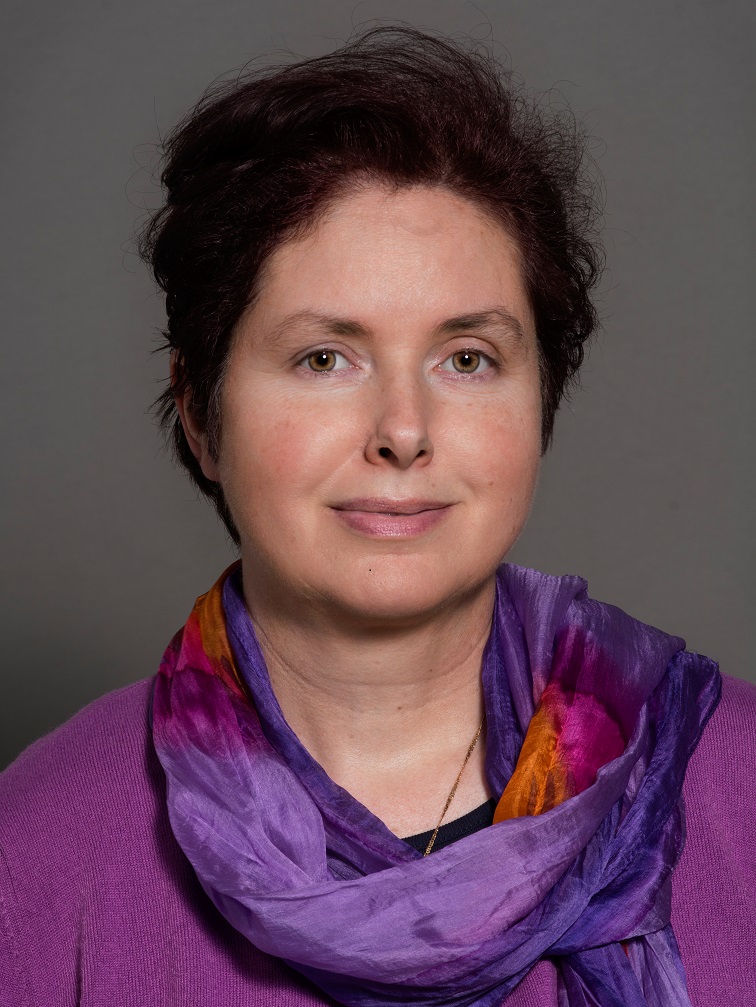
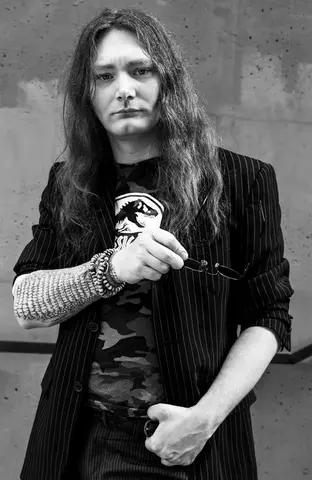
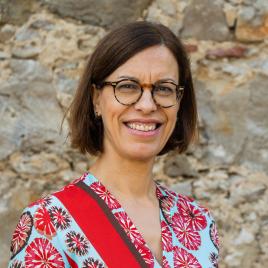
Rita Brdar-Szabó is a Professor at the Institute of Germanic Studies , Eötvös Loránd University, specializing in German Linguistics. Her research focuses on cognitive linguistics, particularly the interplay between metonymy, metaphor, and multimodal discourse across languages and cultures. Research Interests: Rita's work spans figurative language analysis, cross-linguistic comparison, and cultural models. She investigates metonymic indeterminacy, multimodal communication, and the cognitive frameworks shaping linguistic expressions in domains like emotions, medical terminology, and proverbs. Publication Trends: Recent articles highlight her expertise in Croatian and Hungarian metaphorical systems, multimodal metonymy, and computational approaches to proverb analysis. Themes include cultural relativity in figurative language, metonymic networks, and the semiotic mediation between sensory experiences and symbolic systems. Contact: Email: szabo.rita@btk.elte.hu Address: Room 203, Rákóczi út 5, Budapest
Prof. Dr. Dorothee Wieser serves as Professor of Didactics of German Literature at Humboldt University of Berlin's Faculty of Languages and Literature, Institute of German Literature since October 2024, following her professorship at TU Dresden (2014-2024) and visiting professorship at HU Berlin (2011-2014). Her academic journey includes First State Examination in German and Biology (1994-2000) from Jena, Urbino and Göttingen; Second State Examination (2001-2003); and doctorate from TU Berlin (2007). Wieser's research centers on German Didactics with emphasis on knowledge transfer in literature classes, literary understanding processes, and discursive practices. Her work explores metaphor comprehension in literary contexts, narrative mediation as threshold concepts, and digital media integration in German instruction, extending to inclusive education frameworks and interdisciplinary extracurricular learning. Current projects include NarraTeach (narrative mediation in literature teaching) and DFG Network 'i-Functions of Linguistic Signs' (2025-2028), building upon completed DFG/BMBF-funded initiatives like LiMet (metaphor understanding) and TUD-Sylber (teacher training). Academic service includes IQB consultancy since 2011, editorial board membership for Forum Literacy Research since 2015, and Didaktik Deutsch editorial team participation since 2016. She supervises research assistants Dr. Stefan Born and Dr. Antonia Wenzel while teaching summer 2025 courses including 'Introduction to German Didactics' and 'Literary Understanding in Task Construction'.
Kathlyn Cooney is a Professor in the Department of Near Eastern Languages and Cultures at University of California, Los Angeles. She specializes in Egyptian art and archaeology with particular focus on 21st Dynasty funerary practices, coffin reuse strategies, and gender studies in ancient Egypt. Ph.D. in Egyptian Art and Archaeology, Johns Hopkins University (2002) B.A. in German and Humanities, University of Texas at Austin (1994) Her research explores the socioeconomic dimensions of funerary arts, craft specialization patterns, and gender dynamics in both governance (Hatshepsut studies) and funerary contexts. She has authored several influential books including Recycling for Death (2024), Ancient Egyptian Society (2022), and The Cost of Death (2007). Publications demonstrate consistent engagement with coffin reuse patterns (2018), funerary economy (2012), and gender transformation in death contexts (2010). Recent work analyzes 21st Dynasty coffin modifications and their sociohistorical implications. She teaches courses on ancient Egyptian civilization, art and architecture, and gender/power dynamics at both undergraduate and graduate levels. Active in public scholarship through lectures, book signings, and media appearances, she maintains a visible academic presence through platforms like Academia.edu (48,929 public views, Top 4% scholar).
Marco BRUSOTTI is an Associate Professor of History of Contemporary Philosophy (SSD: M-Fil/06) at the University of Salento, affiliated with the Faculty of Letters and Philosophy, Languages and Cultural Heritage and the Department of Humanistic Studies. He holds a PhD from TU Berlin and habilitation from the same institution. His research focuses on Nietzsche and Wittgenstein, intercultural hermeneutics, and philosophical methodology. He directs the University of Salento's research unit for the PRIN 2009 project on Nietzsche and leads activities in the Interuniversity Center 'Colli Montinari' for Nietzsche studies. He serves on editorial boards for Nietzsche-Studien, Monographien zur Nietzsche-Forschung, and Nietzsche Online. He chairs the Nietzsche Society and advises the Friedrich Nietzsche Foundation. His academic journey includes roles at TU Berlin and LMU Munich before returning to Italy via the 'Rientro dei Cervelli' program in 2004. His research explores Nietzsche's philosophy of culture, Wittgenstein's ethnological perspectives, and the interplay between philosophy and literature. Key awards include the 1995 Joachim-Tiburtius-Preis. His work bridges European intellectual history with contemporary philosophical debates, emphasizing comparative approaches and cultural interpretation.
Martin Atherton is an academic affiliated with the University of Central Lancashire (UCLan), specializing in Deaf culture, disability studies, and social history. His work explores themes such as leisure practices within Deaf communities, historical attitudes toward disability, and the role of sports in fostering social cohesion. Research interests include Deaf identity formation, the impact of historical policies on marginalized groups, and the intersection of sports with cultural identity. He has published extensively on topics ranging from the social role of deaf clubs to the hidden histories of football events like the 1966 World Cup trophy theft. Key contributions include analyzing barriers to professional opportunities for deaf individuals, examining the legacy of the 1834 Poor Law Amendment Act, and documenting the cultural significance of sports in Deaf communities. His work bridges historical analysis with contemporary social issues, emphasizing marginalized voices in academic discourse.
Dr. Anne Wienholz is a Researcher at the Institute for German Sign Language (IDGS) within the Department of Language, Literature, and Media, University of Hamburg's Faculty of Humanities. She works on DFG-funded projects focused on experimental sign language research. Her research spans sign language linguistics, psycholinguistics, and neurolinguistics. Key interests include sentence processing in German Sign Language (DGS) and American Sign Language (ASL), language acquisition in deaf children, pronominal reference resolution, and age-of-acquisition effects. She employs eye tracking, ERP, and experimental methodologies to investigate cognitive and neurophysiological mechanisms. Analysis of her 12 publications (2018-2025) reveals consistent experimental investigations of sign language syntax, reference resolution, and developmental trajectories. Work frequently compares DGS and ASL, examining adjective placement, anaphora, and age effects through integrated behavioral and neurophysiological approaches. Dr. Wienholz contributes to DFG projects advancing sign language resources including the DGS Corpus and specialized dictionaries. These grants support corpus development and experimental infrastructure at the IDGS. She is affiliated with the Experimental Sign Language Laboratory (EGS-Labor), utilizing eye tracking and EEG. The IDGS develops critical resources like the Digital Dictionary of German Sign Language (DW-DGS) and domain-specific lexicons for health, psychology, and social work.
Christoph Lüth is a Professor of Computer Science at the University of Bremen and Deputy Head of the Cyber-Physical Systems research group at the German Research Center for Artificial Intelligence (DFKI) since 2006. His work bridges theoretical foundations with practical applications in advanced systems engineering, focusing on provably correct software and program verification. Key affiliations: DFKI Bremen , University of Bremen Research areas: Systems Engineering, Robotics, Hardware Security, Formal Methods Projects: PROTECT (secure systems), EASEPROFIT (post-quantum protocols), DI-OCDCPro (open-source chip design), SIGN-HEP (secure HSM development) His recent publications highlight trends in formal verification of binary code, memory protection in RISC-V architectures, and open-source hardware evaluation. At the University of Bremen, he teaches functional programming and programming language theory. Contact: Christoph.Lueth@dfki.de
Erika Raniolo is a Contract Professor of Glottology and Linguistics at the University of Catania 's Special Teaching Structure of Ragusa. She holds a permanent position as Tenured French Language Teacher (AA24) at the G. Curcio Higher Education Institute in Ispica since the 2024/2025 academic year. Her academic journey includes a PhD in Literary, Philological-Linguistic, and Historical-Philosophical Studies (University of Palermo, 2021) and advanced degrees in European and Non-European Languages (Catania, 2013) and Comparative Studies (Catania, 2011). Education: PhD in Literary, Philological-Linguistic, and Historical-Philosophical Studies (2021, University of Palermo) Master's in European and Non-European Languages and Cultures (2013, University of Catania) Bachelor's in Comparative Studies (2011, University of Catania) Research Interests center on poetic translation between sign and spoken languages, onomastics in signed languages, labializations in LIS, and teaching vocal languages to deaf individuals. She explores multimodal communication and sensory linguistic competence through comparative analysis of LIS (Italian Sign Language) and LSF (French Sign Language). Publications demonstrate expertise in: translating poetry through embodied perspectives; tactile sign language (LISt) for deafblind education; name signs in LIS; labialization studies; medical communication between deaf and hearing people; and pandemic-era sign language translation. Her work spans journal articles, book chapters, and a monograph on sign language poetry. Key Conferences: 2024: Accessibility and Cultural Heritage (Catania) 2023: Alterity in Poetry (Catania); Vertical Curriculum in English (Torino) 2022: LIS/LSF Comparative Study (Palermo); Tactile LIS (Catania) Professional Contributions include a Research Grant (2022/2023) on LIS/LSF in Sicilian cultural heritage, teaching LIS and French at the University of Catania for 5 consecutive academic years, and collaborative work with institutions like CNRS Paris, Université d'Ottawa, and BAICR Cultura della Relazione. She serves as a certified LIS interpreter (ANIMU #293) and holds advanced language certifications in French (C2), English (C1), German (B1), and Spanish (B1).
Barbara Soukup-Kirchner is an Assistant Professor for the Sociolinguistics of German in Austria at the Department of German Studies , University of Vienna. Her work bridges sociolinguistics, linguistic landscaping, and cognitive approaches to language variation. She leads the Sparkling Science 2.0 project 'VisibLL – Students explore the (un)observable multilingualism of Vienna's linguistic landscape' and has directed the Austrian Science Fund (FWF) project 'ELLViA – English in the linguistic landscape of Vienna, Austria' (V394-G23).
Berenike Herrmann is a Professor in the Faculty of Linguistics and Literary Studies at the University of Bielefeld, Germany. She is affiliated with the Department of German Studies and the Department of Literary Studies, and actively contributes to interdisciplinary research through centers such as the Bielefeld Center for Data Science (BiCDaS) and the Center for Uncertainty Studies (CeUS). She leads major research projects within Collaborative Research Centers SFB 1288 and SFB 1646, focusing on comparative literature and linguistic creativity. Faculty of Linguistics and Literary Studies Department of German Studies Department of Literary Studies Collaborative Research Center 1288 – Subproject E06 SFB 1646 – Project A05 Bielefeld Center for Data Science (BiCDaS) Center for Uncertainty Studies (CeUS) Her research spans computational stylistics, data humanities, German-Swiss literature, affect and emotion, metaphors, and social reading practices. She employs digital methods to analyze literary texts and reader responses, bridging traditional literary scholarship with computational approaches. Her work emphasizes comparative frameworks, national literature formation, and the impact of digitality on contemporary literary culture. The 15 most recent articles reflect a strong interdisciplinary trend, combining literary theory with data science, cognitive linguistics, and affect studies. Key themes include computational analysis of style and creativity , emotional dynamics in literature , metaphorical structures , and digital reading practices . The research is characterized by methodological innovation, using metrics and models to study linguistic and literary phenomena in both historical and contemporary contexts. Deputy Chairwoman, Board of Literary Studies Deputy Chair, Library Commission Member, IKM Officers (with Prof. Dr. Maximilian Benz) Voting Member, Linguistics Department Member, BiSEd (Faculty of Linguistics and Literature) She is involved in academic governance and digital infrastructure, advising on library policy, research data services, and curriculum development. She is the module responsible for 'Literature in the present: Culture, media, digitality' (23-GER-PLit2_a), indicating active teaching and program leadership. Her projects are supported by third-party funding, particularly through the German Research Foundation (DFG), and she collaborates across disciplines, especially at the intersection of humanities and data science. Berenike Herrmann is embedded in several interdisciplinary research environments, including the Collaborative Research Centers 1288 and 1646, the Bielefeld Center for Data Science (BiCDaS), and the Center for Uncertainty Studies (CeUS). These labs and teams foster innovative, cross-disciplinary approaches to literary and linguistic research, combining traditional hermeneutics with computational modeling and data-driven analysis.
Caroline L. Rieger is an Associate Professor at the University of British Columbia’s Department of Central, Eastern, and Northern European Studies, within the Faculty of Arts. Her expertise lies in applied linguistics, cultural studies, and intercultural communication. She holds an M.A. from the Universität Essen (1992) and a PhD from the University of Alberta (2000). Rieger’s research focuses on language in use, particularly pragmatics, sociolinguistics, and language pedagogy, with notable contributions to intercultural competence and politeness studies. Her teaching spans German language courses (all levels), applied linguistics, and graduate seminars on second language acquisition. Rieger emphasizes constructivist learning, fostering curiosity and critical thinking in students. She has authored over 30 publications, including works on translation pedagogy, discourse analysis, and sign language perceptions in medical education. Current research projects include politeness studies, translation, and political discourse analysis. She has presented at international conferences such as the International Pragmatics Conference and the Canadian Association of University Teachers of German. Her work bridges theoretical insights with practical applications in language education and cross-cultural communication.
René Porschen is a doctoral candidate and lecturer in the Department of Literary Studies at the Faculty of Arts, University of Erfurt. He is affiliated with the Chair of Modern English Literature and teaches courses on accessible language, stupidity as a literary motif, and speculative fiction. His academic work bridges literary studies, ecocriticism, and speculative thought. Research Interests: His research focuses on paleopoetics—the literary and cultural representation of dinosaurs and prehistoric life—and its intersections with deep time, anthropocentrism, and nonhuman agency. He explores speculative fiction, cosmic horror, and weird fiction, particularly through the lens of H.P. Lovecraft and Arno Schmidt. His work also investigates accessible language (e.g., easy language) as a poetic and political tool, and the utopian potential within dystopian narratives. The most recent publications and lectures reflect a strong engagement with speculative materialism, stupidity as an epistemological stance, and interdisciplinary reading methods. His articles and creative works span literary criticism, cultural journalism, and prose fiction, often centered on the boundaries of knowledge, language, and perception. Scientific Engagement: Member, Junior Research Group "Texts. Signs. Media," University of Erfurt Member, Erfurt Network for New Materialism (ENNM) Member, Society of Arno Schmidt Readers e.V. Member, German Lovecraft Society Member, Theater im Palais e.V. and Friends of the Blue Stage e.V. Teaching and Advising: René Porschen has co-taught seminars on accessible literature and the motif of stupidity. While no formal students are listed, his role as a lecturer and doctoral researcher suggests mentorship within graduate and research groups. He has contributed to interdisciplinary initiatives focused on reading strategies and accessible communication in literature. Labs and Research Groups: He is actively involved in the Junior Research Group "Texts. Signs. Media" and the Erfurt Network for New Materialism, both fostering interdisciplinary dialogue on media, language, and speculative thought.
Albertne Balazsi Julianna is an Associate Professor at the Department of Netherlandic Studies within the Faculty of Humanities and Social Sciences at Károli Gáspár Reformed University. She holds a PhD in Linguistics from ELTE (2002) and has served as Head of the BA Dutch Studies department since 2012, previously leading the MA program from 2008-2012. MA in Hungarian and German Language and Literature with Dutch Studies (ELTE, 1980) PhD in Linguistics (ELTE, 2002) Extensive language proficiency: Dutch and German (C1), English (B2), Hungarian Sign Language (A2/B1) Her research spans Dutch-Hungarian comparative linguistics with specializations in syntax, morphology, and sign linguistics. Her work demonstrates consistent focus on light-verb constructions, negation patterns, and question structures across spoken and sign languages. She has maintained active international collaboration through guest lectureships at Charles University (Prague), Lessius University (Antwerp), and research at the University of Amsterdam (2010-2011). Her publication record shows sustained scholarly output through 2018, with recent work examining etymology in Afrikaans proverbs, comparative negation in Dutch and Hungarian, and sign language planning in the Netherlands and Flanders. Her articles reflect interdisciplinary approaches connecting theoretical linguistics with sociolinguistic applications. She has served as opponent for multiple doctoral defenses at Hungarian universities including ELTE, Debreceni Egyetem, and Pécsi Egyetem. Her administrative contributions include developing BA/MA accreditation materials and teacher training programs for Dutch studies. OTKA research on negation and interrogative constructions in sign languages (2010-2011) Active member of Hungarian Academy of Sciences Linguistics Committee Member of IVN International Association of Dutch Scholars Her academic service includes organizing international conferences such as 'Het belang van kleine talen in een nieuw Europa' (2005) and the Kuyper Symposium (2018), demonstrating leadership in Central European Dutch studies.
Ana Margarida Abrantes is an Associate Professor at the Portuguese Catholic University, affiliated with the Research Centre for Communication and Culture (CECC). Her academic career spans roles as a member of the Faculty Board and the Scientific Board for German Studies at DAAD. She was a visiting researcher at Aarhus University's Center for Semiotics and Case Western Reserve University's Department of Cognitive Science. Her research bridges Cognitive Science , German Studies , and Translation Theory , focusing on Culture and Cognition , Language and Cognition , and Cognitive Poetics . Recent publications explore topics like cultural resilience in crisis, gender in sign language, and the cognitive dimensions of translation. She teaches modules in German Language , Translation of Literary Texts , and Cognition and Creativity , contributing to programs such as the Doctoral Program in Culture Studies and Master in Translation.
Achla M Raina is a Professor in the Department of Humanities and Social Sciences at Indian Institute of Technology Kanpur (IIT Kanpur) . Her expertise lies in cognitive and theoretical linguistics, with a focus on South Asian languages. Education: PhD in Linguistics, Indian Institute of Technology Kanpur (1992) M.Phil in Linguistics, Delhi University (1984) M.A. in Linguistics, Delhi University (1982) M.A. in English Literature, Kashmir University (1980) B.A. in English Literature, Kashmir University (1978) Research Focus: Her work spans Cognitive Linguistics , Pragmatics , Lexical Semantics , and Sign Linguistics , with particular attention to Indic languages like Kashmiri and Hindi. She explores how meaning is constructed in language through cognitive and cultural lenses. Teaching Areas: She teaches courses in cognitive linguistics, natural language semantics, computational linguistics, language acquisition, language evolution, Indian linguistic tradition, sociolinguistics, pragmatics, philosophy of language, generative linguistics, communication studies, and language teaching . Publications Overview: Her research output includes studies on classifier systems in Kashmiri, co-eventual verbs in Hindi, and semantic compositionality in complex predicates, reflecting a deep engagement with both theoretical and empirical linguistics. Contact: achla@iitk.ac.in | Office: FB324, Department of Humanities and Social Sciences, IIT Kanpur | Phone: +91-512-259-7894