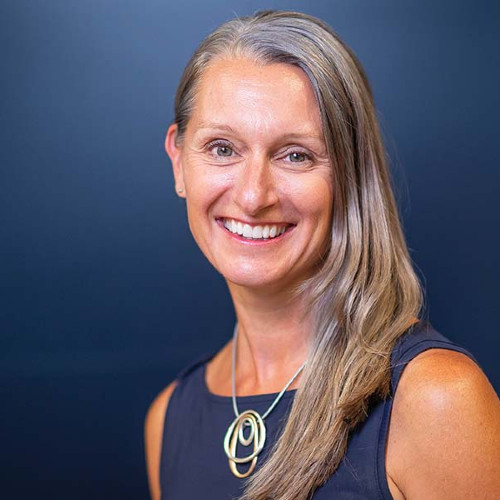
Jennifer Jakobi is a Professor at the School of Health and Exercise Sciences , Faculty of Health and Social Development, UBC Okanagan. She serves as Director of the Institute for Healthy Living and Chronic Disease Prevention and holds the NSERC Chair for Women in Science and Engineering . Her work bridges neuromuscular physiology and STEM diversity initiatives . Research Themes : Frailty, aging in place, sex-differential muscle function, and motor unit modulation. Labs : Leads the Healthy Exercise and Aging Lab (HEAL) and coordinates the iSTAND diversity program. Publications focus on aging biomechanics, cannabis impacts in elderly populations, social VR interventions, and pandemic-era health behaviors. Her NSERC-funded basic research examines cortical-spinal pathways, while UBCO grants support applied studies on vibration therapy and assistive technologies. Scientific Contributions : Identified sex-specific force steadiness mechanisms Developed prehabilitation frameworks for functional independence Advocated for gender-inclusive STEM education Outreach includes youth STEM camps, equity workshops, and community partnerships on aging-in-place policies. Current research explores VR-based social engagement and cannabis safety protocols for seniors.
José Morales Aznar is a Full Professor in the Department of Physical Activity and Sport Sciences and Sports Management at the Faculty of Psychology, Educational Sciences and Sports, Ramon Llull University (Blanquerna). His academic work focuses on the intersection of physical activity, sport sciences, and adapted physical education, with a particular emphasis on judo applications for diverse populations. Dr. Morales Aznar's research interests span Physical Activity, Sport Sciences, Martial Arts (particularly judo), Adapted Physical Activity for people with disabilities, Autism Spectrum Disorders, Intellectual Disabilities, Physical Education, Motor Skills, and Heart Rate Variability. His work demonstrates a strong commitment to applying sport science principles to improve quality of life across different demographic groups, especially those with special needs. Analysis of his recent publications reveals a clear trend toward adapted judo programs, particularly for individuals with autism spectrum disorders and intellectual disabilities. His research combines practical applications with theoretical frameworks to develop evidence-based approaches in adapted physical activity. The publications also show growing interest in technology integration in physical education and the physiological aspects of martial arts training. Dr. Morales Aznar is actively involved in multiple research projects including KATAUTISM (Judo program for autistic children), JUDODI (Effects of judo for adolescents with intellectual disabilities), JIDP (Judo for Intellectual Disability Project), SAFE (Health, Physical Activity and Sports), and AUTJUDO (Adapted Judo for Children with Autistic Spectrum Disorders). These projects demonstrate his leadership in developing and implementing specialized physical activity programs for vulnerable populations while securing significant research funding from various agencies including the EACEA Education, Audiovisual and Culture Executive Agency and Agència de Gestió d'Ajuts Universitaris i de Recerca.
Judith E Carroll, PhD, is an Adjunct Associate Professor in the Department of Psychiatry and Biobehavioral Sciences at UCLA's School of Medicine, where she holds the George F. Solomon Professorship of Psychobiology. She directs the Aging Biology & Behavior Lab and co-leads the Infrastructure for Research in Equity, Aging, Cancer and Health initiative. Her research bridges psychoneuroimmunology, geroscience, and oncology, with continuous NIH funding since 2013. Education: PhD in Biological & Health Psychology, University of Pittsburgh (2010) MA in Biopsychology & Aging, Sonoma State University (2003) BA in Psychology, Sonoma State University (2002) Her research examines biological mechanisms linking stress, sleep, and aging in cancer populations. Primary interests include: Accelerated aging biomarkers in breast cancer survivors Sleep health interventions to reverse cellular aging Impact of early-life adversity on lifelong health trajectories Social determinants of cognitive decline in oncology Recent publications (2023-2025) demonstrate: Dominant focus on epigenetic aging and inflammation in oncology Longitudinal studies of cancer-related cognitive decline Methodological innovation in transcriptomic biomarker discovery Health disparities framework across 80% of publications Awards: American Psychosomatic Society Young Scholar Award (2012) American Sleep Medicine Foundation Bridge to K Award (2013) American Cancer Society Research Scholar Award (2015) STOP CANCER Career Development Award (2016) PNIRS Robert Ader New Investigator Award (2019) Active Grants (NIH): R01AG082348: Patterns of Biological Aging in Cancer Survivors (MPI, 2023-2028) R56AG068086: Heterogeneity in Aging Among Breast Cancer Survivors (PI, 2021-2022) R01CA237535: Accelerated Aging in Breast Cancer (PI, 2020-2023) She mentors through the TLC (Thinking and Living with Cancer) Study consortium involving 15+ institutions. Leads the Aging Biology & Behavior Lab researching stress-sleep-aging mechanisms and co-directs the Infrastructure for Research in Equity, Aging, Cancer and Health (REACH) initiative, fostering multi-institutional collaborations on health disparities.
Dr. Adrian Owen is a Professor of Cognitive Neuroscience & Imaging at Western University's Brain and Mind Institute, holding the Canada Excellence Research Chair. His work focuses on consciousness disorders, neurodegenerative diseases, and functional neuroimaging applications. He pioneered techniques like detecting residual cognition in vegetative patients using fMRI and fNIRS. Research Focus: Owen's research bridges cognitive neuroscience and clinical practice, emphasizing disorders of consciousness, Alzheimer's/Parkinson's mechanisms, and neurorehabilitation. He develops brain-computer interfaces for communication in non-responsive patients and investigates anesthesia effects on neural connectivity. Key Contributions: Pioneered covert cognition detection in vegetative patients, advanced fNIRS applications in ICU settings, and established international clinical cohorts for consciousness assessment. His work has appeared in Nature , Science , and The Lancet . Labs/Teams: Leads the Owen Lab at Western University, collaborating with clinicians, engineers, and neuroscientists to translate neuroimaging innovations into clinical tools. Grants/Industry Links: Receives funding for interdisciplinary projects linking brain imaging, neurology, and biomedical engineering, fostering industry partnerships for neurotech development.
Dr. Joel Williams is an Associate Professor in the Department of Public Health Sciences at Clemson University's College of Behavioral, Social and Health Sciences. His academic foundation includes a Ph.D. in Public Health (University of South Carolina, 2004), MPH (2001), Graduate Certificate in Applied Statistics (2008), and B.S. in Exercise Studies (Lander University, 1996). With clinical experience in sports medicine and hospital settings, Dr. Williams specializes in implementing and evaluating health promotion programs. His research examines obesity prevention, chronic disease management, and mobile health technology applications. Primary interests include: Community-based interventions for physical activity and nutrition Pediatric and population health behavior change Telemedicine solutions for chronic conditions Methodological approaches to program evaluation Dr. Williams' recent publications (2017-2022) demonstrate consistent focus on diabetes management, mobile health innovations, pediatric health, and epidemiological studies. His work frequently employs multidisciplinary approaches across public health, clinical medicine, and digital technology domains. Honors include: Clemson University School of Health Research Scholar (2017) Institute for Advancement of Health Care Faculty Fellow (2015) Clemson University Service Alliance Faculty Fellow (2008) He has advised 21 graduate students as primary or co-advisor, with mentees contributing to research on pediatric asthma, diabetes, nutrition, and telemedicine. His externally funded research portfolio includes projects supported by CDC, NIH (NCI, NHLBI, NICHD), DoD, USDA, and HRSA. Dr. Williams leads interdisciplinary teams for community and clinical trials, frequently collaborating with medical institutions and public health agencies. His research emphasizes practical applications of mobile technology for chronic disease self-management in diverse populations.
David N. Proctor is a Professor of Kinesiology and Physiology at Pennsylvania State University . His research focuses on human cardiovascular aging, vascular adaptation to exercise, and therapeutic strategies for aging populations.
Anne-Sofie Helvik is a Professor at the Norwegian University of Science and Technology (NTNU) within the Department of Public Health and Nursing . Her research focuses on quality of life, coping mechanisms, aging, impairment, and disabilities, with a particular emphasis on older adults. Email: anne-sofie.helvik@ntnu.no Location: Øya Helsehus, 153.03.001, Øya, Håkon Jarls gate 11 Her work spans multiple domains: Health Promotion: Central to her research is improving health outcomes in older populations. Substance Misuse: Investigates alcohol and drug use among older adults and its impact on health. Mental Health: Studies depression, pain, and dementia in aging populations. Sensory Function: Explores olfactory and hearing impairments in older adults. Healthcare Systems: Evaluates treatment, care, and postoperative follow-up in both pediatric and geriatric contexts. Her methodological approach combines both quantitative and qualitative research , with a strong emphasis on longitudinal studies and population-based analyses. Currently, she supervises two doctoral students: Heidi Sivertsen – Researching depression among older community residents. Ingrid Torvik Heian – Investigating olfactory functioning. Her research unit, Allmennmedisinsk Forsknings Enhet (AFE) , focuses on aging and health in older adults, accessible via NTNU’s aging and health page.
Kathleen H. Sienko is the Arthur F. Thurnau Professor in the Department of Mechanical Engineering at the University of Michigan's College of Engineering. She directs the Sienko Research Group, a multidisciplinary lab focused on developing technological solutions at the intersection of healthcare and engineering. Her work spans medical device design, design science, and engineering education with a strong emphasis on global health contexts. Dr. Sienko earned her Ph.D. in Medical Engineering and Bioastronautics from the Harvard-MIT Division of Health Sciences and Technology (HST) program in 2007, an S.M. in Aeronautics & Astronautics from MIT in 2000, and a B.S. in Materials Engineering from the University of Kentucky in 1998. Ph.D., Medical Engineering and Bioastronautics, Harvard-MIT Division of Health Sciences and Technology, 2007 S.M., Aeronautics and Astronautics, Massachusetts Institute of Technology, 2000 B.S., Materials Engineering, University of Kentucky, 1998 Her research focuses on sensory augmentation, rehabilitation engineering, biomechanics, and medical device design with emphasis on global health contexts and task-shifting devices. She has pioneered efforts to incorporate global health technology constraints within engineering design education at undergraduate and graduate levels, establishing field sites in sub-Saharan Africa and Asia where numerous devices have been conceptualized and refined with local stakeholders. Her work in design science examines how and when designers use prototypes in development cycles and how prototypes assist during stakeholder interactions and user requirements identification. Her recent publications reveal a strong trend toward human-centered approaches in global health design, with increasing focus on stakeholder engagement, contextual factors in engineering design, and equity considerations in health technology development. Her work bridges biomechanics, rehabilitation engineering, and design methodology with applications in balance assessment, medical device development for low-resource settings, and engineering education. Dr. Sienko has received numerous prestigious awards including the NSF CAREER Award, University Undergraduate Teaching Award, Provost's Teaching Innovation Prize, and the Miller Faculty Scholar Endowed Award. Her recognition spans teaching excellence, research innovation, and outreach contributions. NSF CAREER Award, 2009 Provost's Teaching Innovation Prize, 2012 Miller Faculty Scholar Endowed Award, 2013 University Undergraduate Teaching Award, 2012 Raymond J. and Monica E. Schultz Outreach and Diversity Award, 2011 She has advised numerous graduate students including Nick Moses (who defended his dissertation in December 2023), Lucy Spicher, Marty Kilbane, and Ibrahim Mohedas. Her research has been supported by significant grants from the National Science Foundation, including the CAREER program, Research Initiation Grants in Engineering Education, and the Graduate Research Fellowship program, as well as funding from the University of Michigan's Rackham Merit Fellows program and Center for Research on Learning and Teaching. The Sienko Research Group operates as a talented multidisciplinary lab developing novel methodologies to create technological solutions addressing pressing societal needs at the healthcare-engineering intersection. Current research thrusts include Design Science, Autonomous Vehicles, Balance, Sensory Augmentation, and Wearable Devices, with particular emphasis on how design ethnography can inform medical device development and how engineering students develop ethnographic skills for global health contexts.
Dr. Anna Hatton is a Senior Lecturer at the School of Health and Rehabilitation Sciences , The University of Queensland. As Co-Director of the UQ Centre for Neurorehabilitation, Ageing and Balance Research and Associate Editor for Gait & Posture , she leads interdisciplinary research into sensory-based rehabilitation technologies. Her work bridges clinical practice with engineering innovation, focusing on footwear devices for balance enhancement. Research themes: novel textured/vibratory insoles , neurological gait analysis , age-related mobility Key funding: NHMRC IDEAS Grants , Bionics Queensland Challenge , Diabetes Australia , PA Research Foundation Her Young Tall Poppy Science Award (2016) recognizes contributions to plantar sensory stimulation. Current supervised projects explore bionic insole neurophysiology , combat sports injury prevention , and sport performance optimization . Media engagements focus on electromyography , sensorimotor function , and footwear interventions .
Job J.A.M. van der Palen is a Full Professor in Cognition, Data and Education at University of Twente, with a long-standing external position as Clinical Epidemiologist at Medisch Spectrum Twente (MST) since June 1, 1993. His academic career spans over three decades with substantial research output including 528 publications, 16,222 citations, and an h-index of 60. He maintains an active research profile with 13 publications already in 2025, demonstrating continued scholarly engagement. Dr. van der Palen's research interests focus on chronic respiratory diseases, particularly Chronic Obstructive Pulmonary Disease (COPD) and asthma management. His work extends to eHealth interventions, randomized controlled trials methodology, and more recently, breast cancer research and delirium detection in elderly cardiac patients. His fingerprint analysis reveals strong expertise in Patient Medicine and Dentistry (100%), Inpatient Medicine (53%), COPD (50%), and Obstructive Lung Disease (37%). His recent publications (2024-2025) demonstrate a clear trend toward interdisciplinary research combining medical domains with data science approaches. There's a notable focus on personalized medicine through intensive longitudinal data analysis, AI-supported systematic reviews, and eHealth interventions for chronic disease management. His work bridges clinical practice with data-driven approaches, particularly evident in studies on COPD exacerbation action plans, pediatric asthma management, and advanced detection methods for postoperative complications. Best oral presentation MST Wetenschapsdag 2023 (as contributor) Dr. van der Palen has supervised 20 students' work according to institutional records, with recent activities including program committee membership for the Medisch Spectrum Twente Wetenschapsdag 2023. His research network spans multiple institutions, with significant collaborations in the Netherlands and internationally, particularly in respiratory medicine and clinical epidemiology. He has contributed to numerous randomized controlled trials and cohort studies focusing on chronic disease management and patient outcomes. His current research activities involve multiple teams working on COPD management (RE-SAMPLE cohort study), pediatric asthma (CIRCUS study), and breast cancer research. The Brain Pro-TCT study demonstrates his involvement in innovative approaches to postoperative care for elderly patients. His work with AI-supported screening methods indicates engagement with cutting-edge data analysis techniques in medical research.
Barbara van Munster is a Professor at the University of Groningen's Faculty of Medical Sciences, affiliated with the University Medical Center Groningen (UMCG). She holds academic positions in geriatrics and clinical geriatrics, combining research leadership with clinical practice as an Internist-Geriatrician at Martini Hospital Groningen. Her roles include Deputy Educator in Clinical Geriatrics (2019–), Chairman of the Alzheimer Center Groningen (2020–), and leadership in national and international committees focusing on multimorbidity, delirium, and geriatric medicine. Her research centers on multimorbidity, frailty, and delirium in elderly populations, with a focus on clinical decision-making, healthcare systems optimization, and translational gerontology. Recent work explores polypharmacy in Alzheimer's patients, cognitive assessment in young-onset dementia, and interdisciplinary care models for complex patients. Key contributions include studies on sarcopenia's impact on surgical outcomes and oxidative stress mechanisms in delirium. Prof. van Munster chairs national guidelines for multimorbidity (NIV) and dementia-friendly hospital initiatives, reflecting her advocacy for evidence-based practices. Her publications span geriatric surgery, cognitive science, and healthcare policy, with a focus on improving care for vulnerable elderly patients. Education: Not explicitly listed in provided texts Key affiliations: FOUR-C (Cure and Care in Community Context), CAD (Cognition, Ageing & Disease) research groups Professional roles: Board member of the European Academy of Medicine of Ageing, Secretary of the 'Journal of Gerontology and Geriatrics' foundation
Gregory Dick, PhD, is a Research Professor in the Department of Physiology & Anatomy at the University of North Texas Health Science Center's College of Biomedical and Translational Sciences. His research focuses on ion channel regulation in coronary arteries, particularly how potassium channels control vascular tone under normal and pathological conditions (e.g., obesity, diabetes). He has led multiple NIH-funded projects exploring coronary vascular dysfunction and metabolic signaling. Education: Bachelor of Science in Physiology, Oklahoma State University Doctor of Philosophy in Physiology, University of Missouri Research Interests: Electro-metabolic signaling in coronary vasodilation Role of K+ channels in coronary blood flow regulation Impact of metabolic syndrome and obesity on cardiovascular health Vascular smooth muscle plasticity in disease states Key Projects (2024–2026): Role of potassium as a coronary metabolic vasodilator (Principal Investigator) Disentangling the Mechanisms of Coronary Dysfunction (Co-Investigator) Grants & Funding: NIH R01 Grant: Mineralocorticoid Receptor-Dependent Coronary Vascular Dysfunction in Obesity Multiple collaborative grants with University of Michigan and University of Missouri Collaborations: Active partnerships with institutions studying coronary autoregulation, metabolic syndrome, and swine models of cardiovascular disease.
Prof. Dominique Hansen is a Full Professor in Exercise Physiology and Rehabilitation of Internal Medicine at Hasselt University's Faculty of Rehabilitation Sciences, and a research associate at the Hasselt Heart Center (Jessa Hospital). His research focuses on 'precision exercise' to combat cardiometabolic diseases like obesity, diabetes, and cardiovascular disease, emphasizing tailored exercise protocols over generic recommendations. He co-developed the EXPERT tool, a digital decision-support system used across Europe to create personalized exercise prescriptions for cardiovascular patients. Education: Advanced degrees in Exercise Physiology and Medicine (details not specified) Key Collaborations: Prof. Paul Dendale, Prof. Karin Coninx, and the 30+ member EXPERT Network Group spanning 10+ European countries His research has produced over 200 peer-reviewed publications, including European guidelines for cardiac rehabilitation. Two major research lines include: (1) developing precision exercise guidelines for CVD prevention and treatment, and (2) exploring exercise's role in protecting non-cardiac organs (e.g., the brain in type 2 diabetes patients). He advocates for exercise as a core component of secondary prevention, emphasizing the need to move beyond 'one-size-fits-all' approaches. Current projects include optimizing physical activity monitoring via wearable tech and mHealth interventions for older adults. Labs/Teams: Hasselt Heart Center Research Group, EXPERT Network Group Grants: Funding details not specified, but receives donations via Hasselt Heart Center
Janet S. Dufek, Ph.D., is a Professor at the University of Nevada, Las Vegas (UNLV) in the Department of Kinesiology and Nutrition Sciences . She also serves as Vice Provost for Faculty Affairs and holds adjunct appointments at the University of Nebraska at Omaha and Rocky Mountain University of Health Professions . Her career spans leadership roles including Associate Dean of the School of Integrated Health Sciences and Director of the Interdisciplinary Health Sciences Ph.D. Program . Education: Ph.D. in Biomechanics (University of Oregon, 1988) M.S. in Scientific Foundations of Kinesiology (Illinois State, 1982) B.S. (Summa Cum Laude) in Physical Education (University of Wisconsin-Superior, 1981) Research Interests focus on biomechanical mechanisms of locomotion , injury prevention , and clinical gait assessment . She specializes in jump-landing dynamics , movement variability , and performance enhancement for clinical populations , advocating for interdisciplinary approaches to solve complex health science problems. Her 15 most recent publications (2019-2024) reflect trends in concussion biomechanics , autism spectrum disorder gait analysis , machine learning applications in diabetes progression , and advanced sensor technology for movement studies . Articles explore topics from head acceleration effects on lower extremity function to weighted vest interventions in autism therapy . Scientific Awards include: Fellow, American College of Sports Medicine UW-Superior Hall of Fame (Scholar-Athlete, 2007) Membership in Phi Kappa Phi and Sigma Xi honor societies As a dedicated mentor , she supervises graduate research projects and advises on interdisciplinary health sciences . Her lab ( REBEL Research Group ) pioneers work in biomechanical injury prevention and gait variability assessment , utilizing pressure-measuring insoles and wearable inertial sensors.
Øyvind Kirkevold is a Professor at the Department of Health Sciences Gjøvik at the Norwegian University of Science and Technology (NTNU). He also holds research roles at the National Center for Aging and Health at Vestfold Hospital HF and the Department of Geriatric Psychiatry at Innlandet Hospital HF. Research interests include geriatric psychiatry, aging, dementia, physical performance in older adults, home care service interventions, and resource planning in healthcare. His work emphasizes qualitative methodologies, geriatric assessment, and improving care for frail elderly populations. Recent publications focus on meaning in life for dementia patients, physical performance in prostate cancer survivors, crisis prevention for frail individuals, geriatric assessment interventions, and resource planning using the Nursing Activities Score. These studies span geriatric psychiatry, oncology, and healthcare logistics. Scientific awards : 2012 - Andrus Viidik Prize 2004 - Leon Jarner Research Prize Projects include active initiatives like screening for delirium, assessing consent capacity, prostate surgery outcomes, and completed projects on minority elder care. He collaborates with institutions such as Innlandet Hospital HF, Oslo University Hospital, and the National Center for Aging and Health.