Jonathan H. Cantor is a Policy Researcher and Professor of Policy Analysis at the RAND School of Public Policy . His research focuses on health policies related to substance use disorder , mental health , and health behaviors , integrating frameworks from health economics , policy analysis , and public health . He leads the Mental Health and Addiction Treatment Tracking Repository , a national longitudinal database for substance use and mental health treatment facilities. His work examines treatment availability for older adults (funded by the National Institute on Aging) and telehealth services in mental health (funded by the National Institute of Mental Health). Recent NIMH grants aim to quantify mental health crisis services supply and its impact on population health. His recent publications (e.g., JAMA , Health Affairs ) address topics like opioid treatment accessibility , telehealth disparities , and food insecurity in higher education . His research spans health equity , preventive healthcare , and modeling/simulation approaches.
Ashli Owen-Smith is a behavioral scientist affiliated with the School of Public Health at Georgia State University , where her research focuses on mental health disparities, suicide prevention, and integrative/complementary approaches for complex mental-physical health conditions. She works with underserved populations including refugees/immigrants, incarcerated individuals, and LGBTQ+ communities through community-based participatory research and mixed-methods frameworks. Her current projects are funded by CDC , DBHDD , and DPH . Education: Ph.D. in Behavioral Sciences (Emory, 2009), S.M. in Public Health (Harvard, 2005), B.A. in Psychology (Smith College, 2001) Her research spans mental health , trauma , suicide prevention , and mindfulness-based interventions . Recent work examines telehealth adaptations for chronic pain and mental health, vaccine hesitancy in refugee communities, and social determinants of suicide . She leads studies on gender-affirming care and health disparities in LGBTQ+ populations. Key article trends include epidemiological analysis of suicide risk factors, COVID-19 impacts on mental health, ICD-10 coding for autism, and complementary medicine in trauma recovery. Subfields span telehealth , health equity , mental-physical comorbidity , and community engagement . Students she has mentored include C.A. Scarlett , T. Griner , and M.M. Sesay . Her work integrates public health policy , clinical research , and health systems analysis .
Päivi Eriksson is a Professor of Management at the University of Eastern Finland (UEF) Business School. She co-leads the Innovation Management research group and coordinates the MSCA Neuro-Innovation PhD Programme (2021-2026) and NOVEL Postdoctoral Programme (2024-2029). Her research focuses on innovation management, academic entrepreneurship, and collaborative research methodologies. She leads the Neuro-Innovation and Impact research team within UEF's neuroscience community (NEURO). Key projects include DATASLEEP (2021-2025), CO-RESEARCH (2022-2026), and Shadows in Paradise (2022-2032). Her work bridges academic research with societal impact through initiatives like the Auria Biobank commercialization. She has authored/co-authored over 150 publications in journals like Journal of Affective Disorders , Qualitative Health Research , and International Journal of Human Resources Development . Eriksson's awards include research council grants and contributions to Elgar's Encyclopedia of Innovation Management . She advises on academic entrepreneurship policies and collaborates with 30+ external partners in healthcare, tech, and industry sectors. Her teaching emphasizes innovation empathy and service design frameworks for customer-centric solutions.
Tamar Rodney is an Assistant Professor at the Johns Hopkins University School of Nursing , specializing in psychiatric mental health. She serves as the DNP Advanced Practice Psych Mental Health Track Coordinator and is affiliated with the Center for Community Programs, Innovation, and Scholarship (COMPASS) and the Center for Infectious Disease and Nursing Innovation . Dr. Rodney’s research focuses on PTSD and traumatic brain injury (TBI) in military personnel and veterans. Her work explores biomarkers , inflammatory responses , and meaning theory to improve diagnosis and treatment planning for mental health conditions. She also investigates telehealth , dementia care , and social isolation in vulnerable populations. Recent publications highlight her expertise in PTSD prevalence among nurses, telehealth applications , biomarker analysis , and community-based interventions for cognitive impairments. Her work bridges neurobiology and psychiatric nursing to inform military health policy . 2022 Coeur de Catherine – St. Catherine University 2021 AMERSA Marianne Marcus Award Multiple scholarships/fellowships (2010–2022) Dr. Rodney’s clinical practice, research, and advocacy address substance use disorders , resilience , and global health challenges. She actively contributes to policy development and education in psychiatric nursing.
Professor Guy Williams is a leading academic at the University of Cambridge with a focus on imaging science and clinical neurosciences, affiliated with Downing College and the Wolfson Brain Imaging Centre . Holding a PhD in Physics from his initial Natural Sciences degree, he specializes in nuclear magnetic resonance (NMR) and MRI techniques for brain imaging. Education: BA, PhD in Physics His research centers on non-invasive imaging of brain structure and function, particularly in traumatic brain injury (TBI) and dementia. His work involves developing novel MRI pulse sequences and advanced data analysis algorithms, including AI-based diagnostic tools. He leads studies on white matter integrity post-trauma, longitudinal dementia assessment, and applications of MRI in disorders of consciousness and addiction. Recent publications highlight collaborations in traumatic brain injury outcomes, AI-guided dementia prediction, and neuroimaging of post-COVID cognitive deficits. His team's work on ultra-high field laminar fMRI and distortion correction methods has advanced clinical neuroscience applications. Key techniques include diffusion tensor imaging (DTI), 7 Tesla MRI, and positron emission tomography (PET/MR). His research spans from basic NMR physics to clinical translation, with a strong emphasis on multi-site studies and real-world diagnostic implementation.
Denise Acampora, MPH, is a Lecturer in Geriatric Medicine at Yale School of Medicine. She specializes in aging-related research focusing on delirium prevention, post-hospitalization outcomes, falls prevention, and clinical trials in elderly populations. Her work spans over three decades, with significant contributions to understanding geriatric syndromes and improving care transitions for older adults. Education: MPH from Columbia University (1980), BS from St. Mary's College (1970). Key Research: Lead author on landmark studies about delirium interventions (NEJM 1999), cranberry clinical trials for UTIs in nursing homes (JAMA 2016), and post-COVID-19 outcomes in older adults (JAMA Network Open 2024). Collaborations: Works with prominent researchers like Thomas Tinetti, Mary Tinetti, and Laura Ferrante on aging-related studies. Her research emphasizes translational strategies to reduce disability and improve quality of life for elderly patients through evidence-based interventions. Current projects focus on longitudinal assessment of post-acute sequelae in older adults (VALIANT cohort).
Dr. Ronald P. Strauss serves as the Adams Distinguished Professor at the University of North Carolina at Chapel Hill in the Adams School of Dentistry, with additional appointments as Professor of Social Medicine in the School of Medicine and Clinical Professor of Epidemiology in the Gillings School of Global Public Health. He concurrently holds the position of Chief Global Officer for the Adams School of Dentistry and is an active member of the UNC Craniofacial Center Team. His academic credentials include: BA in Biology from Queens College New York DMD from the University of Pennsylvania PhD in Sociology from the University of Pennsylvania Dr. Strauss's research examines the social dimensions of chronic health conditions, with specialized focus on craniofacial differences and HIV/AIDS. His interdisciplinary approach integrates clinical practice, sociological theory, ethical frameworks, and health policy analysis to address stigma, healthcare access barriers, prenatal diagnosis implications, and community engagement strategies. Methodologically, he employs qualitative ethnography and survey research to investigate psychosocial impacts. His scholarly output demonstrates consistent thematic focus across decades, with recent publications revealing intensified examination of structural determinants of health, intersectional disparities in craniofacial care, and innovative community-based HIV/AIDS interventions. Key patterns include transdisciplinary collaboration, emphasis on patient-centered outcomes, and critical analysis of systemic inequities in healthcare delivery. Dr. Strauss directs the campus-wide HIV/AIDS Course annually since 1987 and teaches Social and Health Systems to medical students. As Faculty Director of the CFAR Office of Community Engagement and lead of the Thorp Faculty Engaged Scholars Program, he mentors faculty in community-engaged scholarship while maintaining active clinical and research supervision. He maintains leadership within the UNC Craniofacial Center Team and has conducted international fieldwork across five countries, reflecting his commitment to global health equity through partnerships in Brazil, Israel, Thailand, Moldova, and China.
Kay James is an Associate Professor of Neuroscience and Education at Teachers College, Columbia University, and serves as Director of the Graduate Program in Neuroscience and Education and the Neurocognition of Language Lab. Their work focuses on neural mechanisms underlying language disorders, second language acquisition, and cognitive processes in schizophrenia. Key affiliations include Biobehavioral Sciences, Neuroscience and Education, Human Development, and Cognitive Science in Education. Research interests emphasize the neural basis of language processing in pathological contexts such as developmental speech disorders and schizophrenia, alongside second language acquisition in adults. Their interdisciplinary approach bridges cognitive neuroscience with clinical and educational interventions. Publications span studies on mismatch negativity in speech disorders, syntactic development in Arabic diglossia, and brain-behavior asymmetry in schizophrenia. Ongoing work explores voice-related cortical potentials and emotional face processing through electrophysiological methods. Labs and teams include the Neurocognition of Language Lab, focusing on language neurobiology and clinical applications. Grants and advising roles are not explicitly detailed in the provided materials.
Dimitris N Kiosses serves as Professor of Psychology in Psychiatry at Weill Cornell Medical College's School of Medicine since 2021. His academic affiliations center within the Department of Psychiatry with a focus on geriatric mental health services and research. His educational background includes a B.S. from Tufts University (1992), M.A. (1994), and Ph.D. (1999) from Adelphi University, establishing his foundation in clinical psychology with specialization in geriatric populations. Dr. Kiosses' research primarily investigates late-life depression, suicide prevention in older adults, and cognitive-behavioral interventions for comorbid conditions. His work emphasizes Problem Adaptation Therapy (PATH) development and implementation, particularly for depressed elders with cognitive impairment or chronic pain. Recent publications demonstrate growing focus on digital mental health tools, ecological momentary assessment, and international applications of geriatric interventions. His studies frequently examine emotion regulation mechanisms, neurocognitive correlates of depression, and implementation science approaches for real-world settings. Analysis of his 15 most recent publications reveals consistent thematic progression toward transdiagnostic approaches for late-life mental health, with increasing emphasis on technology-enabled interventions, cross-cultural adaptation, and precision medicine applications. The work spans clinical trials, implementation studies, and neurobiological investigations, predominantly targeting depression-suicide pathways in aging populations. Dr. Kiosses maintains active research mentorship through his leadership of multiple NIH-funded projects. His grant portfolio demonstrates particular strength in securing R01-level funding from NIMH and NIA for innovative geriatric mental health interventions. As Principal Investigator, he directs the Problem Adaptation Therapy research program which has evolved from home-based depression treatment (PATH) to specialized adaptations including PATH-Pain and suicide prevention applications. His work increasingly incorporates digital health components and focuses on implementation within primary care and community settings.
Mike Climstein serves as a Lecturer in Human Sciences within the Faculty of Health at Southern Cross University (SCU), where he coordinates the Master of Clinical Exercise Physiology program and acts as Deputy Academic Integrity Officer. He concurrently holds an adjunct Associate Professor position in the Physical Activity, Lifestyle, Ageing and Well-being Research Group at the University of Sydney and directs SCU's Aquatic Based Research initiative. His academic credentials include a PhD in Exercise Science & Human Performance from Oregon State University (1990), an MSc in Exercise Science from Utah State University (1986), and a BSc in Biology from Utah State University (1982). Climstein's research spans clinical exercise physiology with emphases on master athletes' health, chronic disease rehabilitation, sports injury surveillance (particularly surfing), cardiac rehabilitation, smart textile monitoring, and osteoporosis. His work integrates technology-driven health solutions with population-specific exercise interventions, notably for aging populations and athletes. Analysis of his recent publications reveals three dominant trends: 1) AI applications in dermatological diagnostics (e.g., melanoma detection systems), 2) physiological adaptations in aging populations through martial arts and aquatic exercise, and 3) epidemiological studies of chronic conditions in master athletes and occupational groups. These reflect his dual focus on technological innovation and practical health interventions. His scientific recognition includes: Fellowship by Sports Medicine Australia (FASMF) Fellowship by American College of Sports Medicine (FACSM) Fellowship by Exercise and Sports Science Australia (FAAESS) Climstein actively supervises 4 PhD and 2 Master's students while co-supervising 6 Doctor of Physiotherapy candidates. His research program is supported by 38 grants totaling over $7.8 million AUD, including studies on aquatic rehabilitation and smart textile monitoring. As Director of Aquatic Based Research, he leads interdisciplinary teams investigating water-based exercise interventions for chronic disease management, with ongoing projects in cardiac rehabilitation and osteoporosis prevention.
Ana Cristina Manso serves as Associate Professor, Vice-Rector, and Member of the Scientific Council at Egas Moniz University Institute. She directs multiple Preventive and Community Dentistry courses within the Integrated Master's Degree in Dentistry program and serves as a researcher at the Egas Moniz Interdisciplinary Research Center. Her clinical practice includes work at the Oral Health Unit - Clinical Center at the Bankers' Union of the South and Islands. Her educational background includes a PhD in Research in Stomatology (2008) from the University of Granada and a Dentistry Degree (1993) from the Higher Institute of Health Sciences South. She has completed numerous specialized trainings including Pedagogical Training, Quality Assurance Systems, and Social Responsibility seminars at Egas Moniz. Manso's research focuses on geriatric oral health, preventive dentistry, and community-based dental care. Her work examines self-perception of oral health among elderly populations using tools like GOHAI, investigates halitosis treatments including cinnamon-based solutions, and studies caries prevention through remineralization techniques. She has published extensively on dental erosion, temporomandibular disorders, and socioeconomic factors affecting oral health outcomes in Portuguese populations. Her recent publications reveal strong trends in geriatric dentistry and health disparities research, with significant focus on oral health literacy, socioeconomic determinants of oral health, and interdisciplinary approaches to managing conditions like xerostomia and temporomandibular disorders. Methodologically, her work combines clinical trials, cross-sectional analyses, and systematic reviews. Manso has supervised 57 master's dissertations (co-supervising 20), 1 doctoral thesis (co-supervised), and 2 undergraduate theses. Her research projects include ADAPTAR - Projeto EduCom and the Egas Moniz Interdisciplinary Research Center (UID/BIM/04585/2019). She actively participates in quality assurance initiatives as a Member of the Quality Assurance Commission for Egas Moniz Teaching. As Director of the Egas Moniz Interdisciplinary Research Center, she leads research on community dentistry and oral health promotion. Her work extends to social responsibility initiatives including oral health programs for prison populations and elderly community outreach through the 'Primeiro Dente, Primeira escovagem' program.
Malcolm von Schantz is a Professor and Deputy Faculty Pro Vice-Chancellor at Northumbria University, affiliated with the HLS Faculty Management and Administration. Previously, he held leadership roles at the University of Surrey, including Associate Dean (International) and acting Pro-Vice Chancellor (International Relations). He is also an Honorary Professor at the University of the Witwatersrand, South Africa. He holds a PhD in Zoology from an unspecified institution (awarded 10 Dec 1994). His research focuses on human circadian rhythms and sleep, their molecular determinants, and links to physical/mental health. He has secured over £6.4M in research funding from bodies like the MRC, Wellcome Trust, and NIH. Key research areas include sleep architecture, chronotype variability, HIV-related sleep disruptions, and cardiometabolic health correlations. His work has been published in high-impact journals and widely featured in media. He actively participates in international conferences and public outreach, including translating sleep education materials into multiple languages. Notable collaborations include the BioClocks UK initiative and the Baependi Heart Study in Brazil. His recent articles address daylight saving policies, gender-specific sleep-cardiovascular links, and light sensitivity in bipolar disorder. He supervises PhD students and engages in editorial roles across journals. Public impacts include translating educational comics and participating in community health events. His research emphasizes global health equity, particularly in low-resource settings.
Samantha A. Latorre, MD is an Assistant Professor at the University of Maryland School of Medicine , where she works in the Consultation-Liaison Psychiatry division . She also serves as the Associate Program Director for the Consultation-Liaison Psychiatry Fellowship. Her clinical and research focus spans reproductive psychiatry , collaborative care , and women's mental health , with additional expertise in HIV-related mental health. Undergraduate: University of Dayton (Pre-Medicine, Psychology) Medical School: Wright State University Boonshoft School of Medicine (2014) Residency: Adult Psychiatry at University Hospitals Cleveland Medical Center (Case Western, 2018) Fellowships: Public and Community Psychiatry, Women’s Mental Health (2018); Consultation-Liaison Psychiatry (2019) Dr. Latorre’s research emphasizes reproductive psychiatry , particularly perinatal mental health and post-miscarriage depression. She actively contributes to collaborative care models in clinical settings, including HIV clinics, and focuses on multidisciplinary approaches to psychiatric symptoms in complex cases. Her publications and presentations highlight expertise in reproductive psychiatry , collaborative care , and educational initiatives for psychiatry residents. Article topics include anti-NMDAR encephalitis, postpartum psychiatric disorders, geriatric mental health, and documentation practices. Scientific Awards : 2018 Trainee Travel Award (ACLP) 2017 Teaching Award for Women’s Mental Health Day 2017 Best Oral Presentation (Cleveland Consultation Liaison Society) 2017 Scholarship in Teaching Award for resident-led education Dr. Latorre received a $10,000 GME Grant (2015-16) for Women’s Mental Health Day. She teaches medical students and psychiatry/non-psychiatry trainees, emphasizing interdisciplinary education and practical skill development.
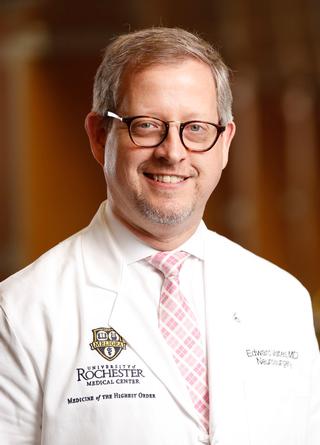
George E. Vates, MD, PhD, is a Professor in the Department of Neurosurgery and the Department of Medicine (Endocrine/Metabolism) at the University of Rochester Medical Center. He serves as neurosurgeon co-director of the University of Rochester Multidisciplinary Neuroendocrinology Clinic and is a key member of the University of Rochester Medical Faculty Group (URMFG), which comprises over 900 providers across 19 departments. Dr. Vates specializes in pituitary tumor surgery, cerebrovascular disorders, and skull base procedures, having performed over 120 transsphenoidal pituitary surgeries. Dr. Vates completed his academic training with exceptional distinction: Duke University: Bachelor's degree, summa cum laude (1988, Phi Beta Kappa) Rockefeller University: PhD in Neuroscience Weill Medical College of Cornell University: MD (1997, Alpha Omega Alpha) University of California, San Francisco: Neurosurgery Residency (1998-2003) Brigham and Women's Hospital, Harvard Medical School: Cerebrovascular/Skull Base Fellowship (2003-2004) His research focuses on pituitary tumor biology, neuroendocrinology, and surgical innovation. He established the Multidisciplinary Neuroendocrinology Clinic as a regional referral center for complex pituitary cases, integrating neurosurgical and endocrinological expertise. Current work emphasizes neuroprotective mechanisms in pituitary adenomas, surgical simulation technology, and optimizing outcomes for elderly glioma patients. Analysis of his 15 most recent publications reveals evolving research trajectories: contemporary studies (2019-2022) concentrate on pituitary tumor management, surgical simulation, and neurosurgical education, while earlier work (2002-2009) explored cerebrovascular anomalies, neural pathway mapping, and vascular malformations. Persistent themes include surgical technique refinement, tumor biology, and clinician training. Dr. Vates' scientific contributions have been recognized through: Phi Beta Kappa (1988) and Alpha Omega Alpha (1991) academic honors Neurosurgery Research and Education Foundation Fellowship (2006) Anspach Award for Cerebral Ischemia Research (2007) AANS Leadership Scholarship and Cone Pevehouse Award (2009) Ongoing service as St. Michael's Hospital Animal Care Committee reviewer As an educator, he mentors neurosurgery residents through clinical supervision and curriculum development, notably publishing on palliative care communication training. His research initiatives, including the 3D-printed cervical laminectomy simulator, demonstrate commitment to advancing surgical education. Current grants focus on neuroprotective strategies in pituitary tumors and resident training methodologies. Dr. Vates co-directs the Multidisciplinary Neuroendocrinology Clinic with endocrinologist Dr. Calvi, fostering collaboration between neurosurgery, endocrinology, and oncology. His clinical team manages complex pituitary cases across Rochester and Hornell campuses, while his research group develops surgical innovations and investigates tumor microenvironment interactions to improve patient outcomes.
Honglei Chen is the MSU Foundation Professor in the Department of Epidemiology and Biostatistics at Michigan State University . With a career spanning over two decades, Dr. Chen specializes in neuroepidemiology with a focus on Parkinson's disease, dementia, and healthy aging. His research leverages large prospective cohorts to investigate environmental risk factors and prodromal stages of neurodegenerative diseases. Key methodologies include assessing olfactory dysfunction, REM sleep behavior, and inflammatory mechanisms as early markers of disease progression. Recent publications highlight his work on Environmental triggers in Parkinson's disease Genetic risk scores for neurodegeneration Inflammatory pathway modulation in macrophages Olfactory dysfunction as aging biomarker