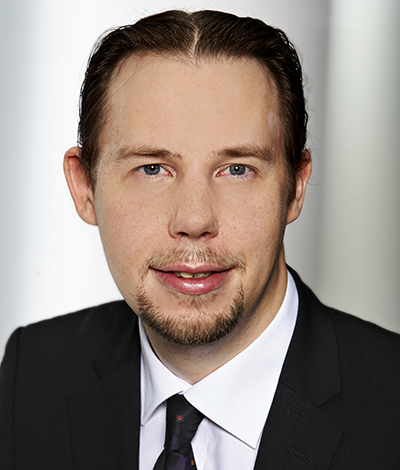
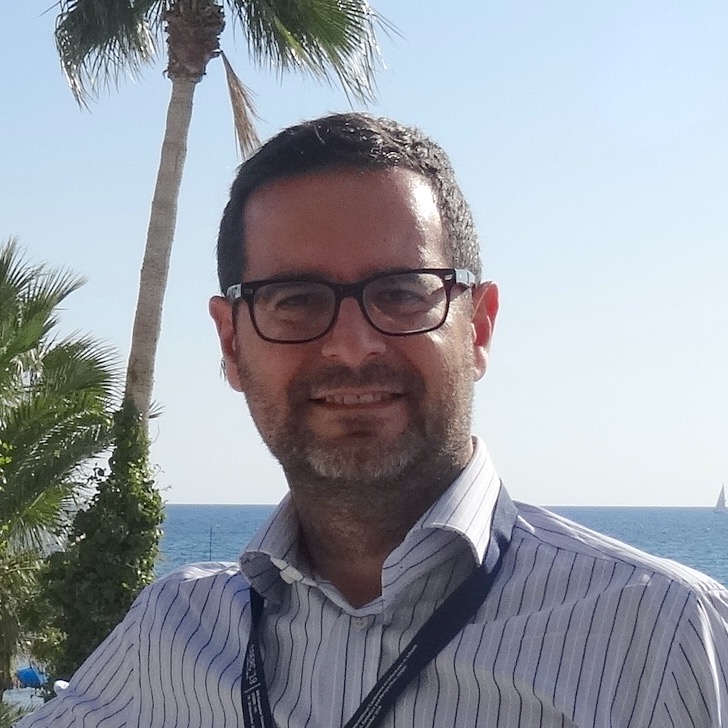
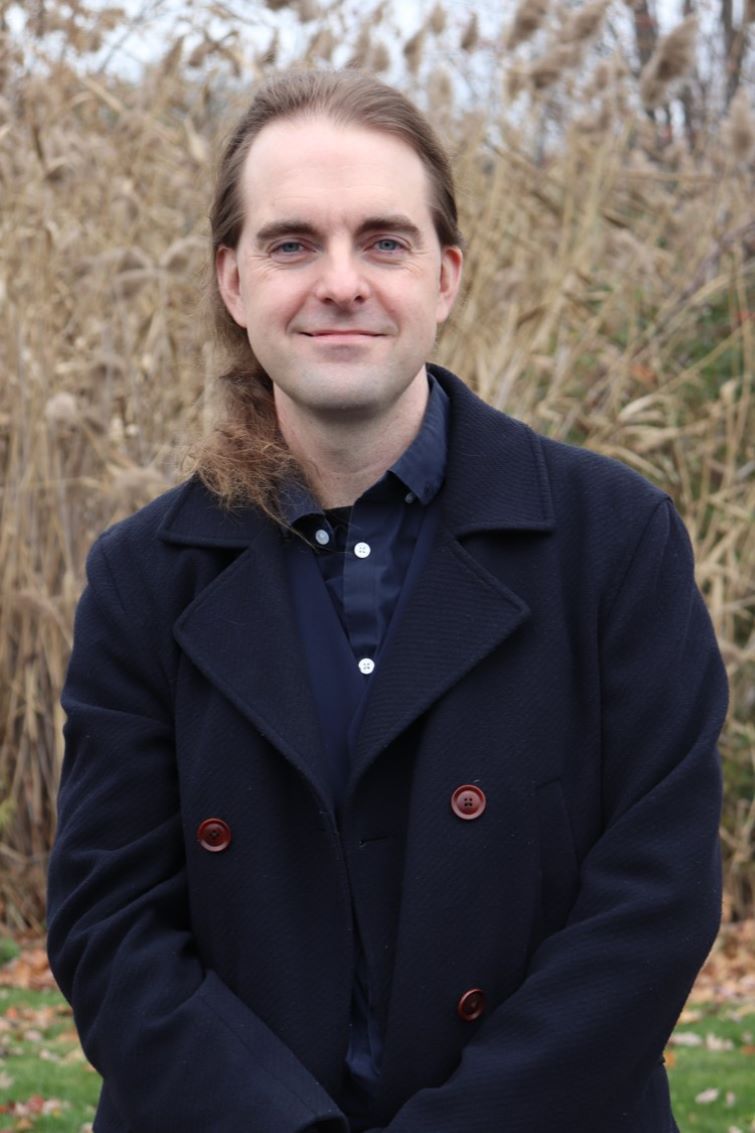
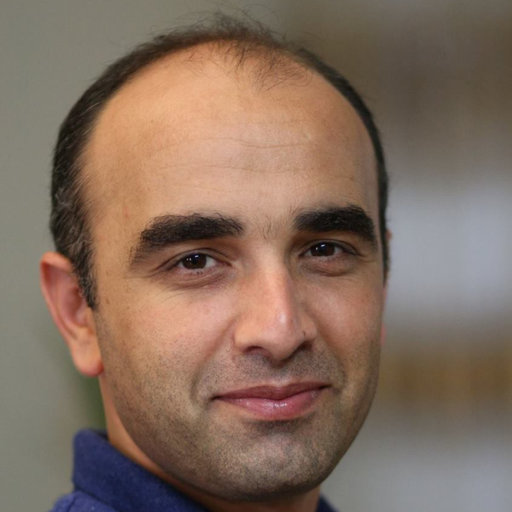
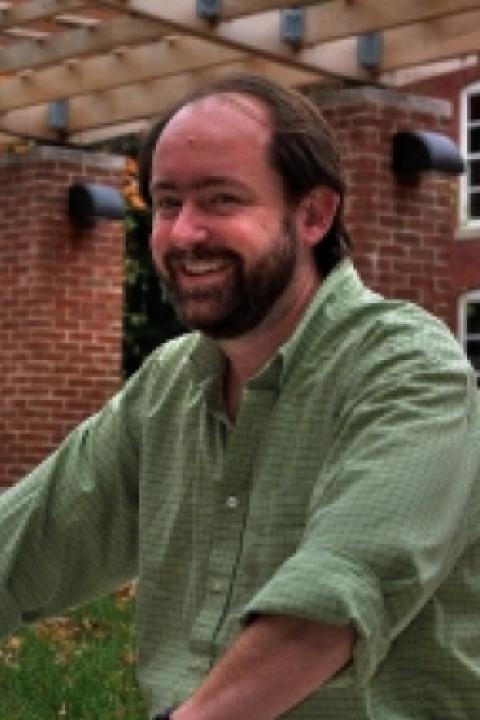
Kyle Bradbury is a Lecturer and Managing Director of the Energy Data Analytics Lab at Duke University. His work merges machine learning, statistical signal processing, and remote sensing to solve critical energy system challenges, particularly focusing on integrating renewable energy (wind and solar) into power grids through advanced modeling of energy storage reliability and cost trade-offs. He teaches the course IDS 705: Principles of Machine Learning .
Gerd Bruder is an Associate Professor in the Department of Computer Science at the University of Central Florida and a Research Associate Professor at the Institute for Simulation and Training. His work bridges computer science, human factors, and immersive technologies, with a focus on Extended Reality (XR) systems. Education: Habilitation, Computer Science, University of Hamburg, Germany (2017) Ph.D., Computer Science, University of Münster, Germany (2011) M.Sc., Computer Science with minor in Mathematics, University of Münster, Germany (2009) Dr. Bruder’s research centers on human-computer interaction in virtual and augmented environments. His interests include perception, 3D user interfaces, display technologies, and digital twins, with applications in healthcare, military training, architecture, and smart environments. He investigates how users perceive and interact with immersive systems, leveraging illusions and redirection techniques to enhance experience and usability. His recent publications reveal a strong trend in trust, cognitive load, and social interaction in XR. Themes include user transitions between realities, robot reliability perception, multisensory feedback, and AI integration. His work often explores how visual and spatial cues affect user behavior and decision-making in complex environments. Scientific Awards: Best Paper Award, ACM VRST 2023 2021 Innovation Award, TechConnect World Multiple Best Paper, Demo, and Poster Awards from ACM and IEEE conferences (2008–2021) Dr. Bruder leads an active research group, mentoring students and collaborating on grants and patents related to AR/VR systems. His work is supported by interdisciplinary teams and institutions, including UCF’s Institute for Simulation and Training. He has co-authored numerous patents in AR magnification, audiovisual detection, and virtual human simulation. His lab focuses on immersive environments, digital twins, and human factors in XR. Projects involve collaborative mixed reality, perceptual illusions, and real-world applications in training and healthcare.
Dr. Ben Tscharke is a Senior Research Fellow at the Queensland Alliance for Environmental Health Sciences (QAEHS), part of the University of Queensland's Faculty of Health, Medicine and Behavioural Sciences. He joined QAEHS in February 2017 after completing his PhD at the University of South Australia. His primary research focus involves wastewater-based epidemiology to monitor community consumption and exposure to illicit drugs, pharmaceuticals, and personal care products across Australia. Dr. Tscharke leads the Australian Criminal Intelligence Commission's National Wastewater Drug Monitoring program at UQ, collaborating with the University of South Australia. His work has established Australia as a leader in wastewater-based epidemiology, providing critical data for public health and policy decisions. PhD in Analytical Chemistry, University of South Australia Dr. Tscharke's research centers on wastewater-based epidemiology, where he analyzes wastewater to estimate population-level consumption of licit and illicit substances. His work extends the utility of wastewater data by combining it with other data sources to improve understanding of drug use patterns and chemical exposure in communities. He has particular expertise in developing correction factors for pharmaceuticals, analyzing temporal and spatial trends in drug consumption, and evaluating the impact of policy changes on substance use. His recent publications demonstrate a strong focus on expanding wastewater-based epidemiology to monitor antidepressants, tobacco products, alcohol, and novel psychoactive substances. His work increasingly incorporates socioeconomic factors and geographical analysis to understand how remoteness and community characteristics influence substance use patterns. Dr. Tscharke has also been expanding into microplastic research, examining plastic deposition in sediments and the release of micro- and nanoparticles from everyday products. Dr. Tscharke actively supervises PhD students on projects related to wastewater-based epidemiology, contaminants of emerging concern, and substance use monitoring. His current research grants include projects funded by the Australian Research Council, Australian Criminal Intelligence Commission, and University of the South Pacific, focusing on identifying contaminant sources, analytical testing, and understanding substance use through multiple data sources. As part of QAEHS, Dr. Tscharke collaborates with a multidisciplinary team including Professor Jochen Mueller, Associate Professor Phong Thai, Dr. Jake O'Brien, and Professor Kevin Thomas. His work contributes significantly to the Minderoo Centre for Environmental Health at UQ, particularly through the National Wastewater Drug Monitoring Program.
Christos Tryfonopoulos is an Associate Professor and Head of the Department of Informatics & Telecommunications at the University of the Peloponnese, where he leads the Software and Database Systems (SoDa) Lab. His academic career spans prestigious institutions including the Max-Planck Institute for Informatics in Germany, where he led the P2P and Information Management research area from 2006-2009, and the Technical University of Crete, where he completed his PhD and MSc degrees. His research interests focus on information management, distributed systems, digital libraries, and data/user anonymity. His work bridges theoretical foundations with practical applications across diverse domains including environmental monitoring, cybersecurity, cultural heritage, and medical informatics. He has developed innovative frameworks for pollution prediction, cyber-threat intelligence, and academic expertise mapping that demonstrate the interdisciplinary nature of his research. Professor Tryfonopoulos has published over 80 papers in top-tier journals and conferences including TOIS, TKDE, SIGIR, and SIGMOD. His recent work shows a strong trend toward applying machine learning techniques to information management problems, with publications spanning environmental science, cybersecurity, and bibliometrics. His research group has developed several significant tools including VeTo+ for expert set expansion, inTIME for cyber-threat intelligence, and Hydria for cultural heritage analytics. Candidate for best research paper in ESWC 2016 conference Honorable mention for best poster (3rd place) in ESWC 2012 conference Award as Distinguished Scientist Excelling in Research Abroad (2008) Best student paper award in ECDL 2005 conference Heraclitus PhD fellowship from Greek Ministry of Education (2002-2005) National Scholarship Foundation of Greece (IKY) scholarship (1998) Professor Tryfonopoulos has supervised 5 PhD students (3 in progress), 19 MSc students, and 31 BSc students. He has led or participated in 13 competitive EU and national research projects including ENIRISST+ for shipping and transport infrastructure, WeCare for student support structures, and FORESIGHT for cybersecurity simulation. His current research focuses on intelligent infrastructure for transportation logistics, cyber-threat intelligence systems, and educational technologies for data science.
Byungkyu Lee is an Assistant Professor of Sociology at New York University within the Faculty of Arts and Science. He serves as co-Director of the Networks in Context lab and holds appointments across multiple research initiatives. His educational background includes a Ph.D. in Sociology from Columbia University (2018), an M.A. in Sociology from Yonsei University (2012), and a B.A. in Business Administration from Yonsei University (2009). Research focuses on social cohesion, network dynamics, and their impacts on health/political well-being Pioneers integration of large language models, surveys, and social media data for social science Develops indicators for social cohesion, polarization, and public opinion prediction Specializes in causal inference methods and computational social science approaches His publication trends reveal a methodological evolution from traditional sociological analysis (2016-2020) toward computational and AI-integrated approaches (2021-2025), with increasing emphasis on health policy applications and polarization dynamics. Honorable Mention for Best Publication Award (ASA Mental Health Section, 2025) Consulting Editor for American Journal of Sociology (2024-2026) Lee actively mentors through the Networks in Context lab and has secured major grants from NSF, NIH, and Russell Sage Foundation. His canceled DOD Minerva project on social cohesion during crises highlights research relevance to national security concerns. Current initiatives include studying effects of Supreme Court rulings on college admissions and co-evolution of AI/society. He maintains active laboratory operations through the Networks in Context initiative, focusing on computational modeling of social dynamics and polarization mechanisms.
Shaya Vosough is an Assistant Professor at Aalto University, focusing on the Built Environment . Her research bridges transportation engineering and urban mobility, with a strong emphasis on micromobility systems , dynamic traffic management , and environmental impact analysis . Current research interests include: Micromobility Adoption - Analyzing e-scooter usage patterns and policy impacts Seamless Multimodal Transportation - Developing frameworks for integrated urban mobility Reinforcement Learning Applications - Optimizing dynamic traffic incentives Emission Analysis - Geospatial modeling of transportation-related emissions Social Routing Behavior - Understanding driver decision-making with navigation apps Publications from 2024-2025 demonstrate expertise in E-scooter safety , reinforcement learning for traffic systems , and sustainable transportation policy . Key trends show strong focus on Helsinki case studies , emerging mobility technologies , and data-driven urban planning . Prior affiliations include collaborative work with the Micromove research group and international multidisciplinary teams.
Dimitrios Gounaridis is an Assistant Research Scientist and Lecturer at the University of Michigan's School for Environment and Sustainability (SEAS), specializing in Geospatial Data Sciences. His research integrates geospatial analysis, artificial intelligence, and environmental science to address climate change impacts, pollution disparities, and social vulnerability. He holds a Ph.D. in Geography from the University of the Aegean. Research Focus Gounaridis investigates critical sustainability challenges through geospatial data science. His work includes: analyzing correlations between animal feeding operations and air pollution; assessing flood risks in socially vulnerable communities; using AI to study climate change denial patterns on social media; and evaluating land-use changes in natural areas. His approach combines environmental science with computational methods to inform policy and equity solutions. Education 2018: Ph.D. in Geography, University of the Aegean 2012: M.Sc. in Applied Geo-Informatics, University of the Aegean 2009: B.A. in Forestry and Management of the Natural Environment, International Hellenic University Media Engagement Gounaridis' research has been featured in prominent outlets including The Detroit News, Michigan Radio, and Stacker, covering topics like urban tree inequity, carbon footprints, and farmland conservation.
Dani Jones is an Associate Research Scientist at the Cooperative Institute for Great Lakes Research (CIGLR) within the University of Michigan's School for Environment and Sustainability (SEAS). They lead the Great Lakes Artificial Intelligence Laboratory, focusing on applying machine learning and artificial intelligence to environmental challenges, particularly climate change adaptation in coastal regions. Education: Ph.D. in Atmospheric Science (Oceanography), Colorado State University (2013) M.S. in Mathematical Sciences, Georgia Southern University (2009) M.S. in Physics, University of Kentucky (2007) B.S. in Physics, Georgia Southern University (2005) Dani's research program centers on data science, machine learning, and artificial intelligence as applied to physical limnology, weather forecasting, water cycle predictions, and observing system design. Their work aims to advance societal adaptations to climate change effects, including coastal and river flooding. With a background in physical oceanography, they specialize in adjoint modeling for sensitivity analysis and unsupervised classification techniques, previously applied to the North Atlantic and Southern Ocean. Dani is establishing CIGLR's Artificial Intelligence Laboratory, leveraging the institute's observing assets, datasets, and partnerships. Analysis of Dani's 15 most recent publications reveals a strong interdisciplinary focus at the intersection of machine learning and environmental science. Their work consistently applies unsupervised classification and neural network techniques to oceanographic and climate problems, with particular emphasis on the Southern Ocean, North Atlantic, and Great Lakes regions. A notable trend is the increasing application of AI to climate adaptation challenges, alongside continued fundamental research in physical oceanography. Scientific Awards: Laws Prize, British Antarctic Survey (2021) UKRI Future Leaders Fellowship (2020-2023) Going the Extra Mile (GEM) Award, British Antarctic Survey (2020) Best Student Presentation Award, Colorado State University Research Symposium (2010) Dani has supervised undergraduate, graduate, and postdoctoral researchers across multiple institutions including Georgia Southern University, University of Cambridge, and British Antarctic Survey. Their supervision spans oceanography, physics, and mathematics, with focus on computational techniques for environmental science. They have received significant research funding including the UKRI Future Leaders Fellowship (SO-WISE project) and have been involved in numerous collaborative projects including C-STREAMS, OceanBound, and DeCAdeS. Dani is also Co-chair of the Observing System Design Capability Working Group for the Southern Ocean Observing System. Dani leads the Great Lakes Artificial Intelligence Laboratory at CIGLR, which integrates machine learning expertise with environmental observation systems. They are also affiliated with the Department of Mathematical Sciences at Georgia Southern University as Affiliate Faculty and holds an Honorary Researcher position at the British Antarctic Survey. Their work bridges computational science with practical environmental applications, particularly in climate change adaptation.
Dr. Enayat Rajabi is an Associate Professor of Data Analytics at the Shannon School of Business , Cape Breton University , Canada. He also serves as an Adjunct Professor at Dalhousie University and is affiliated with Nova Scotia Health as a scientist. His academic journey included a Ph.D. in Information and Knowledge Engineering from the University of Alcalá, Spain, and he has contributed extensively to machine learning and semantic web domains. Education: Ph.D. in Information and Knowledge Engineering, University of Alcalá, Spain (2015) Master of Software Engineering, Ferdowsi University of Mashhad, Iran (2004) Bachelor of Software Engineering, Razi University, Iran (2001) Dr. Rajabi's research focuses on machine learning , knowledge engineering , and semantic web applications in healthcare and smart cities. His work explores explainable AI frameworks, knowledge graph construction, and data-driven solutions for sustainable transportation and clinical decision support systems. His recent publications highlight trends in knowledge graph integration with large language models for healthcare, graph neural networks , and predictive analytics in urban environments. He has secured significant grants, including the NSERC Discovery Grant and Mitacs Research Training Award , to advance these domains. Scientific Contributions: NSERC Discovery Grant (2020-2025) - Semantic Web Analysis over Nova Scotia Open Data ($156,000) New Health Investigator Grant (2022-2024) - Machine Learning for ALC Patients ($97,418) Mitacs Globalink ($4,250) - Graph Neural Networks CBU RISE grants for Explainable Clinical Decision Support Systems and Multi-Label Text Classification Dr. Rajabi has mentored numerous research assistants across projects and maintains active collaborations with institutions in Canada, Spain, and Iran. His technical expertise spans Python, Tableau, Databricks, and PySpark, with teaching responsibilities in Predictive Analytics , Data Visualization , and Quantitative Methods .
Thomas Eiter is a Full Professor at the Institute of Logic and Computation, Technical University of Vienna (TU Wien), where he serves as Head of Research Unit. He is a Full Member of the Division of Mathematics and Natural Sciences since 2022 and holds leadership roles within the university. His research focuses on knowledge representation and reasoning, computational logic, algorithms and complexity in AI, declarative problem solving, nonmonotonic logic programming and databases, and reasoning about actions and change. His work bridges theoretical foundations with practical applications in artificial intelligence, particularly in logic programming and knowledge-based systems. He has made significant contributions to Answer Set Programming (ASP), developing frameworks like DLV and HEX programs that enable sophisticated reasoning capabilities. His recent publications demonstrate a strong focus on stream reasoning (LARS framework), knowledge forgetting, modular reasoning systems, and the integration of logic programming with ontologies. His research shows consistent contributions to both theoretical foundations and practical implementations of AI systems over several decades. ACM Fellow (2020) Fellow of the European Association for AI (2006) Distinguished Paper Award of the 17th International Joint Conference on Artificial Intelligence (IJCAI, 2001) Prominent Paper Award of the Artificial Intelligence Journal (2013) Test of Time Award (10 years) of the International Conference on Logic Programming (2013) Eiter has led and participated in numerous research projects, both internationally funded (such as LogiCS@TUWien, Humane AI, AI4EU) and nationally funded (including projects like BILAI, TAIGER, and several FWF-funded initiatives). His research unit has received substantial support from European Commission programs (H2020) and Austrian funding agencies (FWF, FFG, WWTF). He is actively involved in the academic community as a member of the Austrian Academy of Sciences (ÖAW), Academia Europaea, and has served on the Executive Council of AAAI. His research unit maintains strong connections with international collaborators and has developed influential systems like the DLV answer set programming system.
Annisa Puspa Kirana is a Ph.D. candidate and researcher at the Department of Geo-information Processing (ITC-GIP), Faculty of Geo-Information Science and Earth Observation (ITC), University of Twente. She is a Lecturer in the Department of Information Technology at State Polytechnic of Malang, currently on study leave to focus on her Ph.D. research. Her work integrates Artificial Intelligence , Computer Vision , and Geospatial Analytics to analyze satellite/aerial imagery for Climate Change Mitigation , Disaster Monitoring , and Resource Management . PhD in Geo-Information Science @ University of Twente (Netherlands) Master of Computer Science @ IPB University (Indonesia) Her research emphasizes Deep Learning applications in Earth Observation, including Vision-Language Models and Agentic AI for multimodal data analysis. She collaborates with interdisciplinary teams , government agencies , and industry partners . Selected Publications Trends: Focus on AI agents , LLMs , VLMs , and Vision Transformers for geospatial and environmental applications Technical tutorials on Streamlit , TalkToEBM , and LangChain integration Conceptual breakdowns of agentic vs. agent-based systems , interpretability in AI , and prompt engineering Scientific Awards: LPDP Awardee (Indonesian Endowment Fund for Education) Microsoft Certified Educator She actively mentors students in AI/geospatial fields and advocates for open-source science and ethical AI practices in environmental decision-making. Her work bridges academic research and practical policy tools .
Milan Marjanović is an Assistant Professor at the Department of Mechanical Engineering, Faculty of Technical Sciences in Čačak, University of Kragujevac. Holding an M.Sc. in Mechanical Engineering, he teaches Thermodynamics, Applied Thermodynamics, Renewable Energy Sources, and Machine Elements. His research focuses on Thermal Engineering, Thermoenergetics, and Renewable Energy systems. Born 1990 in Užice Completed primary/secondary education in Požega Faculty of Mechanical Engineering and Civil Engineering, Kraljevo (2012) Master's in Energy Engineering (2014) Research spans biomass combustion optimization, solar energy systems, and hydraulic simulation tools. Active in academic projects like the national PRIZMA 2023 initiative for Active Condensation Hybrid Systems. Key publications include work on: Biomass-fired district heating efficiency AI-driven solar energy prediction models Hybrid photovoltaic-thermal collector testing Industry 4.0 curriculum development for Mechatronics Scientific contributions appear in journals like Case Studies in Thermal Engineering and conferences including COAST 2024. Awards include Ministry scholarships and 'Mašinijada' competition victories. Collaborates with industry partners on mechanical testing equipment development.
Mark Ducey is a Professor in the Department of Natural Resources and the Environment at the University of New Hampshire. His research focuses on forest biometrics, quantitative silviculture, and the application of remote sensing technologies like LiDAR to analyze forest structure, carbon dynamics, and ecological change across scales from individual stands to regional landscapes. Primary Affiliation: University of New Hampshire Department: Natural Resources and the Environment His work spans mixed-species forests in New England, the Blue Mountains of Oregon, and international collaborations in Europe, Australia, New Zealand, Costa Rica, and Brazil. Key research themes include: Quantitative forest inventory techniques Carbon sequestration and climate change impacts Coarse woody debris sampling Remote sensing integration for ecological modeling Land cover change analysis Recent publications highlight advancements in height-diameter modeling, biomass estimation via novel sampling methods, and ecological implications of forest management practices. His teaching includes courses on forest inventory analysis, grant writing, and contemporary conservation issues.
Valentina Presutti is an Assistant Professor at the University of Bologna and an Associate Researcher at the Institute of Cognitive Science and Technologies (CNR). She coordinates the STLab (Semantic Technology Laboratory) and leads the EU H2020 Polifonia project (2021–2024), following previous roles in projects like MARIO , IKS , and NeOn . She is the co-founder of ontologydesignpatterns.org and the Ontology Patterns (WOP) workshop series. PhD : Computer Science, University of Bologna (2006) Key Collaborations : LIPN (University of Paris 13 and CNRS), CNRS Her research focuses on Semantic Web , Linked Data , Ontology Design , and Social Robotics , with a strong emphasis on Knowledge Engineering , Empirical Semantics , and Collaborative Content Management . Recent publications highlight trends in LOD analysis , Ontology Applications , and Human-Robot Interaction . She serves on the editorial boards of Journal of Web Semantics , Data Intelligence , JASIST , and Intelligenza Artificiale , and co-directs the International Semantic Web Research Summer School . Her work bridges semantic technologies with ICT for eHealth and cognitive computing .
Dr. Michael Orosz serves as a Research Associate Professor at the University of Southern California (USC) within the Sonny Astani Department of Civil and Environmental Engineering. He directs the Decision Systems Group at USC's Information Sciences Institute (ISI) and maintains affiliations with USC's Spatial Sciences Institute and the ODNI-funded Intelligence Community Center for Academic Excellence (IC CAE) Advisory Board. His academic credentials include: Ph.D. in Computer Science from the University of California, Los Angeles (1999) M.S. in Computer Science from the University of Colorado (1991) B.S. in Engineering from the Colorado School of Mines (1983) Dr. Orosz's research integrates systems engineering with national security applications, focusing on decision systems, open-source intelligence analytics (OSINT), cyber-physical security, and geospatial intelligence (GEOINT). His work directly addresses critical infrastructure protection, aviation/maritime security, counter-terrorism systems, and intelligence community technologies through advanced data analytics and human-computer interface design. As Director of the Decision Systems Group, he leads defense-focused projects implementing Agile, DevSecOps, and Digital Engineering methodologies for mission-critical systems. His operational impact extends through lectures at the USC Sol Price School of Public Policy on intelligence community operations and specialized OSINT training for law enforcement agencies on cyber intelligence collection techniques.