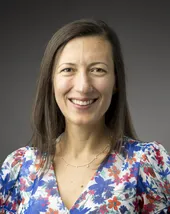
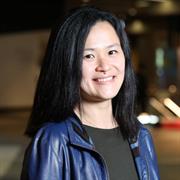
Masahiro Ryo is a Professor of Environmental Data Science at Brandenburg University of Technology (BTU) and leads the working group "Artificial Intelligence for Smart Agriculture" at the Leibniz Centre for Agricultural Landscape Research (ZALF). His research integrates machine learning with ecological systems to address global sustainability challenges, focusing on biodiversity, soil health, and AI-driven agricultural solutions. His work spans environmental data science, ecosystem services, and smart agriculture. Key themes include explainable AI for biodiversity monitoring, soil organic carbon prediction, and machine learning applications in ecological modeling. Recent publications highlight trends in environmental AI, with applications in yield mapping, fungal taxonomy, and global change ecology. He emphasizes the integration of ecological theory with deep learning to tackle small-data problems and improve model transferability. Contact: masahiroryo@gmail.com | Personal Website
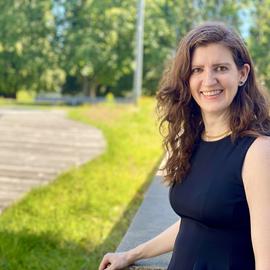
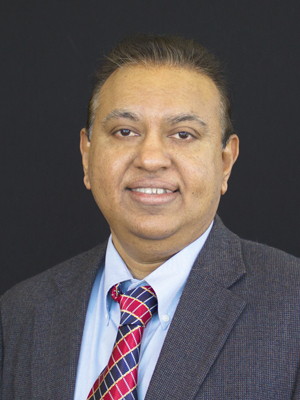
Dr. Yelda Turkan is an Associate Professor in the School of Civil and Construction Engineering at Oregon State University and a Hans Fischer Fellow at the Technical University of Munich (TUM-IAS). Her research focuses on leveraging computer vision, machine learning, and digital twins to enhance sustainability and resilience in the built environment. She holds a Ph.D. in Civil Engineering from the University of Waterloo, Canada, and dual B.Sc. degrees in Civil Engineering and Geomatics Engineering from Istanbul Technical University, alongside an M.Sc. in Remote Sensing. Her work integrates advanced technologies like LiDAR and BIM to improve construction monitoring, structural safety, and fire protection. She has authored over 80 peer-reviewed publications and secured $4.5M in grants from agencies like the NSF. Dr. Turkan serves as Vice President of the International Association for Automation and Robotics in Construction and chairs the ASCE Computing Division Executive Committee. Her research spans digital twins for infrastructure performance, fire safety simulations, and automated progress tracking. Key contributions include frameworks for bridge construction monitoring, fire safety management in timber structures, and BIM-based energy fault detection. Awards include the Robert C. Wilson Faculty Scholar (2023–2025) and ASCE ExCEEd Teaching Fellow (2015).
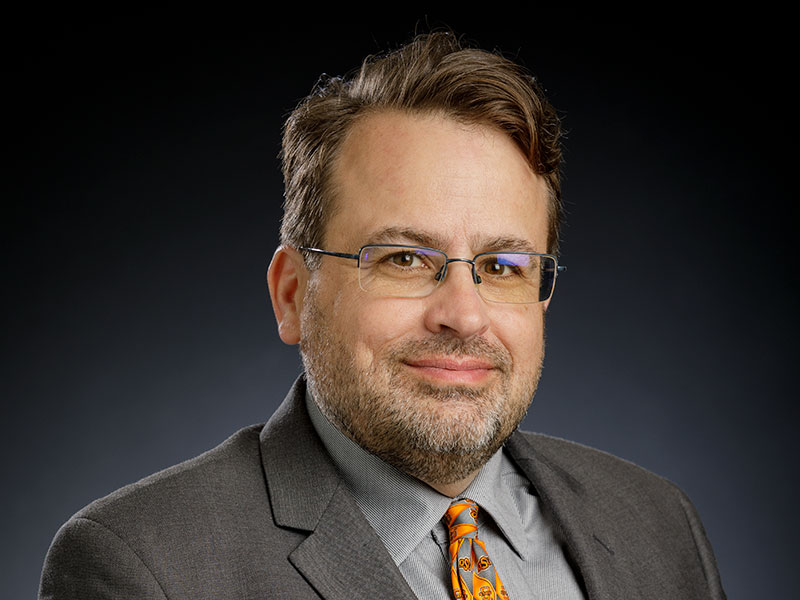
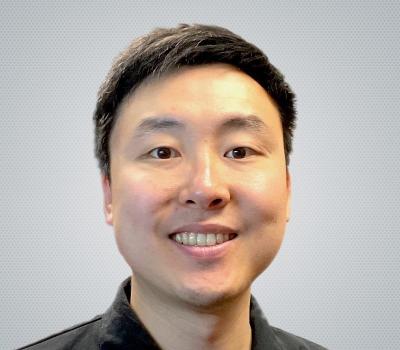
Laura K. Nelson is an Associate Professor of Sociology at the University of British Columbia (UBC) and Director of the Centre for Computational Social Science. Her research focuses on computational methods applied to social movements, gender studies, and text analysis. She holds a PhD and MA from the University of California, Berkeley, and a BA from the University of Wisconsin, Madison. **Education**: PhD in Sociology, University of California, Berkeley MA in Sociology, University of California, Berkeley BA in Sociology (Analysis and Research), University of Wisconsin, Madison Her work bridges sociology and computational methods, examining topics like institutional equity (e.g., NSF ADVANCE), gender disparities in academia, and the use of AI in qualitative research. She has published extensively in journals like *American Journal of Sociology* and serves on editorial boards of *Poetics* and *Acta Sociologica*. Her recent projects include analyzing gender bias in evaluations and leveraging machine learning for feminist social science. **Grants & Advising**: Her postdoctoral work at UC Berkeley and Northwestern University focused on data science and interdisciplinary collaboration. She advises on AI ethics and computational grounded theory, and her teaching includes courses on computational methods in the social sciences. **Affiliations**: She is elected council member for the American Sociological Association’s sections on Sociology of Culture and Mathematical Sociology. She also contributes to initiatives like the *Society-Centered AI* program at Duke University.
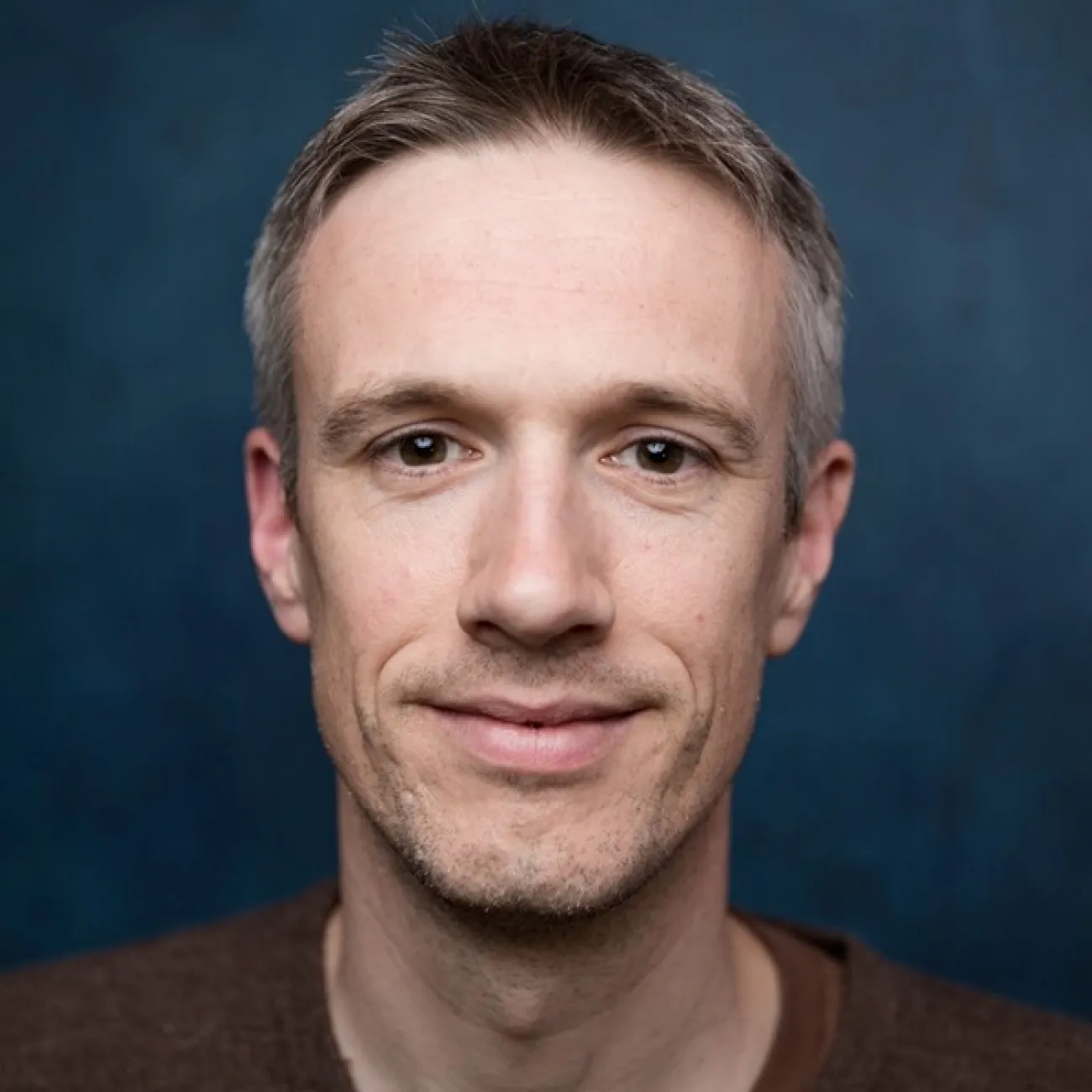
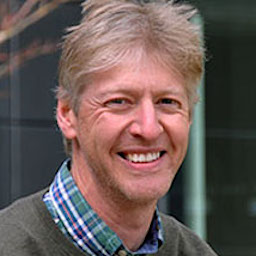
Bruce Sterling is a Professor of New Media and Science Fiction at The European Graduate School (EGS), where he has taught intensive summer seminars since 2003. He also served as "visionary in residence" at the Art Center College of Design in Los Angeles starting in 2005. Sterling is internationally recognized as a science fiction writer, net critic, and cyberspace theorist, with significant influence in the cyberpunk movement. Sterling graduated with a degree in journalism from the University of Texas, Austin, in 1976. His academic journey was followed by a prolific writing career that began with the publication of Involution Ocean in 1977. Sterling's research interests span the intersection of technology, culture, and narrative. He is particularly known for his work on cyberpunk literature, new media theory, and futurism. His concept of "design fiction" has influenced how designers and technologists think about future scenarios. Sterling's Viridian Design Movement promoted environmental awareness through design, while his Dead Media Project documented obsolete communication technologies. His writings consistently explore how technological change reshapes human experience, society, and our understanding of the future. Sterling's recent publications reveal a continued focus on the cultural implications of emerging technologies. His articles examine topics ranging from wearable computing and hyperlocal media to sustainable design and energy transitions. A recurring theme is the relationship between technological progress and environmental sustainability. Sterling frequently employs speculative approaches, using science fiction techniques to explore possible futures and challenge current assumptions about technology's trajectory. Sterling's scientific achievements have been recognized with numerous prestigious awards: Campbell Award (1989) for Islands in the Net Hugo Award (1997) for Bicycle Repairman Hugo Award (1999) for Taklamakan Hayakawa Award (1999) for Taklamakan Clarke Award (2000) for Distraction Sterling has been instrumental in shaping digital culture discourse through his teaching, writing, and activism. As a co-founder of the Electronic Frontier Foundation, he has advocated for digital rights and freedoms. His work bridges academic theory, creative practice, and public engagement, making complex technological issues accessible to diverse audiences. Sterling founded both the Dead Media Project, an archive of obsolete media technologies, and the Viridian Design Movement, an environmental aesthetic initiative. These projects reflect his unique approach to understanding technology through both historical and future-oriented perspectives. His work often explores the lifecycle of technologies, from emergence to obsolescence, and considers how design choices today shape possible futures.
Jamey Jacob, Ph.D., P.E., is a Professor and John Hendrix Chair in Mechanical and Aerospace Engineering at Oklahoma State University, leading the Oklahoma Applied Research Institute (OAIRE). He holds a Ph.D. from UC Berkeley (1995), with earlier degrees from the same institution and the University of Oklahoma. His research focuses on aerodynamics, UAV design, vortex dynamics, geophysical flows, and autonomous systems. Notable projects include solar balloon flight dynamics, eclipse observations, and advanced air mobility (AAM) weather systems. Jacob has pioneered UAV-based weather sensing and developed innovative aerostructures, including inflatable systems. He has received over 15 prestigious awards, including the Regents Distinguished Teacher (2011) and Oklahoma Innovator of the Year (2010). His recent work emphasizes urban wind field mapping and stratospheric balloon applications for planetary science. Jacob’s lab, OAIRE, integrates aerospace engineering with environmental and operational challenges, advancing both academic and applied frontiers.
Professor Andrew Tatem is a Personal Chair in Spatial Demography and Epidemiology at the University of Southampton, leading the WorldPop research group. His work focuses on integrating traditional demographic data with geospatial technologies like satellite imagery and mobile phone data to map population distributions, health dynamics, and pathogen transmission. He leads major initiatives funded by the Bill & Melinda Gates Foundation, Wellcome Trust, and others. Research interests include: Mapping population demographics and mobility patterns Modeling disease spread (e.g., malaria, polio, Zika) Supporting public health interventions via high-resolution data Urbanization and environmental health impacts Notable projects involve global vaccination coverage mapping, polio eradication support, and disaster preparedness. His work has been recognized with awards like the Turing Fellowship and Geovation Innovation Award. He supervises four PhD students in Geography and collaborates internationally with UN agencies and governments. Awards include: AGI Award for Excellence with Impact (2024) Geovation International Geospatial Innovation Award (2023) Breheny Prize (2021) Global Mobile Award for Humanitarian Work (2016) His research outputs emphasize geospatial data fusion, mobility-driven disease modeling, and SDG tracking, with recent focus on post-pandemic health systems and climate adaptation strategies.
Flora Salim is a Professor in the School of Computing Technologies at RMIT University. She serves as co-Deputy Director of the RMIT Centre for Information Discovery and Data Analytics (CIDDA) and an Associate Investigator of the ARC Centre of Excellence in Automated Decision Making and Society. Her research focuses on human behavior modeling, machine learning with time-series and spatio-temporal data, and edge AI applications in IoT and wearables. Flora has secured over $10M in research funding from ARC, industry partners, and government bodies. Notable awards include the 2021 PACM IMWUT Distinguished Paper Award, 2019 Humboldt-Bayer Fellowship, and RMIT's 2018 Research Impact Award. She leads the CRUISE research group and has held visiting professorships at the University of Kassel and University of Cambridge. Editorial roles: Associate Editor of PACM on IMWUT, Area Editor of Pervasive and Mobile Computing Steering Committee member of ACM UbiComp Her work bridges ubiquitous computing and machine learning, with applications in urban analytics, mobility, and health monitoring. Recent projects include self-supervised learning for multimodal data and forecasting with heterogeneous time-series. Supervision areas: Deep learning for sensor data, explainable AI, and wearable-based emotion sensing Teaching programs: Master of Artificial Intelligence and Master of Data Science
Madhav Erraguntla is a Teaching Professor of Industrial & Systems Engineering at Texas A&M University , affiliated with the TEES Center for Remote Health Technologies and Systems . He holds the Mike and Sugar Barnes APT Faculty Fellow title. His research focuses on applying machine learning and AI to healthcare and supply chain management, particularly in diabetes, wearable sensor technologies, and predictive modeling. With over 25 years of industry experience, Dr. Erraguntla has contributed to analytics at AT&T (smart home technologies) and i2 Technologies (retail CRM systems). He leads projects funded by DoD, HHS, and NASA, including national blood inventory surveillance systems. He is a Professional Engineer in Texas and a member of the Institute of Industrial and Systems Engineers (IISE). Education : Ph.D., Industrial Engineering, Texas A&M University (1996); M.Tech., Industrial Engineering, NITIE, India (1989) Key Projects : SBIR grants, mosquito population modeling, diabetes management algorithms, and wearable sensor development His work bridges healthcare innovation and engineering, emphasizing real-world applications in diabetes, emergency hospital management, and public health surveillance. Recent research highlights include AI-driven glucose forecasting, hypoglycemia detection systems, and environmental impacts on disease vectors like Zika virus transmission.
Frédérick Massin is a researcher at ETH Zürich's Swiss Seismological Service (SED), specializing in seismology, earthquake early warning systems, and volcanic monitoring. He is affiliated with the Bedretto Underground Lab (BULGG) and contributes to global seismic research. His work focuses on developing advanced algorithms for rapid earthquake rupture characterization (e.g., FinDer), improving earthquake early warning (EEW) systems in regions like Central America and New Zealand, and analyzing seismic data to enhance disaster preparedness. Key research areas include: Earthquake Source Physics and Real-Time Modeling Seismic Data Center Innovation and Global Networks Volcanic Seismicity and Lahar Detection Socio-Technical Aspects of EEW Systems Recent projects involve assessing EEW impacts in Central America, improving seismic catalogues (FEAR-1), and investigating lake ice seismicity. He collaborates internationally on initiatives such as the Nepal School Seismology Network and Yellowstone volcano-tectonic studies.
Erzhuo "Ezra" Che is an Assistant Professor in the Department of Civil and Construction Engineering at Oregon State University's College of Engineering. His research focuses on 3D point cloud processing, geospatial data analysis, and infrastructure asset management. He teaches courses in 3D laser scanning, digital terrain modeling, and advanced point cloud programming. Education: Ph.D., Civil Engineering (Geomatics), Oregon State University, 2018 M.S., Photogrammetry and Remote Sensing, Wuhan University, 2015 B.Eng., Photogrammetry and Remote Sensing, Wuhan University, 2012 His research interests include lidar technology applications, automated infrastructure assessment, deformation monitoring, and error modeling. Recent work emphasizes ADA compliance evaluation using 3D point clouds and mobile lidar for road marking analysis. Dr. Che has received notable awards such as the 2022 Geo Week Achievement Award and the 2021 Martin Isenburg Best Paper Award. His projects include mapping historical structures at Silver Falls State Park and developing frameworks for efficient point cloud segmentation. His teaching and research bridge geomatics with civil engineering challenges, focusing on practical solutions for infrastructure maintenance and disaster resilience.
Jeremy Crampton is an Adjunct Professor focusing on the societal and political implications of geolocational technologies. He is a leading scholar in critical cartography, surveillance studies, and spatial big data governance. His work explores how technologies like AI, blockchain, and geoweb platforms shape everyday life and power dynamics. He is a Fellow of the Alan Turing Institute and Royal Geographical Society (UK), and a member of the American Association of Geographers. His research spans over three decades, including a seminal 2010 monograph on critical cartography and ongoing projects on counter-GeoAI. He is currently writing The Map and the Spyglass: The New Geographical Analytics of Everyday Life , to be published by Verso. Crampton teaches GEOG 3146 - Political Geography , addressing how spatial technologies influence political structures and governance. Key themes in his work include algorithmic decision-making, geospatial surveillance ethics, and the interplay between technology and sovereignty. His recent articles analyze smart cities, festival security, and the societal impacts of locational data. He critiques techno-utopian narratives, advocating for equitable and transparent geospatial systems. Scientific awards include recognition for his contributions to critical GIS theory and digital geography. His interdisciplinary approach bridges human geography, technology studies, and policy analysis, influencing debates on data governance and spatial justice.
Iain Bye is a Researcher in the Geography Department at Swansea University's School of Biosciences, Geography and Physics. His work focuses on remote sensing applications, particularly using LiDAR technology for forest parameter estimation. He contributes to interdisciplinary environmental research, leveraging geospatial data analysis and ecological modeling. Research Interests: His expertise spans remote sensing methodologies, forest ecology, and environmental monitoring. He explores how advanced technologies like LiDAR enhance understanding of forest structures and ecological dynamics. Publications: His notable work includes a 2019 study in Remote Sensing on photon-counting LiDAR applications in forest research. Awards: No scientific awards explicitly mentioned in available records. Advising & Grants: No student advisement or grant details provided in the text. His role as a Research Officer suggests contributions to project execution rather than direct academic supervision. Labs/Teams: Affiliation with the Geography Department's research groups, though specific lab/team names are not specified in the provided information.
Adrian Parker is a Professor of Geography at Oxford Brookes University's School of Law and Social Sciences. He holds degrees including a DPhil from the University of Oxford. His research focuses on Quaternary science, geoarchaeology, and palaeoecology across the Middle East, North Africa, Southern Africa, and southern England. Key areas include multi-proxy environmental reconstruction using phytoliths, pollen, and geochemistry, with emphasis on understanding human-environment interactions during critical climatic transitions. Dr. Parker leads the Human Origins and Palaeo Environments (HOPE) group within the Centre for Environment and Society (CES). His fieldwork spans UAE, Saudi Arabia, Yemen, and Lesotho, addressing topics like Holocene socio-ecological systems, Neolithic settlement patterns, and climate change impacts. Recent projects include a £41,900 Ras al-Khaimah-funded geoheritage study and a £1,563 University of Michigan collaboration on phytolith analysis. He teaches modules on Quaternary Environmental Change and Arid Zone Environments. Professional accolades include Fellowships from the Society of Antiquaries, Royal Geographical Society, Royal Anthropological Institute, and Higher Education Academy. His advisory work includes mentoring two active PhD students: Sophie Edwards (hominoid craniodental morphology) and Kira Raith (Quaternary climate-landscape dynamics). Publications span over 40 peer-reviewed articles in journals like Quaternary Science Reviews , Scientific Reports , and Antiquity , with a focus on integrating geological and archaeological evidence to reconstruct past environments and human adaptations. His research bridges archaeology, geology, and environmental science, emphasizing interdisciplinary approaches to understanding long-term socio-ecological systems.
Aanuoluwapo Ojelade is a Distinguished Research Fellow in the Department of Industrial and Systems Engineering at the University at Buffalo, School of Engineering and Applied Sciences. His work bridges occupational ergonomics, biomechanics, and construction safety through advanced technologies. Education: PhD, Industrial and Systems Engineering, Virginia Tech University MEng, Industrial and Systems Engineering, Virginia Tech University BEng, Civil Engineering, Osun State University Research Interests: Focus on exoskeleton technology for construction workers, biomechanical analysis of manual tasks, and motion capture systems for ergonomic evaluation. His studies address physical demand reduction, workplace interventions, and technology adoption barriers. Recent Article Trends: Leverage machine learning (random forest, recurrent neural networks) for ergonomic analysis, compare exoskeleton efficacy across industries (construction, mining), and evaluate demographic impacts on technology readiness. Markerless motion capture and EMG-based force prediction are recurring methodologies. Contact: 317 Bell Hall, University at Buffalo, aojelade@buffalo.edu, (716) 645-4721.
Heather He is a Lecturer in Data Science/Analytics at the Bangor Business School , Bangor University. She actively supervises PhD students and contributes to research in retail investing, FinTech, and sustainable business analytics. Research Interests: Retail Investing & Financial Inclusion: Examines retail investor behavior, cognitive biases, and FinTech’s role in democratizing financial access. Advanced News Analytics: Develops predictive models linking media sentiment to corporate governance and market dynamics. Sustainable Analytics: Focuses on ESG standards and data science applications for SME sustainability. Scientific Award: Advance HE Fellowship Certificate (2024). Grant Projects: UK SPF Skills & Innovation Voucher Scheme (multiple projects, 2024–2025). British Academy/Leverhulme Small Research Grant (2023–2025). Welsh Government SMART-FIS Program (2024). British Council Springboard Fund (2024–2025). PhD Students: Jiaxin Li, Ricardo Verschueren, and external advisee Thokozile Tembo (University of Southampton).