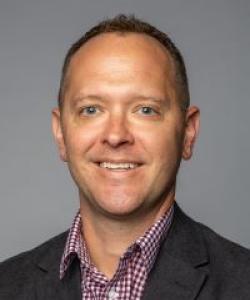
Bastian Bohn is a Researcher at the Institute for Numerical Simulation (University of Bonn). He focuses on Mathematics of Machine Learning , Approximation Theory , and High-dimensional Discretizations . His work bridges Sparse Grid Methods Numerical Analysis Scientific Computing with modern ML applications. His recent publication Algorithmic Mathematics in Machine Learning (2024) consolidates his work on algorithmic foundations for high-dimensional data analysis. Earlier studies investigate Deep Kernel Learning Explainable AI Dimensionality Reduction using sparse grid frameworks.
David Robert Shannon is an Instructor at the Department of Computer Science, University of Copenhagen. He contributes to teaching and research within the Machine Learning section, which participates in the SCIENCE AI Centre. University: University of Copenhagen Department: Department of Computer Science Section: Machine Learning His research interests span theoretical and applied machine learning, focusing on natural language processing, information retrieval, medical image analysis, computational biology, and quantum computing applications. He utilizes the department's powerful compute cluster for projects involving AI's environmental impact, quantum algorithms, and biomedical data modeling. Recent publications highlight work in quantum-inspired neural networks, sustainable AI, medical diagnostics, and cross-cultural computational frameworks. Key themes include ethical considerations in AI, hybrid quantum-classical systems, and multimodal data analysis. David collaborates with the Machine Learning section and SCIENCE AI Centre, leveraging resources like TreeSense for remote sensing and deep learning of global tree resources. The section's activities range from foundational research to applications in sustainability and biological data modeling.
Patrick Forré is an Assistant Professor and Lab Manager of the AI4Science Lab at the Informatics Institute, Faculty of Science, University of Amsterdam. His work bridges theoretical machine learning and scientific applications, fostering interdisciplinary collaboration across informatics, mathematics, ecology, chemistry, physics, biology, and astrophysics. His research centers on mathematical foundations of machine learning including causal inference, graphical models, information theory, conditional independence structures, and geometric deep learning. He specializes in applying these techniques to scientific data problems, particularly in electro-catalysis and nitrogen fixation, where machine learning enhances molecular simulations and quantum chemical modeling. His theoretical work addresses non-linear structural causal models with cycles and latent confounders. The AI4Science Lab under his management focuses on detecting hidden patterns in scientific data through projects like electrode-electrolyte interface modeling, nitrogen-fixing coordination complexes analysis, and classical DFT neural approximations. Located in LAB42 Building at Amsterdam Science Park, the lab connects diverse scientific disciplines through machine learning innovation while organizing colloquia, workshops, and PhD defenses.
Musa Mammadov is a Senior Lecturer in Data Science at Deakin University's School of Information Technology, part of the Faculty of Science Engineering and Built Environment. His research focuses on data science, machine learning, and computational mathematics with applications in environmental modeling, healthcare analytics, and financial systems. Education: Doctor of Philosophy from University of Ballarat Research Interests: Specializing in numerical and computational mathematics, Mammadov develops advanced machine learning techniques for complex classification problems while exploring optimization methods in mathematical economics. His work spans environmental modeling applications in Sri Lanka's Kalu River Basin, healthcare fraud detection algorithms, and financial market analysis. Scientific Contributions: The recent publications highlight his work in hydrological forecasting using deep learning architectures, anomaly detection in medical billing systems, and probabilistic modeling of financial indices. His methodological contributions include improving Bayesian network classifiers and developing novel dependency estimation techniques. Academic Roles: Mammadov serves as editorial board member for Optimization Letters and Annals of Data Science . He supervises doctoral students in data science projects including health provider billing analysis and satellite downlink scheduling optimization.
Alessandro Pezzoli is an Associate Professor at the Politecnico di Torino , affiliated with the Interuniversity Department of Territorial Sciences, Planning and Policies (DIST) and the Responsible Risk Resilience Center (R3C). He holds a Master in Civil Engineering and a PhD in Meteorology and Oceanography. Education: Master in Civil Engineering - Hydraulic Option, Politecnico di Torino (Italy) PhD in Meteorology and Oceanography, Université de Toulon (France) Research Interests: His work spans Applied Meteorology , Bioclimatology , and Climate Change , focusing on natural hazard adaptation and territorial resilience . He integrates human health and tourism perspectives into climate impact studies. Recent Publications: His 2025-2023 articles address coastal flooding , wildfire risk assessment , and nature-based urban resilience , with methodological contributions to climatic modeling and econometric valuation of environmental risks. Scientific Recognitions: Fellow of Royal Meteorological Society (FRMetS) Fellow of Royal Geographical Society (FRGS) Associate Fellow of Royal Institute of Navigation (AFRIN) Director of CLIMATE journal since 2013 Teaching & Mentorship: Serves as Senior Lecturer (Adjunct Professor) at University of Turin for programs in Environmental Economics and Geography . Supervises PhD students in Urban and Regional Development since 2005. Research Leadership: Directed international projects like ONE HEALTH (Kenya), Rede Litoral (Brazil), and Prometeo (Ecuador), with focus on climate adaptation in vulnerable regions across Africa, South America, and Asia.
Luca Salerno is a Fixed-term Assistant Professor at Politecnico di Torino in the Department of Environment, Land and Infrastructure Engineering (DIATI). His primary academic focus is in Hydraulics (CEAR-01/A) within Civil Engineering and Architecture. He holds memberships in three degree program colleges: Member of the College of Environmental and Land Engineering Invited member of the College of Civil and Building Engineering Invited member of the College of Mechanical, Aerospace, and Automotive Engineering His research specializes in river systems dynamics with focus areas including: Eco-morphodynamic processes in river networks Carbon transport and sequestration mechanisms in aquatic systems Hydraulic modeling of large tropical rivers Environmental fluid mechanics applications He investigates how river morphology interacts with ecological processes to influence global carbon cycles. Salerno's publications consistently explore river-based carbon pumping phenomena, showing progression from doctoral research on tropical rivers to recent work on network-driven transport mechanisms. His work integrates field data, geospatial analysis, and fluid dynamics modeling to address environmental challenges. Currently teaches multiple courses including: Water Systems (Agritech Engineering) River Engineering and Restoration (Civil Engineering) Fluid Mechanics (Mechanical Engineering) with teaching activities spanning undergraduate, graduate, and laboratory instruction.
Bradford Mills is a Professor in the Department of Agricultural and Applied Economics at Virginia Polytechnic Institute and State University (Virginia Tech). His research focuses on development economics, international development, and rural/ regional economic development. He has held academic positions at Virginia Tech since 1997 and has conducted fieldwork in countries like Sri Lanka, The Gambia, Guinea, Kenya, The Netherlands, and Germany. His expertise includes poverty measurement, social safety nets, and technology adoption in rural contexts. Education: Ph.D. Agricultural and Resource Economics (UC Berkeley, 1993), M.S. Agricultural Economics (University of Connecticut, 1986), B.A. Political Science & Religious Studies (Hobart College, 1984). Research Interests: Adaptive social protection systems in Sub-Saharan Africa; impacts of forest co-management; heating assistance effects on food security; cross-country energy-efficient technology adoption. His work spans climate resilience, agricultural policy, and international development challenges. Experience includes roles as a Visiting Scientist at Fraunhofer ISI (2007–2008), Research Officer at ISNAR (1995–1997), and a Peace Corps Agricultural Economist in The Gambia (1987–1989).
Peyman Najafirad is an Associate Professor in the Department of Computer Science at the University of Texas at San Antonio (UTSA), part of the College of Sciences. His academic journey includes a Ph.D. and M.S. in Electrical and Computer Engineering and Computer Science from UTSA, alongside an M.S. in Computer Engineering and Artificial Intelligence from Iran's Polytechnic, and a B.S. in Computer Science from Sharif University of Technology. His research focuses on AI security, knowledge representation, probabilistic decision-making, and reinforcement learning. Notable contributions include work on adversarial machine learning, LLM-driven cybersecurity solutions, and multimodal AI systems for remote sensing and medical imaging. Najafirad's publications address challenges in secure code generation, AI fairness, and real-time decision-making frameworks for IoT systems. His work bridges theoretical advancements with practical applications, such as vulnerability analysis in software systems, automated defense mechanisms, and explainable AI for healthcare and disaster response. Current research trends highlight innovations in AI safety, ethical algorithm design, and cross-disciplinary solutions for complex societal challenges. While no awards or grants are explicitly listed, his prolific publication record reflects sustained engagement with cutting-edge topics in computer science. His advising role and academic leadership contribute to fostering the next generation of researchers in interdisciplinary AI applications.
Kristen Underwood is a Research Professor in the Department of Civil and Environmental Engineering at the University of Vermont (UVM), affiliated with the College of Engineering and Mathematical Sciences. Her work bridges water resources engineering, aquatic ecology, and advanced computational methods to address environmental challenges. She holds a Ph.D. in Environmental Engineering and an M.S. in Geosciences from UVM and Penn State University, respectively. Education: Ph.D., Environmental Engineering (UVM); M.S., Geosciences (Penn State) Her research focuses on applying machine learning, Bayesian inference, and geostatistical tools to study catchment dynamics, fluvial geomorphology, and sediment-nutrient flux in rivers. She explores sustainable infrastructure design and floodplain restoration to mitigate hazards and enhance ecological compatibility. Recent work emphasizes floodplain functionality, including sediment deposition patterns and phosphorus retention in restored wetlands. She collaborates on projects like the Functioning Floodplain Initiative and Vermont’s Water Resources Monitoring Network. Publications highlight innovative applications of AI in turbidity forecasting, flood routing models, and snow hydrology using LIDAR data. She also investigates the impact of climate change on water systems and interdisciplinary approaches to Critical Zone science. Dr. Underwood teaches courses in Applied River Engineering and Data Analytics for Water Resources, reflecting her commitment to integrating theory and practical solutions in environmental engineering.
Dr. Justin McMechan is an Associate Professor in the Department of Entomology at the University of Nebraska-Lincoln. He holds a joint appointment with 50% Extension and 50% research responsibilities. Education: Doctor of Plant Health (2016) and Ph.D. in Entomology (2016) from University of Nebraska-Lincoln Research Areas: Soybean Gall Midge ecology, Insect Pest Management, Cover Crop Systems, Wheat Curl Mite-Virus Complex, Plant-Insect Interactions His work focuses on biological control strategies for field crops, with recent studies on Resseliella maxima in soybean and hail damage impacts on wheat virus transmission. He pioneered innovative extension methods combining automated communication tools with traditional field demonstrations. Notable scientific awards include: 2023 Outstanding Paper Award in Agronomy Journal 2022 Harold & Esther Edgerton Junior Faculty Award 2020 FMC Researcher of the Year Dr. McMechan actively supervises graduate students and has secured over $4.9 million in research funding from federal agencies and commodity boards, with particular emphasis on sustainable pest management solutions.
Marieka Brouwer Burg is Assistant Professor of Anthropology at the University of Vermont and Co-Director of the Digital Anthropology Laboratory. She specializes in landscape archaeology, focusing on human-environment interactions during the Archaic period in Mesoamerica. Her NSF-funded project (2021-2025) investigates adaptive strategies in variable environments through archaeological surveys, paleoecological analyses, and geospatial modeling in northern Belize. Brouwer Burg's research has revealed large-scale Archaic fisheries and settlement patterns through multidisciplinary methods including GIS, XRF analysis, and radiometric dating. Education: PhD, Michigan State University (2011) MA, Michigan State University (2007) BA, University of Wisconsin-Madison As a Fulbright fellow, she studied at Dutch research institutions including the Cultural Heritage Agency of Netherlands and Groningen Institute of Archaeology. Her teaching emphasizes experiential learning through digital anthropology methods including geospatial analysis and materials science applications.
Prof. Dr. Ing. Alexandru Isar is a Full Professor at the Department of Communications, Faculty of Electronics and Telecommunications, Politehnica University of Timișoara. He holds academic ranks since 1990 (Adjunct Professor), 1995 (Associate Professor), and 1999 (Full Professor). His research focuses on signal processing, wavelet analysis, and medical imaging. He has advised 5 Ph.D. students and currently supervises 2 doctoral candidates. Isar has published extensively in IEEE journals and authored books on time-frequency representations and network security. **Education**: Ph.D. in Engineering (1993), supervised by Prof. Eugen Pop. Completed postdoctoral research at Telecom Bretagne, France (2003). **Grants**: European Space Agency-funded projects (2013-2017) and national grants (IDEI 2009-2011). **Research Directions**: Introduced time-frequency representations and wavelet theory applications. **Notable Contributions**: Inventions in ultrasonic control systems (1987), development of the Hyperanalytic Wavelet Transform (2008), and SAR/SONAR image denoising algorithms. **Administrative Roles**: Deputy Dean (2001-2004), Department Director (2012-2020). **Collaborations**: European Space Agency projects, international conferences (Brest, Bordeaux), and peer reviews for IEEE journals. His work bridges theoretical signal processing with practical applications in healthcare and telecommunications.
Márton Karsai is an Associate Professor and Head of the Department of Network and Data Science at Central European University (CEU). He also serves as a Research Professor at the Rényi Institute of Mathematics (Hungary) and Editor-in-Chief of Advances in Complex Systems . His work focuses on computational social science, human dynamics, and data-driven modeling of socioeconomic systems. Karsai holds advanced degrees including a DSc from the Hungarian Academy of Sciences and an HDR (Habilitation) in Computer Science from École Normale Supérieure de Lyon. His research integrates temporal networks, human mobility, and social contagion phenomena, often using large-scale datasets from digital platforms and wearable sensors. Notable projects include studies on evacuation behavior during disasters, vaccination hesitancy, and urban socioeconomic stratification. Karsai leads interdisciplinary initiatives like the DyLNet project, which examines social interactions and language development in preschool environments through sensor technology. Recent publications highlight innovations in network clustering algorithms (PASCO), epidemic modeling with generalized contact matrices, and the application of machine learning to infer socioeconomic status from satellite imagery. His work bridges computational methods with real-world challenges in public health, urban planning, and humanitarian development.
Laron K. Williams is a Professor of Political Science at the Truman School of Government and Public Affairs , University of Missouri. He holds the Frederick A. Middlebush Chair and has been affiliated with the institution since 2011, after a prior role at Texas Tech University. Education: Ph.D. in Political Science, Texas A&M University (2008) B.S. in Political Science, University of Nebraska at Kearney His research focuses on electoral accountability , public opinion , and party competition , with methodological expertise in spatial econometrics , time series analysis , and interpretation practices . His work addresses critical questions in comparative politics and international relations. Recent publications analyze trends in public opinion (e.g., issue importance datasets), spatial modeling in political science, and the interplay of economic conditions with electoral and foreign policy decisions. Articles appear in American Journal of Political Science , Journal of Politics , and Political Analysis . Scientific Awards: Frederick A. Middlebush Chair of Political Science Williams contributes to academic software development, including the dynsim package for dynamic simulations of autoregressive relationships. He maintains active profiles on Google Scholar and GitHub , emphasizing reproducibility and open science.
Dr. Alan Yeung is a Research Fellow at the School of Health and Life Sciences , Glasgow Caledonian University . His work primarily focuses on public health , infectious disease epidemiology , and substance use disorders , particularly in the context of HIV , hepatitis C , and opioid agonist treatment (OAT) populations. Institution: Glasgow Caledonian University, United Kingdom School: School of Health and Life Sciences Role: Research Fellow Dr. Yeung’s research emphasizes mathematical modeling of disease transmission, retrospective cohort studies , and policy evaluation for harm reduction strategies. He has contributed extensively to understanding the epidemiology of HIV and hepatitis C among people who inject drugs , including analyzing treatment impacts, mortality trends, and pandemic-related disruptions. Recent publications (2024-2025) highlight his expertise in infectious disease modeling , public health interventions , and substance misuse policy . His work aligns with the UN Sustainable Development Goals related to Good Health and Well-being . Dr. Yeung leads research projects such as "Examining the impact of the pandemic on the uptake of HIV PrEP and effectiveness in preventing HIV transmission" and collaborates with institutions on HIV prevention , opioid-related mortality , and hepatitis C treatment outcomes . Email: aye2@gcu.ac.uk ORCID: 0000-0001-5226-3695