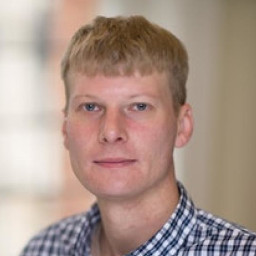
Peter Long is a Senior Lecturer in Ecology and Conservation at the University of Oxford Brookes, School of Biological and Medical Sciences . His research integrates satellite remote sensing, environmental modeling, and biodiversity assessment to address ecological and conservation challenges at landscape and global scales. Key research themes include: Developing algorithms for satellite data analysis Quantifying biodiversity and ecosystem services Building web-based ecological assessment tools Studying climate-agriculture interactions Assessing deforestation drivers in Madagascar Recent publications (2023–2025) focus on regenerative agriculture carbon impacts , Madagascar deforestation policy , and climate-induced habitat changes . He specializes in GIS, high-performance computing, and stakeholder engagement for environmental monitoring. Collaborations span Guatemala , Madagascar , and Europe , with tools like LEFT (web-based ecological value estimator) and BioTIME 2.0 (biodiversity time series database).
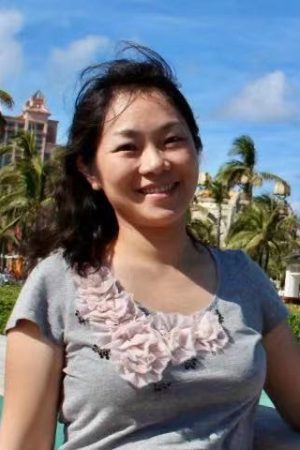
Jing Yang is a full Professor and Director of MS CS Program in the Computer Science Department at the University of North Carolina at Charlotte (UNCC). She has been actively involved in data visualization and visual analytics research since joining UNCC in 2005 after completing her PhD at Worcester Polytechnic Institute. Dr. Yang earned her Bachelor's degrees in Engineering Mechanics and Computer Science from TsingHua University in 1997 and completed her Ph.D. in Computer Science from Worcester Polytechnic Institute in May 2005 under advisors Matthew O. Ward and Elke A. Rundensteiner. Her research focuses on developing visual analytics techniques for abstract data including multidimensional data, time-oriented data, networks, hierarchies, text documents, and trajectory data. She conducts design studies for application domains such as sports, bioinformatics, finance, network security, and health, while exploring fundamental visualization topics like interactions, insight management, clustering-based approaches, and animations. Her recent work emphasizes sports analytics, urban data, and multivariate time series visual analytics. Analysis of Dr. Yang's publication record reveals a strong focus on practical applications of visualization techniques across diverse domains. Her work consistently bridges theoretical visualization frameworks with real-world data challenges, particularly in transportation (taxi trajectories), sports (tennis match analysis), financial transactions, and bioinformatics. The publications demonstrate an evolution from foundational visualization techniques to increasingly sophisticated domain-specific applications. Dr. Yang has secured substantial research funding from NSF, EPA, DHS, and industry partners including Google and Bank of America. Her grants portfolio includes significant projects like TrajAnalytics (NSF, $200,950), Visualizing Event Dynamics (NSF EAGER, $75,317), and Visualizing High Dimensional Categorical Datasets (Google Faculty Research Award, $60,000), among others totaling over $4 million in research support. As an educator, Dr. Yang has taught numerous courses including Visual Analytics, Information Visualization, and Database Design. She directs the Charlotte Visualization Center and has mentored numerous students through research projects. Her collaborative approach is evident in her extensive co-authorship network spanning multiple institutions and disciplines. Current research directions include narrative animation for streaming text visualization and advanced techniques for exploring high-dimensional categorical datasets.
Professor Graham Ogg is a leading academic at the University of Oxford, where he serves as Professor of Dermatology and leads the Skin Immunology Group. His research focuses on cutaneous immunity, particularly the role of CD1a-restricted T cells in inflammatory skin diseases. He is affiliated with the MRC Human Immunology Unit and MRC Weatherall Institute of Molecular Medicine, driving translational research on lipid antigen presentation and skin immune responses. Professor Ogg's investigations center on molecular mechanisms of skin inflammation, with emphasis on CD1a-mediated T cell activation and its implications for atopic dermatitis, psoriasis, and vaccine development. His work bridges fundamental immunology with clinical applications, exploring how lipid metabolism influences immune pathways in barrier tissues. Research themes include: CD1a-lipid interactions in cutaneous inflammation Therapeutic modulation of skin-specific T cell responses Translational models for dermatological drug delivery Immune mechanisms in allergic skin disorders Analysis of his recent publications (2024-2025) reveals dominant research streams: 1) Clinical dermatology focusing on systemic therapies for atopic eczema, 2) Immunological studies of dengue pathogenesis and metabolic interactions, 3) COVID-19 sequelae and immunity dynamics, and 4) Fundamental T cell biology in autoimmune/inflammatory contexts. This corpus demonstrates interdisciplinary integration of dermatology, virology, and immunometabolism. His scientific recognition includes: Fellowship of the Academy of Medical Sciences (FMedSci) Professor Ogg directs the Skin Immunology Group at the MRC Weatherall Institute, coordinating translational projects that investigate cutaneous immune circuits. The team employs single-cell analysis, spatial transcriptomics, and immunological profiling to dissect skin-specific immune responses, with ongoing work exploring CD1a-targeted therapeutic strategies.
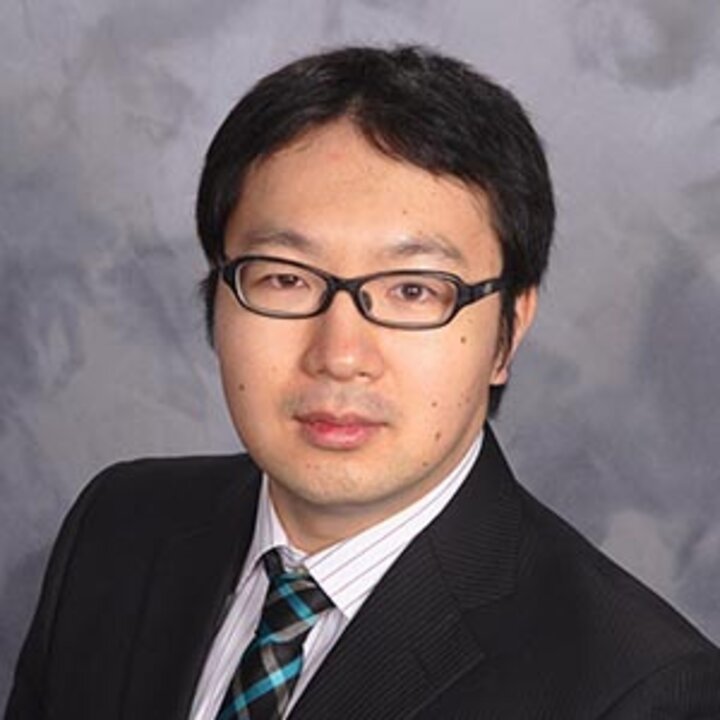
Associate Professor Feng Chen is a faculty member at the School of Mathematics & Statistics, University of New South Wales, specializing in statistical methodology development and applications. His research bridges theoretical statistics and practical implementations across financial modeling, spatiotemporal processes, and public health analysis. PhD in Statistics from University of Hong Kong (2008) MSc in Applied Probability & Statistics from Lanzhou University (2004) BSc in Mathematics from Lanzhou University (2001) Research focuses include: Nonparametric and semiparametric statistical methods Point process modeling with emphasis on Hawkes processes Statistical computing and algorithm development Applications to financial data, earthquake analysis, and public health Recent publications demonstrate methodological advances in: Hawkes process estimation with complex data structures Renewal process applications in seismology GARCH modeling with missing data Spatiotemporal clustering analysis Scientific recognition includes: UNSW Science Staff Impact Award (2023) Professional roles: Director of Research Postgraduate Studies (2023--) Associate Editor for multiple journals Statistics Honours Coordinator (2013-2018) Active participant in statistical societies
Ben K. Grunwald serves as Professor of Law at Duke University School of Law, where he has been a faculty member since 2017 after completing a Bigelow Fellowship at the University of Chicago Law School. His scholarly work bridges legal theory and empirical analysis to address critical issues in criminal justice systems. JD, PhD in Criminology, AM in Statistics, and BA from the University of Pennsylvania Clerked for the Honorable Thomas Ambro on the U.S. Court of Appeals for the Third Circuit Bigelow Fellow at the University of Chicago Law School (2016-2017) Professor Grunwald's research program centers on evidence-based criminal justice reform, with particular emphasis on prosecutorial power dynamics, sentencing fairness, juvenile justice boundaries, and police accountability mechanisms. His methodological approach integrates advanced statistical techniques with legal scholarship to produce actionable insights for policymakers. Current projects examine racial bias in criminal records, optimal decarceration strategies, and the labor market consequences of police discipline. His recent publications demonstrate a consistent focus on translating empirical findings into practical legal reforms, particularly in law enforcement practices and juvenile justice systems. Through interdisciplinary collaborations with criminologists and statisticians, his work challenges conventional wisdom using rigorous data analysis while maintaining strong connections to constitutional principles and procedural justice. Professor Grunwald teaches foundational courses including Criminal Law and Criminal Procedure: Investigation, along with specialized seminars in Criminology and Criminal Procedure that emphasize empirical methodologies. His curriculum development reflects his commitment to training future lawyers in evidence-based legal practice and policy analysis.
Dag Olav Hessen is a Professor at the University of Oslo , leading the Center for Biogeochemistry in the Anthropocene (CBA) . The center integrates expertise from the Department of Life Sciences, Earth Sciences, and Chemistry to investigate climate-carbon-ecosystem interactions in northern latitudes. Research Focus: Climate change impacts on freshwater and marine ecosystems Key Areas: Ecological stoichiometry, genome size, pelagic food webs, permafrost thaw Methodology: Interdisciplinary approaches combining fieldwork, lab experiments, and modeling His recent publications address critical issues like greenhouse gas dynamics in thawing permafrost , tipping points in lake ecosystems , and global change effects on zooplankton communities . Collaborative work spans Arctic char vulnerability, DOM-contaminant interactions, and climate governance frameworks.
Thushara Addanki is a Researcher at the Chair of Renewable and Sustainable Energy Systems, Technical University of Munich (TUM). He holds a Master's degree in Power Engineering from TUM, where he completed his thesis on Intertemporal Urbs with previous investments in the endogenous material demand for new capacity investments . His work focuses on modeling, optimization, and sustainability analysis of energy systems, with emphasis on renewable integration in developing regions and green hydrogen solutions. Research interests span energy system modeling, renewable resource assessment, life-cycle environmental impact integration, and techno-economic analysis of global hydrogen/synfuel supply chains. His publications reflect expertise in high-resolution geospatial analysis (pyGRETA), cross-sectoral optimization (Impuls-urbs), and international energy policy applications. Thushara contributes to projects including ETSAP Germany (energy systems modeling) and multi-national collaborations analyzing energy transitions in Uruguay, Bavaria, and global contexts. He is active in the ENS research team at TUM, advancing tools for sustainable energy planning.
Taro Mieno is an Associate Professor in the Department of Agricultural Economics at the University of Nebraska-Lincoln, specializing in precision agriculture and water resource economics. His work bridges agricultural policy, spatial econometrics, and environmental sustainability. University: University of Nebraska-Lincoln Department: Agricultural Economics Academic Rank: Associate Professor Research Interests: Precision agriculture and variable rate technologies Groundwater economics and drought resilience On-farm experimentation and data-driven decision making Agricultural policy and environmental externalities Machine learning applications in agronomic optimization Soil-water interactions and resource management Email: tmieno2@unl.edu
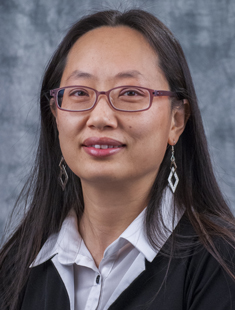
Hye-Chung Kum is a Professor in the Department of Health Policy & Management at Texas A&M University, where she pioneers Population Informatics to transform digital data into evidence-based health policy solutions. Her work bridges computer science, public health, and social work to address critical data challenges in healthcare systems. Education: PhD, University of North Carolina at Chapel Hill (UNC-CH), 2004 MSW (Master of Social Work), UNC-CH, School of Social Work, 1998 MS, UNC-CH, Department of Computer Science, 1997 BS, Yonsei University, Seoul, Korea, Department of Computer Science, 1995 Research Vision: Dr. Kum develops privacy-preserving human-computer hybrid systems for cleaning and integrating chaotic real-world data (e.g., EHRs, administrative records). Her Population Informatics framework enables ethical large-scale analysis while addressing data genocide in marginalized communities through innovations like the Secure Decoupled Linkage (SDLink) system. Publication Trends: Recent work (2024-2025) reveals three dominant threads: (1) Mental health service utilization dynamics during/post-pandemic, (2) Racial/ethnic disparities in emergency department use and cancer outcomes, and (3) Ethical data sharing frameworks for vulnerable populations. Her Texas-focused studies on Medicaid payment models and AI-driven record linkage demonstrate practical policy applications. Research Infrastructure: As director of the Population Informatics Lab, she leads cross-disciplinary teams developing Privacy-by-Design tools that balance public health needs with data sovereignty—particularly for American Indian and Alaska Native communities. Her grant-funded work consistently addresses Medicaid transformation and healthcare cost drivers through secondary data analytics.
Professor Stefan Siebert is Head of the Department of Crop Sciences at the Agricultural Faculty of the University of Göttingen, a position he has held since October 2017. His academic career spans multiple prestigious institutions including the University of Bonn, University of Frankfurt, and University of Kassel, where he completed his doctoral studies. University of Göttingen (2017-present): Professor and Head of Crop Science/Agronomy University of Bonn (2016-2017): Temporary Head of Chair Crop Science University of Bonn (2009-2015): Habilitation in Crop Science and Resource Conservation University of Frankfurt (2004-2009): Postdoctoral Scientist University of Kassel (2002-2005): Ph.D. Student and Scientist Professor Siebert's research focuses on sustainable resource use in crop production, climate change impacts on plant growth, plant growth modeling, and drought risk assessment. His work integrates large-scale data analysis with modeling approaches to understand the complex interactions between resource use, crop management, and productivity. He has developed comprehensive datasets on water, soil, and nutrient use in agriculture and pioneered methods for analyzing irrigation systems globally. His recent publication trends reveal a strong emphasis on irrigation systems, climate change impacts on agriculture, and advanced crop modeling techniques. The analysis of his 15 most recent articles shows consistent focus on water resource management, spatial analysis of agricultural systems, and the effects of climate variability on crop production. His work frequently combines remote sensing data with ground-based measurements to create high-resolution datasets for agricultural decision-making. Professor Siebert leads several significant research projects including ZERN (Future of Nutrition in Lower Saxony, 2024-2029), Collaborative Research Center 1502 on Regional Climate Change (2022-2025), and OUTLAST (Development of a global drought hazard forecasting system, 2022-2025). He has been continuously developing and maintaining a global dataset on irrigated areas since 1997, establishing himself as a leading authority in agricultural water management. His teaching portfolio is extensive, covering scientific writing, field production exercises, general crop production, methodical work, plant biology, crop production and breeding, sustainability of production systems, and applications of data analysis to agronomy. Professor Siebert's work bridges theoretical research with practical applications in sustainable agriculture, making significant contributions to our understanding of how to maintain food security in the face of climate change.
Robert Heimer is a Professor of Epidemiology (Microbial Diseases) and Pharmacology at Yale University, with affiliations to the Yale School of Public Health , Center for Interdisciplinary Research on AIDS (CIRA) , and Yale Institute for Global Health . His research focuses on substance use epidemiology , HIV and viral hepatitis prevention , and harm reduction strategies , particularly addressing the opioid crisis through interdisciplinary methods combining laboratory, behavioral, and structural analyses. PhD in Molecular Biology/Pharmacology (Yale University, 1988) BA in Molecular Biology (Columbia College, 1974) His work examines injection drug use consequences , syringe exchange programs , overdose prevention , and pharmacological addiction treatment , with funding from NIH, CDC, and Gilead Foundation. Recent publications analyze spatial overdose patterns , opioid treatment accessibility , and structural stigma in rural healthcare . He has contributed to understanding HIV transmission in Russia and global harm reduction policy . Scientific Awards: Recognized through Annual Research Awards and Career Achievement Awards at Yale School of Public Health. Dr. Heimer directs the Interdisciplinary Research Methods Core at CIRA and conducts fieldwork in Vietnam and Lebanon, addressing cross-border substance use challenges and stigma in marginalized populations . His research informs public health policy and prison-to-community healthcare transitions .
Sushil Prasad is a Professor of Computer Science at the University of Texas at San Antonio (UTSA), affiliated with the College of Sciences. His research focuses on data-intensive computing, energy-efficient deep learning models, parallel algorithms, and high-performance software systems. He holds a Ph.D. from the University of Central Florida, an M.S. from Washington State University, and a B.Tech. from the Indian Institute of Technology, Kharagpur. His work emphasizes integrating parallel and distributed computing into early computer science curricula. Key research interests include geospatial data analysis using ICESat-2 and Sentinel-2 imagery, edge device-optimized neural networks, and scalable polygon processing algorithms. He has contributed to frameworks like MPI-GIS and Crayons for high-performance geospatial computing. His educational initiatives include NSF-funded curriculum modernization efforts in parallel computing education. Recent work trends show a focus on climate science applications (e.g., polar sea ice classification), energy-efficient AI, and GPU/OpenMP parallelization. He has organized workshops like EduHPC and EduPar to advance HPC education strategies. Notable recognition includes the TCPP Outstanding Service Award (2012). His projects span cloud-based GIS systems, distributed ML training, and big spatial data processing. Collaborations include NSF-funded research on colocation mining, trajectory analysis, and curriculum development for undergraduate HPC education.
Calvin Masilela is a Professor in the Department of Anthropology, Geospatial and Earth Sciences at Indiana University of Pennsylvania (IUP), housed within the Kopchick College of Natural Sciences and Mathematics. He holds a PhD in Environmental Design and Planning from Virginia Tech, along with advanced degrees from the University of Westminster in London. His academic roles include Director of Upward Bound Math and Science (2007–2023) and former Director of the BS Regional Planning Program (2013–2021) and McNair Scholars Program (2004–2013). His research focuses on globalization and smart city development, African urbanization, sustainable infrastructure, and land reform. Notable contributions include analyses of climate resiliency in megacities, urban agriculture systems, and Zimbabwe’s land redistribution policies. He has authored/co-authored over 30 peer-reviewed publications across journals like African Geographical Review and Planning and Environment B . Masilela has received prestigious awards such as the 2021 IUP Certificate of Appreciation and 2018 Outstanding Researcher award. His grants total over $6 million, including leadership roles in federal programs like the Ronald E. McNair Post-Baccalaureate Achievement Program and Upward Bound initiatives. His work bridges academic research with community development, emphasizing participatory planning methods and global south development challenges. He teaches courses on global cities, urban policy, African geography, and research methodologies. His professional service includes editorial roles and contributions to international development projects like the USIA-funded Higher Education Capacity Building initiative in Southern Africa.
Nikitas Karanikolas serves as Professor in the Department of Informatics and Computer Engineering at the University of West Attica since March 2018, following a distinguished career progression from Assistant Professor (2004) to Associate Professor (2010) and Professor (2014) at the Technological Educational Institute of Athens. His professional trajectory includes significant roles as Systems Head of TEI Athens Library (1996-1997) and Chief of Informatics at Aretaieio University Hospital (1997-2004), alongside leadership positions in the Greek Computer Society as Board Member (2004-2006) and Secretary General (2006-2008). His academic foundation includes: Bachelor's in Statistics and Informatics from Athens University of Economics and Business (1988) PhD in Applied Informatics from Athens University of Economics and Business (1994) with thesis "Technological and Linguistic approaches in Natural Language Understanding" Dr. Karanikolas maintains an exceptionally broad research portfolio spanning Natural Language Processing , Computational Linguistics , Medical Informatics , and Green Energy systems. His work consistently bridges theoretical computational frameworks with practical healthcare applications, particularly evident in recent dementia care technologies and Greek language processing systems. The interdisciplinary nature of his research connects computational phonology with medical diagnostics and e-government applications. Analysis of his 15 most recent publications reveals a pronounced shift toward AI-driven healthcare solutions (particularly dementia patient monitoring), multilingual NLP systems (Greek and Polish), and urban safety applications . His work demonstrates consistent methodology development in ontological representations and multimodal fusion techniques, with increasing emphasis on real-world clinical and governmental implementations since 2023. No scientific awards were documented in the source materials. With 16 journal papers, 68 conference publications, and six authoritative Greek university textbooks, Dr. Karanikolas maintains an active research trajectory. His advising capacity is evidenced through extensive publication mentorship, particularly in medical informatics and NLP projects. While specific grant details are unavailable, his hospital information system implementations and textbook authorship suggest successful research funding acquisition. Current research activities focus on multimodal aggression prediction systems for dementia care, Greek language ontological frameworks, and urban navigation safety applications, primarily conducted through the University of West Attica's informatics infrastructure.
Karin Tonderski is an Associate Professor at Linköping University's Department of Management and Engineering, specializing in Environmental Technology and Management. She leads research on biogas solutions, nutrient recycling, and wetland systems for water purification. Her work bridges environmental science with societal impact, particularly in South Africa and Baltic Sea region initiatives. Research Interests: Tonderski focuses on circular fertilizers, biogas innovation, and sustainable urban agriculture. She investigates how wetlands can mitigate eutrophication and provide clean water in informal settlements. Her projects emphasize cross-sector collaboration and policy integration for effective environmental management. Awards & Grants: Recipient of a SEK 3 million Formas grant (2019–2022) for South African wetlands research. Active in EU-funded projects like BONUS MIRACLE and the Biogas Solutions Research Center (BRC), advancing biogas as a sustainable energy source. Teaching & Mentoring: Teaches environmental engineering and sustainability courses, supervising bachelor and master theses. Contributes to LiU's PhD program in biogas solutions, emphasizing digestate management and systems thinking. Key Collaborations: Partners with Wits University (South Africa), Helmholtz UFZ (Germany), and Baltic Sea Region institutions. Her work integrates technical innovation with community-driven solutions to address global environmental challenges.