Ajay B. Limaye is an Assistant Professor in the Department of Environmental Sciences at the University of Virginia. His research spans terrestrial and planetary landscapes, focusing on fluvial geomorphology, quantitative stratigraphy, and planetary surface processes. He employs remote sensing, geospatial analysis, numerical modeling, and laboratory experiments to study river dynamics, sedimentary deposits, and climate records on Earth, Mars, and Titan. His work integrates NSF and NASA-funded projects, including the development of a Landscape Evolution Laboratory with a 7m×3m experimental basin for controlled landscape modeling. His research explores feedbacks between landslides and ecology in central Virginia, Martian deltaic deposits, and submarine channel systems. He teaches courses in geomorphology, planetary geology, and fundamental geosciences. NSF CAREER Award (2023) : "GLOW: Sequencing rivers with machine learning and bioinformatics" Keck Institute Fellowship (2010) : High-resolution stratigraphy of Mars polar deposits Recent publications analyze braided river dynamics (e.g., Brahmaputra-Jamuna River), meander bend geometry, landslide-vegetation interactions, and planetary hydrology. His experimental work on autogenic fluvial terraces and turbidity maximum zones in estuaries demonstrates interdisciplinary methodological rigor.
Thushara Addanki is a Researcher at the Chair of Renewable and Sustainable Energy Systems, Technical University of Munich (TUM). He holds a Master's degree in Power Engineering from TUM, where he completed his thesis on Intertemporal Urbs with previous investments in the endogenous material demand for new capacity investments . His work focuses on modeling, optimization, and sustainability analysis of energy systems, with emphasis on renewable integration in developing regions and green hydrogen solutions. Research interests span energy system modeling, renewable resource assessment, life-cycle environmental impact integration, and techno-economic analysis of global hydrogen/synfuel supply chains. His publications reflect expertise in high-resolution geospatial analysis (pyGRETA), cross-sectoral optimization (Impuls-urbs), and international energy policy applications. Thushara contributes to projects including ETSAP Germany (energy systems modeling) and multi-national collaborations analyzing energy transitions in Uruguay, Bavaria, and global contexts. He is active in the ENS research team at TUM, advancing tools for sustainable energy planning.
Robert Heimer is a Professor of Epidemiology (Microbial Diseases) and Pharmacology at Yale University, with affiliations to the Yale School of Public Health , Center for Interdisciplinary Research on AIDS (CIRA) , and Yale Institute for Global Health . His research focuses on substance use epidemiology , HIV and viral hepatitis prevention , and harm reduction strategies , particularly addressing the opioid crisis through interdisciplinary methods combining laboratory, behavioral, and structural analyses. PhD in Molecular Biology/Pharmacology (Yale University, 1988) BA in Molecular Biology (Columbia College, 1974) His work examines injection drug use consequences , syringe exchange programs , overdose prevention , and pharmacological addiction treatment , with funding from NIH, CDC, and Gilead Foundation. Recent publications analyze spatial overdose patterns , opioid treatment accessibility , and structural stigma in rural healthcare . He has contributed to understanding HIV transmission in Russia and global harm reduction policy . Scientific Awards: Recognized through Annual Research Awards and Career Achievement Awards at Yale School of Public Health. Dr. Heimer directs the Interdisciplinary Research Methods Core at CIRA and conducts fieldwork in Vietnam and Lebanon, addressing cross-border substance use challenges and stigma in marginalized populations . His research informs public health policy and prison-to-community healthcare transitions .
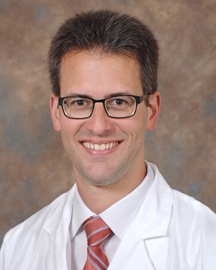
Dr. Justin L. Benoit is an Assistant Professor at the University of Cincinnati College of Medicine, Department of Emergency Medicine. His work focuses on prehospital medicine, cardiac arrest resuscitation, and blood-based biomarkers, with a clinical emphasis on cardiovascular disease and airway management. He is board-certified in Emergency Medicine and Emergency Medical Services by the American Board of Emergency Medicine. Bachelor's Degree: University of Maryland, College Park (Cell and Molecular Biology and Genetics) Master's Degree: University of Cincinnati (Clinical and Translational Research) Medical Degree: Case Western Reserve University Residency: University of Cincinnati (Emergency Medicine) Fellowship: University of Cincinnati (EMS and Clinical Research) His research spans sudden cardiac arrest, emergency airway management, and biomarker development, particularly in the context of OHCA and SARS-CoV-2. Recent publications highlight advancements in ECPR accessibility, cooling duration protocols, and ventilation practices. He leads multiple federally and privately funded grants, including NIH and Bill & Melinda Gates Foundation projects. Dr. Benoit's work integrates emergency medicine, critical care, and public health, emphasizing data-driven improvements in resuscitation and pandemic response. Collaborations with international researchers and institutions underscore his impact on global clinical practices.
Dr. Louis Rice is an Associate Professor in the Department of Architecture and the Built Environment at the University of the West of England (UWE Bristol), affiliated with the Faculty of Environment and Technology. He previously served as Head of the World Health Organisation Collaborating Centre for Healthy Urban Environments. With a professional background including over a decade as an architect in London and Paris, his research integrates architecture, urban design, and public health to advance sustainable and equitable urban environments. Education: BA (Hons), Dip.Arch, RIBA Part 3, MA, FHEA, PhD from Sheffield University Research Focus: Louis leads interdisciplinary studies on the spatial determinants of wellbeing, zero-carbon design, and urban resilience. His work emphasizes biophilic principles and health-centric architecture, addressing challenges like climate vulnerability and social equity in informal settlements. Recent projects explore adaptive strategies for coastal cities, participatory design in education, and pandemic-responsive urban planning. Publication Trends: His 15 most recent articles (2022–2025) reflect a strong emphasis on climate resilience, health equity, and community-centered design. Key themes include coastal disaster management, social robotics for neurodiverse populations, COVID-19 socioeconomic impacts, and geospatial vulnerability assessments—predominantly using interdisciplinary methodologies across architecture, public policy, and environmental science. Professional Engagement: Louis contributes to curriculum development linking public health and architecture education. He maintains active collaborations through the WHO Centre network and focuses on translating research into actionable strategies for healthier built environments.
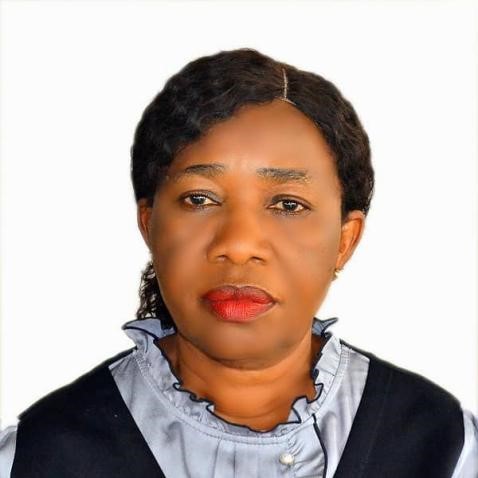
Dr. Rose Alani is an Associate Professor and senior researcher at the Department of Chemistry, Faculty of Science, University of Lagos . With over 20 years of experience in environmental and analytical chemistry, she leads Nigeria's Air Quality Monitoring Research Group (AQMRG) and served as the 2024 Nigerian Coordinator for the CLEAN-Air Forum. B.Sc. Industrial Chemistry, Ahmadu Bello University (1988) M.Sc. Industrial Chemistry, University of Port Harcourt (1992) Ph.D. Environmental/Analytical Chemistry, University of Lagos (2012) Her research focuses on environmental pollution monitoring across air, water, and soil, particularly examining contaminant distribution linked to carbon production dynamics. She specializes in air quality modeling, health risk assessments of gaseous and particulate pollutants, and environmental sustainability. Recent publications highlight her work in GIS-based pollution mapping, seasonal air pollution variability, PAHs exposure risks, and economic impact analysis. These studies emphasize solutions for urban environmental challenges in Lagos and broader West Africa. Distinguished Researcher Awards (University of Lagos Golden Jubilee Conferences, 2009-2012) Featured in EPIC's Public Local Actors Registry (2023) Recognized as Air Quality Champion by EPIC (2024) She co-chairs the US-Nigeria Air Quality Technical Working Group and collaborates with institutions across Africa, Europe, and North America.
Marcus Gary is a Research Associate Professor at the Bureau of Economic Geology, Jackson School of Geosciences, The University of Texas at Austin, and Principal Geoscientist at the Edwards Aquifer Authority. His expertise lies in karst hydrogeology, focusing on karst processes and their implications for natural resource management. He holds a Ph.D. in Hydrogeology (UT Austin, 2009) and a B.S. from the same institution (2001). His doctoral work on Sistema Zacatón, a deep underwater cave system in Mexico, integrated geophysics, geochemistry, and NASA-funded DEPTHX AUV technology to map cave structures. Education: Ph.D. in Hydrogeology, UT Austin (2009) B.S., UT Austin (2001) A.S. in Marine Technology, College of Oceaneering (1994) Research Interests: Karst aquifer dynamics Groundwater-surface water interactions Volcanogenic speleogenesis Edwards and Trinity Aquifer management Geophysical and geospatial techniques in hydrogeology His work spans academic research, government service (USGS), and consulting. He teaches Applied Karst Hydrogeology at UT Austin and leads field operations for the Edwards Aquifer Authority. Notable projects include dye tracing studies in Central Texas, springhead delineation, and volcanic influences on karst systems. His research often emphasizes environmental policy and sustainable groundwater management. Labs/Teams: Edwards Aquifer Authority Field Operations, DEPTHX AUV Project Team, Jackson School of Geosciences Hydrogeology Group.
Harvey Miller is a Professor and Reusche Chair in Geographic Information Science at The Ohio State University's Department of Geography, College of Arts and Sciences. He serves as Director of the Center for Urban and Regional Analysis (CURA). His research focuses on GIScience, mobility science, and sustainable transportation, particularly integrating geospatial techniques with transportation equity, time geography, and urban sustainability. He teaches courses in geospatial databases, spatial modeling, and sustainable transportation. Education: Ph.D. (Geography), The Ohio State University, 1991 M.A. (Geography), Kent State University, 1987 B.A. (Geography), Kent State University, 1985 Research Interests: His work explores geospatial analysis of urban mobility, accessibility equity, and smart city technologies. Notable projects include the Ghost Neighborhoods initiative (3D modeling of historic Black neighborhoods), analysis of public transit reliability, and environmental justice tool development. He co-authored a National Academies report on geospatial tools for environmental justice. Achievements: Co-chair of National Academies consensus study on environmental justice tools Lead on Columbus Smart City Operating System project Recipient of U.S. Department of Transportation funding Labs/Teams: Director of CURA, collaborating with institutions like the Ohio History Connection on urban heritage projects. Affiliated with the Sustainability Institute and Translational Data Analytics Institute at OSU.
Dr. Emily Burchfield is an Assistant Professor in the Department of Environmental Sciences at Emory University, where she leads the FACES (Food, Agriculture, Climate, Environment, and Sustainability) Lab. Her research integrates social and environmental data to study agricultural sustainability, with projects focused on land use change, climate adaptation, and rural livelihoods. She holds a PhD in Environmental Engineering from Vanderbilt University and MA in Economics from the University of Louvain. Her work examines how agricultural systems adapt to climate change, the characteristics of productive and resilient farming, and drivers of cultivation and conservation behavior. Dr. Burchfield's research combines geospatial analysis with qualitative methods to understand agricultural transitions at multiple scales. Recent publications explore crop diversification, agricultural data practices, and rural livelihoods. Her group develops computational tools for agricultural analysis and collaborates with farming communities to support sustainable transitions.
Jun Shen is a Professor at the School of Computing and Information Technology, University of Wollongong. He specializes in computational intelligence, cloud computing, and big data applications, with a focus on AI-driven solutions for real-world challenges in transport systems, healthcare, education, and environmental management. He has secured over 40 research grants totaling AU$4.5 million and supervised 26 completed PhD projects. His work spans interdisciplinary areas including bioinformatics, smart manufacturing, and digital health. Research interests include bio-inspired algorithmic optimization, AI in arts/media, and edge computing for IoT systems. He has pioneered research centers in applied computing since 2014 and holds editorial roles in top journals like IEEE Transactions. As an IEEE Distinguished Lecturer, he actively promotes AI ethics and interdisciplinary collaboration. Recent publications emphasize adversarial machine learning defenses, UAV systems, and multimodal data fusion. His supervision includes projects in intelligent transport systems, cloud computing, and e-learning. Grants include projects on resilient energy systems and UAV geolocation verification. Leadership roles include leading over 20 researchers and chairing conferences. He advocates for digital transformation in public services and has conducted fieldwork at MIT, UCI, and Georgia Tech.
Li Li is a Professor in the Department of Civil and Environmental Engineering at Pennsylvania State University. She leads the Li Reactive Water research group, focusing on the Critical Zone and its response to climate change and human activities. Her work examines interactions between water, soils, rocks, roots, and microbes, with implications for water quality and sustainability. Research interests include reactive transport modeling, stream chemistry dynamics, and the impacts of climate extremes on hydrological systems. She has contributed to high-profile studies such as the discovery of ancient carbon release via rivers and the effects of extreme rainfall on nutrient loss in American soils. Recent recognitions include dual awards from the Earth and Space Association (2024) and being named an Institute of Energy and the Environment Fellow. Her lab actively collaborates on projects like the BioRT-HBV model and applications of deep learning in hydrological data analysis. Key projects: Facilitating environmental investigations with single-column models, maximizing CO₂ trapping in geological formations Leadership roles: IEE Fellow, Principal Investigator of NSF-funded research
Parker VanValkenburgh is an Associate Professor of Anthropology and Associate Professor of Archaeology and the Ancient World at Brown University. His research employs archaeological methods to address anthropological questions, focusing on colonialism and imperialism's impacts on Indigenous people and environments in the Peruvian Andes. He directs the Brown Digital Archaeology Laboratory and co-directs several major projects including the Paisajes Arqueológicos de Chachapoyas (PACha) project and GeoPACHA (Geospatial Platform for Andean Culture, History and Archaeology). His educational background includes: PhD from Harvard University (2012) MA from University of London (2005) MPhil from University of Cambridge (2004) BA from Stanford University (2003) VanValkenburgh's research focuses on the long-term impacts of colonialism and imperialism on Indigenous people and environments in the Peruvian Andes. Through studying architecture, ceramics, environmental datasets, and archival documents, he explores how relationships between people, institutions, and environments transform during imperial histories. His work emphasizes how survival and resilience strategies developed by communities dealing with empires are passed down across generations. He applies digital methodologies, particularly GIS, to map and analyze social, political, and environmental change in space and time, while also critically examining how digital mediation transforms archaeological practice. His recent publications reveal a strong trend toward integrating advanced computational methods with archaeological research. There's a clear emphasis on using AI, machine learning, and remote sensing technologies to enhance archaeological survey and analysis in the Andes. His work spans traditional archaeological topics like landscape, ceramics, and colonial architecture with cutting-edge digital approaches including vision foundation models, point cloud processing, and semi-supervised learning for identifying ancient urbanization patterns. His scientific achievements have been recognized with numerous awards: John Carter Brown Faculty Fellow (2023-24) Meenakshi Narain Excellence in Research Mentoring Award (Brown University, 2023) William G. McLoughlin Award for Excellence in Teaching in the Social Sciences (2021) Cogut Center for the Humanities Faculty Fellowship (2018) American Council of Learned Societies Fellowship (2017) VanValkenburgh has successfully secured substantial research funding for multiple projects. His Paisajes Arqueológicos de Chachapoyas (PACha) project has received NSF funding through 2025, while his GeoPACHA initiative has garnered support from ACLS and SPARC grants. He also co-directs the 'Mapping Historical Trauma in Tulsa, 1921-2021' project. His teaching portfolio includes courses on Geographic Information Systems, cartography, critical digital archaeology, and the archaeology of the Andean region, for which he received Brown's prestigious teaching award. He directs the Brown Digital Archaeology Laboratory, which serves as a hub for integrating digital methodologies with archaeological research. His collaborative network includes scholars from institutions like Vanderbilt University (Steven Wernke) and the University of Tulsa (Alicia Odewale), reflecting his commitment to interdisciplinary research that bridges archaeology, anthropology, and digital humanities.
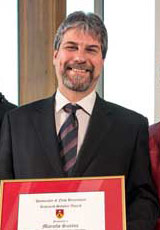
Marcelo Santos is a Professor in the Department of Geodesy and Geomatics Engineering at the University of New Brunswick (UNB), where he has been a faculty member since 2000. He holds a PhD in Geodesy (1995, UNB), M.Sc. in Geophysics (1990, Rio de Janeiro National Observatory), and B.Sc.E. in Cartographic Engineering (1982, Rio de Janeiro State University). His academic career includes roles such as Head of the Department (2012–2017) and international leadership in organizations like the International Association of Geodesy (IAG), where he served as President of Commission 4 (2015–2019) and Senior National Delegate of Canada (2007–2011). Research interests focus on Space and Physical Geodesy, GNSS navigation, and atmospheric delay modeling. His work emphasizes rigorous height systems, geoid determination, and integration of geodetic techniques with numerical weather models. Key contributions include the development of UNB’s atmospheric delay models and the Stokes-Helmert geoid computation methodology. Professional activities include chairing IAG commissions, directing UNB’s Space Geodesy Laboratory (1996–1999), and advising on geodetic infrastructure projects in Brazil and Canada. His publications span over 150 peer-reviewed articles, covering topics like tropospheric modeling, geoid determination, and GNSS applications in environmental monitoring. Led research grants include projects on global topographical density models and climate applications of GNSS-derived tropospheric parameters. Collaborations involve institutions like NASA, ESA, and Brazil’s IBGE. Current projects focus on enhancing geoid models and improving vertical datum systems for precision geomatics applications.
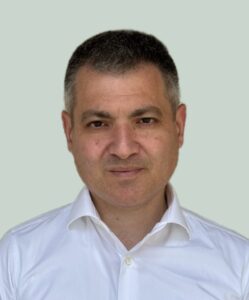
Paolo Trunfio is a Professor of Computer Engineering at the University of Calabria, Italy, and co-founder of DtoK Lab S.r.l., an academic spin-off focused on data analysis and distributed systems. He holds a Ph.D. and is affiliated with the DIMES Department, specializing in big data, cloud computing, and high-performance computing (HPC). His research emphasizes scalable data analysis frameworks, edge-cloud continuum solutions, and machine learning applications for social media and disaster monitoring. Trunfio serves as an Associate Editor for ACM Computing Surveys and Journal of Big Data , and is on the editorial boards of several journals including Future Generation Computer Systems . He has authored four influential books, including Programming Big Data Applications (2024) and Data Analysis in the Cloud (2015). His work spans distributed systems, IoT-based smart objects, and exascale computing. Notable projects include the EU-funded eFlows4HPC and ASPIDE initiatives, which focus on HPC workflows and exascale programming models. Trunfio’s publications (over 200 papers) address topics like social media analytics, energy-efficient P2P networks, and parallel data mining. He leads research in urgent computing for disaster response, edge-cloud integration for urban mobility, and AI-driven data analysis. His contributions to cloud frameworks (e.g., JS4Cloud, ParSoDA) and HPC libraries (e.g., DCEx) highlight his expertise in bridging theory and practice in distributed computing ecosystems.
Overview Nallan C. Suresh is the UB Distinguished Professor in the Department of Operations Management and Strategy at the School of Management, University at Buffalo. He is affiliated with the Stephen Still Institute for Sustainable Transportation and Logistics. His work focuses on supply chain management, sustainability, manufacturing systems, and operational resilience. Research Interests Dr. Suresh's research explores supply chain agility, reverse supply chains, recycling efficiency, disaster response logistics, and sustainable operations. He investigates how technologies and policies impact supply chain resilience, particularly in hazardous-materials transportation and fast fashion industries. His work also addresses global policy effects, such as China's National Sword Policy on plastics recycling. Key Contributions Recent studies include: Development of DEA models for recycling efficiency evaluation Analysis of supplier relationship management frameworks Optimization of hub networks for hazardous materials Pre-positioning strategies using mobile phone data for disaster response Affiliations and Contact Contact: ncsuresh@buffalo.edu | 351 Jacobs Management Center, Buffalo, NY 14260