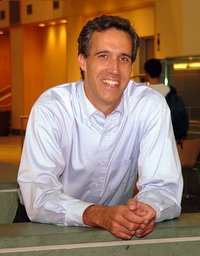
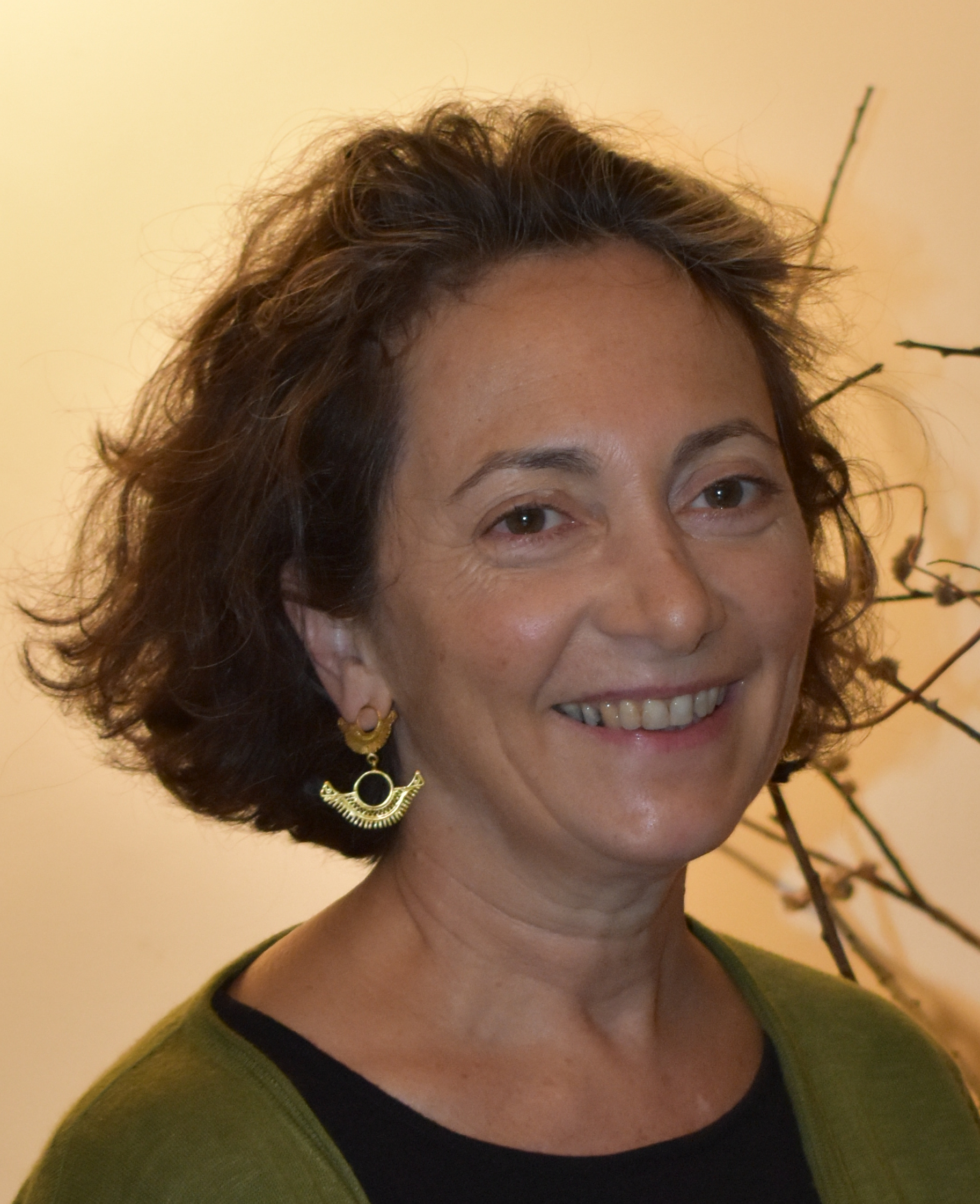
Daniel Huttenlocher is the John P. and Rilla Neafsey Professor of Computing, Information Science, and Business at Cornell University, where he serves as Dean of Computing and Information Science. Concurrently, he holds the position of Dean at MIT's Stephen A. Schwarzman College of Computing and is Vice Provost of Cornell Tech. His academic roles span Cornell's Computer Science Department and Johnson Graduate School of Management. Huttenlocher's research encompasses diverse domains including computer vision (image matching, object recognition, video analysis), social networks (governance models, link prediction, community dynamics), autonomous systems (DARPA Urban Challenge), geometric algorithms , and interactive document systems . His work bridges theoretical algorithms and practical applications, with recent advancements in structured models for visual recognition and large-scale network analysis. His publications (2010-2006) demonstrate a consistent focus on algorithmic innovation in computer vision and social computing. Recent works emphasize real-world applications like location recognition, social media governance, and image restoration, employing machine learning, probabilistic modeling, and large-scale data mining techniques across diverse visual and network datasets. While no awards are listed, Huttenlocher co-chaired major conferences (CVPR 2006/2009) and serves on the MacArthur Foundation Board. He has developed educational tools like the CoNote annotation system to foster collaborative learning and chaired Cornell's computing initiatives leading to the Faculty of Computing and Information Science.
Prof. Dr. Katrin Weller is a leading scholar in computational social science and research data management. She holds the Professorship for Research Data Management in the Social Sciences at Heinrich Heine University Düsseldorf (since 2024) and serves as Scientific Director of the Data Services for the Social Sciences department at GESIS - Leibniz Institute for the Social Sciences . Her career includes co-leading the Research Data and Methods team at the Center for Advanced Internet Studies (CAIS) (2021-2023) and heading GESIS's Digital Society Observatory team (2015-2024). Academic Appointments Professor for Research Data Management in Social Sciences, HHU Düsseldorf (2024-present) Scientific Director, Data Services for Social Sciences, GESIS (2024-present) Research Themes Digital behavioral data quality and reusability Ethical challenges in social media research Altmetrics and scholarly communication Platform data preservation and archiving Key Collaborations Center for Advanced Internet Studies (CAIS) Library of Congress (Digital Studies Fellow) International conferences (AoIR, WebSci, ICWSM) Scientific Contributions span 15+ years of publications addressing social media's methodological, ethical, and archival dimensions. Notable works include: Frameworks for assessing data quality in digital social research Ethical implications of decentralized platform data collection (e.g., Mastodon) Preservation strategies for Twitter and Wikipedia references Analysis of affective drivers in political information seeking Her teaching includes seminars on social media research fundamentals at Heinrich Heine University. As an organizer , she has led European symposia on computational social science challenges and co-founded the #FAIL workshop series to study social media research failures.
Gerald Adam Zwettler is a researcher at the University of Applied Sciences Upper Austria (FH Hagenberg) with a focus on digital transformation in Information and Communication Technology (ICT). His work spans machine learning applications in non-destructive testing, human-robot interaction, and sensor data classification. Active in projects like FLARE (Human-Centered AI for NDT), MARIE (Mobile Robotic Assistance), and MOVE (Orthosis Modeling) Collaborates internationally on railway infrastructure analysis and medical imaging Research interests include deep learning , medical image processing , IoT sensor analysis , and AI-driven customization of orthopedic devices . Recent work explores edge computing for low-energy IoT systems and multimodal interaction frameworks for office robots. Publications emphasize applied AI in technical domains, with methodological contributions to presegmentation techniques , Levenshtein distance optimization , and human-centered robotics . Project roles include principal investigator in knowledge databases for industrial plastic manufacturing.
Catherine Dominguès is a senior researcher at the French National Mapping Agency (IGN) specializing in Natural Language Processing for Cartography within the MEIG (Mediation and Enrichment of Geographic Information) research team. Her work bridges computational linguistics and geographic information science, focusing on the intersection of language analysis and spatial data representation. Education : Habilitation à diriger des recherches (HDR) in Natural Language Processing (2020), PhD in Computer Science (2001), DEA in Theoretical Foundations of Computer Systems (1989) Research Interests center on places and placenames , expressive variations in toponym spelling , location-based information retrieval , and sensitive cartography . Her methodology combines data mining , fuzzy spatial reasoning , and geovisualization techniques. Key publication trends show her work connects NLP for map analysis , mountain rescue support systems , and narrative-based mapping . She contributes to heterogeneous data integration and fuzzy logic applications in geographic contexts. Supervision : Co-supervised Dong Chuanming (PhD) and previously supervised Firas Bessadok (PhD) Projects : Core member of the CHOUCAS project (2017-2022) integrating heterogeneous data for mountain rescue, and involved in MATRICIEL (2016-2017) mapping migrant perceptions
Cyril Faucher is an Associate Professor at the University of La Rochelle , associated with both the L3i Laboratory and the IUT of La Rochelle 's Computer Science department. He has served since 2013 as the head of the Integrator Developer (ID) course within the DUT Informatique program. His research focuses on Temporal Knowledge Modeling Model-Driven Engineering Semantic Web Applications Periodic Event Simulation Human Activity Modeling He has contributed to multiple research projects including ANR DéAIS (2014-2016), HOSEN (2013-2016), and Tourinflux (2013-2015). His work has been implemented in the RelaxMultiMedias ANR project (2009-2012) for cultural event modeling. Professor Faucher teaches across various IT domains including Database Systems (Oracle, MySQL) Web Development (PHP, JavaScript, jQueryMobile) Object-Oriented Programming (Java) Enterprise Architecture (UML, TOGAF) Software Project Management (Agility, SCRUM) Model-Driven Engineering He has developed several open-source tools for model engineering including Kermeta, OpenEmbeDD, and MDE Utils.
Dr. Brent Elliott is a Research Associate Professor at the Bureau of Economic Geology, part of the Jackson School of Geosciences at The University of Texas at Austin. He joined the Bureau in August 2012 following resource evaluation work for the Alaska Department of Natural Resources. His expertise spans field geology, geochemical modeling, mineral resource assessment, and academic instruction with over 15 years of university-level teaching experience. Dr. Elliott's research focuses on economic mineral resources, including uranium distribution in the Texas Gulf Coast, rare earth element potential in West Texas laccoliths, frac sand characterization, and aggregate resource evaluation for infrastructure development. His multidisciplinary approach integrates petrology, geochronology, tectonics, and geospatial modeling to study ore-forming processes and resource logistics. Recent publications emphasize critical mineral resources (lithium, REE, uranium), magmatic-hydrothermal systems in Trans-Pecos Texas, and geospatial assessment methodologies. His articles consistently address mineral formation mechanisms, resource prospectivity modeling, and practical applications for industry and government stakeholders. He mentors students through research supervision and leads federally funded initiatives, including NSF–IRES international collaborations examining Slovakian ore systems. Current partnerships involve the U.S. Geological Survey, Texas Department of Transportation, and Office of Surface Mining Reclamation and Enforcement. His team is developing analytical capabilities for mineral characterization as part of the PRC 131 laboratory renovation.
Stéphane Baciocchi is a Researcher at the École des Hautes Études en Sciences Sociales (EHESS) , affiliated with the Centre for Historical Research (CRH) and its Laboratory of Demography and Social History (LaDéHiS) . He coordinates major projects including GeoHistoricalData , Structure and Dynamics of Forms , and the ANR TIME-US initiative on textile trade remuneration and time budgets in France (17th-20th centuries). His work bridges historical demography, religious sociology, and digital methodologies. Current Projects : GeoHistoricalData, Structure and Dynamics of Forms, ANR TIME-US Collectives : LaDéHiS, CRH Digital Collective, French Sociology Association Social Networks RT Committees : EHESS GIS Steering Committee, Labex HASTEC, Monitoring Unit against Sexual Harassment at EHESS His research interests focus on collective investigative practices , historical GIS, and relational data analysis across social sciences. He specializes in the sociology of the summer 1789 Grand'Peur , the history of social sciences (Le Play, Durkheim, Hertz), and digital editions of historical sources . Notably, he oversees the Prosopographic dictionary for students of the École Normale and the Cassini Roads and Cities Dataset . Baciocchi has taught seminars on relational data analysis (2003-2010), ethnography of religious facts (2005-2008), and history of investigative collectives (2007-present). He contributes to the Durkheimian Studies journal as associate editor and collaborates with the British Center for Durkheimian Studies at Oxford.
Dominik Hagmann is a researcher at the University of Vienna’s Faculty of Life Sciences, Department of Evolutionary Anthropology. His work bridges Roman archaeology, digital humanities, and bioarchaeology, focusing on rural settlement patterns, landscape analysis, and public engagement through citizen science. Expertise in digital archaeology and GIS applications Active in interdisciplinary studies combining bioarchaeology and spatial analysis Prominent projects in Northern Noricum and Tuscany His research integrates 3D documentation, experimental archaeology, and open science initiatives. Recent publications highlight machine learning in settlement modeling, gender studies in Roman cemeteries, and FAIR data principles for archaeological dissemination. Notable recognition includes the Mobility Fellowship (2019). His work aligns with UN Sustainable Development Goals, particularly in heritage preservation and digital inclusion.
Eva Navarro López is a Full Professor in Computing within the School of Interactive Games and Media at the Golisano College of Computing and Information Sciences at Rochester Institute of Technology (RIT). She previously served as Director of the School of Information (iSchool) at RIT and directs the Artificial intelligence and DAta science Research Lab (AiDAs). Navarro is a scientist of international standing with extensive contributions across multiple fields including hybrid dynamical systems, cyber-physical systems, and computational neuroscience. She has held significant positions including member of the Science and Methodology Committee at the International Panel on the Information Environment (IPIE) and affiliate at the Minderoo Centre for Technology and Democracy at University of Cambridge. Eva earned her Ph.D. from the Polytechnics University of Catalonia (Spain) and completed her MSc, BEng, and BSc at the University of Alicante (Spain). Her educational journey reflects her multidisciplinary approach, bridging computer science, mathematics, and engineering disciplines that would later define her research career. Her academic path has taken her through prestigious institutions across four countries: USA, UK, Mexico, and Spain, where she shadowed the footsteps of Alan Turing in Manchester and Santiago Ramón y Cajal in Madrid. Navarro's research interests defy easy compartmentalization, spanning hybrid dynamical systems, cyber-physical systems, network science, mathematical modelling, symbolic AI, control engineering, computational neuroscience, and collective intelligence. Her unique contribution lies in building bridges between traditionally separate fields , transferring ideas from one domain to another to create novel approaches. She approaches research as a 'scientist artist,' viewing both science and art as attempts to understand the world better. Her work on neuroplasticity and brain-inspired computing has led to innovative AI architectures that incorporate knowledge of astrocytes and other brain cells beyond just neurons. Analysis of Navarro's recent publications reveals a strong trend toward interdisciplinary applications of computational methods. Her work spans from fundamental theoretical contributions in hybrid systems and formal verification to practical applications in medical imaging, epidemic modeling, and gender equity in technology. A notable pattern is her consistent focus on nature-inspired models of computation across diverse domains, whether modeling brain function, urban structures, or information ecosystems. Her research increasingly addresses societal implications of technology, particularly regarding gender equity and ethical AI development. 100 Brilliant Women in AI Ethics - 2025 Distinguished Alumni Ambassador 2024 at University of Alicante Women Leader of the Business Ecosystem 2024 Recognized in Spain's Guide to Women Leaders of the Business Ecosystem Navarro has supervised an extensive research team across multiple institutions, mentoring numerous PhD students, postdocs, and research assistants from diverse backgrounds. Her mentoring philosophy emphasizes building communities and education as pathways to change the world. She co-founded ACM-Women Europe and the womENcourage conference series, creating spaces for women in computing. Her research has been supported by significant projects including the UK-funded 'Dynamically Driven Verification of Systems With Energy Considerations,' where she served as principal investigator for the first UK project dedicated to formal verification of nonlinear hybrid systems. As director of AiDAs (Artificial intelligence and DAta science Research Lab), Navarro leads a multidisciplinary team exploring nature-inspired models of computation, learning, and evolution for complex systems. The lab's work integrates insights from neuroscience, mathematics, and computer science to develop new paradigms in AI. Navarro also contributes to TechnoLatinas, a self-organized community focused on supporting technologists and scientists from Latin America, and serves on the Advisory Council for Gender Music Tech, demonstrating her commitment to creating inclusive technology ecosystems.
Prof. Anthony Lehmann is a leading researcher at the University of Geneva , affiliated with the EnviroSPACE group and the Department of Environmental and Water Sciences . His career spans over three decades, pioneering innovations like the GRASP software for Species Distribution Modeling (SDM) and coordinating large-scale projects such as enviroGRIDS , ACQWA , and ValPar.CH . He serves as Associate Editor for Environmental Sciences and Policy and co-led a MOOC on Ecosystem Services.
Ralph Müller-Pfefferkorn is Head of the Department of Distributed and Data Intensive Computing at the Center for Information Services and High Performance Computing, Technische Universität Dresden. His work focuses on data management, metadata systems, and high-performance computing infrastructure. He holds a PhD in Physics from TU Dresden (2001) and has extensive experience in research data infrastructure development, spanning roles from 1996 to present across physics and computational science domains. Education: 2001: Dr. rer. nat., Physics, TU Dresden (Thesis on BABAR detector calibration) 1996: Diploma in Physics, TU Dresden 1992–1996: Studies in Physics at TU Dresden 1990–1992: Studies at TU Chemnitz Research interests emphasize distributed data management, long-term archiving, and FAIR data principles. He contributes to initiatives like the Research Data Alliance (IG Co-Chair) and UNICORE Forum board. His publications address challenges in big data workflows, metadata standards, and interdisciplinary infrastructure integration. Labs/Teams: Leads the Distributed and Data Intensive Computing team within TU Dresden's HPC center, collaborating on projects like MoSGrid and MASi repository systems.
Dr. Hy Dao is Full Professor and Vice-Director at the Institute of Environmental Sciences, University of Geneva, where he leads the Department of Geography and Environment. He concurrently heads the Metadata & Socio-Economics Unit at GRID-Geneva (UN Environment Programme). His academic credentials include a PhD in Human Geography from the University of Geneva and postgraduate training at the International Institute for Aerospace Surveys and Earth Sciences (ITC, Netherlands). Professor Dao's research spans: Geospatial technologies (GIS, remote sensing, webmapping) Environmental risk assessment and planetary boundaries Sustainable territorial development and cohesion metrics Population mapping methodologies E-learning in geosciences His work emphasizes quantitative modeling of environmental risks, territorial downscaling of sustainability frameworks, and participatory spatial planning approaches. His publications (2001-2025) demonstrate strong thematic coherence, focusing on: Climate change vulnerability and adaptation strategies Geospatial data semantics and infrastructure Disaster risk reduction frameworks Sustainable development indicators Participatory mapping methodologies Notably, 60% of recent publications address climate adaptation technologies and spatial governance. Professor Dao leads significant research initiatives including: TRACES (2021-2025): Developing semantic environmental trajectories using big data CATI-GE Geoportal: Territorial inequality analysis for Geneva Canton He currently supervises doctoral candidates working on geospatial applications in mining governance, ecosystem services policy, and smart city development. As Director of Geomatics programs and representative to the Geneva Land Information System, he bridges academic research and spatial data governance.
Julia Fischer is a Researcher in Computational Landscape Ecology at UFZ focusing on socio-ecological systems and spatial data infrastructures. Her work develops tools for spatial data quality assessment and provenance tracking in environmental research. Contributes to understanding ecosystem service provision in protected areas. Research examines human-environment interactions in European biosphere reserves, analyzing how zoning systems influence service coproduction. Advances metadata standards for geospatial data interoperability.
João Correia Lopes is an Assistant Professor at the University of Porto 's Department of Informatics Engineering , Faculty of Engineering. He also serves as a Senior Researcher at INESC TEC Technology and Science. Correia Lopes holds a PhD in Computing Science from Glasgow University (1997) and a Diploma in Electrical Engineering and Computers from the University of Porto (1984). Research Interests: e-Health, e-Science, IoT, Web and Mobile Applications Key Contributions: Development of data curation platforms (Dendro, UPBox), FAIR data implementations, and blockchain-based solutions for media licensing and journalism.
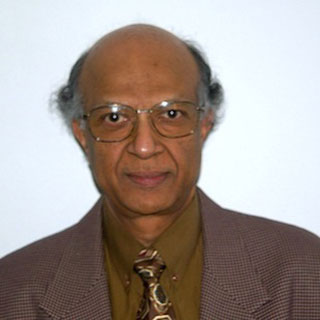
Subhasish Mazumdar is Professor and Department Chair of Computer Science and Engineering at New Mexico Institute of Mining and Technology. With degrees in Mathematics and Computer Science, his research bridges theoretical foundations and practical applications in data management. Research focus areas: Privacy-preserving techniques for mobile and spatial data Secure logging and tamper-resistant databases Document database architectures Bioinformatics data integration Heterogeneous system interoperability Recent work examines spatial transformation-based privacy models and security vulnerabilities in mobile environments. His publications span algorithms for Hilbert curve optimizations, ad library privacy threats, and model-based classification approaches. He teaches courses in algorithms, database systems, and data science, and serves as adjunct professor in Information Technology.