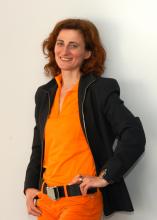
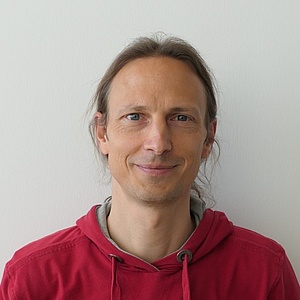
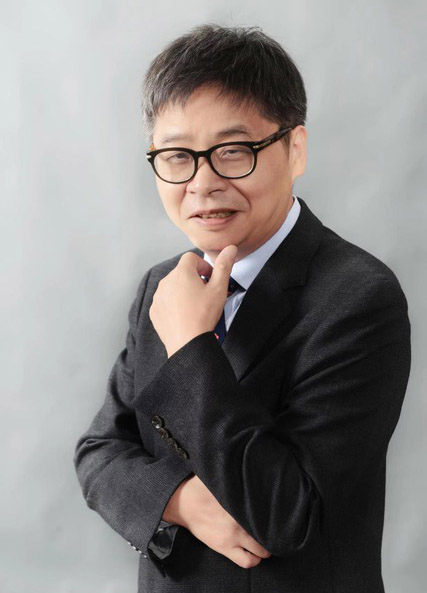
Katja Hose is a Full Professor of Data Management at TU Wien's DBAI research unit, heading the Data Management and Knowledge-Driven AI Lab. She previously held a Poul Due Jensen Foundation Professorship at Aalborg University. Her research focuses on data and knowledge engineering, including graph databases, knowledge graphs, querying, analytics, and machine learning, with interdisciplinary applications in bioscience, healthcare, and environmental assessment. Education: PhD in Computer Science (Ilmenau University of Technology, 2009), Postdoc at Max Planck Institute for Informatics (2009–2012). Academic roles include Program Co-Chair for ISWC 2024 and EDBT 2023, and editorial board membership at VLDBJ and TGDK. She leads projects like TARGET (health virtual twins) and ARMADA (data management). Research Interests: Knowledge Graphs, Semantic Web, Big Data, Machine Learning, Data Integration, and Provenance Systems. Key contributions include SHACL shape extraction, conversational data analytics, and environmental knowledge graphs. Awards include the 2025 Distinguished Meta-Reviewer Award and 2024 Manfred Paul Award. Advising and Grants: Supervised students including E. Pürmayr (Diploma Thesis 2025). Active in EU projects (TARGET, ARMADA) and grant coordination. Labs/Teams: DMKI Lab at TU Wien, collaborating with interdisciplinary teams in healthcare and environmental science.
Claudia Plant is a Professor in the Faculty of Computer Science , leading the Research Group Data Mining and Machine Learning . Her research focuses on clustering algorithms, data mining, and machine learning applications in areas like biomedical data, wind energy, and causality inference. She has contributed to projects such as Knowledge-infused Deep Learning for Natural Language Processing (2020–2028) and Hybrid Computational Sciences (2021–2021). Plant has authored over 160 publications, with recent work emphasizing deep learning, anomaly detection, and GPU-optimized algorithms. She actively engages in academic activities, including talks on clustering methods and interdisciplinary projects like Governing Algorithms: The Politics of Data and Decision-Making . Her research interests span clustering algorithms , graph neural networks , causality discovery , and ethical digital transformation . Notable projects include causal analysis of wind farm dynamics and AI-enhanced education tools. Plant’s work bridges computational methods with societal challenges, such as empowering marginalized communities through ethical technology adoption.
Vienna University of Economics and BusinessAustria
Axel Polleres is a full professor at the Institute for Data, Process and Knowledge Management in Vienna University of Economics and Business (WU Wien). He leads the department of Information Systems and Operations Management while maintaining active research in knowledge graphs, semantic web technologies, and ontology engineering. PhD and Habilitation from Vienna University of Technology Former positions at University of Innsbruck, Universidad Rey Juan Carlos, DERI Ireland, and Siemens AG Co-chair of W3C SPARQL working group Editorial board member for Semantic Web Journal and IJSWIS His research focuses on: Querying and reasoning over ontologies Graph schema languages (SHACL, SPARQL) Wikidata constraint formalization Ontology reuse in collaborative platforms Crisis management knowledge graphs FAIR data principles implementation Recent publications analyze knowledge graph evolution, constraint validation methodologies, and semantic web standardization efforts. Key topics include: OWL/RDF interoperability solutions Unit conversion systems for Wikidata Partition-based query processing frameworks Network resilience analysis for urban planning Open data platform discovery tools Temporal analysis of collaborative knowledge graphs He has co-organized major conferences like ISWC2023 and ESWC workshops while maintaining active roles in European research projects. Current work involves spatiotemporal knowledge graphs for city resilience and semantic web infrastructure development.
Tomasz Miksa is a researcher affiliated with TU Wien's Department of Research Data Management, focusing on machine-actionable data management plans (maDMPs), semantic web technologies, and data reproducibility. He collaborates extensively on projects involving automated assessment of data management workflows, FAIR data implementation, and privacy-preserving analysis platforms. Primary affiliation: TU Wien Department: Research Data Management Key projects: WellFort, FAIR Data Austria, openEO API His research integrates semantic technologies with data governance to enhance reproducibility in scientific workflows, particularly in domains like environmental monitoring and legal informatics. Recent publications emphasize ontological frameworks (DCSO), API harmonization, and auditable machine learning systems. Notable collaborative works include: Reproducibility standards for soil moisture data Knowledge graph applications in cyber-physical energy systems Dynamic data citation mechanisms He supervises students in theses related to maDMP integration, data citation frameworks, and institutional research data planning architectures.
Silvia Miksch is a Full University Professor of Visual Analytics at TU Wien's Faculty of Informatics, leading the CVAST Center. She holds a PhD from the University of Vienna and has held roles including Head of the Department of Information and Knowledge Engineering at Danube University Krems. Her research focuses on Visual Analytics, Information Visualization, Temporal Data Analysis, and Medical Informatics. She has supervised numerous PhD and Master’s students, with notable advisees including Ignacio Baltazar Pérez Messina and Davide Ceneda. Her work bridges theory and practice, addressing challenges in Visual Analytics for healthcare, business intelligence, and digital humanities. Awards include the IEEE VGTC Technical Achievement Award (2023) and induction into the IEEE Visualization Academy (2020). She actively contributes to conferences like IEEE VIS and EuroVis as program chair and steering committee member. Her projects, such as 'VisuExplore' and 'DisCo', have received recognition for advancing visualization in medical and cultural domains. Key research areas include guidance-enriched systems, network visualization, and temporal reasoning. She explores applications in fraud detection, cultural heritage analysis, and pandemic data visualization. Her lab's tools, like 'Hermes' and 'COVIs', exemplify task-driven design for real-world data challenges.
Johannes Scholz is a Full Professor for Geoinformatics at the Department of Geoinformatics (Z_GIS) at Paris-Lodron-University Salzburg. He leads the GeoAI, GeoKG, and GeoSemantics research group and holds secondary roles in academic governance, including membership in the Curricularkommission Geographie at Salzburg and the Austrian Standards TC 084 committee. He has held visiting positions at the University of California, Santa Barbara, and prior affiliations include Associate Professor at Graz University of Technology and Senior Researcher at Research Studios Austria - Studio iSPACE. His research interests span geospatial artificial intelligence, knowledge graphs, semantics, and numerical optimization, with applications in energy transition, digital tourism, and cyber-physical systems. Projects include Agent-based simulation for energy systems GeoHumanities integration Indoor geography analysis Selected scientific awards include the ISPRS Outstanding Reviewer Award (2020) and the Forschungspreis der Steiermark (2011). He has secured significant funding for projects such as "Virtual Shepherd" (FFG 2024) and "ABM4EnergyTransition" (FFG 2022).
Silvia Miksch is a Full Professor of Visual Analytics at the Vienna University of Technology (TU Wien), leading the Research Unit Visual Analytics (E193-07) and coordinating the Research Focus on Visual Computing and Human-Centered Technology. She holds a PhD from TU Wien and has held academic roles at institutions like Stanford University (FWF postdoc), Danube University Krems (2006–2010 as University Professor), and TU Wien. Her research focuses on visualization, visual analytics, interaction design, and temporal data analysis with applications in medical informatics, process engineering, and cultural heritage. Education: Master of Social and Economic Science (University of Vienna, 1987), PhD (TU Wien, 1990). Former roles include Chair of the Austrian Society for Artificial Intelligence (ÖGAI) and leadership in EU projects like VALCRI and KAVA-Time. She has authored over 200 publications and received awards such as the IEEE VGTC Visualization Technical Award (2023) and induction into the IEEE VGTC Visualization Academy (2020). Research interests include knowledge-assisted visual analytics, task-driven guidance systems, and spatiotemporal data exploration. She oversees the Laura Bassi Centre of Expertise 'CVAST' and advises numerous PhD and master’s students. Her work bridges theory and practice, with notable projects like the Marvel Cinematic Universe infographic (GD 2019 Best Creative Challenge) and Game of Thrones character networks (GD 2018 Third Prize). Key Awards: Best Paper Award at vis4dh 2019, IEEE VGTC Technical Award 2023 Editorial Roles: Associate Editor of Transactions on Visualization and Computer Graphics (2011–2015), Editorial Board of Journal of Biomedical Informatics (2012–2020) Leadership: Chair of EuroVis Steering Committee (2023–2027), Member of VIS Executive Committee (2015–2020)
Gerald Hiebel is a Research Associate at the Institute of Archaeology, University of Innsbruck. Since 2018, he has led and contributed to multiple projects including Information Integration for Prehistoric Mining Archaeology , Text Mining Medieval Mining Texts , and Virtual Exhibition in All Dimensions . His work is funded by institutions like the Austrian Science Fund (FWF), Austrian Academy of Sciences (ÖAW), and the European Union. Current Projects : Virtual Exhibition in All Dimensions (Project Management), Inventaria (Principal Investigator), Text Mining Medieval Mining Texts (Principal Investigator) Research Interests : GIS, Ontological Data Models, Semantic Integration, Archaeological Information Modeling Recent Publications focus on spatiotemporal extensions of CIDOC-CRM, FAIR data principles for mining archaeology, and semantic modeling of excavation data. He has developed knowledge graphs connecting cultural resources with spatiotemporal places and contributed to standards like CRMgeo and CRMarchaeo. Scientific Awards : Marie Curie Fellowship, Erwin Schrödinger Fellowship Collaborations : University of Southern California, ICS-FORTH, European Association of Archaeologists
Krzysztof Janowicz is a Professor at the University of Vienna and Head of the Department of Geography and Regional Research. Previously, he held full professorships at the University of California, Santa Barbara (UCSB) and Pennsylvania State University. He directs the Research Network Data Science and is Editor-in-Chief of the Semantic Web journal. His research focuses on Spatial Data Science, GeoAI, and knowledge graphs, emphasizing the integration of semantic and data-driven approaches. Education includes a PhD in Geoinformatics from the University of Münster and postdoctoral work at the Institute for Geoinformatics. Teaching includes courses on spatial data science, cartography, and geoinformatics, such as field trips to Scotland and North America. He leads projects like the KnowWhereGraph, a large-scale geo-knowledge graph for interdisciplinary applications. His work addresses AI sustainability, geographic diversity evaluation, and privacy in geospatial AI. He has directed UCSB’s Center for Spatial Studies and contributed to disaster risk management frameworks through ontologies like HIP.
Dr. Milosh Jovanovikj holds the role of Associate Professor at the Faculty of Computer Science and Engineering in Skopje, North Macedonia, and concurrently serves as a PostDoc Researcher at TU Wien in Vienna, Austria. He is also a Senior R&D Knowledge Graphs Engineer at OpenLink Software in London. His primary research focuses on Knowledge Graphs (KGs), including their lifecycle processes such as modeling, enrichment, and analytics-driven AI applications. He has contributed to over 10 international and 25 national research projects, authored 60+ publications, and co-authored 3 books. His expertise spans Data Engineering, Semantic Web technologies, Linked Data, and Applied AI. Significant contributions include developing frameworks like RDFGraphGen for RDF graph generation and PharmKE for pharmaceutical text analysis. He has led initiatives in geospatial semantic web standards (GeoSPARQL) and healthcare informatics, including predictive analytics for nephrology data. Education: PhD in Computer Science and Engineering His work bridges academia and industry, with projects like the 3DFed federation engine and Semantic Sky (a Gmail plugin). He has extensive experience in ontology development (e.g., SEOntology, VEO for CO2 emissions) and open data initiatives, including LinkedDrugs for global drug data consolidation. Active in dissemination, his articles span knowledge graph applications in music recommendation, finance sentiment analysis, and drug-disease relation discovery. He has collaborated on benchmarks like the GeoSPARQL Compliance Benchmark and Mighty Storage Challenge (MOCHA). Grants/Projects: HOBBIT, SAGE, 3DFed, LinkedDrugs He leads teams in advancing semantic web integration, cloud service platforms (Semantic Sky), and educational materials like Web Programming Basics . His labs and teams focus on AI-driven solutions for healthcare, geospatial analytics, and enterprise systems.
Assoc. Prof. Roman Kern is affiliated with the Institute of Machine Learning and Neural Computation at Graz University of Technology and serves as Chief Scientific Officer at Know-Center Research GmbH , a competence center for Big Data analytics. His research bridges natural language processing, data science, and machine learning with a focus on causal inference and discovery, applied to scientific publication mining, intelligent transportation systems, and smart production. Research Interests : Causal inference, NLP, data science, trustworthy AI, knowledge discovery, and interdisciplinary applications. Projects : VanillaFlow (sustainable electrolytes for batteries), REWAI (causal discovery in textile manufacturing), and EPN-2024-RI (planetary science infrastructure). Teaching : Courses include Knowledge Discovery, Natural Language Processing, and Introduction to Scientific Working at TU Graz. His recent publications analyze causal relationships in semiconductor manufacturing, differential privacy, and LLM applications in healthcare and environmental monitoring. Roman Kern actively mentors students through thesis topics on causality, LLMs, and data privacy frameworks, while leading applied research projects with industry partners.
Minyi Guo is a Chair Professor and Head of the Department of Computer Science and Engineering at Shanghai Jiao Tong University (SJTU), China. Previously, he served as Professor and Department Chair at the School of Computer Science and Engineering, University of Aizu, Japan. Dr. Guo received his BSc and ME degrees from Nanjing University, China in 1982 and 1986, and his PhD from University of Tsukuba, Japan in 1998. Dr. Guo's educational background includes: BSc in Computer Science, Nanjing University, China (1982) ME in Computer Science, Nanjing University, China (1986) PhD in Computer Science, University of Tsukuba, Japan (1998) Dr. Guo's research spans multiple areas in computer science, with a primary focus on parallel/distributed computing , compiler optimizations , cloud computing , database systems , and big data . He has published over 400 papers including approximately 150 in major journals and 250 in international conferences, with more than 60 papers in IEEE/ACM transactions and over 100 papers in prestigious conferences. Dr. Guo has also authored 7 books (4 in English, 3 in Chinese) and received 5 best/highlight paper awards from international conferences. Dr. Guo's publication record demonstrates strong contributions across multiple domains of computer systems research. His recent work shows particular emphasis on big data processing, edge computing, graph neural networks, and data center optimization. The publications reveal a consistent trajectory of impactful research in parallel and distributed systems, with increasing focus on AI/ML applications and blockchain technologies in more recent years. Dr. Guo has received numerous prestigious awards and honors: State Technological Invention Award of China (second class award, 2019) Shanghai Technological Invention Award (first class award, 2018) IEEE Technical Committee on Scalable Computing Award for Excellence in Scalable Computing (2018) Ministry of Education Natural Science Award (first class award, 2017) IEEE Fellow (2017) Chief Scientist of National Basic Research Project (973 Program, 2014) Recruitment Program of Global Experts (2010) Excellent Academic Leaders of Shanghai (2010) National Science Fund for Distinguished Young Scholars (2007) As an academic leader, Dr. Guo has served as Department Head for ten years, managing a department with over 100 faculty members and 1000+ students. Under his leadership, the department was promoted to the top tier in China and ranked among the top 40 in the world. He has secured significant research funding, including serving as Chief Scientist of the prestigious 973 Program in 2014 and receiving the National Science Fund for Distinguished Young Scholars in 2007. Dr. Guo has also been selected for the Recruitment Program of Global Experts in China (2010). Dr. Guo actively contributes to the academic community as an associate editor of IEEE Transactions on Parallel and Distributed Systems, IEEE Transactions on Cloud Computing, and Journal of Parallel and Distributed Computing. He has served as General/Program Chair for IEEE conferences and delivered keynote speeches at well-established conferences. His research group has developed practical technologies with industry impact, including 28 licensed patents, some of which have been transferred to companies like Alibaba.
Julia Neidhardt is an Assistant Professor at TU Wien Informatics, specializing in Information Systems Engineering. Her research focuses on recommender systems, digital humanism, and user modeling, particularly in tourism and news domains. She leads the Christian Doppler Lab for Recommender Systems and is a UNESCO Co-Chair on Digital Humanism. Neidhardt holds a background in mathematics and computer science, with postdoctoral research at the Austrian Academy of Sciences and visiting scholar roles at Northwestern University and the University of Geneva. Roles: Assistant Professor, Leader of Christian Doppler Lab for Recommender Systems, Board Member of CAIML Education: Dr. techn. (PhD) and Mag.a rer.nat. (Master's) in relevant fields Her research emphasizes ethical AI, fairness in recommendations, and human-centered design. Notable contributions include work on sentiment analysis in online forums, serendipity in recommendations, and offensive language detection in multilingual contexts. She actively chairs conferences like ACM UMAP and RecSys, and serves on editorial boards for journals like the Journal of Information Technology & Tourism. Grants/Projects: Leads the CDL Rec-Sys Lab (2022–2028), Excalibur (2022–2023), and projects on digital humanism and tourism technology. Her work integrates network analysis, computational linguistics, and empirical studies to address societal impacts of AI. Awards: Distinguished Reviewer of ACM TORS, UNESCO Co-Chair, and top-tier conference involvement.
Renata Georgia Raidou is an Associate Professor in Biomedical Visualization and Visual Analytics at TU Wien's Institute of Visual Computing & Human-Centered Technology. She leads the Research Unit of Computer Graphics and serves as Curriculum Coordinator for the Bachelor in Informatics (Specialization Digital Health) and Master in Medical Informatics programs. She holds prestigious awards including the EuroVis Young Researcher Award (2022), Best PhD Award (2018), and Dirk Bartz Prize (2017). Her research focuses on medical applications of Visual Analytics, with emphasis on uncertainty visualization, comparative visualization, and anatomical edutainment through physicalizations. She explores how visual tools can enhance decision-making in precision medicine, particularly in radiotherapy and cancer treatment. Her work bridges visualization, machine learning, and image processing to address clinical challenges. Raidou's recent projects include developing predictive visual analytics systems for radiotherapy planning and creating tactile physicalizations for anatomy education. She actively contributes to the field through editorial roles (Associate Editor of Computer & Graphics ) and policy advising via EASAC's 'AI in Healthcare' initiatives. Key Projects: Health Virtual Twins for Stroke Management, PREVIS for Radiotherapy Decision Support, Pelvis Runner for Anatomical Variability Analysis Teaching: Courses on Medical Visualization, Data Analytics in Health Sciences, and Visual Computing Grants: European Commission-funded projects (2024–2028) Her lab develops interdisciplinary tools for clinicians, researchers, and educators, emphasizing both technical innovation and real-world impact.