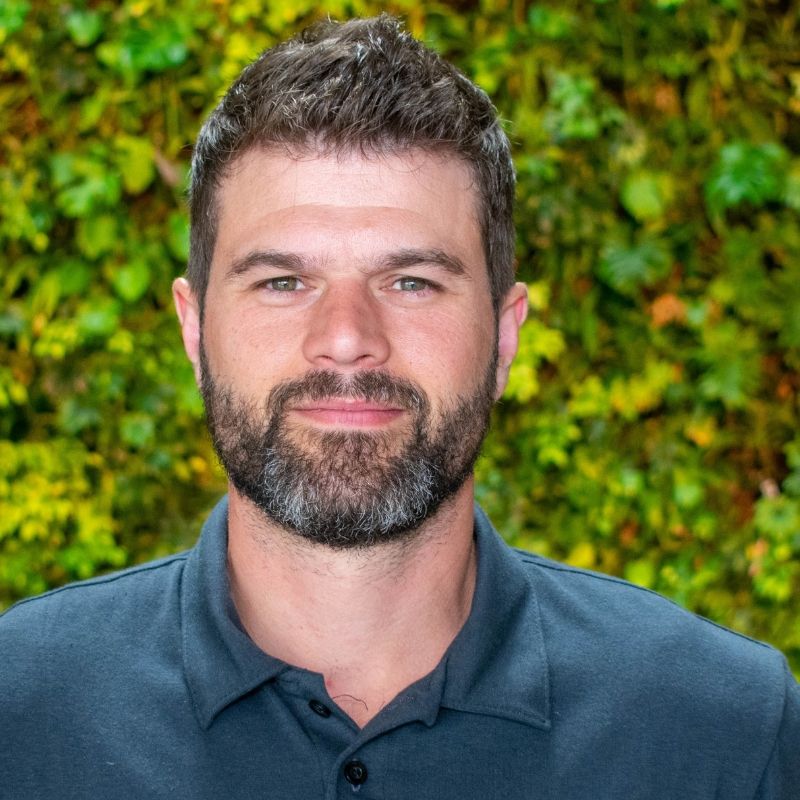
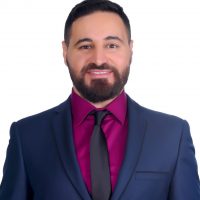
Gordon Huang is an Adjunct Professor in the Civil Engineering department at McMaster University , specializing in environmental systems analysis and sustainable resource management. His research focuses on quantitative methods for addressing uncertainties in climate change, water-food-energy nexus planning, and contaminant remediation. Primary Affiliation : Civil Engineering, McMaster University His work integrates advanced computational models like Bayesian neural networks, factorial optimization, and copula-based downscaling to analyze complex environmental interactions. Recent projects examine CO2 emission pathways, microplastic impacts, and climate-driven drought risks. Key methodologies include stochastic programming , ecological network analysis , and machine learning for predictive modeling. Publications span topics from membrane technology for water treatment to large-scale hydropower socio-economic effects. Email : huangg31@mcmaster.ca
Dr. Karthik Akkiraju serves as Assistant Professor in the Department of Materials Engineering within UBC's Faculty of Applied Science, maintaining an active research program at the intersection of materials science and socio-environmental systems. His office (FF 011) and contact email (karthik.akkiraju@ubc.ca) reflect his current institutional affiliation. His research pioneers a techno-social paradigm for planetary health through three synergistic foci: (1) Establishing material poverty benchmarks using household survey data to identify resource-deprived communities; (2) Quantifying socio-environmental impacts across material supply chains; (3) Integrating well-being metrics into heterogeneous catalyst design frameworks. This work fundamentally reimagines materials engineering by centering human well-being within ecological boundaries, developing design methodologies that balance material requirements with equitable environmental constraints. Analysis of his publication trajectory reveals consistent interdisciplinary innovation spanning computational catalysis, environmental policy, and social metrics. His recent work demonstrates particular strength in perovskite catalyst engineering for sustainable chemistry and novel methodologies for spatial well-being assessment, reflecting a unique fusion of traditional materials science with computational social science. Dr. Akkiraju directs the Sustainable Materials Lab (SMAL), where his team develops frameworks connecting material consumption patterns to human development outcomes, creating pathways for resource allocation that simultaneously address poverty alleviation and environmental sustainability.
Jumi Gogoi is a Postdoctoral Research Fellow at the University of Waterloo in the Department of Earth and Environmental Sciences . She earned her PhD in February 2024 from the Institute for Resources, Environment and Sustainability at the University of British Columbia , supervised by Dr. Navin Ramankutty and Dr. Nathaniel K. Newlands. Her research bridges agricultural datasets, satellite imagery, and machine learning to develop climate-resilient farming strategies. PhD (2024): University of British Columbia (Supervisors: Dr. Navin Ramankutty, Dr. Nathaniel K. Newlands) MS Business Analytics (University of Dallas) MSc Economics (University of Bath) BA Business (Lady Shri Ram College, University of Delhi) Her work emphasizes satellite big-data and machine learning for crop yield prediction in Canada. Recent publications focus on model evaluation , data integration , and scale-dependent analytics to optimize agricultural strategies under climate change. While no awards are listed, her interdisciplinary background spans business, economics, and environmental sciences.
Hugo Larochelle is an Associate Professor at the Université de Montréal's Department of Computer Science and Operations Research (DIRO) within the Faculty of Arts and Sciences. His expertise spans Neural Networks, Deep Learning, and Machine Learning, with contributions to fields like Computer Vision and Natural Language Processing. A graduate of DIRO (Bacc 2004, PhD 2009), he held roles at the University of Sherbrooke (2011–2016) and co-founded Whetlab (acquired by Twitter in 2015). Currently at Google Brain, he balances academic and industrial research, leading projects like the UNIQUE initiative exploring neuroscience-AI intersections. He actively contributes to Quebec’s AI ecosystem through MILA and has received prestigious awards, including the 2019 Diplômé d'honneur. His work emphasizes ethical AI, reproducibility, and interdisciplinary applications. Education: Baccalauréat (Computer Science), Université de Montréal, 2004 Doctorat (Computer Science), Université de Montréal, 2009 Research Interests: Hugo’s work focuses on advancing deep learning techniques for real-world applications, including environmental monitoring (e.g., tree crown segmentation via drone imagery), AI ethics, and model unlearning. He explores intersections between neuroscience and AI, leveraging interdisciplinary approaches to solve complex problems. Recent efforts emphasize benchmark standardization (e.g., EEVEE/GATE) and improving model efficiency through architecture innovations like SoftMoE. Articles Trends: Recent publications highlight contributions to instance segmentation (SAM models), ethical AI (unlearning frameworks), and interdisciplinary applications (e.g., bird species modeling with remote sensing). His work bridges theoretical advancements with practical tools for industries and environmental science. Scientific Awards: 2019 Diplômé d'honneur (Université de Montréal). Advising & Grants: Supervised PhD students in topics like neural networks, code modeling, and program execution (e.g., Sara Hooker, David Bieber). Co-PI on the UNIQUE project (2019–2024, FRQNT-funded), exploring neuro-AI synergies. Recipient of CIFAR funding for ICRA research (2017–2022). Labs & Collaborations: Active contributor to MILA as an associate member. Leads interdisciplinary efforts in AI for environmental challenges and healthcare imaging optimization.
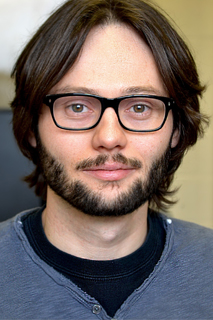
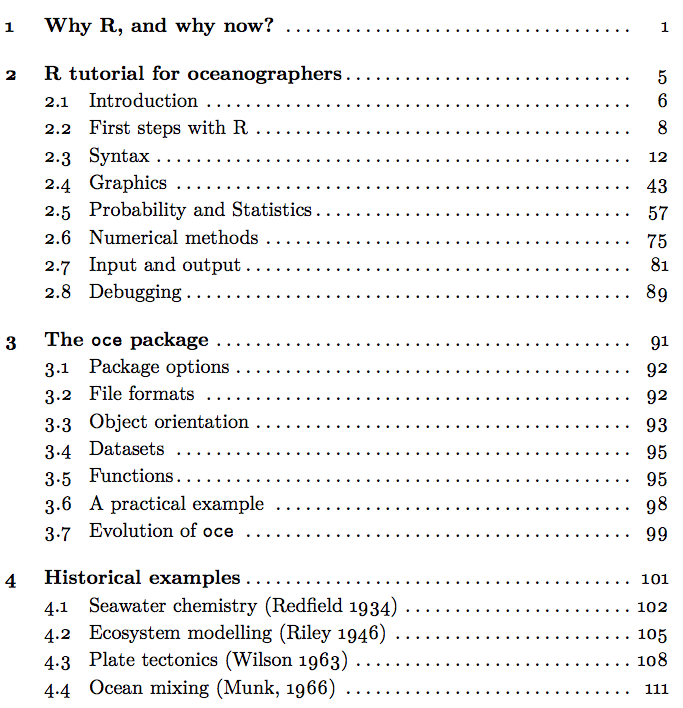
Prof. Daniel E. Kelley is a Professor in the Department of Oceanography at Dalhousie University, Halifax, Nova Scotia, Canada. He serves as Graduate Coordinator and teaches both undergraduate and graduate courses. His research focuses on physical oceanography, particularly ocean mixing caused by internal waves and double-diffusive convection. He holds academic affiliations including roles as university Senator and former executive member of the Canadian Meteorological and Oceanographic Society. Education: BSc from Mount Allison University PhD from Dalhousie University Research Interests: His work addresses small-scale mixing processes in ocean dynamics, parameterization of convection, internal waves, and frontal instabilities. He collaborates on topics ranging from under-ice algal blooms to whale-ship collision mechanics. His methodologies emphasize open-source tools like R and the 'oce' package, as highlighted in his book Oceanographic Analysis with R . Notable Contributions: Developed the 'oce' R package for oceanographic data analysis Recipient of Rosemary Gill Award and NSERC fellowships Author of over 50 peer-reviewed publications Awards & Honors: Rosemary Gill Award for outstanding service to students NSERC University Research Fellowship Outstanding PhD Thesis (CMOS) Labs/Teams: Collaborates with interdisciplinary teams on oceanographic software development and environmental data analysis initiatives.
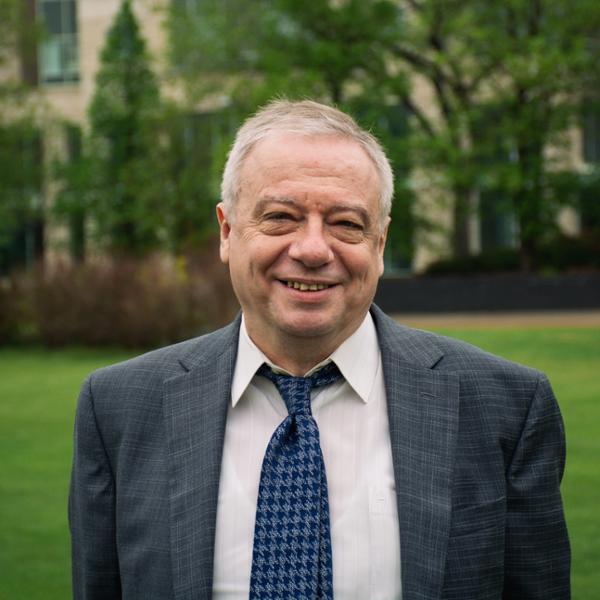
Andrei Volodin is a Professor in the Department of Mathematics and Statistics at the University of Regina, Canada. He serves as the Co-op Work/Study Coordinator and has an extensive publication record spanning probability theory, statistical inference, and applied statistics. His research focuses on limit theorems, bootstrap methods, and distributional analysis with applications to quality control and healthcare economics.
Jean-Daniel Jacob is an Associate Professor in the School of Nursing at the Faculty of Health Sciences, University of Ottawa, currently on academic leave. His research focuses on critical and sociopolitical aspects of psychiatric nursing, power dynamics, ethics, and violence risk management in forensic settings. University of Ottawa - Ph.D. Nursing (2010) University of Ottawa - M.Sc.N (accelerated) (2006) University of Ottawa - B.Sc.N (2005) Research themes include: critical theory applications in nursing; sociopolitical analysis of healthcare institutions; violence and risk management in forensic psychiatry; ethical implications of security imperatives; deconstruction of expert psychiatric discourse; and Foucauldian analysis of healthcare systems. Key article trends show expertise in critical discourse analysis of forensic nursing practices (5/15), institutional violence and risk management (4/15), ethical implications of security measures (3/15), and theoretical applications of Foucault's ideas (3/15). Recent work emphasizes spatial dynamics in nursing research and redefining medicalization processes. Jacob served as Chair of the University Research Chair in Forensic Nursing (2009-2018) and currently chairs Droit-Accès de l'Outaouais, a mental health rights advocacy organization. His work critically examines power structures in psychiatric institutions, focusing on control measures, abjection theory, and the paradox of providing care within carceral environments. Research frequently employs qualitative methods and poststructuralist frameworks.
Animesh Animesh is an Associate Professor and Area Coordinator of Information Systems at McGill University's Desautels Faculty of Management. His research examines the economic and strategic impacts of digital technologies, with focus areas including online advertising, social media analytics, platform ecosystems, and sustainable business models. Animesh's work combines econometric analysis with large-scale data to investigate how digital innovations transform business practices. Recent studies explore AI hallucination detection, open government data economics, and sustainability communication strategies. His research on software patents has influenced understanding of innovation management in competitive IT markets. Animesh maintains industry partnerships through the McGill Dobson Centre for Entrepreneurship.
Azim U. Mallik is a Professor and Chair in the Department of Biology at Lakehead University, specializing in Plant Ecology, Disturbance Ecology, and Riparian Ecology. His research focuses on ecosystem responses to disturbances such as fire and logging, including plant-microbe interactions and successional pathways. He holds a PhD from the University of Aberdeen, UK, and academic qualifications from Dhaka, Bangladesh. Education: HBSc and MSc from Dhaka, Bangladesh; PhD from the University of Aberdeen, UK. Research Interests: Dr. Mallik investigates progressive/retrogressive succession, plant-soil feedbacks, and the structural stability of riparian buffers. His work explores how disturbances shape ecosystem processes and biodiversity, with a focus on boreal and tropical ecosystems. Key themes include allelopathy, microbial interactions, and alternate stable states in managed forests. Publications Trends: His recent work spans hydrological modeling in China, plant-microbe interactions, and disturbance impacts on biodiversity. Collaborations emphasize global ecosystems, including tropical karst forests and boreal riparian zones. Advising & Grants: He has advised students including P. St. Martin and C. St. James. His research involves interdisciplinary projects funded by grants exploring ecosystem resilience and restoration. Labs & Collaborations: Collaborations include institutions in China, Canada, and the UK, reflecting his global focus on ecological processes and conservation strategies.
Justin Longo is an Associate Professor at the Johnson Shoyama Graduate School of Public Policy (University of Regina campus) and Director of the Digital Governance Lab . His work bridges artificial intelligence , policy analytics , and digital governance , with a focus on the social implications of emerging technologies and transboundary environmental policy . He holds a PhD in Public Policy from the University of Victoria (2013). Key Roles : Cisco Research Chair in Digital Governance (2015-2020), Affiliate Member at the University of Victoria's School of Public Administration (2024-2025), and Fulbright Canada Visiting Scholar at UCLA Law's Institute for Technology, Law & Policy (2023). Research Themes : AI in public administration, digital policy tools, citizen science, and governance of Internet-of-Things (IoT) devices . His recent work includes generative AI for briefing note drafting and facial recognition regulation . His 15 most recent publications span AI governance (2025-2016), digital policy tools (2024), collaborative platforms (2018), and health policy analytics (2021). Notable awards include the Fulbright Canada Visiting Scholar Program (2023) and the Sylvia Ostry Prize in Public Policy (2011). Grants : Over CAD 1.2 million in competitive funding, including SSHRC, SHRF, and MacArthur Foundation support. Teaching : Courses in Digital Governance , Policy Analytics , and Strategic Management , with a focus on generative AI applications in public administration education. Service : Advisor to SSHRC, reviewer for journals like Canadian Public Administration , and organizer of national student case competitions.
Lucas Gomez Tobon is an Adjunct Professor at Universidad de los Andes, teaching machine learning and game theory. He serves as Deputy Director of the Data Mining Department at Quantil. Holding a Master’s in Economics from Universidad de los Andes, his research focuses on applied machine learning for social good, including crime modeling and music-driven statistical analysis. His notable works include predicting Colombian music charts using CNNs (69% recall) and linking musical trends to economic indicators (82% variability explanation in Consumer Confidence Index). Recent projects include a REDNACECYT-MD4SG Summer of Science intervention in a Mexican indigenous community and developing the tidyX NLP preprocessing package. His 2023 CLATSE presentation on underreported crime modeling received media attention via Caracol Radio. Research spans spatio-temporal crime patterns, econometric applications of music data, and social impact technologies.
Ala'a Al-Habashna is an Adjunct Professor at Carleton University's School of Computer Science within the Faculty of Engineering and Design. He holds a PhD from Carleton University and focuses on advanced wireless communication systems, 5G/6G networks, machine learning applications, and discrete-event simulation. His research integrates AI-driven solutions for network optimization, spectrum management, and smart urban infrastructure analysis. Education: PhD in Computer Science, Carleton University Research Interests: 5G/6G Networks, Machine Learning for Communications, Cognitive Radio Systems, IoT Integration, and Urban Modeling via Computer Vision Focus on resource allocation algorithms, channel modeling, and AI-driven network architectures Key Article Trends: Recent work emphasizes AI integration in next-gen networks (e.g., RIS-assisted MIMO, GenAI-6G), 5G energy efficiency, and urban analytics using street-view imagery. Earlier contributions include DEVS-based simulation frameworks for fire modeling and D2D video streaming optimization. Collaborations & Funding: Active partnerships include Ericsson Canada for projects like Channel Reconstruction for LTE/NR and Spectrum Sharing with Machine Learning . A funded PhD position is available in Wireless Communication and 5G Networks requiring expertise in Mathematical Optimization. Labs & Teams: Engaged in Ericsson-Carleton Partnership initiatives and leads interdisciplinary teams addressing 6G challenges. Research leverages Carleton's advanced wireless and AI facilities.
Angela Bedard-Haughn is the Dean and Professor in the Department of Soil Science at the University of Saskatchewan. Her research focuses on the interplay between land use, climate change, and soil properties, particularly in carbon and nitrogen dynamics, wetland soils, and digital soil mapping. She holds a Ph.D. from the University of California, Davis, and degrees from the University of Saskatchewan. Professor Bedard-Haughn's work emphasizes high-resolution soil data to contextualize field studies and models. Her research team specializes in digital soil mapping (DSM) and soil information management. She teaches courses such as EVSC 380.3 (Grassland Soils and Vegetation) and SLSC 825.3 (Field Studies and Research Design of Saskatchewan Soil Landscapes). Her recent publications address soil carbon dynamics in wetlands, optimal sampling methodologies for carbon stock estimation, and the use of miniaturized spectrometers in soil analysis. She explores nature-based solutions like short-rotation willow for land restoration and advocates for harmonized soil data systems. Bedard-Haughn has led interdisciplinary projects on Prairie Pothole Region ecosystems, integrating remote sensing and geospatial techniques to predict soil properties and map wetland types. Her work underscores the importance of timely soil data for environmental decision-making.
Mike Evans is a Professor at the University of British Columbia Okanagan within the Irving K. Barber Faculty of Arts and Social Sciences and Department of Community, Culture and Global Studies . Holding a PhD and MA from McMaster University and a BA from University of Victoria , his work bridges Indigenous Knowledges with interdisciplinary research frameworks. Research focuses on Urban Aboriginal issues , Métis history , Indigenous methodologies , and regional food systems Key publication themes include: decolonizing research practices , Indigenous geospatial studies , and ecological cultural analysis He engages in community-based research across multiple domains: Island studies through ecological and cultural lenses Trans-national migration examining Tongan and Métis contexts Participatory action research with Indigenous communities
Hans-Arno Jacobsen is a Professor holding the Jeffrey Skoll Chair in Computer Networks and Innovation at the University of Toronto , affiliated with the Department of Electrical and Computer Engineering and Department of Computer Science under the Faculty of Applied Science and Engineering . Full-time faculty member since 2001 Fellow of the IEEE Chair of the Computer Group Jacobsen leads the Middleware Systems Research Group (MSRG) , focusing on scalable distributed systems. His work spans: Core research: Event processing, publish/subscribe systems, service-oriented architectures Applied domains: Blockchain infrastructure, quantum machine learning, cloud computing Cross-disciplinary interests: Energy informatics, sustainable computing, quantum chemistry His publications and grants since 2019 demonstrate sustained leadership in: Quantum computing applications Reproducibility in quantum systems Blockchain optimization Microservices architecture Cyber-physical system engineering Selected scientific awards: Double Test-of-Time Award recipient from VLDB (2019) and ACM Middleware (2015) Event Processing Technical Society's Innovative Principles Award (2011) Major funding includes: NSERC Discovery Grant (2021-2026) for 'Learning Clouds' IBM/NSERC Collaborative Grant (2019-2023) for cloud microservices Ontario Research Fund (2019-2026) for CyPreSS project