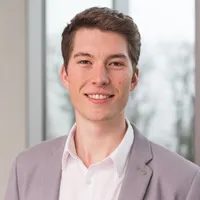
Ahmed Elbeltagi is an Assistant Professor in the Agricultural Engineering Department at Mansoura University's Faculty of Agriculture. His work focuses on hydrology, agricultural water management, and climate change adaptation. Specializes in data-driven modeling for water resource optimization Integrates machine learning with traditional hydrological models Active in climate change impact assessments on agricultural systems Recent research trends include: Developing open-source tools like Aqua-MC for irrigation simulation Applying hybrid deep learning models for evaporation prediction Advancing water quality assessment through multivariate analysis Exploring economic applications of wetlands in arid regions He collaborates with institutions across Egypt, India, China, and Saudi Arabia, with a focus on sustainable water management solutions.
Dr. Gaël Kermarrec is a researcher at the Boundary Layer Meteorology Group , part of the Institute of Meteorology and Climatology within the Faculty of Mathematics and Physics at Leibniz University Hannover . His work focuses on atmospheric turbulence, GNSS applications, and remote sensing for environmental monitoring. Boundary layer meteorology Turbulence theory GNSS signal processing Terrestrial laser scanning Climate change impacts Geodetic time series analysis His research integrates advanced mathematical models like LR B-splines and Matérn covariance with large eddy simulations to study: Atmospheric turbulence effects on optical/GNSS signals Hydrospheric mass loading Deformation analysis of terrain/port infrastructure Climatic sea-level changes Machine learning for remote sensing The 15 most recent articles (2025-2023) demonstrate his focus on: GNSS-based turbulence detection AI-enhanced climate mapping Advanced surface approximation techniques Multi-sensor data fusion Stochastic modeling of geodetic observations Environmental impacts on optical measurements He has developed tools like the Klimascanner QGIS plugin for urban climate resilience and contributes to: Understanding atmospheric scale lengths Improving TLS/GNSS deformation monitoring Analyzing hydrospheric changes Wavefront modeling Ionospheric corrections
Professor Walter Timo de Vries is a faculty member at the Technical University of Munich (TUM) , holding the Chair of Land Management and Land Development within the Department of Aerospace and Geodesy, TUM School of Engineering and Design . His research focuses on intelligent and responsible land management , urban and rural development , spatial justice , and the development of a Human Geodesy framework. A graduate of TU Delft (1988) and Rotterdam (PhD), he has led international projects across Asia, Africa, and South America. At TUM, he directs the Master's and PhD Programs in Land Management , serves as Dean of Geodesy , and leads TUM.Africa . Member of the German Geodetic Commission Member of the Bavarian Academy for Rural Development Academic Coordinator of TUM SEED Center Research Interests span responsible land governance , land tenure security , land consolidation , and geospatial methods for sustainable development. His recent work examines the Water-Energy-Food Nexus and digital twins in collaborative planning. He has supervised over 20 PhD and Master’s students on topics like spatial justice , nomic pastoral tenure , and smart land use . Publications address blockchain in land administration , spatial inequalities , and land policy reforms across global contexts.
Prof. Dr. Nadine Göppert is a University Professor (W3) of Hydrogeology at the Institute of Geological Sciences , Freie Universität Berlin , Germany. She previously served as an Akademische Rätin and Senior Scientist at the Karlsruhe Institute of Technology (KIT) from 2011–2024, and held research positions at the Weizmann Institute of Science (2009–2011) and University of Karlsruhe (2008–2009). Her academic background includes a Dr. rer. nat. (2008) and Diploma in Geology (2002) from the University of Karlsruhe. Education Doctorate in Hydrogeology (2008), University of Karlsruhe Diploma in Geology (2002), University of Karlsruhe Her research focuses on karst hydrology , groundwater tracing , particle transport dynamics , and water quality monitoring in alpine and subtropical karst systems. Recent publications analyze tracer experiments , microplastic transport , and hydrochemical variability across diverse karst environments. Her teaching portfolio includes Applied Hydrogeology , Field Methods , and Laboratory Techniques for students in Geosciences and Water Engineering. She has supervised numerous theses on topics like karst groundwater dynamics and fluorescence-based water quality analysis .
Dr. Jann Michael Weinand is the head of the Integrated Scenarios department at the Institute of Climate and Energy Systems (ICE-2) within Forschungszentrum Jülich GmbH. He leads a team of 30 scientists, PhD students, and master students focusing on energy system analysis, complexity management, and AI integration. His work addresses regional and international energy systems, emphasizing renewable energy resource assessment and techno-economic feasibility. Dr. Weinand holds a Dr.-Ing. from the Karlsruhe Institute of Technology (2020) and a Mechanical Engineering and Business Administration degree from RWTH Aachen University (2016). His research spans energy autonomy, renewable resource optimization, and the socio-technical challenges of energy transitions. Key research areas include energy system modeling, geothermal and wind energy potential, and data-driven methodologies. He coordinates interdisciplinary projects with academic and industrial partners, contributing to high-impact journals like Nature Energy and Joule. His team develops open-source tools (e.g., ETHOS workflows) for reproducible energy assessments and advocates for spatially disaggregated energy planning. Publications highlight trade-offs in energy system design, AI risks, and land-use conflicts for renewables. He emphasizes integrating social, technical, and environmental factors into energy policy frameworks.
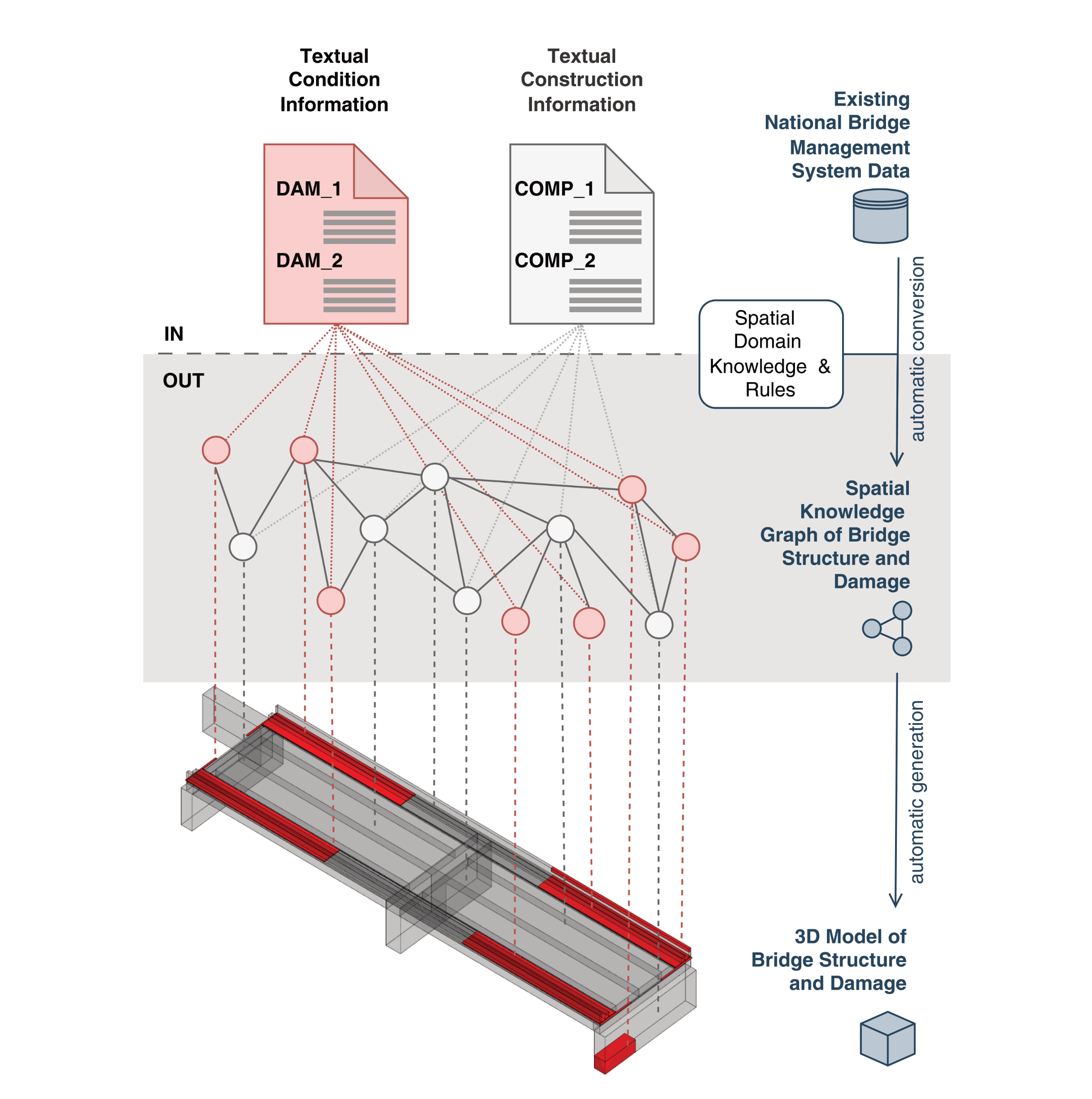
Prof. Dr. Jakob Beetz serves as a University Professor at RWTH Aachen University's Faculty of Architecture, leading the Design Computation (DC) research group. His work addresses critical challenges in sustainable built environments through digital innovation, focusing on integrating knowledge, information, and data across disciplines to reduce the sector's energy and material consumption—which accounts for over one-third of global totals—while advancing climate goals under the European Green Deal. His research spans Building Information Modeling (BIM), digital twins, and artificial intelligence, with emphasis on graph-based data federation, semantic web technologies, and large language models in construction. Key interests include evidence-based planning, parametric design optimization, building physics simulation, and networked knowledge modeling. Recent projects explore federated digital twin ecosystems for infrastructure management, intelligent damage assessment systems, and AI-driven solutions for wood structure preservation, directly contributing to sustainable development targets. Analysis of his 2024-2025 publications reveals a cohesive trajectory toward decentralized data environments and AI integration in Architecture, Engineering, and Construction (AEC). His work bridges theoretical foundations in knowledge representation with practical applications in bridge maintenance, road infrastructure, and timber construction, demonstrating consistent innovation in spatial data querying, federated issue management, and ontology-based process modeling. Prof. Beetz actively supervises PhD candidates, as evidenced by DC.Promotions 2024, and drives international collaboration through events like the Forum Construction Informatics 2025 and CIB W78 conferences. His research group engages with industry standards including Industry Foundation Classes (IFC) and Common Data Environments (CDEs), emphasizing open data principles and interoperability to transform construction workflows.
Craig Knoblock serves as Keston Executive Director of the Information Sciences Institute (ISI) at the University of Southern California (USC), Vice Dean of the USC Viterbi School of Engineering, and Research Professor of Computer Science and Spatial Sciences. He also directs the Data Science Program and the Center on Knowledge Graphs at USC. His educational background includes a Ph.D. and M.S. in Computer Science from Carnegie Mellon University (1991, 1988) and a B.S. with honors in Computer Science from Syracuse University (1984). Knoblock's research focuses on data semantics , specializing in source modeling, schema and ontology alignment, entity and record linkage, data cleaning, Web data extraction, and knowledge graph construction. His work bridges computer science, geospatial analysis, and artificial intelligence to solve complex data integration challenges. Recent projects emphasize historical map digitization, geospatial knowledge graphs, and smart city applications. His 300+ publications demonstrate consistent contributions to knowledge graphs and geospatial data integration, with a growing emphasis on historical map analysis and urban applications. The research trajectory shows increasing interdisciplinary collaboration across computer vision, geoinformatics, and domain-specific applications. IEEE Fellow (2020) ACM Fellow (2017) AAAI Fellow (2004) Robert S. Engelmore Memorial Lecture Award (2014) Donald E. Walker Distinguished Service Award (IJCAI, 2018) Use-Inspired Research Award (USC Viterbi, 2018) As Executive Director of ISI, Knoblock oversees one of USC's premier research centers with significant federal funding. His leadership extends to directing the Center on Knowledge Graphs and the Data Science Program. While specific grant details aren't provided, his extensive publication record and leadership roles indicate substantial research funding across data integration, knowledge representation, and geospatial applications. His work bridges theoretical computer science with practical applications in historical preservation, urban planning, and resource management through collaborative projects with government agencies and industry partners. Knoblock leads the Center on Knowledge Graphs at USC, focusing on developing techniques for building and utilizing knowledge graphs across diverse domains. His team combines expertise in artificial intelligence, geospatial analysis, and data integration to tackle challenges in historical map digitization, urban applications, and resource discovery. The research group maintains strong connections with both academic and government partners through the Information Sciences Institute's extensive network.
Prof. Dr.-Ing. Jörg Blankenbach holds the Chair of Construction Informatics and Geoinformation Systems at RWTH Aachen University's Geodetic Institute. His research focuses on the integration of digital technologies in civil engineering and geospatial systems. Current affiliations include: Chair of Construction Informatics and Geoinformation Systems, RWTH Aachen University Geodetic Institute, RWTH Aachen University Research interests span digital construction management, geospatial data modeling, BIM-GIS integration, and smart infrastructure systems.
Katharina Eggensperger is an Early Career Research Group Leader at the University of Tübingen , leading the AutoML for Science group within the Cluster of Excellence Machine Learning for Science . She previously completed her Ph.D. at the University of Freiburg under Frank Hutter and Marius Lindauer (2022), and actively contributes to the AutoML community through open-source tool development and competition leadership. Co-developer of AutoML.org tools Faculty member of IMPRS-IS Chair for multiple AutoML workshops/conferences (2019-2025) Her research focuses on automated machine learning (AutoML) with specific attention to: AutoML Systems Hyperparameter Optimization Tabular Machine Learning Scientific Applications of ML She has organized multiple AutoML schools and conferences, including serving as Program Chair for AutoML 2024 and Non-archival Track Chair for AutoML 2025. Her work emphasizes making machine learning accessible through automation while maintaining scientific rigor and interpretability, particularly for tabular data applications. Katharina actively recruits PhD students through IMPRS-IS and collaborates with institutions like the University of Freiburg and Cyber Valley .
Prof. Hansjörg Kutterer is a Professor and Dean at the KIT-Department of Civil Engineering, Geo and Environmental Sciences at Karlsruhe Institute of Technology (KIT). His primary affiliation is with KIT's Department of Civil Engineering, Geo and Environmental Sciences. He leads geodetic research initiatives focusing on Earth observation systems, atmospheric modeling, and geophysical data analysis. His research emphasizes advanced applications of GNSS, InSAR, and satellite gravimetry for monitoring climate-related phenomena such as water vapor dynamics, terrestrial water storage changes, and ground motion patterns. Key projects include developing machine learning-enhanced models for tropospheric delay corrections and integrated water vapor estimation in the Upper Rhine Graben region. Prof. Kutterer actively contributes to international geodetic frameworks like the Global Geodetic Observing System (GGOS), particularly through DA-CH regional collaborations. His work bridges geodetic methodologies with interdisciplinary challenges in climate science and environmental engineering. He oversees departmental operations as Dean, fostering innovation in geospatial education and infrastructure. His technical expertise spans geodetic deformation analysis, statistical robust estimation, and the integration of geophysical models with observational data.
Leif Sörensen is a researcher at the University of Hildesheim , affiliated with the Institute of Business Administration and Business Informatics within the Faculty of Mathematics, Natural Sciences, Economics and Computer Science . His work focuses on operations research and digital transformation in public transport systems, particularly examining flexible transport models, agent-based simulations, and geoinformation system integration. Core Affiliations Researcher (since 2023) - HAWK Hochschule für Angewandte Wissenschaft und Kunst, Holzminden Doctoral Researcher - Institute of Business Administration and Business Informatics, University of Hildesheim Former Student Assistant - TU Dresden and Max Planck Institute for Self-Organization Research Focus: Sörensen's research bridges transport policy , agent-based modeling , and data analytics . He investigates how digital transformation can enhance rural mobility through flexible public transport systems , with emphasis on contractual incentives for drivers and stochastic behavior prediction . His work spans both developed and developing economies , particularly analyzing informal transit systems in South Africa. Publication Trends: Recent articles demonstrate a strong focus on operations research in transport contexts, with 7/9 publications involving agent-based simulations and DRT (Demand-Responsive Transport) . Keywords cluster around urban mobility , digital transformation , and transport resilience , while sub-fields reveal expertise in dynamic routing algorithms , passenger acceptance metrics , and GIS-integrated transport planning . Key Projects Co-author on European Commission-funded transport safety modeling Participant in Smart Hybrid research initiative (44 co-publications) Contributor to International Transportation Economics Association conferences Academic Background: Holds degrees in International Economics (University of Göttingen) and International Business and Development (University of Bayreuth). Completed internships at UNECE Geneva and KfW Entwicklungsbank Pretoria , with fieldwork in South Africa and Japan .
Pascal Hitzler is a University Distinguished Professor and holds the endowed Lloyd T. Smith Creativity in Engineering Chair at Kansas State University's Department of Computer Science, Carl R. Ice College of Engineering. He directs the Center for Artificial Intelligence and Data Science (CAIDS) and the Institute for Digital Agriculture and Advanced Analytics (ID3A). Previously, he held roles at Wright State University, Karlsruhe Institute of Technology, and TU Dresden. His research focuses on neuro-symbolic AI, semantic web technologies, knowledge graphs, and ontology engineering. Education: PhD in Mathematics (2001, University College Cork), Diplom in Mathematics (1998, University of Tübingen). Academic achievements include over 400 publications, founding editor roles for journals like Neurosymbolic Artificial Intelligence , and leadership in organizations like the Neural-Symbolic Learning and Reasoning Association. Research interests include AI explainability, knowledge representation, and interdisciplinary applications of semantic technologies. He leads the DaSe Lab for Data Semantics, advancing projects like the KnowWhereGraph and Enslaved.org Hub Knowledge Graph. His work bridges symbolic AI with neural networks, emphasizing practical applications in agriculture, environmental science, and historical data preservation. Grants and collaborations span academic, industrial, and international partners. He has advised numerous students and researchers, contributing to both theoretical advancements and real-world semantic systems deployments.
Daniel Kühbacher is a Tutor and researcher at the Chair of Environmental Sensing and Modeling at Technische Universität München (TUM). He specializes in developing high-resolution urban emission inventories for CO2, CH4, and co-emitted species, and leads the setup of a 100-sensor CO2 network in Munich to assess sector-specific emission factors. His work bridges environmental monitoring, sensor technology, and urban climate science. Teaching roles include tutoring the Environmental Sensing and Modeling lecture and advanced seminar, as well as the joint practical course Gemeinschaftspraktikum MST . Research focuses on integrating traffic simulation data, mobile measurement units, and flux footprint modeling to quantify urban greenhouse gas emissions. Education: M.Sc. in Environmental Engineering Affiliations: Member of the ICOS Cities project and contributor to the ICOS Science Network Publications emphasize urban GHG monitoring innovations, including sensor network optimization, flux measurement validation, and inventory intercomparison studies. His work supports policy-relevant insights into emission hotspots and mitigation strategies. Currently develops the SCOUT project for street-level carbon observatories and explores human respiration emissions using mobile network data.
Thushara Addanki is a Researcher at the Chair of Renewable and Sustainable Energy Systems, Technical University of Munich (TUM). He holds a Master's degree in Power Engineering from TUM, where he completed his thesis on Intertemporal Urbs with previous investments in the endogenous material demand for new capacity investments . His work focuses on modeling, optimization, and sustainability analysis of energy systems, with emphasis on renewable integration in developing regions and green hydrogen solutions. Research interests span energy system modeling, renewable resource assessment, life-cycle environmental impact integration, and techno-economic analysis of global hydrogen/synfuel supply chains. His publications reflect expertise in high-resolution geospatial analysis (pyGRETA), cross-sectoral optimization (Impuls-urbs), and international energy policy applications. Thushara contributes to projects including ETSAP Germany (energy systems modeling) and multi-national collaborations analyzing energy transitions in Uruguay, Bavaria, and global contexts. He is active in the ENS research team at TUM, advancing tools for sustainable energy planning.
Professor Stefan Siebert is Head of the Department of Crop Sciences at the Agricultural Faculty of the University of Göttingen, a position he has held since October 2017. His academic career spans multiple prestigious institutions including the University of Bonn, University of Frankfurt, and University of Kassel, where he completed his doctoral studies. University of Göttingen (2017-present): Professor and Head of Crop Science/Agronomy University of Bonn (2016-2017): Temporary Head of Chair Crop Science University of Bonn (2009-2015): Habilitation in Crop Science and Resource Conservation University of Frankfurt (2004-2009): Postdoctoral Scientist University of Kassel (2002-2005): Ph.D. Student and Scientist Professor Siebert's research focuses on sustainable resource use in crop production, climate change impacts on plant growth, plant growth modeling, and drought risk assessment. His work integrates large-scale data analysis with modeling approaches to understand the complex interactions between resource use, crop management, and productivity. He has developed comprehensive datasets on water, soil, and nutrient use in agriculture and pioneered methods for analyzing irrigation systems globally. His recent publication trends reveal a strong emphasis on irrigation systems, climate change impacts on agriculture, and advanced crop modeling techniques. The analysis of his 15 most recent articles shows consistent focus on water resource management, spatial analysis of agricultural systems, and the effects of climate variability on crop production. His work frequently combines remote sensing data with ground-based measurements to create high-resolution datasets for agricultural decision-making. Professor Siebert leads several significant research projects including ZERN (Future of Nutrition in Lower Saxony, 2024-2029), Collaborative Research Center 1502 on Regional Climate Change (2022-2025), and OUTLAST (Development of a global drought hazard forecasting system, 2022-2025). He has been continuously developing and maintaining a global dataset on irrigated areas since 1997, establishing himself as a leading authority in agricultural water management. His teaching portfolio is extensive, covering scientific writing, field production exercises, general crop production, methodical work, plant biology, crop production and breeding, sustainability of production systems, and applications of data analysis to agronomy. Professor Siebert's work bridges theoretical research with practical applications in sustainable agriculture, making significant contributions to our understanding of how to maintain food security in the face of climate change.