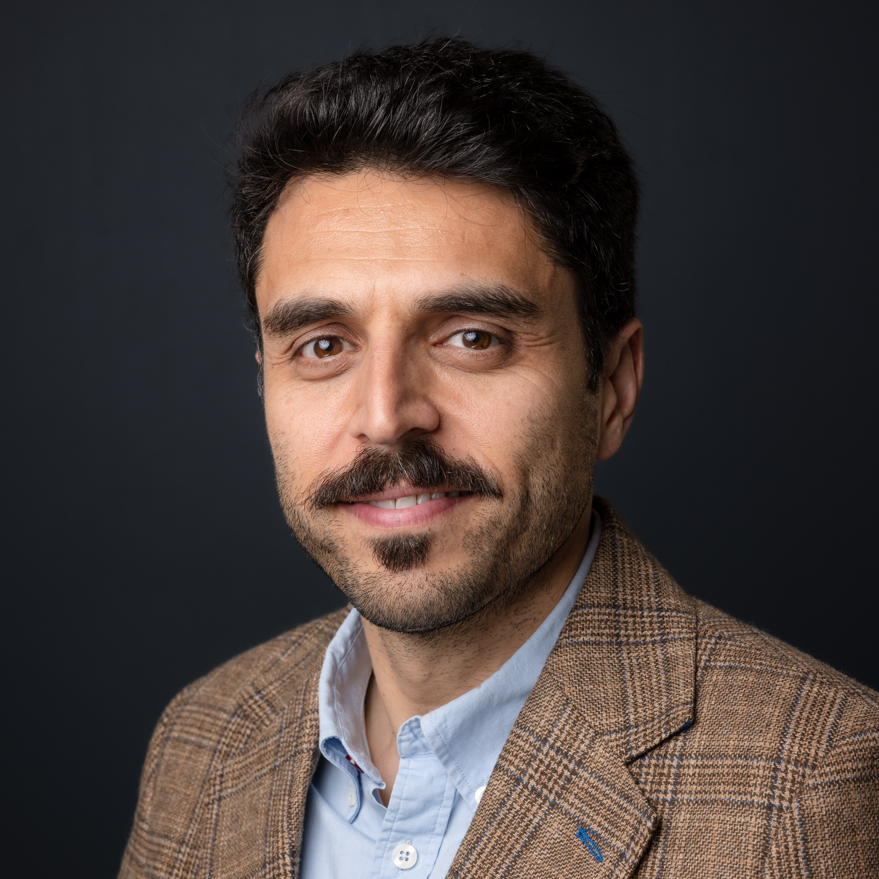
Associate Professor Mohsen Kalantari is a Geospatial Engineering academic at the University of New South Wales (UNSW) School of Civil and Environmental Engineering , with concurrent roles as co-founder of the startup Faramoon . His career spans roles at the University of Melbourne's Department of Infrastructure Engineering and Victorian government's land administration initiatives through DELWP. Education : PhD in Geomatics Engineering (2008, University of Melbourne), Master of GIS Engineering (2004), Bachelor of Surveying Engineering (2001) His research bridges geospatial engineering with construction automation , focusing on 3D cadastre , BIM-GIS integration , and smart cities . Recent publications show trends in underground land administration , digital twins , and LADM standard implementations . Scientific Awards : National educational recognition (2019), Victorian educational grants (2018), and prestigious fellowships (2012) As a supervisor , he guides PhD candidates in topics ranging from BIM for waste management to underground cadastral systems . His industry engagement includes partnerships with the United Nations , Open Geospatial Consortium , and Singapore Land Authority .
Associate Professor Jiwon Kim is a leading researcher in Transport Engineering at the University of Queensland's School of Civil Engineering. She serves as Director of Higher Degree by Research and was a DECRA Fellow from 2019-2022. Holding degrees from Korea University and Northwestern University, she specializes in AI/ML applications for transportation systems. PhD, Northwestern University BS & MS, Korea University Her research focuses on Artificial Intelligence and Machine Learning applications in transportation, including: Deep learning for traffic management Reinforcement learning in mixed traffic environments Multi-agent systems for urban mobility optimization Spatiotemporal trajectory analysis Recent publications demonstrate expertise in: Eco-driving strategies Traffic incident prediction Queue length estimation Crash risk modeling Scientific recognition includes: ARC DECRA Fellowship (2019-2022) She supervises doctoral students in: Transportation data analytics Autonomous vehicle systems Intelligent traffic management Current projects explore real-time traffic monitoring, synthetic mobility data generation, and connected vehicle technologies.
Dr. Alireza Nili is a Senior Lecturer in Service Science at QUT's School of Information Systems within the Faculty of Science. His expertise spans digitization of customer-centric services, AI/chatbots, IoT/IIoT, and sustainable technologies. He holds a PhD from Victoria University of Wellington and has coordinated large-scale courses like IT Systems Design (IFB103), achieving top teaching scores. Nili's research focuses on service ecosystems, trust in digital services, and public/retail sector innovations. He has secured over $1.4M in industry grants for projects involving Cisco, Amazon, and Services Australia. His awards include the 2023 Educator of the Year and multiple top conference paper recognitions. Nili supervises PhD students at Level 3 mentoring status and contributes to major conferences as track chair/associate editor. Research highlights include frameworks for chatbot governance, IOT in agriculture, and AI ethics. His work appears in IEEE Software , Communications of the ACM , and MIT Sloan Management Review . Current projects address consumer trust in AI technologies and spatial data systems. Nili's interdisciplinary approach combines design science with empirical methodologies to bridge theory and practice in digital service innovation.
Professor Luke Prendergast is the Deputy Dean of the School of Computing, Engineering & Mathematical Sciences (SCEMS) at La Trobe University (LTU) and holds a Professorship in the Department of Mathematics and Statistics. He previously served as Head of Department (2014–2020) and led LTU's Statistics Consulting Platform. His research focuses on robust statistics, meta-analysis, dimension reduction, and applied statistics, leading the DRAMA research group. Collaborations span fields like endocrinology, disability studies, and respiratory health. He actively contributes to research grants, including projects on Prader-Willi syndrome and exercise for disability populations. Professor Prendergast's recent work emphasizes statistical software development (e.g., the rquest package) and applications in biostatistics, such as metabolomics analysis and health intervention fidelity. His articles address topics like quantile-based hypothesis testing, geospatial accessibility for disability care, and motivational interviewing efficacy. Professional roles include NHMRC grant review panels, editorial boards for Nutrients and Respirology , and leadership in the Statistical Society of Australia (SSA Vic). His teaching includes courses in meta-analysis, linear models, and data-based critical thinking. Grants funded projects on exercise programs for cerebral palsy populations and community-university partnerships for disability inclusion. Luke's work bridges statistical theory with real-world health challenges, emphasizing robust methodologies and interdisciplinary collaboration.
Dr. Alessio Russo is a Senior Lecturer in Landscape Architecture at the School of Architecture and Built Environment, Queensland University of Technology (QUT). As a recognized expert in urban ecosystem services and green infrastructure, his research bridges environmental design with human health and climate change mitigation. His research emphasizes enhancing urban human health and wellbeing through biodiverse green spaces, participatory design, and nature-based solutions that address thermal comfort, pollution removal, food production, and water runoff. Key projects include 2023-2024: Urban rewilding aesthetics & people's needs in blue/green infrastructure (UKRI RECLAIM Network Plus) 2023: Climate-resilient public spaces (RPA Small Grants, UoG) 2021-2022: Shared vision for urban greening (UCL & Net Zero Innovation Programme) His scholarly output spans 2014-2025, focusing on nature-based urban regeneration aligned with SDG 11. He serves as Associate Editor for Urban Agriculture and Regional Food Systems and sits on editorial boards of Urban Planning, Discovering Cities, and Urban Resilience and Sustainability. Professional memberships include IFLA, ICOMOS-IFLA, and IUCN CEM.
Professor Stuart James Khan is an Adjunct Professor in the School of Civil & Environmental Engineering at the University of New South Wales (UNSW). He previously served as Director of the Australian Graduate School of Engineering (AGSE). His research focuses on sustainable urban water management, water treatment processes, and chemical contaminant analysis. Khan holds a PhD in Environmental Engineering from UNSW (2003) and a BSc (Hons 1 in Organic Chemistry) from the University of Sydney (1995). His research interests include water recycling, desalination, disinfection byproduct formation, and the safe management of chemical contaminants. He has advised over 15 PhD students on topics ranging from advanced treatment technologies to risk assessment frameworks. Khan has published extensively, with over 200 journal articles and 18 book chapters, emphasizing interdisciplinary approaches to water quality challenges. Key contributions include advancing membrane bioreactor performance, optimizing water recycling systems, and assessing risks associated with emerging contaminants. His work bridges fundamental science and practical engineering solutions, addressing global water security challenges. Current projects explore wastewater-based epidemiology, PFAS remediation, and climate-resilient water infrastructure. Khan collaborates internationally on water reuse strategies and has contributed to policy frameworks for safe water management. His teaching spans courses like Water & Wastewater Treatment and Environmental Risk Analysis, reflecting his commitment to educating future engineers in sustainable practices.
Dr. Bo Liu is an Associate Professor in the School of Computer Science at the University of Technology Sydney (UTS), where he serves as a core member and director of the AI Security and Privacy (AISP) Research Lab at the Australian Artificial Intelligence Institute (AAII). With expertise spanning cybersecurity, privacy protection, AI and machine learning, and wireless communications, Dr. Liu has established himself as a leading researcher in the field of AI security and privacy. Dr. Liu earned his PhD from the Department of Electronic Engineering at Shanghai Jiao Tong University in 2010. His academic journey at UTS has progressed from Senior Lecturer (November 2019-December 2022) to his current position as Associate Professor (January 2023-present). Dr. Liu's research focuses on the critical intersection of artificial intelligence and security, particularly addressing emerging threats in the age of advanced AI systems. His work spans multiple dimensions of security and privacy, including deepfake detection, privacy-preserving data synthesis, AI model security, and fair machine learning. He has pioneered approaches to detect AI-generated content, protect visual privacy through de-identification techniques, and address the complex relationship between algorithmic fairness and privacy preservation. His publication record demonstrates significant contributions across multiple cutting-edge research areas, with particular emphasis on detecting and mitigating threats from generative AI systems. His recent work reveals a strong focus on deepfake detection across multiple modalities (images, video, and audio), privacy-preserving techniques for sensitive data, and the security implications of emerging AI architectures like Retrieval-Augmented Generation systems. Dr. Liu has secured substantial research funding, including as Lead Chief Investigator on multiple ARC Discovery and Linkage Projects, totaling over $3.5 million AUD. His industry collaborations include partnerships with the NSW Department of Planning and the Reserve Bank of Australia, demonstrating the practical applicability of his research. As an academic leader, Dr. Liu serves as Associate Editor for IEEE Transactions on Broadcasting and actively contributes to the academic community through conference organization, peer review for top-tier venues, and assessment for ARC grant schemes. He also teaches courses including Penetration Testing, Ethical Hacking and Offensive Security, and supervises Masters and PhD students in cybersecurity and privacy research.
Professor Jes Sammut is a faculty member at the University of New South Wales (UNSW) in the School of Biological, Earth & Environmental Sciences . He serves as Deputy Dean for External Engagement and leads the UNSW Aquaculture Research Group , while also holding the position of Deputy Director (International) at the Centre for Marine Science & Innovation. Additionally, he is an Honorary Research Fellow at ANSTO , where he uses nuclear tools to study seafood provenance. His research spans biological, physical, and social sciences, focusing on aquaculture solutions across Australia, Vietnam, Papua New Guinea, Indonesia, India, Thailand, and the Philippines.
Dr. Johnson Xuesong Shen is an Associate Professor at the School of Civil and Environmental Engineering , University of New South Wales . His work integrates Digital Twins , Building Information Modeling (BIM) , and Construction Automation with a focus on robotics, AI, and LiDAR/UAS technologies. Research Interests: Digital Twins, BIM, Construction Robotics, Emissions Modeling, LiDAR/UAS, Structural Health Monitoring Education: Ph.D. in Construction Engineering and Management, The Hong Kong Polytechnic University His publications span 2025–2005, emphasizing construction automation , environmental impact reduction , and innovative tunneling solutions . Recent work includes IoT-Bayes fusion for real-time safety monitoring and life cycle analysis of construction waste. Scientific Awards: Vice Chancellor's Award for Teaching Excellence, UNSW, 2014 Best PhD Student Paper Award, CONVR, UK, 2013 Postdoctoral Fellowship, University of Alberta, 2011-2013 Best Paper Award, ASCE Construction Research Congress, 2010 Dr. Shen mentors 9 PhD candidates in areas like 3D object detection , fuel consumption modeling , and UAV-based LiDAR . His grants include $5.98M from the Australian Research Council (2022–2027) for resilient infrastructure systems and projects on modular construction and intelligent tunneling .
Dr. Xuzhen He is a Senior Lecturer at the School of Civil and Environmental Engineering, University of Technology Sydney (UTS). He holds a BSc from Tsinghua University and a PhD from the University of Cambridge, where he received the John Winbolt Prize (2015). His research focuses on geotechnics, geomechanics, and numerical methods, with an emphasis on AI integration. Notable contributions include studies on soil erosion, particle segregation, and tunnel engineering. He leads projects funded by ARC, including DECRA (2021) and a Discovery grant (2023). His work bridges experimental and computational approaches, addressing challenges in geotechnical infrastructure and environmental stability. Education: Bachelor of Science, Tsinghua University, China PhD in Civil Engineering, University of Cambridge, UK Research Interests: AI-driven geotechnical analysis (slope stability, tunnelling) Multiscale geomechanical modelling (hypoplasticity, multiphase systems) Numerical methods (DEM, SPH, material point method) Awards: ARC DECRA (2021) John Winbolt Prize (2015) Grants: "Modernise geotechnical investigation and analysis with machine learning" (ARC DP230100678) "Multiscale modelling of fluid–particle transport in porous media" (ARC DE220100763) Labs/Teams: Member of UTS Transport Research Centre (TRC) Associate member of Centre for Advanced Modelling and Geospatial lnformation Systems (CAMGIS)
Dr. Zhenyu Zhang is a Lecturer in Surveying and Spatial Science at the School of Surveying and Built Environment , University of Southern Queensland (Springfield Campus). With over 20 years of tertiary teaching experience, he specializes in geomatic engineering, GIS programming, remote sensing, and machine learning applications for geospatial data analysis. His work focuses on LiDAR technologies (terrestrial and airborne) for environmental management, 3D modeling, and high-resolution DEM generation. Member of Surveying and Spatial Science Institute (SSSI), Australia Member of Modelling and Simulation Society of Australia and New Zealand Member of International Global Navigation Satellite Systems (IGNSS) His research integrates geomatics with environmental geoscience, emphasizing forest biomass estimation, carbon accounting, and BIM development using laser scanning. He teaches foundational and advanced courses in surveying, geodetics, GIS programming, and research projects at both undergraduate and postgraduate levels.
Prof Ghassan Beydoun is a Professor and Head of Discipline (Information Systems) at the School of Computer Science, University of Technology Sydney (UTS). He leads the Information Systems discipline and is affiliated with the Centre for Advanced Modelling and Geospatial Information Systems (CAMGIS). His research focuses on AI-driven systems, agent-based modelling, ontologies, and disaster management, with notable contributions to knowledge graphs, enterprise architecture, and IoT applications. Beydoun actively supervises Masters and PhD students in these domains. His research interests span metamodelling, agent systems, and AI applications in disaster management (e.g., flood, landslide, and earthquake risk assessment), health systems, and smart infrastructure. He has pioneered frameworks for reproducible machine learning solutions, digital identity systems, and cloud migration strategies. Beydoun’s work integrates interdisciplinary methods, such as bibliometric analysis for journal evolution and XAI for spatial hazard prediction. Recent publications highlight his expertise in AI for climate-induced hazard modelling, agent-based knowledge transfer mechanisms, and metaverse applications in education. His funded projects include AI-powered circular economy initiatives, smart beach safety systems, and health data querying frameworks. Beydoun collaborates with industry partners like CSIRO, Capsicum Business Architects, and Data Zoo, translating research into practical solutions for enterprise architecture, cybersecurity, and public health.
Professor Clinton Fookes is a faculty member at the Queensland University of Technology (QUT) within the School of Electrical Engineering & Robotics . His research focuses on leveraging computer vision and artificial intelligence to develop automated systems that understand, anticipate, and interact with human behaviors, with applications in medical diagnostics, autonomous vehicles, defense, and industrial efficiency . Research areas include AI adaptability, multimodal biosignal analysis, and human-machine interaction Collaborates with CSIRO Data61, Defence Science and Technology Group, Orica, Airbus, and Sentient Vision Systems Develops systems for human action detection, infrastructure monitoring, and stress response prediction His work addresses critical challenges in AI deployment, such as environmental adaptability and reducing diagnostic errors in medical and autonomous systems. Recent publications highlight trends in self-supervised learning, zero-shot knowledge transfer, multimodal integration , and 3D reconstruction for healthcare , while exploring ethical AI use in sectors like mining and defense . Professor Fookes emphasizes interdisciplinary collaboration, bridging engineering, medicine, and social sciences to advance AI systems capable of real-world impact. His research agenda includes improving AI memory capabilities and explainability for safer, more reliable automation.
Professor Richard Kingsford is a distinguished river ecologist and conservation biologist at the University of New South Wales (UNSW), serving as Director of the Centre for Ecosystem Science within the School of Biological, Earth & Environmental Sciences. With a career spanning over three decades since earning his PhD from the University of Sydney in 1986, he has established himself as a leading expert on Australian river systems. His research focuses on river ecology and conservation biology, particularly in the wetlands and rivers of the Murray-Darling Basin and Lake Eyre Basin. Kingsford's work integrates field ecology with policy development, having previously worked for the NSW Government Environment agency from 1986-2004 before transitioning to academia. He has made significant contributions to understanding how river regulation impacts ecosystems and biodiversity. Kingsford's recent publications demonstrate his expertise in freshwater ecosystem science, adaptive management approaches, and conservation interventions. His research spans from fundamental ecological studies of river systems to applied conservation projects including the Wild Deserts rewilding initiative in Sturt National Park and the Platypus Conservation Initiative. He has developed expertise in using emerging technologies like drone imagery and remote sensing for ecosystem monitoring. As an influential researcher, Kingsford has served on numerous state and federal advisory committees, helping translate scientific findings into river policy and management practices across Australia. His work bridges the gap between academic research and practical conservation outcomes through community engagement and strategic adaptive management approaches. Director of the Centre for Ecosystem Science, UNSW Leader of Wild Deserts rewilding project Expert in Murray-Darling Basin and Lake Eyre Basin ecosystems Specialist in freshwater conservation and adaptive management
Dr. Boyin Ding is an Associate Professor at the University of Adelaide , serving as Academic Director at Haide College and researcher in the Mechanical Engineering department within the Faculty of Sciences, Engineering and Technology. He leads the Wave Energy Research initiative established in 2014, while also contributing to Robotics and Biomechanics through his work with the Flinders Medical Device Research Institute. Research Areas: Ocean Wave Energy Harvesting Control Systems for Renewable Energy 6DOF Robotic Testing Spine Biomechanics Transnational Education Programs Key Collaborations: Australia-China Joint Research Centre for Offshore Wind & Wave Energy Acoustics, Vibration and Control Research Group Scientific Awards: Australian Endeavour Fellowship Malcolm Kinnaird Engineering Excellence Award (2012) His recent publications focus on hybrid offshore energy systems, nonlinear hydrodynamics in wave energy converters, and biomechanical testing technologies. He has developed control algorithms for floating offshore wind-wave systems and pioneered 6DOF robotic platforms for medical applications. As an eligible PhD supervisor, he actively collaborates with global industries and academic institutions.