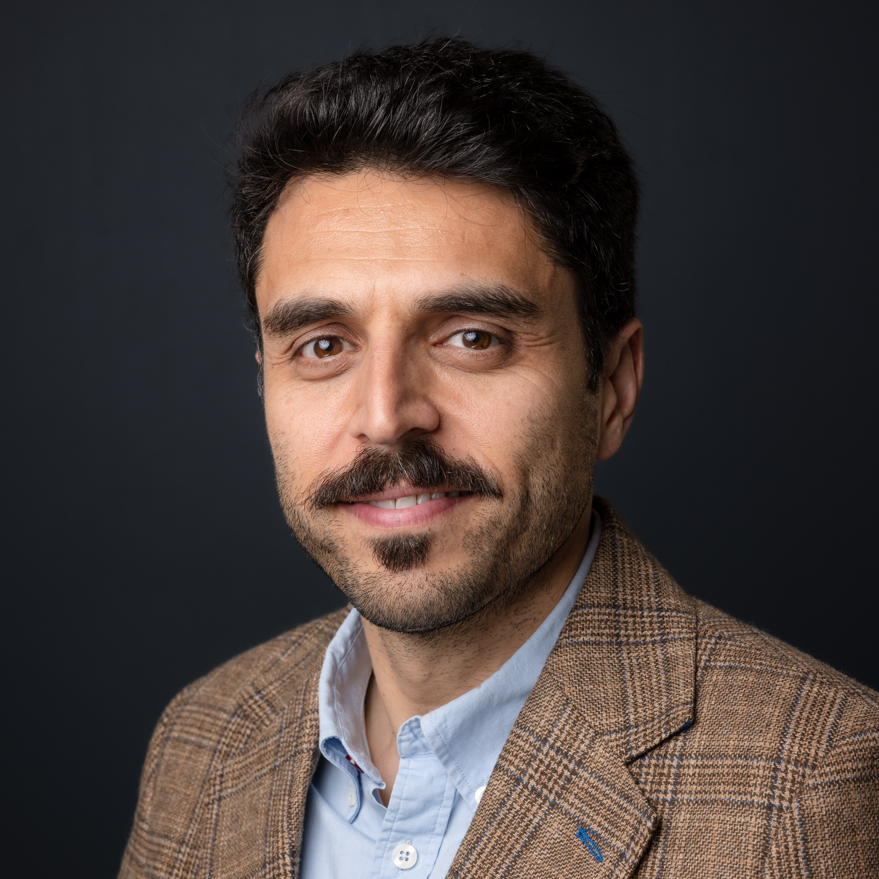
Associate Professor Mohsen Kalantari is a Geospatial Engineering academic at the University of New South Wales (UNSW) School of Civil and Environmental Engineering , with concurrent roles as co-founder of the startup Faramoon . His career spans roles at the University of Melbourne's Department of Infrastructure Engineering and Victorian government's land administration initiatives through DELWP. Education : PhD in Geomatics Engineering (2008, University of Melbourne), Master of GIS Engineering (2004), Bachelor of Surveying Engineering (2001) His research bridges geospatial engineering with construction automation , focusing on 3D cadastre , BIM-GIS integration , and smart cities . Recent publications show trends in underground land administration , digital twins , and LADM standard implementations . Scientific Awards : National educational recognition (2019), Victorian educational grants (2018), and prestigious fellowships (2012) As a supervisor , he guides PhD candidates in topics ranging from BIM for waste management to underground cadastral systems . His industry engagement includes partnerships with the United Nations , Open Geospatial Consortium , and Singapore Land Authority .
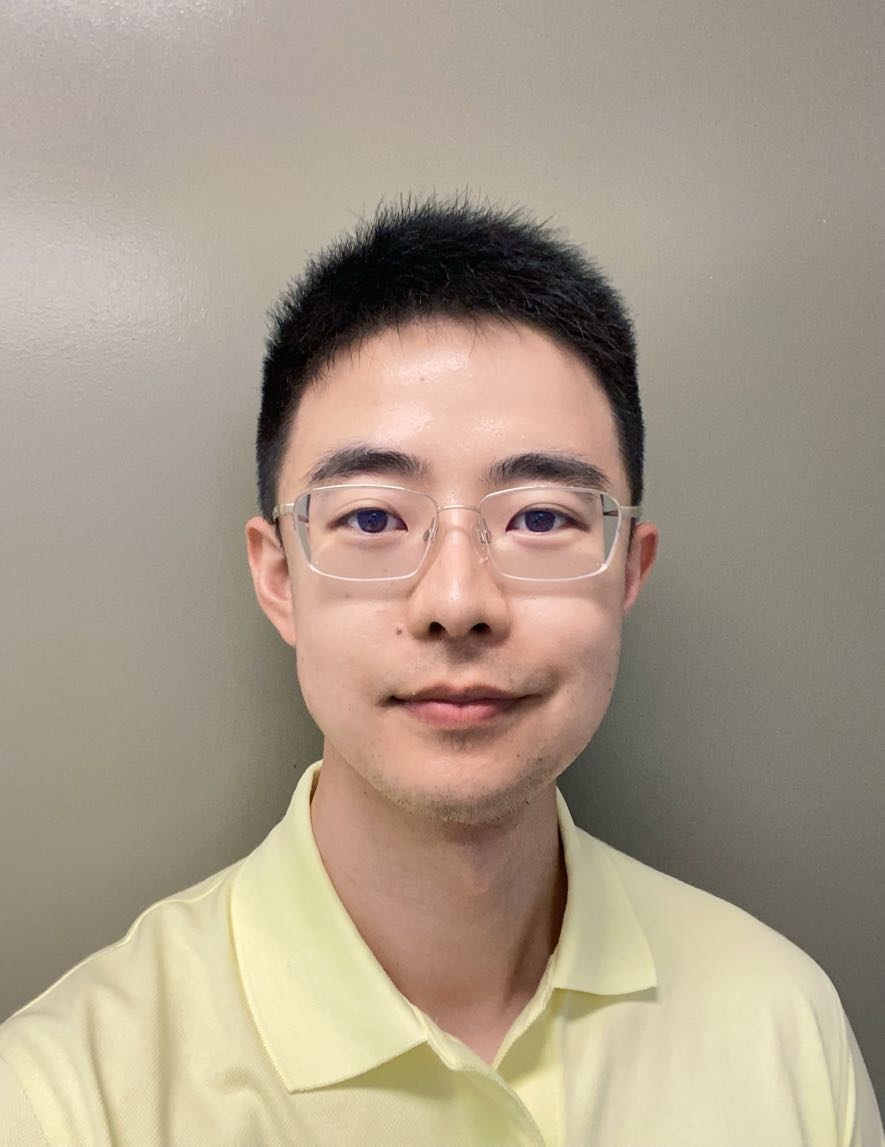
Dr. Bo Liu is an Associate Professor in the School of Computer Science at the University of Technology Sydney (UTS), where he serves as a core member and director of the AI Security and Privacy (AISP) Research Lab at the Australian Artificial Intelligence Institute (AAII). With expertise spanning cybersecurity, privacy protection, AI and machine learning, and wireless communications, Dr. Liu has established himself as a leading researcher in the field of AI security and privacy. Dr. Liu earned his PhD from the Department of Electronic Engineering at Shanghai Jiao Tong University in 2010. His academic journey at UTS has progressed from Senior Lecturer (November 2019-December 2022) to his current position as Associate Professor (January 2023-present). Dr. Liu's research focuses on the critical intersection of artificial intelligence and security, particularly addressing emerging threats in the age of advanced AI systems. His work spans multiple dimensions of security and privacy, including deepfake detection, privacy-preserving data synthesis, AI model security, and fair machine learning. He has pioneered approaches to detect AI-generated content, protect visual privacy through de-identification techniques, and address the complex relationship between algorithmic fairness and privacy preservation. His publication record demonstrates significant contributions across multiple cutting-edge research areas, with particular emphasis on detecting and mitigating threats from generative AI systems. His recent work reveals a strong focus on deepfake detection across multiple modalities (images, video, and audio), privacy-preserving techniques for sensitive data, and the security implications of emerging AI architectures like Retrieval-Augmented Generation systems. Dr. Liu has secured substantial research funding, including as Lead Chief Investigator on multiple ARC Discovery and Linkage Projects, totaling over $3.5 million AUD. His industry collaborations include partnerships with the NSW Department of Planning and the Reserve Bank of Australia, demonstrating the practical applicability of his research. As an academic leader, Dr. Liu serves as Associate Editor for IEEE Transactions on Broadcasting and actively contributes to the academic community through conference organization, peer review for top-tier venues, and assessment for ARC grant schemes. He also teaches courses including Penetration Testing, Ethical Hacking and Offensive Security, and supervises Masters and PhD students in cybersecurity and privacy research.
Professor Jes Sammut is a faculty member at the University of New South Wales (UNSW) in the School of Biological, Earth & Environmental Sciences . He serves as Deputy Dean for External Engagement and leads the UNSW Aquaculture Research Group , while also holding the position of Deputy Director (International) at the Centre for Marine Science & Innovation. Additionally, he is an Honorary Research Fellow at ANSTO , where he uses nuclear tools to study seafood provenance. His research spans biological, physical, and social sciences, focusing on aquaculture solutions across Australia, Vietnam, Papua New Guinea, Indonesia, India, Thailand, and the Philippines.
Kanchana Kariyawasam serves as Associate Professor in the Department of Accounting, Finance and Economics within Griffith University's Business School. Holding a PhD in IP Law from Griffith University, an LL.M (Advanced) in IP Law from The University of Queensland, and an LL.B (Hons) from the University of Colombo, she maintains active research affiliations with the Law Futures Centre (2009-2024) and Griffith Asia Institute (2019-present). Her research spans Intellectual Property Law with specialized focus on Copyright and Artificial Intelligence, IP and Right to Repair, Patent Law in Biotechnology, and Gender Equality in IP systems. Current projects examine AI-generated works, digital exhaustion doctrine, and NFT legality under Australian copyright frameworks, reflecting strong alignment with Sustainable Development Goals 4 (Quality Education) and 9 (Industry Innovation). Professor Kariyawasam's funded research portfolio includes significant projects such as the WIPO Study on Illegal Retransmission of Live Broadcasts (2023), Queensland Government Ewaste initiatives (2022), and Griffith University's Right to Repair Workshop (2020). Her publications demonstrate consistent output in high-impact journals including European Intellectual Property Review and International Journal of Law and Information Technology , with recent works analyzing AI copyright challenges, spatial data protection, and medical device repair rights. Deputy Vice-Chancellor's 2024 Student Experience of Teaching Survey Commendation Green Impact Gold Award Recipient (2023, Griffith Repair Cafe) Highly Commended Griffith Award for Excellence in Teaching (Large Classes) Two GBS teaching citations She currently supervises five doctoral candidates researching AI data privacy, patent law intersections, and agricultural IP issues, while having successfully completed supervision of four doctoral theses including works on female entrepreneurship and agribusiness marketing. As Coordinator of Griffith Repair Cafe and Steering Committee Member of Australian Repair Network, she bridges academic research with community engagement on repair rights and e-waste reduction.
Associate Professor Ben Sparrow is affiliated with the University of Adelaide's School of Biological Sciences within the Faculty of Sciences, Engineering and Technology. He leads the TERN Ecosystem Surveillance program, focusing on environmental monitoring methodologies and data standardization. His work emphasizes integrating remote sensing technologies with ecological data to improve biodiversity tracking and policy development. Ben has extensive experience in grant-funded research, including leadership roles in TERN's AusPlots and Eco-informatics initiatives, and has contributed to projects like the Global Drylands Assessment with the UN FAO. He collaborates with stakeholders to address socio-ecological challenges in environmental management and has advised Honours students on topics related to natural resource management and ecological data analysis. Research Interests : Ben's research centers on environmental surveillance, ecological monitoring standardization, remote sensing applications, citizen science integration, and understanding climate change impacts on Australian flora. He advocates for adaptable protocols that balance national data consistency with regional autonomy, ensuring ecological data supports both science and policy. His work includes developing open-access datasets (e.g., deadtrees.earth) and advancing tools like the ausplotsR package for vegetation analysis. Grants & Funding : Recent grants include $2.1M from NCRIS/TERN (2018), a $484,770 Citizen Science Grant for the Wild Orchid Watch project, and UN FAO funding ($20,000 USD) for global drylands research. He has also secured funding for LiDAR and photogrammetry initiatives, vegetation mapping projects, and cross-disciplinary research efforts. Professional Activities : Ben actively participates in committees such as the Enabling ecosystem surveillance working group (Ecosystem Science Council) and the Drylands Working Group (UN FAO). He co-chaired the 15th Australasian Remote Sensing and Photogrammetry Conference and contributes to global initiatives like the sPlot dataset project. His work bridges ecological science with practical policy applications, emphasizing reflexivity and communication in socio-ecological systems. Labs/Teams : Ben is part of the Terrestrial Ecosystem Research Network (TERN) team at the University of Adelaide's Waite campus, leading the Ecosystem Surveillance unit. He collaborates with the AusPlots Rangelands program and the Eco-informatics group to develop continental-scale ecological monitoring infrastructure.
Dr Kai Li Lim is the St Baker Fellow in E-Mobility at the Dow Centre for Sustainable Engineering Innovation , part of the Faculty of Engineering, Architecture and Information Technology at The University of Queensland (UQ) . Specializing in data engineering , telematics , and autonomous vehicle systems , his research examines electric vehicle (EV) usage patterns , charging reliability , and spatiotemporal data analysis to inform policy and sustainable transport strategies. Education : BEng (Hons) in Electronic and Computer Engineering (University of Nottingham), MSc in Computer Science (Lancaster University), PhD in Artificial Intelligence and Robotics (The University of Western Australia, funded by Australian Government Research Training Programme). Research Interests include: Electric vehicle telematics and data analytics Computer vision and deep learning for autonomous navigation Policy development for sustainable transport Infrastructure planning for EV and hydrogen systems Integration of cloud computing and IoT in mobility solutions Publication Trends reveal a focus on EV charging behaviors , data platform architectures , and autonomous driving frameworks , with recent work addressing regional emission disparities , modular safety systems , and online assessment integrity . Scientific Awards : St Baker Fellow in E-Mobility, Visiting Fellowship at UC Davis Electric Vehicle Research Center, Australian Government Research Training Programme (PhD funding). Supervision and Grants : Available for supervision, Dr Lim has secured funding from Energy Consumers Australia , iMove CRC , and Australian Urban Research Infrastructure Network (AURIN) for projects on EV charging incentives, freight emissions modeling, and longitudinal vehicle data databases. Labs and Collaborations : Collaborates with UC Davis Electric Vehicle Research Center , UQ School of Civil Engineering , and UQ School of Electrical Engineering and Computer Science . Leads the UQ Teslascope Project and contributes to the Green Australian Vehicle Ownership (GreenAVO) Capability for AURIN .
Professor Arko Lucieer is the Head of the School of Geography, Planning, and Spatial Sciences at the University of Tasmania. He holds a PhD in Remote Sensing from Utrecht University (Netherlands). His research focuses on advancing drone and remote sensing technologies for environmental monitoring, particularly in biodiversity mapping, ecosystem dynamics, and Antarctic ecology. He leads the TerraLuma research group, pioneering ultrahigh-resolution remote sensing applications. Key roles include: Established TERN DroneScape for national ecosystem monitoring Developed protocols for drone-based data collection and AI-driven analysis Recipient of the 2008 National Banksia Environmental Award Research Interests: Integration of drone technology, multispectral/hyperspectral imaging, and AI to quantify plant traits, map ecosystems, and address climate change impacts. Projects span forest health, Antarctic moss communities, and precision agriculture. Grants & Projects: TERN DroneScape: $1.6M for standardized drone-based ecosystem monitoring NatureScan: $1.2M for national biodiversity monitoring using drones and AI Supervision: Mentor to over 20 doctoral students, focusing on remote sensing applications in ecology, forestry, and environmental science. Labs/Teams: TerraLuma research group, specializing in drone remote sensing innovation and environmental data analytics.
Dr. Shixun Huang is a Lecturer in the School of Computing and Information Technology at the University of Wollongong, Australia. He holds a PhD from RMIT University and specializes in data mining, machine learning, and optimization algorithms for high-dimensional data problems. His research develops efficient algorithms for data discovery, similarity search, and network analysis. Current projects focus on optimized data acquisition strategies for machine learning, cost-effective labeling for graph neural networks, and cardinality estimation in high-dimensional databases. Methodologically, he combines combinatorial optimization with machine learning techniques. Dr. Huang supervises graduate research on diffusion models for medical imaging, graph prompt learning, and image captioning systems. His honors include multiple best paper awards at top database conferences and recognition for teaching excellence (College Top Course Award at RMIT). Recent publications address dataset distinctiveness maximization (WWW 2025), high-dimensional similarity search (VLDB 2025), and edge computing optimization (2024). Earlier foundational work established new approaches for influence maximization in social networks and temporal graph representation learning.
Michael A. Rasheed is a leading marine ecologist at James Cook University , specializing in seagrass ecosystem monitoring and conservation. His work focuses on seagrass resilience , herbivory impacts , and coastal environmental management across Queensland's Great Barrier Reef and Torres Strait regions. Key research themes include: Seagrass monitoring in industrial ports (Gladstone, Townsville, Weipa) Deep-water seagrass light thresholds for dredging management Herbivore exclusion experiments to study ecosystem structuring Blue carbon stock assessments and climate vulnerability analyses His publications (2016–2025) demonstrate consistent ecosystem monitoring using long-term datasets and spatial analysis to inform marine conservation policies . Collaborations span multi-institutional teams including TropWATER, Reef and Rainforest Research Centre, and Australian Marine Science Association.
Dr. Lesley Arnold holds an Adjunct Associate Professor position at Curtin University's School of Earth and Planetary Sciences within the Faculty of Science and Engineering. She specializes in governmental geospatial information policy, working globally with organizations like the United Nations and World Bank to strengthen geospatial management for sustainable development. As a lead author of the UN-GGIM Integrated Geospatial Information Framework (IGIF), she develops strategies for spatial data reform, open data initiatives, and SDI policies. Her career includes executive roles at Landgate, where she managed WA's geospatial programs, and leadership positions in intergovernmental committees such as ICSM and AuScope. Education: PhD in Spatial Science (Curtin University, 2005), BSc (First Class Honours) in Cartography (Curtin, 1996), and a Diploma in Cartography (Wembley Technical College, 1985). Awards include the SSSI Fellowship and D.B. Johnston Award for spatial sciences excellence. Research focuses on Spatial Data Infrastructures (SDIs), geospatial ecosystems powered by AI, data supply chains, and integrated geoinformation management. She has authored papers on semantic web technologies, geospatial provenance models, and decision-making frameworks for coastal management. Professional roles include Board Directorships at AuScope and AURIN, and executive leadership in global geospatial initiatives. Her work emphasizes collaboration across governments, academia, and industry to build sustainable geospatial data ecosystems.
Dr. Agnes Haryanto is a Research Fellow in the Embodied Visualisation Group at Monash University's Faculty of IT. Her work focuses on improving healthcare quality through live-streaming clinical analytics and dashboards for accreditation. She holds a PhD from Monash University (2015) in Spatial and Graph Databases. Education: Doctor of Philosophy, Monash University Research interests span Big Data Management, Geospatial Databases, and Health Informatics. Her current projects include a digital health intervention for Emergency Department clinicians (2023–2026), funded by Australia's Department of Health and Aged Care. She has contributed to advancing spatial query optimization and clinical data warehouse systems. Collaborations involve interdisciplinary teams addressing SDGs like quality education and health equity. Teaching commitments include units like FIT3003 (Business Intelligence) and FIT5137 (Advanced Database Technology). Key projects include developing real-time clinical analytics systems to bridge gaps in healthcare data utilization. Her work aligns with UN SDG 3 (Good Health) and SDG 4 (Quality Education).
Rachel Allavena is a Professor and Deputy Head of School at the School of Veterinary Science, The University of Queensland . She specializes in veterinary pathology and comparative medicine , developing cancer immunotherapies using pet dogs with natural cancer as models for human oncology. Her work bridges veterinary and human medicine, focusing on translational research . She also leads forensic pathology investigations for Racing Queensland , Queensland Police , and RSPCA Queensland , advocating for animal cruelty prevention . PhD in Comparative Medicine (Cornell University) Postgraduate Diploma in Veterinary Anatomic Pathology (University of Guelph) Bachelor of Veterinary Biology and Honours (University of Queensland) Her research spans comparative oncology (including canine brain cancer, lymphoma, melanoma, osteosarcoma ), koala conservation (co-developer of KoalaBASE database), and envenomation studies . She has trained ACVP board-certified pathologists and developed drug safety testing protocols in the UK pharmaceutical sector. Her immunotherapy trials have achieved 20% cure rates in terminal canine cancer patients. 2015 - Faculty of Science Teaching Excellence Award 2021 - UQ Citation for Outstanding Contributions to Student Learning As a media expert , she has featured in international outlets and delivered a TEDx talk on canine cancer therapy. She actively supervises PhD/MPhil students in projects like Canine Osteosarcoma Immunotherapy and Feline GI Lymphomas . Her team explores biometallic implants and forensic pathology applications.
Tim Cohen is an Associate Professor in the School of Science at the University of Wollongong. He serves as Director of the ARC Centre of Excellence for Australian Biodiversity and Heritage (CABAH) and Deputy Director of Environmental Futures. His expertise spans geomorphology, Quaternary science, and climate extremes, focusing on integrating past and present environmental data to inform landscape management. Cohen holds a PhD from the University of Wollongong (2003) and a BSc (Hons) from Macquarie University (1996). He has led ARC-funded projects, including a Future Fellowship (2018–2022), and contributed to over 100 research outputs with an h-index of 28. His work addresses Australia's hydrological history, arid zone dynamics, and human-environment interactions. Education: PhD in Geosciences, University of Wollongong (2003) BSc (Hons) in Earth Sciences, Macquarie University (1996) Research Interests: Geomorphology, Quaternary Science, Climate Extremes, Environmental Management, Hydrology, and Paleoenvironmental Reconstruction. Recent articles highlight his work on Australian arid zone hydrology, climate-vegetation interactions, and lacustrine paleoenvironments. Cohen’s grants include tracking flooding patterns and aridification in Australian deserts (ARC Discovery, 2025–2029) and environmental resilience studies. He supervises PhD/MPhil students on topics like megadune evolution and paleofire records. Leadership roles include President of the Australian and New Zealand Geomorphology Group and roles in CABAH and the Optical Dating Facility. Awards include the ARC Future Fellowship (2018–2022). His research emphasizes multidisciplinary approaches, with global media coverage of findings on climate impacts and human adaptation in arid regions.
Kyungmi Joanne Lee is a Senior Lecturer at James Cook University (JCU), Australia, specializing in Computer Science and Artificial Intelligence. She holds a PhD in Computer Science from Griffith University (2007) and previously served as a Lecturer at Charles Sturt University (2007–2008). Her research focuses on machine learning, algorithm optimization, neural networks, data mining, and applied AI. Key projects include developing real-world scheduling systems for mining operations, ultrasonic signal classification, and spatio-temporal trajectory analysis. Teaching responsibilities include modules like Database Modelling, where she coordinates and lectures. She currently supervises 5 PhD students, with 3 nearing completion. Her work spans diverse applications, such as emergency management through geospatial data analysis and curriculum development via text mining. With 58 publications across journals and conferences, her contributions highlight interdisciplinary approaches to data-driven solutions.
Dr Alina Bialkowski is a Senior Lecturer at the School of Electrical Engineering and Computer Science , part of the Faculty of Engineering, Architecture and Information Technology at The University of Queensland. Her research focuses on interpretable machine learning and computer vision to enhance AI transparency and solve real-world challenges. Prior to joining UQ in late 2017, she held postdoctoral positions at University College London (2015–2017), where she studied human perception in driving, and Disney Research Pittsburgh (2014), analyzing team sports using spatiotemporal data. Dr Bialkowski earned her PhD and Bachelor of Engineering (Electrical Engineering) from Queensland University of Technology, Australia. Her doctoral research centered on group behavior analysis from visual and spatiotemporal data, with applications in sports analytics and intelligent surveillance systems. Her research interests span medical imaging (especially electromagnetic imaging of strokes), human attention modeling in driving, intelligent transport systems , surveillance systems , and sports analytics . She emphasizes explainable AI to bridge the gap between technical systems and human understanding, employing methods like feature visualization and attribution. Her work also explores sensors for non-invasive imaging and machine learning frameworks to ensure ethical AI. Dr Bialkowski has received significant recognition, including the Best Paper Prize at the 2017 IEEE Winter Conference on Applications of Computer Vision (WACV) . Her research has led to 6 international patents with collaborators such as Disney Research, Toyota Motor Europe, and The University of Queensland, focusing on electromagnetic imaging and AI-driven solutions. She actively contributes to interdisciplinary projects like The Lanyard Project (traffic sensor fusion) and co-authored a SmartSat CRC-funded research report on machine learning for satellites. Dr Bialkowski is available for supervision and advocates for AI systems that integrate human-centric principles into their design and evaluation.