Scott BrameView profile
Academic
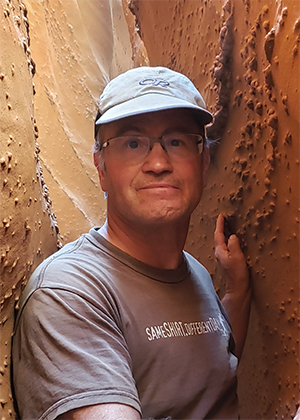
Scott Brame is a Research Assistant Professor at Clemson University's Department of Environmental Engineering and Earth Sciences. He specializes in applying spatial analysis techniques and GIS to address environmental and geological challenges. His work includes real-time spatial analysis applications, such as modeling constructed wetlands for water treatment, gas storage cavern feasibility, and aquifer systems. Brame holds an M.S. in Hydrogeology (Clemson University, 1993) and a B.S. in Geologic Engineering (New Mexico Tech, 1983). Education: M.S., Hydrogeology, Clemson University, 1993 B.S., Geologic Engineering, New Mexico Institute of Mining and Technology, 1983 His research interests span environmental geology, GIS applications, hydrogeology, and spatial modeling. He has developed innovative methods for integrating geocaching and virtual reality into geoscience education, enhancing experiential learning. His projects often involve collaborations with industry and government agencies, such as the U.S. Department of Energy, focusing on carbon storage and subsurface resource management. Publications highlight his contributions to education technology, environmental contamination analysis, and reservoir engineering. His work on PCB contamination in Lake Hartwell and gas storage cavern design showcases interdisciplinary applications of GIS and statistical methods. Awards: Vincent E. Nelson Memorial Award, AAPG Eastern Section (2004) Clemson University Board of Trustees Faculty Excellence Award (2006) Brame advises students through courses like GEOL 4210 GIS Applications in Geology and GEOL 4750 Summer Geology/Hydrogeology Field Camp . His research is supported by grants from the Gas Storage Technology Consortium and U.S. DOE, totaling over $6M in funding for geophysical monitoring technologies and subsurface storage innovations. His involvement with laboratory teams includes the HydroMechanics Research Group, focusing on CO2 storage monitoring and subsurface strain analysis. Future work emphasizes advancing optical fiber sensor technologies for real-time geophysical data collection.