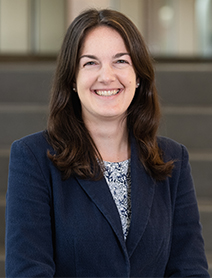
Professor Iwona Cieślak, affiliated with the University of Warmia and Mazury in Olsztyn and the Faculty of Geoengineering , specializes in socio-economic geography and spatial management. Her work focuses on geospatial analyses, urbanization dynamics, landscape transformations, and spatial conflict identification. Scientific Interests : Geospatial databases, urban sprawl, land use conflicts, sustainable development Infrastructure : Access to GIS tools and geographic databases Her recent research emphasizes GIS-driven urban planning, land cover analysis, and sustainable development strategies. Key trends include the application of fuzzy set theory to spatial modeling, the use of CORINE Land Cover data for urbanization studies, and the integration of qualitative and quantitative methods in socio-economic geography. She actively supervises doctoral projects and has access to funding and laboratory infrastructure.
Ehab Mina is an Adjunct Professor in the Department of Civil and Urban Engineering at New York University (NYU Tandon School of Engineering). He has over 18 years of international experience in geodetic surveying, GPS technology, and hydrological projects, with extensive work in the U.S. and Egypt. His U.S. experience includes managing geodetic control networks for agencies like NYSDOT and NYCDOT, while in Cairo, he serves as an Associate Professor in Geodetic Surveying at the Survey Research Institute. Adjunct Professor, NYU Tandon School of Engineering (Civil and Urban Engineering) Associate Professor, Survey Research Institute, Cairo University (Geodetic Surveying) Education: PhD in Geodetic Surveying, Faculty of Engineering, Zagazig University (2001) MS in Civil Engineering, Faculty of Engineering, Cairo University (1996) BSc in Civil Engineering (Surveying), Faculty of Engineering, Zagazig University (1990) His research focuses on GPS surveying techniques, 3D laser scanning, GIS integration for cadastre solutions, and geodetic control networks. Publications highlight applications in hydrology, river sedimentation analysis, and infrastructure projects like highways and bridges. His work spans GPS network calibration, hydrographic surveying, and statistical validation of measurements, reflecting trends in geospatial engineering and civil infrastructure. Notable projects include the use of networked RTK technology and GPS-GIS systems for urban planning.
Veronica M. White is an Assistant Professor of Data Science in Health Systems Engineering at the Florida A&M University-Florida State University College of Engineering. With a Ph.D. in Industrial & Systems Engineering from the University of Wisconsin-Madison (2024), she specializes in applying operations research, analytics, and decision science to public health and safety challenges such as substance use disorder, mental health, criminal justice, and healthcare access. Ph.D., Industrial & Systems Engineering, University of Wisconsin-Madison, 2024 M.S., Industrial & Systems Engineering, University of Wisconsin-Madison, 2019 B.S., Industrial & Manufacturing Systems Engineering, Iowa State University of Science & Technology, 2017 Her research focuses on optimizing systems at the intersection of public health and criminal justice, emphasizing: Substance use disorder treatment Policing and criminal justice decision-making Community program evaluation Implementation science Recent publications highlight trends in: Crime forecasting indices and their optimization Pre-arrest diversion programs for addiction treatment Stochastic models for emergency response Policy evaluation in criminal justice reform Machine learning applications in healthcare K-12 outreach for operations research Scientific awards include: DAS/SDP Decision Analysis Practice Award Finalist (2022) INFORMS DEI Ambassador (2022-2023) IISE Future Faculty Fellows Program (2022) National Institute of Justice Fellowship (2020-2021) Her work spans collaborations with medical professionals, law enforcement, policymakers, and social scientists, driving innovations in: Substance use disorder interventions Public safety analytics Health systems engineering Community program implementation
Matthew Fricke is a Research Associate Professor in the Department of Computer Science at the University of New Mexico, School of Engineering. He is affiliated with the Center for Advanced Research Computing (CARC), the Moses Biological Computation Lab, and the Lab for Agnostic Biosignatures, and contributes to the Interdisciplinary Working Group on Algorithmic Justice. His work bridges computer science, biology, and environmental science through computational modeling and robotics. His educational background includes a PhD and MS in Computer Science, a BS in Mathematics, all from the University of New Mexico, and a BA in Anthropology from Appalachian State University. Fricke's research centers on distributed complex systems, including computational biology (e.g., T cell and ant foraging dynamics), swarm robotics for planetary exploration and volcano surveys, high-performance computing, machine learning for climate modeling, and biosignature detection. He applies principles from biological systems to design efficient algorithms for robotic swarms and supercomputing environments. His recent publications (2020–2025) reveal a strong trend in applying machine learning and swarm robotics to Earth and space sciences, particularly in autonomous UAV-based environmental monitoring of volcanoes and climate systems. His work increasingly integrates causal discovery, field robotics, and interdisciplinary collaboration. He has mentored multiple PhD students, including Jannatul Ferdous, John Ericksen, Jake Nichol, and Humayra Tasnim, whose dissertations reflect his research themes. He has also secured research support through student-led projects in NASA robotics challenges and HPC competitions. Fricke teaches courses such as High Performance Computing, Swarm Robotics, and Complex Adaptive Systems, and leads workshops on SLURM, MPI, and scientific computing. He is actively involved in student mentorship and interdisciplinary research collaboration. His research labs include the Moses Biological Computation Lab and the Lab for Agnostic Biosignatures, where teams work on bio-inspired robotics, immune modeling, and planetary exploration technologies.
Gotthard Meinel is a Senior Fellow at the Leibniz Institute of Ecological Urban and Regional Development (IOER) since 2023, with a distinguished career spanning over three decades in geoinformatics and spatial analysis. Previously, he served as Head of the Research Department for Spatial Information and Modeling (2009-2022) and held various leadership positions within the institute since joining in 1992. Meinel received his education at the Technical University of Dresden, graduating in Information Technology in 1981. He pursued postgraduate studies in biomathematics and earned a specialist mathematician degree between 1981-1992, culminating in his promotion (PhD equivalent) in 1987. His research focuses on geoinformatics, particularly remote sensing image processing and the automated analysis of large geospatial datasets. Meinel specializes in monitoring land-use developments and building stock through advanced spatial analysis methods. His work encompasses the development of indicators and visualization technologies for understanding settlement patterns and open space dynamics. With expertise spanning computer science, mathematics, and spatial analysis, Meinel has made significant contributions to the field of land use monitoring in Germany. Analysis of Meinel's recent publications reveals a strong focus on land use monitoring systems, spatial data infrastructure, and the integration of survey and geospatial data. His research increasingly emphasizes interdisciplinary approaches, combining urban planning, environmental science, and data science to address complex spatial challenges. Key trends include the development of comprehensive monitoring frameworks, analysis of building stock characteristics, and exploration of sustainable land use practices across Germany. Meinel has led or participated in numerous significant research projects including the Social-Spatial Research Data Infrastructure (SORA), the Research Database for Non-Residential Buildings (ENOB:DataNWG), OpenGeoEdu, and the Competence Center for Scalable Data Services and Solutions (ScaDS). These projects demonstrate his leadership in developing innovative spatial data infrastructures and analytical approaches. As project leader and principal investigator, Meinel has supervised numerous research initiatives and likely mentored students and junior researchers, though specific advisees are not documented in the provided materials. His work has significantly influenced spatial planning practices and land use monitoring methodologies in Germany. Meinel's research is closely associated with the IOER Monitor, a comprehensive spatio-temporal research data infrastructure for settlement and open space development in Germany. His team has developed sophisticated methodologies for analyzing land use change, building stock dynamics, and urban structure through the integration of topographic data, remote sensing, and statistical approaches.
Eduard Gröller is a Full Professor of Visualization at the Vienna University of Technology (TU Wien), leading the Research Unit of Computer Graphics and the Visualization Group within the Institute of Visual Computing & Human-Centered Technology (VC&HCT). He holds adjunct professorships at the University of Bergen, Norway, and chairs several academic committees. His academic journey began with a PhD in 1993 from TU Wien, followed by extensive contributions to visualization research. His research focuses on visual computing, scientific visualization, and medical imaging, with applications in energy modeling, climate analysis, and molecular biology. Gröller has pioneered methods like BEMTrace for BIM-based energy models and HORA 3D for flood risk visualization. He co-authored over 300 publications, including foundational work in IEEE Transactions on Visualization and Computer Graphics and Computer Graphics Forum . Gröller's awards include the IEEE VGTC Technical Achievement Award (2019), Eurographics 2015 Outstanding Technical Contributions Award, and Fellow of the Eurographics Association (2009). He actively contributes to conferences like EuroVis and IEEE Visualization as program chair and reviewer. His educational efforts span courses in visual computing, graphics, and data analysis, with a focus on immersive tools like ImNDT for material data exploration. Current projects include Climate-Sensitive Adaptive Planning for Resilient Cities, Visual Analytics in Radiation Therapy, and scalable web-based visualization techniques. He leads teams in VRVis, a research center for applied visualization, and collaborates internationally on medical imaging and environmental data challenges.
Briana Wyatt is an Assistant Professor in Soil Physics & Hydrology at Texas A&M University's College of Agriculture & Life Sciences. She leads research on soil moisture dynamics using in-situ/remote sensing data to quantify water balance components. Her work supports sustainable management of soil/water resources. Education: Ph.D. Soil Science - Applied Soil Physics & Hydrology, Oklahoma State University (2019) M.S. Plant and Soil Science, Oklahoma State University (2015) B.S. Environmental Science, Oklahoma State University (2013) Research Focus: Integrates meteorological data, soil moisture monitoring, and remote sensing to analyze evapotranspiration, drainage patterns, and hydrological fluxes across landscapes. Current projects examine soil health impacts on water cycles and develop precision agriculture tools. Awards: Early Career Award (2024) Students: Seyed Ali Azizi Jaiveer Brar Ke Ni Bismark Osei Mingxiu Wang Kathryn Watson Dallas Williams
Tamás Lovas serves as Associate Professor at the Department of Photogrammetry and Geoinformatics, Faculty of Civil Engineering, Budapest University of Technology and Economics. He teaches advanced courses in Building Information Modeling, Laser Scanning, Remote Sensing, and Intelligent Transportation Systems while supervising diploma theses in Surveying and Geoinformatics Engineering. Education: 1994: High school graduation, Városmajor High School, Budapest 1999: Certified Surveyor and Geoinformatics Engineer, Budapest University of Technology, Faculty of Civil Engineering 2005: PhD (Earth Sciences), Budapest University of Technology and Economics, Faculty of Civil Engineering Research Interests: Dr. Lovas specializes in laser scanning technologies and geospatial data processing with emphasis on airborne and terrestrial point cloud analysis. His work bridges civil engineering applications and computational methods, particularly in infrastructure monitoring and digital representation. Processing, classification, and modeling of airborne laser scanned data Accuracy testing of terrestrial laser scanning Processing and modeling of terrestrial laser scanned data Comparative study of spatial data acquisition technologies His 2022-2025 publications demonstrate accelerating integration of artificial intelligence in point cloud processing, with significant contributions to road surface extraction, urban land cover classification, and BIM automation. Current research trends show strong focus on digital twin development for autonomous vehicles and infrastructure management. Scientific Awards: Republic Scholarship (1998-1999) Karlsruhe Chancellor's Scholarship (1999) ERASMUS scholarship (2000) Korányi Fellowship (2001-2002) János Bolyai Research Scholarship (2008-2011) OHV 1st place (2008) Dean's commendation for ERASMUS committee work (2014) For Students Award - Teaching Department (2017) Advising and Grants: Dr. Lovas mentors students through diploma theses and TDK research projects on topics including object survey with amateur sensors and hull modeling. His research funding includes the prestigious János Bolyai Research Scholarship and international fellowships supporting collaborations with institutions like The Ohio State University. Labs and Teams: As founding member and supervisory board member of the Hungarian BIM Association, he drives industry-academia collaboration. His leadership roles include Deputy Dean of Education at the Faculty of Civil Engineering and responsibility for English language training programs, facilitating international academic exchange.
Seif Haridi is a Professor at KTH Royal Institute of Technology in Stockholm, Sweden, specializing in parallel and distributed computing systems. He holds dual roles as Chair-Professor of Computer Systems and Chief Scientific Advisor at RISE SICS. His research integrates systems engineering with theoretical foundations, focusing on programming systems, distributed computing, and big data technologies. Key contributions include co-designing SICStus Prolog, the Mozart Programming System, and Apache Flink, as well as leading the development of HOPS, a European big data platform awarded the IEEE Scale Prize 2017. He has led major EU projects like EIT-Digital’s cloud computing initiative and co-founded startups such as LogicalClocks and HiveStreaming. His teaching includes courses on distributed algorithms and peer-to-peer computing at KTH. Notable awards include the European Data Science Technology Innovation 2019. His work spans systems like HOPS, Flink, and Kompics, emphasizing scalability and robustness in distributed environments. Current projects include CDA (Continuous Deep Analytics) and ExtremeEarth for geospatial data analysis. Research interests include distributed algorithms, consensus protocols, and cloud-native systems. His lab’s contributions to scalable storage (e.g., HopsFS) and stream processing (Apache Flink) highlight his impact on both academia and industry.
T. Chester is an academic affiliated with Arizona State University (ASU), serving as a Lecturer in the School of Social Transformation. Their research focuses on critical race theory, gender and sexuality studies, queer theory, and global historical topics like the transatlantic slave trade. Chester holds a PhD from ASU, an MA from Temple University, and a BA from Florida State University. Courses taught include Race, Gender and Sport , Critical Race Theory , and Global History: Slave Trade . Education: PhD in Social Transformation, Arizona State University MA in African American Studies, Temple University BA in Africana Studies, Florida State University Research interests emphasize intersections of race, gender, and urban resilience. Recent work explores climate adaptation strategies in infrastructure systems, particularly in Phoenix and coastal cities. Chester contributes to frameworks linking social-ecological-technological systems for equitable urban development. Their publications analyze cascading infrastructure failures, heat exposure mitigation, and disaster preparedness. Advancing interdisciplinary collaboration, Chester integrates historical analysis with contemporary urban challenges, advocating for socially just sustainability practices in infrastructure design.
Michael J. Tyworth is an Assistant Clinical Professor in the Department of Supply Chain & Information Systems at The Pennsylvania State University. His work focuses on organizational identity, social informatics, computer-mediated communication, and information security. He holds a Ph.D. in Information Sciences & Technology (2009), an M.S. in Information Science from Indiana University (2004), and a B.S. in Psychology from Penn State (1992). His research explores how organizations' technological systems reflect their identities, with a focus on public safety networks, cybersecurity, and criminal justice information systems. Recent studies include architectural patterns of public safety networks, cyber situation awareness frameworks, and integrated criminal justice systems. Publications highlight themes like interagency collaboration, organizational ICT design, and distributed decision-making in cybersecurity. His work bridges theoretical frameworks with practical applications, emphasizing cartographic analysis and qualitative methods. While specific advising roles or grants are not detailed here, his research consistently addresses real-world challenges in public safety, cybersecurity, and organizational behavior.
Dr Toby Waine is a Professor in Applied Remote Sensing at Cranfield University, affiliated with the Cranfield Environment Centre. He holds an EngD in Non-invasive soil property measurement for precision farming (Cranfield University, 1999). His career includes commercial roles in IT-agronomy and mobile software before returning to academia in 2004 to focus on remote sensing applications in agriculture and environmental monitoring. Research Themes: Land Resources Monitoring: Specializing in crop inventory via multi-spectral satellite integration, including opium production monitoring in Afghanistan and vegetation assessments in semi-arid regions. Precision Agriculture: Developing remote sensing tools for crop canopy management, yield prediction, and nutrient optimization through projects like the European Space Agency’s FarmingTruth initiative. Key Collaborations: Works with clients such as the UN, Department for Energy Security and Net Zero, and Unilever. Active in projects like regenerative tea production systems and soil management for smallholder farmers in Kenya. Publications: Over 100 peer-reviewed articles, focusing on remote sensing applications in agriculture, environmental monitoring, and urban sanitation. Recent work includes spatial modeling of faecal matter flow in unsewered cities and agent-based models for farmer decision-making in arid regions. Awards & Recognition: No specific named awards listed, but recognized for contributions to applied remote sensing through industry-academia partnerships. Labs/Teams: Leads the Applied Remote Sensing Group and collaborates with the Environment and Agrifood research theme at Cranfield.
Professor Phil Longhurst is a faculty member at Cranfield University, holding the Chair of Environment and Energy Technology in the School of Water, Energy & Environment . He leads the Centre for Renewable and Low Carbon Energy and serves as Director of Partnerships, bridging academia with industry and government clients. His academic background includes a PhD in Innovation & Technology Assessment, a degree in Design and Technology, and a B.Ed. (Hons). Prior to academia, he worked in the furniture industry and trained as a Design and Technology educator, developing educational wind tunnel demonstrators. His research focuses on waste management innovation , including material recovery from waste streams, energy-from-waste applications, and pollution prevention. Key projects involve risk assessments for agricultural use of composts (PAS100) and anaerobic digestates (PAS110), trace metal recovery from contaminated land, and systems modeling for waste minimization and net-zero transitions. He has pioneered methods like mechanical-biological treatment (MBT) of solid waste and solid recovered fuels (SRF) quality analysis. Professor Longhurst collaborates with major institutions such as EPSRC, NERC, Defra, BEIS , and industrial partners like Viridor, Biffa, Boeing . He teaches in Energy, Environment, and Agrifood themes while supervising doctoral researchers. Recent work includes contributions to HM Treasury’s Infrastructure study via the Engineering Interdependencies Expert Group (EIEG) and developing short courses on biowaste regulation and odour control. His research emphasizes cross-sector collaboration, environmental policy implementation, and transitioning energy systems to net-zero. Clients span government departments (e.g., HM Treasury, UK Water Industry Research), NGOs, and commercial sponsors. Phil has also evaluated methane diffusion dynamics in coal gasification and pioneered neural network-based approaches for solar PV adoption modeling.
Dr. Zia Ush Shamszaman is a Senior Lecturer in Computer Science at Teesside University's School of Computing, Engineering & Digital Technologies (SCEDT). He holds a PhD in Computer Science from the University of Galway and a Master's from Hankuk University of Foreign Studies. His research focuses on Cybersecurity, AI Ethics, IoT Resilience, and Game Theory applications, with a strong emphasis on bridging academic research with industry applications. Teaching responsibilities include postgraduate modules on AI Ethics, Cyber Risk Management, and Ethical Hacking, alongside undergraduate courses in Secure Data Acquisition and Ethical Hacking. He actively supervises five PhD students in cybersecurity and AI, advocating for inclusive technology education and societal impact. Professional memberships include IEEE (Senior Member), Elsevier Advisory Panel, and W3C. He has organized conferences like the International Conference on Suitable Technologies 4.0 and served on program committees for major events. Recognized for exceptional peer reviewing, he has received awards from leading journals like the Journal of Network and Computer Applications and Future Generation Computer Systems. Current projects funded by Innovate UK include CyberPathway (diversity in cybersecurity education), SafeSCMS (AI-driven supply chain security), and Opera-CyberThemis (trustworthy AI frameworks). Past industry roles include technical leadership in Bangladesh's government projects like the Machine Readable Passport system and World Bank-funded Bangladesh Automated Clearing House initiative. Shamszaman's work spans industry collaborations, academic leadership, and community engagement, with recent media contributions on GenAI governance and cyber resilience strategies. His research integrates theoretical advancements with practical solutions for SMEs, healthcare systems, and underserved communities.
Emily Tucker is an Assistant Professor in the Department of Industrial Engineering at Clemson University's College of Engineering, Computing and Applied Sciences. Her research bridges operations research, stochastic modeling, and healthcare logistics to address critical societal challenges. Education: Ph.D. in Industrial and Operations Engineering, University of Michigan (2020) M.S.E. in Industrial and Operations Engineering, University of Michigan (2017) B.S. in Industrial and Systems Engineering, North Carolina State University (2013) Her research focuses on stochastic optimization, quantum computing applications, supply chain resilience, and healthcare policy. Recent work includes geopolitical impacts on pharmaceutical supply chains, equitable urban planning through optimization, and pandemic response strategies. Key publication trends show integration of stochastic modeling with healthcare operations (2020-2025), quantum optimization advancements, and resilience frameworks for disaster relief and global health equity. Her work spans theoretical algorithm development and real-world implementation in public health and supply chain domains. Professional Affiliations: Senior Member, Institute of Industrial and Systems Engineers (IISE) Member, Institute for Operations Research and the Management Sciences (INFORMS) She teaches graduate courses in transportation engineering, optimization theory, and uncertainty modeling. Research emphasizes policy-driven supply chain solutions and social good applications of operational research.