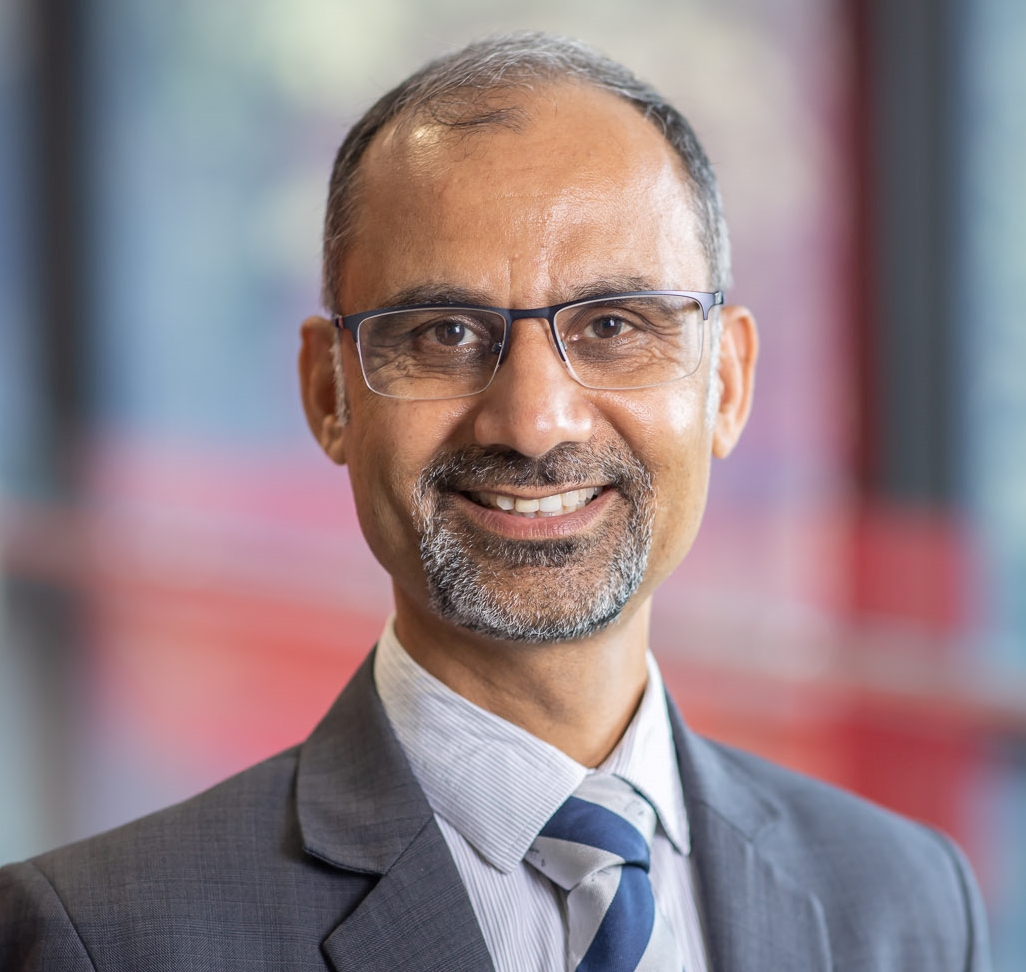
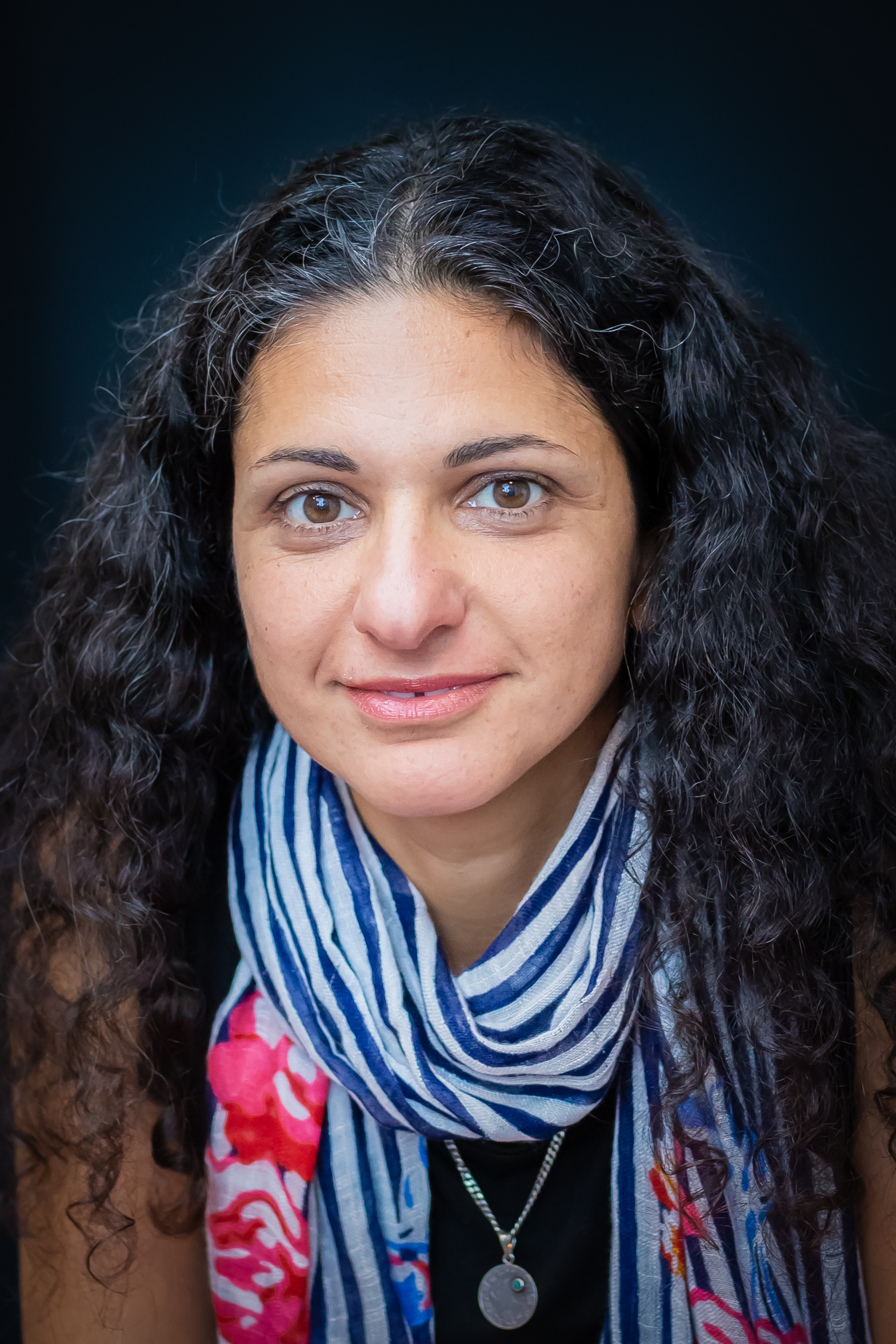
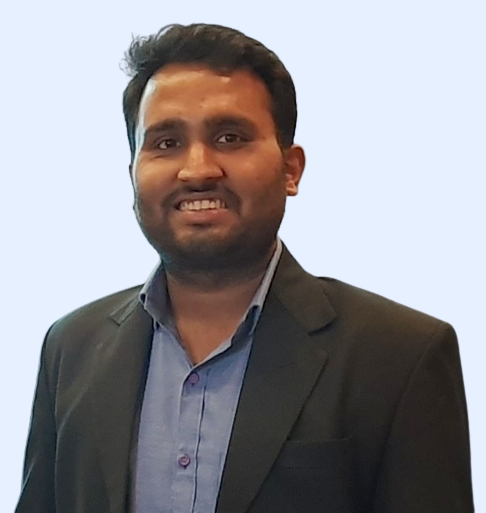
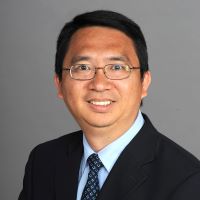
Haitian Wang is a Research Officer at the University of Western Australia (UWA) in the School of Engineering, Department of Electrical, Electronic and Computer Engineering, and also serves as a Research Scientist at the Department of Primary Industries and Regional Development (DPIRD) in Western Australia. His work bridges urban mapping and agricultural intelligence through advanced sensing technologies. His research interests span 3D Urban Mapping , Remote Sensing , LiDAR and GNSS Data Fusion , Precision Agriculture , and Deep Learning . He focuses on developing high-precision mapping pipelines for urban environments and AI-powered solutions for agricultural challenges, including weed detection and real-time decision-making platforms using UAV-based multispectral imaging. Analysis of his recent publications reveals a strong trend in applying LiDAR and remote sensing technologies to both urban and agricultural contexts. His work integrates multimodal sensing (LiDAR, GNSS, and imaging) with deep learning for 3D point cloud processing, object detection, and environmental monitoring, contributing to smart city and sustainable farming initiatives.
Prof. John Taylor is a prominent academic at The Australian National University (ANU), affiliated with the School of Computing. His research focuses on interdisciplinary areas spanning climate science, machine learning, and high-performance computing. He has made significant contributions to atmospheric modeling, GPU-accelerated algorithms, and data-driven environmental predictions. Research Interests Climate Modeling and Regional Climate Simulations Machine Learning Applications in Meteorology Deep Learning for Image Analysis and Semantic Segmentation High-Performance Computing and GPU Optimization Statistical Downscaling of Climate Variables Cloud-Based Scientific Workflows Collaborations Prof. Taylor collaborates extensively with institutions globally, including work on projects like the Earth Virtualization Engines (EVE) and the PAUNet precipitation prediction framework. His research often bridges computational methods with real-world environmental challenges, such as heat extremes and hydrological modeling. Key Achievements Over 5000 citations and an h-index of 50 Developed innovative frameworks for climate data assimilation and GPU-accelerated algorithms Leader in applying machine learning to environmental monitoring and prediction Labs/Teams He leads research groups at ANU focused on computational climate science and advanced imaging techniques. His team has developed platforms like the Cloud-Based Image Analysis Toolbox and the DCM software for 3D materials modeling.
Nian Zhang is a Professor in the Department of Electrical and Computer Engineering at the University of the District of Columbia (UDC), part of the School of Engineering and Applied Sciences. His research focuses on computational intelligence, machine learning, and their applications in big data science, biomedical engineering, and autonomous systems. Dr. Zhang holds a Ph.D. in Computer Engineering from Missouri University of Science & Technology, an M.S. in Automatic Control from Huazhong University of Science & Technology, and a B.S. in Electrical Engineering from Wuhan University of Technology. He has led numerous grants funded by the National Science Foundation (NSF), National Institutes of Health (NIH), and Department of Defense (DoD), focusing on machine learning, cybersecurity, and biomedical engineering. Notable projects include developing algorithms for standoff detection of threat chemicals and advancing diversity in STEM through experiential learning. Dr. Zhang has received multiple awards, including UDC's Scholar Award (2025) and Excellence in Research Award (2016). He serves as an Associate Editor for IEEE Transactions on Neural Networks and Learning Systems (TNNLS) and other journals, and has organized international conferences such as the International Conference on Intelligent Control and Information Processing (ICICIP 2025). His research emphasizes imbalanced data classification, neurodynamic optimization, and applications in hyperspectral imaging, environmental monitoring, and medical diagnostics. He has developed frameworks for addressing challenges in data scarcity and class imbalance across disciplines.
Associate Professor Simit Raval is an academic leader in mining engineering at the University of New South Wales (UNSW), specializing in sensing technologies for mining, environmental, and civil engineering applications. He currently serves as Director of Undergraduate Studies in Mining Engineering and Co-Director of the Laboratory for Imaging of the Mine Environment (LIME). His research focuses on integrating advanced sensors (e.g., UAVs, LiDAR, hyperspectral systems) to address challenges in mine automation, environmental monitoring, and off-Earth resource extraction. He has secured over $3M in competitive grants, including multiple ACARP projects, and pioneered work on methane emissions quantification, spoil categorization, and underground laser scanning. Education: PhD in Mining Engineering (UNSW, 2008–2011) Bachelor of Mining Engineering (Guru Ghasidas University, India, 1991–1994) Research Interests: Industrial Automation: LiDAR optimization, AI-driven data analytics, sensor fusion Environmental Monitoring: Methane emissions quantification, mine rehabilitation, space resource extraction impacts Off-Earth Mining and Carbon Sequestration Grants & Awards: Six national ACARP grants, UNSW Vice Chancellor’s Teaching Awards, International Tim Show Award, and recognition as 'Environment Champion' by MERESOC. His grants span sensor development, CO2 sequestration, and automated structural mapping. Teaching & Supervision: Coordinates four core mining courses and supervises PhD/MS students in smart sensing, IoT, and robotics. Notable advisees include Timothy Pelech (Off-Earth Mining) and Sarvesh Kumar Singh (mobile laser scanning). Labs & Teams: Leads LIME lab and collaborates across disciplines on projects like SCANDY (handheld imaging systems) and BHP Tailings Challenge. His work bridges academic research with industry applications in Australia and globally.
Nadia Saad Noori is an Associate Professor at the Department of Information and Communication Technology at the University of Agder (UiA). Since 2016, she has conducted research and teaching at CIEM - Centre for Integrated Emergency Management , and joined NORCE Norwegian Research Center as a Senior Researcher in 2018. Her work bridges industry experience (Cisco, hi-tech startups) with academic rigor , focusing on technology integration in crisis management , cybersecurity , and industrial monitoring systems . Her educational background includes: B.Sc. & M.Sc. in Computer Systems Engineering M.A.Sc. in Technology Innovation Management Ph.D. in Electronic and Information Systems Engineering Research interests span machine learning , autonomous systems , and security frameworks through: Disaster response coordination systems Industrial condition monitoring Humanitarian technology solutions Cyber-physical systems Recent publications demonstrate technical breadth : 2024: Thermal gesture recognition and UAV navigation in industrial spaces 2023: Cybersecurity frameworks and ecological pattern recognition 2022: Industrial seal diagnostics and autonomous systems She leads research groups in: Autonomous and Cyber-Physical Systems (ACPS) CIEM - Integrated Emergency Management Communication and System Security
Gustavo Castellanos-Galindo serves as Programme Area Manager (PA1) for Coastal Resources and Sustainable Blue Economy at the Leibniz Centre for Tropical Marine Research (ZMT) in Bremen, Germany. His research focuses on tropical marine ecosystems with emphasis on conservation biology and human-environment interactions. His primary research interests include tropical fish ecology , mangrove conservation , invasion biology , and small-scale fisheries management . His work integrates ecological modelling with field studies to address sustainability challenges in tropical social-ecological systems, particularly examining how climate change and anthropogenic pressures affect coastal communities and biodiversity. Analysis of his recent publications reveals a consistent focus on mangrove ecosystems as critical nurseries supporting global fisheries, interoceanic species invasions through canals like Panama, and community-based conservation approaches . His research spans methodologies from environmental DNA analysis to AI-based habitat mapping, demonstrating interdisciplinary innovation in marine science. Dr. Castellanos-Galindo actively contributes to international conservation initiatives including the STRONG High Seas project, where he co-authored reports on biodiversity beyond national jurisdiction in the Southeast Pacific. His work bridges scientific research with policy-relevant applications for marine resource management. His laboratory and field research primarily operates in the Tropical Eastern Pacific, with significant work in Colombia and Panama, focusing on mangrove forests, coral reefs, and associated fisheries. Current projects examine Panama Canal-mediated species invasions and sustainable management frameworks for small-scale fisheries.
Sharad Kumar Gupta is a Guest Scientist at the Helmholtz-Centre for Environmental Research - UFZ in Leipzig, Germany, and a Scientist at the Center for Advanced Systems Understanding (CASUS) in Görlitz. His research focuses on remote sensing , environmental informatics , and geospatial data analysis with applications in ecological modelling , UAV technology , and environmental risk assessment . Education Ph.D. in Remote Sensing (2015) - Indian Institute of Technology Mandi M.Tech in Geoinformatics (2014) - NIT Bhopal B.Tech in Computer Science (2011) - Uttar Pradesh Technical University Research Highlights Developed Drone4Tree cloud platform for UAV-based tree canopy detection Specialized in hyperspectral data scaling and agricultural stress monitoring Published extensively on environmental data integration , geophysical inversion , and urban green infrastructure Affiliations Dept. Monitoring and Exploration Technologies, UFZ Dept. Earth Systems Research, CASUS (HZDR) Key Publications address landslide susceptibility mapping , UAV-based environmental monitoring , machine learning applications in agriculture, and multi-method data integration for subsurface analysis. His work appears in journals like EGU General Assembly , Permafrost Periglacial Processes , and Environmental Earth Sciences .
Shlomo Geva is an Adjunct Professor in the School of Computer Science at Queensland University of Technology's Faculty of Science. His research focuses on information retrieval systems, particularly in specialized areas including XML search engines, text search engines, link discovery, and document computing. His academic work spans multiple disciplines within computer science, with particular emphasis on information retrieval technologies and their applications. Professor Geva's research interests include clustering algorithms, cross language information retrieval, focused information retrieval, information retrieval systems, link discovery mechanisms, search engine technologies, text indexing and retrieval methods, and XML indexing and retrieval techniques. His work demonstrates a consistent focus on improving the efficiency and effectiveness of information access systems across various data formats and domains. His recent publications reveal a trend toward applications of information retrieval techniques in diverse fields including remote sensing, bioinformatics, and data stream processing. The research shows an evolution from traditional information retrieval problems toward more specialized applications requiring advanced clustering algorithms and efficient data processing techniques for large-scale datasets. Professor Geva has successfully supervised numerous doctoral students whose research topics include indoor environment mapping by robots, cross-language information retrieval, natural language query interfaces for XML, evolvable hardware, and autonomous robot behavior systems.
Sari Peltonen is a University Lecturer in Computing Sciences. She holds a Doctor of Science (Technology) in Information Technology (awarded 2000) and a Master of Science in Mathematics from the University of Tampere (awarded 1996). Her research focuses on computer vision, robotics, and engineering applications, with specialized interests in pose estimation, photogrammetry, retroreflective marker systems, and safety-critical environments. Recent work explores applications in nuclear fusion (ITER) and forest navigation systems. Peltonen's publication trends show strong focus on computer vision solutions for industrial applications (75%), robotics navigation (15%), and interdisciplinary behavioral science (10%). Recent work demonstrates increasing emphasis on safety-critical systems and environmental adaptability. She maintains active peer-review contributions for journals including Scientific Reports and Journal of Electronic Imaging , and conferences such as IEEE ISCAS and EMBEC/NBC.
Dr. Lei Gao is a Principal Research Scientist at CSIRO Land and Water with over 20 years of expertise in complex environmental systems research. A nationally and internationally recognized thought leader, he pioneers methods in sustainability modelling and AI-driven environmental predictions while collaborating with institutions like Oxford University, IIASA, and the Chinese Academy of Sciences to address land and water management challenges. His research centers on complex systems modelling, sustainability assessment, adaptive management under uncertainty, and machine learning applications for environmental systems. He specializes in translating these methodologies into practical solutions for water resources, land systems, and socio-economic analysis, with a focus on robust decision-making under climate extremes and global change. Recent publications reveal a dominant trend integrating artificial intelligence with environmental modelling, particularly in water flow prediction, soil carbon sequestration, and climate impact assessment. His work increasingly addresses systemic sustainability challenges through scenario analysis, trade-off assessments, and SDG-focused frameworks, demonstrating strong interdisciplinary convergence. Dr. Gao's scientific accolades include: Cell Press China Paper of the Year Award (Sustainability Category) CSIRO Chairman’s Medal for Science Excellence Julius Career Award for exceptional early to mid-career scientists MVIPIT Best Paper Award Impactful Publication Award Publons Peer Review Award — Top reviewers for CSIRO Multiple Best Paper Awards and Research Excellence recognitions As Project Leader for the CAS-CSIRO Joint Project on agricultural climate adaptation, CSIRO Strategic Project on AI-based water banking, and Australia-China Science Fund on soil carbon sequestration, he demonstrates exceptional grant leadership in securing competitive funding for high-impact environmental research. Based at CSIRO Land and Water, Dr. Gao operates within a dynamic international research ecosystem, leveraging cross-program collaborations and partnerships with global institutions to develop innovative sustainability solutions for complex environmental challenges.
Chris Schwarz serves as Director of Engineering and Modeling Research at the Driving Safety Research Institute (DSRI) within the University of Iowa's College of Engineering. Holding a PhD in Electrical and Computer Engineering from the University of Iowa (1998), Dr. Schwarz has been a research engineer at DSRI since 1997 and plays a key role in the National Advanced Driving Simulator (NADS) program, a high-fidelity motion-base simulator owned by NHTSA and operated by the university. His educational background includes a B.S. in Electrical and Computer Engineering from the University of Illinois at Urbana-Champaign (1990) and his doctoral degree from the University of Iowa. Dr. Schwarz's research spans multiple critical areas in transportation safety and vehicle technology development, with particular expertise in simulation methodologies for emerging automotive systems. Dr. Schwarz's primary research interests focus on vehicle automation, connected simulation, driver modeling, and driver state detection. His work encompasses advanced driver assistance systems, connected vehicles, warning systems, automated vehicle technologies, and driver impairment modeling. He has developed numerous simulation-based testing approaches that address critical safety challenges in emerging vehicle technologies, with particular attention to human factors considerations in partial and full automation scenarios. His research often bridges engineering principles with behavioral science to create more effective and safer vehicle systems. Dr. Schwarz has led or co-led significant research initiatives for major organizations including the Mid-American Transportation Center, the SAFER-SIM University Transportation Consortium, the Iowa Department of Transportation, and Toyota's Collaborative Safety Research Center. His publication record of over 70 papers demonstrates consistent contributions to the field, with recent work focusing on distributed simulation architectures, driver monitoring systems, and automated vehicle testing methodologies. Senior Member of the Institute of Electrical and Electronics Engineers (IEEE) Member of the Society of Automotive Engineers (SAE) Active participant in the vehicle-highway automation committee of the Transportation Research Board (TRB) Member of the simulation task force within the SAE On-Road Automated Driving (ORAD) committee Dr. Schwarz maintains extensive collaborations across multiple disciplines, working with researchers in human factors, electrical engineering, computer science, and transportation safety. His recent work on multi-sensor driver monitoring, silent failure detection in partial automation, and distributed simulation frameworks demonstrates his ongoing leadership in advancing methodologies for testing and validating next-generation vehicle technologies. His contributions to the 25-year history of the National Advanced Driving Simulator highlight his long-standing commitment to advancing driving simulation technology for safety research.
Shu-Ching Chen is a Professor and Executive Director of the Data Science and Analytics Innovation Center (dSAIC) at the University of Missouri-Kansas City (UMKC), School of Science and Engineering. He holds a Ph.D. in Electrical and Computer Engineering from Purdue University and has extensive experience in data science, multimedia big data, disaster information management, AI/ML, and AR/VR. He leads a multi-university research center focused on data analytics, AI, and societal impact. Research Interests: His research spans data science , multimedia big data , disaster informatics , AI/ML , and spatial computing . He has pioneered work in multimodal data fusion, multimedia retrieval, and intelligent systems for disaster response and climate modeling. His recent work emphasizes AI-driven solutions for public health, transportation, and environmental resilience. The 15 most recent publications reflect a strong trend in AI for societal challenges , including pandemic response, disaster management, climate modeling, and transportation analytics. His work integrates deep learning , graph neural networks , remote sensing , and multimodal data fusion , often applied to real-world problems in public safety, healthcare, and infrastructure. There is a clear emphasis on practical software systems (e.g., hurricane loss modeling) and interdisciplinary collaboration . Scientific Honors: IEEE Fellow (2016), AAAS Fellow (2016), AIMBE Fellow (2025), AAIA Fellow (2021), SIRI Fellow (2009) ACM Distinguished Scientist (2011) Best Paper Awards (2006, 2016, 2022) IEEE TCMC Impact Award (2024), Service Award (2019) FIU Top Scholar (2011, 2012), Eminent Scholar (2014–2019) Research Leadership and Grants: Dr. Chen has secured major funding from NSF, NIH, DHS, DOE, NOAA, DoD, and industry partners (Microsoft, IBM). He is PI of a U.S. Department of Education Center of Excellence in AI-Empowered Spatial Computing and leads the dSAIC. His grants focus on AI for disaster management, pandemic response, transportation, and secure computing. He actively mentors students and collaborates across institutions. Labs and Centers: He leads the Data Science and Analytics Innovation Center (dSAIC) , a University of Missouri System-wide center. He is also PI of the AI-Empowered Spatial Computing Center of Excellence funded by the U.S. Department of Education.
Professor Taufiq Asyhari is a faculty member at Monash University, specializing in Data Science and Machine Learning. He holds a PhD in Information Engineering from the University of Cambridge, with expertise in telecommunications, privacy-preserving AI, and sustainable development. Visiting Professor of Future Communication Systems at Birmingham City University (since 2023) Board of Experts member at Wallacea Research Centre for Biodiversity Conservation and Climate Change (since 2022) His research spans geographically diverse AI applications in telehealth, smart cities, and environmental sustainability. Recent projects focus on fair AI systems, privacy-preserving machine learning, and tropical biomass energy solutions. Key publication trends show active contributions in: 5G telecommunications, intrusion detection systems, environmental machine learning, and sustainable energy technologies. His work combines theoretical research with practical implementations across multiple domains. Scientific achievements include: Doctor of Philosophy from University of Cambridge Editorial roles at Mobile Information Systems, Sensors, PeerJ Computer Science, and IEEE Access
Naeem Janjua is a Senior Lecturer at Flinders University and an Adjunct Senior Lecturer at Edith Cowan University. He specializes in AI, Deep Learning, Semantic Web technologies, and Knowledge Graphs, with a focus on real-world applications in logistics, healthcare, and IoT systems. His research emphasizes causal relationships in data and event-centric AI decision-making. He holds a PhD from Curtin University's School of Information Systems (2013), recognized as an outstanding thesis. His interdisciplinary work includes frameworks for unstructured data structuring into semantic-rich knowledge graphs, enhancing AI applications like recommendation systems. Recent projects explore causal inference in real-time event analysis. He has secured significant grants, including an AUD 1.75M Australian Research Council (ARC) Linkage Grant for green logistics via Cyber-Physical Systems (2016–2020) and AUD 150K from Cinglevue Pty Ltd for knowledge graph-based educational tools (2020–2024). Dr. Janjua has advised four PhD students, including notable works on SLA management, stochastic software modeling, and medical image analysis. He is a Course Coordinator for the BIT Program and teaches software systems, testing, and quality assurance courses. His professional recognition includes IEEE Senior Member status and Australian Computing Society certification. Research interests span AI ethics, causal ML, and decision support systems, with over 700 citations and an h-index of 13. Collaborations include global institutions and industry partners like Cinglevue Pty Ltd.
Hank Theiss is a Research Associate Professor at the University of Arkansas, College of Arts & Sciences , affiliated with the Center for Advanced Spatial Technologies (CAST) since 2020. Previously, he served as Chief Scientist at Centauri (formerly IAI) from 2001-2020, leading photogrammetry research for NGA, and as Visiting Assistant Professor at Purdue University (2000-2001). PhD in Civil Engineering (Photogrammetry) from Purdue University (2000) MS in Civil Engineering (Geomatics) from Purdue (1995) BS in Civil Engineering from Virginia Tech (1994) Research Interests focus on: Sequential bundle adjustment for multi-image analysis Generic sensor modeling (GLAS/GFM) for spaceborne sensors like Key Hole (KH) Error propagation and accuracy assessment in 3D GEOINT products AI/ML/DL augmentation for photogrammetric workflows His scientific awards include: Photogrammetric (Fairchild) Award (2021) Centauri Technical Fellow (2019) Impact Team Award (2016) ASPRS Davidson Award (2016) Millie Bayne Distinguished Service Award (2011) Professional Contributions include developing the first bistatic SAR sensor model, prototyping narrow FOV optical motion imagery algorithms for Global Hawk UAVs, and leading the Community Sensor Model Working Group (CSMWG) to standardize geopositioning capabilities across government/industry/academia.