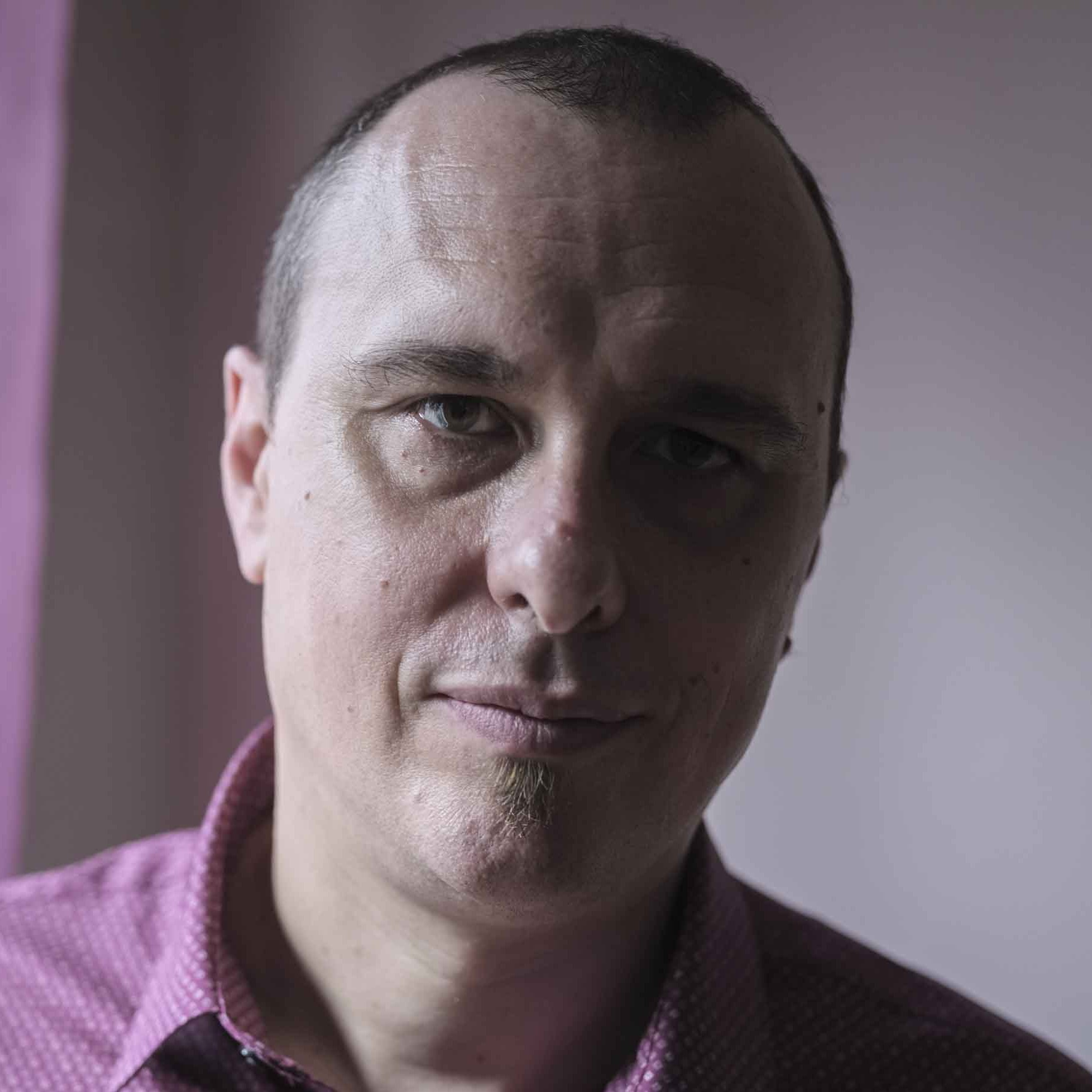
Jonathan Weber is Full Professor in Computer Science at Université de Haute-Alsace and Head of the Computer Science and Network Department at ENSISA. His research develops deep learning methods for time series analysis, image processing, and computer vision applications. Research focuses on time series classification, clustering, and generation using deep neural networks. Applications span medical imaging, remote sensing, rehabilitation assessment, and geospatial mapping. Recent publications establish evaluation frameworks for human motion generation, develop efficient architectures for time series classification, and create neural approaches for hiking map generation. His team created the InceptionTime model for time series classification. Professor Weber leads the MSD (Modeling of Dynamic Systems) research team at IRIMAS and has supervised multiple PhD students in computer vision and time series analysis.
Anastasia ZAKHAROVA is a Associate Professor in the Department of Mathematical Engineering at the Université de La Rochelle . Her research focuses on Compressed Sensing , Multiscale Methods , and Image Analysis . Collaborations with institutions including Le2I (Université de Bourgogne), LJK Grenoble 1, and Moscow State University. Current teaching includes Numerical Analysis, Functional Analysis, and Compressive Sensing in the Mathematical Engineering program. Administrative role as head of the 3rd year of the Mathematical Engineering department since 2015. Her recent publications highlight advances in image reconstruction, multiscale modeling, and optimization. She has co-organized major workshops such as 'Integrability in Dynamical Systems and Control' (2012) and SMAI Industry Meetings (2016).
Tina NIKOUKHAH is a researcher in applied mathematics at the Centre Borelli at École normale supérieure Paris-Saclay, appointed since 2022. She holds a Master's in industrial and applied mathematics from Grenoble-Alpes University (2014), an engineering degree from Ensimag (Grenoble-INP), and a PhD in applied mathematics from ENS Paris-Saclay. Her research focuses on detecting image falsifications through JPEG compression traces and deepfake identification, with applications in digital forensics and computer vision. Key Roles: Researcher at Centre Borelli, lecturer at ENS Paris-Saclay and ESJ Lille, and director of GetReal Labs. She develops tools like the ZERO detector for forgery localization, and contributes to open-source projects such as the Simplest_GOD library. Research Interests: Tina specializes in algorithms to uncover image forgeries, including JPEG grid detection, video noise analysis, and synthetic image identification. Her work bridges signal processing, forensic analysis, and machine learning to combat misinformation through digital forensics. Awards: Recipient of the 2022 L'Oréal-UNESCO Young Talent Award for Women in Science, recognizing her contributions to combating image falsification. Teaching & Outreach: Engages in science education through the Maison d'Initiation et de Sensibilisation aux Sciences (MISS) and public lectures on fact-checking, deepfakes, and algorithm ethics.
Nel Samama is a Professor at Telecom SudParis, affiliated with the ISTeC school and the SAMOVAR department. His research focuses on satellite navigation systems, indoor positioning technologies, and wireless communication systems. He has authored numerous articles on topics such as UWB-based localization, GNSS infrastructure, and RF energy harvesting. Samama has also contributed to books like Indoor positioning: technologies and performance and holds patents related to geolocation systems and interference mitigation. His work emphasizes improving positioning accuracy in constrained environments, such as hospitals and museums, using innovative signal processing techniques and infrastructure like repeaters and pseudolites. Recent projects include developing e-Health-enhanced geolocation systems and symbolic positioning frameworks for resilient navigation. Samama's research spans academic conferences (e.g., IPIN, ENC) and industrial applications, reflecting his expertise in both theoretical and applied aspects of geolocation. His contributions address challenges like spoofing detection, low-power IoT node design, and multi-standard GNSS receiver optimization.
Wissam Antoun is a PhD Researcher at ALMAnaCH, a research team within INRIA (Institut National de Recherche en Informatique et en Automatique) in Paris. Specializing in Natural Language Processing with a focus on Arabic and French language models, he has developed several influential models including AraBERT (the first Arabic BERT), AraGPT2 (the first Arabic LLM), and CamemBERTa (a French language model based on DeBERTa V3). Prior to his current position, he served as a Research Engineer at ALMAnaCH, a Senior Machine Learning Engineer at Siren Analytics in Beirut, and co-founded the Machine INtelligence Development (MIND) Lab at the American University of Beirut. Wissam's research focuses on developing state-of-the-art NLP technologies for languages displaying high variability, particularly Arabic dialects used on social media. His work spans multilingual language modeling, tokenization techniques for morphologically rich languages, and the development of comprehensive language model suites. Recent projects include Gaperon (a French LLM suite with 1.5B, 8B, and 24B parameters), ModernCamemBERT (the first non-English ModernBERT model), and pioneering work on detecting French AI-generated text. His research demonstrates expertise in model training, evaluation, and practical implementation for real-world NLP applications. His publication record shows consistent high-impact contributions, with AraBERT becoming the most cited Arabic AI paper and most starred Arabic GitHub repository, with over 10 million downloads on Hugging Face. His work has been published at major venues including Findings of ACL 2023 and preprints on arXiv. The trends in his recent articles show a progression from foundational Arabic language models to more sophisticated French language modeling and analysis of AI-generated content. Wissam has received multiple prestigious awards including First Place in the Arabic Sentiment Analysis competition at KAUST (2021) and Second Place in the OSACT4 Shared task on Offensive Language Detection (2020). His technical capabilities span the full AI stack from research to deployment, with expertise in major frameworks, software tools, and programming languages. As an educator, Wissam has served as a Graduate Teaching Assistant at the American University of Beirut, teaching courses in Software Tools, Parallel Programming, and Data Structures and Algorithms. He has also provided NLP instruction through workshop series and supported contestants in the Stars of Science program. His lab work centers around the ALMAnaCH research team at INRIA, where he contributes to advancing French language modeling capabilities through active development on GitHub repositories.
Nicolas Audebert is a Computer Vision and Machine Learning researcher working as a junior research director at the French National Institute of Geographic and Forest Information (IGN) in the LASTIG laboratory, STRUDEL team. He is currently on leave from his position as Associate Professor of Computer Science at the Conservatoire national des arts et métiers (Cnam) where he was part of the Vertigo team. His research spans computer vision, machine learning, and Earth Observation with applications in remote sensing and video games. Dr. Audebert earned his PhD in Computer Science from ONERA and IRISA in 2018, followed by an MEng in Computer Science from Supélec and an MSc in Human-Computer Interaction from Université Paris-Sud in 2015. In May 2025, he successfully defended his habilitation à diriger des recherches (HDR) titled "Learning representations from observations". His research focuses on representation learning , where he develops methods to create abstract representations of raw data that allow computers to manipulate high-level concepts numerically. In Earth Observation , he processes and makes sense of large volumes of satellite data for land cover mapping, change detection, and image interpretation. His work in machine learning for games explores how to use reinforcement learning to generate diverse and challenging AI in video games. Additional research interests include generative models, multimodal learning, and domain adaptation techniques. His recent publications demonstrate expertise in cross-sensor learning, super-resolution of satellite imagery, diffusion models for Earth Observation, and robust image retrieval systems. His work bridges theoretical advances in deep learning with practical applications in geospatial analysis, with a particular focus on developing methods that work across different sensor types and environmental conditions. Outstanding Reviewer for ECCV 2024 Outstanding Reviewer for BMVC 2021 Outstanding Reviewer for ICCV 2021 Best Benchmarking Contribution Award at GEOBIA 2016 2nd best student paper award at JURSE 2017 Google Research Scholar Program gift Dr. Audebert currently advises four PhD students: Maxime Merizette (semantic segmentation of 3D point clouds), Georges Le Bellier (domain adaptation for Earth Observation), Léo Géré (generative models for music), and Aimi Okabayashi (super-resolution of satellite image time series). He has successfully supervised two PhD students to completion: Perla Doubinsky (controlling generative models) and Elias Ramzi (robust image retrieval), whose thesis won the AFRIF PhD award 2024. He has mentored numerous MSc students on diverse topics including flood detection, procedural generation of video game levels, and deep learning for communication systems. He leads the MAGE project (2022-2026), funded by the Agence Nationale de la Recherche, which investigates using procedural generation and modern rendering engines to create labeled synthetic data for Earth Observation models, particularly for disaster mapping applications. He also leads the SESURE project (2021-2023) focused on super-resolution of Sentinel-2 time series, and previously led the RL-Games project (2020-2022) exploring reinforcement learning applications for video games.
Arnaud Le Bris is a Researcher in remote sensing, land cover classification, and image processing at the French National Geographic Institute (IGN), assigned to the Laboratory of Geographic Information Science and Technology (LaSTIG) since 2005. He is a member of the STRUDEL research team and has established himself as a leading expert in high-resolution land cover classification, hyperspectral imaging, and data fusion methodologies. His research focuses on: High resolution land cover classification from very high spatial resolution data Hyperspectral and super-spectral imaging techniques Data fusion for remote sensing applications Processing and analysis of historical aerial imagery Quality evaluation and change detection in geographic databases Automatic georeferencing of archival photogrammetric surveys Dr. Le Bris has published extensively in top remote sensing journals and conferences, with recent work emphasizing CNN-based semantic segmentation for land cover classification, historical aerial image processing, and multi-source data fusion. His research often addresses complex urban and natural environments, with applications in environmental planning, urban development, and territorial evolution studies over time. His publications demonstrate a consistent focus on methodological innovation in spectral band selection, radiometric correction, and geometric processing of both contemporary and historical imagery. Dr. Le Bris actively contributes to major research projects including HYEP (Hyperspectral imagery for Environmental urban Planning), URCLIM (Urban Climate Services), MAESTRIA, and HIATUS (Historical Aerial Images Time Series Analysis). These projects address critical challenges in urban planning, climate adaptation, and land use monitoring through advanced remote sensing techniques. As an academic mentor, he has supervised numerous PhD students, post-doctoral researchers, and interns from various institutions including Université Paris Est, National School of Geographic Sciences, and international universities. His supervision spans topics from 3D city model evaluation to hyperspectral data fusion and historical image analysis.
Manchun Lei is a researcher at the Laboratory of Geographic Information Sciences and Technologies (LaSTIG) under the National Institute of Geographic and Forest Information (IGN) in France. She holds a PhD in Instrument and Image Informatics from the University of Burgundy (2011) and has been actively involved in remote sensing and image physics research since 2008. Education: Doctorat en Instrument et Informatique de l'Image (2011), Master en Vision (2008) from Université de Bourgogne, France. Research Interests focus on radiometric correction of images in urban and coastal environments, hemispherical imagery for radiometric measurements, ocean color image simulation, and optical remote sensing for coastal monitoring. Her work addresses geometric constraints in geostationary ocean color missions and leverages hydrodynamic-biogeochemical models for coastal image simulation. Publication Trends highlight expertise in geostationary sensor simulation, radiometric normalization, and coastal/ocean color remote sensing. Key methodologies include CycleGAN for image harmonization, log-transformed band ratio algorithms, and hemispherical radiance field calibration. Teaching includes radiometric correction at the ENSG-Geomatique Master PPMD program since 2017. She supervised the 2019 internship of Islame Dhibou (MSc Optics, Vision, Image, Multimedia) on hemispherical radiance systems.
Bruno Vallet is a Senior Researcher at IGN (French National Institute of Geographic and Forest Information) within the LASTIG lab and leads the ACTE research team since 2019. His work focuses on geospatial data processing, including LiDAR and image registration, 3D urban modeling, and computer vision applications. He contributes to projects like AI4GEO and Time Machine , specializing in large-scale point cloud analysis and structured city reconstruction. Education : Habilitation (HDR) in Geographic Information Science (Univ Paris-Est, 2016), PhD in Computer Science (Institut National Polytechnique de Lorraine, 2008), and Master's in Computer Vision (Telecom ParisTech, 2005). His research integrates surface reconstruction , semantic labelings , and uncertainty propagation , with methodologies applied to autonomous navigation and urban change detection. Recent publications emphasize data fusion, visibility computation, and deep learning for 3D scene analysis. He co-supervises PhD students and leads teaching activities at ENSG (National School of Geographic Sciences), covering image processing and 3D data structures. Bruno Vallet also chairs the ISPRS Working Group II/4 on 3D Scene Reconstruction, demonstrating leadership in photogrammetry and remote sensing communities.
Dr. Alwin Poulose is an Assistant Professor Grade I in Data Science at the School of Data Science, Indian Institute of Science Education and Research (IISER) Thiruvananthapuram, Kerala, India, since January 2023. Previously, he worked as a Researcher at the Center for ICT and Automobile Convergence (CITAC), Kyungpook National University, South Korea (2021-2022), and as a Research Fellow at the University of Michigan, Dearborn, United States (November-December 2022). His educational background includes a B.Sc. in Computer Maintenance and Electronics (2012), M.Sc. in Electronics (2014), M.Tech in Communication Systems (2017), and Ph.D. in Electronics and Electrical Engineering (2021) from Kyungpook National University, South Korea. Dr. Poulose's research spans multiple domains of intelligent systems, with a focus on localization technologies, human activity recognition, facial emotion recognition, and human behavior prediction. His work bridges computer vision, machine learning, and sensor technologies to develop practical applications in healthcare, transportation safety, and animal welfare. He has made significant contributions to indoor positioning systems using Wi-Fi, UWB, and IMU sensors, as well as to emotion recognition systems that have applications in driver monitoring and autonomous vehicles. His extensive publication record demonstrates a progression from fundamental research in localization and activity recognition to increasingly diverse applications across healthcare, agriculture, and social sciences. Recent work shows a trend toward broader interdisciplinary applications of machine learning techniques, including medical diagnostics, agricultural technology, and social data analysis. Technical Program Committee Member for the 12th International Conference on ICT Convergence (2021) and 1st Korea Artificial Intelligence Conference (2020) Session Chair for the 27th Asia-Pacific Conference on Communications (APCC 2022) and 3rd Korea Artificial Intelligence Conference (2022) Guest editor for special issues in Sensors Journal, Frontiers in Signal Processing, and Algorithms Journal Topic editor for Sensors, Sustainability, and Algorithms journals Dr. Poulose leads the Deep Intelligence Learning Lab (DiL Lab) at IISER TVM, where his team works on cutting-edge research in human-centered AI systems. His service activities include extensive reviewing for major IEEE journals including IEEE Access, IEEE Sensors Journal, IEEE Transactions on Circuits and Systems, and multiple MDPI journals since 2018-2022. His collaborative work extends across international institutions in South Korea, United States, and India, demonstrating a strong network in the academic community.
Salah Bourennane is a Lecturer and researcher in the Computer Science department at the Fresnel Institute , with a focus on advanced machine learning and multidimensional signal processing techniques. His research interests span: Machine Learning (deep learning, transfer learning, optimization algorithms) Signal Processing (hyperspectral analysis, tensor decomposition, noise reduction) Medical Imaging (diagnostic systems, brain mapping, cancer detection) Computer Vision (face recognition, surveillance systems, 3D verification) Security Applications (mask detection, concealed object classification, steganalysis) Recent publications highlight his work in: Tensor-driven methods for low-resolution face recognition Hybrid multilinear-linear architectures for camera network identification Deep learning frameworks for medical diagnostics (e.g., breast cancer segmentation, Alzheimer's disease mapping) Optimization algorithms (e.g., grey wolf optimizer variants) for sensor systems and image processing Real-time pandemic response technologies like social distance monitoring His work is implemented within the Fresnel Institute research laboratory, specializing in computer vision and data science applications.
Jean-Marc Lasgouttes is a Researcher at Inria Paris working within the Astra project team, a joint research initiative between Inria Paris and Valeo. He also holds a teaching position at INSA Rouen Normandie's Department of Mathematical Engineering, where he has instructed courses including Boosting methods (until 2024), Functional Data Analysis (until 2018), and general Data Analysis (until 2024) for both the Mathematical Engineering department and the Specialized Master's program in Data Science. Dr. Lasgouttes' primary research focuses on probabilistic modeling of large systems using statistical physics tools, with particular emphasis on Intelligent Transportation Systems. His work spans traffic flow modeling, vehicle platooning, urban traffic prediction, and geopositioning systems. He frequently employs Markov Random Fields, statistical physics approaches, and game theory to address complex transportation challenges, bridging theoretical statistical methods with practical applications. His research methodology often involves developing novel algorithms like the ★-IPS family for incremental GMRF estimation. Analysis of his recent publications reveals a consistent trajectory of applying advanced probabilistic models to increasingly sophisticated transportation scenarios. His work demonstrates strong expertise in spatio-temporal modeling, with publications covering car-following dynamics, landmark-based positioning, cooperative ITS, and autonomous vehicle systems. The interdisciplinary nature of his research connects statistical physics, machine learning, and transportation engineering to solve real-world mobility challenges. At INSA Rouen Normandie, Dr. Lasgouttes has developed comprehensive teaching materials for data analysis courses, including practical applications of principal component analysis and correspondence analysis using real-world datasets such as European protein consumption patterns and Titanic passenger data. His educational approach emphasizes hands-on implementation with R programming, reflecting his commitment to practical statistical applications. The Astra project team serves as Dr. Lasgouttes' primary research environment, facilitating collaboration between academic researchers and industry partners to address contemporary transportation challenges. His work has contributed to significant research events including the 2018 workshop on Large Random Networks and Constrained Walks honoring Guy Fayolle's 75th birthday, and the 2012 interdisciplinary workshop on inference associated with the Travesti ANR grant.
André Bigand is a Lecturer at Université du Littoral Côte d'Opale (ULCO) and leads the IMAP research team. His work focuses on uncertainty modeling with fuzzy sets, image processing, and deep learning applications in art analysis. 1981: Aggregation of Applied Physics 1987: DEA in Electronics-Instrumentation (Univ. Paris6) 1993: Doctorate in Electronics (Univ. Paris6) 2001: Authorization to Direct Research (ULCO) His research spans image processing , deep learning , and time series analysis , with applications in phytoplankton dynamics , face detection in paintings , and explainable AI . He has published 11 international peer-reviewed articles and 41 communications with proceedings. Bigand collaborates with international institutions like the University of Waterloo (Canada) and the Lebanese University. He has served as Jury President for the 'Electronics-Instrumentation' Master's Degree and co-led ERASMUS+ programs. His recent publications emphasize visual art analysis , plant disease detection , and environmental time series imputation . He supervises 2 ongoing theses and has directed 5 thesis projects.
Ahed ALBOODY is a Researcher (IR) working with the SPECIFI team, specializing in Machine Learning and Deep Learning applications for computer vision and remote sensing. With a research focus spanning from 2008 to the present, their work bridges the gap between theoretical computer vision techniques and practical applications in environmental monitoring, agriculture, and disaster response. Their primary research interests include: Machine Learning & Deep Learning for High Level Computer Vision Deep Learning & Big HyperSpectral and Multispectral Satellite Data Fusion Remote Sensing Image Analysis for Ocean Color Extraction Smart Agriculture Applications using Hyperspectral Imaging Qualitative Spatial Reasoning Systems for Change Detection in Satellite Images Recent work has focused on 3D hand gesture recognition using Graph Transformer Mixture-of-Experts, efficient parallel transformers, and applications of hyperspectral imaging for fire detection through smoke. Earlier research concentrated on spatial reasoning systems, particularly enriching the RCC8 model for topological relations in geospatial databases. Scientific contributions span multiple domains: Remote sensing and satellite image processing Computer vision and deep learning architectures Environmental monitoring applications Agricultural technology and precision farming Disaster response systems As a researcher, ALBOODY has collaborated extensively with colleagues across multiple institutions, with notable collaborations with Rim Slama on gesture recognition, Matthieu Puigt and Gilles Roussel on satellite image fusion, and Florence Sèdes and Jordi Inglada on spatial reasoning systems. Their work demonstrates a consistent trajectory from foundational research in spatial reasoning to applied work in remote sensing and computer vision.
Marc Chaumont is an Associate Professor (HDR Hors-Classe) at the Laboratoire d'Informatique de Robotique et de Microélectronique de Montpellier (LIRMM) in Montpellier, France, and teaches at the University of Nîmes. He also collaborates with the IRISA laboratory in Vannes since 2024. His primary research focuses on visual data analysis, remote sensing, and steganography. Chaumont holds a Ph.D. in Computer Science from INSA Rennes and has authored nearly 100 international articles. He is a Senior Member of IEEE and an associate editor of the IEEE Transactions on Information Forensics and Security (TIFS). His work spans steganalysis, underwater imaging, coral reef ecology, and medical imaging applications. Chaumont leads collaborations with institutions like MARBEC, CIRAD, and the Astrophysics and Cosmology Laboratory (CPPM). Key achievements include developing the Yedroudj-Net CNN for steganalysis and pioneering deep learning methods for LiDAR urban object classification. He has been recognized with the Top-3% Best Reviewer award at IEEE ICIP 2020. His research bridges computer science with environmental and medical domains, emphasizing reproducibility in deep learning experiments and societal applications like wastewater network mapping (Cart'EAUX).