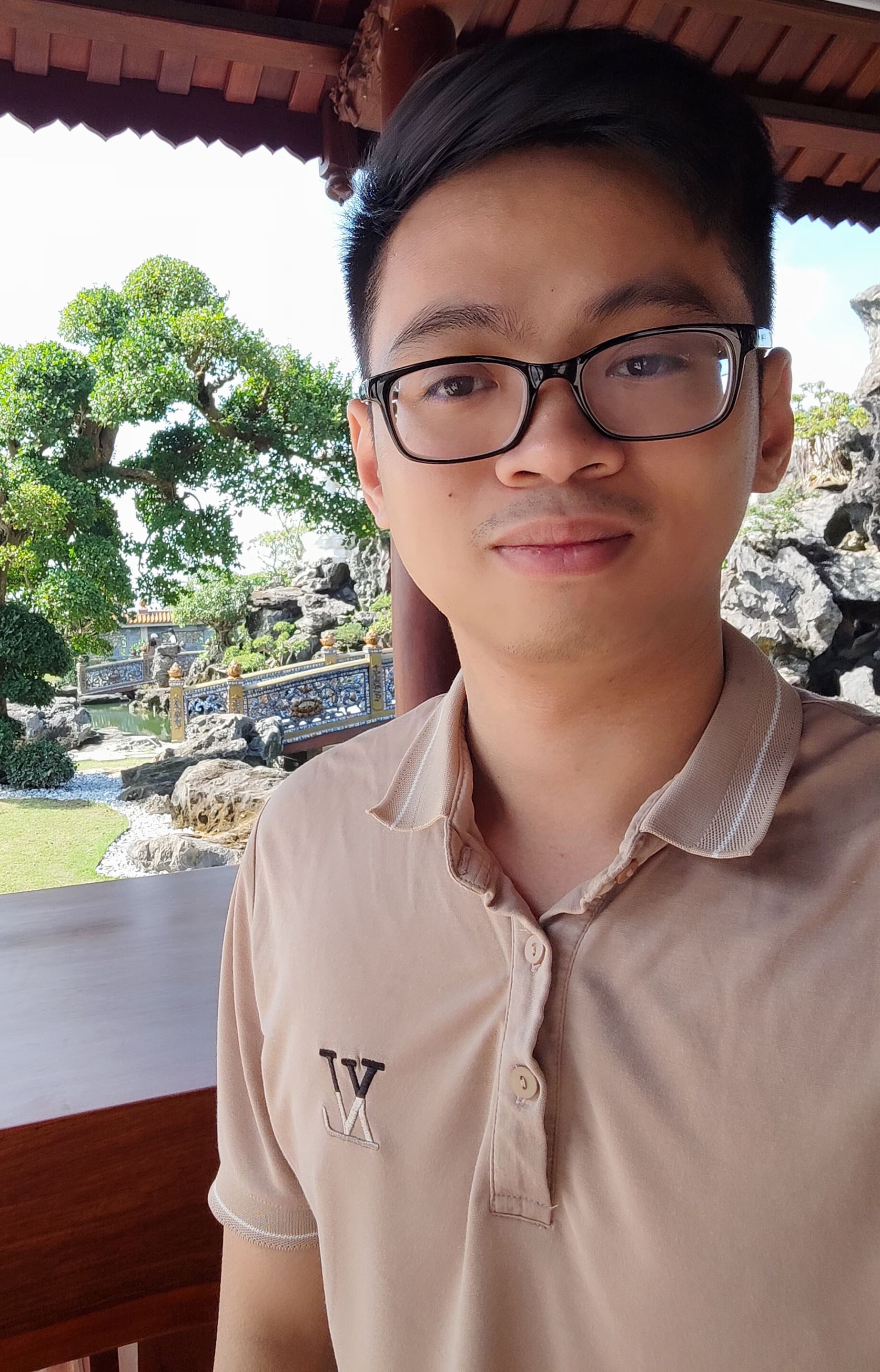
Dieu Tien Bui is a Full Professor in the Department of Business and IT at the University of South-Eastern Norway (USN) School of Business. His research focuses on Geospatial Artificial Intelligence Machine Learning GIS and Remote Sensing Natural Hazard Modeling Environmental Problems (landslides, floods, soil salinity, biomass) . He has contributed to over 15 recent publications in journals like Science of the Total Environment , Remote Sensing , and Geomorphology , emphasizing hybrid AI models for landslide and flood susceptibility. His work spans Vietnam, India, China, and Iran with applications in climate change adaptation and disaster management. Scientific Awards: Global Highly Cited Researcher PhD Supervision: He has supervised 8 PhD students at institutions including USN, NTNU, and Vietnamese universities.
Trym Vegard Haavardsholm is a 20% part-time Lecturer at the University of Oslo (UiO) within the Section for Autonomous Systems and Sensor Technologies. He also serves as Principal Scientist at the Norwegian Defence Research Establishment (FFI) and is a PhD candidate at the Department of Engineering Cybernetics, NTNU. His research focuses on computer vision, machine learning, robotics, and image analysis, with a particular emphasis on multispectral imaging systems and unmanned aerial vehicles (UAVs). Haavardsholm has contributed to advancements in sensor technologies for tactical reconnaissance, autonomous navigation, and real-time data processing. His work spans applications in defense, environmental monitoring, and emergency response systems. Research Interests Haavardsholm’s research integrates interdisciplinary approaches to develop innovative sensor systems and algorithms. Key areas include compact multispectral imaging for small UAVs, in-operation camera calibration, and anomaly detection in hyperspectral data. His contributions emphasize practical applications such as urban feature classification, collaborative indoor navigation, and bioaerosol detection. His work bridges theoretical computer science with applied engineering, addressing challenges in autonomous systems and sensor fusion. Publications His publications highlight trends in multispectral sensor design, UAV imaging, and real-time georeferencing. Recent work includes compact sensor systems for tactical use and advancements in pushbroom image rectification. Earlier research explored band selection algorithms for target detection and GPU-accelerated anomaly detection. Professional Roles As a lecturer, Haavardsholm contributes to academic supervision and teaching in autonomous systems. His dual role at FFI and UiO reflects his commitment to translating academic research into practical defense and civilian applications. His PhD candidacy at NTNU underscores his ongoing academic engagement in engineering cybernetics.
Eirik Valseth is an Associate Professor of Scientific Computing at the Norwegian University of Life Sciences (NMBU), Department of Data Science. He holds concurrent roles as a research associate at the Oden Institute, University of Texas at Austin, and an affiliated researcher at Simula Research Laboratory (Department of Numerical Analysis and Scientific Computing). His expertise lies in advanced finite element methods for PDEs with applications in flood modeling and hydropower systems. Current Affiliation: NMBU (Norwegian University of Life Sciences) Secondary Affiliations: Oden Institute (UT Austin), Simula Research Laboratory Research interests span numerical methods for challenging PDE systems, including: Stabilized finite element formulations Hurricane storm surge and riverine flood modeling Hydropower infrastructure analysis Computational mechanics and applied mathematics His recent publications (2024–2025) emphasize flood risk assessment (compound flooding, dam breaks, dredging impacts), advanced numerical methods (isogeometric analysis, stochastic finite elements, graph-grammar algorithms), and environmental applications (pollution transport, pathogen distribution, mosquito population dynamics after hurricanes). Key trends include cross-disciplinary integration of physics-aware machine learning and robust hydrodynamic simulation tools. Valseth's work extends to software development (e.g., WAVEx for spectral wave models, SWEMniCS for coastal circulation) and large-scale modeling frameworks like the ADCIRC unstructured mesh model for US coasts. Collaborative projects involve institutions such as University of Texas at Austin, Simula, and NOAA.
Thanh Le is a Doctoral Research Fellow at the Department of Informatics, University of Oslo, affiliated with the Networks and Distributed Systems research group. Their work spans multiple domains including machine learning, edge/cloud computing, and embedded systems. Research Interests: The fields_of_interest include Distributed Systems, Deep Learning, Embedded Systems, and Edge Computing. Their research focuses on optimizing AI models for edge environments, applying deep learning to medical diagnostics, and developing smart systems for energy and healthcare applications. Publications: Thanh Le's articles demonstrate expertise in edge computing optimization, medical imaging analysis, and IoT-based solutions. The work from 2022-2024 shows a trend of integrating deep learning with spectrum management, renewable energy systems, and healthcare logistics. Laboratory Affiliation: Member of the Networks and Distributed Systems (ND) research group at the University of Oslo.
Bjørnar Tessem is a Professor at the Department of Information and Media Studies, University of Bergen. His research focuses on artificial intelligence (AI) and machine learning applications in journalism and sustainable resource management, particularly fisheries. He leads projects like MediaFutures and collaborates with researchers on anomaly detection in fisheries data and ethical AI in automated journalism systems. His work bridges computational methods with societal challenges, emphasizing fairness, transparency, and sustainability. Research interests include AI-driven journalism frameworks, knowledge graphs for news angles, sustainable fisheries monitoring via machine learning, and ethical implications of AI in media. Key projects involve developing tools for detecting violations in fishing activities and enhancing news production through automated systems. He also contributes to public understanding through popular science articles on technology and AI. Recent articles highlight advancements in collective anomaly detection for fisheries surveillance, future technologies in journalism, and fairness in automated data journalism systems. Tessem’s research is supported by grants from the Research Council of Norway and has implications for both academic and industry applications in media and environmental sectors.
Tore Brattli is a Senior Lecturer and Study Program Manager in Media and Documentation Science at the Department of Language and Culture, UiT The Arctic University of Norway, under the Faculty of Humanities, Social Sciences and Teacher Education. He plays a key role in shaping the BA, MA, and one-year programs in media and documentation science, with a focus on information technology integration. His research interests include: Information Retrieval Search Engines Databases Digitalization Classification and Cataloging Knowledge Organization Semantic Change in Digital Terminology His teaching spans courses such as Databases, Search Engines and Data Modeling (MDV-1004), Document Organization and Retrieval (MDV-1201), Document Institutions in a Digital Age (MDV-1210), and Big Data, Social Media and Retrieval (MDV-3051). His recent publications reflect a strong focus on the evolution of digital concepts, classification systems like Dewey Decimal, and innovations in library services, especially in digital and networked environments. Themes across his work include the transformation of scholarly communication, automatic classification using semantic indexing, and the impact of digital media on traditional library structures. Notable scientific contributions include studies on the semantic expansion of the term "digital," experiments in automatic classification for public libraries, and analyses of digital journal paradigms. His work bridges library science, information systems, and digital humanities. He advises on curriculum development and leads program management but no formal advisees or students are listed. There is no mention of grants, awards, or laboratory affiliations. His research is primarily theoretical and applied within academic and library contexts.
Steven Hicks is a Senior Research Scientist in the Holistic Systems department at Simula Metropolitan. His work focuses on applying artificial intelligence techniques to medical and multimedia applications, with particular emphasis on explainability and transparency in AI systems. Dr. Hicks' research spans multiple domains including medical imaging, particularly in gastrointestinal endoscopy and reproductive medicine. His primary interests include Deep Learning , Medical Multimedia , Explainable AI , and Computer Vision . His work has significant applications in polyp detection, sperm analysis, ECG interpretation, and medical image segmentation, contributing to advancements in diagnostic accuracy and clinical decision support systems. Analysis of Dr. Hicks' recent publications reveals a strong focus on medical applications of AI with emphasis on transparency and explainability. His work frequently addresses challenges in gastrointestinal endoscopy, reproductive medicine, and cardiology. A notable trend is his involvement in creating benchmark datasets like Kvasir-VQA and VISEM-Tracking, and organizing challenges through MediaEval and ImageCLEF to advance the field of medical AI and establish standardized evaluation frameworks. Dr. Hicks actively collaborates with medical professionals and researchers across multiple institutions, contributing to the development of practical AI solutions for real-world medical problems. His work bridges the gap between theoretical AI research and clinical applications, with significant contributions to both technical innovations and the creation of essential resources for the medical AI community.
Norwegian University of Science and TechnologyNorway
Franz Tscheikner-Gratl is an Associate Professor at the Department of Civil and Environmental Engineering, Faculty of Engineering, NTNU. He holds a Master’s in Civil Engineering (2011) and a PhD in Technical Sciences (2016) from the University of Innsbruck. Previously, he participated in the QUICS Marie Curie ITN at TU Delft and joined NTNU’s Water and Wastewater Group in 2019. He chairs the UDAM working group under the Joint Committee on Urban Drainage (JCUD) and serves on the editorial board of Urban Water Journal. His research focuses on asset management of urban infrastructure, modeling uncertainties in water systems, and integrated catchment analysis. Key areas include deterioration modeling, green infrastructure performance, and decision-support frameworks for infrastructure resilience. He leads projects like B-WaterSmart (EU water-smart society initiative) and SESSILE (sustainable building water design). Recent publications emphasize leakage detection in water networks, Legionella risk modeling, and transferable deterioration models for infrastructure systems. Awards include the 2013 Eduard-Wallnöfer-Price and 2016 Austrian Excellence Award. He advises on trenchless technologies and collaborates internationally on urban drainage challenges.
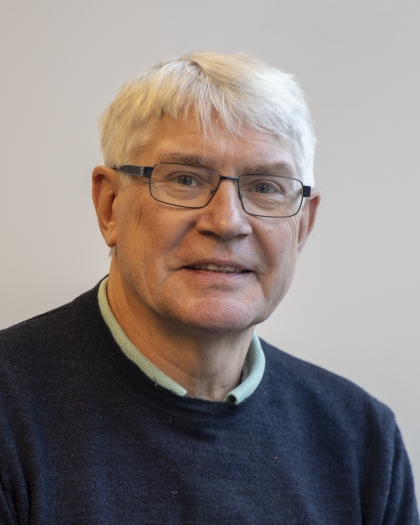
Paal Engelstad is a Professor at the University of Oslo, affiliated with the Section for Autonomous Systems and Sensor Technologies at the Institute of Transport Economics (ITS). He holds a full-time academic position. His research focuses on machine learning, wireless communications, renewable energy systems, and network security, with applications in IoT, reinforcement learning, and graph neural networks. His work addresses challenges in energy forecasting, autonomous systems, and secure information exchange. Key research interests include: Deep learning for solar and wind energy forecasting Graph neural networks and their applications in recommendation systems and network analysis Non-orthogonal multiple access (NOMA) in IoT and wireless networks Reinforcement learning for autonomous systems and control Security classification and anomaly detection in networks His recent publications highlight contributions to probabilistic solar irradiance forecasting, graph-based wind prediction models, and reinforcement learning algorithms for autonomous vehicles. He collaborates extensively with international researchers and has led projects like DESSI (Distributed Energy System and Security Infrastructure). Engelstad is involved in the following initiatives: Development of secure cross-domain information exchange frameworks Advances in energy-efficient IoT and sensor networks Applications of machine learning in cybersecurity and network optimization His research lab focuses on interdisciplinary solutions bridging transport economics, energy systems, and intelligent sensor technologies.
Norwegian University of Science And TechnologyNorway
Kiran Raja is an Associate Professor at the Department of Computer Science within the Faculty of Information Technology and Electrical Engineering at the Norwegian University of Science and Technology . With a focus on biometric security , computer vision , and educational technology , Raja's academic career spans both technical innovation and pedagogical research. Research interests include: Biometric Security – Face morphing attack detection, deepfake defense, and cancelable template protection Computer Vision – Facial recognition, image generation, and UAV-based person re-identification Medical AI – Healthcare data protection and medical image super-resolution Educational Reform – Redesigning computer science curricula and cross-campus teaching methodologies Recent work trends show a strong emphasis on privacy-preserving AI , ethical biometric systems , and educational technology . Key technical contributions include Vision Transformers for morphing attack detection GAN-based synthetic face morphing datasets Quantization-enhanced models for edge computing Graph Neural Networks for activity recognition Collaborations span institutions like IEEE, Springer, and SPIE, with consistent co-authorship with researchers such as Christoph Busch , Raghavendra Ramachandra , and Haoyu Zhang .
Ephrem Taddesse is an Associate Professor at the Faculty of Technology and Science, University of Agder. His research focuses on pavement design, road materials technology, geometric design of highways, pavement maintenance, and non-destructive testing using techniques like Ground Penetrating Radar (GPR). He specializes in developing predictive models for pavement performance, leveraging artificial neural networks and advanced material characterization. His work integrates civil engineering principles with data-driven approaches to enhance infrastructure durability and sustainability. Education & Affiliations: PhD in Civil Engineering from Norwegian University of Science and Technology (2010), with postdoctoral contributions in pavement management systems and material science. Research Groups: Sustainable Built Environment and Materials for Construction and Construction. Key publications include studies on asphalt concrete deformation, fatigue damage analysis, and bridge element condition assessment. His work emphasizes practical applications in Norwegian and international road networks, with a focus on coastal and low-volume road infrastructure. Collaborations with institutions like NTNU and international conferences highlight his global impact.
Norwegian University of Science And TechnologyNorway
Bjørn Andreas Kristiansen is an Assistant Professor in the Department of Engineering Cybernetics at NTNU. He is a core member of the NTNU Small Satellite Lab , leading the ADCS team for the HYPSO satellite mission . His research focuses on optimizing satellite operations, spacecraft attitude control, and agile maneuver design for Earth observation missions. He holds a PhD in Engineering Cybernetics (2023) from NTNU, with a thesis on energy and time optimal spacecraft control. Education: PhD in Engineering Cybernetics, NTNU (2023) MSc in Cybernetics and Robotics, NTNU (2019) Research interests include energy-efficient spacecraft control, magnetorquer-based attitude control, and deep reinforcement learning for autonomous systems. His work is published in top journals like IEEE Transactions on Control Systems Technology and IEEE Transactions on Geoscience and Remote Sensing . Key contributions: Developed energy-optimal control strategies for solar-powered satellites Pioneered agile maneuver algorithms for push-broom imaging satellites Validated HYPSO-1 CubeSat's hyperspectral imaging capabilities in orbit Labs/Teams: Active contributor to the HYPSO mission and the Center for Autonomous Marine Operations and Systems (NTNU AMOS) .
Nadia Saad Noori is an Associate Professor at the Department of Information and Communication Technology at the University of Agder (UiA). Since 2016, she has conducted research and teaching at CIEM - Centre for Integrated Emergency Management , and joined NORCE Norwegian Research Center as a Senior Researcher in 2018. Her work bridges industry experience (Cisco, hi-tech startups) with academic rigor , focusing on technology integration in crisis management , cybersecurity , and industrial monitoring systems . Her educational background includes: B.Sc. & M.Sc. in Computer Systems Engineering M.A.Sc. in Technology Innovation Management Ph.D. in Electronic and Information Systems Engineering Research interests span machine learning , autonomous systems , and security frameworks through: Disaster response coordination systems Industrial condition monitoring Humanitarian technology solutions Cyber-physical systems Recent publications demonstrate technical breadth : 2024: Thermal gesture recognition and UAV navigation in industrial spaces 2023: Cybersecurity frameworks and ecological pattern recognition 2022: Industrial seal diagnostics and autonomous systems She leads research groups in: Autonomous and Cyber-Physical Systems (ACPS) CIEM - Integrated Emergency Management Communication and System Security
Norwegian University of Science and TechnologyNorway
Gabriel Hanssen Kiss is currently an Associate Professor at the Department of Computer Science (IDI), Norwegian University of Science and Technology (NTNU), and Senior Engineer at the Operating Room of the Future, St Olavs Hospital. He holds a PhD in Engineering from K.U. Leuven, Belgium, with a focus on visualization and automated polyp detection in virtual colonoscopy, and a computer science engineer diploma from Technical University of Cluj-Napoca, Romania. Education: PhD in Engineering (K.U. Leuven), Computer Science Engineer (Technical University of Cluj-Napoca) Affiliations: NTNU (Associate Professor), St Olavs Hospital (Senior Engineer) His research focuses on medical image processing and visualization, extended reality (XR) systems, and ultrasound technology. Key subfields include volumetric data visualization, image registration/fusion, and XR applications in both medical and non-medical domains. Recent publications highlight AI-driven echocardiography, LiDAR-GNSS data fusion for localization, and mixed reality in surgical training. Collaborative work spans AI applications in transesophageal echocardiography for left ventricular function, 3D segmentation models, and augmented reality systems for medical education. He works with teams at NTNU and St Olavs Hospital, focusing on systems like the Operating Room of the Future (FOR).
Norwegian University of Science And TechnologyNorway
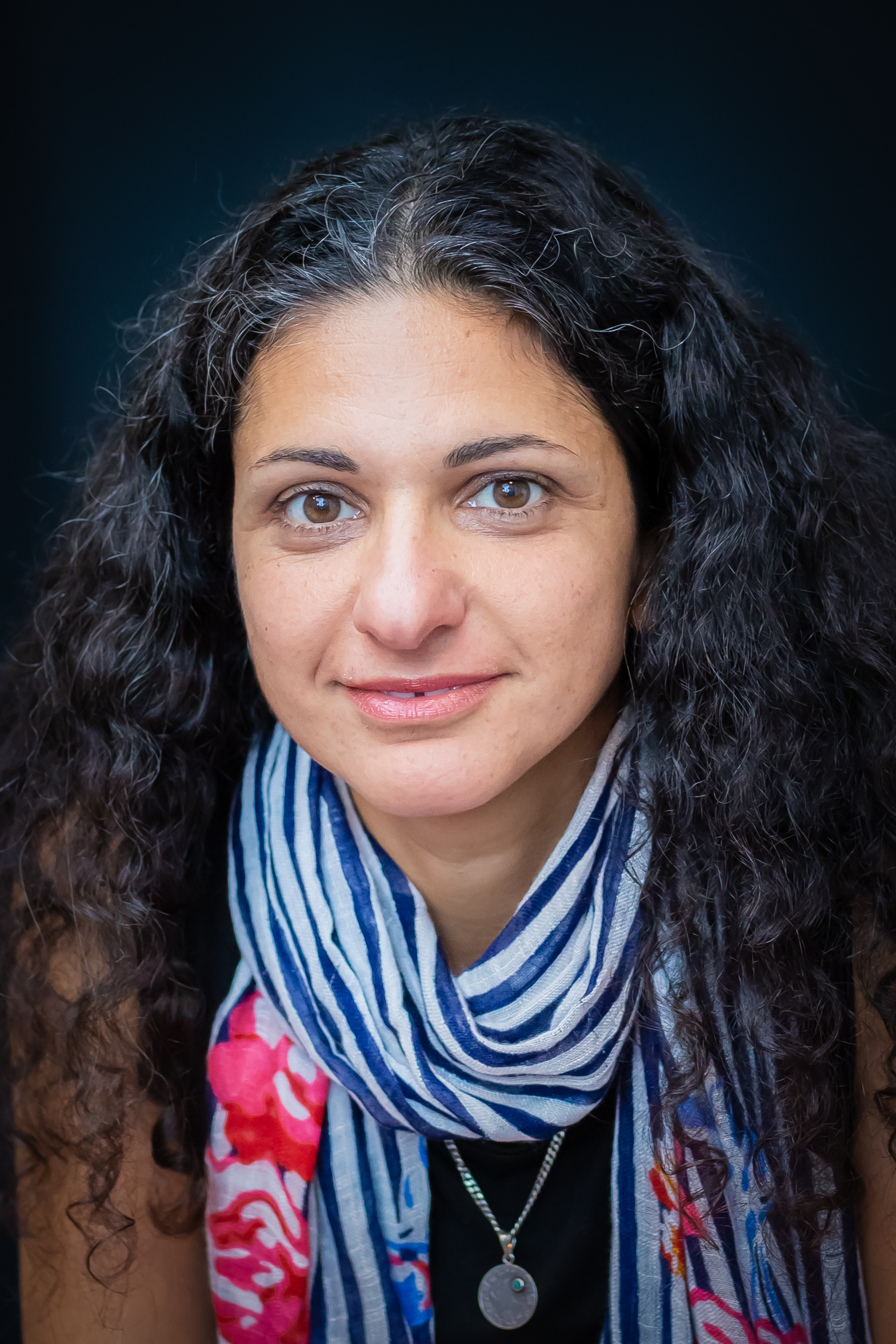
Professor Lizhen Huang is a distinguished academic at the Norwegian University of Science and Technology (NTNU), where she serves as a Professor and Group leader of Civil Engineering and Geomatics within the Department of Manufacturing and Civil Engineering, Faculty of Engineering. She also holds the position of Innovation Leader at the department and is a member of the IV faculty's innovation committee, promoting "research-innovation-education integration". Her research spans multiple critical domains: Sustainable Built environment (buildings and infrastructure) Sustainability assessment (LCA, LCC, SD) Digital twin (BIM-IoT-AI) Circular built environment and DPP Energy demand analysis Professor Huang leads strategic research on the "digital twin for sustainable built environment" with over €5 million secured for projects targeting carbon-neutral futures. Her work integrates digital technologies with sustainability principles across EU and national initiatives, demonstrating consistent innovation in circular economy applications for the built environment. Her scholarly contributions include over 40 high-impact journal publications, with one paper achieving over 820 citations since 2018. Her research trajectory shows increasing focus on integrating BIM, IoT, and AI for sustainable construction solutions. Professor Huang has mentored 10+ PhD students, 5+ post-doctoral researchers, and 2+ faculty members while actively participating in scientific evaluations from PhD defenses to faculty recruitments. Her extensive collaboration network spans European innovation platforms including ECTP-DBE and AIOTI. She currently leads multiple significant projects including Horizon Europe initiatives (SPADE and PRecyling), RCN projects (TRE STEG, CircWOOD, SirkTre), and NTNU sustainability initiatives focused on circular cities and decarbonization pathways.


/trymh/trym.jpg)

/paalee/paal-engelstad.jpg)