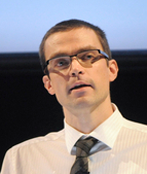
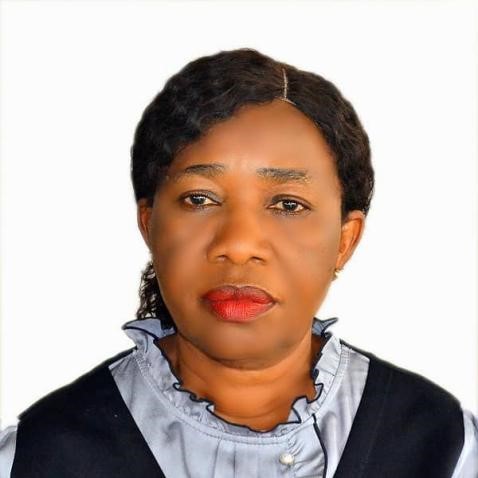
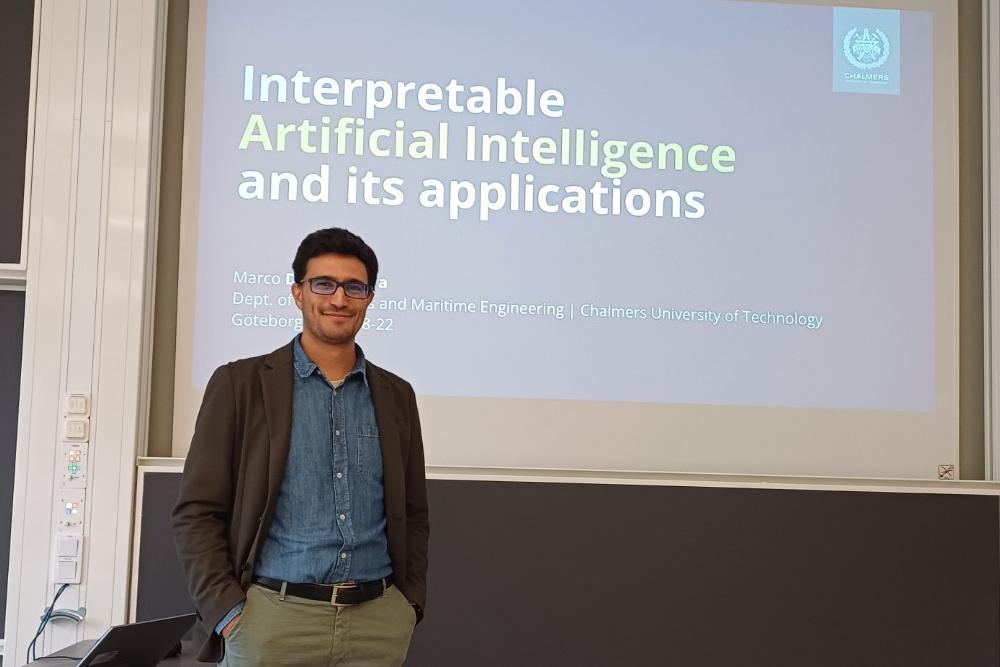
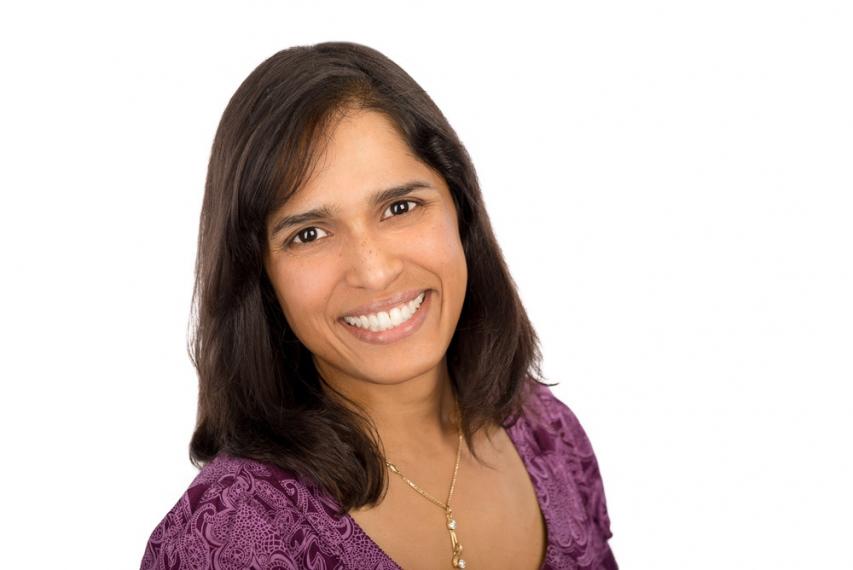
Professor Scott Anthony Sisson is a leading academic at the University of New South Wales (UNSW) , holding the position of Professor of Statistics and Data Science in the School of Mathematics and Statistics . He serves as Director of the UNSW Data Science Hub (uDASH) and Deputy Director of the UNSW AI Institute (UNSW.ai) . Previously, he was Deputy Director of the Australian Centre of Excellence for Mathematical and Statistical Frontiers (ACEMS) and held leadership roles in the Australasian Society of Bayesian Analysis and Statistical Society of Australia . PhD in Statistics (Bristol University, 2002) MSc in Environmental Statistics and Systems (Lancaster University, 1997) BSc in Mathematics and Statistics (Lancaster University, 1996) His research focuses on computational statistics and Bayesian inference , with expertise in machine learning , extreme value theory , and high-dimensional data analysis . He develops simulation-based algorithms for complex statistical problems and applies these to diverse scientific challenges like seagrass decline, urban flood modeling, and drug delivery systems. His recent work spans quantum computing for statistics, graphon modeling, and synthetic likelihood methods. Scientific awards include: 2024 Fellow of the International Society of Bayesian Analysis 2023 Fellow of the Institute of Mathematical Statistics 2017 ARC Future Fellowship 2010 Queen Elizabeth II Research Fellowship 2006 John Yu Fellowship His advising team has mentored students in statistical modeling, Bayesian computation, and applied data science. Grants from the Australian Research Council and industry collaborations support his research in government and scientific applications. He contributes as Associate Editor for Journal of Computational and Graphical Statistics and Statistics and Computing .
Dr. Marita Zimmermann is a Senior Research Economist at the Institute for Disease Modeling (IDM) under the Bill & Melinda Gates Foundation and an Affiliate Assistant Professor at the University of Washington's CHOICE Institute. As a health economist, epidemiologist, and global health researcher, she focuses on using rigorous methods to maximize healthcare value, particularly in resource-limited settings. PhD in Comparative Health Outcomes, Policy, and Economics (CHOICE) from University of Washington MPH in Epidemiology from Brown University BS in Chemical and Biomedical Engineering from Carnegie Mellon University Her research spans HIV, polio, family planning, and public health policy, with a strong emphasis on cost-effectiveness , economic modeling , and policy-relevant analysis . She has developed agent-based models like FPSim and HPVsim for reproductive health policy, and contributed to critical analyses of pharmaceutical manufacturing in low-income contexts. Recent publications highlight her work on COVID-19 dynamics in Washington State, pharmacist-led PrEP implementation , and polio eradication economics . Her modeling expertise bridges finance, public health, and healthcare delivery with practical applications. ARCS Scholar, Thomas Francis Jr. Fellowship, and other prestigious awards Recognized for excellence in global health education and research Dr. Zimmermann mentors graduate students in health economic methodology and has extensive experience in stakeholder communication, including interactive tools and peer-reviewed publications. She leads projects on women's health, family planning, and HIV treatment optimization.
O-Jong Kim is an Assistant Professor in the Department of Aerospace Engineering at Sejong University, specializing in satellite navigation systems and precise positioning technologies. His research bridges theoretical advancements with practical applications in aerospace engineering, particularly focusing on CubeSat development and GNSS technologies. His educational background includes: B.A. from Seoul National University (2011) M.A. from Seoul National University (2013) Ph.D. from Seoul National University (2018) Dr. Kim's research interests center on nano-satellite development and operation, alternative positioning navigation and timing systems, indoor precise positioning, and GNSS receiver technology. His work addresses critical challenges in navigation systems, particularly in urban and indoor environments where traditional GNSS signals face significant limitations due to signal obstructions and multipath effects. Analysis of his recent publications reveals a strong focus on practical navigation solutions, with particular emphasis on multipath mitigation techniques, CubeSat-based navigation systems, and alternative positioning approaches for emerging applications like Urban Air Mobility. His research demonstrates consistent progression from theoretical algorithms to field-tested implementations, with publications showing increasing citation impact. Dr. Kim has established productive research collaborations, particularly with Seoul National University colleagues, evidenced by his extensive co-authorship network. His research output shows steady growth, with significant publication activity in 2020, 2023, and 2024, indicating active research momentum and sustained scholarly productivity. His major achievements include the design, development, launch, and in-orbit operation of the SNUGLITE cubesat, and the development of single-transmitter-based positioning systems for alternative navigation and indoor navigation applications. These accomplishments demonstrate his ability to translate theoretical research into operational space systems.
Dr. Rose Alani is an Associate Professor and senior researcher at the Department of Chemistry, Faculty of Science, University of Lagos . With over 20 years of experience in environmental and analytical chemistry, she leads Nigeria's Air Quality Monitoring Research Group (AQMRG) and served as the 2024 Nigerian Coordinator for the CLEAN-Air Forum. B.Sc. Industrial Chemistry, Ahmadu Bello University (1988) M.Sc. Industrial Chemistry, University of Port Harcourt (1992) Ph.D. Environmental/Analytical Chemistry, University of Lagos (2012) Her research focuses on environmental pollution monitoring across air, water, and soil, particularly examining contaminant distribution linked to carbon production dynamics. She specializes in air quality modeling, health risk assessments of gaseous and particulate pollutants, and environmental sustainability. Recent publications highlight her work in GIS-based pollution mapping, seasonal air pollution variability, PAHs exposure risks, and economic impact analysis. These studies emphasize solutions for urban environmental challenges in Lagos and broader West Africa. Distinguished Researcher Awards (University of Lagos Golden Jubilee Conferences, 2009-2012) Featured in EPIC's Public Local Actors Registry (2023) Recognized as Air Quality Champion by EPIC (2024) She co-chairs the US-Nigeria Air Quality Technical Working Group and collaborates with institutions across Africa, Europe, and North America.
Dr. Saidi Siuhi serves as an Associate Professor of Civil Engineering at South Carolina State University, where he teaches undergraduate and graduate courses while conducting research and providing institutional service across departmental and university levels. His academic credentials include: Ph.D. in Civil Engineering from the University of Nevada, Las Vegas (2009) M.Sc. in Civil Engineering from Florida State University (2006) B.Sc. in Civil Engineering from the University of Dar-es-Salaam (2003) Specializing in transportation engineering, Dr. Siuhi's research focuses on traffic safety, transportation planning, and microscopic traffic simulation. His work addresses critical transportation challenges including distracted driving/walking behaviors, traffic management during special events (notably the 2017 solar eclipse), and the application of advanced computational methods to transportation networks. He integrates emerging technologies like virtual reality, machine learning, and deep learning to develop innovative safety solutions for complex transportation systems. Analysis of his recent publications (2021-2025) reveals a strong trajectory toward computational transportation safety, with increasing emphasis on AI-driven solutions for pedestrian safety, driver behavior analysis, and infrastructure monitoring. His work consistently bridges theoretical transportation models with practical safety applications, particularly in distracted behavior analysis and event-based traffic management. Dr. Siuhi actively mentors students through senior design projects (CE 459/460) and graduate coursework, though specific advisee names aren't documented. His service contributions span departmental, college, and university committees, supporting academic operations and strategic initiatives within the engineering program.
Aleksi Lehikoinen is an Associate Professor at the University of Helsinki's Faculty of Biological and Environmental Sciences, holding a docentship and serving as Supervisor in the Doctoral Programme in Sustainable Use of Renewable Natural Resources and the Doctoral Programme in Wildlife Biology. He works in the Zoology Unit as Chief Superintendent and is based at the Biocenter 3 in Viikinkaari, Helsinki. His research focuses on ornithology, climate change impacts on biodiversity, and conservation biology, with extensive field work in Finnish ecosystems. Lehikoinen's research interests center on bird population monitoring, climate change effects on avian communities, and biodiversity conservation. His work examines how climate warming influences species distributions, community composition, and ecosystem functioning, particularly in boreal regions. He investigates the effectiveness of protected areas in mitigating climate change impacts and studies human-wildlife interactions through citizen science initiatives. His research combines long-term monitoring data with advanced statistical approaches to understand ecological patterns and processes. His recent publications (2024-2025) demonstrate a strong focus on climate change ecology, with particular attention to how warming temperatures affect bird communities in boreal regions. The research spans multiple scales from individual species responses to community-level changes, examining thermal niches, distribution shifts, and biodiversity-stability relationships. His work increasingly incorporates interdisciplinary approaches, connecting ecological monitoring with human dimensions of conservation through studies of citizen science and public engagement in bird monitoring. BirdLife Suomen kultainen ansiomerkki (2024) Environmental award of Sophie von Julins society to Hanko Bird Observatory (2010) Helsingin Seudun Lintutieteellisen yhdistyksen Tringan BirdLife -ansiomerkki (2011) Influencer of the year in the Finnish Museum of Natural History (2011) Newcomer of the year 2010 in the Museum of the Natural History (2010) Lehikoinen actively supervises doctoral students in sustainable resource use and wildlife biology programs. He leads multiple significant research projects including 'Lajien kumulatiiviset ja vuorovaikutteiset vasteet ilmastonmuutokseen' (2024-2028) funded by the Academy of Finland, 'HABITRACK RIA' (2024-2027) with the European Commission, and 'Digitaalinen kansalaistiedekeskus Erkko' (2024-2028) funded by the Jane and Aatos Erkko Foundation. His work combines scientific research with practical conservation applications. Lehikoinen is deeply involved in large-scale biodiversity monitoring initiatives, particularly bird population monitoring programs in Finland. He collaborates with the Finnish Museum of Natural History and participates in citizen science projects that engage the public in data collection. His work with the 'Lintuatlas' (Bird Atlas) project represents a significant contribution to understanding bird distribution changes across Finland, combining professional scientific monitoring with volunteer observations.
Marco L. Della Vedova is a Senior Lecturer in Applied Artificial Intelligence at Chalmers University of Technology, Sweden. He works in the Vehicle Engineering and Autonomous Systems division within the Department of Mechanics and Maritime Sciences, as part of Prof. Mattias Wahde's research group. Since 2025, he has served as Director of the Data Science and AI master's programme (MPDSC) at Chalmers, where he teaches courses including Introduction to Artificial Intelligence and Digitalization in Sports. Dr. Della Vedova earned his academic foundation at the University of Pavia, Italy, where he completed his BSc (2006), MSc (2009), and PhD (2013) in Computer Engineering. His doctoral research focused on "Real-Time Physical Systems and Electric Load Scheduling" under Prof. Tullio Facchinetti. During his PhD studies, he spent a year at U.C. Berkeley hosted by Prof. Francesco Borrelli at the Model Based Predictive and Distributed Control Lab. His research spans multiple AI domains with a strong emphasis on interpretability. Dr. Della Vedova develops interpretable methods for conversational AI, naturalness evaluation of forests using canopy height models, and geospatial applications. His work bridges theoretical AI with practical societal benefits, particularly in environmental monitoring, transportation systems, and orienteering. He has previously contributed to cloud computing, hate speech detection, and cyber-physical energy systems, demonstrating his interdisciplinary approach to AI research. Dr. Della Vedova's publication record reveals a consistent trajectory of impactful research across multiple domains of artificial intelligence. His recent work shows a strong focus on interpretability in AI systems, with significant contributions to natural language processing, geospatial analysis, and causal inference. The research demonstrates both theoretical depth and practical applications, particularly in environmental monitoring and social media analysis. His methodology often combines traditional machine learning approaches with novel interpretability techniques, creating bridges between complex AI systems and human understanding. Dr. Della Vedova has received several prestigious recognitions for his work: Best PhD thesis award from the Order of the Engineers of Bergamo (2013) Italian champion of Il Cervellone (2012) Top Italian performer in IEEEXtreme 6.0 programming competition (148th overall globally, 2012) Premio Arturo Schena award from Fondazione Credito Valtellinese (2010) With over 50 students supervised through bachelor's and master's theses, Dr. Della Vedova has established himself as a dedicated mentor in the AI community. His current PhD students include Minerva Suvanto working on interpretable NLP and Vivien Lacorre developing AI for railway infrastructure inspection. His supervision spans diverse topics from forest naturalness evaluation to hate speech detection and transportation optimization. Beyond formal supervision, he actively contributes to educational initiatives including serving as Director of Chalmers' Data Science and AI master's program and developing innovative teaching methods that connect theoretical concepts with real-world applications. Dr. Della Vedova is deeply embedded in both academic and professional communities. He leads the Applied Artificial Intelligence research group at Chalmers while maintaining strong connections with European research networks through projects like the ERASMUS+ EUrienteering initiative. His interdisciplinary approach is reflected in collaborations across computer science, environmental science, and social sciences. Notably, he applies his AI expertise to orienteering both as a researcher developing localization methods and as a licensed Event Advisor for the International Orienteering Federation, demonstrating how his professional and personal interests converge in innovative ways.
Dr. Stuart Marshall serves as Associate Dean of Academic Development in the Faculty of Science and Engineering at Victoria University of Wellington - Te Herenga Waka, where he also holds the academic rank of Senior Lecturer. Previously, he served as Head of School for the School of Engineering and Computer Science from 2015-2021 after joining the institution as a Lecturer in 2003. His academic journey includes completing his BSc, MSc, and PhD in Computer Science at Victoria University of Wellington, with his doctoral research focusing on software reuse. Marshall's research interests center on information and data visualization, particularly exploring how visualization can function as collaborative tools in team environments rather than single-user applications. He also investigates explainable AI and mobile user interface design with emphasis on promoting healthy device usage patterns. His work bridges theoretical computer science with practical applications in education and environmental analysis. Analysis of his publication record reveals a consistent focus on visualization techniques, with recent work shifting toward immersive analytics and virtual reality applications for complex data analysis, particularly in ecosystem services. Earlier publications concentrated on mobile learning applications grounded in transactional distance theory, software visualization for large codebases, and graph layout algorithms. Marshall has supervised six PhD students and eight Masters students to completion, with current doctoral supervision spanning immersive environments for reading assistance, medical diagnosis interfaces, and cardiac procedure simulation. His grant portfolio includes multiple ACM ISS 2022 projects with industry partners including Sensor Holdings Limited, Niantic, Autodesk, and Northeastern University, along with an Australian Research Council grant for digital games preservation. Teaching responsibilities encompass foundational programming, safety-critical systems, human-computer interaction, and data visualization across undergraduate and graduate courses. He teaches subjects including SWEN326 (Safety-Critical Systems), CGRA151 (Introduction to Computer Graphics and Games), and DATA301 (Data Science in Practice), with teaching assignments scheduled through 2026.
Sara Barsotti is a researcher at the National Institute of Geophysics and Volcanology (INGV) specializing in volcanology and volcanic hazard assessment. Her key roles include: Associate Editor for Volcanology at Frontiers in Earth Science Review Editor for Geohazards and Georisks at Frontiers in Earth Science Contributor to the EU Center of Excellence for Exascale in Solid Earth (ChEESE) Member of the EUROVOLC citizen-science initiative Collaborator with European volcano observatories Her research focuses on computational geophysics, volcanic hazard modeling, and operational monitoring systems. She investigates tephra dispersion dynamics, lava flow behavior, and probabilistic hazard assessment using high-performance computing. Her work emphasizes European volcanic systems—particularly Icelandic eruptions—and integrates multidisciplinary approaches to improve crisis management protocols and public safety during volcanic events. Analysis of her recent publications reveals a strong trend toward operationalizing advanced computational methods for real-time hazard assessment. Key developments include exascale computing applications for solid earth simulations, refinement of the Aviation Colour Code system for aviation safety, and citizen-science data integration for eruption monitoring. These efforts consistently target practical risk mitigation strategies during active volcanic crises like the 2021 Fagradalsfjall eruption. Scientific awards: None mentioned in the provided text. While specific advised students or individual grants aren't documented, her leadership in major European projects (ChEESE, EUROVOLC) demonstrates substantial involvement in funded research initiatives. These projects coordinate transnational collaborations involving observatories, research centers, and emergency management agencies across Europe. Barsotti actively participates in integrated European volcano infrastructure teams, contributing to standardized monitoring protocols, hazard communication frameworks, and crisis response systems. Her work bridges institutional observatories (e.g., Icelandic Meteorological Office, INGV sections) with community-based monitoring tools, enhancing data collection and public engagement during volcanic unrest.
Nadir Guermoudi serves as an ATER (Attaché Temporaire d'Enseignement et de Recherche) in Data Engineering at ISAE-ENSMA, France. His institutional affiliations include: ISAE-ENSMA (Institut Supérieur de l'Aéronautique et de l'Espace - École Nationale Supérieure de Mécanique et d'Aérotéchnique) in Chasseneuil LIAS Laboratory (joint unit with University of Poitiers) operating at both ISAE-ENSMA and ENSIP (École nationale supérieure d'ingénieurs de Poitiers) campuses His research centers on data engineering with emphasis on machine learning applications for spatial database systems. Key focus areas include: Machine learning integration in database optimizers Spatial query processing and indexing Selectivity estimation techniques Geospatial data management solutions His recent WISE 2024 publication demonstrates a significant trend in applying machine learning to traditional database optimization challenges, particularly for spatial filters where conventional methods struggle with complex data distributions. This work bridges spatial data management and AI-driven query optimization. Scientific Awards: No awards or fellowships were documented in the source material. Advising and Grants: No information regarding student supervision, research grants, or funding sources was provided in the available documentation. Labs and Teams: He actively participates in the Data Engineering research team within LIAS laboratory, a collaborative unit spanning ISAE-ENSMA and University of Poitiers, focusing on advanced data management systems and optimization techniques.
Dr. Jonathan Frame is an Assistant Professor of Artificial Intelligence/Machine Learning in Geological Sciences at the University of Alabama (2024–present) and a Faculty Fellow at the Alabama Water Institute (2024–2027). He holds a PhD in Geological Sciences from the University of Alabama (2022), an MS in Civil Engineering from the University of California, Irvine (2011), and a BS in Earth Systems Science, Technology, and Policy from California State University, Monterey Bay (2010). His research focuses on advancing hydrologic modeling through machine learning, including deep learning for streamflow forecasting, geospatial modeling, and flood prediction systems. Notable projects include improving the National Water Model with LSTM networks and developing rapid inundation mapping techniques using satellite data. He has contributed to over 30 peer-reviewed publications and actively participates in conferences like AGU and NeurIPS. His engineering experience spans flood risk mitigation, groundwater analysis, and pipeline transient modeling across California, Texas, and Washington. Research Interests Machine learning integration in hydrological systems Operational flood forecasting and inundation mapping Data-driven approaches for ungauged basins Climate nonstationarity and model adaptability Hydraulic transient analysis in water infrastructure Recent Contributions Frame’s recent work emphasizes NextGen water modeling frameworks, combining physics-based models with AI to enhance predictive accuracy. His 2025 paper on heterogeneous water modeling frameworks and 2024 studies on rapid inundation mapping highlight innovations in integrating satellite observations with hydrologic models. He also explores topics like mass conservation constraints in rainfall-runoff models and evapotranspiration prediction using deep learning. Grants & Projects FEMA partnership for near-real-time flood damage prediction systems NOAA-funded research on AI in environmental sciences NASA snowpack analysis for water resources forecasting Development of the Tarsier environmental modeling framework Labs & Collaborations Frame collaborates with the Alabama Water Institute and contributes to interdisciplinary teams advancing hydrologic AI. His work intersects with climate science, environmental engineering, and computational hydrology to address global water challenges.
Prof. Alfred Stein is a Full Professor in Spatial Statistics and Image Analysis at the Department of Earth Observation Science, Faculty ITC, University of Twente. He earned his MSc in Mathematics and Information Science from Eindhoven University of Technology and a PhD in Spatial Statistics from Wageningen University. His career spans roles at Wageningen University (1988–2002), ITC (2002–present), including leadership positions as department head, vice-rector research, and portfolio holder for education. Education: MSc (Eindhoven University of Technology), PhD (Wageningen University) Leadership: Department Head (Earth Observation Science), Vice-Rector Research (2008–2012), Portfolio Holder Education (2012–) His research focuses on Spatial and Spatio-Temporal Statistics , emphasizing Bayesian inference , data quality , image analysis , and fuzzy techniques . Key application domains include agriculture, health, urban land use, coastal systems, hazards, and wildlife. He has mentored over 30 PhD students since 1998, with 11 currently under supervision. Recent research trends highlight AI-driven remote sensing for glacier mapping, urban livability, and disease modeling. Publications span Deep Learning for SAR tomography, Bayesian hierarchical models for health data, and multitemporal SAR analysis for environmental monitoring. Awards include the Best Paper Award (2019) and ISARA Founder's Award (2020) . Scientific Awards Best Paper Award (2019) ISARA Founder's Award (2020) As Editor-in-Chief of Spatial Statistics and associate editor for multiple journals, he leads academic discourse. Collaborations include the University of Cape Town and University of Pretoria as Honorary Professor. His work contributes to UN Sustainable Development Goals, particularly in climate action and sustainable cities.
Ayesha Ali is a Professor of Statistics and Director of the Master of Data Science program at the University of Guelph. She holds a PhD in Statistics from the University of Washington (2002) and has expertise in statistical methods for complex high-dimensional systems, including ecological networks, causal inference, and bioinformatics. Her research integrates graphical Markov models, machine learning, and statistical computing to address challenges in plant-pollinator networks, livestock genetics, and disease risk modeling. Education: B.Sc. Honours in Statistics and Actuarial Science, University of Western Ontario (1996) M.Sc. in Statistics, University of Toronto (1998) Ph.D. in Statistics, University of Washington (2002) Research Interests: Graphical Markov models and ecological networks Causal inference and longitudinal data analysis Machine learning and high-dimensional predictive modeling Statistical methods for livestock genetics and animal health Computational statistics and bioinformatics Articles Trends: Her recent work spans interdisciplinary applications, including veterinary oncology biomarker discovery, remote sensing for agricultural suitability, and pipeline development for cross-species transcriptomics. She emphasizes graphical structure exploitation in regression and predictive modeling, with contributions to both theoretical and applied statistical methodologies. Awards: Canadian Journal of Statistics Award (2020) for groundbreaking work on doubly sparse regression NSERC Discovery Grant (2018) NSERC Collaborative Research and Development Grant (2015) Advising & Grants: She has supervised numerous graduate and undergraduate students on projects ranging from plant-pollinator network analysis to bioinformatics. Her grants include NSERC-funded research on milk fatty acid genetics and statistical methods for clustered data. Labs/Teams: Involved in the Bioinformatics program at the University of Guelph, contributing to interdisciplinary research collaborations in ecology and animal science.
Stephen M. Strader is an Associate Professor of Geography and the Environment at Villanova University, serving as Graduate Program Director. He holds a Ph.D. from Northern Illinois University (2016) and specializes in hazards geography, atmospheric science, and GIS applications. His research focuses on severe weather vulnerability, climate change impacts, and disaster risk reduction, with emphasis on tornado exposure, mobile home safety, and urban sprawl effects. He has led grants addressing tornado sheltering behaviors and severe weather communication, and co-authored over 30 peer-reviewed articles. Strader’s work bridges physical and social sciences to enhance community resilience against natural hazards. Education: Ph.D. & M.S. in Geography (Northern Illinois University), B.S. in Geography (Indiana University) Affiliations: American Meteorological Society, Association of American Geographers Research highlights include the 'Expanding Bull's Eye Effect'—explaining how population growth amplifies disaster risks—and studies on tornado impacts in mobile home communities. He actively engages with media to communicate climate and disaster science, including op-eds in The New York Times and CNN.
Syrielle Montariol is a Researcher and Course Lecturer at the École Polytechnique Fédérale de Lausanne (EPFL), affiliated with the Natural Language Processing Lab (NLP) under the School of Computer and Communication Sciences (IC). She holds a postdoctoral position and teaches courses related to computational linguistics and AI applications. Her research focuses on advancing NLP, medical language models, multimodal learning, and AI ethics. She works in the INR 240 office and maintains collaborations across EPFL's academic divisions. Research Interests: Her work spans interpretability of AI systems, cross-modal reasoning, medical domain adaptation, sustainability text analysis, and the societal impact of AI. Recent projects include developing explainable models (e.g., global mixture-of-experts frameworks) and benchmarking tools like Vinabench for visual narratives. Publications: Her recent work addresses critical challenges in AI, including vulnerability of higher education to LLMs, medical language model adaptation (Meditron), and robust geo-localization systems. Key themes include ethical AI, multimodal learning, and domain-specific NLP applications. Labs & Teams: She contributes to the NLP lab's initiatives on visual-language models and collaborates with interdisciplinary teams on projects like PAN-RSVQA for remote sensing and PICLe for low-resource NER systems.