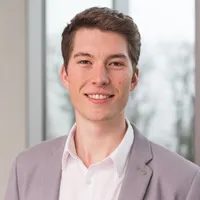
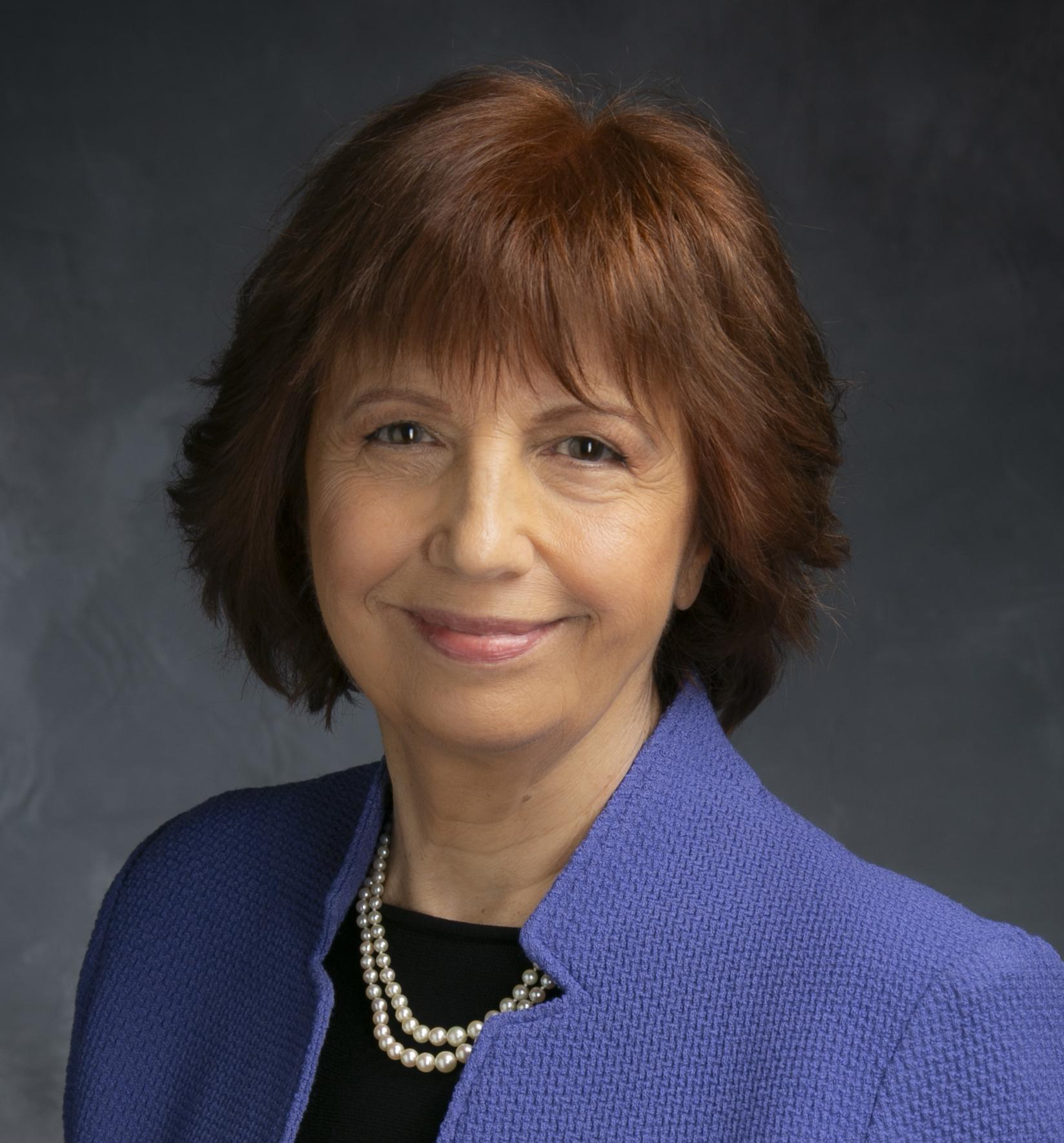
Daniel Kühbacher is a Tutor and researcher at the Chair of Environmental Sensing and Modeling at Technische Universität München (TUM). He specializes in developing high-resolution urban emission inventories for CO2, CH4, and co-emitted species, and leads the setup of a 100-sensor CO2 network in Munich to assess sector-specific emission factors. His work bridges environmental monitoring, sensor technology, and urban climate science. Teaching roles include tutoring the Environmental Sensing and Modeling lecture and advanced seminar, as well as the joint practical course Gemeinschaftspraktikum MST . Research focuses on integrating traffic simulation data, mobile measurement units, and flux footprint modeling to quantify urban greenhouse gas emissions. Education: M.Sc. in Environmental Engineering Affiliations: Member of the ICOS Cities project and contributor to the ICOS Science Network Publications emphasize urban GHG monitoring innovations, including sensor network optimization, flux measurement validation, and inventory intercomparison studies. His work supports policy-relevant insights into emission hotspots and mitigation strategies. Currently develops the SCOUT project for street-level carbon observatories and explores human respiration emissions using mobile network data.
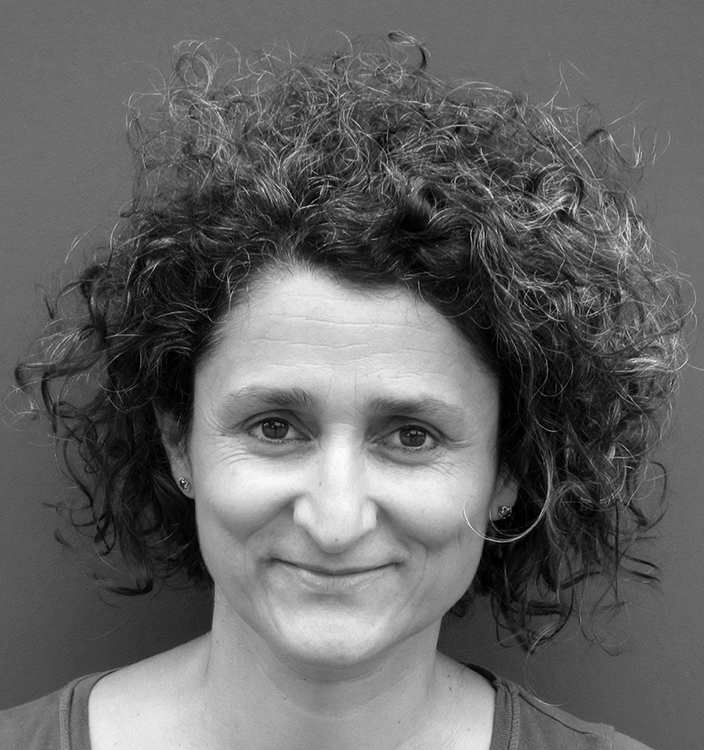
Dr. Elisa Palazzo is a Senior Lecturer at the University of New South Wales (UNSW) within the Faculty of Arts, Design & Architecture. With a PhD in urban design, regional and environmental planning, she has extensive international teaching experience at universities in Italy, China, and Australia. Her professional background includes over 20 years as a registered landscape architect, architect, and urbanist, with significant project experience across Europe, the Middle East, China, and Australia. Her research focuses on adaptive and regenerative urban design, particularly water-sensitive cities and flood adaptation strategies in urban and rural systems. She explores biocultural diversity, landscape ecology, and transdisciplinary approaches to address environmental change. Her work bridges landscape architecture with urban design to create more resilient and environmentally sound cities. Analysis of her recent publications reveals a strong emphasis on practical applications of urban resilience, with particular attention to flood adaptation strategies, biocultural landscape assessment, and the implementation of water-sensitive urban design principles globally. Her research shows an increasing focus on transdisciplinary approaches that integrate community engagement with technical solutions. Banksia Sustainability Award 2020 (Academia and Research category) Place Leadership Award 2019 Learning & Teaching Award 2020 Executive Dean's award for excellence in teaching 2017 Peter Joseph Lenné Preis (1999) Multiple EUROPAN first prizes (1996, 1999) Dr. Palazzo has successfully supervised three PhD students and one Post-Doc to completion since 2015/2016 and currently supervises research in adaptive urban design, water resilience, and post-mining site regeneration. She has secured significant research funding including a $0.94 million MYER Foundation grant (2018-2020) and multiple Category 2 and 3 grants totaling $196,000 (2015-2024). She actively contributes to cultural landscape heritage work, serving as co-convenor of the Australia ICOMOS National Scientific Committee on Cultural Landscapes and Cultural Routes, and as co-author of the Burra Charter Practice Note on Cultural Landscapes. Her professional practice includes 38 built projects that have received 29 awards, including 11 first prizes.
Professor Angelika Krehl serves as Professor for Economics, regional and sectoral structural policy and Director of the NIERS Institute (Lower Rhine Institute for Regional and Structural Research) at Niederrhein University of Applied Sciences since 2020. Her academic leadership spans regional economics, urban spatial structure analysis, and sustainability research within the Department of Economics. Her research focuses on theoretical foundations and empirical analysis methods of urban spatial structures, regional economics, economic geography, and GIS-based regional research with emphasis on sustainability aspects. Key methodologies include polycentricity measurement, density pattern analysis, and integrated spatial modeling using remote sensing data. Her work bridges urban morphology with economic development processes. Recent publications reveal strong trends in polycentric urban systems analysis, corporate regional responsibility frameworks, and sustainable land use economics. Over 70% of her recent work examines German metropolitan regions through morphological polycentricity lenses, with increasing focus on sustainability transitions and social innovation mechanisms since 2020. Methodological innovation in GIS integration and spatial metrics development characterizes her publication trajectory. Professor Krehl leads multiple major research initiatives including RediStar (diversity-sensitive startup funding), AUFBRUCH (sustainable bioeconomy transformation), R(h)einTex (textile recycling innovation), and R³ (corporate regional responsibility). Her institutional leadership extends to directing NIERS Institute and serving on the university's Advisory Board for Research and Transfer. As Director of NIERS Institute, she oversees collaborative research teams focused on regional structural policy, with particular emphasis on lignite phase-out governance, sustainable learning projects, and regional innovation ecosystems. Her work integrates academic research with practical policy implementation through close partnerships with regional stakeholders.
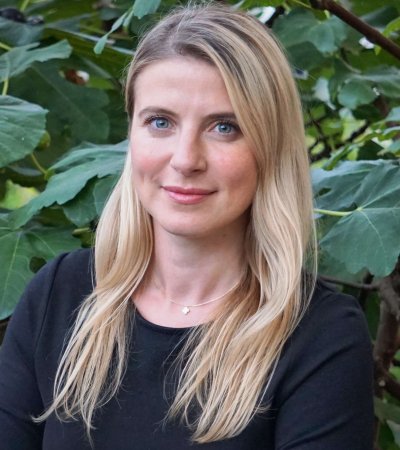
Lina von Sydow is a Professor in Computational Science at Uppsala University's Department of Information Technology. She serves as Section Dean for the Mathematical-Computer Science Section since July 2023. Her academic journey includes becoming an Associate Professor in 2000, Senior Lecturer since 1997, and leading the Department of Information Technology from 2018 to 2023. PhD in Domain Decomposition Methods (1995, Uppsala University) Postdoctoral Fellow at Oxford University (1996-1997) Her research spans computational science with dual focuses on Computational Finance and Ice Sheet Modeling . In finance, she develops numerical methods for option pricing using PDEs, radial basis functions, and stochastic volatility models. In climate science, she contributes to ice sheet dynamics through full Stokes models and adaptive time-stepping approaches, particularly in simulating grounding line migration. Recent publications (2025) address gender disparities in IT education, including comparative analysis of admission trends and intervention studies to boost female enrollment. Earlier works (2020-2015) focus on high-order finite difference methods for financial derivatives, BENCHOP benchmarking projects, and preconditioning techniques for PDEs. Scientific awards include Excellent Teacher (2013) She actively collaborates on educational reforms, co-authoring studies like Gender-aware course reform in Scientific Computing (2013). Her leadership roles include Head of Department (2018-2023) and Section Dean (2023-present), influencing academic governance and interdisciplinary research. Labs and teams: Works with Uppsala University's Computational Science group, Elmer/ICE project collaborators (e.g., Per Lötstedt, Gong Cheng), and international partners in numerical finance and climate modeling.
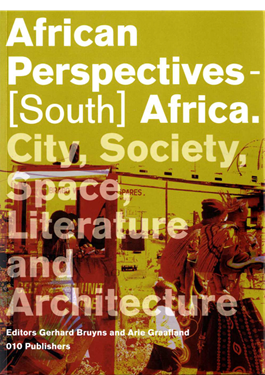
Dr. ir. Gerhard Bruyns is a tenured Associate Professor at the School of Design, The Hong Kong Polytechnic University , where he serves as Associate Dean (Academic Programmes) and Director of RPg Studies . Previously, he held tenured positions at the Delft University of Technology , Netherlands, in both the Delft School of Design and the Department of Urbanism. His expertise spans spatial morphology, volumetric urbanism, and critical environments in dense urban contexts.
Özge Öner serves as Associate Professor in Spatial Economics and Real Estate at the University of Cambridge's Department of Land Economy and holds a Fellowship at Sidney Sussex College, where she additionally serves as Vice Master and Director of Studies. Her institutional affiliations extend to research fellowships at Stockholm's Institute of Retail Economics and Jönköping's Centre for Entrepreneurship and Spatial Economics (CEnSE). Her academic foundation includes a 2014 PhD in Economics with specialization in Urban and Regional Economics from Jönköping International Business School, complemented by doctoral research at the University of Illinois' Regional Economics Applications Laboratory (REAL). Prior academic appointments include Assistant Professor at Jönköping International Business School and Researcher at Stockholm's Research Institute of Industrial Economics (IFN). Research Interests: Öner's scholarly work critically examines migration dynamics, labor mobility patterns, micro-geographic segregation mechanisms, ethnic enclave formation, retail/service geography, urban amenity distribution, entrepreneurial geography, and political spatial organization. Her methodological approach heavily leverages geocoded register data and spatial econometric techniques to investigate how geographic context shapes economic behavior, with particular emphasis on Swedish and European urban systems. This interdisciplinary framework bridges spatial economics, economic geography, and migration studies through rigorous quantitative analysis of neighborhood-level phenomena. Publication Trends: Her recent output (2023-2025) demonstrates evolving focus toward infrastructure-impact analysis (tramway effects on commercial vitality), refugee labor market integration pathways, and micro-scale retail/ethnic enclave dynamics. Methodologically, she increasingly employs synthetic control approaches and granular geospatial data to isolate causal mechanisms in urban economic processes, while maintaining strong connections to policy-relevant questions about segregation, integration, and commercial geography. Scientific Awards: Handelsbanken Wallander postdoctoral scholarship (2015) Young Investigator Award in Italy (2018) Young Researcher Award in Sweden (2019) from the Swedish Entrepreneurship Forum Advising and Public Engagement: As Director of Studies at Sidney Sussex College, Öner oversees academic progression for undergraduate students. She actively translates research into public discourse through monthly columns in Svenska Dagbladet (The Swedish Daily News), where she analyzes contemporary socioeconomic issues through her spatial economics lens. While specific doctoral advisees aren't documented in source materials, her leadership roles indicate significant mentoring responsibilities. Research Networks: Öner maintains active collaboration through dual research fellowships: at Stockholm's Handelns Forskninginstitut (Institute of Retail Economics) where she examines commercial geography, and at Jönköping's CEnSE focusing on spatial entrepreneurship patterns. These positions facilitate cross-institutional research on retail dynamics, migration geography, and urban economic structures using Scandinavian longitudinal datasets.
Tiffany Roberts Briggs serves as Chair and Associate Professor in the Department of Geosciences at Florida Atlantic University. Her academic foundation includes a Ph.D. (2012), M.S. (2008), and B.S. in Environmental Science with Honors (2006), all from the University of South Florida. Her research centers on coastal geomorphology and sedimentology , with critical focus on beach-dune-nearshore system responses to natural events like hurricanes and anthropogenic interventions including coastal engineering. Key specialties include beach morphology evolution, microplastics in coastal sediments, sea turtle habitat characterization, and coastal resilience strategies. Current projects involve Hurricane Ian impact analysis, regional sediment management, and decadal-scale inlet dynamics. Teaching portfolio spans undergraduate and graduate courses including Physical Geology, Coastal and Marine Science, Shore Erosion & Protection, and specialized topics in beach morphodynamics. She actively mentors graduate students through directed research courses and supervises thesis work evident in her co-authored publications with student researchers. Briggs directs research at the Coastal Studies Lab and leads field investigations across Southeast Florida coastlines. Her work integrates advanced methodologies including LiDAR, aerial imagery, and GIS modeling for coastal change assessment. Recent publications reveal strong collaboration with agencies like USACE and NOAA, particularly in post-hurricane damage evaluation and community resilience planning.
Moosa Tatar is an Assistant Professor at the University of Houston College of Pharmacy , specializing in Pharmaceutical Health Outcomes and Policy . His research combines data science and applied econometrics to analyze public health policies, focusing on drug misuse , metabolic syndrome , liver diseases , and COVID-19 disparities. He holds dual PhDs in Health Services Research (University of Nebraska Medical Center) and Economics (University of Mazandaran), with expertise in machine learning , health equity , and vaccine policy modeling . PhD, Health Services Research, University of Nebraska Medical Center PhD, Economics, University of Mazandaran MA, Economics, Azad University BA, Economics, University of Sistan and Baluchistan His work addresses critical public health challenges through large-scale dataset analysis , including excess mortality during pandemics , vaccine inequality , and economic impacts of health policies . Key themes include social vulnerability , health disparities , and policy evaluation using machine learning and econometric modeling . Tatar's research has informed global and national health interventions related to prescription drug monitoring and hepatitis C screening . He is affiliated with the Society for Medical Decision Making , AcademyHealth , and American Public Health Association , serving as an ad hoc reviewer for journals like JAMA Pediatrics and Value in Health Regional Issues . His contact email is mtatar@Central.UH.EDU .
Ben Lacey is an Associate Professor of Medicine and Epidemiology at the University of Oxford's Oxford Population Health. His research focuses on population health metrics, health inequalities, and enhancing large-scale observational epidemiology through linked administrative records. Education : MBChB (University of Edinburgh, 2004), MSc in Global Health Science, DPhil in Epidemiology (University of Oxford) Affiliations : UK Biobank, Clinical Trial Service Unit and Epidemiological Studies Unit (CTSU), Big Data Institute (BDI), Richard Doll Consortium Lacey's recent work examines obesity trends, cancer disparities, and cardiovascular risk factors using UK Biobank data. He contributes to the Global Burden of Disease Study and develops open-access tools for health outcome prediction. Scientific awards include his fellowship in the Faculty of Public Health of the Royal Colleges of Physicians. His research has significant policy implications, particularly in addressing social and spatial inequalities in health outcomes across Europe.
Ottar Bjornstad is a Distinguished Professor of Entomology and Biology at Pennsylvania State University, holding the Huck Chair of Epidemiology. He is affiliated with multiple research centers, including the Center for Infectious Disease Dynamics, One Health Microbiome Center, and Center for Mathematical Biology. His research focuses on population ecology, epidemiological modeling, and the mathematical foundations of infectious disease dynamics. He investigates how climate change affects ecological systems, transmission patterns of zoonotic diseases, and the interplay between host demographics and disease spread. Recent publications highlight his work on dengue virus transmission, vaccine distribution logistics, and age-structured epidemic models. His studies span disciplines including ecology, virology, and computational epidemiology. Elected to Norwegian Academy of Sciences and Letters (2021) He collaborates with institutions worldwide, addressing global health challenges like Lassa virus spread and measles persistence mechanisms. His methodological contributions include statistical frameworks for epidemic analysis and spatial synchrony metrics.
Terhi Ala-Hulkko is a Postdoctoral Researcher at Aalto University's Department of Built Environment, affiliated with the Planning and Transportation research group. Her work focuses on urban mobility and spatial resource management. Position: Postdoctoral Researcher University: Aalto University Department: Department of Built Environment Email: terhi.ala-hulkko@aalto.fi Research Interests: Terhi's research spans transportation geography, urban planning, and sustainable resource distribution. She leverages advanced data analytics to address urban mobility challenges and ecological resource mismatches. Analysis of intra-city mobility patterns using mobile phone tracking data Development of spatial accessibility frameworks for forest resource management Integration of GIS and sustainability metrics in urban and ecological planning Publication Trends (2025): Recent works highlight her dual focus on urban mobility and ecological resource mapping. The articles employ geospatial technologies and inter-disciplinary approaches to address sustainability challenges in transportation and forestry sectors. Research Groups: Actively participates in the Planning and Transportation research group at Aalto University, contributing to data-driven urban and environmental studies.
Cantay Caliskan is an Associate Professor at the Goergen Institute for Data Science, University of Rochester. He teaches Data Mining, Statistical Machine Learning, and the Data Science Capstone courses in the undergraduate and graduate data science curriculum. Bachelor of Arts, Brandeis University Master of Arts, Koç University PhD in Political Science, Computer Science, and Statistics, Boston University (2018) His research focuses on computational social science, computer vision, and generative AI, with applications in deep learning, network analysis, and AI ethics in social contexts. His recent publications span interdisciplinary topics including: Geo-cultural bias in AI-generated urban models (SimCityNet) Comparative religious text analysis using LLMs (HalalLLM vs. KosherLLM) Political polarization metrics through social media interactions Article trends highlight AI's role in addressing social science challenges, from electoral geography to disaster response optimization. His work integrates natural language processing, dynamic network modeling, and cross-cultural analysis. He contributes to advancing accessible AI systems (ACROSS) and understanding misinformation dynamics. No scientific awards listed in available data.
Dr. Yuhan Jiang is an Assistant Professor in the Department of Built Environment at North Carolina A&T State University's College of Science and Technology. He serves as the Founding Director of the HUD Center of Excellence for Innovation in Affordable Housing and Sustainable Communities (CIAHSC). Dr. Jiang leads a multidisciplinary research team focused on integrating robotics, artificial intelligence, and Building Information Modeling in construction operations and infrastructure management. Ph.D. in Civil Engineering from Marquette University M.M. in Construction Management from Guangzhou University Additional Construction Management degree from Guangzhou University Dr. Jiang's research primarily focuses on artificial intelligence applications in architecture, engineering, construction, and operations (AECO). His work integrates robotics and remote sensing for data collection, computer vision and machine learning for data processing, and BIM, GIS, and AR/VR for data visualization. His research enables more efficient construction operations, building inspection, and infrastructure management. Additionally, he has extensive experience in community redevelopment planning and complex systems simulation, including investigating urban village formation mechanisms. Analysis of Dr. Jiang's recent publications reveals a strong focus on applying drone technology, computer vision, and deep learning to construction and infrastructure challenges. His work spans multiple domains including façade modeling, pavement evaluation, sidewalk inspection, earthwork calculation, and 3D reconstruction. A consistent theme across his research is the development of automated systems that improve efficiency, accuracy, and safety in construction and infrastructure management through AI and robotics. N.C. A&T and CoST Junior Faculty Teaching Excellence Award 2024-25 N.C. A&T and CoST Rookie Researcher of the Year Award 2024 ASCE Journal of Architectural Engineering Best Paper Award 2022 ASCE CI & CRC Joint Conference Best Paper Award 2024 AAAS HBCU Making and Innovation Showcase 1st Place 2024 CoST SciTech Week Innovation Challenge awards (2023-2025) N.C. A&T Provost's Faculty Fellow (2023 & 2024) Dr. Jiang has successfully secured over $4.5 million in research funding as PI or Co-PI, including a $2.5 million HUD Center of Excellence grant. He has mentored students who won 1st and 3rd place in the 2023 & 2024 Sci-Tech Week Innovation Challenge competitions and 1st place at the 2024 AAAS HBCU Making and Innovation Showcase. His funded projects span AI-driven BIM education tools, smart farming with robotics, drone-based façade modeling, and digital twin applications for infrastructure management. As Founding Director of the HUD Center of Excellence for Innovation in Affordable Housing and Sustainable Communities (CIAHSC), Dr. Jiang leads a multidisciplinary team focused on innovative approaches to affordable housing and sustainable community development. His lab work integrates drone technology, computer vision, and AI to create practical solutions for real-world construction and infrastructure challenges.
Leila De Floriani is a Professor at the University of Maryland, with appointments in the Department of Geographical Sciences and the University of Maryland Institute for Advanced Computer Studies (UMIACS). She previously served as a professor at the University of Genova (Italy) since 1990, where she developed Italy's first undergraduate and graduate curricula in computer graphics and directed the Ph.D. program in Computer Science for eight years. Her professional activities include serving as the 2020 President of the IEEE Computer Society and currently as IEEE Division VIII Director for 2023-24. Professor De Floriani's research spans geometric modeling, data visualization, spatial data representation and processing, computer graphics, shape analysis, and topological data analysis. Her work focuses on developing mathematical models and algorithms for representing, analyzing, and visualizing complex spatial data, particularly through hierarchical models, mesh-based representations, and topology-based approaches. Her research group, the GeoVis group, investigates applications in terrain modeling, environmental data analysis, and forest structure mapping using LiDAR technology. Analysis of her recent publications reveals a strong focus on terrain representation and processing, with increasing emphasis on topological data analysis, machine learning integration, and efficient algorithms for large-scale spatial data. Her work bridges theoretical foundations in computational topology with practical applications in geospatial sciences, demonstrating consistent innovation in data structures and visualization techniques. Scientific Awards & Recognitions Fellow of IEEE (2016) for contributions to geometric modeling and scientific visualization Fellow of International Association for Pattern Recognition (IAPR) (1998) for contributions to geometric modeling and image analysis Fellow of Eurographics Association (2020) for outstanding contributions to computer graphics and visualization Pioneer of Solid Modeling Association (2017) for seminal work in solid and feature-based modeling Inducted Member of IEEE Visualization Academy (2020) IEEE Computer Society Golden Medal Award (2018) Inducted Member of IEEE Honor Society Eta Kappa Nu (2019) Multiple best paper awards at major conferences including Shape Modeling International (2015), IEEE/EG Symposium on Volume and Point-Based Graphics (2008), and ACM SIGSPATIAL (2008) Professor De Floriani has successfully advised numerous PhD students including Xin Xu, Yunting Song, and Noel Dyer, whose recent dissertations focused on topology-based individual tree mapping, efficient terrain analysis, and bathymetric data visualization respectively. Her research has been funded by prestigious agencies including the National Science Foundation, NASA, and the European Commission. As the leader of the UMD GeoVis group, she oversees a research program that develops open-source tools for spatial data analysis available on GitHub, with current projects focusing on forest point cloud processing and topology-based geospatial data visualization. The GeoVis group, affiliated with the Department of Geographical Sciences, UMIACS, and the Center for Geospatial Information Sciences, maintains a strong collaborative environment with ongoing projects in geometric modeling, spatial data structures, topology-based machine learning, and mesh-based terrain modeling. The group has received recent funding from NASA's HPOSS program for developing an open-source library for forest point cloud processing based on topological data analysis.
Andreas Niekler is a research associate and lecturer in Computational Humanities at the Institute of Computer Science, Leipzig University, Faculty of Mathematics and Computer Science. He develops computational methods for semantic language analysis and applies them to computational social science and humanities research, with focus on machine learning and data management methodologies. His research interests span Natural Language Processing , Computational Social Science , Digital Humanities , Text Mining , Machine Learning , and Conversational AI . Niekler specializes in developing algorithms including Bayesian Models, Topic Models, Deep Learning, and Support Vector Machines for text analysis applications. He is actively involved in the development of the interactive Leipzig Corpus Miner platform and researches how semantic representations can be applied to literary studies and scientometrics. Niekler's recent publications demonstrate expertise across computational linguistics, social science methodology, and practical applications of text mining. His work shows strong interdisciplinary connections between computer science, linguistics, and social sciences, with particular emphasis on developing robust methodologies for automated content analysis. As an educator, Niekler has extensive teaching experience in computational methods for humanities and social sciences, offering courses on text mining, computational linguistics, and programming in R and Python. He serves as a scientific staff member in the Computational Humanities research group led by Prof. Dr. Manuel Burghardt and represents scientific staff in the Faculty Council of Mathematics and Computer Science at Leipzig University.