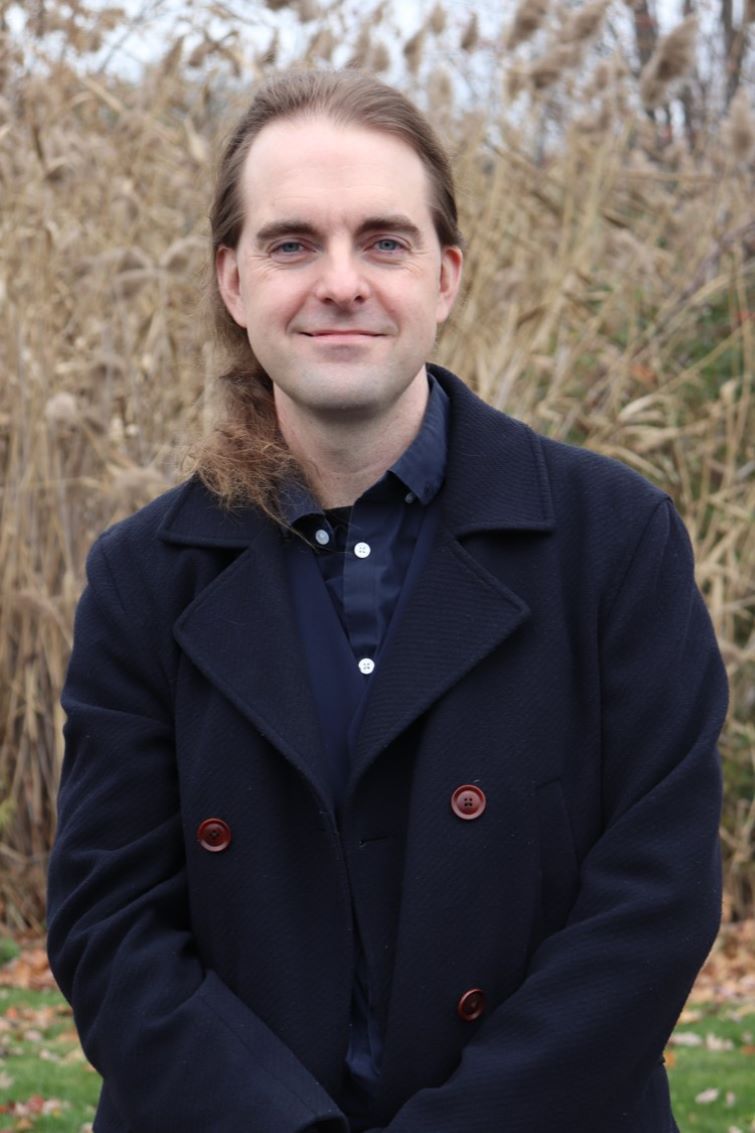
Kyle Bradbury is a Lecturer and Managing Director of the Energy Data Analytics Lab at Duke University. His work merges machine learning, statistical signal processing, and remote sensing to solve critical energy system challenges, particularly focusing on integrating renewable energy (wind and solar) into power grids through advanced modeling of energy storage reliability and cost trade-offs. He teaches the course IDS 705: Principles of Machine Learning .
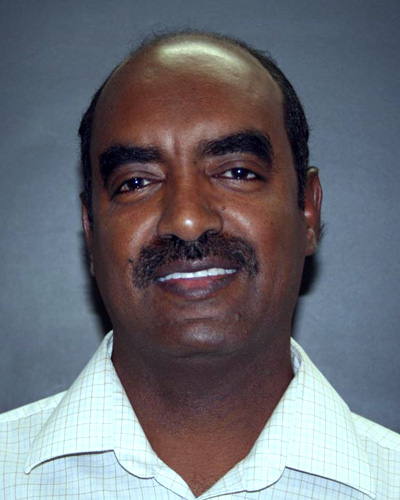
Hatim Sharif serves as Professor in the Department of Civil and Environmental Engineering and Construction Management at The University of Texas at San Antonio's Margie and Bill Klesse College of Engineering and Integrated Design. His research bridges environmental engineering, hydrology, and transportation safety with significant focus on arid and semi-arid regions including Texas and the Middle East. Holding multiple advanced degrees, he directs interdisciplinary projects addressing critical infrastructure resilience challenges. His educational credentials include: Ph.D. in Environmental Engineering, University of Connecticut M.S. in Civil Engineering, Colorado State University B.S. in Civil Engineering, University of Khartoum M.P.H., Texas Health Science Center Professor Sharif's research centers on environmental and civil engineering challenges with emphasis on flood prediction systems , road safety under extreme weather , and remote sensing applications for environmental monitoring . His work integrates hydrological modeling, transportation engineering, and public health to address climate change impacts on water resources and infrastructure. Notable strengths include developing physically-based models for arid regions and analyzing socio-environmental justice dimensions through satellite data. Analysis of his publication record reveals strong interdisciplinary trends combining hydrology, transportation safety, and environmental justice. His recent work increasingly utilizes high-resolution satellite data and radar precipitation products to study extreme weather events, with growing focus on autonomous vehicle infrastructure adaptation and environmental health disparities. Middle Eastern case studies (particularly UAE and Saudi Arabia) feature prominently alongside Texas-based research. His scientific recognition includes: Fulbright Scholar Award (2015-2016) Fulbright Senior Specialist Award (2015) LTHE Scientific Visitor Fellowship, Grenoble (2014) NSF Science Technology Centers Faculty Fellowship (2007) NCAR Advanced Studies Program Faculty Fellowship (2006) NCAR Postdoctoral Fellowship (2002-2004) Professor Sharif serves as Associate Editor for Remote Sensing (MDPI) and the Arabian Journal for Science and Engineering (Springer), demonstrating scholarly leadership. His professional affiliations with AGU, AMS, AWRA, APHA, and ASEE facilitate cross-disciplinary collaboration. While specific grant details beyond his fellowships aren't enumerated, his extensive publication output indicates sustained research funding through federal agencies and international partnerships, particularly with Middle Eastern institutions. His research operates through international collaborations with institutions in Saudi Arabia, UAE, and France, focusing on water-stressed regions. Current initiatives address autonomous vehicle infrastructure adaptation, climate-resilient urban drainage, and environmental justice applications of satellite monitoring, with future work likely expanding into AI-driven hydrological forecasting and integrated transportation-climate models.
Rochelle Wigley is a Lecturer and Project Director for Nippon Foundation/GEBCO projects at the University of New Hampshire. With a Ph.D. in sedimentology and geochemistry from the University of Cape Town, she bridges geological research with advanced ocean mapping technologies. Her work focuses on integrating geochemical analysis with bathymetric data to enhance continental shelf evolution understanding, particularly in southern Africa. Education Ph.D., Geology/Earth Science, University of Cape Town M.S., Geochemistry, University of Cape Town B.S., Geology/Earth Science, Rhodes University B.S., Chemistry, Rhodes University Her research spans marine authigenic minerals (phosphorites, glauconite), deep ocean bathymetry, and autonomous mapping systems. She pioneered projects like the Indian Ocean Bathymetric Compilation and contributed to the Shell Ocean Discovery XPRIZE through AUV-USV integration. She teaches courses such as Marine Geosci for Hydrography and Ocean Mapping Internships . Recent publications emphasize global bathymetry challenges, programming education for ocean mappers, and collaborative data processing networks. Although no awards are explicitly listed, her leadership in international mapping programs underscores her influence in marine geoscience and policy. As part of the Center for Coastal & Ocean Mapping, Wigley manages the Chase Ocean Engineering Lab, fostering innovation in unmanned seafloor mapping. She maintains a global alumni network for GEBCO, advancing remote data workflows and training future ocean mappers.
Mohamed Aly is a Professor at the University of Arkansas, affiliated with the Department of Geosciences, Center for Advanced Spatial Technologies (CAST), Arkansas Center for Space & Planetary Sciences, and Environmental Dynamics (ENDY) Program. His research integrates Synthetic Aperture Radar Interferometry (InSAR), GIS, GNSS, and machine learning for geohazard assessment and environmental monitoring. Education: PhD in Geology (Radar Interferometry), Texas A&M University MS in Geology (Remote Sensing & GIS), Zagazig University Research focuses on InSAR for crustal deformation, machine learning in geospatial analysis, wildfire and landslide susceptibility modeling, and geothermal process monitoring. Recent publications emphasize multisensor data fusion and Google Earth Engine applications. Scientific awards include NASA EPSCoR Early Career Investigator, Fulbright College Teaching Commendation, and Academic Excellence from Texas A&M. He mentors students in geohazard research and geospatial technologies.
Helena Titheridge is a Professor of Mobility and Sustainable Transport at the Department of Civil, Environmental and Geomatic Engineering, University College London (UCL) . With appointments at UCL since 1997, she has held roles in the Bartlett School of Planning and the Transport Studies Group at the University of Westminster (2003). Her research focuses on sustainable transport systems, social exclusion, GIS-T applications, and the interplay between transport, land-use, and environmental policies. She collaborates with organizations such as Transport for London, RPS Group, and Ipsos MORI. Education : PhD (Open University, 2005), MSc (Middlesex University, 1993), BSc (University of Leeds, 1991), Postgraduate Certificate in Learning and Teaching (University of Westminster, 2006). Research Interests encompass: Sustainable transport and mobility systems Social exclusion and equity in urban transport GIS-T for policy analysis Decision support tools for local authorities Deep learning in urban ecoacoustic assessment Informal settlement modeling (e.g., predictSLUMS) Professional Activities include: Associate Editor, Journal of Transport Geography (2016–present) Editorial roles in Transportation Planning and Technology and Journal of Transport and Land Use Conference organizer (Universities Transport Studies Group, 2008–2009) External examiner and grant reviewer Teaching spans postgraduate and undergraduate levels, with directorship of the MSc Transport and Mobility Systems , EngD Urban Sustainability and Resilience , and EngD Environmental Engineering Science programs. She teaches courses on transport-environment interactions, interdisciplinary urban sustainability, and engineering impact assessment.
Dr. Samantha Clarke is a Senior Lecturer in the Educational Innovation team at The University of Sydney . Her work focuses on enhancing university teaching through initiatives like the Modular Professional Learning Framework and the Peer Review for Teaching program , recognized by multiple international and national teaching awards. Her research spans professional development for educators , generative AI integration in teaching , and equity-focused education strategies . She has led projects such as the Green Guide for equity-focused teaching and the Cogniti program to build AI capacity among educators. QS Wharton Reimagine Education Awards Gold Winner ACODE Technology Enhanced Learning Award Senior Fellowship of Advanced HE (SFHEA) Vice-Chancellor's 'Sydney Leaders' Award EDUCAUSE Horizon Report Exemplar She maintains an Honorary Associate role in the School of Geosciences , contributing to tsunami hazard research via submarine landslide studies. Her publications bridge education innovation and marine geology .
Byungkyu Lee is an Assistant Professor of Sociology at New York University within the Faculty of Arts and Science. He serves as co-Director of the Networks in Context lab and holds appointments across multiple research initiatives. His educational background includes a Ph.D. in Sociology from Columbia University (2018), an M.A. in Sociology from Yonsei University (2012), and a B.A. in Business Administration from Yonsei University (2009). Research focuses on social cohesion, network dynamics, and their impacts on health/political well-being Pioneers integration of large language models, surveys, and social media data for social science Develops indicators for social cohesion, polarization, and public opinion prediction Specializes in causal inference methods and computational social science approaches His publication trends reveal a methodological evolution from traditional sociological analysis (2016-2020) toward computational and AI-integrated approaches (2021-2025), with increasing emphasis on health policy applications and polarization dynamics. Honorable Mention for Best Publication Award (ASA Mental Health Section, 2025) Consulting Editor for American Journal of Sociology (2024-2026) Lee actively mentors through the Networks in Context lab and has secured major grants from NSF, NIH, and Russell Sage Foundation. His canceled DOD Minerva project on social cohesion during crises highlights research relevance to national security concerns. Current initiatives include studying effects of Supreme Court rulings on college admissions and co-evolution of AI/society. He maintains active laboratory operations through the Networks in Context initiative, focusing on computational modeling of social dynamics and polarization mechanisms.
Kirsten Wiens is an Assistant Professor at Temple University’s College of Public Health, Department of Epidemiology and Biostatistics. As an infectious disease epidemiologist, her work bridges seroepidemiology, spatial analysis, and disease modeling to address gaps in traditional surveillance systems. She leads the Wiens Lab , which focuses on understanding unobserved infections in cholera and diarrheal diseases, particularly how mild/asymptomatic cases and healthcare access barriers impact transmission dynamics. Education: PhD in Immunology from New York University School of Medicine, postdoctoral research at University of Washington (IHME) and Johns Hopkins Bloomberg School of Public Health. Her research addresses critical public health challenges, including Estimating true cholera burden via serological and transmission models Mapping diarrheal disease hotspots using geostatistical methods Quantifying care-seeking behavior disparities in low-resource settings Informing vaccine campaigns through enhanced surveillance Recent publications (2021–2025) span high-resolution mapping, seroepidemiology for SARS-CoV-2, and household transmission studies. Collaborations include institutions in Bangladesh, the Democratic Republic of the Congo, and South Sudan, with methodologies applied globally through the Global Burden of Disease (GBD) and Local Burden of Disease (LBD) frameworks. Lab Members: The Wiens Lab includes research associates, assistants, and alumni such as Daniel Costello (MPH) and Ashlynn Solomon (Clinical Research Coordinator). Students are encouraged to engage in coding (primarily R), reproducible science via GitHub, and ethical AI use for research.
Dimitrios Gounaridis is an Assistant Research Scientist and Lecturer at the University of Michigan's School for Environment and Sustainability (SEAS), specializing in Geospatial Data Sciences. His research integrates geospatial analysis, artificial intelligence, and environmental science to address climate change impacts, pollution disparities, and social vulnerability. He holds a Ph.D. in Geography from the University of the Aegean. Research Focus Gounaridis investigates critical sustainability challenges through geospatial data science. His work includes: analyzing correlations between animal feeding operations and air pollution; assessing flood risks in socially vulnerable communities; using AI to study climate change denial patterns on social media; and evaluating land-use changes in natural areas. His approach combines environmental science with computational methods to inform policy and equity solutions. Education 2018: Ph.D. in Geography, University of the Aegean 2012: M.Sc. in Applied Geo-Informatics, University of the Aegean 2009: B.A. in Forestry and Management of the Natural Environment, International Hellenic University Media Engagement Gounaridis' research has been featured in prominent outlets including The Detroit News, Michigan Radio, and Stacker, covering topics like urban tree inequity, carbon footprints, and farmland conservation.
Dani Jones is an Associate Research Scientist at the Cooperative Institute for Great Lakes Research (CIGLR) within the University of Michigan's School for Environment and Sustainability (SEAS). They lead the Great Lakes Artificial Intelligence Laboratory, focusing on applying machine learning and artificial intelligence to environmental challenges, particularly climate change adaptation in coastal regions. Education: Ph.D. in Atmospheric Science (Oceanography), Colorado State University (2013) M.S. in Mathematical Sciences, Georgia Southern University (2009) M.S. in Physics, University of Kentucky (2007) B.S. in Physics, Georgia Southern University (2005) Dani's research program centers on data science, machine learning, and artificial intelligence as applied to physical limnology, weather forecasting, water cycle predictions, and observing system design. Their work aims to advance societal adaptations to climate change effects, including coastal and river flooding. With a background in physical oceanography, they specialize in adjoint modeling for sensitivity analysis and unsupervised classification techniques, previously applied to the North Atlantic and Southern Ocean. Dani is establishing CIGLR's Artificial Intelligence Laboratory, leveraging the institute's observing assets, datasets, and partnerships. Analysis of Dani's 15 most recent publications reveals a strong interdisciplinary focus at the intersection of machine learning and environmental science. Their work consistently applies unsupervised classification and neural network techniques to oceanographic and climate problems, with particular emphasis on the Southern Ocean, North Atlantic, and Great Lakes regions. A notable trend is the increasing application of AI to climate adaptation challenges, alongside continued fundamental research in physical oceanography. Scientific Awards: Laws Prize, British Antarctic Survey (2021) UKRI Future Leaders Fellowship (2020-2023) Going the Extra Mile (GEM) Award, British Antarctic Survey (2020) Best Student Presentation Award, Colorado State University Research Symposium (2010) Dani has supervised undergraduate, graduate, and postdoctoral researchers across multiple institutions including Georgia Southern University, University of Cambridge, and British Antarctic Survey. Their supervision spans oceanography, physics, and mathematics, with focus on computational techniques for environmental science. They have received significant research funding including the UKRI Future Leaders Fellowship (SO-WISE project) and have been involved in numerous collaborative projects including C-STREAMS, OceanBound, and DeCAdeS. Dani is also Co-chair of the Observing System Design Capability Working Group for the Southern Ocean Observing System. Dani leads the Great Lakes Artificial Intelligence Laboratory at CIGLR, which integrates machine learning expertise with environmental observation systems. They are also affiliated with the Department of Mathematical Sciences at Georgia Southern University as Affiliate Faculty and holds an Honorary Researcher position at the British Antarctic Survey. Their work bridges computational science with practical environmental applications, particularly in climate change adaptation.
Dr. Chengbo Ai is an Associate Professor at the Department of Civil and Environmental Engineering , University of Massachusetts Amherst , specializing in transportation infrastructure and safety research. He holds a Ph.D. in Transportation Systems Engineering from Georgia Tech and a B.S. in Electrical Engineering from Peking University. Research Interests: Transportation Asset Management, Mobile LiDAR Applications, Roadway Safety Analytics, and Spatial Infrastructure Analysis Current Projects: Developing automated guardrail/sidewalk inventory systems, improving pedestrian infrastructure accessibility, and optimizing rail inspection methods Publications focus on integrating computer vision, machine learning, and geospatial technologies for infrastructure condition assessment. Recent work includes automated guardrail evaluation, rail gage inspection using consumer-grade devices, and pedestrian network analysis. Awards: Dwight David Eisenhower Transportation Fellowship recipients (2020-2022) Acorn Innovation Grant (2019) Best Poster Award at MassDOT Conference (2019) Students: Mentors Ph.D. researchers in pavement preservation, LiDAR processing, and transportation equity, with alumni working at FHWA, AECOM, and leading engineering firms Lab Facilities include advanced LiDAR systems (Theodore 1-3), dual-GPU workstations (Sullivan, Wazowski), and field vehicles like "Cynthia" for mobile mapping.
Michael Sawada is a Full Professor at the University of Ottawa in the Department of Geography, Environment and Geomatics . With a career spanning decades, his work bridges geomatics, health geography, and machine learning applications in spatial analysis. Ph.D. in Geography (2001) M.A. in Geography (1996) B.A. (Hon.) in Geography with concentration in Philosophy (1994) His research focuses on geospatial methodologies for addressing complex environmental and public health issues, including: Health disparities and disease distribution Machine learning for remote sensing and land use analysis Natural hazard risk assessment and mitigation Urban healthscapes and climate change impacts Recent publications highlight his innovative integration of deep learning with geospatial datasets , including analysis of neighbourhood-level Lyme disease risks and neural network-enhanced lichen cover mapping . His work also explores income polarization patterns in Canadian metropolitan areas and health service utilization trends. Professor Sawada supervises graduate students including Krutiben Mehta , Sarah Gebert , Zhewen Luo , Raziyeh Ramezani , and Amirreza Farshchin . He teaches advanced geomatics courses like GEG 6102 - Advanced Geomatics , emphasizing digital earth technologies and spatial information systems.
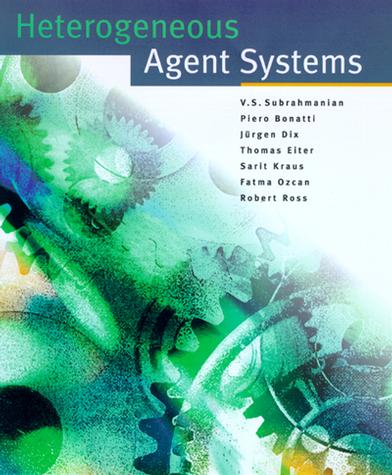
Thomas Eiter is a Full Professor at the Institute of Logic and Computation, Technical University of Vienna (TU Wien), where he serves as Head of Research Unit. He is a Full Member of the Division of Mathematics and Natural Sciences since 2022 and holds leadership roles within the university. His research focuses on knowledge representation and reasoning, computational logic, algorithms and complexity in AI, declarative problem solving, nonmonotonic logic programming and databases, and reasoning about actions and change. His work bridges theoretical foundations with practical applications in artificial intelligence, particularly in logic programming and knowledge-based systems. He has made significant contributions to Answer Set Programming (ASP), developing frameworks like DLV and HEX programs that enable sophisticated reasoning capabilities. His recent publications demonstrate a strong focus on stream reasoning (LARS framework), knowledge forgetting, modular reasoning systems, and the integration of logic programming with ontologies. His research shows consistent contributions to both theoretical foundations and practical implementations of AI systems over several decades. ACM Fellow (2020) Fellow of the European Association for AI (2006) Distinguished Paper Award of the 17th International Joint Conference on Artificial Intelligence (IJCAI, 2001) Prominent Paper Award of the Artificial Intelligence Journal (2013) Test of Time Award (10 years) of the International Conference on Logic Programming (2013) Eiter has led and participated in numerous research projects, both internationally funded (such as LogiCS@TUWien, Humane AI, AI4EU) and nationally funded (including projects like BILAI, TAIGER, and several FWF-funded initiatives). His research unit has received substantial support from European Commission programs (H2020) and Austrian funding agencies (FWF, FFG, WWTF). He is actively involved in the academic community as a member of the Austrian Academy of Sciences (ÖAW), Academia Europaea, and has served on the Executive Council of AAAI. His research unit maintains strong connections with international collaborators and has developed influential systems like the DLV answer set programming system.
Annisa Puspa Kirana is a Ph.D. candidate and researcher at the Department of Geo-information Processing (ITC-GIP), Faculty of Geo-Information Science and Earth Observation (ITC), University of Twente. She is a Lecturer in the Department of Information Technology at State Polytechnic of Malang, currently on study leave to focus on her Ph.D. research. Her work integrates Artificial Intelligence , Computer Vision , and Geospatial Analytics to analyze satellite/aerial imagery for Climate Change Mitigation , Disaster Monitoring , and Resource Management . PhD in Geo-Information Science @ University of Twente (Netherlands) Master of Computer Science @ IPB University (Indonesia) Her research emphasizes Deep Learning applications in Earth Observation, including Vision-Language Models and Agentic AI for multimodal data analysis. She collaborates with interdisciplinary teams , government agencies , and industry partners . Selected Publications Trends: Focus on AI agents , LLMs , VLMs , and Vision Transformers for geospatial and environmental applications Technical tutorials on Streamlit , TalkToEBM , and LangChain integration Conceptual breakdowns of agentic vs. agent-based systems , interpretability in AI , and prompt engineering Scientific Awards: LPDP Awardee (Indonesian Endowment Fund for Education) Microsoft Certified Educator She actively mentors students in AI/geospatial fields and advocates for open-source science and ethical AI practices in environmental decision-making. Her work bridges academic research and practical policy tools .
Milan Marjanović is an Assistant Professor at the Department of Mechanical Engineering, Faculty of Technical Sciences in Čačak, University of Kragujevac. Holding an M.Sc. in Mechanical Engineering, he teaches Thermodynamics, Applied Thermodynamics, Renewable Energy Sources, and Machine Elements. His research focuses on Thermal Engineering, Thermoenergetics, and Renewable Energy systems. Born 1990 in Užice Completed primary/secondary education in Požega Faculty of Mechanical Engineering and Civil Engineering, Kraljevo (2012) Master's in Energy Engineering (2014) Research spans biomass combustion optimization, solar energy systems, and hydraulic simulation tools. Active in academic projects like the national PRIZMA 2023 initiative for Active Condensation Hybrid Systems. Key publications include work on: Biomass-fired district heating efficiency AI-driven solar energy prediction models Hybrid photovoltaic-thermal collector testing Industry 4.0 curriculum development for Mechatronics Scientific contributions appear in journals like Case Studies in Thermal Engineering and conferences including COAST 2024. Awards include Ministry scholarships and 'Mašinijada' competition victories. Collaborates with industry partners on mechanical testing equipment development.