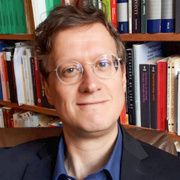
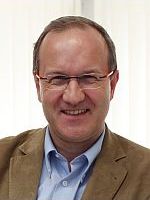
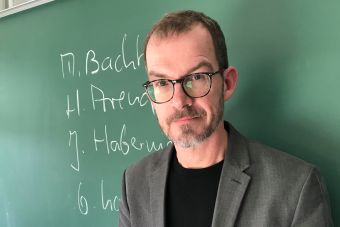
Prof. Dr. Oliver Müller is a Professor at the Department of Philosophy, University of Freiburg, and serves as Vice Dean of the Faculty of Philosophy. His academic journey includes a doctorate from Humboldt University Berlin (2005) and a habilitation in Philosophy (2012). Müller leads research on Philosophical Anthropology, Philosophy of Technology, and Ethics, with a focus on human-machine interactions and Anthropocene ethics. He supervises doctoral and postdoctoral researchers across projects like livMatS and BrainLinks-BrainTools. Research interests span neuroethics, transhumanism, and socio-technological systems, emphasizing ethical frameworks for emerging technologies. Publications explore AI ethics, drone warfare, and phenomenological embodiment, reflecting interdisciplinary engagement with neuroscience and environmental philosophy. Honors include the MTZ Bioethics Award and Heisenberg Fellowship. Müller directs participatory discourse initiatives bridging art and science, fostering public engagement with technological ethics. His work advances critical dialogues on human enhancement and ecological responsibility in the digital age.
Max Planck Institute for Research on Collective GoodsGermany
Ben McWilliams is a Research Fellow at Bruegel, focusing on Energy and Climate Policy . His work combines data-driven analysis to critique and inform European public policy, with particular emphasis on energy sector decarbonisation , industrial policy , and hydrogen-based economic geography . Recently, he has analyzed European energy crises and proposed policy responses , while tracking clean tech trends and natural gas dynamics across Europe. Education : MSc in Economic Policy (Utrecht University, thesis on carbon taxation in British Columbia); BSc in Economics (University of Warwick) with exchange year at Monash University Research Focus : Energy Security , Climate Policy , Hydrogen Economics , and Industrial Decarbonisation Key Contributions : Co-authored 15 major analyses (2021-2025) on topics including EU-Russia energy divorce , transatlantic clean investment , and hydrogen strategy Awards : No scientific awards mentioned in available records Affiliations : Bruegel (Affiliate Fellow), dual citizenship (British/Dutch)
Prof. Dr. Gunther Hellmann is a Professor of Political Science at Goethe University Frankfurt, specializing in German and European foreign policy. He serves as a Principal Investigator, Board Member, and Research Field Coordinator at the Cluster of Excellence 'Normative Orders,' and has held leadership roles such as President of the World International Studies Committee (2017–2021) and Dean of the Department of Social Sciences (2004–2005). His academic contributions include co-editorship of the Journal of International Relations (ZIB) and a visiting professorship at Johns Hopkins University’s SAIS Bologna Center. Affiliations: Goethe University Frankfurt, Cluster of Excellence 'Normative Orders,' World International Studies Committee, Aspen Institute Berlin, Transatlantic Academy Education: Political Science, History, and Philosophy at Freiburg, Munich, and Washington, D.C. Research Interests: Hellmann focuses on international relations theory, foreign policy analysis, German and European foreign policy, security and peace policy, and the transformation of global and regional orders. His work emphasizes the interplay between normative expectations and practical diplomacy, with a particular interest in transatlantic relations, strategic dilemmas, and praxis theory. Publications: His recent works examine global order challenges, pragmatism in foreign policy, and the evolution of international practices. Articles from 2024 address normative expectations, economic interdependence, and post-reunification German foreign policy. Earlier works (2022–2020) analyze praxis theory, securitization, and the relevance of theoretical political science to real-world issues. Teaching: He supervises theses and exams in international relations, requiring topics related to foreign policy theory, German/EU policy, and security studies. Students must attend his colloquium and submit detailed outlines.
Prof. Dr. Andreas Zick is a leading scholar at Bielefeld University, serving as Scientific Director of the Institute for Interdisciplinary Conflict and Violence Research (IKG) and Professor for Socialization and Conflict Research at the Faculty of Education. He also co-leads the ConflictA initiative since 2023 and contributes to migration education through the Faculty of Education. 2008: Professor for Socialization and Conflict Research, Bielefeld University 2013: Director of IKG 2023: Scientific Head of ConflictA His research focuses on intergroup conflicts , group-based antipathy , right-wing extremism , radicalization , and socialization processes . He investigates spatial dimensions of radicalization, societal integration challenges, and prejudice dynamics through comparative studies. Recent publications analyze radicalization spaces (2024-2025) using spatial sociology, democratic conflict perceptions (2025), and cross-cultural prosocial behavior during pandemics. Key methods include ethnography, longitudinal surveys, and multi-perspective comparative analysis. Scientific contributions recognized by: Communicator Award (2016) Nevitt Sanford Lifetime Award (2022) Active in public policy as member of the Federal Agency for Civic Education's advisory board and Federal Commissioner's Antiracism Expert Council. Leads major projects on radicalization prevention and spatial conflict dynamics with national/international partners.
Katrin Bromber is a German Researcher at the Centre for Modern Oriental Studies in Berlin, where she has led the research group "Progress and its Discontents: Ideas, Practices, Materiality" since 2014. Her career spans senior research roles at ZMO and academic teaching positions at the University of Vienna. Nationality: German. Language skills: Native German, fluent English/Swahili, moderate Amharic, good reading knowledge in French/Russian, basic Tigrinya. Habilitation (2009–): African Studies, University of Vienna PhD (1993): African Linguistics, University of Leipzig MA (1988): Swahili Studies, University of Leipzig Katrin Bromber's research interrogates intersections of body politics , sports history , Swahili linguistics , and Ethiopian modernity . Her work traces how physical culture, media representation, and colonial/imperial narratives shape national identities across Africa and Asia. Current focus: "Progress" as contested concept in Ethiopian and Gulf urbanism. Key article trends reflect her translocal methodology: 2017 studies on Ethiopian stadiums and fitness culture ; 2014-2013 publications analyzing East African military press , sports branding in the Gulf , and Swahili poetry ; 2007-2000 works on colonial linguistic politics , Indian Ocean slavery , and German colonial Swahili promotion . Recurring sub-fields: body as political text, translocal modernity, media historiography. Scientific Awards: Research Grant of the Berlin City Council (1999-2000): Gendered Slavery study Service to the Scientific Community: Chairwoman, Academic Association for Horn of Africa Studies (2012–) Editorial Advisory Board - Stichproben. Vienna Journal of African Studies (2015–) Editorial Advisory Board - Studies of Department of African Languages and Cultures (2015–) Teaching Experience: Textlinguistics, Mediacommunication, African Linguistics, Swahili (elementary/advanced), Swahili Literature, Swahili in Arabic Script at Leipzig, Humboldt-Berlin, Free Berlin, and Vienna universities Anthropology of the Body at Mekelle University Summer School Field Research: Tanzania (1993-2003): Swahili Poetry, Intellectual History Kenya (2005): Indian Ocean WW2 UAE/Bahrain (2009): Sports and Body Cultures Ethiopia (2009-2015): Sports, Body Politics
Holger Straßheim is Professor of Political Sociology at Bielefeld University, affiliated with the Faculty of Sociology, Department 4 – Politics and Society. He also holds leadership roles as co-director of the Institute for Interdisciplinary Studies of Science (ISOS) and the Institute for World Society Studies, and is an elected member of the university’s Senate. He coordinates the MA program in Political Communication and serves on multiple examination and ethics committees. University: Bielefeld University School: Faculty of Sociology Department: Department 4 – Politics and Society Research Institutes: ISOS, Institute for World Society Studies Administrative Roles: Program Coordinator MA Political Communication, Member of BA/MA Examination Boards, Habilitation Committee His research centers on the interplay between science and politics, particularly the role of expertise and evidence in public policy. Key areas include behavioral public policy, climate and consumer policy, Arctic geopolitics, and the temporal dimensions of governance. He investigates how knowledge is produced, legitimized, and used in policy-making across transnational contexts. The most recent publications reflect a strong focus on evidence cultures, ethical expertise in crises, and the global spread of behavioral governance. These works analyze how expert advice functions under uncertainty, the paradoxes of evidence-based policy, and the institutionalization of ethical guidance during emergencies like the COVID-19 pandemic. The research often employs comparative and interdisciplinary methods, engaging with science and technology studies, political sociology, and policy analysis. Best Dissertation Award, University of Tübingen (2011) Visiting Fellow, Harvard Kennedy School (2014) Visiting Research Fellow, Collège d’études mondiales, Paris (2018) Visiting Research Fellow, University of Bologna (2022) Straßheim has supervised and advised in various research projects and PhD initiatives, particularly through his leadership in DFG and ESRC-funded programs. He has secured significant third-party funding, including projects on Arctic knowledge co-production and ethics in crisis governance. He is actively involved in academic service, reviewing for major journals and research councils, and shaping policy discourse through editorial roles in Critical Policy Studies and the Advances in Critical Policy Analysis book series. He leads the Straßheim Research Group, fostering interdisciplinary collaboration on science-policy interfaces. He is a key figure in research networks such as the Science and Democracy Network (Harvard) and the International Arctic Science Committee. His work bridges academic inquiry with real-world policy challenges, emphasizing democratic accountability, epistemic pluralism, and the ethical dimensions of expertise.
Jeremy Blackburn is an Associate Professor in the Department of Computer Science at Binghamton University. He co-founded the International Data-driven Research for Advanced Modeling and Analysis Lab ( iDRAMA Lab ) and leads its Binghamton satellite. His research focuses on large-scale measurement and analysis of social media, particularly the behavior of malicious actors and disinformation campaigns.
Stefan Rohdewald is a Professor of East and Southeast European History at the University of Leipzig since 2020. His research focuses on the historical entanglements between Eastern Europe and the Middle East, emphasizing transconfessionalism, urban history, and memory discourses. Education: Studied and completed his doctorate at the University of Zurich (2004), habilitation at Passau (2005–2012). Affiliations: Past professor at Giessen (2013–2020), research associate in Passau (2003–2012), and Max Planck scholarship for doctoral research. Research interests span Transottoman studies, examining mobility dynamics between Eastern Europe, the Ottoman Empire, and Persia. He leads the DFG priority program Transottomanica (2017–2023) and contributes to decolonial and transimperial frameworks in Ukrainian history. Recent publications include analyses of geopolitical imaginaries, edited handbooks on the Black Sea region, and studies on Ottoman-Europe knowledge exchange. His work critiques national historiographies and explores multiculturality in Habsburg Bosnia-Herzegovina.
Detlef Pollack is a Senior Professor and Chair of Sociology of Religion at the Institute for Sociology, University of Münster. He has held this position since August 2022, following a distinguished academic career that includes serving as Professor of Sociology of Religion at the Westphalian Wilhelms University Münster from 2008 to 2022, and as Professor of Comparative Cultural Sociology at the Viadrina European University Frankfurt (Oder) from 1995 to 2008. Pollack has been a member of the board of the Excellence Cluster "Religion and Politics" at the University of Münster since 2023 and previously served as its deputy speaker (2019-2021) and speaker (2015-2018). Pollack's academic background includes a habilitation from Bielefeld University (1994) in Sociology, a doctorate in Sociology of Religion (summa cum laude) from Leipzig University (1984), and theological studies at Leipzig University (1976-1981). His academic journey reflects a deep engagement with both theological and sociological perspectives on religion. Professor Pollack's research focuses on religious change in Western and Eastern Europe and the USA, political culture in Eastern and Central Europe, GDR research, systems theory, and differentiation theory. His work bridges historical analysis with contemporary sociological theory, particularly examining how religious institutions and practices adapt to modern social structures. He has made significant contributions to understanding secularization processes, religious pluralism, and the relationship between religion and modernity. Pollack's extensive publication record demonstrates consistent engagement with major debates in the sociology of religion. His recent work explores religious responses to global crises, religious fundamentalism, and the complex relationship between religion, politics, and national identity in contemporary Europe. His research often employs comparative methodologies, examining religious phenomena across different cultural and national contexts. Among his notable achievements are the Karl-Polányi-Preis from the Hungarian Sociological Society (2018), his fellowship at the Lichtenberg-Kolleg in Göttingen (2011), and his Max Weber Chair at New York University (2003). He has also been recognized with fellowships at Princeton University (1993) and the Wissenschaftskolleg Berlin (1996). Pollack actively contributes to academic discourse through his leadership roles in professional organizations, including the International Society for the Sociology of Religion (since 1995) and the Sociology of Religion section of the German Sociological Association (since 1994). His teaching portfolio includes seminars on postcolonial theory, Western modernity in times of global crisis, religious fundamentalism, secularization, and the relationship between religion and politics in Russia, Germany, and the USA.
Alice Salomon University of Applied Sciences BerlinGermany
Dana Schmalz is a Senior Research Fellow at the Max Planck Institute for Comparative Public Law and International Law in Heidelberg, Germany, and currently serves as a visiting scholar at Columbia Law School and a fellow at the Columbia Center for Contemporary Critical Thought in New York. Funded by an Alexander von Humboldt Foundation fellowship, she pursues a two-year research project examining critical dimensions of international refugee law and migration governance. Her academic profile combines rigorous legal scholarship with theoretical engagement across international law, political philosophy, and migration studies. Dr. Schmalz earned her doctorate from the University of Frankfurt in 2017 with a dissertation on democratic theoretical issues in refugee law, followed by an LL.M. in Comparative Legal Thought from Cardozo Law School, New York, in the same year. She serves as an editor for the journal Kritische Justiz (KJ), contributing to critical legal scholarship in German-speaking academic circles. Her research centers on the intersection of refugee law and democratic theory, examining how political rights are secured for those without voice in democratic processes. She critically investigates population discourse and its relationship to migration governance, exploring how demographic projections shape perceptions of 'too many' migrants. Her scholarship analyzes the language and power structures of international law, examining how legal frameworks construct hierarchies and influence global governance. She has published extensively on European border policies, refugee protection mechanisms, and the theoretical foundations of international legal order. Dr. Schmalz's recent publications reveal a sophisticated analysis of migration governance that connects historical developments with contemporary challenges. She examines how legal concepts like responsibility-sharing function in practice, investigating the role of geopolitical proximity in determining state obligations toward refugees. Her work consistently combines rigorous legal analysis with critical theoretical perspectives, often challenging conventional understandings of migration governance. She explores the internalization of borders in demographic thinking and the ways legal frameworks contribute to perceptions of migration as 'excess.' Alexander von Humboldt Foundation fellowship supporting current research As an active contributor to Völkerrechtsblog, Dr. Schmalz helps shape digital infrastructure for global legal scholarship. Her work connects with broader academic communities through collaborations with scholars across international law and refugee studies. While specific grant details beyond the Humboldt fellowship aren't provided in the source material, her extensive publication record indicates sustained research activity across multiple funding cycles. She engages with practical policy challenges through her analysis of European migration governance and refugee protection mechanisms. Dr. Schmalz's research connects with multiple academic networks through her work at the Max Planck Institute, Columbia University, and her editorial role at Kritische Justiz. Her scholarship bridges German and Anglo-American academic traditions, contributing to transnational legal discourse on migration and refugee protection. She participates in interdisciplinary conversations that connect legal scholarship with political theory, philosophy, and migration studies.
Andreas Langenohl is a full Professor at the Institute of Sociology , Justus Liebig University Giessen , holding the Chair in General Comparative Studies. He has held fellowships at institutions like the Kulturwissenschaftliches Kolleg (Konstanz) and the Collaborative Research Center in Freiburg, and is an Extra-Ordinary Professor at North-West University (South Africa). PhD in Social Sciences (1999, magna cum laude ), Justus Liebig University Giessen M.A. in Sociology and Slavic Philology (1996, with highest honors ) His research spans economic sociology , financial market temporality , security studies , and cultural foundations of integration . He explores intersections of finance and politics, infrastructural security, and socio-temporal dynamics in economic theory. Recent work focuses on geoeconomic hegemony during the Ukraine conflict, pandemic security governance, and decentralized finance algorithms. Scientific Awards : Karl-Polanyi-Award (2010) for economic sociology Wolfgang-Mittermaier-Award (2007) for academic teaching Knowledge Unlatched Open Access selection (2020) Grants : He has secured multiple DFG and foundation grants for projects on financial infrastructures, securitization, and EU-Russia relations, including collaborations with institutions like Cornell University and the Einaudi Center for European Studies. Labs & Teams : Langenohl leads projects within the Collaborative Research Centre/Transregio 138 Dynamics of Security (Giessen & Marburg) and contributed to the Center of Excellence Cultural Foundations of Integration (Konstanz).
Prof. Rasmus Gjedssø Bertelsen is Professor of Northern Studies and inaugural Barents Chair in Politics at UiT The Arctic University of Norway. A Danish scholar raised in Iceland, he directs work package 2 on Power with Science Diplomacy in the H2020 InsSciDE consortium, collaborating with Prof. Maria Rentetzi. His research spans transnational knowledge flows between USA-Europe-Middle East-East Asia-Arctic and focuses on elite socialization, epistemic communities, and science diplomacy’s role in adapting Arctic governance to global shifts. Education: PhD (Cambridge, with year at Sciences Po), postdoc (Harvard, UNU), studies in Copenhagen, Reykjavik, Geneva, Lausanne, Amsterdam Key Research Areas: Arctic International Relations, Science Diplomacy, Brain Circulation, Transnational Knowledge Networks, Power Transition, GCC Triple-Helix Relations His 15 most recent articles (2012–2024) examine Arctic governance, Sino-Arctic engagement, energy systems, and science diplomacy. Trends include historical learning for policy adaptation, China’s Arctic strategies, and the Arctic as a laboratory for global governance models. Bertelsen initiated UiT’s UNFCCC observer status and participated in COP15 (2009) and COP21 (2015). He coordinates the Norwegian-Russian PhD course Society and Advanced Technology in the Arctic and the Norway-EU Science Diplomacy Network. Additional roles include advising on EU Arctic policy, analyzing US-China-Russia Arctic dynamics, and exploring space science applications in Arctic development.
GIGA German Institute of Global and Area StudiesGermany
Dr. Sara Bazoobandi is a Research Fellow at the GIGA Institute for Middle East Studies, part of the German Institute for Global and Area Studies (GIGA), a Leibniz Institute based in Hamburg, Germany. She has been associated with GIGA since February 2020. Her research focuses on International Political Economy and Energy Economics, with a regional emphasis on Iran and the Gulf Cooperation Council (GCC) countries. Her academic background includes a PhD in Middle East Political Economy from the Institute of Arab and Islamic Studies at the University of Exeter, an MSc in Economic Development in Emerging Markets from the University of Reading, and a BSc in Civil Engineering from Tehran, Iran. Prior to her current role, she served as a Senior Lecturer and Lecturer in International Political Economy at Regent's University London (2015–2018), and as a Research Fellow at the Middle East Institute, National University of Singapore (2012). Dr. Bazoobandi’s research centers on the political economy of the Middle East, particularly Iran’s economic resilience, diversification strategies, and digital transformation. She examines how Iran navigates international sanctions, develops its knowledge-based economy, and strengthens strategic alliances. Her work also explores the geopolitical implications of the Russo-Iranian nexus, focusing on military, economic, and ideological cooperation. More recently, she has been involved in the Digital Transformation Lab (DigiTraL), analyzing digitalization as a tool for international cooperation, particularly between Germany and the Global South. Her recent publications and policy studies highlight trends in AI governance, GCC digital transformation, and the weaponization of knowledge in authoritarian contexts. These works reflect a strong interdisciplinary approach, combining political science, economics, and security studies. She regularly contributes to media outlets such as Frankfurter Allgemeine Zeitung , WirtschaftsWoche , and Deutsche Welle , offering expert commentary on Middle Eastern geopolitics, Iranian foreign policy, and regional conflicts. Dr. Bazoobandi has taught at the Department of Political Science, University of Hamburg (2024), offering a seminar on ideology, state ethos, and power projection in Iran. She has also been a lecturer and speaker at international forums including the Gulf Research Meeting at Cambridge University, the Istituto per gli studi di politica internazionale (ISPI), and the GIGA Forum, where she has addressed topics such as gender equality in the MENA region and the 2022 Iranian protests. She is also the Managing Director of Middle East Risk Consulting, a role she has held since May 2018, demonstrating her engagement with applied policy and risk analysis in the region.
Marcus Biermann is an Assistant Professor for International Economic Policy at Bielefeld University. His research focuses on international economics, particularly how multinational firms transmit economic shocks across borders and the impact of trade on firm dynamics. Ph.D. in Economics, London School of Economics (2019) MSc in Economics, London School of Economics (2012) BSc in Economics, University of Bonn (2011) His work explores cross-border financial flows, virtual academic collaboration during the pandemic, and the geopolitical dimensions of trade linkages (e.g., Russia-Ukraine war). Publications highlight the role of management practices in multinational investments and the historical effects of trade liberalization. Recent articles analyze: 2025: Changes in racial diversity in economics seminars post-COVID 2025: Stock market responses to trade linkages with Russia/Ukraine 2024: Virtual seminar geography and gender inequality 2024: Multinational firms amplifying financial shocks 2022: Management practices in foreign direct investment 2021: Trade and firm size distribution in the German Empire His research combines empirical analysis with historical datasets and contemporary corporate finance theories.
Jörg Büechl serves as Professor of Strategy and International Management at ESB Business School, Reutlingen University, where he holds dual appointments as Study Dean for the M.Sc. Business Psychology & Business Transformation program (Graduate School Ostwürttemberg) and for B.A./M.A. Business Studies targeting Small and Medium-sized Enterprises. His academic leadership extends from prior roles including Adjunct Professor of International Business at Tübingen University and Professor of Human Resource Management at Aalen University, alongside industry experience at Daimler Mobility and Robert Bosch. Research centers on cross-cultural organizational dynamics , particularly China-Germany business relations, with seminal work on intercultural trust development between Chinese subordinates and German supervisors. Key thematic pillars include agile transformation in SMEs (examining digitization barriers during crises like COVID-19), family business leadership (analyzing succession through family dynamics), and remote work impacts through Eastern-Western cultural lenses. His methodology emphasizes empirical validation of theoretical models in real-world multinational settings. Publication trends (2021-2025) reveal escalating focus on AI integration in HR processes (2025), China-Africa business ecosystems (2024), and pandemic-driven organizational agility (2022-2024). Over 70% of recent work connects digital transformation with human factors—employee satisfaction, trust mechanisms, and leadership adaptation—demonstrating consistent interdisciplinary bridging of technical and behavioral domains. As Study Dean, Büechl directs academic programming for business transformation curricula while leveraging his China Centrum Tübingen affiliation (where he headed the Competence Cluster for Chinese Business Culture) to infuse global perspectives into German business education. His industry background in post-merger integration and Asian market consulting directly informs applied research on SME competitiveness during disruptive change.