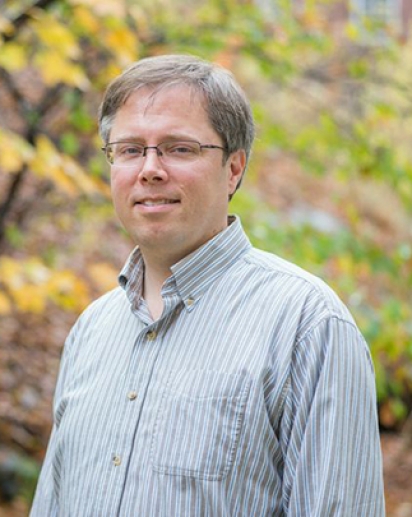
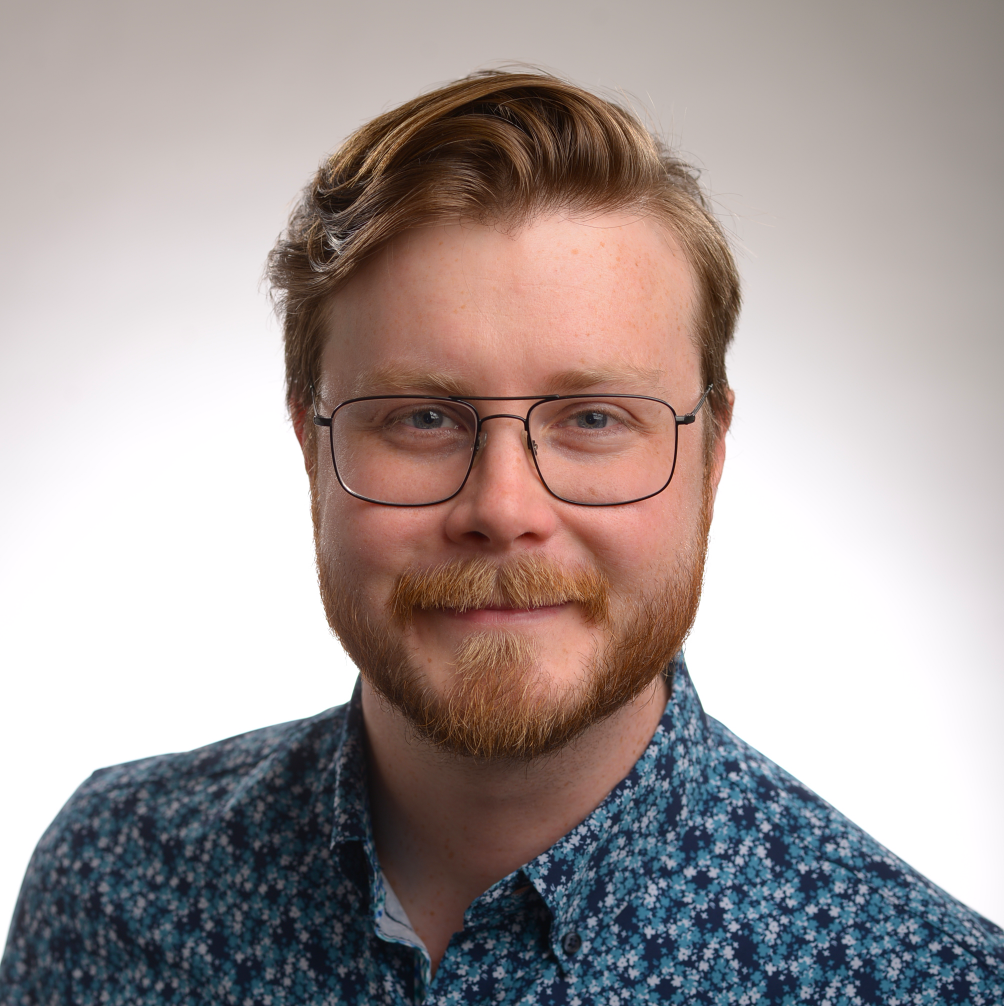
Jonathan W. Chipman is an Adjunct Assistant Professor at Dartmouth College and Director of the Citrin Family GIS/Applied Spatial Analysis Laboratory. He holds an A.B. from Dartmouth College and M.S./Ph.D. from the University of Wisconsin-Madison. Specializing in geospatial science, his work integrates remote sensing, GIS, and spatial analysis to study environmental and social systems. Research focuses include lake optical properties via satellite imagery, land-use changes in Egypt/China, vegetation dynamics in southern Africa, and socio-spatial segregation patterns in the US. Education: A.B., Dartmouth College M.S., University of Wisconsin-Madison Ph.D., University of Wisconsin-Madison Research Interests: Chipman applies geospatial tools to environmental challenges, including climate change impacts on glaciers, land-cover transformations, and socio-environmental linkages. His work bridges disciplines like hydrology, ecology, and public health through innovative GIS methods. Recent projects explore tropical glacier dynamics, greenspace health correlations, and malaria endemicity patterns. Key Article Trends: Publications emphasize remote sensing applications in glaciology, environmental toxicology, and socio-environmental systems. Themes include satellite-based monitoring of river systems, glacier classification in High Mountain Asia, and GIS-driven analysis of human health exposures tied to land cover. Lab & Collaborations: Leads the Citrin Lab, focusing on applied spatial analysis. Courses taught include GEOG 54 (Geovisualization) and EARS 77 (Environmental GIS). Active in 3D landscape modeling collaborations via SketchFab and Google Scholar.
Peter D. Ditlevsen is a Professor at the Niels Bohr Institute , University of Copenhagen, specializing in Physics of Ice, Climate and Earth (PICE) . With a background in theoretical physics, he transitioned to climate dynamics and turbulence. Dr. Scient (2004), University of Copenhagen PhD (1991), Technical University of Denmark Research Interests : Focuses on Tipping Points in the Earth System , especially AMOC collapse , using stochastic dynamical systems , alpha-stable processes , and nonlinear climate modeling . His work bridges climate physics , dynamical meteorology , and time series analysis . Recent Publications : 2025 work on ice-core-based Dansgaard–Oeschger event modeling , 2024 studies on AMOC multistability and complex system predictability , and 2023 Nature Communications paper on AMOC collapse early warning (cited 4000+ times in media). Scientific Leadership : Leads CriticalEarth H2020 (2021-24) and contributed to TiPES (2019-23). Holds Carlsberg Fellowship and Ole Rømer Prize . Outreach : Produces weekly climate science podcast with David Trads, delivers 4-6 public lectures/year, and has appeared in 40+ media outlets. Teaches Electrodynamics , Thermodynamics , and Turbulence courses.
Amy Bonsor is an Official Fellow and Director of Studies in Natural Sciences (Physical) at Queens' College, University of Cambridge. Her academic work focuses on the intersection of astronomy and planetary science, particularly examining the composition and evolution of planetary systems through the lens of white dwarf pollution. Dr. Bonsor's research primarily centers on understanding the composition of exoplanetary material by studying polluted white dwarfs. Her work combines observational astronomy with theoretical modeling to investigate planetary debris disks, tidal interactions, and the geochemical signatures of accreted planetary material. She has made significant contributions to understanding how white dwarfs can serve as cosmic laboratories for studying the bulk composition of exoplanetesimals, including their differentiation processes and volatile content. Her recent publications reveal a strong emphasis on the chemical analysis of planetary material through white dwarf spectroscopy, with particular attention to mineralogy, elemental abundances, and the implications for planetary formation and evolution. She has pioneered approaches combining machine learning with traditional astronomical techniques to categorize and interpret white dwarf spectral data at scale. As Director of Studies in Natural Sciences at Queens' College, Dr. Bonsor plays a key role in undergraduate education within the Physical Sciences track of Cambridge's renowned Natural Sciences Tripos. Her leadership position indicates her standing within the Cambridge academic community and her commitment to nurturing the next generation of scientists.
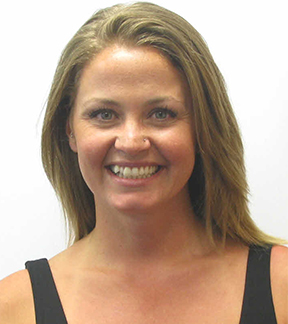
Tiffany Roberts Briggs serves as Chair and Associate Professor in the Department of Geosciences at Florida Atlantic University. Her academic foundation includes a Ph.D. (2012), M.S. (2008), and B.S. in Environmental Science with Honors (2006), all from the University of South Florida. Her research centers on coastal geomorphology and sedimentology , with critical focus on beach-dune-nearshore system responses to natural events like hurricanes and anthropogenic interventions including coastal engineering. Key specialties include beach morphology evolution, microplastics in coastal sediments, sea turtle habitat characterization, and coastal resilience strategies. Current projects involve Hurricane Ian impact analysis, regional sediment management, and decadal-scale inlet dynamics. Teaching portfolio spans undergraduate and graduate courses including Physical Geology, Coastal and Marine Science, Shore Erosion & Protection, and specialized topics in beach morphodynamics. She actively mentors graduate students through directed research courses and supervises thesis work evident in her co-authored publications with student researchers. Briggs directs research at the Coastal Studies Lab and leads field investigations across Southeast Florida coastlines. Her work integrates advanced methodologies including LiDAR, aerial imagery, and GIS modeling for coastal change assessment. Recent publications reveal strong collaboration with agencies like USACE and NOAA, particularly in post-hurricane damage evaluation and community resilience planning.
Vishnu S Nair serves as Assistant Professor (Grade I) in the School of Earth, Environmental and Sustainability Sciences at IISER Thiruvananthapuram since January 2024, following postdoctoral positions at IRD-France (2022-2023) and UC Berkeley (2019-2021). His research bridges tropical meteorology and climate science with practical applications for monsoon forecasting and climate adaptation. Education PhD in Meteorology & Oceanography, ESSO-INCOIS/Andhra University (2011-2017) Dr. Nair's research centers on monsoon low-pressure systems, investigating their historical variability, climate change impacts, and connections to extreme rainfall events. He develops advanced tracking algorithms and dynamical downscaling techniques to improve climate projections for vulnerable regions like South Asia and Pacific Islands. His work integrates observational analysis, climate modeling, and real-time forecasting systems to address critical questions about monsoon dynamics under global warming. His 14 publications (2014-2023) reveal consistent focus on monsoon system behavior, with recent work emphasizing future projections of low-pressure systems and observed increases in extreme rainfall rates. Key methodologies include high-resolution modeling, global dataset creation, and teleconnection analysis between monsoons and phenomena like ENSO and IOD. Scientific Recognition Gold Medal for Best PhD Thesis, Andhra University (2018) Junior Research Fellowship with Lectureship, CSIR-UGC (2011) CLIPSSA Postdoctoral Fellowship at IRD-France (2022-2023) Monsoon Mission Postdoctoral Fellowship at UC Berkeley (2019-2021) Dr. Nair actively recruits PhD candidates (requiring CSIR-JRF/GATE fellowships) and offers winter/summer internships in tropical meteorology. His research is supported by international projects including CLIPSSA for Pacific Island climate adaptation and India's Monsoon Mission for forecasting improvements. He contributes to global monsoon datasets used by meteorologists worldwide and serves as referee for leading journals like Geophysical Research Letters . He leads the Monsoon Dynamics Research Group at IISER-TVM, collaborating with institutions including Météo-France, UC Berkeley, and Indian climate research centers. Current initiatives focus on dynamical downscaling for island-scale climate projections and real-time tracking systems for monsoon low-pressure systems.
Summer Rupper is a Professor at the School of Environment, Society & Sustainability at the University of Utah, where she has held her position since July 2019. Her research focuses on understanding the interactions between climate, glaciers, and water resources, with particular emphasis on high mountain regions including High Mountain Asia, the Himalayas, and polar regions. She leads multiple research projects examining glacier dynamics, hydrological processes, and climate change impacts on water security for downstream populations. BS in Geology from Brigham Young University (2001) MS in Geology from University of Washington (2004) PhD in Earth and Space Sciences from University of Washington (2007) Professor Rupper's research spans physical geography, environmental geoscience, and climate change science, with specific expertise in glaciology, hydrology, and atmospheric sciences. Her work integrates field measurements, remote sensing, and numerical modeling to understand glacier dynamics, snow processes, and water resource availability in mountainous regions. She has particular expertise in High Mountain Asia, where glaciers provide critical water resources for over a billion people. Her research addresses fundamental questions about glacier response to climate change, hydrological partitioning, and the implications for water security in vulnerable regions. Her recent publications demonstrate a consistent focus on understanding glacier dynamics, hydrological processes, and climate interactions in mountainous regions. The work spans multiple methodologies including remote sensing analysis, numerical modeling, statistical approaches, and field-based measurements. Key themes include glacier melt contributions to river systems, precipitation patterns in complex terrain, snow density modeling, and the impacts of climate change on water resources in High Mountain Asia and polar regions. Her research often integrates multiple data sources and approaches to address complex questions about cryospheric processes and their societal implications. Superior Research Award (2024, CSBS, University of Utah) G.K. Gilbert Award for Excellence in Geomorphic Research (2022) Outstanding Utah Higher Education Science Teacher (2021) Top Researcher Award, Celebrate U showcase (2017) Antarctic Service Medal (2010, USAF) Professor Rupper actively mentors graduate students through thesis research courses at both the PhD and Master's levels, as well as individual projects. She has secured significant research funding from multiple federal agencies including NSF, NASA, and USAID, with current projects examining climatic controls on Antarctic ice sheets, glacier dynamics in High Mountain Asia, and historical glacier changes. Her collaborative work extends across international boundaries, working with scientists in Pakistan, Bhutan, and other regions to address shared water security challenges. She also engages in community outreach through workshops with school districts and science teacher associations to communicate climate science to broader audiences. Professor Rupper participates in multiple collaborative research teams including the NASA High Mountain Asia Team (HiMAT), where she contributes expertise in glacier dynamics and hydrology. She serves on several scientific committees including the NSF Ice Core Facility Sample Allocation Committee and the American Geophysical Union Cryosphere Section Fellows Committee. Her research often involves interdisciplinary teams combining expertise in glaciology, hydrology, remote sensing, and climate modeling to address complex questions about mountain water systems under changing climate conditions.
Xueheng Shi is an Assistant Professor in the Department of Statistics at the University of Nebraska-Lincoln (UNL), with a joint appointment in Biological System Engineering . He joined UNL in August 2022 after postdoctoral positions at UC Santa Cruz (2020–2021) and UC Davis (2021–2022) under mentors Robert Lund, Alexander Aue, and Thomas Lee. Dr. Shi teaches graduate courses including mathematical statistics, asymptotic theory, probability, stochastic processes, and time series analysis. Research Interests: Dr. Shi's work focuses on developing statistical methodologies for time series analysis , changepoint detection , and high-dimensional data . Key applications include climate science, signal processing, and machine learning. His research emphasizes computational algorithm development and theoretical foundations across domains like climate modeling and stochastic optimization. Publications: Recent articles (2019–2024) concentrate on climate change detection , particularly global warming trends and temperature series analysis. Methodological innovations include autocovariance estimation around changepoints, comparative studies of detection algorithms, and reviews of best practices in climatological statistics. Dominant themes are changepoint techniques, environmental data diagnostics, and statistical computing. Advising: Dr. Shi actively mentors graduate students in statistics and invites prospective applicants interested in his research areas to contact him directly.
Dr. Armin Agha Karimi is a Lecturer in the School of Surveying and Built Environment at the University of Southern Queensland. He holds a BSc in Civil Engineering from Tabriz University, an MSc from Middle East Technical University (METU), and a PhD from the University of Newcastle. His research focuses on spatial data integration, cadastral systems modernization, environmental monitoring using remote sensing, and sea level variability analysis. Key research interests include 3D cadastral boundaries in BIM environments, digital twin applications in built environments, and the impact of hydrological loading on land motion. He has contributed to studies on erosion hotspot mapping in Queensland and the implications of coal seam gas activities on land subsidence. His work on Baltic Sea sea level dynamics and Australian coastal projections has advanced understanding of climate-driven environmental changes. Dr. Karimi is affiliated with the Centre for Sustainable Agricultural Systems and actively publishes on geomatics, climate science, and legal aspects of digital surveying. His recent articles highlight innovations in VR-ready survey data transformation and the legal challenges of electronic cadastral plans.
Dr. Ian Walker is a Professor in the Department of Geography at the University of California, Santa Barbara (UCSB). He specializes in physical geography and geomorphology, with expertise in sediment transport, coastal and aeolian processes, environmental fluid dynamics, and dune ecosystem restoration. He holds a B.Sc. in Geography and Environmental Science from the University of Toronto and a Ph.D. in Geography from the University of Guelph, Canada. Prior to UCSB, he served as faculty at Arizona State University and the University of Victoria (Canada). His research focuses on coastal and desert environments, employing field and lab methods such as terrestrial laser scanning (TLS), unmanned aerial systems (UAS), wind tunnel simulations, and computational fluid dynamics (CFD). Key projects include dust emissions mitigation at Oceano Dunes (collaborating with California Department of Parks) and invasive plant removal studies in Humboldt Bay. He has secured over $6M in research funding and advised over 40 students/post-docs. Education: B.Sc. (University of Toronto), Ph.D. (University of Guelph) Editorial Roles: Earth Surface Processes & Landforms , Annals of the American Association of Geographers , Journal of Coastal Research Professional Affiliations: Member of NASEM Scientific Advisory Panel for Owens Valley Dust Studies His articles emphasize coastal morphodynamics, restoration strategies, and climate change impacts. Notable work includes comparing UAS/TLS methods for geomorphic change detection and modeling airflow over dunes using CFD. He teaches courses on physical geography, geomorphology, and remote sensing. Grants and partnerships include collaborations with US Fish & Wildlife Service, NOAA, and state agencies. His lab focuses on integrating geospatial technologies with field experiments to address coastal sustainability challenges.
Dr. Stella Pytharouli is a Senior Lecturer in Civil and Environmental Engineering at the University of Strathclyde. With over 20 years of expertise in structural and ground deformation monitoring/analysis, her research focuses on subsurface characterization and slope instability early warning systems through microseismic monitoring, geodetic technologies, and machine learning integration. MEng (2002) - University of Patras MSc (2004) - University of Patras PhD (2007) - University of Patras Her research combines advanced signal processing with geodetic monitoring (terrestrial/aerial) to develop AI-driven solutions for UK landslide sites. Key areas include: Microseismic monitoring of weak seismic events Geometric and kinematic analysis of ground deformations Integration of geotechnical data with machine learning Climate change impact on slope stability Low-cost sensor development for environmental monitoring Recent publications highlight her work on AI-based seismic classification models, tiltmeter applications, and 3D reconstruction techniques. Her group includes 4 PhD students and 1 postdoc. Scientific recognitions include: Geophysical Research Letters front cover selection (2011) EOS Research Spotlight (2019) Lampadarios Prize from Academy of Athens (2009) TOPCON Award for young researchers (2008) As Director of Postgraduate Research (2020-present), she supervises PhD students and teaches land surveying modules. Current projects address slope stability analysis, climate change correlations, and seismic data automation.
Fraser King is an incoming Assistant Professor in the Department of Atmospheric and Oceanic Sciences (AOS) at the University of Wisconsin–Madison, starting in Winter 2026. He holds a PhD in Machine Learning and Remote Sensing of Precipitation from the University of Waterloo (2022) and is currently a postdoctoral research associate at NASA Goddard Space Flight Center. His research integrates machine learning with atmospheric physics to advance precipitation and snowfall retrieval, cloud microphysics, and climate modeling. He has held research positions at the University of Michigan and NASA Jet Propulsion Laboratory. His research interests include: Climate and Climate Change Radiation and Remote Sensing Synoptic Meteorology Atmospheric and Cloud Physics Large Scale Dynamics Machine Learning and Model Interpretability Arctic Snowfall Prediction His recent publications reflect a strong trend in applying deep learning (e.g., U-Net, CNNs) and unsupervised methods (PCA, t-SNE, UMAP) to radar and satellite data for precipitation and snow microphysics. Key themes include radar gap inpainting, melting layer detection, and dimensionality reduction for physical interpretation. His work bridges geoscience and AI, aiming for interpretable models that enhance physical understanding. Scientific awards and professional service include: Finalist for the 2023 Governor General's Gold Medal, University of Waterloo Associate Editor, Journal of Atmospheric and Oceanic Technology (AMS) Member, AMS Committee on Artificial Intelligence Applications to Environmental Science Executive Council Member, AGU Precipitation Technical Committee Executive Member, Eastern Snow Conference Research Board Fraser King has mentored students through research projects and led educational initiatives such as a 12-week course on machine learning for land cover classification. He has secured research experience through internships at Aquanty Inc. and multiple NASA-affiliated institutions. He founded MapsByFraser, a company combining cartography and satellite data, and has collaborated with Google's Quantum AI team. His technical skills span Python, deep learning frameworks, and high-performance computing platforms. He leads several major research projects: Towards Interpretable Physical Models : Using sparse autoencoders and nonlinear dimensionality reduction to interpret geoscience models. Microphysical Dimensionality Reduction : Applying PCA, t-SNE, and UMAP to identify physical modes in precipitation data. BlindPaint : A U-Net for radar gap inpainting in spaceborne systems. DeepPrecip : A deep learning model for surface precipitation retrieval. iPhone LiDAR : Using consumer smartphones for snow depth measurement via drones. NRCan Machine Learning Land Cover Classifier : Training ML models on Sentinel-2 data. Climate Model Calibration : Using ML to correct biases in snow-related climate variables. CloudSat Snowfall Validation : Validating high-latitude snowfall estimates. Snow Modelling : A Rust-based physical/temperature-index snow model.
Bernardo Tellini is a Full Professor of Electrical and Electronic Measurements at the Department of Energy, Systems, Land, and Construction Engineering (DESTEC) at the University of Pisa, where he also serves as Vice-Rector for Doctoral Research. He has held this institutional role since 2020, overseeing doctoral program planning, accreditation, and admission procedures. Previously, he chaired the doctoral program in Energy, Electrical, and Thermal Engineering from 2012 to 2016 and served on the Leonardo da Vinci Doctoral School in Engineering from 2008 to 2016. Education: PhD in Electrical Engineering, University of Pisa (1999) Degree in Electrical Engineering, University of Pisa (1993) Postdoctoral research at Karlsruhe Research Center for Technology and Environment Industry experience at ABB Tellini's research focuses on electrical and magnetic measurement methodologies for high-power pulsed applications, characterization of electrical and magnetic properties of materials, aging processes in battery cells, and electromagnetic emissions from power circuits. His work spans from fundamental measurement theory to practical industrial applications, particularly in railway technologies where he represents the University on the Steering Committee of the District for Railway Technologies, High-Speed, and Network Safety in Tuscany. He has served as president of the European Pulsed Power Laboratories agreement and chaired major IEEE conferences including I2MTC 2015 and MELECON 2020. His recent publications reveal a strong emphasis on RFID-based localization systems , nanoparticle-enhanced optical sensors , and advanced battery characterization techniques . The research trajectory shows increasing integration of measurement science with emerging technologies like plasmonic sensing, microwire-based transducers, and smart systems for industrial monitoring. His team has developed innovative approaches for battery health monitoring under vibration stress, temperature sensing using magnetic materials, and precise localization methods using phase-based RFID systems. Professional Service: President of Italian Section of IEEE (2019-2021) Scientific director of Pisa research unit in Association of Electrical and Electronic Measurements (GMEE) Member of Certification Committee of Italcertifer SpA (since 2019) Representative on District for Railway Technologies Steering Committee (since 2013) Tellini has authored approximately 200 publications in international journals and conference proceedings. His leadership extends to academic governance through roles on the DESTEC Department Human Resources Committee and various university committees overseeing scientific qualifications and doctoral programs. His research bridges theoretical measurement principles with practical engineering solutions for energy systems, transportation infrastructure, and industrial monitoring applications.
David Seckel is a Professor of Physics & Astronomy at the University of Delaware, affiliated with the College of Arts & Sciences. His research focuses on cosmic rays, neutrino astrophysics, and the development of large-scale observatories like the IceCube Neutrino Observatory and the ANITA detector. He has contributed to studies of ultra-high-energy cosmic rays, neutrino detection techniques, and cosmological implications of particle interactions. Key research areas include analyzing atmospheric and astrophysical neutrino fluxes, probing cosmic ray composition via air shower measurements, and investigating neutrino emission from active galactic nuclei. His work leverages advanced detector technologies and machine learning methods for data analysis. Collaborations include the IceCube Collaboration, RNO-G radio array, and the PUEO payload for airborne neutrino detection.
Karianne Bergen is an Assistant Professor of Data Science and Earth, Environmental & Planetary Sciences at Brown University, with a courtesy appointment in Computer Science. She leads the Scientific Machine Learning (SciML) Research Group, affiliated with the Data Science Institute (DSI), DEEPS, and the SciAI Center. Her research focuses on scientific machine learning (SciML), including surrogate models for climate science, explainable AI (XAI), and foundation models. She holds a Ph.D. and M.Sc. in Computational and Mathematical Engineering from Stanford University and a B.Sc. in Applied Mathematics from Brown University. Her postdoctoral training included a Harvard University HDSI fellowship in Computer Science. Education: B.Sc. Applied Mathematics, Brown University (2009) M.Sc. Computational and Mathematical Engineering, Stanford University (2015) Ph.D. Computational and Mathematical Engineering, Stanford University (2018) Research Interests: Dr. Bergen’s work bridges machine learning and Earth sciences, emphasizing scalable methods for climate modeling and geophysical data analysis. Her group develops emulators for Antarctic ice sheet dynamics, XAI frameworks for climate data interpretation, and scientific foundation models for geoscience applications. Recent projects include GAN-based sea ice resolution enhancement and flow-based neural networks for sea level projections. Awards: Harvard Data Science Initiative Postdoctoral Fellowship (2018–2020) Stanford Graduate Fellowship in Science and Engineering (2011–2015) Outstanding Student Paper Award, American Geophysical Union (2015) Advising & Collaborations: She mentors PhD students in Earth, Environmental, and Planetary Sciences and collaborates with institutions like MIT-Lincoln Laboratory, SciAI Center, and international geoscience groups. Her lab includes postdocs (e.g., Hilarie Sit) and alumni from data science practicum programs. Labs/Teams: The SciML group at Brown University focuses on multidisciplinary projects at the intersection of AI and Earth sciences, with recent presentations at AGU Fall Meetings and the AI for Science Workshop at ICML.
Maria Christina Mariani is a Professor and Department Chair in the Department of Mathematical Sciences at the University of Texas at El Paso (UTEP). Her interdisciplinary research bridges mathematics with applications in public health, geophysics, physics, and finance, with a focus on developing novel mathematical models for complex data analysis. Dr. Mariani earned her Ph.D. in Mathematics from the University of Buenos Aires in 1992, where she received an Outstanding dissertation award. She also holds an M.S. in Physics (1996) and an M.S. in Mathematics (1987), both from the University of Buenos Aires with highest honors. Her research interests span Applied Mathematics, Nonlinear partial differential equations, Stochastic differential equations, Machine Learning techniques, Mathematical Finance, Mathematical Physics, and Numerical Methods. She has developed mathematical models for medical data analysis (particularly breast cancer, heart disease, and prostate cancer), seismic and explosive data, and financial markets. Her work emphasizes the development of mathematical models to enhance understanding of medical data and extreme events in various phenomena. Dr. Mariani's recent research focuses on applying machine learning and stochastic models to complex data sets across multiple domains. Her work demonstrates consistent innovation in developing novel algorithms for medical diagnosis and prognosis, analyzing seismic data, and modeling financial markets using Levy processes, Ornstein-Uhlenbeck models, and wavelet techniques. She has mentored numerous students throughout her career, including PhD candidates, MS students, and post-doctoral researchers, demonstrating her commitment to academic development and knowledge transfer. Dr. Mariani has served as Department Chair and holds the Shigeko K. Chan Distinguished Professor title in Mathematical Sciences, reflecting her significant contributions to the field and institution.