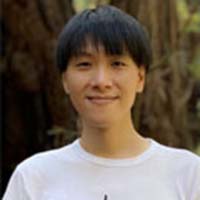
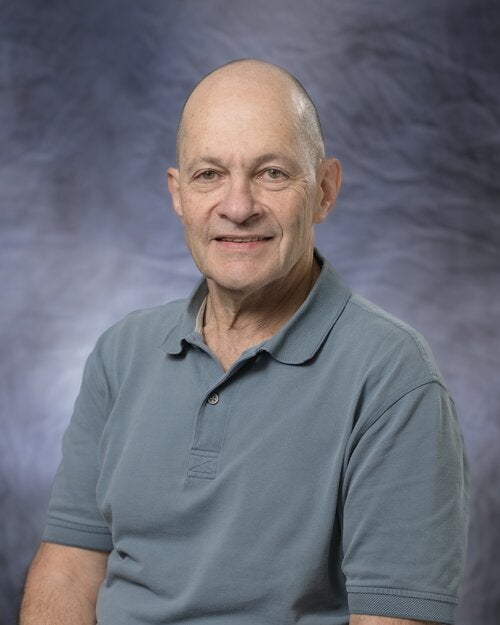
Min Chen is an Assistant Professor in the Department of Forest and Wildlife Ecology at the University of Wisconsin–Madison, affiliated with the Russell Labs. His research focuses on terrestrial ecosystem modeling, remote sensing applications, and human-Earth system interactions. He holds a PhD in Earth & Atmospheric Sciences from Purdue University, an MS in Remote Sensing and GIS from Beijing Normal University, and a BS in Computer Science from Beijing Normal University. His postdoctoral work included roles at the Carnegie Institution for Science and Harvard University. Research interests include forest carbon dynamics, methane emissions from wetlands, wildfire risk analysis, and the integration of remote sensing with Earth system models. His work emphasizes advancing methods for global-scale environmental monitoring using satellite and drone technologies. Notable contributions include studies on forest edge dynamics, vegetation-climate feedbacks, and the application of machine learning in ecological modeling. Recent publications highlight advancements in leaf trait prediction using transfer learning, global wetland methane flux modeling, and the impacts of climate change on land-use patterns. His lab develops innovative approaches to track terrestrial carbon cycles and assess human-driven environmental changes. Ongoing projects explore urban land expansion effects on carbon balances and phenological shifts under global change scenarios.
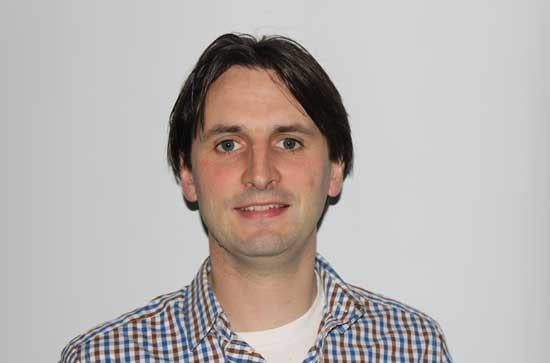
Philipp Schlatter is a Professor in the Department of Mechanics at KTH Royal Institute of Technology. His research focuses on fluid mechanics, turbulence, and computational fluid dynamics (CFD), with expertise in high-performance computing and direct numerical simulations (DNS). He leads projects involving scalable CFD frameworks like Neko and Nek5000, and investigates turbulent boundary layers, flow control, and coherent flow structures. His work includes experimental and numerical studies of wing profiles, rotating systems, and transition dynamics. Schlatter teaches courses on computational fluid dynamics and turbulence, emphasizing both theoretical and practical aspects of fluid mechanics. Key research interests include developing numerical methods for high-fidelity simulations, understanding turbulence mechanisms, and optimizing flow control strategies. His contributions span aerodynamics, heat transfer, and the application of machine learning to fluid dynamics problems. Schlatter collaborates extensively on interdisciplinary projects, leveraging advanced computing resources to address complex fluid flow phenomena. Publications highlight advancements in DNS frameworks, Bayesian optimization for flow control, and analysis of turbulent structures in pipe and boundary layer flows. His research also addresses challenges in measurement techniques and uncertainty quantification in CFD simulations.
Dr. Laura Gulia is a Researcher at the Swiss Seismological Service (SED) affiliated with ETH Zurich. As the Principal Investigator of the ERC Advanced Grant FARIA, her work focuses on statistical seismology, earthquake forecasting, and induced seismicity. She pioneered the Foreshock Traffic Light System (FTLS), a real-time tool to distinguish between aftershock decay and foreshock sequences, published in Nature (2019) and further developed in Seismological Research Letters (2024). Her research emphasizes b-value analysis, data quality validation, and correlations between seismic activity and reservoir compaction rates in induced seismicity. Key Affiliation: Swiss Seismological Service (SED), ETH Zurich Grants: ERC Advanced Grant FARIA Her research interests include: - Real-time seismic hazard assessment - Artifact detection in seismic catalogs - Macroseismic data analysis using citizen-reported intensity data - Link between gas production and induced seismicity in Groningen Her publications demonstrate advancements in: - Foreshock/aftershock differentiation algorithms - Quantifying induced seismicity risks through b-value metrics - Integrating citizen science data for rapid earthquake response Awards: ERC Advanced Grant FARIA (2020) Advising and Collaborations: - Leading the FTLS development team at SED - Collaborating with European Mediterranean Seismological Centre (EMSC) on real-time macroseismic systems - Contributing to the Groningen gas field seismicity monitoring Labs/Teams: - Swiss Seismological Service (SED) research group - ERC-funded FARIA project consortium
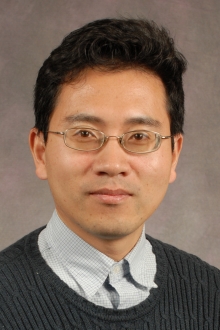
Jack Huizenga is an Associate Professor in the Department of Mathematics at The Pennsylvania State University. His research focuses on algebraic geometry, particularly Hilbert schemes of points, moduli spaces of vector bundles, and interpolation problems. He is a co-organizer of the Algebra and Number Theory Seminar at Penn State. Education: Ph.D., Harvard University (2012). He has designed courses introducing algebraic geometry through linear algebra and interpolation problems, such as Polynomial Interpolation: An Introduction to Algebraic Geometry . Research Interests: Algebraic Geometry, with a focus on Brill-Noether theory, moduli spaces, vector bundles on surfaces, and birational geometry. His work explores geometric structures like Hilbert schemes, projective plane blowups, and stability conditions of sheaves. Publications highlight advanced topics in algebraic geometry, including cohomology of vector bundles, Seshadri constants, and geometric interpolation problems. He has collaborated extensively with researchers like Izzet Coskun on foundational problems in moduli spaces and stability conditions. No scientific awards are explicitly listed in the provided information. His advising and grant activities are not detailed here, though he has authored lecture notes and exercises for specialized courses. He maintains a research website at https://sites.psu.edu/jhuizenga/ .
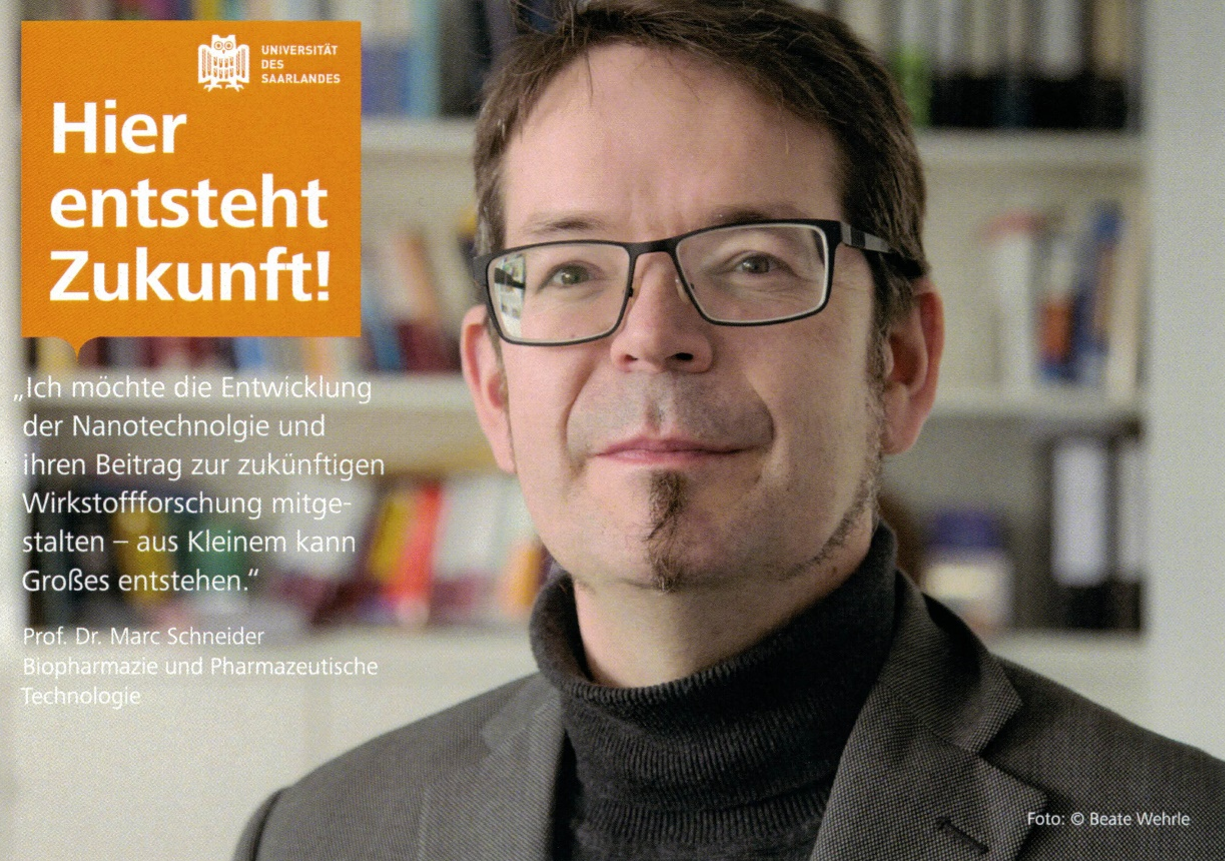
Prof. Dr. Marc Schneider holds a professorship in Biopharmaceutics and Pharmaceutical Technology at Saarland University's College of Pharmacy . His research focuses on colloidal drug delivery systems, particularly nanostructured and non-spherical particle engineering for overcoming biological barriers in pulmonary and transdermal applications. He leads an internationally recognized lab in Saarbrücken, collaborating with Helmholtz Institute for Pharmaceutical Research Saarland (HIPS) and trinational institutions. Research Highlights: Development of inhalable nano/microparticle systems Surface modification of gelatin nanoparticles Characterization of mucus-penetrating particles 3D printing for microneedle fabrication Atomic Force Microscopy (AFM) for nanoparticle analysis Selected Scientific Awards: European Journal of Pharmaceutics and Biopharmaceutics Best Paper Award (2018) for mucus-penetrating nanoparticles Recognized in 'Ausgezeichnete Orte im Land der Ideen' competition (2018) for 'Nano-Mais' drug delivery system Collaborative Networks: Co-editor for Advanced Drug Delivery Reviews special issue on biological barriers Key participant in trinational Master's program in Biomedicine with Strasbourg, Mainz, and Luxembourg Active in Controlled Release Society (CRS) conferences and local chapters
Dr. Zhigang Peng is a Professor in the School of Earth & Atmospheric Sciences at Georgia Institute of Technology, part of the College of Sciences. His research focuses on seismicity dynamics, fault zone imaging, and data science applications in geophysics. He holds a Ph.D. in Geological Sciences from the University of Southern California (2004), an M.S. in Electrical Engineering (2002), and a B.S. in Geophysics from the University of Science and Technology of China (1998). Dr. Peng’s work spans seismological studies of earthquake triggering mechanisms, fault zone structures, and deep-focus earthquakes. He has pioneered dense seismic array techniques to image fault systems and employs machine learning for event detection and phase picking. His recent projects include analyzing the 2023 Kahramanmaraş earthquake sequence in Türkiye and the 2024 Noto earthquake in Japan. He leads initiatives like the Center for Collective Impact in Earthquake Science (C-CIES), promoting inclusive scientific collaboration. Research Highlights: Fault zone imaging, dynamic triggering, AI-driven seismology Labs: ES&T 2235 (Seismology Lab), ES&T 2256 (Office) His awards include the 2002 AGU Outstanding Student Paper Award. He actively contributes to earthquake hazard assessment, nuclear explosion monitoring, and volcano-seismic interactions, with over 150 peer-reviewed publications.
John McDonald is a Professor in the Department of Computer Science at Maynooth University, where he has held a faculty position since 2001. He is affiliated with the Maynooth University Hamilton Institute and the Assisted Living and Learning Institute (ALL). His research focuses on computer vision, robotics, and AI, emphasizing spatial perception and autonomous systems. He has contributed to areas such as visual SLAM, intelligent vehicle systems, and digital holography, with funding from SFI, EU, and other agencies. Currently, he is a Funded Investigator in Lero (SFI Research Centre for Software) and collaborates on the SFI Blended Autonomy Vehicles Spoke. Key research themes include simultaneous localization and mapping (SLAM), robotic navigation, 3D reconstruction, and applications in autonomous driving. His work integrates cutting-edge techniques in computer vision and machine learning to address challenges in spatial intelligence and perception. Publications highlight advancements in dense mapping, fisheye camera systems, and geospatial analysis. He has held visiting roles at MIT’s CSAIL and the National Centre for Geocomputation. His contributions span academic journals, conferences, and technical reports, reflecting a strong emphasis on both theoretical and applied robotics research. John McDonald has supervised numerous research projects and contributed to initiatives like the John and Pat Hume Doctoral Scholarships. His work bridges academia and industry, with a focus on real-world applications of autonomous systems and AI-driven robotics.
Piotr Koniusz is a Principal Research Scientist at Data61/CSIRO and an Honorary Associate Professor at the Australian National University (ANU), with an Adjunct role at UNSW. He holds a PhD in Computer Vision from the University of Surrey (2013) and a BSc from Warsaw University of Technology (2004). His research focuses on Foundation Models, Representation Learning, and Few-shot Learning, with contributions to Graph Neural Networks and Adversarial Robustness. Key roles include Program Chair for NeurIPS’25, Senior Area Chair for ICML’25 and ICLR’25, and Workshop Co-Chair for WWW’25. Awards include the Sang Uk Lee Best Student Paper (ACCV’22) and recognition as an Outstanding Area Chair (ICLR 2021–2023). Research interests span Vision-Language Models (VLMs), Generative Adversarial Networks (GANs), and Domain Adaptation. He supervises PhD students at ANU and collaborates with industry on projects like traffic forecasting and ecotoxicology prediction.
Neil Lambert is a Professor of Theoretical Physics at King's College London's Department of Mathematics within the Faculty of Natural, Mathematical & Engineering Sciences. He previously held a PPARC Advanced Fellowship at King's and worked at CERN from 2010-2013. His research focuses on supersymmetry, string theory, and M-theory, particularly studying M2 and M5 branes, non-relativistic field theories, and non-Lorentzian spacetime symmetries. Education: BSc in Mathematics and Physics from the University of Toronto (1992), PhD in String Theory and Branes from the University of Cambridge (1996). Postdoctoral roles included positions at King's, ENS Paris, and Rutgers University. Recent work explores non-relativistic brane dynamics, AdS/CFT correspondence, and M-theory's microscopic degrees of freedom. He chairs the STFC-funded Fundamental Physics UK virtual centre and edits Physics Letters B . Key contributions include the BLG model for M2-branes and advances in understanding non-supersymmetric branes. Publications emphasize topics like null reductions of M5-branes, conformal field theories in 5D/6D, and non-Lorentzian symmetries. His research bridges string theory, quantum field theory, and geometry, with applications in holography and gauge-gravity duality.
Rune Haugseng is a Professor in the Department of Mathematical Sciences at NTNU in Trondheim, Norway, and a member of the Geometry and Topology research group. His work focuses on higher category theory, homotopy theory, and their applications to derived algebraic geometry and topological quantum field theories. He teaches courses such as a 2025 PhD course on higher categories and has supervised multiple PhD and Master’s students, including Louis Martini, Fredrik Bakke, and Tallak Manum. His research explores foundational aspects of ∞-categories and ∞-operads, with contributions to topics like symmetric monoidal structures, Segal spaces, and bispans. His articles often bridge abstract categorical frameworks with concrete applications in algebraic topology and mathematical physics. Haugseng has authored over 20 academic articles in journals such as Advances in Mathematics , Journal of Topology , and Publicacions Matemàtiques . He has also developed lecture notes on ∞-categories and operads, emphasizing pedagogical approaches to advanced topics. He is actively involved in academic collaborations, including with David Gepner, Joachim Kock, and Claudia Scheimbauer. His current teaching and supervision reflect a commitment to advancing research in higher categorical structures and their interdisciplinary applications.
Associate Professor Fiona O'Leary is affiliated with the University of Sydney's Sydney Nursing School and the Discipline of Nutrition and Dietetics within the Faculty of Medicine and Health. She holds membership in the Charles Perkins Centre's Brain and Body, Biology of Ageing, and Healthy Food Systems research nodes. Her academic qualifications include a PhD, BSc (Hons), and a Graduate Diploma in Nutrition and Dietetics. Her research focuses on dietary assessment, malnutrition, public health nutrition, and evidence translation for healthy ageing. Notable projects include the NHMRC-funded Maintain Your Brain dementia prevention trial and secondary analysis of the Australian National Nutrition Survey. She also leads initiatives in Tanzania and Zambia addressing childhood malnutrition through poultry and crop integration. Current research projects: Maintain Your Brain trial, dietary patterns analysis, COPD supplementation, and food security initiatives in Africa. Dr. O'Leary has 33 peer-reviewed publications, primarily in ageing and dementia. She teaches Medical Nutrition Therapy and coordinates the Dietetic Professional Studies course. Awards include Advanced Accredited Practising Dietitian status. Her advisory roles include associate supervision of PhD and MPhil students in nutrition and cognitive function, oral health, and biomarker panel development.
Tamas Hausel is a Professor at the Institute of Science and Technology Austria (IST Austria) , holding this position since 2016. He previously served as a Professor and Chair of Geometry at École Polytechnique Fédérale de Lausanne (EPFL) from 2012 to 2016, and held academic roles at the University of Oxford, University of Texas at Austin, University of California, Berkeley, and the Institute for Advanced Study, Princeton. PhD in Mathematics (University of Cambridge, 1999) Diploma in Mathematics (Eötvös Loránd University, Budapest, 1995) Research Focus: Hausel's work bridges algebraic geometry, geometric representation theory, and mathematical physics. His research explores moduli spaces in gauge theory, Higgs bundles, hyperkähler geometry, and the geometric Langlands duality. He has led major projects funded by the European Research Council and other prestigious bodies. Scientific Recognition: Hausel has been awarded two ERC Advanced Grants , the Whitehead Prize , and the Alfred Sloan Research Fellowship . He has delivered invited talks at the International Congress of Mathematicians and the International Congress on Mathematical Physics . 2026-2031: ERC Advanced Grant (EUR 2.5M) 2022-2025: FWF Standalone Grant (EUR 378K) 2013-2018: ERC Advanced Grant (EUR 1.3M) 2009-2013: EPSRC First Grant (GBP 414k) 2005-2013: Royal Society University Research Fellowship (GBP 530k) 2006-2010: NSF Standard Grant (USD 242k)
Rafał Latała is a distinguished Professor at the Institute of Mathematics, Faculty of Mathematics, Informatics and Mechanics, University of Warsaw, where he has held a full professorship since 2013. He is also a Corresponding Member of the Polish Academy of Sciences since 2016 and an AMS Fellow since 2013. His academic career spans over 25 years at the University of Warsaw, progressing from Instructor (1994-1997) to Assistant Professor (1997-2003), Associate Professor (2003-2012), and finally to his current position as Professor. Additionally, he held a part-time professorship at the Institute of Mathematics of the Polish Academy of Sciences from 2009-2012. His educational background includes a PhD in Mathematics from the University of Warsaw (1997) with a dissertation on estimation of moments of sums of independent random variables under the supervision of Professor Stanisław Kwapien, a Habilitation degree in Mathematics (2002), and the title of Professor awarded by the President of Poland (2009). He completed his MSc in Mathematics at the University of Warsaw in 1994. Latała's research focuses on the intersection of probability theory and geometric analysis, with particular expertise in convex geometry, functional analysis, asymptotic geometric analysis, and the theory of log-concave measures. His work bridges theoretical mathematics with applications in high-dimensional statistics and random matrix theory. He has made significant contributions to understanding moment inequalities, concentration phenomena, and the geometric structure of high-dimensional random objects. His recent work demonstrates increasing sophistication in handling complex relationships between different norms of random vectors and matrices. His publication record shows a consistent focus on probabilistic methods in geometric settings, with recent articles demonstrating advanced techniques for analyzing random matrices, log-concave measures, and canonical processes. The research trajectory reveals increasingly sophisticated methods for bounding norms and moments in high-dimensional spaces, with applications spanning theoretical mathematics to statistical learning theory. Kolmogorov Lecture 2024 Prize of the Foundation for Polish Science in mathematics, physics, and engineering sciences 2023 Orlicz Lecture 2023 Institute of Mathematics of the Polish Academy of Sciences Prize 2014 AMS Fellow since 2013 Foundation for Polish Science Grant Mistrz 2007-2011 Prime Minister Award for Habilitation Thesis 2003 Invited Speaker at International Congress of Mathematicians 2002 Latała has supervised five PhD students to completion (Rafal Meller, Marta Strzelecka, Jakub Wojtaszczyk, Radoslaw Adamczak, and Rafal Lochowski) and four MSc students (Maciej Bartczak, Dariusz Matlak, Tomasz Tkocz, and Marcin Lis). His editorial service includes positions at Probability Surveys (2024-26), The Annals of Probability (2015-20), and Studia Mathematica (2006-present). He has organized numerous international conferences including the High Dimensional Probability X conference in 2023 and served on various professional committees including the Central Commission for Academic Degrees and Titles.
Miklos Z. Racz is an Assistant Professor at Northwestern University with a joint appointment in the Department of Computer Science and the Department of Statistics and Data Science. He is affiliated with the IDEAL Institute. Previously, he was an Assistant Professor at Princeton University (ORFE Department) and a postdoc at Microsoft Research. His research focuses on probability, statistics, computer science, and information theory, with emphasis on combinatorial statistics, discrete probability, and applied probability. Key interests include statistical inference on random discrete structures like random graphs, community detection, latent geometry inference, and DNA data storage. He has advised numerous PhD and undergraduate students. Education: PhD in Statistics (UC Berkeley, 2015), MS in Computer Science (UC Berkeley), MS in Mathematics (Budapest University of Technology and Economics). Research interests span random graph theory, network analysis, information cascades, and computational biology. He teaches courses like Mathematical Foundations of Computer Science and Probability for Statistical Inference. His work has been published in top venues like Annals of Applied Probability, NeurIPS, and IEEE journals. Notable contributions include breakthroughs in graph matching algorithms for stochastic block models, community recovery, and DNA synthesis optimization. His research has practical applications in data storage and network science.
Steven Bradlow is a Professor in the Department of Mathematics at the University of Illinois at Urbana-Champaign (UIUC), affiliated with the College of Liberal Arts & Sciences. His research focuses on differential geometry, gauge theory, algebraic geometry, and topology, with particular emphasis on Higgs bundles, moduli spaces, and geometric structures. He holds a PhD from the University of Chicago (1988) and has held additional campus roles as a Professor of Mathematics. Research Interests: Bradlow’s work explores advanced topics such as holomorphic vector bundles, stability conditions, and geometric invariant theory. His studies of Higgs bundles integrate techniques from algebraic geometry, differential geometry, and mathematical physics, addressing questions related to moduli spaces, spectral curves, and representation varieties. He investigates exotic components of surface group representations and their connections to Teichmüller theory, contributing to the broader understanding of geometric structures and their topological properties. Recent Work Trends: Recent publications highlight his focus on Cayley correspondences, higher rank Teichmüller spaces, and uniformization techniques for branched surfaces. His collaborative projects often bridge algebraic and differential geometry, with applications to gauge theories and geometric analysis. He has also contributed to editorial work honoring peers like Karen Uhlenbeck and Oscar García-Prada. Grants & Advising: While specific grant details are not listed, Bradlow has been involved in NSF-funded initiatives (e.g., EMSW21-MCTP, RNMS: Geometric Structures). His advising contributions are reflected in co-authored works with students/postdocs such as Brian Collier and Oscar García-Prada. He is associated with research networks exploring geometric representation theory and mathematical collaborations. Labs/Teams: Active within UIUC’s Department of Mathematics, Bradlow collaborates with researchers in geometry and topology. His work often intersects with interdisciplinary groups studying geometric structures, though specific lab affiliations are not detailed here.