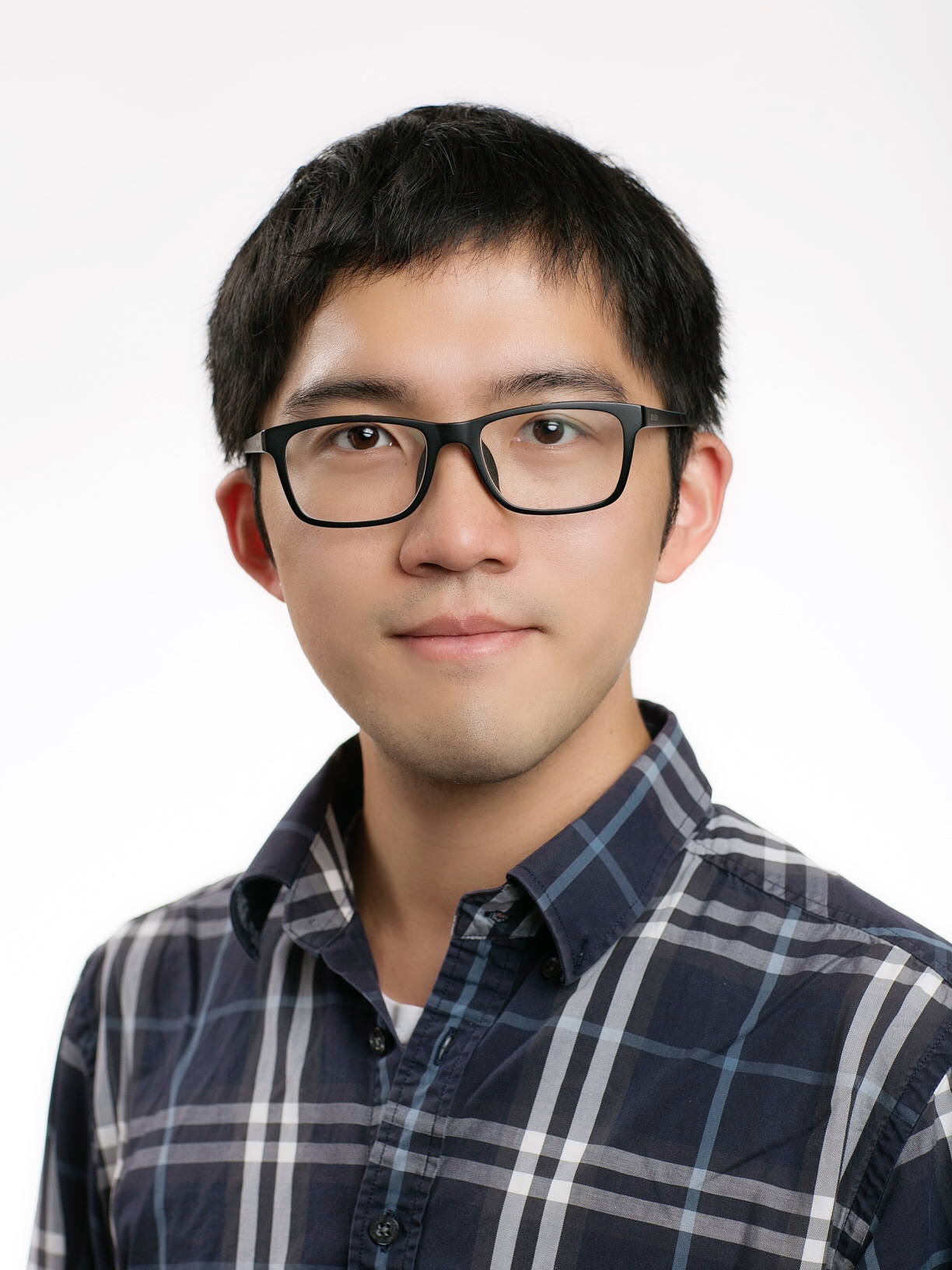
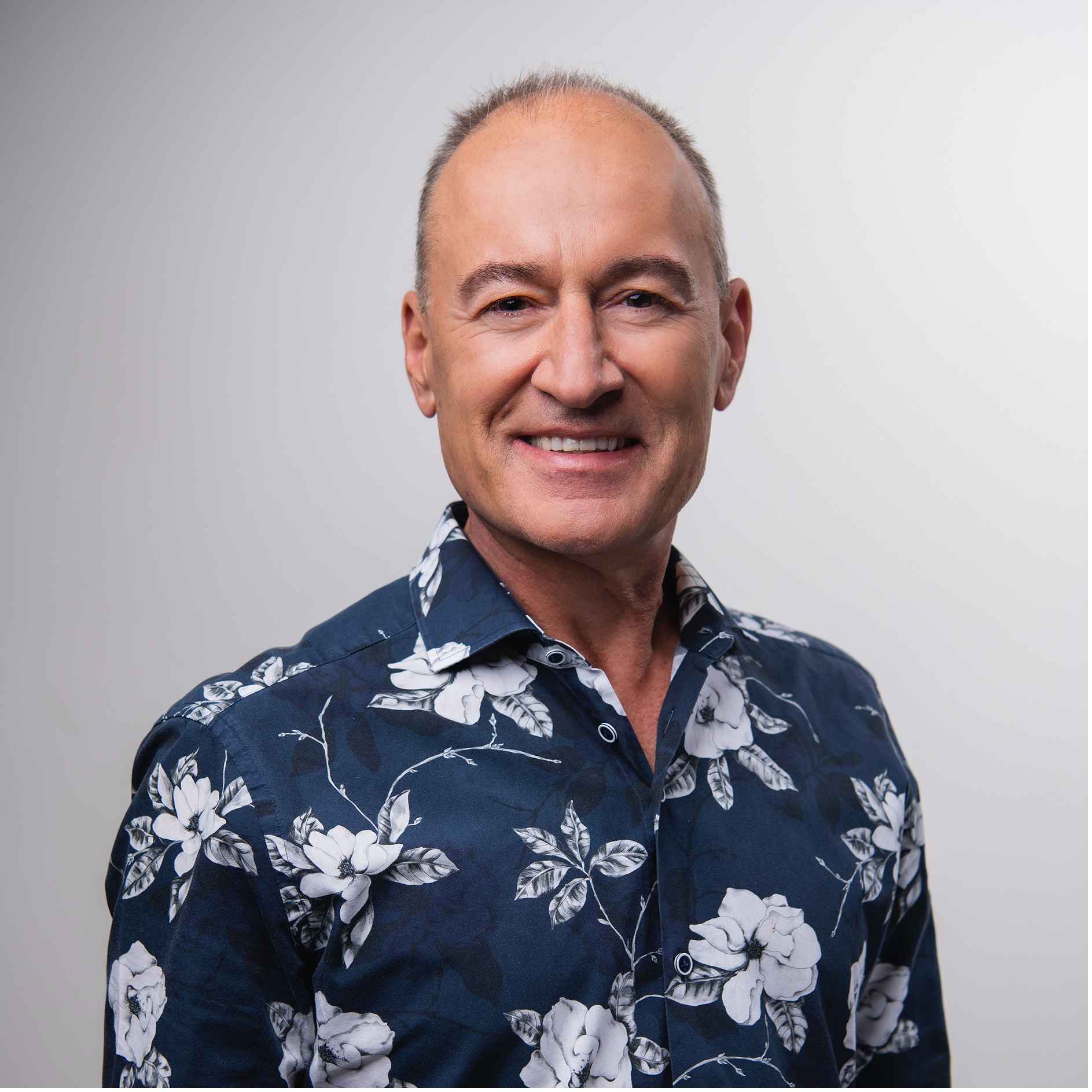
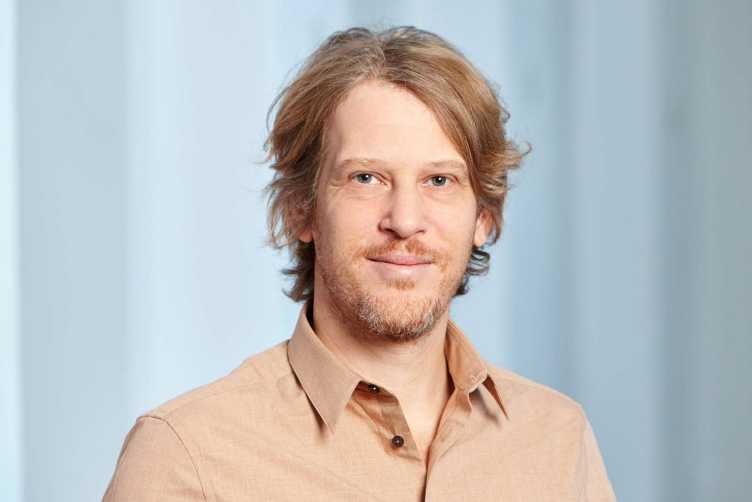
Jean Decaix is a Researcher at the University of Applied Sciences and Arts Western Switzerland (HES-SO Valais-Wallis - Haute Ecole d'Ingénierie ) within the Department of Energy and Environmental Techniques . His work focuses on hydropower systems , computational fluid dynamics (CFD) , and cavitation modeling for hydraulic turbines. Decaix contributes to projects like SCCER-SoE (Supply of Electricity center) and XFlex Hydro , aiming to enhance grid stability through advanced turbine operation. Decaix's research spans Francis and Pelton turbines , with a focus on flow topology , unsteady cavitating flows , and hydraulic short-circuit modes . He develops freely distributable CFD tools for building airflow and turbine efficiency, validated through experimental measurements and numerical simulations . Notable projects : SCCER-SoE (2017-2020): Innovation roadmaps for geothermal and hydropower Solution de transfert d'énergie par pompage-turbinage à petite échelle (2015-2017): Economic model development for small-scale hydropower Decaix's 15 most recent publications (2015-2024) cover topics like cavitation suppression , vortex rope dynamics , Pelton turbine efficiency , and CFD validation for building energy systems. His work emphasizes renewable energy integration and mechanical stress reduction in hydropower plants.
Xu Chen is a doctoral researcher at ETH Zurich specializing in 3D generative models and neural implicit shape animation . His work focuses on creating photo-realistic simulations of human activity for applications in human-centric perception tasks .
Markus Gross is a Professor of Computer Science at ETH Zurich, where he founded the Computer Graphics Laboratory in 1994. He also serves as the Chief Scientist of the Walt Disney Studios and Director of DisneyResearch|Studios, a position he has held since 2008. His work bridges academia and industry, with research that has been applied in Hollywood films, sports broadcasting, and medical applications. Professor Gross received his Master of Science in electrical and computer engineering and his Ph.D. in computer graphics and image analysis from Saarland University in Germany in 1986 and 1989. His research spans multiple domains of computer graphics and visual computing. Early in his career, he pioneered point-based graphics techniques that offered alternatives to traditional triangle-based rendering pipelines. More recently, his work has focused on digital humans, AI characters, and machine learning applications for visual computing. His research has led to significant practical applications, including the Medusa capture system used in Hollywood films, the blue-c immersive telepresence system, and the Liberovision technology now used by major sports broadcasters. Analysis of his recent publications reveals a strong focus on neural rendering techniques, particularly around Gaussian splatting and diffusion models. His work increasingly integrates AI with traditional computer graphics methods, with applications in digital humans, medical visualization, and video processing. Many papers demonstrate practical applications in film production, medical treatment planning, and interactive systems. Professor Gross has received numerous prestigious awards throughout his career: 2024 Eurographics Gold Medal 2021 Steven Anson Coons Award for outstanding creative contributions to computer graphics 2019 Technical Achievement Award from the Academy of Motion Picture Arts and Sciences 2013 Karl Heinz Beckurts-Preis 2013 Konrad-Zuse-Medaille für Informatik 2013 Technical Achievement Award from the Academy of Motion Picture Arts and Sciences 2012 Academy Sci-Tech Oscar award for Wavelet Turbulence Professor Gross has mentored numerous Ph.D. students throughout his career, with 20 Ph.D. students contributing to his blue-c project alone. His research has been supported by significant funding from both academic and industry sources, enabling the creation of multiple startups including Cyfex, Novodex, LiberoVision, Dybuster, and Animatico (acquired by Nvidia in 2022). He leads the Computer Graphics Laboratory at ETH Zurich and DisneyResearch|Studios, fostering collaboration between academic research and practical industry applications. His teams have developed groundbreaking technologies that have impacted film production, sports broadcasting, medical visualization, and educational technology.
Peter Eggenberger Hotz is a researcher at the Zurich University of Applied Sciences (ZHAW) , affiliated with the School of Engineering . His work bridges Artificial Intelligence , Medical Imaging , and Computational Modeling . As a team member in projects like Bio-Hybrid Hierarchical Organoid-Synthetic Tissues (Bio-HhOST) and DIR3CT: Deep Image Reconstruction through X-Ray Projection-based 3D Learning , he focuses on Deep Learning applications in Computed Tomography and Radiation Therapy .
Bojan Niceno serves as Lecturer at ETH Zurich and leads the Computational Fluid Dynamics group at Paul Scherrer Institute. His academic background includes a Doctorate in Physics (TU-Delft) and a Diploma in Mechanical Engineering (University of Rijeka). Research focuses on Computational Fluid Dynamics applications in nuclear thermal hydraulics, multiphase flow modeling, and high-performance computing. Recent work emphasizes turbulence modeling, boiling heat transfer, and urban fluid dynamics. Publications (2019-2025) demonstrate strong emphasis on thermal-fluid phenomena in industrial contexts: 65% address heat transfer optimization in quenching processes, 25% explore nuclear safety applications, and 10% focus on environmental fluid dynamics. Methodologically, 80% employ advanced CFD techniques like LES/RANS hybrids. Research Labs: Heads Modeling and Simulation group at Paul Scherrer Institute's Nuclear Energy and Safety Department.
Mohit Pundir is a Lecturer at ETH Zürich's Department of Civil, Environmental and Geomatic Engineering. He specializes in computational mechanics, focusing on finite element methods, contact mechanics, and fracture simulations. Research Focus: His work emphasizes: Eulerian phase-field approaches for contact problems FFT-based methods in solid mechanics Computational modeling of material behavior High-performance fracture simulation frameworks Recent Publications: Pundir's 2023-2025 articles demonstrate strong themes in numerical methods for materials science, including topology-optimized structures, corrosion prediction in porous media, and physics-consistent ML models for materials.
Prof. Dr. Roy Wagner is Full Professor at the Department of Humanities, Social and Political Sciences at ETH Zürich, specializing in the History and Philosophy of Mathematical Sciences. He earned his PhDs in Mathematics (1997) and History of Ideas (2007) from Tel Aviv University. His career includes postdoctoral positions at Cambridge University, Paris VI, MSRI Berkeley, and professorships at multiple institutions before joining ETH Zurich. His research spans philosophy of mathematics, historical epistemology, and mathematical practice, with emphasis on structural semiotics, ethics of mathematical articulation, and cross-cultural transmission of mathematical knowledge. Recent publications examine historical manuscripts (Kaṇakkatikāram), philosophical critiques of mathematical dehumanization, and the intersection of mathematics with music and ethics. Wagner teaches interdisciplinary courses including 'Critiques of Scientific Objectivity' and 'Academic Freedom, Activism, and Sanctions'. His work links mathematical epistemology with broader societal contexts, exploring how mathematical consensus forms and how mathematical practices reflect cultural and ethical frameworks. His historical investigations cover diverse traditions including medieval Jewish mathematics in Islamicate societies, early modern European mathematics, and South Indian mathematical manuscripts. Philosophical work addresses foundational questions about abstraction, representation, and the ontological status of mathematical objects.
Miloš Stojaković is a Full Professor at the Department of Mathematics and Informatics, Faculty of Sciences, University of Novi Sad, Serbia. He has held this position since 2016, following roles as Associate Professor (2011–2016) and Assistant Professor (2006–2011). His research focuses on positional games, discrete and computational geometry, discrete random structures, combinatorial algorithms, and graph theory. He leads the Foundations of Computer Science group since 2018. Stojaković earned his Ph.D. in Computer Science from ETH Zurich (2005), advised by Emo Welzl and Tibor Szabó, and holds M.Sc. and B.Sc. degrees from the University of Novi Sad. He has been recognized with the Dr Z. Đinđić Award (2008) for best young scientist in Vojvodina and the Best Student of University of Novi Sad Award (1998/99). He has advised three Ph.D. students: Mirjana Mikalački, Marko Savić, and Jelena Stratijev. His work spans over 60 publications, including seminal contributions to positional games and computational geometry. He serves on editorial boards of Discrete Mathematics & Theoretical Computer Science and the Novi Sad Journal of Mathematics . Stojaković teaches courses such as Combinatorial Algorithms, Graph Theory, and Theoretical Computer Science at the University of Novi Sad. He has also taught specialized courses on positional games at institutions like the University of Buenos Aires and Eötvös Loránd University Budapest. His research interests emphasize algorithmic and combinatorial aspects of games, geometry, and graph theory.
Robert Dalang is a Full Professor and Chair of Probabilities at École Polytechnique Fédérale de Lausanne (EPFL) in Switzerland. He is affiliated with the School of Basic Sciences, Department of Mathematics, specifically the Probability Section. His office is located in building MA, room B2 493 at EPFL's Lausanne campus. He also serves as a Full Professor in the Section of Mathematics (SMA) and for the Doctoral Program in Mathematics (EDMA). Professor Dalang's research focuses on probability theory and stochastic analysis. His work primarily centers on: Stochastic partial differential equations (SPDEs), particularly stochastic heat and wave equations Brownian motion and Brownian sheet Lévy processes and Lévy white noise Hitting probabilities and polarity Fractal properties of random fields Stochastic optimization problems His recent publications demonstrate a continued focus on the theoretical properties of solutions to stochastic partial differential equations, including their regularity, hitting probabilities, and asymptotic behavior. He has made significant contributions to understanding the fine properties of solutions to stochastic heat and wave equations, particularly in critical dimensions. Professor Dalang has served on the elected committee for the Pension fund PUBLICA since Fall 2007, being reelected for 2009-2012. His work on this committee has focused on preserving employee interests during the transition from a defined benefits system to a defined contributions system. He has supervised numerous PhD students, including: Candil David Jean-Michel Chen Le Ciccarella Carlo Conus Daniel Dumas Frédéric Humeau Thomas Marie Jean-Baptiste Pu Fei Rossel Jean-Benoît Vinckenbosch Laura Professor Dalang teaches courses including Analysis III, Analysis IV, and Theory of Stochastic Calculus at EPFL.
Juhan Aru is an Associate Professor in the Department of Mathematics at the École Polytechnique Fédérale de Lausanne (EPFL), affiliated with the Random Geometry (RGM) group. His research focuses on random geometry, Gaussian Free Fields (GFF), and stochastic processes , with applications to statistical mechanics and mathematical physics. He teaches courses such as Analysis IV, Probability, Gaussian Processes, and Introduction to Random Geometry. Affiliations: SB MATH RGM (Random Geometry Group) EDMA - Enseignement (Mathematics Education) SMA - Enseignement (Mathematics Teaching) His research investigates critical phenomena in 2D statistical physics, including SLE processes, Liouville quantum gravity, and multiplicative chaos. Recent work explores the interplay between GFF properties and geometric/topological structures like excursion decomposition and thick points. He advises PhD students including Philémon Bordereau and Han Xiao, and has directed Guillaume Charles Woessner's thesis. His lab's website is https://www.epfl.ch/labs/rgm/ .
Gianluca Rizzo is an Adjunct Professor at HES-SO Valais-Wallis, affiliated with the Higher School of Management (Haute Ecole de Gestion) and the Internet of Things (IoT) department linked to EPFL. He holds a Computer Science Bachelor's degree from UC3M University in Madrid. His research focuses on IoT, vehicular communications, AI-driven network optimization, and disaster-resilient systems. Education: Computer Science BSc (UC3M University, Madrid) Affiliations: HES-SO Valais-Wallis, EPFL IoT Group, RECODIS (Post-Disaster Communications Lab) His work spans energy-efficient networking, opportunistic content dissemination (Floating Content), and distributed learning techniques. Key contributions include optimizing multi-agent systems in dynamic environments, developing gossip learning frameworks for urban trajectory prediction, and analyzing SWIPT (Simultaneous Wireless Information and Power Transfer) in vehicular networks. He also explores emergency networks for post-disaster scenarios, leveraging technologies like UAVs and floating content for situational awareness. Recent publications emphasize AI-native vehicular communications, edge computing orchestration, and infrastructure savings via moving base stations. Collaborative projects include V-Edge (virtual edge computing) and the NOSE nomadic sensing ecosystem. His work bridges theoretical models (e.g., stochastic geometry) with practical implementations, addressing challenges in 5G/6G, smart cities, and industrial IoT.
Barbara Solenthaler is a Lecturer at the Department of Computer Science, ETH Zurich. Her research focuses on physics-based simulations, facial animation, and machine learning applications in computer graphics.
Prof. Philippe Rigollet is a Professor of Mathematics at MIT, where he is a member of the Statistics and Data Science Center and a Principal Investigator at the Laboratory for Information and Decision Systems. He is also an affiliate member of the Broad Institute. Previously, he served as Assistant Professor at Princeton and Postdoc at Georgia Tech. He is currently on leave from MIT to hold a Chair from the Fondation des Sciences Mathématiques de Paris. His research focuses on the mathematical foundations of data science, particularly the use of geometric ideas to process complex data. His work bridges analysis, geometry, and probability through optimal transport theory and its applications in statistics and machine learning. Scientific recognitions include: National Science Foundation CAREER award Best Paper Award at the Conference on Learning Theory Medallion Lecture at the Joint Statistical Meetings Fellow of the Institute for Mathematical Statistics
Carl Allen is a Laplace Junior Chair in Machine Learning at École Normale Supérieure, Paris, working in the research group of Stéphane Mallat, Giulio Biroli and Garbiele Peyré. Previously, he was a postdoctoral fellow at ETH Zurich and completed his PhD in Machine Learning in 2021 at the University of Edinburgh under the supervision of Professors Tim Hospedales and Iain Murray. His educational background includes a BSc in Mathematics & Chemistry from the University of Southampton, an MSc in Mathematics and the Foundations of Computer Science (MFoCS) from the University of Oxford, and MScs in Artificial Intelligence and Data Science from the University of Edinburgh. Before transitioning to AI/ML research, he spent several years in Project Finance. Allen's research focuses on mathematically understanding mechanisms behind successful machine learning methods, particularly neural networks. He investigates how machine learning models exploit aspects of data distribution from a probabilistic perspective. His current topics include explaining how VAEs disentangle independent factors of data, identifying mathematical models behind self-supervised learning, and deriving probabilistic interpretations of softmax classification. His PhD work investigated neural representations of discrete objects and their relationships, with a main result explaining how word embeddings can seemingly be added and subtracted (e.g., queen ≈ king - man + woman), which received Best Paper (honorable mention) at ICML 2019. His research spans theoretical foundations of machine learning, with particular emphasis on representation learning, disentanglement, and probabilistic modeling of neural networks. His work connects mathematical principles with practical machine learning applications, aiming to develop more interpretable and reliable algorithms. Allen has received notable recognition including a Best Paper honorable mention at ICML 2019 and a research grant from the Hasler Foundation. He has delivered invited talks at prestigious institutions including Harvard Center of Mathematical Sciences & Applications and Astra-Zeneca. His collaborative work spans multiple institutions, including a notable internship at Samsung AI Centre, Cambridge, where he worked at the intersection of representation learning and logical reasoning. His research has significant implications for developing more interpretable, reliable, and theoretically grounded machine learning systems.
Tolga Birdal is an Assistant Professor (Lecturer) and UKRI Future Leaders Fellow in the Department of Computing at Imperial College London. As the Principal Investigator (PI) of the CIRCLE group , his research focuses on topological deep learning, geometric machine learning, and 3D computer vision, with theoretical interests in non-Euclidean inference and deep learning principles. Education: PhD and MSc in Computer Vision from Technical University of Munich (2018), BSc in Computer Science from Sabancı University (2008). Projects: PI for UKRI-EPSRC's UNTOLD (Topological Deep Learning), Royal Society's drug discovery initiative, and EPSRC's GNOMON (Generative Models in non-Euclidean Spaces). Leadership: Area Chair for CVPR, ICCV, and 3DV 2025 Publication Chair. His work bridges differential geometry, algebraic topology, and deep neural networks, with applications in quantum computer vision, 3D/4D generative priors, and medical imaging. Key contributions include novel frameworks for rotation forecasting, graph generation, and topological generalization bounds. Scientific Awards: UKRI Future Leaders Fellowship EMVA Young Professional Award