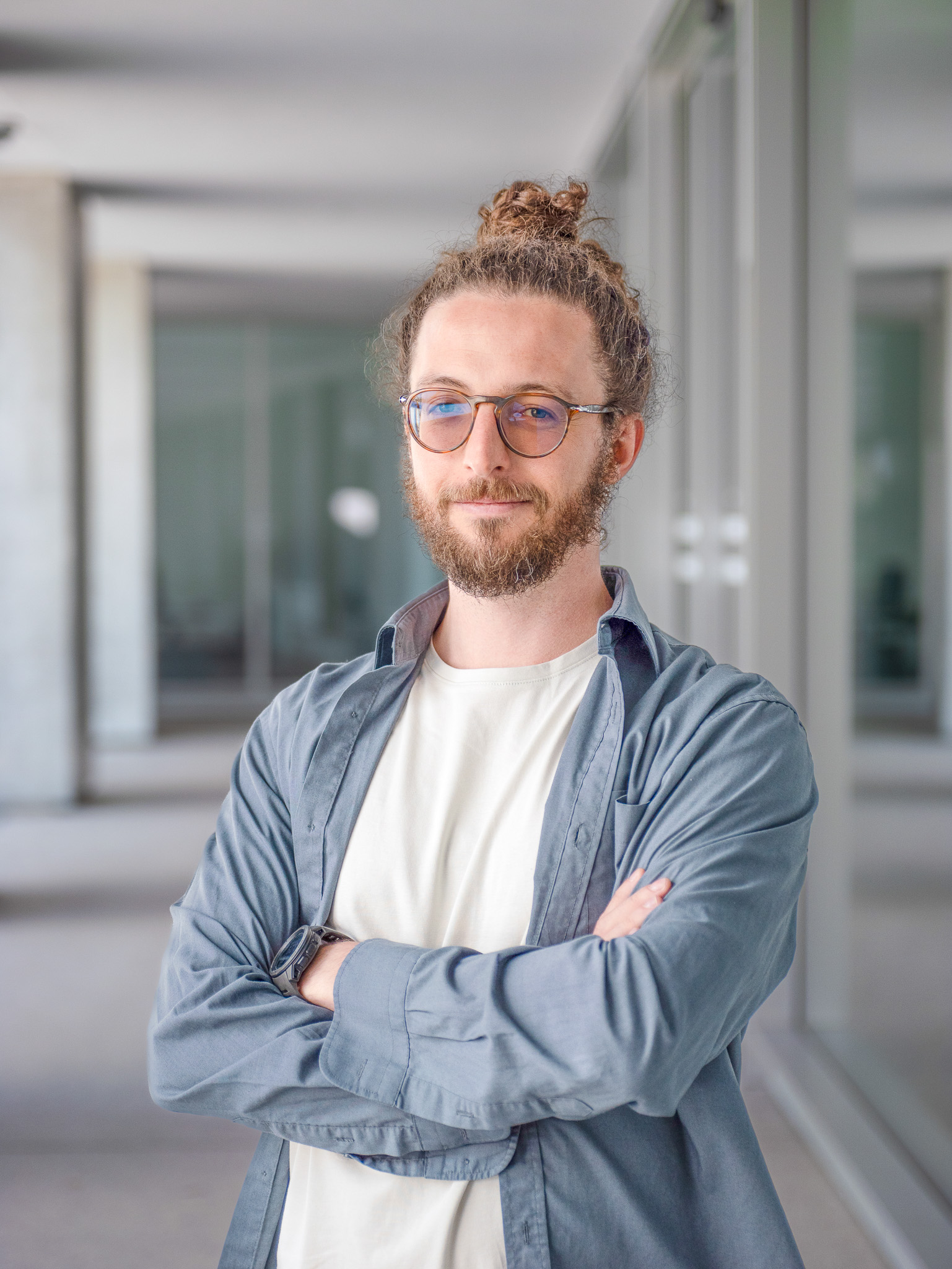
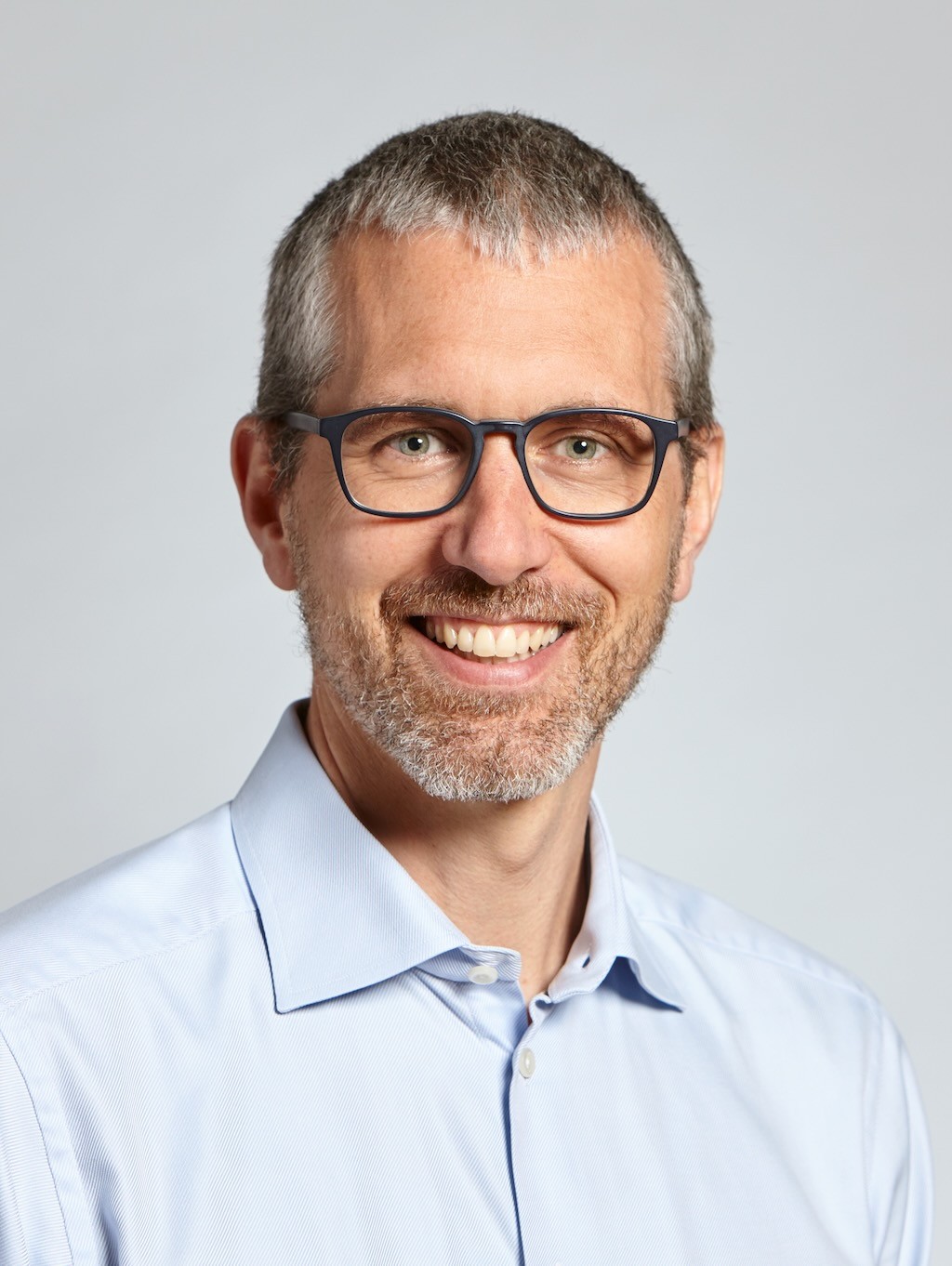
Christophe Allemann is a Full Professor at the Fribourg School of Engineering and Architecture (HEIA-FR), part of the University of Applied Sciences and Arts Western Switzerland (HES-SO). He serves as Head of Institute and specializes in synthesis and catalysis, process chemistry, flow chemistry, and chemical production. His research focuses on topics such as sol-gel processes, sensor development, and catalyst optimization. Education: PhD in Chemistry, University of Fribourg, Switzerland (2002) BSc and BA programs in Chemistry and Architecture at HEIA-FR Research Interests: His work spans synthesis methodologies, flow chemistry applications, process scale-up, and risk analysis. He emphasizes interdisciplinary education and the development of robust industrial processes. Publications: His recent work includes advancements in phosgene sensors, lanthanide complexation studies, and mixing efficiency in micromixers. Key themes include catalytic mechanisms, solvent effects, and microreactor technologies. Labs/Teams: As Head of Institute, he leads research teams focusing on chemical production, catalysis, and continuous processing innovations.
Federica Lanza is a Lecturer at the Department of Earth and Planetary Sciences at ETH Zurich, affiliated with the Schweiz. Erdbebendienst (SED), the Swiss Seismological Service. Her work focuses on seismology, geophysics, and geothermal systems, with expertise in induced seismicity, fault dynamics, and advanced monitoring technologies like Distributed Acoustic Sensing (DAS). She teaches courses such as Seismic Waves II in the Autumn Semester 2025. Her research integrates field experiments, computational modeling, and machine learning to address challenges in seismic hazard assessment, geothermal energy development, and tectonic processes. Key areas include forecasting induced earthquakes at geothermal sites, analyzing fault interactions in fold-and-thrust belts, and developing innovative sensor systems for subsurface monitoring. Dr. Lanza collaborates on large-scale projects like the Utah FORGE initiative, advancing techniques for real-time seismic monitoring and fracture network characterization. Her contributions bridge fundamental geophysical research with practical applications in energy systems and risk mitigation.
Dr. Kadek Hendrawan Palgunadi is a researcher at the Swiss Seismological Service (SED) under ETH Zurich. His work focuses on seismology, earthquake dynamics, and fault system analysis with a particular emphasis on Indonesia and Türkiye. He has contributed significantly to understanding cascading earthquake mechanisms, fault geometry characterization, and ground motion modeling. His recent studies include analysis of the 2023 Türkiye earthquake doublet, the 2022 Cianjur earthquake, and the newly identified Kalaotoa Fault system. Key research areas include multiscale seismicity patterns, fracture energy analysis in fault networks, and innovative methods for seismic waveform generation using machine learning. He has developed methodologies for hypocenter relocation and rupture dynamics modeling, contributing to improved seismic hazard assessments in active tectonic regions. His work also extends to interdisciplinary projects such as the Sea-VL dataset for Southeast Asia vision-language studies and sustainable agriculture systems. Notable contributions include insights into fault slip localization, stress regime analysis in complex fault systems, and applications of denoising diffusion models for high-resolution seismic data processing. Collaborations involve international institutions and fieldwork in regions like Sulawesi, Sumatra, and the East Anatolian Fault zone.
Dr. Claudia Politi is affiliated with the Institute of Quantum Electronics at ETH Zürich, working within the Professorship for Experimental Quantum Information . Her research focuses on quantum systems, including ultracold atoms, Bose-Einstein condensates, and supersolid states. Key areas include phase transitions, vortex dynamics, and dipolar interactions in quantum fluids. She has contributed to experiments on angular oscillations in supersolids and heating effects in quantum fluids. Dr. Politi's work bridges quantum optics and condensed matter physics, exploring novel quantum phenomena in controlled atomic systems. Her recent publications highlight advancements in observing vortices in dipolar supersolids and studying superfluid-supersolid phase transitions. The research often involves manipulating ultracold atomic gases to probe fundamental quantum behaviors, with implications for understanding quantum phase transitions and material properties at the atomic scale.
Dr. Josep Mas-Roselló is a **Professor of Organic Chemistry** at ETH Zurich, Switzerland, leading the Wennemers Group. His research focuses on designing eco-friendly organic catalysts to replace toxic metal-based catalysts in chemical transformations. He investigates catalytic activation of inert bonds (e.g., hydrogenations, C─H functionalization) using experimental and computational methods. Education: B.Sc. in Chemistry (2013), University of València, Spain Ph.D. in Chemistry (2017), University of Bristol, UK (advisor: Prof. Jonathan Clayden) Research Interests: His group develops sustainable organic catalysts for asymmetric synthesis, aiming to reduce environmental impact. Key themes include oxime hydrogenation, iridium-catalyzed reactions, and ligand design. Recent work addresses challenges in CO₂ fixation and metal-free catalytic systems. Scientific Awards: SNF Ambizione Fellowship (2022) Lab & Collaborations: As group leader, he mentors Master’s, PhD students, and postdocs. The lab collaborates on projects involving computational modeling and green chemistry innovations. Research outcomes include patents (e.g., WO2020094528A1 for enantioselective processes).
Jérôme André Roland Noir is a Privatdozent (Professor) in the Department of Earth and Planetary Sciences at ETH Zürich, affiliated with the Institut für Geophysik. His research focuses on geophysical fluid dynamics, particularly in rotating and stratified flows influenced by topography, planetary core dynamics, and subsurface ocean processes. He contributes to experimental and theoretical studies of planetary fluid layers, combining laboratory experiments with numerical simulations. Key research areas include precession-driven flows, core-mantle coupling, and rotational instabilities in non-axisymmetric geometries. Recent work explores the interplay between topography and fluid dynamics in planetary cores, as well as the impact of libration on resonant fluid modes. His articles highlight experimental and computational advancements in understanding geophysical flows, including studies on Length of Day variations and fractal energy structures in librating spheres. He co-edited a special issue on precession and libration-driven flows. Current projects are funded by grants such as 'Roughness and large scale topography enhanced coupling in planetary cores and subsurface oceans' and 'Unravelling Earth’s magnetic history and processes.' Dr. Noir’s work bridges fluid mechanics with geophysics, addressing fundamental questions in planetary dynamics and Earth’s rotational behavior. His lab facilities at ETH Zürich support experimental investigations of complex fluid systems.
Kai Hormann is a full professor in the Faculty of Informatics at Università della Svizzera italiana (USI Lugano). He earned his Ph.D. in computer science from the University of Erlangen-Nürnberg in 2002 and has held positions at Clausthal University of Technology, Caltech, and the CNR in Pisa. His research focuses on mathematical foundations of geometry processing, including barycentric coordinates, subdivision algorithms, and rational interpolation. Hormann has authored over 100 publications and serves as an associate editor for journals like Computer Aided Geometric Design and Dolomites Research Notes on Approximation . In 2024, he received the prestigious John A. Gregory Award for his contributions to geometric modeling. Education : Ph.D. in Computer Science, University of Erlangen-Nürnberg (2002) Diploma in Mathematics, University of Erlangen (1997) Abitur, Leibniz-Gymnasium Bad Schwartau (1992) Research Interests : Hormann’s work bridges computer science, applied mathematics, and engineering. His current projects include interactive shape deformations, time-dependent object processing, 3D visualization, and GPU-accelerated algorithms. His research areas encompass geometry processing, computational sciences, and numerical analysis. Publications : His recent articles focus on barycentric coordinates, subdivision schemes, and surface reconstruction. Themes include transfinite coordinates, curvature continuity, and efficient interpolation methods. Awards : John A. Gregory Award (2024) Chair of SIAM Activity Group on Geometric Design (2017–2018) Advising & Grants : He has advised numerous PhD students, including work on barycentric rational curves and subdivision schemes. He has organized conferences such as the SIAM GD and GMP series, reflecting his leadership in computational geometry. Labs & Teams : Hormann is affiliated with the Dalle Molle Institute for Artificial Intelligence (IDSIA USI-SUPSI), collaborating on interdisciplinary projects in AI and geometry processing.
Ola Svensson is an Associate Professor at the School of Computer and Communication Sciences, EPFL. His research focuses on approximation algorithms, combinatorial optimization, computational complexity, and scheduling. He has been supported by grants including the ERC Starting Grant "OptApprox" (2014-2019), SNF grants, and the ERC Consolidator Grant "POTCO" (2023-). He teaches courses such as Advanced Algorithms and Approximation Algorithms and Hardness of Approximation. Education: PhD from IDSIA - Universita della Svizzera italiana (2009) and Master's from Uppsala University (2005). Research Interests: Design and analysis of approximation algorithms for NP-hard problems, scheduling, and computational complexity. He explores limitations of approximation techniques through hardness results and contributes to theoretical computer science. Publications span clustering, scheduling, and graph problems like the Traveling Salesman Problem. Recent work includes learning-augmented algorithms and robust optimization. Awards: I&C teaching award and best paper awards at FOCS (2017) and STOC (2018). Over a dozen PhD students advised, many entering postdocs or industry roles. Labs/Teams: Part of the theory group at EPFL, collaborating on academic projects and course development.
Colin Shaw is a Senior Lecturer specializing in Human Evolutionary EcoPhysiology, focusing on how ancestral environmental adaptations influence modern human health. His research integrates physiology, psychology, ecology, and medicine to study evolutionary mismatches caused by urbanization. Key interests include skeletal biomechanics, bone structure variation, and the evolutionary basis of human health. Research emphasizes bone adaptation in athletes, fossil hominins, and ancient populations, with a focus on limb morphology, trabecular architecture, and locomotor behavior. Collaborative projects include studies on Neandertal activity patterns, Australopithecus hip loading, and the effects of hide-processing on limb anatomy. Publications span over 20 years, covering topics like bone microstructure scaling in primates, fibular robusticity as mobility indicators, and the relationship between modern environments and chronic stress. His work bridges anthropology, biology, and public health, addressing both academic and applied questions. Notable contributions include pioneering methods for estimating body mass from skeletal variables and advancing understanding of evolutionary mismatch theories. Shaw’s research is characterized by interdisciplinary approaches and a commitment to linking ancient human adaptations to contemporary health challenges.
Daniele Zambon is a postdoctoral researcher at the Dalle Molle Institute for Artificial Intelligence (IDSIA), affiliated with Università della Svizzera italiana (USI) in Lugano, Switzerland. He is a member of the Faculty of Computer Science and the Graph Machine Learning Group, as well as the IEEE Task Force on Learning for Graphs. PhD : Informatics, Università della Svizzera italiana (USI), 2022 Master’s & Bachelor’s : Mathematics, University of Milan, Italy Visiting Researcher : University of Florida, University of Exeter Internship : STMicroelectronics, Italy His research lies at the intersection of machine learning and graph-structured data, with a strong emphasis on graph representation learning , learning in non-stationary environments , and time series analysis . He explores how to model dynamic graphs, detect anomalies and changes over time, and develop deep learning methods for spatiotemporal forecasting. His work integrates statistical testing, geometric deep learning, and neural architectures like Graph Neural Networks (GNNs) and Neural ODEs. The recent publications highlight a clear trend toward temporal and dynamic graph modeling , especially for time series forecasting and irregularly sampled data . There is a growing focus on generative and foundation models for graphs , uncertainty-aware learning , and the creation of benchmark datasets like PeakWeather. His work bridges theoretical contributions (e.g., statistical tests, Kalman filters on graphs) with practical applications in sensing, environmental modeling, and system monitoring. Co-author of patent: Method for the Detecting Electrocardiogram Anomalies and Corresponding System (US10610162B2) PhD thesis featured in D22 Excellent Computer Science Dissertations (2022) Associate Editor, IEEE Transactions on Neural Networks and Learning Systems (IEEE TNNLS) Organizer of tutorials and special sessions at ICML, LoG, KDD, and ESANN Daniele actively contributes to the academic community through advising and teaching at USI’s Bachelor’s and Master’s programs. He has co-supervised research projects and co-organized educational initiatives such as tutorials on graph deep learning. His collaborative work involves grants and partnerships with institutions like MeteoSwiss, leading to impactful datasets and applied research. He is deeply involved in building research capacity through workshops and community engagement in the graph learning field. He is a core member of the Graph Machine Learning Group at IDSIA and contributes to the IEEE Task Force on Learning for Graphs , fostering international collaboration and setting research agendas in the domain of graph-based AI.
Balestra Gioele is a Full Professor at the Fribourg School of Engineering and Architecture (HES-SO) and Co-Head of the iPrint Institute. His primary affiliations include the BSc HES-SO in Mechanical Engineering, where he teaches CFD simulation and Fluid Mechanics. He leads the ComplexFluidPrint project (since 2019), developing advanced inkjet technologies for complex fluids. His research focuses on fluid mechanics, microfluidics, and rheology, with recent projects addressing micro-manipulation via liquid plugs and composite materials for IoT applications. Research interests include thin film instabilities, droplet dynamics, and industrial applications of inkjet technology. Notable projects include the experimental validation of liquid plug-based micro-manipulation (2020-2022), funded by HEIA-FR, and a collaborative effort on multifunctional composite materials with COMATEC (2019-2021), yielding 250'000 CHF in funding. His work bridges theoretical models, numerical simulations, and experimental validation. Publications span topics like machine learning for inkjet behavior prediction (2023), karst drapery morphogenesis (2021), and instability mechanisms in curved substrates (2018-2020). Current research emphasizes inertial microfluidics, airflow visualization for inkjet systems, and advanced nozzle plate manufacturing (2024). Grants: HES-SO, HEIA-FR, COMATEC Team Collaborations: Over 20 researchers across projects, including Domae Yoshinori, Maturo Jonas, and Gallaire François Labs/Teams: iPrint Institute, ComplexFluidPrint team
Prof. Sebastian Huber is a Lecturer at ETH Zürich's Department of Physics within the Institute for Theoretical Physics. His research focuses on classical topological wave phenomena and applications of machine learning to quantum statistical many-body systems. He holds an ERC Consolidator Grant and previously served as an SNSF Professor. Education: Diplom (2004) and PhD (ETH Zürich under Prof. Gianni Blatter), followed by postdoctoral research at the Weizmann Institute of Science supported by SNSF and Swiss Friends of Weizmann fellowships. Research interests span topological materials, metamaterials, and quantum many-body systems. Notable grants include ERC Consolidator (2018-present) and SNSF Professorship (2012-2018). His work bridges theoretical physics with experimental realizations in condensed matter and acoustics. Awards include the Koshland Prize and SNSF Fellowships. Active in teaching via ETH's Zurich Physics Colloquium and advanced graduate courses in theoretical physics.
Prof. Olimpia Mamula Steiner is an Ordinary Professor at the Haute école d'ingénierie et d'architecture de Fribourg (HEIA-FR), part of the University of Applied Sciences and Arts Western Switzerland (HES-SO). She leads research in synthesis, catalysis, and functional materials development from her office in Fribourg, Switzerland. Her educational background includes: BSc HES-SO in Chemistry from HEIA-FR, specializing in Organometallic Catalysis and Organic Chemistry MSc HES-SO in Life Sciences, focusing on Asymmetric Synthesis Bachelor in Chemistry from the University of Fribourg, with emphasis on Chemistry of d and f metals Prof. Mamula Steiner's research spans multiple chemistry domains with strong focus on stereoselective synthesis, nanoparticle development, and functional materials. Her work bridges fundamental chemical research with practical applications in medical diagnostics, environmental monitoring, and advanced manufacturing. She has pioneered innovative approaches to chiral metal complexes, sensors for hazardous compounds like phosgene, and novel materials for electroluminescent displays, demonstrating exceptional interdisciplinary integration. Her publication record reveals consistent expertise in rhenium anticancer complexes, pinene-based ligand systems, and sensor development. Recent work shows increasing focus on medical applications, particularly in cancer research and diagnostic tools, while maintaining strong foundations in synthetic methodology and materials characterization. The interdisciplinary nature of her research is evident in collaborations spanning chemistry, medicine, engineering, and environmental science. Prof. Mamula Steiner actively mentors students and researchers, having supervised PhD work on pinene-pyridine derivatives and their applications. Her laboratory emphasizes sustainable chemistry approaches, including waste-to-resource conversion and eco-friendly manufacturing processes, reflecting contemporary priorities in green chemistry.
Oliver Kröcher is an Adjunct Professor at the École Polytechnique Fédérale de Lausanne (EPFL) within the School of Basic Sciences (SB) , specifically in the Institute of Chemical Sciences and Engineering (ISIC) and the SCGC-ENS group. His research focuses on heterogeneous catalysis for environmental and energy applications, including emission control, NOx and N2O abatement, methane oxidation, and CO2 utilization. He also contributes to educational initiatives, such as Catalysis for emission control and energy processes .
Dr. Uros Puc is a researcher at the ZHAW Zurich University of Applied Sciences , affiliated with the School of Engineering . His work focuses on terahertz (THz) photonics , organic electronics , and photovoltaics , particularly in developing and characterizing organic crystals for THz wave generation and sensing applications. Research Interests : Puc's research spans terahertz technology , nonlinear optics , and molecular phonon engineering , with applications in materials testing, biomedical sensing, and sustainable technologies. He investigates how substituent groups and crystal structures influence THz phonon vibrations and nonlinear optical properties, aiming to enhance THz emission efficiency and stability. Publications highlight his contributions to broadband THz spectroscopy , organic crystal design , and analytical gas sensing . His work also extends to terahertz applications in circular economy and construction materials characterization .