Dr. Anna Puig Puig is a Professor at the University of Barcelona, affiliated with the Faculty of Mathematics and Computer Science within the Department of Mathematics and Computer Science. Her research focuses on gamification in education, 3D point cloud processing, data visualization, and biomedical applications of computer science. Key research areas include: Gamification and serious games for education 3D point cloud segmentation and analysis Machine learning applications in geospatial and biomedical domains Interactive visualization systems Virtual reality for archaeological and educational purposes Notable projects include: INDOMAIN - Pedagogical Module in Intelligent Tutoring Systems HORIZON 2020 European Cancer Image Platform GRAPES - Machine Learning for Shape Processing CLiC Research Group in Language and Computing Digital Reconstruction of Neolithic Social Life
Ignacio Cascos Fernandez is an Associate Professor at the Department of Statistics, School of Engineering, Carlos III University of Madrid. His research focuses on Multivariate Analysis (depth functions, multivariate quantiles) and Probability Theory (stochastic orders, random sets, financial risk measures). Key Research Areas Multivariate analysis with emphasis on data depth and quantiles Probability theory involving stochastic orders and random sets Applications to financial risk modeling and statistical process control Notable Awards IASC ERS Young Researchers Award (2006) Elected member of the International Statistical Institute (2008) PhD Supervision Advised José Manuel Cueto (2021) on multifactor models for equity returns Advised Maicol Ochoa (2022) on expectiles and multivariate analysis Recent Projects Developed data depth methodologies for biological age prediction Created statistical tools for complex data in finance and real estate analysis
Dr. Ekaterina Khestanova is a Research Fellow at the Institute of Photonic Sciences (ICFO), specifically in the Quantum Nano-Optoelectronics research group. She holds a PhD in Condensed Matter Physics from the University of Manchester (UK). Her research focuses on quantum materials, particularly 2D materials and van der Waals heterostructures, with an emphasis on optoelectronic properties, superconductivity, and nonlinear optical phenomena. Her work explores topics such as interlayer excitons in transition metal dichalcogenides, quantum geometry in twisted bilayer graphene, and the mechanical and electronic properties of atomically thin materials. She has contributed to advancements in precision transfer techniques for 2D materials and the study of topological polaritons in monolayers. Key contributions include experimental revelations of intrinsic superconductivity at material interfaces, nonlinear polariton effects, and strain-induced phenomena in nanomaterials. Her research bridges fundamental physics with nanotechnology applications, particularly in optoelectronic device development and interface engineering.
Tomás García Martín is the current Dean of the UCJC School of Technology and Science at Universidad Camilo José Cela. He holds a PhD in Chemical Engineering from the Complutense University of Madrid (1995) and has held academic roles including Associate Professor at the Complutense University, Polytechnic University of Madrid, and Alfonso X el Sabio University. His professional career spans over three decades, combining academia, industry (BASF, Hewlett Packard), and administrative leadership roles such as Secretary of the Official College of Chemists of Madrid. He specializes in biotechnology, environmental engineering, operations optimization, and industrial process design , with notable contributions to nanotechnology and sustainable logistics. His research has led to patents and over 60 evaluated projects in industrial safety and R&D innovation. He has directed doctoral programs at multiple universities and coordinated postgraduate courses at institutions like the University of Cambridge. Key achievements include two Sexenios de Investigación (2015), recognition as a qualified university professor (2003), and awards for early-career research. His work bridges technical expertise with policy, particularly in transportation safety law and environmental compliance. Current teaching includes programs in Logistics, Business Management, and Legal-Economic Sciences, reflecting his interdisciplinary approach to education and research.
Gleb Pogudin is an Assistant Professor at École Polytechnique, Institute Polytechnique de Paris, where he is a member of the MAX team within the Laboratoire d'informatique. His research focuses on the intersection of symbolic computation, differential equations, and algebraic methods with applications across multiple scientific domains. Dr. Pogudin's primary research interests span several interconnected areas: Symbolic computation and computer algebra algorithms Theory and applications of differential and difference equations Nonlinear algebra and polynomial systems Structural identifiability of dynamical models Model reduction techniques for complex systems His recent publications (2024-2025) demonstrate a strong focus on developing theoretical foundations for differential elimination, structural identifiability analysis, and model reduction. These works span applications in systems biology, epidemiology, pharmacology, and optics. Notably, his research bridges pure mathematical theory with practical computational implementations, creating tools that address real-world scientific challenges. Dr. Pogudin has developed several significant software tools that implement his theoretical advances: StructuralIdentifiability.jl: A Julia package for assessing structural identifiability CLUE: Software for exact model reduction of ODE models via constrained lumping SIAN: Software for structural identifiability analysis of ODE models His GitHub repositories contain numerous implementations of algorithms from his papers on differential elimination and related topics, demonstrating his commitment to making theoretical advances practically accessible to researchers across disciplines.
Esther Cabezas Rivas is an Assistant Professor in the Department of Mathematics at the Faculty of Mathematics, University of Valencia. She is affiliated with the Geometric Analysis Group U.V. (GAGUV) and conducts research in differential geometry and geometric analysis. Research Interests: Her primary research areas include differential geometry, geometric analysis, curvature flows (especially Ricci flow and mean curvature flow), partial differential equations on manifolds, and global analysis. She investigates volume-preserving geometric flows, soliton solutions, and curvature evolution in symmetric and noncompact spaces. Publication Trends: Her research publications since 2006 demonstrate a sustained focus on geometric evolution equations, particularly mean curvature flow and Ricci flow. Her work combines analytical PDE techniques with deep geometric insights, often exploring long-time behavior, singularity formation, and curvature preservation under flow. Collaborations with leading geometers have resulted in publications in top journals such as Inventiones Mathematicae and Calculus of Variations and Partial Differential Equations . Email: esther.cabezas-rivas@uv.es Personal Website: https://www.uv.es/estcari2/ Academic Background: She received her PhD in 2008 from the University of Valencia under the supervision of Dr. Vicente Miquel with a thesis on volume-preserving curvature flows in rotationally symmetric spaces.
Helena Martín Cruz is an Assistant Professor at the Faculty of Mathematics, Jaume I University . Her research focuses on Quantum Information Processing and Algebraic Geometry applications to error-correcting codes. As of 2024, she has published 4 works since her doctoral graduation from Jaume I University in 2024. PhD in Mathematics (2024), Jaume I University Thesis: Quantum codes and locally recoverable codes from evaluation codes Her work explores Quantum Stabilizer Codes , Hermitian Dual-Containing Codes , and Monomial-Cartesian Code Constructions for quantum computing applications. Collaborators include Dr. Carlos Galindo Pastor and Dr. Fernando Hernando Carrillo. Recent publications analyze quantum code optimization against the Gilbert-Varshamov Bound and develop Locally Repairable Codes for quantum systems. She has contributed to advancements in Quantum Error-Correcting Codes through algebraic structures and finite field cryptography.
Matteo Giacomini is an Associate Professor of Computational Engineering at Universitat Politècnica de Catalunya (UPC), affiliated with the Laboratori de Càlcul Numèric (LaCàN). He is also an affiliated researcher at CIMNE (Severo Ochoa Excellence Centre) and affiliated faculty at IMTech (Institute of Mathematics of UPC-BarcelonaTech). His research focuses on numerical methods for PDEs, including high-order and low-order methods, error estimation, and reduced-order modeling. Applications span computational fluid dynamics, solid mechanics, image segmentation, and industrial sustainability. Education : PhD in Applied Mathematics, École Polytechnique (2016) MSc & BSc in Mathematical Engineering, Politecnico di Milano (2013 & 2010) Research Interests : High-order methods: finite element, discontinuous Galerkin Error & adaptivity: a posteriori estimates, mesh adaptation Dimensionality reduction: reduced order models, scientific ML PDE-constrained optimization: topology/shape optimization Software development: open-source CSE tools Recent Work Trends : Recent articles emphasize multi-fidelity surrogate modeling, domain decomposition for parametric PDEs, and robust finite volume methods for incompressible/compressible flows. He also contributes to HDG method implementations (e.g., HDGlab) and industrial applications of CFD. Labs & Affiliations : LaCàN - UPC CIMNE - Innovative Algorithms & Credible Data-Driven Models groups IMTech - Mathematical Modelling research line
Alejandro Dominguez Fernandez is a researcher at Universitat Politècnica de Catalunya (UPC) within the Department of Mechanical Engineering, affiliated with the School of Industrial Engineering of Barcelona (ETSEIB). He actively participates in two research groups: TECNOFAB - Grup de Recerca en Tecnologies de Fabricació DigiFACT - Agrupació de Centres per la Factoria Digital Avançada (Xarxa TECNIO / CIT UPC) His research focuses on advanced manufacturing technologies with special emphasis on 3D printing and surface engineering. Key research areas include: Additive manufacturing for biomedical applications Multi-material printing techniques Surface roughness optimization Manufacturing process monitoring Digital factory systems Recent publications demonstrate strong focus on 3D printing applications for medical prosthetics, surface quality analysis in machining processes, and manufacturing process optimization.
Dr. Marcos Loureiro Garcia is an Assistant Professor at the University of Vigo, affiliated with the Department of Mathematics within the Faculty of Education and Sport Sciences. He obtained his PhD in 2020 with a thesis on "Modeling and numerical approach of aortic valve stages: healthy, stenotic and transcatheter replaced (TAVI)". His career demonstrates interdisciplinary expertise combining mathematics, cardiology, and educational innovation. Doctorate in Mathematics Applied to Cardiology (2020) Master's in Industrial Mathematics Master's in Teacher Training Bachelor's Degree in Mathematics His research focuses on applying mathematical methods to cardiology, particularly for simulating aortic valve pathologies and transcatheter aortic valve implantation (TAVI) procedures. He has developed biomechanical models of aortic valves, investigated TAVI outcomes through numerical simulation, and explored educational technology applications for mathematics teaching. His academic work spans both computational cardiology and mathematics education. He has published on topics including deep learning for TAVI characterization, digital valve twins, and augmented reality applications in teacher training. His research addresses clinical challenges through mathematical modeling while contributing to innovative teaching methodologies. Scientific achievements include: Best Poster Prize in Numerical Simulation at ESC Congress (2018) Six-Year Research Career Recognition Grants from Ministry of Science, Xunta de Galicia, GAIN He collaborates with leading institutions like the Czech Technical University in Prague and the Center for Computational Medicine in Cardiology (Lugano), developed his doctoral research at the Galicia Sur Health Research Institute (IISGS), and currently participates in the RITME research group focused on educational innovation and mathematical modeling.
Francesc Alías Pujol is a Professor at the Department of Engineering, Ramon Llull University (La Salle Campus Barcelona), where he also serves as Director of Teaching and Research Staff Policies since September 2019 and coordinates the PhD Program in Information Technologies since February 2022. He is a researcher in the Human-Environment Research (HER) group, focusing on speech and acoustic signal processing for natural human-machine interaction. His educational background includes: BSc in Telecommunications Engineering (1997) MSc in Electronics Engineering (1999) PhD in ICT and their application in Management (2006) MBA in Business Administration (2013) University Expert Program in Digital Transformation (2023) Dr. Alías's research primarily focuses on signal processing, with special emphasis on speech and acoustic signal processing to achieve natural interaction between humans, machines, and their environment. His work spans from Text-to-Speech (TTS) synthesis to vocal biomarkers for digital health applications, numerical voice simulation, and environmental acoustics. He has developed expertise in expressive speech analysis and synthesis, sound source identification, and smart city applications through wireless acoustic sensor networks. His publication record shows a consistent trajectory in speech and acoustic processing, with recent work focusing on the impact of global events like the COVID-19 pandemic on urban soundscapes, advanced techniques for glottal source analysis, and the development of algorithms for anomalous noise event detection in smart city applications. His research bridges theoretical signal processing with practical applications in environmental monitoring and human-computer interaction. Dr. Alías has received numerous scientific awards including: 3rd six-year research merit (2018-2023) from AQU Catalunya Most cited paper in Noise Mapping (2021) for his work on COVID-19's impact on urban noise 2nd six-year research merit (2012-2017) from AQU Catalunya Best academic record award for his MBA (2013) Multiple best paper awards from the Spanish Thematic Network on Speech Technology He has led and participated in numerous research projects including DISTRESIA (stress biomarker identification), FEMVoQ (3D voice simulation), SUARAMAP (acoustic monitoring for dementia detection), GENIOVOX (expressive voice generation), and DYNAMAP (dynamic noise mapping). His work has been supported by various funding bodies including the European Commission, Spanish Ministry of Science, and Catalan Government. As coordinator of the PhD Program in Information Technologies and former Director of the Department of Engineering (2014-2021), Dr. Alías plays a significant role in academic leadership at La Salle-URL. His research group focuses on the intersection of speech processing, environmental acoustics, and smart city applications, contributing to both theoretical advancements and practical implementations in these fields.
Andrés Amador Garcia Granada is a Professor in the Department of Industrial Engineering at IQS School of Engineering. His research spans interdisciplinary domains including biomedical engineering, additive manufacturing, precision photonics, and robotics. Current projects: AUXSTENT , EQUIDENTAL , BioCrash , PolyCoarct , and Aortyx AX-GEN01 Active collaborations with institutions like TV3 Marathon Foundation , AGAUR , and Agencia Estatal de Investigación Research Interests focus on: Biomedical device development (stents, dental implants) Additive manufacturing techniques and materials AI applications in precision photonics Biomimetic robotic systems Scientific Awards and Grants include: TV3 Marathon Foundation Grant (2024) AGAUR Transfer Grant (2024) Agencia Estatal de Investigación Grant (2022) Multiple institutional research awards
Patrick Morris is a postdoctoral researcher in the GAPCOMB group at Universitat Politècnica de Catalunya (UPC) in Barcelona, funded by a Marie Curie fellowship. He holds a PhD in Combinatorics and Graph Theory from Freie Universität Berlin (2021), a Master's from the same institution, and a 4-year MSci from the University of Bristol. His research focuses on Extremal and Probabilistic Combinatorics with applications to Discrete Probability, Number Theory, and Algebraic Group Theory. Notably, his work on canonical Ramsey theorems earned a Best Paper Award at LAGOS 2023. His studies often explore structural properties of graphs and hypergraphs under random perturbations, with emphasis on Hamiltonicity, bootstrap percolation, and transversal problems. Collaborations include projects with Prof. Guillem Perarnau and Prof. Tibor Szabó, yielding impactful results in combinatorial theory. Education: PhD in Mathematics (2021), Freie Universität Berlin Master's in Combinatorics & Graph Theory (Freie Universität Berlin) MSci in Mathematics (University of Bristol, 2015) Research Interests: Extremal Combinatorics Probabilistic Combinatorics Bootstrap Percolation Hypergraph Theory Random Graphs Ramsey-Turán Theory Key Contributions: Over 15 peer-reviewed papers in top journals (e.g., Random Structures & Algorithms , Journal of Combinatorial Theory ), with focus on Hamilton cycles, clique factors, and canonical Ramsey-type theorems. His work bridges combinatorial structure and probabilistic methods, often addressing open problems in graph theory.
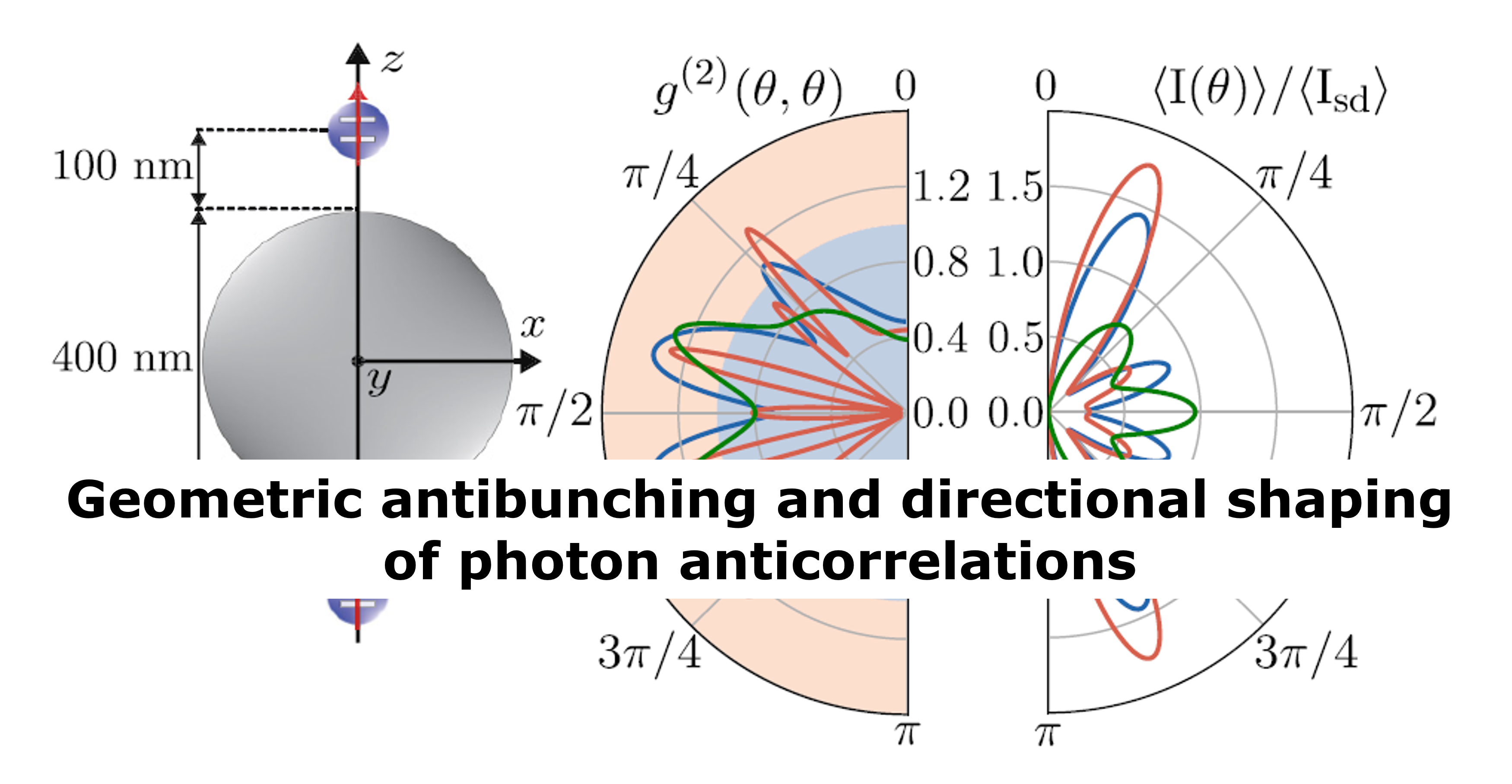
A. I. Fernández Domínguez is an Associate Professor in the Department of Theoretical Condensed Matter Physics at the Universidad Autónoma de Madrid (UAM), Spain. He is affiliated with the Condensed Matter Physics Center IFIMAC and focuses on theoretical investigations of quantum nanophotonic phenomena. His research spans transformation nano-optics, light-matter interactions at the nanoscale, and spoof plasmon metamaterials. Educational Background: Not explicitly stated in the provided text. Research Interests: Transformation Nano-optics: Explores material-geometry links in Maxwell's equations, applied to nano-antennas and plasmon-exciton coupling. Light-Matter Interactions: Investigates plasmon-assisted energy transfer, exciton dynamics, and quantum optical effects in nanophotonic systems. Quantum Nanophotonics: Develops strategies for quantum light generation and tailoring photon-emitter interactions in nanocavities. Spoof Plasmon Metamaterials: Designs metamaterials enabling plasmonic effects in infrared/THz ranges through geometric surface modes. Articles Trends: Recent work emphasizes quantum emitters in nanocavities, non-Hermitian systems, and plasmon-molecule coupling. Topics include directional photon emission, polariton dynamics, and metamaterial applications in low-frequency photonics. Scientific Awards: No awards listed in the provided text. Advising/Grants: Advising information unavailable; no grant details provided. Labs/Teams: Active in the Condensed Matter Physics Center IFIMAC, collaborating on theoretical nanophotonics projects.
Ana Maria Gomez Amador is an Assistant Professor in the Department of Mechanical Engineering at the University Carlos III of Madrid (UC3M). She is affiliated with the Experimental Mechanics, Calculations and Transport Group (MECATRAN) and the Duque de Santomauro Institute of Motor Vehicle Safety. Her research focuses on structural analysis, 3D printing applications, vehicle safety, and educational technology. Her academic work spans mechanical systems, including studies on T-stub connections, soil-structure interaction, and Roman engineering systems. She has contributed to advancements in low-cost mechanical ventilators, automotive braking efficiency, and aerodynamic device design. Her projects include leading studies on roadworthiness testing and developing educational tools for descriptive geometry and engineering design. Dr. Gomez Amador has collaborated on over 30 publications since 2016, with recent work emphasizing additive manufacturing, finite element analysis, and interdisciplinary applications of mechanical engineering. She maintains active roles in both teaching and applied research, addressing modern challenges in transportation safety and sustainable materials science. Her professional activities include patent development (e.g., driving style evaluation systems) and software tools like fBrake-TT for automotive analysis. She has advised on technical reports for organizations like AECA-ITV and Eiffage Energie, contributing to both academic and industrial innovation.