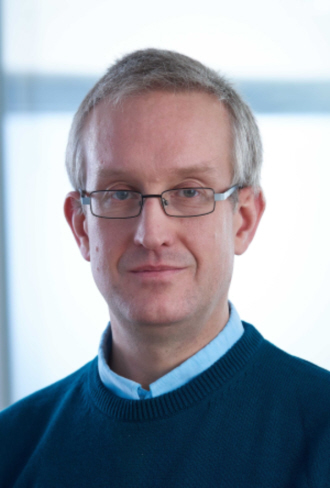
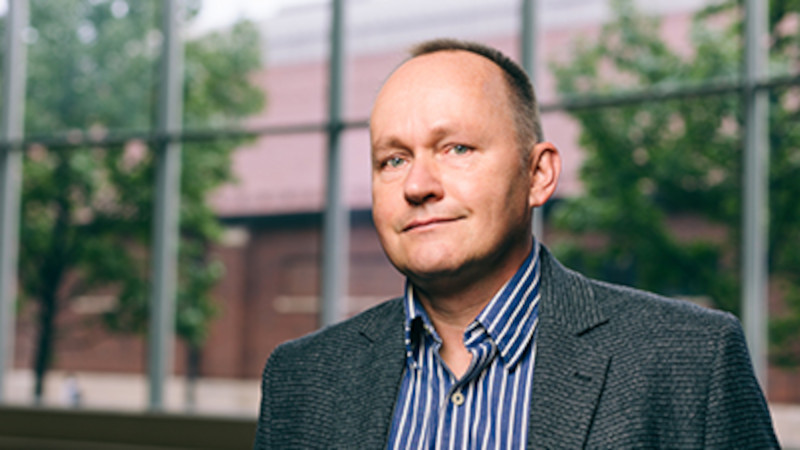
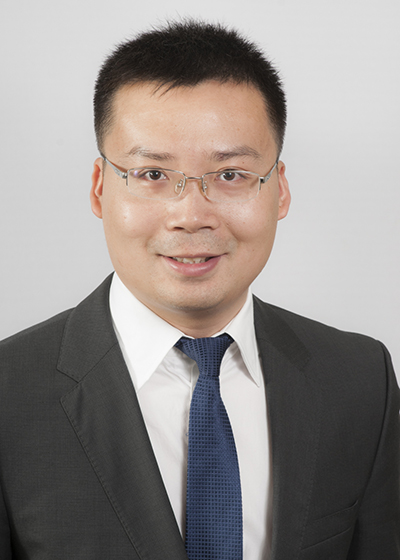
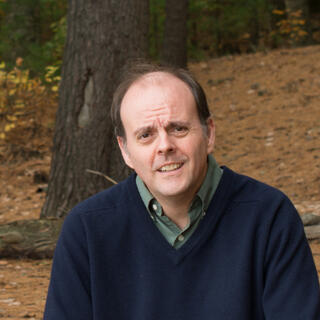
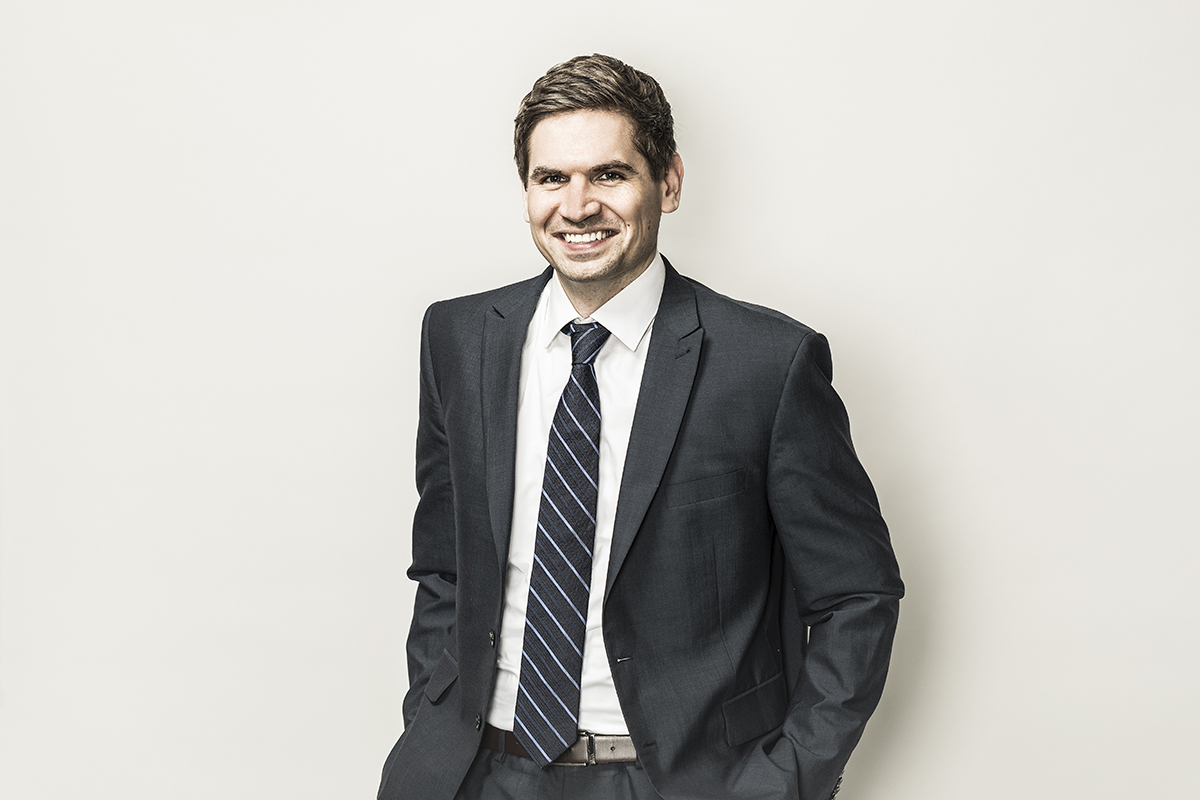
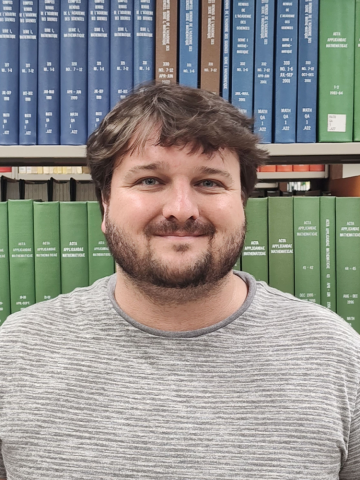
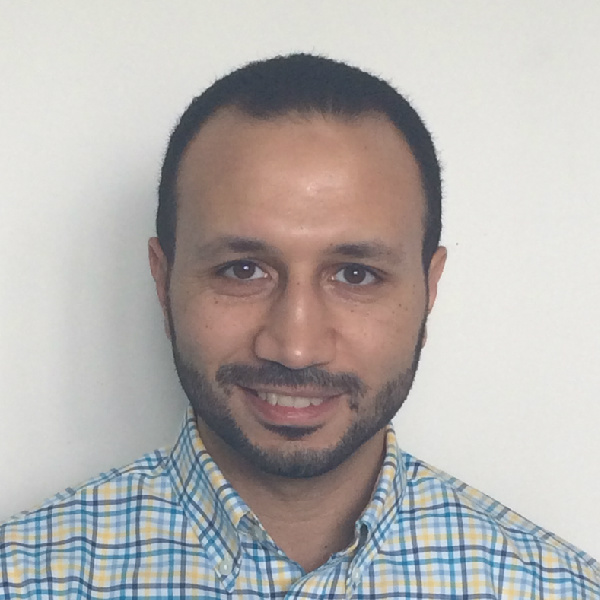
Christian Pascal Hirsch is an Associate Professor for Data Science and Statistics at the Department of Mathematics, Aarhus University. His research focuses on random networks inspired by biology and health sciences, utilizing techniques from topological data analysis and stochastic geometry. He is affiliated with the Stochastics group, AU DIGIT Centre, and AU Quantum Campus. Research Interests: Topological data analysis, large deviations theory, spatial random networks, and stochastic geometry. His work includes studies on percolation theory, Gibbs measures, and applications to neural networks and geometric functionals. Publications span journals such as the Journal of Applied and Computational Topology, Journal of Statistical Physics, and Stochastic Processes and Their Applications, covering topics from network topology to Poisson approximation.
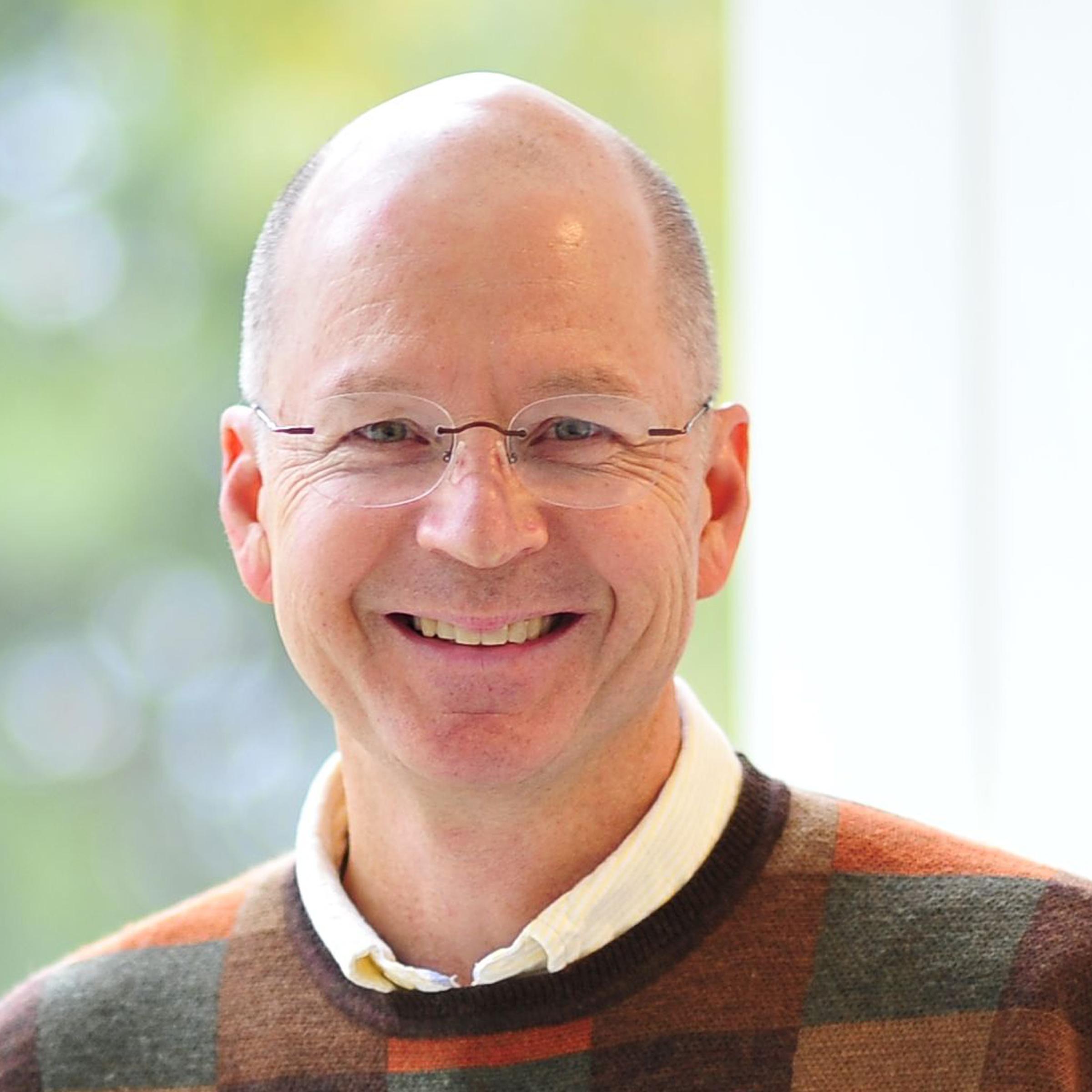
Professor Oliver Johnson is a faculty member at the School of Mathematics, University of Bristol, UK, where he serves as Head of School and holds the Professor of Information Theory position. His research bridges information theory, probability, and statistics, focusing on entropy convergence, group testing, and fundamental limits in data analysis. Current PhD students: Kieran Morris, Conor Crilly Ex-PhD students: Matt Aldridge, Leonardo Baldassini, Dan Cowley, Vaia Kalokidou, Tom Kealy, Jennifer Chakravarty, Zichen Gui, Chrys Paschou Ex-postdoc: Erwan Hillion His work includes ORCiD profile and collaborations across information theory, cybersecurity, and ecological modeling.
David Mount is a Professor in the Department of Computer Science at the University of Maryland, with an additional appointment at the University of Maryland Institute for Advanced Computer Studies (UMIACS). His primary research focus is Computational Geometry, particularly in designing, analyzing, and implementing data structures and algorithms for geometric problems. Applications of his work span image processing , pattern recognition , information retrieval , and computer graphics . He is a Fellow of the ACM and has received the ACM Recognition of Service Award twice. A member of the Algorithms and Theory Group, Mount has authored over 200 publications, many of which are available on Google Scholar, DBLP, and ArXiV. Research Focus Computational Geometry Algorithm Design and Analysis Geometric Data Structures Nearest Neighbor and Range Searching Clustering Algorithms Recent Publications Mount's recent publications (2023-2025) emphasize non-Euclidean geometry (e.g., Hilbert metric), dynamic geometric structures , and approximation algorithms for polytopes, Voronoi diagrams, and Delaunay triangulations. Collaborative works with students and researchers address challenges in kinetic data compression , label tracking , and geometric software development (e.g., Ipelets for polygonal geometry). Professional Activities Editorial Board Member, TheoretiCS (2021-present) Senior Associate Editor, ACM Trans. on Spatial Algorithms and Systems (2013-2020) Program Committee Member, FOCS , ESA , SODA , and other major conferences Awards ACM Fellow ACM Recognition of Service Award (twice)
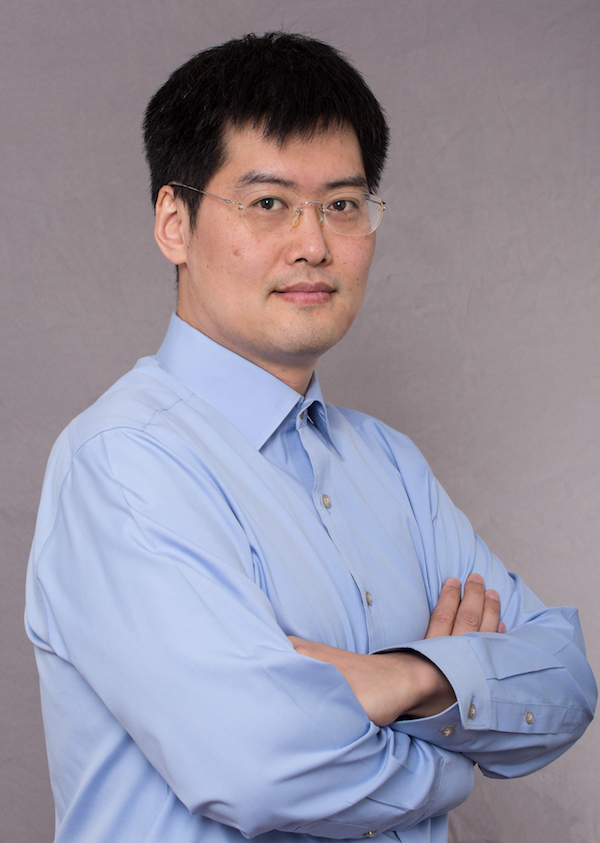
Craig Shultz is an Assistant Professor in the Department of Electrical and Computer Engineering at the University of Illinois Urbana-Champaign (UIUC), where he joined in January 2024. He is affiliated with the College of Engineering and conducts research through the Interactive Display Lab, which he founded upon joining UIUC. Prior to his academic position, Shultz co-founded Fluid Reality and served as VP of Research and Development at Tanvas, where he developed electroadhesive touchscreens based on his research at Northwestern University. Dr. Shultz's educational background includes: Ph.D. in Mechanical Engineering from Northwestern University (2017) M.S. in Mechanical Engineering from Northwestern University (2015) B.S. in Electrical Engineering from the University of Tulsa (2011) Shultz's research focuses on advancing human-computer interaction through innovative haptic technologies. His work centers on developing tactile interfaces that leverage electrostatic actuation and novel input/output devices to create immersive user experiences. His primary research areas include: Human-Computer Interaction - Exploring contemporary use cases and building novel input and output devices Electrostatic Actuation - Modeling and characterization of moderate to high voltage electrostatic actuators Haptic Technology - Designing and evaluating tactile interaction devices Interactive Embedded Systems - Creating systems that respond to human touch in sophisticated ways Shultz's research has demonstrated how haptic technologies can enhance user experiences across various domains including virtual reality, mobile devices, and interactive displays. His work aims to elevate haptic rendering to the sophistication level of graphics and audio systems through practical hardware and software solutions. Dr. Shultz has received numerous prestigious awards for his research contributions: IEEE Robotics and Automation Society Technical Committee on Haptics Early Career Award (2025) TCH Early Career Award at World Haptics 2025 Sony Faculty Innovation Award for Finger Mounted Haptic Displays (2025) Multiple Best Paper awards at premier ACM and IEEE conferences (2014-2022) As an educator and mentor, Shultz has advised multiple graduate students in the Interactive Display Lab, including Jung-Hwan (the lab's inaugural member), Seung Heon, and Yanjun (his first PhD student). His research has attracted significant attention, being featured in major media outlets including NBC Nightly News, TechCrunch, and Engadget. Shultz teaches courses such as ECE 210 (Analog Signal Processing), ECE 211 (Analog Circuits & Systems), ECE 445 (Senior Design Project Lab), ECE 598 CS (Interactive Haptic Systems), and ME 470 ZJ3 (Senior Design Project). The Interactive Display Lab, housed in room 3038 of the Electrical and Computer Engineering building at UIUC, is equipped with electronics assembly and debugging equipment, a prototyping lab, optical bench, student offices, and a photo and VR studio. The lab benefits from access to departmental mechanical, electrical, and clean room fabrication facilities. Current research directions include developing fast interactive soft buttons (DynaButtons), high-resolution haptic gloves (Fluid Reality), and flat panel haptics with embedded electroosmotic pumps.
Waldemar Celes Filho is an Associate Professor in the Department of Computer Science at Pontifical Catholic University of Rio de Janeiro (PUC-Rio) and serves as Director of the Tecgraf Institute/PUC-Rio. With a career spanning over three decades, he has established himself as a leading researcher in computer graphics and scientific visualization. His educational background includes a Civil Engineering degree from UFRJ (1986), a Master's in Civil Engineering from PUC-Rio (1990), a Doctorate in Computer Science from PUC-Rio (1995), and postdoctoral studies in Computer Graphics at Cornell University (1995-1997). Dr. Celes Filho's research focuses primarily on Computer Graphics with special emphasis on Scientific Visualization, Numerical Simulation, Distributed Visualization, and Real-Time Rendering. He is particularly known for his work on visualization techniques for black oil reservoir models and as a co-creator of the Lua programming language. His research has resulted in over 50 publications spanning nearly three decades, with consistent output continuing through 2025. His recent publications demonstrate a strong trend toward applying advanced visualization techniques to complex industrial problems, particularly in petroleum engineering and construction informatics. His work bridges theoretical computer graphics with practical applications in engineering domains, showing particular strength in volume rendering, CAD model visualization, and distributed rendering systems. As Director of the Tecgraf Institute, he leads research initiatives that connect academic work with industry applications, fostering collaborations that translate visualization research into practical tools. Dr. Celes Filho has mentored numerous students who have become co-authors on his publications, including Paulo Ivson, Fábio Markus Miranda, and Lucas Caracas de Figueiredo, among others. His work continues to be influential in both academic and industrial settings.
Xuming He is an Associate Professor at the School of Information Science and Technology (SIST), ShanghaiTech University, where he leads the PLUS Lab. His research spans computer vision and machine learning with a focus on developing algorithms that operate effectively under limited supervision and evolving data conditions. His core research interests include weakly-supervised and few-shot learning for scenarios with sparse annotations, continual learning frameworks for knowledge retention during sequential task acquisition, semantic segmentation techniques for scene understanding, and multimodal vision-language representations. He emphasizes interpretable machine learning to build transparent AI systems capable of human-understandable reasoning, addressing critical challenges in model trustworthiness and deployment reliability. Recent publications reveal strong trends toward novel class discovery in long-tailed recognition scenarios, physics-informed generative modeling for scientific applications, and robust segmentation under distribution shifts. His work increasingly integrates large language models for multimodal reasoning while maintaining focus on efficiency in resource-constrained environments like robotic grasping and medical imaging analysis. He actively mentors students, having supervised Qian He to PhD completion and Chuanyang Hu to Master's degree in 2023. He welcomes prospective graduate students through ShanghaiTech's Computer Science & Technology program and offers undergraduate research projects requiring minimum six-month commitments. The PLUS Lab under his direction drives innovation in learning under supervision constraints, with recent work spanning medical tumor analysis, cross-view geolocation, photonic computing, and semiconductor design verification. The lab's research bridges theoretical advances with practical applications across healthcare, robotics, and scientific discovery domains.
Bedrich Benes is a Professor and Associate Department Head in the Department of Computer Science at Purdue University. He holds a Ph.D. and M.S. in Computer Science from Czech Technical University in Prague (1998 and 1991, respectively). His research focuses on generative methods for geometry synthesis, procedural modeling, simulation of natural phenomena, and additive manufacturing. He has published over 200 research papers and secured grants from organizations like the NSF, NASA, and DOE. Editor-in-Chief of Elsevier's Graphical Models Senior Member of ACM and IEEE Fellow of Eurographics Association Research interests include graphics, visualization, geometric modeling, and computational biology. He leads projects on tree digital twins, urban forestry modeling, and immersive VR/XR education. Advised students include Bosheng Li and Xiaochen Zhou, who recently defended their Ph.D. theses. Notable contributions include neural ranking algorithms for forest reconstruction and tools like Tree-D Fusion for tree dataset generation. His work bridges computer graphics with environmental science and agriculture.
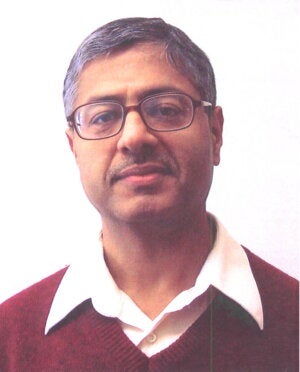
Anil N. Hirani is a Professor in the Department of Mathematics at the University of Illinois at Urbana-Champaign (UIUC), affiliated with the College of Liberal Arts & Sciences. He holds a PhD from the California Institute of Technology (2003) in Computer Science with minors in Mathematics and Control and Dynamical Systems. His academic journey includes roles as Assistant Professor (Computer Science, UIUC, 2005–2013) and Associate Professor (Mathematics, UIUC, 2013–2022) before becoming a full Professor in 2022. His research focuses on the interplay between geometry/topology and algorithms, with emphasis on structure-preserving discretizations of exterior calculus and differential geometry. Key areas include Discrete Exterior Calculus (DEC), numerical methods for PDEs, computational topology, and machine learning applications. He has organized workshops, such as the 2025 Discrete Exterior Calculus workshop at IMSI, and contributed to software like PyDEC. Education: PhD, Caltech (2003); MS in Computer Science (Stanford); Undergraduate degree in Computer Science (BITS Pilani, India). Awards include the NSF CAREER Award (2007–2012). Teaching includes courses on Differential Geometry (MATH 423), Vector and Tensor Analysis (MATH 481), and Computational Mathematics (MATH 490). He has advised numerous PhD students, notable among them Kaushik Kalyanaraman and Vaibhav Karve. Articles span DEC applications in fluid dynamics, cohomology computations, and machine learning. His work bridges theoretical foundations with practical applications in engineering and computer science.
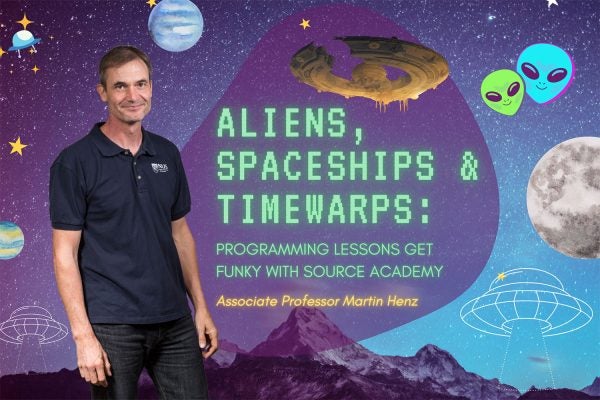
Martin Henz is an Associate Professor at the National University of Singapore , affiliated with the School of Computing and its Department of Computer Science . His academic journey includes an M.Sc. in Computer Science from Stony Brook University (1993) and a Dr.rer.nat. in Computer Science from Saarland University (1997). He has also worked as a Research Scientist at the German Research Centre for Artificial Intelligence. Research Focus : Scalable Experiential Learning, Systems for Teaching/Learning, AI in Education, Programming Languages, Algorithms, and Constraint Programming. Key Projects : Source Academy (immersive programming environment), Deep Teaching (LMS enhancements), and NUS Seafarers (maritime experiential learning). Publications span education technology, programming languages, and sustainable engineering, with recent works focusing on JavaScript-based pedagogy, automated question generation, and electric vehicle conversions. He supervised Rahul Singhal 's PhD, leading to the educational startup Cerebry, and co-founded Workforce Optimizer Pte Ltd with Alan Sevugan. Awards : NUS Annual Digital Education Award (2021) NUS Annual Teaching Excellence Award (2016/17) Fulbright Scholarship (1990) Startup @ Singapore Champion (2001)
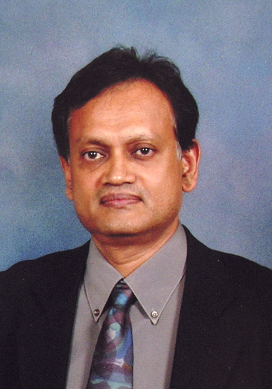
Professor Tilak Chandratilleke is a faculty member in the School of Civil and Mechanical Engineering at Curtin University, part of the Faculty of Science and Engineering. He holds a PhD from the University of Cambridge and has extensive post-nominals including MIEAust, CPEng, and MASME. His research focuses on advanced thermal engineering, computational fluid dynamics (CFD), and heat transfer optimization. Key areas of interest include thermal energy storage systems, fluid flow in curved ducts, and thermal design for industrial applications. He also serves in the Office of the Provost, contributing to academic governance. Research Interests: - Computational Fluid Dynamics (CFD) modeling of complex thermal systems. - Heat and mass transfer in energy storage and manufacturing processes. - Design and analysis of heat exchangers and thermal recuperators. - Fluid dynamics in curved geometries and secondary vortex structures. - Applications in renewable energy systems and advanced manufacturing. Selected Publications (2022–2010): - Investigated high-temperature thermal energy storage using CaCO₃/Al₂O₃ reactors (2022). - Developed numerical models for metal hydride thermal storage systems (2021). - Analyzed boiling heat transfer in curved ducts and laser-assisted machining thermal effects (2020–2019). - Advanced CFD methodologies for convective boiling and turbulent flow modeling (2018–2016). - Pioneered studies on Dean vortices and microfluidic heat enhancement (2011–2010). Teaching: - Thermodynamics and Heat Transfer. - Fluid Mechanics and Engineering Applications. Labs/Teams: - Involved in Curtin’s thermal energy and advanced manufacturing research groups. - Collaborates with industry partners on renewable energy and thermal system optimization projects.
Dr. Zichun Zhong is an Associate Professor and Graduate Program Director in the Department of Computer Science at Wayne State University's James and Patricia Anderson College of Engineering. He earned his Ph.D. from the University of Texas at Dallas and completed postdoctoral training at UT Southwestern Medical Center. His research focuses on geometric modeling, computer graphics, medical image processing, and visualization technologies. Research encompasses: Geometric modeling of surfaces and volumes 3D computer vision and reconstruction Medical image segmentation and visualization Virtual/augmented reality applications GPU-accelerated algorithms Awards and honors include NSF CAREER and CRII awards, Faculty Research Excellence Award, and Excellence in Teaching recognition. He serves as Technical Paper Chair for Shape Modeling International conferences and associate editor for multiple journals. Current doctoral advisees: Shiman Zhou, Hongbo Li, Haikuan Zhu, and Sikai Zhong. Notable alumni include researchers at Samsung NEON, Skoltech, and General Motors.
Fernando Camelli is an Associate Professor in the Physics & Astronomy Department at George Mason University, holding dual roles as Instructional Faculty and Faculty. His research focuses on computational fluid dynamics (CFD), urban environmental modeling, and high-performance computing. He specializes in simulating complex fluid flows in urban environments, subway systems, and industrial applications, with particular emphasis on turbulence modeling, fluid-structure interaction, and GPU-accelerated algorithms. Key research areas include: CFD for urban airflow and contamination dispersion Meshless and immersed boundary methods Integration of geographic information systems (GIS) with CFD Large-scale simulations using parallel computing His work addresses practical challenges such as subway ventilation optimization, emergency contaminant dispersion prediction, and urban infrastructure design. Recent studies emphasize scalability improvements for fluid-structure interaction simulations and GPU-based code modernization.
Dr. Thomas A. Cooper is an Associate Professor at the Lassonde School of Engineering, York University, specializing in Mechanical Engineering. He focuses on solar energy systems, integrating thermal science, optics, and materials to develop technologies for solar energy conversion into electricity, heat, and fuels. His research has received international recognition through awards and fellowships. BASc (University of Toronto) MSc & DrSc (ETH Zurich) Research interests include solar concentrators, high-temperature materials, and thermochemical processes. His work spans fundamental and applied domains, such as radiation heat transfer , nonimaging optics , and CO2 capture materials . Recent publications highlight his innovation in solar thermal desalination, aerogel composites, and Martian dust conversion. Key article trends demonstrate expertise in concentrated solar power (2023), nonimaging optical design (2022), plasmonics (2017), and thermochemical redox cycles (2016). Collaborative projects with institutions like Synhelion AG and Toronto Metropolitan University emphasize interdisciplinary and industrial applications. ASME Solar Energy Graduate Student Award ETH Medal Hans Eggenberger Prize Chorafas Prize NSERC PGS-M/D Fellowships Swiss National Science Foundation Fellowship The CooperLab at York University houses advanced facilities for solar simulation, thermal testing, and spectroscopy. Active projects funded by NSERC, CFI, and Lassonde Innovation Fund explore photothermal materials, CO2 capture, and Martian resource utilization. The lab advises graduate researchers like Matteo Timpano and Niknaz Atashdehghan.
Timothy Duff is an Assistant Professor in the Mathematics Department at the University of Missouri's College of Arts and Science. He co-organizes the Math & Data Seminar and specializes in applied computational algebraic geometry for 3D reconstruction in computer vision. Research integrates algebraic geometry with machine learning and numerical analysis to solve geometric problems in imaging systems. Core interests include multi-view geometry, minimal solvers, and certified numerical methods. Recent publications emphasize efficient algorithms for camera calibration, 3D reconstruction, and polynomial system solving. Work frequently develops tools in Macaulay2 and addresses theoretical challenges in computer vision through algebraic frameworks.
Dr. Ahmed S. Ibrahim is an Associate Professor in the Department of Electrical & Computer Engineering at Florida International University (FIU), leading the Wireless Innovation Lab (WIL). He holds a Ph.D. from the University of Maryland and M.S./B.S. degrees from Cairo University. His research focuses on wireless communications, vehicular networks, millimeter wave systems, and geometric machine learning applications in network optimization. Education: Ph.D., Electrical Engineering, University of Maryland, College Park (2009) M.S., Electronics and Electrical Communications, Cairo University (2004) B.S., Electronics and Electrical Communications, Cairo University (2002) Research Interests: Dr. Ibrahim specializes in advanced wireless communication systems, including drone-assisted aerial networks, vehicular communications, and millimeter wave technologies. His work integrates Riemannian geometry and machine learning to address challenges in network optimization, security, and resource allocation. Recent projects include applying geometric frameworks to link scheduling, beamforming, and interference management. Key Contributions: His NSF CAREER-funded research ( CNS-2144297 ) explores Riemannian-geometric tools for low-latency wireless networks. Notable outputs include frameworks for RIS-assisted ISAC systems, massive MIMO resource allocation, and satellite network scheduling. Awards: NSF CAREER Award (2022-2027) Rising Star Award, Florida Academy of Science (2022) Advising & Grants: He mentors Ph.D. students in geometric machine learning and wireless systems. Current projects include Riemannian-geometry-based scheduling and NSF-funded studies on mmWave vehicular communications. His lab collaborates with industry and academic institutions on 5G/6G network solutions. Labs & Teams: Director of the Wireless Innovation Lab (WIL), focusing on 6G research, network testbeds, and interdisciplinary projects combining signal processing, AI, and communications.