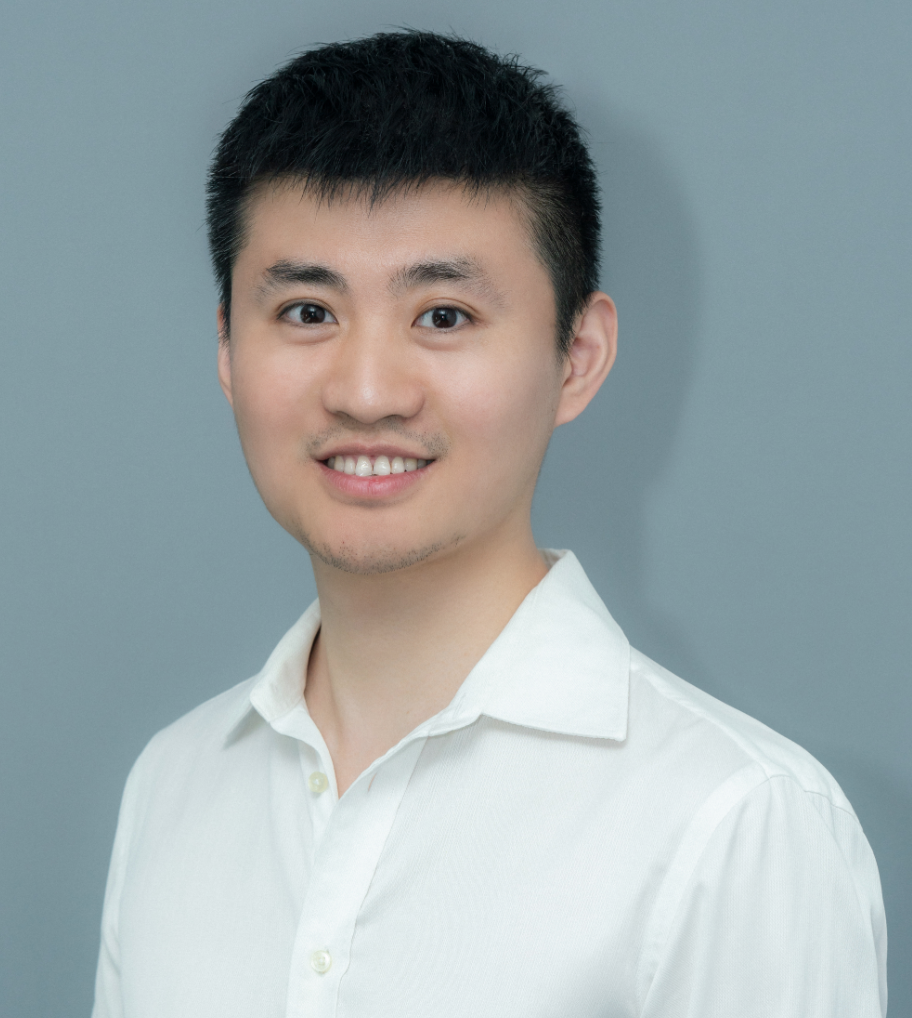
Bruno Mera is a Research Fellow under a FCT CEEC Grant in Mathematics at Instituto de Telecomunicações and a Visiting Scholar at the Ozawa Group, Advanced Institute for Materials Research (WPI-AIMR), Tohoku University. His work bridges theoretical physics and advanced mathematics, focusing on the geometric and topological structures underlying quantum phenomena. His primary research interests include: Quantum matter and its geometric/topological structures Kähler geometry in fractional Chern insulating phases Geometric quantization and coherent state transforms Information geometry for model selection in high-dimensional data Topological aspects of conserved currents in gauge theories Mera's recent publications reveal a sophisticated mathematical approach to physical problems, particularly in condensed matter physics and quantum field theory. His work consistently explores deep connections between differential geometry, topology, and physical phenomena, with emphasis on how geometric structures capture underlying physical behavior. The recurring themes across his articles include applications of bundle theory to band structures, topological interpretations of conservation laws, and classification problems using Lie group methods. Bruno Mera maintains an active research presence through his blog (https://bmeraphys.blogspot.com/) where he details his mathematical investigations. His current research includes applications of geometric methods to quantum Hall effects, fractional Chern insulators, and model selection problems in statistical learning.
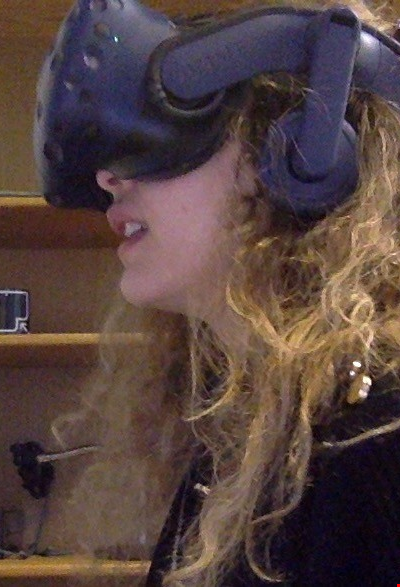
Professor Julie Wall is a faculty member at the University of West London, serving as Professor of AI and Advanced Computing in the School of Computing and Engineering. She is actively engaged in research, teaching, and professional service, including her role as an expert at the British Standards Institution (BSI) in the domain of artificial intelligence. Research Interests: Julie Wall's research is centered on the design and application of intelligent systems for processing and modeling temporal data, particularly in speech and language. She leverages neural network architectures—ranging from biologically inspired models to computationally efficient deep learning systems—to analyze diverse data types such as audio, video, images, tabular data, and 3D features. Her work extends to developing production-grade deep learning and natural language understanding systems for immersive environments like virtual and augmented reality. Publications and Research Trends: Her body of work, comprising over 50 high-quality papers and multiple patents, reflects a strong trajectory in AI systems that integrate multimodal data with temporal dynamics. The research spans core areas of machine learning, natural language processing, and applied AI, with increasing focus on real-world deployment, efficiency, and intelligent interaction in extended reality platforms. Scientific Awards: US Patent UK Patent Advising and Grants: Julie Wall supervises research students across disciplines including forensic science and artificial intelligence. She contributes extensively to academic programs, teaching courses such as BSc and MSc in Computer Science, Artificial Intelligence, Data Science, and specialized AI programs in cybercrime and criminal justice. While specific grant details are not listed, her patent holdings and publication volume suggest sustained research funding and project leadership. Labs and Teams: As a leading researcher in AI and advanced computing, she is likely involved in or leads research groups focused on intelligent systems, deep learning, and multimodal AI at the University of West London, though specific lab names are not mentioned in the text.
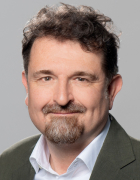
Juuso Seuri is a Researcher at the Department of Mathematics and Systems Analysis within the School of Science at Aalto University. His affiliation includes roles in multiple research groups such as Algebra and Discrete Mathematics, Analysis (Complex Analysis), Differential Geometry & Applications, Nonlinear Partial Differential Equations (NPDE), and Time-Frequency Analysis. He contributes to organizing academic events like NNPSM2016, HAPDE2015, and PFT2024, and participates in research seminars and teaching activities. Research interests span advanced mathematical domains including algebraic structures, geometric analysis, mathematical physics, and PDE applications. His work intersects with interdisciplinary areas such as Math & Arts and numerical analysis. He is based in Espoo, Finland, at the Otakaari 1 campus in Room Y250d. No specific grants, awards, or student advising records are explicitly mentioned in the provided text. He collaborates within the Nonlinear PDE group and contributes to departmental initiatives like STACK research and e-learning projects.
Hao Zhou is a Research Associate Professor at the Institute for AI Industry Research (AIR), Tsinghua University. His research focuses on developing Generative AI models for discrete symbols such as text, small molecules, and proteins. Previously, he worked as a Research Scientist/Manager at Bytedance AI Lab. Currently, he leads the Generative Symbolic Intelligence group at Tsinghua AIR and co-leads the SIA Lab, a joint laboratory with ByteDance for LLM research. His research interests span molecular representation learning, generative models for scientific discovery, and applications in drug design and protein engineering. Recent work includes advancements in 3D molecular modeling, protein language models, and non-autoregressive sequence generation. These efforts aim to bridge AI techniques with scientific domains like chemistry and biology. Recent publications highlight contributions to areas such as auto-encoder-based molecular representation (Mol-AE), multi-scale protein modeling (ESM All-Atom), and structure-based drug design (MolCRAFT). These papers reflect a focus on improving generative models' accuracy and applicability to real-world scientific challenges. Best Short Paper of INLG (2022) Ranked #1 on WMT EN-DE translation (2021) CCF NLPCC Distinguished Young Scientist (2021) Best Paper Award of ACL (2021) CAAI Doctoral Dissertation Award (2019) He advises several students, including Qiying Yu, Yuxuan Song, and Danqing Wang, and oversees grants related to AI in drug discovery and molecular modeling. His labs are actively hiring postdocs and research assistants, and he encourages student interns to join collaborative projects. Key initiatives include the SIA Lab’s work on LLM research and the Generative Symbolic Intelligence group’s exploration of AI-driven scientific breakthroughs. These efforts emphasize interdisciplinary approaches to tackle complex challenges in AI and life sciences.
Prof. Dr. Boris Jutzi is a leading academic in photogrammetry and remote sensing, currently serving as Professor at Karlsruhe Institute of Technology (KIT) and acting head of the Chair of Photogrammetry and Remote Sensing at Technical University of Munich (TUM). His research focuses on active optical sensors, computer vision, laser scanning, and 3D reconstruction techniques. He holds a diploma in electrical engineering from University of Kaiserslautern, a PhD from TUM, and venia legendi from KIT. Affiliations: KIT Institute of Photogrammetry and Remote Sensing, TUM Chair of Photogrammetry and Remote Sensing Education: Diploma in Electrical Engineering (University of Kaiserslautern) Doctorate (TUM) Venia Legendi (KIT) His research interests include: Neural Radiance Fields (NeRF) for 3D reconstruction LiDAR technology and applications UAV-based remote sensing Geospatial data fusion Computer vision in environmental monitoring Awards: Faculty Teaching Award (2020) Best Paper Awards (2019, 2016, 2014, 2006) His work emphasizes novel sensor integration and automated scene analysis , with contributions to urban and environmental 3D modeling. Current projects include underwater scene reconstruction via NeRFs and large-scale digital twin datasets (e.g., TUM2TWIN).
Marc HOFFMANN is a Professor at Université Paris Dauphine-PSL and holds the Fundamental Chair at the Institut Universitaire de France since 2024. His academic journey includes roles at institutions such as INRIA (2020-2022), École Polytechnique (2007-2015), and Université Gustave Eiffel (2003-2012). Research Focus: Statistics of random processes, nonparametric statistics, and applications in financial modeling and population biology. Key Contributions: Adaptive estimation, confidence bands, inverse problems, rough volatility modeling, and growth-fragmentation processes. Advising: Supervised 19 PhD students with topics spanning statistical inference, Hawkes processes, and stochastic volatility. Collaborations include CIFRE grants with EDF, SCOR, and Banque de France. Scientific Awards : Fundamental Chair at Institut Universitaire de France (2024).
Eliana Duarte is an Assistant Professor in Probability and Statistics at Universidade do Porto, where she conducts interdisciplinary research at the intersection of statistics, algebraic geometry, commutative algebra, and combinatorics. Her work focuses on algebraic and geometric methods in statistical modeling, particularly in discrete models, graphical models, and tensor product surfaces. Her research interests include Algebraic Statistics , Graphical Models , Discrete Statistical Models , Toric Varieties , Implicitization , and Polynomial Systems . She applies algebraic techniques to understand the structure of statistical models and their maximum likelihood estimators, with recent work on decomposable models, polytree learning, and rational linear precision in higher-dimensional polytopes. The trend in her recent publications (2016–2024) reflects a consistent focus on the algebraic foundations of statistical models, combining symbolic computation with geometric insight. Her work spans pure mathematical theory and applications in causal inference, microbiome modeling, and geometric design. Key themes include the use of syzygies, toric fiber products, and virtual resolutions in modeling and implicitization. Scientific Awards: No awards listed in the provided text. Advising and Grants: Dr. Duarte advises graduate students in statistics and algebraic methods, although specific advisee names are not listed. She is involved in multiple research projects related to algebraic statistics and probabilistic modeling. While no specific grants are mentioned, her sustained publication record suggests active research funding. Labs and Teams: No specific laboratory or research team name is provided in the text. However, her collaborative publications indicate active participation in interdisciplinary research networks, particularly in algebraic statistics and computational geometry.
Harry Z. Davis is a Professor at the Stan Ross Department of Accountancy within the Zicklin School of Business at Baruch College, City University of New York. He has held this position for multiple decades, teaching core courses such as Principles of Accounting (ACC 2101) and Financial Reporting (ACC 9110) across numerous semesters. His academic journey includes a B.A. in Philosophy from Yeshiva University (1972), an M.B.A. from Baruch College (1976), and both an M.Phil. (1977) and Ph.D. in Accounting (1978) from Columbia University. Professor Davis's research spans financial accounting, management accounting, and interdisciplinary topics bridging mathematics and philosophy. His recent publications explore number theory (e.g., Pythagorean triples) and classical philosophy alongside traditional accounting subjects. Earlier work focused on behavioral aspects in accounting education, financial reporting ethics, and tax policy impacts. His publications demonstrate consistent scholarly output since the 1980s, with recent articles showing increased engagement with pure mathematics. Awards and Honors: Teaching Excellence: Beta Alpha Psi (1999), National Association of Black Accountants (1998), Baruch College Presidential Distinguished Teaching (1994) Research Fellowships: American Accounting Association (1977), Haskins & Sells at Columbia University (1975-1976) Early Recognition: Westinghouse Science Talent Search Certificate (1967), Mathematical Association Award (1967) He has advised approximately 100 Master's students and served on key committees including Graduate Curriculum, Learning Assurance, and Department Executive Committees. No information about labs, grants, or research teams was found in the provided text.
Gautam Pai is a postdoctoral researcher at the Eindhoven University of Technology , affiliated with the School of Mathematics and Computer Science . His work focuses on geometric learning, differential geometry, and the application of partial differential equations (PDEs) to machine learning and computer vision. Research Interests : Geometric Deep Learning, Optimal Transport, Cartan Connections, Lie Group Theory, Biomedical Image Analysis, and Structural Health Monitoring. Collaborations : Active in interdisciplinary projects involving mathematics, computer science, and biomedical engineering. Awards : No explicit scientific awards mentioned in the provided data. Advising : No students or advisees listed in the available records. Recent research output highlights his expertise in designing geometrically equivariant neural networks and applying optimal transport methods to real-world problems like crack detection in steel bridges and vascular tree tracking in retinal imaging. His publications span peer-reviewed journals and conference proceedings, emphasizing the intersection of mathematics and machine learning.
Nadine Aburumman is an Associate Dean for Equality, Diversity and Inclusion (EDI) and Lecturer in Computer Science at Brunel University London, within the College of Engineering, Design and Physical Sciences. She leads the Graphics and Extended Reality Team (GERT) and is a member of the Centre for AI: Social and Digital Innovation and the Interactive Multimedia System (IMS) research group. Her academic journey includes postdoctoral positions at University College London, the Computer Science Research Institute of Toulouse, and Friedrich-Alexander University Erlangen-Nürnberg. Dr. Aburumman holds a BSc and MSc in Computer Science, with her MSc specializing in computer graphics, vision and imaging, and a PhD in computer science focusing on digital human and shape simulation. She was awarded a PhD Erasmus Mundus Scholarship for her doctoral studies at Sapienza University of Rome. She also holds FHEA status (PgCAP in academic practice) and is a Professional Member of the British Computer Society (BCS). Her research spans real-time computer graphics , extended reality , and AI-powered immersive technologies . She investigates interactive character animation, physically based simulations, and the application of VR/AR/XR in interdisciplinary contexts including neuroscience, education, and social interaction. Her work bridges computer science with practical applications in healthcare, training, and human-computer interaction, with a particular focus on making technology accessible and inclusive. Dr. Aburumman's publication record shows increasing interdisciplinary work, with recent publications focusing on collaborative virtual environments, haptic feedback systems, and the integration of neuroscientific methods like fNIRS to study human responses in virtual environments, particularly with neurodiverse populations. Her work demonstrates a clear trajectory from foundational graphics research toward applied, socially relevant technology development. 2024: Runner-Up: Lecturer of the Year (Student Led Award-University Level) 2023: The Recognition of Excellence (RoE) Award 2022: Brunel Research Initiative And Enterprise Fund (BRIEF) Award 2016-2018: CIMI Post-doctoral Fellowships 2014: Best paper and best presentation awards at the 30th SCCG conference 2012: EU Erasmus Mundus PhD Scholarship Dr. Aburumman has supervised over 140 undergraduate students (including 50 Final Year Projects) and 16 successful MSc dissertations. Notable students include Mariama Kebbeh Suko who won the 2021 BCS prize for her AR project on African & Black History, and Brandon Michael whose work on VR language pedagogy was accepted for publication. She currently supervises PhD students Mingzhao Zhou (real-time visual and haptic feedback) and Rania Xanthidou (haptic feedback in VR learning environments). Her research is supported by multiple grants including Royal Society Partnership Grants, RCIF Grants, and projects with the RESPECT4Neurodevelopment initiative. As leader of the Graphics and Extended Reality Team (GERT), Dr. Aburumman fosters interdisciplinary collaboration across computer science, neuroscience, and education. Her team works on projects ranging from droplet-solid interaction simulations to VR systems for neurodiverse children, reflecting her commitment to applying graphics research to real-world challenges. She co-coordinated the AI Centre Thought Leadership series for 2023-2024 and is actively involved in outreach through programs like Code First Girls and Made In Brunel.
Dietmar Weinmann is a Senior Researcher at the CNRS (Centre National de la Recherche Scientifique) affiliated with the IPCMS (Institut de Physique et Chimie des Matériaux de Strasbourg) and the University of Strasbourg. His work focuses on theoretical solid-state physics, particularly quantum effects in electronic properties, mesoscopic physics, and quantum transport phenomena. His research explores non-local heating in quantum thermoelectrics, scanning gate microscopy applications in graphene and semiconductor heterostructures, power dissipation asymmetry in quantum point contacts, and orbital magnetization mechanisms in mesoscopic systems. Key themes include electron correlations, spin-orbit interactions, and disorder effects in nanoscale devices. Scientific awards include the Marie Curie Fellowship during his postdoctoral work at SPEC Saclay. He teaches an elective course on Electronics for Quantum Science and Technology at the University of Strasbourg. As a member of the Mesoscopic Quantum Physics team, his research combines theoretical modeling with experimental collaborations on quantum transport imaging and inverse problem solving via machine learning.
Alexander Hartelt is a researcher at the Institute of Computer Science, Faculty of Mathematics and Computer Science, University of Würzburg. He works at the Chair of Artificial Intelligence and Knowledge Systems (Computer Science VI) focusing on computer vision applications for historical document digitization. His research interests include: Computer Vision for historical document analysis Layout recognition and segmentation algorithms Optical character recognition (specializing in handwritten documents) Deep learning-based information extraction Digital preservation of cultural heritage materials Hartelt's recent publications demonstrate strong focus on medieval music manuscripts and historical print digitization. His work combines contour-based segmentation, deep learning networks, and open-source tool development to address challenges in historical document processing. Key application areas include music notation transcription and OCR for aged printed materials. Hartelt has been actively teaching since Winter Semester 2020/21, supervising: Artificial Intelligence I exercises Current Trends in Artificial Intelligence seminars Software internship topics His primary research projects include: Corpus Monodicum : Researching, transcribing and editing historically significant monodic music collections using the Ommr4all transcription tool Segmentation of Old Prints : Developing algorithms for segmentation and transcription of historical printed materials using pixel classifiers, contour-based approaches, and baseline detection methods
Jason Cantarella is a Professor in the Mathematics Department at the University of Georgia. His research focuses on geometric knot theory, particularly the shapes of random curves and polygons. He teaches Differential Geometry of Curves and Surfaces (MATH 4250) every spring and specializes in the Multivariable Mathematics (MATH 3500-3510) course sequence. His research interests center on geometric properties of random polygons and knots, using differential, algebraic, and symplectic geometry of polygon spaces. Dr. Cantarella is particularly interested in questions like how likely it is that a random curve is knotted or what can be expected from a random diagram of a random space curve. His work bridges pure mathematics with applications in polymer physics and molecular biology. His recent publications show a strong focus on random polygons, topological polymers, geometric probability, and computational methods for analyzing knotting phenomena. There's a clear progression from theoretical foundations to algorithm development and practical applications, particularly in understanding the statistical properties of knotted structures in physical systems. Dr. Cantarella leads a research group that includes graduate students Tom Needham, Michael Berglund, and Harrison Chapman, as well as postdoctoral fellow Clayton Shonkwiler. He collaborates with faculty members Jason Parsley and Matt Mastin at UGA, and internationally with researchers including Tetsuo Deguchi at Ochanomizu University, the Uehara group at Kyoto University, and Clayton Shonkwiler of Colorado State University. He has developed several computational tools including Octrope (for polygonal tube radius calculation), plCurve (polygon library), Ridgerunner (knot tightening software), and Tsnnls (sparse non-negative least squares solver). These tools have enabled significant advances in the computational study of geometric knot theory and random polygon spaces.
Saar Hersonsky serves as Professor of Mathematics at the University of Georgia's Department of Mathematics in Athens, with office location at 408 Boyd GSRC. Contact details include email saarh@uga.edu, phone (706) 542-2111, and fax (706) 542-2573. His research bridges two primary disciplines: Mathematics : Geometric and Non-Smooth Analysis, Topology, Conformal Geometry, Geometric Structures in Low Dimensional Topology, and Geometry of Negatively Curved Spaces Computer Science : Computer Networks, Image Science, Machine Learning, and Data Science No scientific awards or honors were documented in the source material. Information regarding student advising, research grants, laboratory facilities, or collaborative teams was not provided in the available content. Academic profiles are accessible via Google Scholar, Research Gate, and LinkedIn.
Gabriele Gerlach is a Professor at the Carl von Ossietzky University of Oldenburg since 2007, affiliated with the Institute of Biology and Environmental Sciences and leading the Department of Biodiversity and Evolution of Animals. She also serves as an Adjunct Senior Scientist at the Marine Biological Laboratory (USA) and an Adjunct Professor at the Boston University Marine Program. Education : Ph.D. (1990) and Habilitation (2000) in Zoology and Ecology at the University of Constance, Germany. Research Interests : Biodiversity, evolutionary biology, and ecology combined with mathematical approaches. Her work focuses on operator theory, spectral analysis, and dynamical systems applied to biological and environmental questions. Publications : Recent contributions include mathematical frameworks for kernel operators, transition semigroups, and spectral convergence, bridging abstract analysis with computational biology.