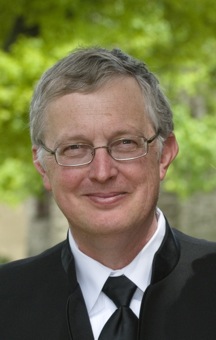
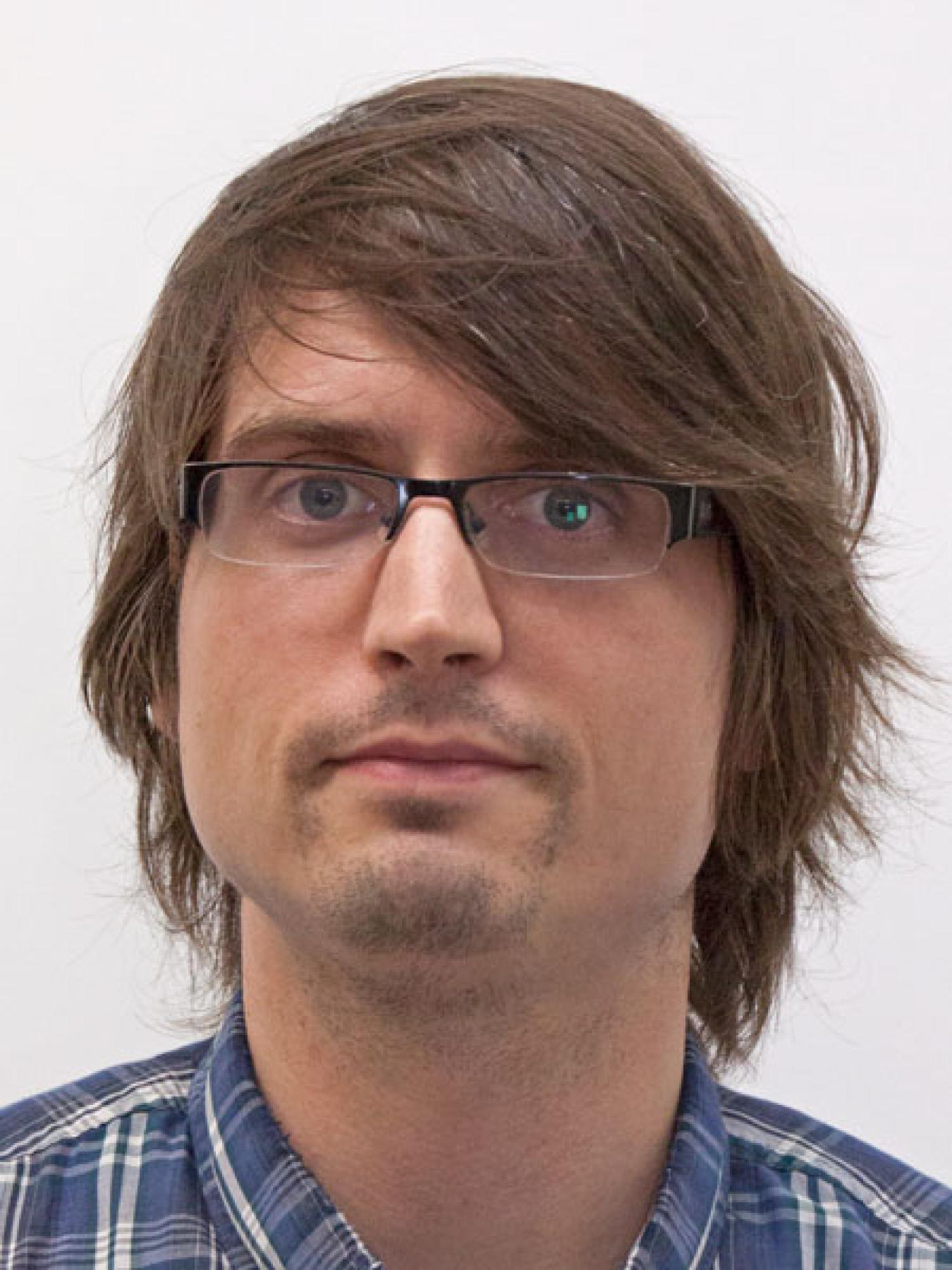
Călin-Adrian POPA is a Full Professor at the Department of Computer and Software Engineering, Politehnica University of Timişoara. He holds a Ph.D. in Computer Science and Information Technology (2015) from Politehnica University Timişoara, and additional degrees in Mathematics from West University of Timişoara (B.Sc. 2013, M.Sc. 2015). His research focuses on artificial intelligence, machine learning, and neural networks, with specializations in complex-valued systems (octonion, quaternion, Clifford algebra), stability analysis, and synchronization of neural networks. He has been awarded the 'Profesor Bologna' Distinction (2017). Research interests include: Advanced neural network architectures Deep learning for computer vision Fractional-order systems Nonlinear dynamics and control Applications in robotics and astrophysics His publications span 2014–2025, emphasizing theoretical contributions to neural networks and practical applications in computer vision and robotics. He supervises a large cohort of PhD students in AI-related fields.
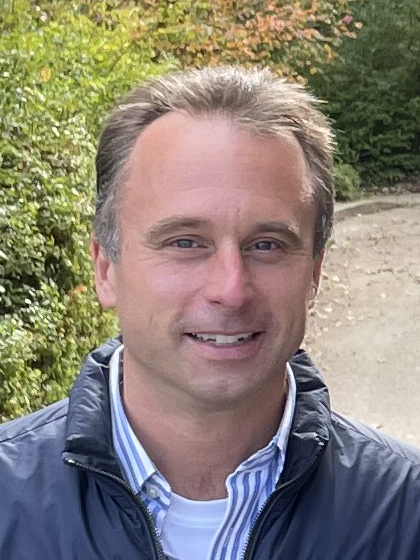
Cristiano Bocci is a Full Professor at the Department of Information Engineering and Mathematical Sciences, University of Siena. His research focuses on Algebraic Geometry, Commutative Algebra, and their applications in sensor networks and statistics. He teaches courses like Computational Geometry and Analytical Geometry, and his work extends to interdisciplinary projects involving engineering and data science. Contact him at cristiano.bocci@unisi.it. Research Interests: Geometric constructions in projective spaces Hadamard products of varieties and ideals Applications of algebraic methods in sensor networks and granular material measurement Recent Trends in Publications: Over 2023-2024, Bocci has explored Hadamard products' algebraic properties, Gorenstein points in projective spaces, and sensor network designs. His work bridges pure mathematics with engineering solutions like LoRaWAN-based systems for granular material volume measurement. Grants & Advising: While specific grants aren't listed, his active publication record suggests ongoing research projects. No student advisees are explicitly mentioned. Labs/Teams: Collaborates on interdisciplinary teams applying algebraic geometry to sensor technology and data modeling.
Suraj Panicker is a Postdoctoral Researcher in the Department of Automation Technology and Mechanical Engineering. He holds a Master of Science in Industrial Management from Oregon State University (2018) and a Bachelor of Science in Mechanical Engineering (2014). His research focuses on additive manufacturing, materials science, and engineering design optimization, with particular emphasis on thermal analysis, dimensional modeling, and process-structure-property linkages. He has contributed to UN Sustainable Development Goals related to education and innovation. Key research themes include wire arc additive manufacturing, infill strategy optimization, and graph-based modeling for design fidelity evaluation. His work integrates functional modeling, Bayesian networks, and singular value decomposition to address challenges in manufacturing processes and sustainability. Recent activities include presenting at the 2024 International Symposium on Industrial Engineering and Automation and contributing to the HE-LHC magnet production project. Collaborations span academic and industrial partners, with active involvement in conferences since 2019. His research outputs (20 articles from 2018–2025) explore topics ranging from thermal history prediction to cold spray functionalization of additive manufactured structures.
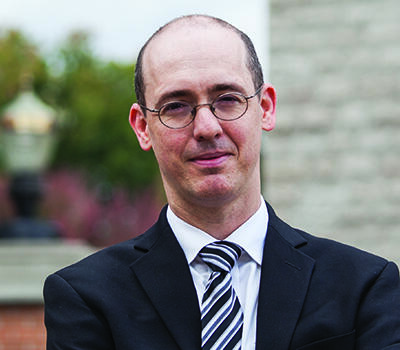
Nicholas James McCleerey serves as an Assistant Professor in the Department of Mathematics at Purdue University's College of Science, specializing in complex geometry and nonlinear partial differential equations arising in geometric analysis. His academic background includes a Ph.D. from Northwestern University under Valentino Tosatti and postdoctoral research at the University of Michigan with Mattias Jonsson. McCleerey's research spans complex geometry , differential geometry , and algebraic geometry , with emphasis on Monge-Ampere equations , complex Hessian operators , and geodesic rays . He investigates singularities, tropical geometry, and Calabi-Yau manifolds using pluripotential theory and non-Archimedean methods. Analysis of his 14 publications (2018-2024) reveals concentrated work on singular solutions to Monge-Ampere equations in complex and real settings, eigenvalue problems for complex Hessian operators, and connections between tropical geometry and Calabi-Yau hypersurfaces, demonstrating evolving methodological sophistication. McCleerey actively mentors through the Math Alliance and supervises the Purdue Experimental Math Lab (PXML) project on numerical computation of Monge-Ampere eigenvalues. He co-organizes Purdue's Geometry and Geometric Analysis Seminar with Lvzhou Chen, fostering collaborative research in geometric analysis. His teaching portfolio includes undergraduate courses in Ordinary Differential Equations, Calculus, Linear Algebra, and Topology, reflecting strong commitment to mathematical education across foundational and advanced levels.
Maxim Braverman is a Professor in the Mathematics Department at Northeastern University. His research focuses on spectral theory, geometric analysis, and mathematical physics, with a particular emphasis on index theorems, differential operators on manifolds, and applications to quantum field theory. He has collaborated extensively on topics such as the Weyl law, symplectic reduction, and the study of mtDNA mutations. Braverman holds a Ph.D. in Mathematics and has authored numerous influential papers in top-tier journals. His work often bridges the gap between pure mathematics and theoretical physics, with notable contributions to the understanding of non-compact manifolds and their spectral properties. Key research interests include the geometry of differential operators, geometric quantization, and the interplay between topology and analysis. His recent work explores the dynamics of mtDNA mutations and their implications in genetics, reflecting his interdisciplinary approach. Braverman has been recognized for his scholarship through publications in prestigious venues and his editorial contributions to academic journals. His research has been supported by various grants, though specific details are not listed here. He is affiliated with Northeastern University’s Mathematics Department and has contributed to academic service, including organizing conferences on spectral theory and geometric analysis.
Orli Herscovici is an Assistant Professor in the Department of Mathematics and Computer Science at St. John’s College of Liberal Arts and Sciences, St. John’s University. Her research focuses on advanced mathematical analysis, combinatorics, and special functions, with notable contributions to fractional calculus, polynomial theory, and combinatorial identities. She has published extensively on topics including Gaussian principal frequencies, deformed fractional transforms, and degenerate polynomials. Her work bridges pure mathematics and applications in probability theory and nonlinear systems. Dr. Herscovici’s academic affiliations include the Mathematics and Computer Science department, where she contributes to teaching and research initiatives. Her publications reflect a deep engagement with interdisciplinary areas such as spectral geometry and umbral calculus. While no specific scientific awards or grants are highlighted in the provided text, her scholarly output demonstrates sustained academic engagement in theoretical and applied mathematics.
Michela Zedda is an Associate Professor at the Department of Mathematical, Physical and Informatics Sciences of the University of Parma . Her research focuses on complex geometry, differential geometry, and geometric analysis, with particular emphasis on Kähler and Sasakian manifolds, geometric flows, and quantization techniques. Her work includes studies on isometric immersions of locally conformally Kähler manifolds, stability in Lie group actions, J-flow dynamics on Sasakian manifolds, and Berezin-Engliš quantization of Cartan-Hartogs domains. Recent contributions address convergence properties of geometric flows and asymptotic expansions in geometric quantization. Professional Activities: She organizes workshops such as PREDICT 2025 and Informal Geometry Workshop in Paradiso 2025 , and participates in international conferences on complex and differential geometry.
Domenico Mucci is an Associate Professor at the Department of Mathematics, University of Parma. His research focuses on calculus of variations, geometric analysis, and partial differential equations with applications to material science and continuum mechanics. Key areas of investigation include energy relaxation in constrained mappings, geometric curvatures of irregular curves, and fracture mechanics in elastic materials. Education details are not explicitly provided, but his extensive publication record indicates advanced expertise in mathematical analysis and applied mathematics. His work often involves collaborations with leading researchers such as P.M. Mariano and L. Nicolodi, addressing topics like BV spaces, Sobolev maps, and the mathematical foundations of non-smooth geometric structures. Research interests prominently feature relaxed energies in constrained systems , nonlinear elasticity models , and geometric singularities . Recent articles explore generalized Varga materials, minimal hyperfurfaces, and crack nucleation in shells. His contributions bridge pure mathematical analysis with applied mechanics, addressing problems in materials science and engineering. No scientific awards are explicitly mentioned, but his prolific publication history (64 papers listed) reflects sustained academic impact. Ongoing work includes studies on fractional Sobolev spaces, weak curvatures, and variational problems in high-dimensional settings. Collaborations often involve theoretical frameworks for continuum kinematics and incompatible strain decompositions.
Massimo Gobbino is an Associate Professor at the Department of Civil and Industrial Engineering, University of Pisa. His research focuses on Partial Differential Equations (PDEs), Functional Analysis, and Calculus of Variations, with notable contributions to the Perona-Malik equation, non-local approximations of Sobolev norms, and wave equations with damping. He collaborates extensively with researchers like Nicola Picenni and Marina Ghisi. Key research areas include the analysis of PDEs related to image processing, variational methods, and nonlinear phenomena. His work bridges theoretical analysis with applications in mathematical physics and optimization. Recent studies explore monotonicity properties, symmetry-breaking, and multi-scale analysis of minimizers. Prof. Gobbino’s articles frequently appear in journals such as Journal of Functional Analysis , Calculus of Variations and PDEs , and SIAM Journal on Mathematical Analysis . He maintains an active presence in academic forums and student supervision through structured directories like Studenti and Eureka projects.
Virginie Ehrlacher Galland is a Professor at CERMICS (Centre d'Enseignement et de Recherche en Mathématiques et Calcul Scientifique) within École des Ponts ParisTech. Her expertise lies in applied mathematics, numerical analysis, and computational physics, with a focus on multiscale problems, quantum chemistry, and uncertainty quantification. She holds a PhD from CERMICS (2012) and a Habilitation (2020) from Université Paris-Dauphine. Her research interests include cross-diffusion systems, reduced basis methods, and optimal transport applications. Key contributions involve numerical methods for electronic structure calculations, homogenization techniques, and adaptive algorithms. She leads the ERC Starting Grant HighLEAP (2023-2028) and contributes to major projects like the ERC Synergy project EMC². Awards: Irène Joliot-Curie Prize (2023), Chevalier de l’Ordre National du Mérite (2025). Grants/Projects: ERC Starting Grant HighLEAP (PI), ERC Synergy EMC² (Member), ANR JCJC COMODO (PI). Her work bridges theoretical analysis and computational methods, addressing challenges in materials science, fluid dynamics, and machine learning applications.
Thomas J. Santner is a Professor in the Department of Statistics at Ohio State University. His research focuses on experimental design, particularly in integrating computer simulations with physical experiments. He co-authored influential books including *The Design and Analysis of Computer Experiments* (Springer, 2019) and *The Design and Analysis of Experiments for Statistical Selection, Screening, and Multiple Comparisons* (Wiley, 1995). His work bridges statistics and engineering, addressing challenges in prosthesis design, biomedical systems, and industrial processes. Notably, he collaborates with the Hospital for Special Surgery on bone-implant systems and biomaterials research. Education: Ph.D., Purdue University, 1973. Research interests include: Computer experiments and hybrid simulation-physical experimentation Statistical selection and screening methodologies Applications in biomedical engineering and manufacturing optimization Uncertainty quantification in finite element models Recent work emphasizes optimizing complex systems through calibrated simulators, with applications in injection molding processes and joint replacement design. His articles demonstrate methodological contributions to design efficiency, sensitivity analysis, and multiobjective optimization. Prior roles include former Director of the Department of Statistics' Consulting Service and former Department Chair at Ohio State University.
Prof. Dirk Lebiedz is a full professor at the Institute of Numerical Mathematics, University of Ulm, specializing in optimal control, mathematical modeling, and dynamical systems. He holds a PhD in Physical Chemistry and dual Diplom degrees in Chemistry and Mathematics from the University of Münster. His career includes habilitations in Physical Chemistry (Heidelberg), Bioinformatics (Freiburg), and Mathematics (Freiburg). He has led research groups focusing on model reduction in multi-scale systems, with applications in combustion chemistry, biological signaling, and medical treatment optimization. Education: 1998: Diplom in Chemistry (Münster) 2002: Diplom in Mathematics (Münster) 2001: PhD in Physical Chemistry (Münster) 2007: Habilitation in Physical Chemistry (Heidelberg) 2010: Habilitation in Mathematics (Freiburg) Research Interests: Prof. Lebiedz’s work spans optimal control theory, nonlinear dynamics, and computational methods for complex systems. He develops geometric and differential geometric approaches to model reduction, focusing on slow invariant manifolds in chemical and biological systems. His research also explores interdisciplinary applications in medicine, ecology, and music theory, such as mathematically modeling circadian rhythms and linking mathematical principles to philosophical and artistic concepts. Recent Work Trends: His recent publications emphasize holomorphic dynamical systems, invariant manifold analysis, and applications of differential geometry. He investigates complex-time systems and their connections to fundamental mathematical problems like the Riemann Hypothesis. His articles often bridge pure mathematics with applied fields like combustion engineering and biomedical modeling. Awards & Recognition: He has held visiting professorships at Heidelberg University and secured multiple habilitations across disciplines, reflecting his interdisciplinary impact. Labs/Teams: Leads the Institute of Numerical Mathematics at Ulm, focusing on computational methods for multi-scale systems. Collaborates with the Center for Integrative Biological Signaling Studies (Freiburg) and the SFB 1391 (Tübingen).
Prof. Dr. Anna Dall'Acqua holds a position as University Professor (Univ.-Prof.) at the Institute for Applied Analysis, Universität Ulm. Her research focuses on partial differential equations, calculus of variations, geometric analysis, and mathematical physics, with specific interests in higher-order elliptic problems, elastic curves, Willmore surfaces, and Hartree-Fock theory. She leads a research group and has supervised doctoral students including Gabriel Knöbl and Manuel Schlierf. Her work is supported by grants from the German Research Foundation (DFG) and Taiwan’s MoST. Recent research includes studies on elastic networks, Willmore flow of tori, and obstacle problems in elasticity. She teaches advanced courses such as Functional Analysis, Calculus of Variations, and Analysis series at the university. Prof. Dall'Acqua’s publications span over two decades, with contributions to journals like Calc. Var. PDEs , Journal of Differential Equations , and Analysis & PDE . Her habilitation thesis (2011) and earlier work on boundary value problems and pseudorelativistic Hartree-Fock systems highlight her interdisciplinary expertise.
Stephen Ramsey, an Associate Professor at Oregon State University, holds dual appointments in the School of Electrical Engineering and Computer Science (College of Engineering) and the Department of Biomedical Sciences (Carlson College of Veterinary Medicine). With a PhD in Physics from the University of Maryland, his postdoctoral training in computational genomics at the University of Washington, and professional experience at the Institute for Systems Biology and Center for Infectious Disease Research, Ramsey bridges computational methods with biomedical applications. Education : Ph.D., Physics, University of Maryland; M.S., Physics, University of Maryland; Sc.B., Mathematical Physics, Brown University Ramsey specializes in computational systems biology , focusing on bioinformatics , biomedical knowledge graphs , and precision medicine . His research integrates machine learning , gene regulatory network modeling , and multi-omics data analysis to address challenges in rare disease diagnostics , drug monitoring , and inflammatory disease mechanisms . Current work includes AI-driven biomedical translation and electrochemical biosensor development for non-invasive diagnostics . Recent publications highlight knowledge graph applications in translational biomedicine , causal network inference in clinical-environmental data integration , and cross-species cancer transcriptomics . His team develops tools like RTX-KG2 and PloverDB to standardize biomedical data sharing and semantic reasoning . Scientific Awards : 2019 Zoetis Award (Carlson College of Veterinary Medicine) 2016 NSF CAREER Award 2016 PhRMA New Investigator Award 2010 NIH K25 Mentored Quantitative Research Award Ramsey advises in computational biology courses (CS 446/546) and contributes to biomedical AI through projects like mediKanren for rare disease diagnostics . His NSF-funded research explores gene expression noise and regulatory network dynamics , while NIH and PhRMA grants support his translational medicine initiatives. He leads the Ramsey Laboratory , which develops graph-based reasoning tools for biomedical data translation and multi-omics integration . The lab's work spans comparative oncology models, electrochemical biosensors , and knowledge graph infrastructure for clinical decision support .
Robin Deeley is an Associate Professor in the Department of Mathematics at the University of Colorado Boulder. His research focuses on dynamical systems (especially Smale spaces), index theory, and noncommutative geometry, with applications to C*-algebras. Funded by the NSF, his work bridges topology, algebra, and dynamics. Recent publications explore synchronizing dynamical systems, classifiable C*-algebras, and geometric models for K-homology. His results contribute to the classification of operator algebras arising from minimal group actions.