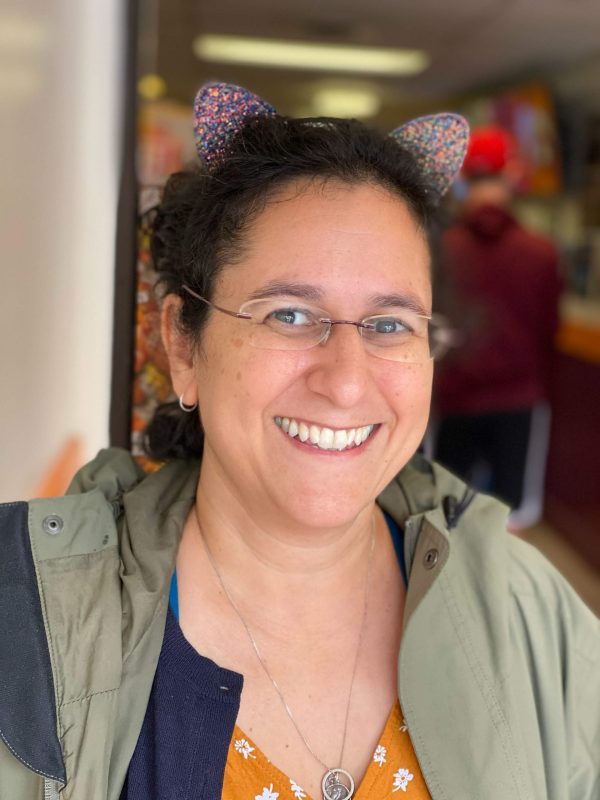
Daniel Cameron Campbell is a Researcher at the Department of Mathematical Analysis , Faculty of Mathematics and Physics , Charles University , Prague. He teaches advanced courses on Sobolev spaces and calculus, focusing on nonlinear elasticity and geometric function theory. Research Interests: Ball-Evan's approximation, mappings of finite distortion, nonlinear elasticity, Sobolev embeddings Teaching: Derivatives and Integrals for Advanced Levels (NMMA437), Mathematical Analysis I (NOFY151) Research Trends: His recent work addresses approximation of Sobolev and BV homeomorphisms, focusing on diffeomorphic and piecewise affine methods. He explores topological constraints, Jacobian sign preservation, and applications to nonlinear elasticity and metric measure spaces. Scientific Contributions: Principal Investigator for GAČR grant 20-19018Y (2020–2022) on analytical tools for variational problems. Organized workshops: GeoCa 20 (2020), Per Partes (2021), GeoCa 22 (2022). Contact: Email daniel.campbell@mff.cuni.cz or campbell@karlin.mff.cuni.cz .
Elvise Berchio is a Full Professor in the Department of Mathematical Sciences (DISMA) at Politecnico di Torino, where she also serves as Deputy Coordinator of the Doctoral College of Mathematical Sciences. Her academic career spans theoretical and applied mathematics with a focus on partial differential equations and their applications in engineering contexts. Her research interests include: Functional inequalities (Sobolev, Hardy, Rellich) Partial differential equations (elliptic, parabolic, higher-order) Variational methods Mathematical models for bridges and plates Professor Berchio's work demonstrates a consistent focus on geometric-analytic methods for PDEs, with particular attention to inequalities on Riemannian manifolds and mathematical models for engineering structures. Her recent publications show a progression from theoretical analysis of PDEs to increasingly sophisticated applications in fluid-structure interaction and geometric contexts. She has established herself as a leading researcher in the analysis of higher-order partial differential equations with applications to engineering problems. She is actively involved in the mathematical community through: European Women in Mathematics (2015-present) Italian Mathematical Union (UMI) (2005-present) National Group for Mathematical Analysis (GNAMPA) (2004-present) Editorial board of RENDICONTI DEL SEMINARIO MATEMATICO (2019-present) Professor Berchio has directed multiple significant research projects including GAMPA (2023-2026), Direct and inverse problems for partial differential equations (2019-2022), and ASPETTI GEOMETRICI E QUALITATIVI DI EDP (2014-2017). She teaches Mathematical Analysis I and Mathematical Methods for Engineering across various engineering programs at Politecnico di Torino and supervises doctoral students in the Mathematical Sciences program.
Yuanchang Xie serves as Professor in Civil and Environmental Engineering at UMass Lowell's Francis College of Engineering, where he leads research in the Center for Smart Cyber-Physical Systems. His work integrates computational methods with transportation infrastructure analysis, focusing on safety-critical applications through federal partnerships. Dr. Xie earned his Ph.D. in Civil Engineering from Texas A&M University (2007), preceded by M.S. and B.S. degrees in Transportation Engineering from Southeast University, China (2003, 2000). His academic foundation supports interdisciplinary research bridging civil engineering and cyber-physical systems. Research centers on traffic safety, intelligent transportation systems, and logistics optimization. He pioneers AI-driven approaches for crash prediction, connected vehicle operations, and infrastructure monitoring, emphasizing real-world implementation through partnerships with USDOT and state agencies. Current work explores multimodal data fusion for safety analytics in mixed-autonomy environments. Recent publications (2024-2025) reveal accelerating focus on deep learning applications: crosswalk detection via drone imagery, trajectory prediction in mixed traffic, and real-time work zone safety monitoring. This evolution demonstrates strategic alignment with emerging transportation technologies while maintaining core safety objectives. No scientific awards were explicitly documented in source materials. Dr. Xie has secured continuous funding as Principal Investigator through NSF, USDOT, DOE, and USDA programs. Key projects include Connected Vehicles: Toward the Understanding of "Firm Science" (NSF), Center of Multi-Scale Sensing Technologies (USDOT), and nuclear evacuation modeling for rural communities (USDA). His grants consistently address infrastructure resilience through cyber-physical integration. He directs research activities within UMass Lowell's Center for Smart Cyber-Physical Systems, which develops sensor networks and computational models for transportation infrastructure monitoring. The center's work on drone-based inspection systems and emergency response logistics demonstrates practical applications of his theoretical frameworks.
Abhishek Halder is an Associate Professor in the Department of Aerospace Engineering at Iowa State University and an Associate Adjunct Professor in the Department of Applied Mathematics at the University of California, Santa Cruz. He is also a member of the Translational AI Center at Iowa State University. His academic journey includes joining Iowa State University as an Assistant Professor in July 2023 and previously serving as faculty at UC Santa Cruz starting from October 2017. Dr. Halder's educational background includes studies at IIT Kharagpur and Texas A&M University, where he developed expertise in systems and control theory with applications to matrix analysis, probability, and optimization. His research has been recognized with prestigious awards including the O. Hugo Schuck Best Application Paper Award from the American Automatic Control Council, Applied Mathematics Research Award from UC Santa Cruz, Outstanding Doctoral Student Award from Texas A&M, and Best Dual Degree Thesis Award from IIT Kharagpur. His research focuses on stochastic systems, control and optimization with applications to large scale cyber-physical systems. Dr. Halder has made significant contributions to the fields of optimal transport, Schrödinger Bridge theory, distributional control, and uncertainty propagation in dynamical systems. His work bridges theoretical developments with practical applications in power systems, aerospace engineering, and machine learning. He has secured multiple research grants from NSF, including a CPS Frontier project on Computation-Aware Algorithmic Design for Cyber-Physical Systems. Dr. Halder has demonstrated leadership in the control systems community through editorial roles including Associate Editor for IEEE Transactions on Automatic Control (2025-present), ASME Journal of Dynamic Systems, Measurement, and Control (2025-present), Systems & Control Letters (2022-present), and previously for IEEE Control Systems Society Conference Editorial Board (2019-2025) and IEEE Transactions on Aerospace and Electronic Systems (2019-2022). He is a Senior Member of IEEE and a member of IFAC, SIAM and ASME. His research group has produced numerous publications in top-tier journals and conferences, with recent work focusing on connections between optimal transport theory, stochastic control, and machine learning. The publication trends show increasing integration of Schrödinger Bridge formulations with machine learning techniques for distributional control problems across various domains including power systems, aerospace applications, and resource allocation. O. Hugo Schuck Best Application Paper Award (2024) Applied Mathematics Research Award from UC Santa Cruz (2022) IEEE Senior Member (2021) Outstanding Doctoral Student Award from Texas A&M Best Dual Degree Thesis Award from IIT Kharagpur Dr. Halder has mentored numerous PhD students including Alexis, Georgiy, Iman, Shadi, and Kenneth, many of whom have received prestigious fellowships. His research group maintains strong collaborations with national laboratories including Lawrence Livermore National Lab and Los Alamos National Lab, as well as industry partners. Dr. Halder is also committed to education and outreach, having created and taught the 'Feedback Control' course for high school students in the California State Summer School for Mathematics and Science (COSMOS), introducing complex control theory concepts without calculus or linear algebra.
Ashot Minasyan is a Professor of Pure Mathematics at the University of Southampton within the Faculty of Social Sciences, specializing in Geometric and Combinatorial Group Theory. His research is centered at the Pure Mathematics Centre for Geometry, Topology, and Applications. His primary research interests include Word Hyperbolic Groups, Relatively Hyperbolic Groups, Acylindrically Hyperbolic Groups, Small Cancellation Theory, and Profinite Topology on Groups. His work frequently explores separability properties, group actions on trees, and geometric structures in algebraic contexts. Minasyan's recent publications demonstrate significant contributions to understanding quasi-isometric diversity, virtual retractions, and exotic properties of acylindrically hyperbolic groups. His research shows consistent focus on subgroup separability, conjugacy problems, and structural properties of complex group systems. Emil Artin Junior Prize in Mathematics (2007) Bjarni Jónsson Prize (2005) He has secured multiple EPSRC-funded research projects including 'Profinite Topology on non-positively curved groups' and 'Recent Advances in Geometric Theory'. His teaching portfolio includes undergraduate courses such as Linear Algebra I, Geometry and Topology, Hyperbolic Geometry, and Complex Function Theory across various year levels.
Nick Wright is an Associate Professor of Pure Mathematics at the University of Southampton , where he also serves as the Undergraduate Admissions Tutor for Mathematical Sciences. His research spans geometric and noncommutative frameworks, with a focus on coarse geometry and the Baum-Connes conjecture. Education: PhD in Mathematics from Penn State University, USA; BA/Part III/MA from the University of Cambridge. Research Interests: Nick investigates coarse geometry, non-commutative geometry, and geometric group theory. His work includes projects on metric geometry and analysis, Yu's Property A, amenable groups, and K-theory of affine Weyl groups. He collaborates with researchers like Graham Niblo and Roger Plymen. Recent Publications highlight trends in coarse median spaces, property A, and duality theorems. These works bridge abstract algebra with geometric structures, emphasizing infinite-dimensional analysis and topological classifications. Scientific Awards: Vice Chancellor's Award for Teaching (2013). Teaching: He currently teaches Hilbert Spaces and Harmonic Analysis modules, extending algebraic concepts to infinite-dimensional settings. Formerly taught Calculus and Analysis. Supervision: Currently supervises PhD students Dominic Charles Majda, Jane Toni Joy Turner, and Max Clarke in the Mathematical Sciences department. Grants: Funded by EPSRC and the Leverhulme Trust for projects including the Baum-Connes Conjecture and interdisciplinary work on preventing wide-area blackouts.
Giuseppe Zappalà is an Associate Professor of Geometry at the Department of Mathematics and Computer Science (DMI) of the University of Catania, Italy. He has been with the university since 1996, initially as a Researcher and promoted to Associate Professor in 2021. His academic home is firmly rooted in the University of Catania, where he completed both his undergraduate studies and PhD. His research focuses primarily on Commutative Algebra and Algebraic Geometry . More specifically, he investigates Hilbert functions of 0-dimensional subschemes of curves, arithmetically Gorenstein schemes, fat points in projective spaces, reducibility of Hilbert schemes, and Lefschetz properties. His work often bridges theoretical concepts with concrete geometric constructions. His publication record shows a consistent focus on the intersection of algebraic structures and geometric properties, with particular attention to graded algebras, Betti numbers, and special configurations of algebraic varieties. Over the years, his research has evolved from foundational work on subschemes to more specialized investigations of Gorenstein properties and Lefschetz phenomena. As an academic service contributor, Zappalà has served as a referee for national and international journals and as a reviewer for Zentralblatt MATH. He has been actively involved with the Pragmatic research school for 15 editions (1997-2012), which has trained numerous algebraic geometers from around the world. He teaches Linear Algebra and Geometry courses for both Computer Engineering and Computer Science degree programs at the University of Catania. His office hours are held Tuesday and Thursday from 10:00 to 12:00 in Studio 46, III Blocco, DMI.
Federico Vigolo is a Junior Professor in pure mathematics at the University of Göttingen's Mathematical Institute and a Principal Investigator of RTG 2491 - Fourier Analysis and Spectral Theory. He also serves as one of the Equal Opportunities Officers (Gleichstellungsbeauftragte) of the Mathematical Institute. His work bridges several areas of mathematics including coarse geometry, operator algebras, and geometric group theory. Dr. Vigolo completed his PhD at the University of Oxford in 2018 with a thesis titled "Geometry of actions, expanders and warped cones". His academic journey has led him to become a prominent researcher in coarse geometry and its interactions with other mathematical fields. His primary research focuses on Coarse Geometry and its rich interactions with operator algebras, index theory, and group theory. Specific topics he has extensively worked on include Roe algebras, Expander Graphs, coarse Baum–Connes conjecture, actions on metric and measure spaces, and CAT(0) and Hyperbolic Cube Complexes. His work often explores the connections between large-scale geometric properties and algebraic structures, with significant contributions to understanding coarse groups and warped cones. An analysis of his publication record reveals a strong focus on the intersection of coarse geometry with operator algebras and group theory. His work consistently explores how coarse geometric properties manifest in algebraic structures like Roe algebras, and how these connections can be used to prove rigidity results or construct counterexamples to important conjectures. A notable trend is his development of frameworks that unify previously disparate concepts in coarse geometry, such as his work on coarse geometric modules and rigidity frameworks for Roe-like algebras. His 2023 monograph "An Invitation to Coarse Groups" represents a foundational contribution to this emerging field. Professional Activities Organizer of the "Autumn School on Large Scale Geometry" (2023, Göttingen) Organizer of the "Random walks and related random topics" workshop (2022, Göttingen) Organizer of the YMC*A conference (2021, Münster) Organizer of the "Interactions between expanders, groups and operator algebras" mini-workshop (2021, Münster) Dr. Vigolo actively supervises students, with Christos Kitsios currently pursuing a PhD under his guidance. He welcomes bachelor's and master's students interested in topics related to coarse geometry, geometric group theory, group actions on measure spaces, and operator algebras. He teaches a variety of courses including "Analytische Geometrie und Lineare Algebra," "Introduction to algebraic topology," and specialized seminars on topics like "Gender and Mathematics" and "topological K-theory." His research has led to significant contributions in multiple areas, particularly in developing the theory of coarse groups and exploring the connections between coarse geometry and C*-algebras. His work on warped cones and asymptotic expanders has provided new counterexamples to the coarse Baum-Connes conjecture and advanced our understanding of coarse geometric invariants.
Diogo Oliveira e Silva is an Associate Professor in the Department of Mathematics at Instituto Superior Técnico, Lisbon, and holds an Honorary Senior Research Fellow position at the University of Birmingham. His academic journey includes a PhD from UC Berkeley under Michael Christ (2012), a Habilitation at Universität Bonn (2017), and prior roles at Bonn and Berkeley. His research focuses on harmonic analysis, particularly sharp inequalities, oscillatory integrals, Fourier restriction theory, uncertainty principles, and nonlinear Fourier analysis. Education: PhD in Mathematics (2012, UC Berkeley), Habilitation (2017, Universität Bonn) Affiliations: Instituto Superior Técnico (current), University of Birmingham (honorary), former positions at Bonn and Berkeley His work explores Fourier restriction theory , symmetry breaking phenomena , spherical packings , and sharp inequalities across geometric and analytic contexts. Recent publications address dimension-free estimates , stability of extremizers , and sign uncertainty principles , often leveraging collaborations with researchers like R. Mandel, G. Negro, and R. Quilodrán. Grants from EPSRC , DFG , NSF , AIM , and FCT have supported his work. He has been actively involved in international conferences and lecture series , including events in Rwanda, Germany, Brazil, and Japan. Teaching roles span complex analysis, Fourier analysis, and PDE courses at IST and Birmingham.
Raffael Hagger is a researcher at the University of Reading, specializing in operator theory, functional analysis, and mathematical physics. His work focuses on Toeplitz and Hankel operators, spectral theory, and quantization in domains like Fock spaces and bounded symmetric domains. Recent Research Trends: Hagger's publications (2025–2015) span topics such as band-dominated operators on locally compact abelian groups, quantum harmonic analysis for polyanalytic Fock spaces, and spectral properties of Toeplitz operators on the unit ball and Lipschitz domains. His work also addresses compactness criteria, essential spectra, and symmetries in random hopping matrices. Collaborations: He frequently collaborates with researchers like J. Virtanen, W. Bauer, and M. Lindner.
Lisa Beck is a Professor at the Institute of Mathematics , University of Augsburg, specializing in Applied Analysis . Her research focuses on partial differential equations and the calculus of variations, with a particular emphasis on regularity theory for elliptic problems, functionals with linear growth, and the behavior of solutions under stochastic disturbances. University: University of Augsburg School: Faculty of Mathematics, Natural Sciences and Technology Department: Institute of Mathematics Academic Rank: Professor Research Interests : Lisa Beck's work addresses regularity properties of solutions to nonlinear elliptic and parabolic systems, including partial Hölder continuity, boundary regularity, and the impact of stochastic perturbations on uniqueness and regularity. Her studies extend to variational problems with linear or subquadratic growth, cohesive fracture models, and blowup techniques in regularity theory. Publication Trends : Her recent publications (2025–2015) span topics such as gradient integrability for BD-minimizers , exponential convergence in drift-diffusion systems , optimal regularity for isoperimetric sets , and stochastic regularization of transport equations . These works often intersect calculus of variations , nonlinear elliptic systems , and stochastic analysis . Contact : Email: lisa.beck@math.uni-augsburg.de Phone: +49 821 598 -5475 Address: Universitätsstraße 12, 86159 Augsburg
Eric Stachura is an Associate Professor of Mathematics at Kennesaw State University, affiliated with the College of Science and Mathematics. His research spans metamaterials, liquid crystal optics, fractals, and electromagnetic theory, with applications in acoustics and quantum mechanics. Ph.D. in Mathematics, Temple University (2016) M.A. in Mathematics, Temple University (2013) B.S. in Mathematics (minor in Physics), University of Illinois at Chicago (2011) Stachura’s work focuses on mathematical modeling of physical systems, including the development of a novel framework for metamaterial lens design, analysis of electromagnetic wave propagation in fractal media, and nonlinear problems in geometric optics. He has co-authored foundational studies on Snell’s Law generalizations and the mathematics of metasurfaces. His recent publications highlight interdisciplinary applications of mathematics, particularly in fractal geometry, liquid crystal optics, and acoustic wave dynamics. He leads the Immersive Visualization Environments Research Cluster at the Coles College of Business and is co-director of a paid summer internship program for high school and undergraduate students via the Army Educational Outreach Program. Recipient of the 2024-2025 College of Science and Mathematics Outstanding Scholarship and Creativity Award Recipient of the 2024-2025 University-level Outstanding Scholarship and Creativity Award American-Scandinavian Foundation Fellow (2019-2020)
Sayan Mukherjee is a Professor of Statistical Science, Computer Science, and Mathematics at Duke University, with affiliations at the Information Initiative at Duke. His academic work spans multiple departments, reflecting his interdisciplinary research approach. His research focuses on three main areas: Geometry and topology in probabilistic modeling , where he develops methods for modeling geometric and topological properties of objects/data with uncertainty; Modeling massive data , building statistical models and algorithms for dimension reduction, classification, and matrix completion that scale to huge datasets; and Applied Bayesian models in computational biology , collaborating with biologists on projects ranging from functional genomics to population biology. Mukherjee has mentored numerous graduate students and postdoctoral fellows who have gone on to positions at institutions including Harvard, U Chicago, Duke, UNC, and industry positions at companies like Google, Novartis, and SAS. His collaborative network spans across multiple disciplines including geometry, topology, learning theory, cancer biology, computational biology, and evolutionary ecology. He has developed significant software tools including Bayesian Sparse Factor Analysis of Genetic Covariance Matrices (BSFG), Automated 3D Geometric Morphometrics (auto3dgm), and Analysis of Sample Set Enrichment Scores (ASSESS), demonstrating his commitment to creating practical computational methods for complex biological and statistical problems.
Peter Nickolas is an Associate Professor and Honorary Fellow at the School of Mathematics and Applied Statistics, University of Wollongong, Australia. His research focuses on pure mathematics, particularly in topology, group theory, and distance geometry. His work includes studies on harmonic continued fractions, quasihypermetric spaces, and topological groups. He has collaborated with researchers such as Safavi-Naini, Tonien, Elfard, and Wolf across disciplines like cryptography and functional analysis. He has received funding from Discovery Projects for research on approximate authentication systems. His academic supervision includes completed higher-degree research projects in areas related to continued fractions and free paratopological groups. Honorary Fellow
Nicole Abaid is an Associate Professor in the Department of Mathematics at Virginia Tech, affiliated with the College of Science. Her research integrates dynamical systems, control theory, and robotics to study collective behavior in biological and engineered systems. She explores biologically-inspired models, such as bat swarms and brain networks, to develop applications in robotics and environmental monitoring. Her work combines agent-based modeling, network analysis, and data-driven approaches to understand interactions in animal groups and robotic systems. Notable projects include analyzing bat echolocation for acoustic sensing in robotics and studying stress effects in human crowd dynamics during emergencies. She has also contributed to piezoelectric energy harvesting and ex vivo muscle stimulation via Functional Electrical Stimulation (FES). Abaid’s research has been supported by grants like the NSF CAREER Award for collective behavior studies. She collaborates on interdisciplinary projects, including outreach programs in biomimetics and robotics for K-12 education. Her publications span journals and conferences, emphasizing applications in ecology, robotics, and control systems.