Changyong Feng, PhD, is a Professor of Biostatistics and Computational Biology, Anesthesiology, and Dentistry at the University of Rochester Medical Center. He serves as Co-Director of the Department of Dentistry and holds a faculty position in the Department of Biostatistics and Computational Biology. He earned his PhD in Statistics from the University of Rochester in 2002. Dr. Feng’s research focuses on multivariate survival analysis, empirical processes theory, longitudinal data analysis, and statistical methods in epidemiology and clinical trials. His work spans interdisciplinary collaborations, including studies on anticoagulant efficacy in cardiovascular surgery, microbiome data analysis, and behavioral predictors of oral health. He has contributed to clinical trials, anesthesiology practices, and veterinary pharmacology. His expertise includes developing statistical models for complex biomedical data. Dr. Feng is affiliated with multiple departments at URMC, reflecting his role in bridging statistical methodologies with clinical and translational research. His publications address diverse topics from drug dosing optimization to influenza antibody dynamics. His research underscores the application of advanced statistical techniques to real-world medical challenges.
Martin Gallauer is an Assistant Professor at the Mathematics Institute, University of Warwick, specializing in algebraic topology, algebraic geometry, and representation theory. His research explores tensor-triangular geometry, motivic homotopy theory, and the structure of permutation modules. Education includes a PhD in Mathematics (2015), MA in Philosophy (2011), and MS in Mathematics (2011) from the University of Zurich. Research focuses on the interplay between homotopy theory and arithmetic geometry, with investigations into motivic cohomology, p-adic cohomology theories, and categorical structures in representation theory. Publications concentrate on advances in tensor-triangular geometry (patch-density, spectral classifications), motivic phenomena (Artin-Tate motives, monodromy operators), and foundational frameworks (six-functor formalisms, universal coefficient systems). Articles frequently employ derived categories, Galois representations, and homological techniques. Current PhD students include Yorick Fuhrmann, Pier Federico Pacchiarotti, and Daniel Roebuck, working on problems in chromatic homotopy theory and geometric representation theory.
Alexander Goncharov is the Philip Schuyler Beebe Professor of Mathematics at Yale University's Department of Mathematics. His research focuses on arithmetic algebraic geometry, geometry, representation theory, and mathematical physics. He has received the European Mathematical Society Prize for his contributions to mathematics. His work spans topics such as motives, moduli spaces, polylogarithms, and quantum geometry. Education: Ph.D. 1987 (USSR). His research explores connections between algebraic geometry, number theory, and physics, with a focus on motivic cohomology, Hodge theory, and geometric representation theory. He has contributed to the understanding of scattering amplitudes, cluster varieties, and quantum invariants of moduli spaces. Research highlights include studies on Hodge correlators, motivic fundamental groups, and the geometry of moduli spaces. His recent work integrates quantum geometry with algebraic structures, such as cluster algebras and non-commutative systems. Key publications address exponential volumes of hyperbolic surfaces, spectral descriptions of non-commutative systems, and quantum aspects of moduli spaces. He has authored over 100 papers and is a leading figure in the field, with contributions to both pure mathematics and its intersections with theoretical physics. His lab or team collaborations are not explicitly detailed in the provided texts.
Mordecai J Golin is a Professor in the Department of Computer Science and Engineering at The Hong Kong University of Science and Technology (HKUST), School of Engineering. His research lies at the intersection of theoretical computer science, algorithms, and discrete mathematics, with strong applications in information theory and computational geometry. His research interests include algorithms , computational geometry , data structures , dynamic programming , coding theory , and combinatorics . He has made significant contributions to the design and analysis of optimal search trees, prefix-free coding, and minmax regret optimization in dynamic flow networks. His work often combines probabilistic analysis with algorithmic efficiency. The recent publications highlight a sustained focus on optimization problems in graphs and trees, particularly in dynamic flow networks for applications like evacuation modeling, and in data compression via advanced Huffman and AIFV coding techniques. The research spans from theoretical foundations to algorithmic innovation, with recurring themes of efficiency, robustness, and structural analysis. Scientific Awards No specific awards mentioned in the provided text. Advising and Grants : While specific students and grants are not listed, Dr. Golin has an extensive record of collaborative research with colleagues at HKUST and internationally, suggesting active supervision and project leadership. His frequent publications in top-tier venues indicate sustained funding and research activity. Labs and Teams : Though not explicitly named, his work is likely conducted within theoretical computer science or algorithms research groups at HKUST, possibly associated with centers focusing on discrete mathematics or information sciences.
Carina Curto is a Professor of Applied Mathematics and Brain Science at Brown University, affiliated with the Division of Applied Mathematics and the Carney Institute for Brain Science. She holds a B.A. in Physics from Harvard University (2000) and a Ph.D. in Mathematics from Duke University (2005). Her research focuses on theoretical and computational neuroscience, applying algebra, topology, and dynamical systems to study neural networks and neural coding. She has held faculty positions at Penn State (2014–2024) and the University of Nebraska-Lincoln (2009–2014), and was a postdoctoral researcher at Rutgers and NYU. Research Interests : Neural network theory, topology in neuroscience, algebraic structures of neural codes, and their applications to understanding brain circuits and cognition. Her work bridges mathematical theory and experimental neuroscience, with emphasis on threshold-linear networks, combinatorial coding, and circuit dynamics. Grants & Awards : NIH R01, NSF grants (DMS-1951165, DMS-1516881), Simons Fellowship (2021–22), Penn State Faculty Scholar Medal (2020), Sloan Research Fellowship (2011–15). Labs & Collaborations : Leads the Curto Lab for Mathematical Neuroscience at Brown, focusing on interdisciplinary research connecting network dynamics to brain function. Collaborators include Anda Degeratu, Chad Giusti, and Katherine Morrison. Her lab includes postdocs, PhD students, and affiliate members working on projects like CTLN dynamics and clique topology.
Justin Solomon is an Associate Professor in the Department of Electrical Engineering & Computer Science at Massachusetts Institute of Technology, where he serves as Principal Investigator of the Geometric Data Processing Group. He maintains dual affiliations with the Computer Science and Artificial Intelligence Laboratory (CSAIL) and the MIT Center for Computational Science and Engineering (CCSE), reflecting his interdisciplinary research bridging theoretical mathematics with practical applications in graphics and machine learning. His research interests center around geometric data processing, computational geometry, and optimal transport theory, with significant contributions to computer graphics, machine learning, and computer vision. Solomon's work spans fundamental mathematical theory to practical implementations, particularly in shape analysis, 3D reconstruction, and geometric deep learning. His research demonstrates consistent innovation in developing algorithms that bridge discrete and continuous geometry with applications in graphics, vision, and AI. The publication trends reveal Solomon's evolving research trajectory from foundational work in geometry processing toward increasing integration with modern machine learning techniques. His recent work shows strong emphasis on diffusion models, geometric deep learning, and applications of optimal transport in AI, with significant contributions to SIGGRAPH, NeurIPS, and ICML proceedings. The research demonstrates both mathematical rigor and practical impact, with applications spanning character animation, 3D reconstruction, and generative AI. Amazon Research Award (2017) for Large-Scale Geometrically-Structured Sampling Amazon Research Award (2023) for Lightweight Algorithms for Generative AI Ben Wegbreit Prize for Best Undergraduate Honors Thesis Firestone Medal for Excellence in Undergraduate Research Boothe Prize for Excellence in Writing 2nd place, SGP best paper awards (2010) Solomon has secured substantial research funding through awards like the Amazon Research Awards and maintains active collaborations across academia and industry. His group has produced numerous influential publications with students and collaborators, contributing significantly to both theoretical foundations and practical implementations in geometric data analysis. His textbook "Numerical Algorithms" demonstrates his commitment to education alongside research. As Principal Investigator of the Geometric Data Processing Group, Solomon leads a research team focused on developing mathematical foundations for analyzing and processing geometric data. The group maintains strong connections with both theoretical mathematics and practical applications, working at the intersection of computer graphics, machine learning, and computational geometry. Their work has significant implications for fields ranging from computer animation to medical imaging and scientific computing.
Professor Ioanna Sandvig is a leading academic at the Norwegian University of Science and Technology (NTNU) , where she serves as group leader of the Integrative Neuroscience Group within the Department of Neuromedicine and Movement Science. She is also President of the Norwegian Neuroscience Society (NNS) and actively participates in international societies including the Federation of European Neuroscience Societies (FENS), Society for Neuroscience (SfN), ALBA Network, and Clinical-Academic Group for Alzheimer's Disease. Research Interests : Her group investigates neuroplasticity mechanisms in CNS damage and repair , focusing on structure-function relationships in biological neural networks under healthy and pathological conditions. They integrate in vivo , in vitro , and computational models to identify adaptive/maladaptive plasticity in neurodegenerative diseases like ALS and Alzheimer's. The research combines connectomics , transcriptional analysis , and geometric network modeling to decode network behaviors. Scientific Contributions : Recent publications explore topics including synaptic transcript dysregulation in ALS, functional complexity of 3D-engineered networks, and platinum microelectrode technologies. Her work demonstrates interdisciplinary approaches bridging neuroscience , bioengineering , and computational systems . Scientific Recognition : President, Norwegian Neuroscience Society (2024) Member, Federation of European Neuroscience Societies Member, Society for Neuroscience Member, ALBA Network Member, Clinical-Academic Group for Alzheimer's Disease Laboratory & Collaborations : The Integrative Neuroscience Group collaborates across NTNU's neuroscience departments and clinical institutions, developing tools for neuroplasticity analysis and contributing to preclinical disease modeling.
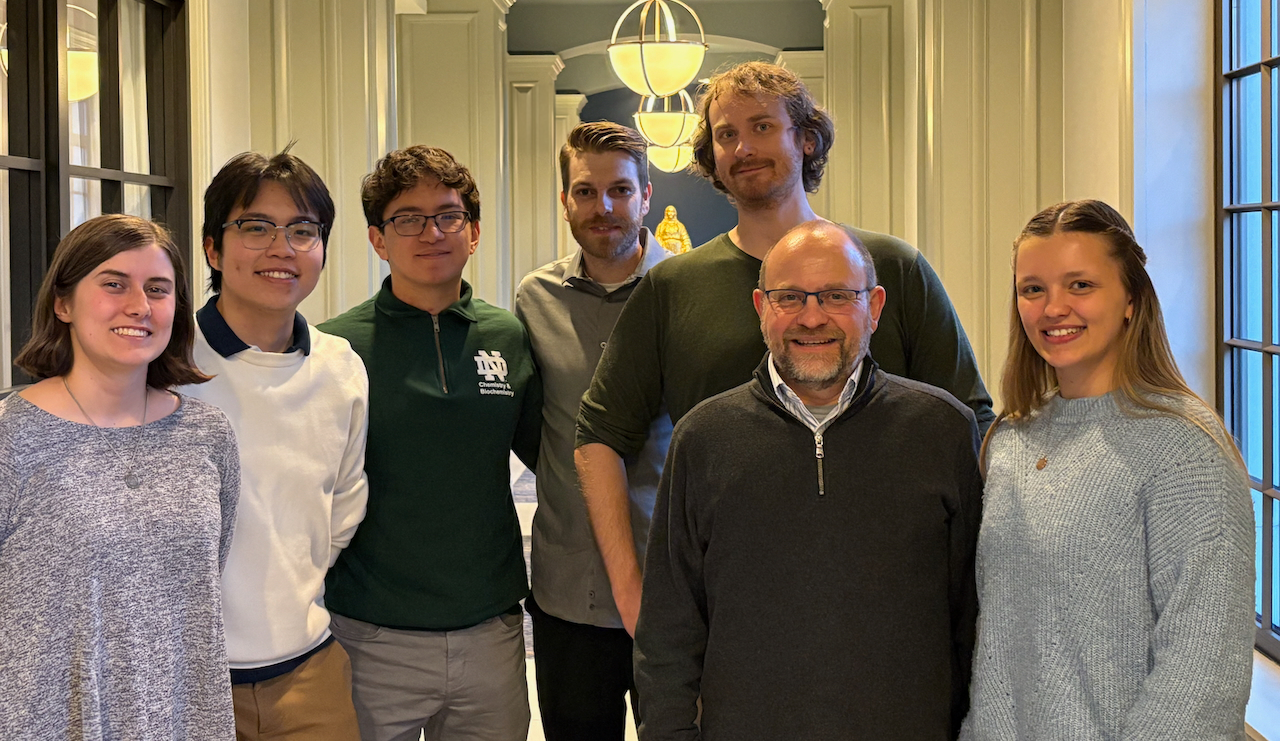
J. Daniel Gezelter is a Professor and Chair of the Department of Chemistry & Biochemistry at the University of Notre Dame within the College of Science. His research focuses on theoretical and computational studies of complex condensed-matter systems, particularly using molecular dynamics simulations to understand emergent behavior at interfaces. Ph.D. in Chemistry, University of California, Berkeley (1995) CPS in Chemistry, University of Cambridge, UK (1990) B.S. in Chemistry & Philosophy, Duke University (1989) Gezelter's research interests lie at the intersection of physical chemistry, statistical mechanics, and computational science. His group develops novel algorithms for molecular dynamics simulations to study energy and mass transport across interfaces. Key areas include thermal transport in nanoparticles, enantiomeric separation via shear flow, electrostatic interactions in condensed phases, and dynamics at ice-water interfaces. The lab combines analytical theory with state-of-the-art simulations, often developing open-source software like OpenMD to advance the field. The most recent publications demonstrate a strong trend toward understanding interfacial transport phenomena—particularly thermal and momentum conductance—using reverse non-equilibrium molecular dynamics (RNEMD) methods. The work spans applications from gold nanoparticle heat dissipation to chiral molecule separation and ice surface physics, reflecting a unifying theme of emergent dynamics in complex systems. Methodological innovations in electrostatics (e.g., damped shifted force) and implicit solvent modeling (e.g., Langevin Hull) underpin these investigations. His scientific awards include: Provost's Award for Teaching Excellence in the Core Curriculum (2023) Shilts/Leonard Award for Outstanding Teaching (2020) Rev. Edmund P. Joyce Award (2013, 2020) National Science Foundation CAREER Award (2002) Camille and Henry Dreyfus New Faculty Award (1999) National Science Foundation Graduate Research Fellowship (1990–1993) Churchill Scholar (1989–1990) Gezelter advises graduate students and leads an active research group supported by the National Science Foundation, the Camille & Henry Dreyfus Foundation, the Alfred P. Sloan Foundation, and the University of Notre Dame. His lab emphasizes open science, making software and data freely available. He has held leadership roles including Associate Dean for Undergraduate Studies (2020–2023) and Senior Associate Dean for Education & Undergraduate Programs (2023–2025), underscoring his commitment to academic administration and education. The Gezelter Laboratory develops and maintains OpenMD , an open-source molecular dynamics engine, and contributed to the early development of Jmol , a widely used computational chemistry viewer. The lab collaborates with both experimental and theoretical groups and promotes inclusivity and diversity in science.
Meng Wu is a professor at the Department of Mathematical Sciences, University of Oulu, Finland. Previously, he held postdoctoral positions at the Einstein Institute of Mathematics, Hebrew University of Jerusalem (2017), and at the University of Oulu (2013-2016), followed by a University Researcher role there (2017-2018). His work bridges ergodic theory, dynamical systems, and fractal geometry. Research interests include multifractal analysis, self-similar sets, and geometric measure theory. Recent work explores Furstenberg-type slicing theorems, scaling limits of self-conformal measures, and projection theorems with applications to exact overlaps conjectures. His publications often employ ergodic theory and dynamical systems to analyze fractal dimensions and geometric properties of sets. Trends in his articles highlight connections between number theory, probability, and fractal geometry, focusing on Hausdorff and Assouad dimensions, oriented random walks, and renormalization techniques. Collaborations include A.H. Fan, J. Schmeling, L.M. Liao, and A. Algom.
Michela Zedda is an Associate Professor at the Department of Mathematical, Physical and Computer Sciences of the University of Parma. Her research focuses on differential and symplectic geometry, particularly in Kähler metrics, Sasakian manifolds, and geometric quantization. Department: Mathematical, Physical and Computer Sciences (University of Parma) Academic Rank: Associate Professor Email: michela.zedda@unipr.it Her work explores the interplay between Kähler and symplectic structures, with key contributions to projectively induced metrics, immersions into complex space forms, and the geometry of Cartan-Hartogs domains. Recent publications (2024–2025) address scalar flat metrics on line bundles and symplectic cones over Sasakian manifolds. Zedda's research spans geometric analysis, including the Yamabe problem, Ricci solitons, and stability under Lie group actions. She has extensively studied diastasis functions, TYZ expansions, and balanced metrics in both Cartan and Hartogs domains. Teaching appointments include Geometry courses for Mathematics and Management Engineering students at the University of Parma (2022–2025) and previous roles in Mathematics and Dental Medicine programs. No scientific awards or advisees are documented in the provided texts.
Prof. Andreas Bernig is a faculty member at Goethe University Frankfurt am Main, affiliated with the Department of Computer Science and Mathematics. He has held a W3 professorship in Differential Geometry since October 2009 and served as Dean of the Faculty (2017-2019) and Director of the Institute for Mathematics (2022-2024). His research spans Integral Geometry, Finsler Geometry, Riemannian Geometry, Geometric Inequalities, and Geometric Measure Theory, with a focus on valuations, kinematic formulas, and curvature measures in singular and pseudo-Riemannian settings. His recent publications explore topics such as the Hard Lefschetz theorem in convex valuation theory Weyl principle for Kähler manifolds Kinematic formulas in pseudo-Riemannian space forms Dual area measures in Hermitian integral geometry Invariant valuations on complex and quaternionic spaces These works often involve collaborations with leading mathematicians like J.H.G. Fu, Gil Solanes, and Thomas Wannerer. Prof. Bernig has received notable scientific recognition, including First prize at the German Mathematical Olympiad (1991, 1992) DFG and SNFS funding for projects like "Invariants of Singular Spaces" and "Tensor Valuations" He has supervised doctoral and Master’s students such as Luca Iffland, Frederik Herget, and Frank Steinke, and actively participates in international conferences and workshops in integral geometry, convex geometry, and geometric analysis.
Günther Hörmann is an Associate Professor at the Faculty of Mathematics, Department of Mathematics, University of Vienna. With an academic career spanning from 1995 to present, he has established himself as a prominent researcher in mathematical analysis with particular expertise in generalized functions, microlocal analysis, and partial differential equations. His research interests span several interconnected areas of mathematical analysis and its applications: Generalized functions and Colombeau algebras Microlocal analysis and wavefront sets Partial differential equations, particularly wave equations Mathematical physics applications in quantum field theory Geophysical modeling and earth deformation Non-smooth geometry and regularization techniques Hörmann's scholarly output demonstrates a consistent focus on developing rigorous mathematical frameworks for analyzing differential equations with singular coefficients or data. His work often bridges pure mathematical theory with applications in physics, particularly in quantum mechanics, relativity, and geophysics. A distinctive feature of his research is the application of generalized function theory to problems that involve singularities or low regularity conditions. His publication record shows remarkable productivity across nearly three decades, with significant contributions in both theoretical mathematics and its applications. The interdisciplinary nature of his work is evident in collaborations across mathematics, physics, and even biomedical research as seen in his 2023 prostate cancer study.
Razvan Anisca is a Professor in the Department of Mathematical Sciences at Lakehead University, specializing in Geometric Functional Analysis . He has held this position since 2015 and previously served as Department Chair (2013-2017, 2021-2023) and Associate/Assistant Professor since 2003. His research focuses on Banach spaces, Hilbert spaces, and their geometric properties. PhD, University of Alberta (2002) BSc, University of Bucharest (1997) Recent publications highlight his work on: Ergodicity in Hilbert spaces (2020, 2023) Arithmetic sums of Cantor sets (2009, 2023) Complex structures in Banach spaces (2003, 2017) Approximation properties in functional spaces (2012) He co-organized a Banff International Research Station (BIRS) workshop on Banach space theory in 2012.
Dr. Yuan He serves as Lecturer (Teaching) at UCL Institute for Global Prosperity within The Bartlett Faculty of the Built Environment, University College London. She leads the MSc Global Prosperity program and co-directs the Asian Prosperity Hub, focusing on feminist democracy and development trajectories in China, India, and South Korea. Her educational foundation includes: PhD in Development Studies, University of Cambridge MPhil in Development Studies, University of Cambridge MA in Industrial Economics, Nanjing University BA in International Applied Social Sciences, Nanjing University Her research critically examines how women's political participation drives structural change in Asian authoritarian contexts, challenging purely economic development models. She documents everyday politics through fieldwork in rural India and China, emphasizing prosperity beyond GDP metrics. Recent publications unexpectedly bridge social sciences and computational methods, featuring machine learning applications in control theory and safe reinforcement learning—suggesting emergent interdisciplinary collaborations. Recognition includes: UKIERI funding award (2024) for 'Building Transformative Research Capabilities of Master's Students in Sustainability' with IIT Delhi She mentors MSc dissertation students while securing international grants, and has delivered gender training to 1,000+ corporate employees across Asia. Her media presence includes 40,000-view YouTube talks and commentary for Hong Kong Phoenix TV. As co-editor of UCL Press's 'Global Prosperity Thought and Practice' series and co-convener of 2024's 'Alternative Imaginaries: Feminist Politics in the Global South' conference, she actively shapes decolonial academic discourse.
Nages Shanmugalingam is a Professor in the Department of Mathematical Sciences at the University of Cincinnati. He teaches both undergraduate and graduate level courses, including Multivariable Calculus and Geometric Analysis as scheduled for Fall Semester 2025. Dr. Shanmugalingam received his Bachelors degree from the University of Rochester and his doctoral degree from the University of Michigan under the supervision of Professor Juha Heinonen. His academic career has focused on geometric analysis and related fields. His primary research interests center around geometric function theory, potential theory, and analysis on metric measure spaces. He has made significant contributions to understanding Sobolev spaces, BV functions, and quasiconformal mappings in metric settings. His work bridges geometric analysis with potential theory, exploring how geometric properties of spaces influence analytical behavior of functions and solutions to partial differential equations. Dr. Shanmugalingam's recent publications (2024-2025) demonstrate a consistent focus on geometric analysis in metric measure spaces, with research exploring warped products, homogeneous Newton-Sobolev spaces, regularity theory for PDEs in non-Euclidean settings, and connections between combinatorial modulus and conformal dimension. His scholarly output shows particular emphasis on understanding how geometric structures influence analytical properties in non-smooth settings. He actively participates in the mathematical community, regularly attending and contributing to international conferences including workshops at ICMAT, Oberwolfach, and various meetings across Europe, Asia, and North America. His scholarly network includes prominent researchers in geometric analysis worldwide.