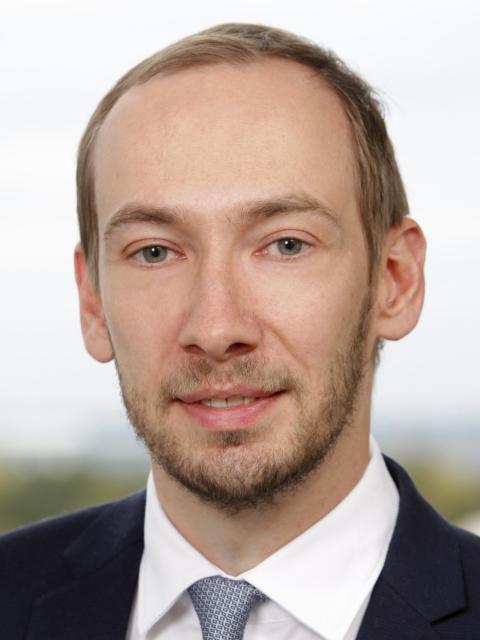
Günter Hotz is a full Professor at the Department of Computer Science (Fachrichtung Informatik), Universität des Saarlandes , Germany. His academic career spans over five decades, including roles as Director of the Computer Center (1972-1974) Spokesperson for SFB 100 (1982-1984) and SFB 124 (1991-1992) . Research Interests include Theoretical Computer Science Circuit Design Computational Complexity Information Theory Geometric Motion Planning Formal Verification . His work focuses on analytic machines, hardware verification, and motion planning algorithms, with applications in linguistics and VLSI design. Publications emphasize formal methods for hardware, computational models over real numbers, and efficient parsing algorithms. Key trends involve integrating mathematical theory with practical circuit design and motion planning solutions. Scientific Awards include Leibniz Prize (1986) Konrad Zuse Medal (1999) Grand Cross of Merit (1998) . Students : Supervised 40 dissertations, with over a third of his advisees becoming professors in mathematics and computer science. Labs & Projects : Led major research initiatives like SFB 100 (COMSKEE system) and SFB 124 (VLSI design methods). Collaborative works with international institutions in France, the U.S., and Georgia.
Iro Armeni is an Assistant Professor in the Civil and Environmental Engineering Department at Stanford University's School of Engineering. She leads the Gradient Spaces research group, focusing on the intersection of civil engineering, architecture, and machine perception to design and construct data-driven environments across physical and digital space. Her educational background is highly interdisciplinary: PhD in Civil and Environmental Engineering with Minor in Computer Science from Stanford University (2020), Postdoctoral Researcher at ETH Zurich (2023), MSc in Computer Science from Ionian University (2013), MEng in Architectural Engineering from University of Tokyo (2011), and Diploma in Architectural Engineering from National Technical University of Athens (2009). Before academia, she worked as an architect and consultant for both private and public sectors. Dr. Armeni's research focuses on developing quantitative and data-driven methods that learn from real-world visual data to generate, predict, and simulate new or renewed built environments with humans at the center. She is particularly interested in creating gradient spaces that blend 100% physical (real reality) to 100% digital (virtual reality) using Mixed Reality. Her work spans computer vision, 3D scene understanding, semantic mapping, and their applications in the built environment. Her recent publications demonstrate significant contributions across multiple venues including CVPR, ECCV, SIGGRAPH, and ISPRS Journal, with research themes centered around 3D scene understanding, appearance transfer, scene synthesis, SLAM in dynamic environments, and semantic mapping. Her work shows a consistent trajectory toward creating sustainable, inclusive, and adaptive built environments that support current and future physical and digital needs. She has received prestigious awards including the ETH Zurich Postdoctoral Fellowship, Google PhD Fellowship, and MEXT Scholarship. Her teaching includes graduate courses such as Designing for Gradient Spaces (CEE342), Computer Vision for the Built Environment (CEE247C), and AI Applications in AEC (CEE329), reflecting her interdisciplinary approach to integrating machine perception with civil engineering applications.
Dr. Arne Schmitz is a researcher at the Department of Computer Science, RWTH Aachen University, specializing in computational methods for wireless communications and computer graphics. His work bridges radio wave propagation physics with advanced visualization techniques, focusing on practical applications for mobile network planning and mobile device interfaces. His primary research domains include: Radio wave propagation modeling in urban environments GPU-accelerated beam/ray tracing algorithms Antenna pattern compression using spherical harmonics Real-time 3D visualization for resource-constrained mobile devices Ad-hoc multi-display systems for collaborative mobile applications Analysis of his publication timeline reveals an evolution from foundational radio propagation models (2006) toward increasingly sophisticated urban simulation frameworks (2011-2012), with consistent emphasis on computational efficiency. His most impactful contributions integrate computer graphics rendering techniques with telecommunications engineering, particularly in adapting beam tracing for radio wave simulation and developing novel mobile visualization paradigms that overcome hardware limitations through client-server architectures. Dr. Schmitz maintains a strong collaborative relationship with Professor Leif Kobbelt and colleagues at RWTH Aachen, with co-authorship appearing in 9 of his 10 documented publications. His research demonstrates consistent funding support through participation in IEEE and ACM conferences, though specific grant details are not disclosed in the available materials.
Osman Darcan is an Associate Professor at Bogazici University in Istanbul, Turkey, with a verified institutional email osman.darcan@boun.edu.tr. His academic career spans over two decades with consistent research output in computational fields. Education Background: Undergraduate: Boğazici University, Computer Engineering Masters: Boğaziçi University, Computer Engineering Ph.D.: Boğaziçi University, Industrial Engineering His research focuses on practical applications of computational techniques across multiple domains. Darcan's work in Programming Techniques emphasizes object-oriented development frameworks and visualization tools for educational purposes. His Simulation research includes distributed systems and load balancing algorithms, while Artificial Intelligence applications target data mining for student profiling and e-commerce. The E-Learning strand features innovative tools for linear programming, geometric problem-solving, and programming education, demonstrating a strong commitment to pedagogical innovation through technology. Publication trends (2000-2012) reveal an evolution from foundational work in distributed simulation (2000-2006) toward applied data mining in education and e-commerce (2009-2012). His research consistently bridges theoretical computer science with practical educational and business applications, particularly in cluster analysis for student performance and agent-based modeling for market simulations. No scientific awards were documented in the source material. While specific advising records and grant details weren't provided, Darcan's publication pattern indicates supervision of students in data mining and simulation projects. His international conference presence (IBIMA, PICMET, World Conference on E-Learning) suggests active participation in global academic networks. The absence of lab/team mentions implies independent or small-group research operations focused on software tool development.
Felix Pancheri is an employee at the Chair of Microtechnology and Medical Device Technology (MiMed) at the Technical University of Munich (TUM) since February 2021. Holding an M.Sc. in Mechatronics and Information Technology, he actively contributes to research and teaching within the MiMed group, supervising courses including Mechatronic Device Technology (MGT), Development of mechatronic devices (SMG), and Mathematical Tools (MTT). His research spans interdisciplinary domains with core focus areas: Robotics : Specializing in bio-inspired quadruped locomotion, soft robotics, and medical robotics applications Mechatronic Systems : Integration of mechanical, electronic, and software components for medical devices Advanced Manufacturing : Leveraging topology optimization and additive manufacturing for rapid prototyping Computational Design : Developing automated systems for custom mechanical structures Analysis of his 2021-2024 publications reveals consistent innovation in topology-optimized robotic mechanisms, particularly for legged locomotion and gripper systems. His work demonstrates strong bio-inspiration trends, translating natural movement principles into compliant mechanical designs fabricated through 3D printing. Medical applications form a significant thread, including surgical instrument development and 3D digitization techniques for surgical planning, reflecting the MiMed group's translational research focus. No scientific awards are documented for Felix Pancheri in available records. As an academic contributor, he supervises key courses: Mechatronic Device Technology (MGT) exercises Development of mechatronic devices (SMG) seminars Mathematical Tools (MTT) instruction While no individual grants are specified, he participates in MiMed's funded projects including IndiPrint, Arburg Automated Design, and CarrierBot, which advance automated design methodologies and robotic applications. The MiMed research environment provides state-of-the-art facilities for robotics prototyping, medical device development, and additive manufacturing, supporting his work on bio-inspired mechanisms and surgical robotics systems with strong industry-academia collaboration.
Yiming Zhou is a researcher at Saarland University of Applied Sciences (htw saar) in Saarbrücken, Germany. Their work spans multiple engineering domains with emphasis on artificial intelligence integration, 3D scene reconstruction, and advanced imaging techniques. Contact: yiming.zhou@htwsaar.de Location: Goebenstraße 40, 66117 Saarbrücken Research Focus Zhou's research explores cutting-edge technologies in: AI applications for non-destructive evaluation Dynamic SLAM systems for robotics Next-generation 3D reconstruction methods Multimodal deception detection frameworks Novel Gaussian splatting techniques Semantic encoding for spatial data Recent Publications Trends Their scholarly output reveals a trajectory toward Real-time spatial mapping solutions Hybrid neural-implicit representations CAD-integrated building documentation AI-enhanced image translation pipelines Signal processing innovations Cross-modal data fusion Laboratory Affiliation Zhou contributes to the faculty laboratories at htw saar, focusing on engineering research through practical implementations and algorithm development.
Assoc. Prof. Vassia Atanassova, PhD is an Associate Professor in the Bioinformatics and Mathematical Modelling Department at the Institute of Biophysics and Biomedical Engineering , Bulgarian Academy of Sciences. She holds a PhD in Informatics and Computer Sciences (2013) and has been actively contributing to generalized nets, intuitionistic fuzzy sets, and decision-making under uncertainty since 2002. Education : PhD in Informatics and Computer Sciences (2013), Institute of Information and Communication Technologies – BAS Master in Marketing (2009), University of National and World Economy Bachelor in Informatics (2004), Faculty of Mathematics and Informatics, Sofia University Her research focuses on intuitionistic fuzzy logic applications, generalized net modeling , and Wiki technologies for knowledge transfer . She has developed novel intuitionistic fuzzy operators and conducted extensive work on intercriteria analysis for complex systems. Recent publications emphasize fuzzy decision-making frameworks (2015-2019), with applications in Algorithm optimization Economic modeling Bioinformatics Medical data analysis Scientific Awards : Youngest Researcher Award 'Ivan Evstratiev Geshov' (2011) 2nd Award, VIII Youth Session of Federation of Scientific-Technical Unions (2010) She serves as Guest Editor for MDPI Mathematics and technical editor for international journals. Her teaching includes PhD-level courses on Wikipedia-based knowledge transfer and fuzzy set theory at Bulgarian universities.
Georges-Pierre Bonneau is a Professor at University of Grenoble conducting research at Laboratoire Jean Kuntzmann (LJK) and INRIA in the MAVERICK research group. His academic career spans over three decades, beginning with his PhD from Universität Kaiserslautern in 1993, followed by positions as CNRS researcher (1994-2001), and Professor at University of Grenoble since 2001. Dr. Bonneau's research focuses on scientific visualization, computer-aided geometric design (CAGD), computer-aided design (CAD), and computational fabrication techniques. His work bridges theoretical geometric modeling with practical applications in structural monitoring, energy consumption visualization, and digital fabrication. He has developed innovative methods for surface reconstruction from sparse data, bending-active structures, and visualization of uncertain scalar data fields. His recent publications demonstrate a strong focus on immersive 3D modeling techniques, computational fabrication methods, and advanced visualization systems. Bonneau's research shows consistent evolution from foundational geometric modeling work in the 1990s-2000s toward contemporary applications in VR/AR interfaces, computational design of physical structures, and energy consumption visualization systems. Throughout his career, Bonneau has actively contributed to the academic community as conference organizer and program committee member for major venues including SPM, SMI, Eurographics, and IEEE Visualization conferences. He has supervised numerous PhD students whose work spans diverse applications of geometric modeling and visualization, with recent students focusing on surface creation from sparse strokes, bending-active structures, and structural monitoring systems. His former students have gone on to successful careers at institutions including AAC Clyde Space, Zurich Insurance, Pixminds, ISIR, and CEA.
Evangelos Bartzos is a researcher affiliated with the ΕρΓΑ Lab , a collaborative unit under the AROMATH team (joint with INRIA Sophia-Antipolis ) and the ATHENA Research Center . He earned his PhD in Telecommunications and Informatics from the National and Kapodistrian University of Athens under Prof. Ioannis Z. Emiris, as part of the ARCADES Marie Skłodowska-Curie Innovative Training Network . Education: PhD in Telecommunications and Informatics (University of Athens) His research focuses on algebraic modeling , graph rigidity theory , and distance geometry . His work investigates the maximal number of graph embeddings under length constraints in Euclidean spaces and spheres, leveraging real and complex algebraic geometry to bridge theoretical bounds and practical applications in computational mathematics. The 13 publications in his profile span 2015–2023 and reveal a trajectory from early computational biology modeling to advanced rigidity theory research. Key trends include the use of multi-homogeneous Bézout bounds, hypergraph orientations, and algebraic systems to analyze minimally rigid graphs and their realizations across dimensions. Evangelos has participated in numerous conferences and workshops including ISSAC , CASC , and the French Computational Geometry Days , presenting results on rigidity bounds and geometric constraint systems. His collaborations extend to institutions in France (ENS Lyon, Université Lyon 1), Austria, and Russia, particularly through the HEVEA project’s isometric reduction research.
Jiaang Li is a PhD Fellow and Guest Researcher at the Department of Computer Science , University of Copenhagen. His research spans Natural Language Processing , Computer Vision , and Multimodal Learning , focusing on vision-language models, word order sensitivity, and cross-modal understanding. PhD Fellow , Department of Computer Science, Pioneer AI (P1AI) Guest Researcher , Department of Computer Science, Natural Language Processing Research interests include: Vision-Language Model Analysis Multimodal Dataset Development Language Model Interpretability Human-Centred AI Applications Model Robustness and Ethics Recent publications highlight trends in: Vision-Language Concept Alignment Task-Oriented Model Evaluation Visual Culture Understanding Bias and Cultural Theory in AI Retrieval-Augmented Generation
Zachary Treisman is an Assistant Professor of Mathematics at Western Colorado University and serves as the Honors Program Director. He holds a PhD in Mathematics from the University of Washington (2006) and a BA in Mathematics from Reed College (1999). His academic career spans collaborations with mathematical artist Lun-Yi Tsai, work on high-profile legal cases involving statistical analysis, and postdoctoral research at the Tata Institute for Fundamental Research in Mumbai, India. PhD, University of Washington (2006) BA, Reed College (1999) His research bridges theoretical mathematics and practical applications, with a focus on: Topological and geometric data analysis Ecosystem modeling and ecological statistics Interdisciplinary art-mathematics projects Algebraic geometry fundamentals Treisman teaches a wide range of mathematics courses from foundational college algebra to advanced algebraic analysis, emphasizing mathematical typesetting and historical perspectives. He contributes to both the Math & Computer Science Department and the university's honors program.
Dr. Nils Morten Kriege is an Associate Professor at the Faculty of Computer Science, University of Vienna, where he leads the Data Mining and Machine Learning research group. Previously, he served as Assistant Professor (2020-2023) at the same institution and held positions at TU Dortmund including Interim Professor (2019/2020) and Postdoctoral Researcher (2015-2020). His research focuses on graph-based machine learning methods with applications in cheminformatics and drug discovery. His educational background includes a Doctorate in Computer Science (2015) and Diploma in Computer Science (2009), both from TU Dortmund. He has also been a Visiting Researcher at the University of York, UK. Dr. Kriege's research centers on graph algorithms and machine learning with graphs, particularly focusing on graph neural networks, graph kernels, and their applications in cheminformatics and drug discovery. His work bridges theoretical computer science with practical applications, developing novel methods for graph similarity, graph classification, and network analysis. He has made significant contributions to understanding the expressivity and robustness of graph neural networks, as well as developing efficient algorithms for graph similarity search and molecular analysis. His recent publications (2023-2025) demonstrate a strong focus on graph neural networks, with particular attention to their expressivity, robustness against attacks, and practical applications in drug discovery. His work spans theoretical foundations (Weisfeiler-Leman hierarchy, graph isomorphism testing), practical implementations (efficient quantization, defense frameworks), and domain-specific applications (cheminformatics, drug discovery). Vienna Research Groups for Young Investigators (2019) - €1,466k funding for "Algorithmic Data Science for Computational Drug Discovery" Member of the Global Young Faculty V, Stiftung Mercator (2017) Dr. Kriege leads an independent research group funded through the Vienna Research Groups for Young Investigators program, focusing on computational drug discovery. He has served on program committees for major conferences including NeurIPS, ICML, IJCAI, AAAI, ICLR, and ICDM, and has reviewed for prestigious journals such as Transactions on Pattern Analysis and Machine Intelligence. His teaching portfolio includes courses on Data Mining, Graph Learning, and Introduction to Machine Learning. He leads the Machine Learning with Graphs work group within the Data Mining and Machine Learning Research Group at the University of Vienna, collaborating with researchers like Wilfried Gansterer and Petra Mutzel on graph-based methods for drug design and molecular analysis.
Silvia Giuseppina Franchini serves as a Contract Teacher in the Department of Biomedicine, Neuroscience and Advanced Diagnostics at the University of Palermo's School of Medicine and Surgery. Her academic career demonstrates a strong interdisciplinary focus bridging advanced mathematical frameworks with practical medical applications. Dr. Franchini's research interests include: Geometric and Clifford Algebra applications in medical imaging Hardware acceleration for geometric algebra operations Machine learning approaches for medical diagnosis, particularly for Crohn's disease Embedded systems design for real-time image processing Robotics control systems using conformal geometric algebra Medical image analysis and 3D reconstruction Her publication record spanning fifteen years reveals an evolution from foundational hardware implementations to sophisticated medical applications. She has developed specialized architectures including the GAPPCO system, ConformalALU coprocessor, and GAPP compiler, demonstrating innovative approaches to implementing geometric algebra in hardware for medical imaging. Her recent work emphasizes machine learning applications for Crohn's disease classification, showing how mathematical frameworks can translate to clinical diagnostic tools. Dr. Franchini maintains active research engagement with publications continuing through 2022, indicating ongoing contributions to the field of medical imaging technology development. Her work consistently addresses computational challenges while maintaining clinical relevance, particularly in gastroenterology through her Crohn's disease research.
Shayan Doroudi is an Assistant Professor at the School of Education, University of California, Irvine, where he conducts research at the intersection of artificial intelligence, learning sciences, and educational philosophy. His work bridges technical aspects of educational technology with critical perspectives on equity, history, and the philosophical foundations of learning. Doroudi's research interests focus on what he calls the "foundations of learning about learning" and how these relate to the design of socio-technical systems that improve learning. He examines the philosophical, historical, sociological, ethical, and critical perspectives underlying learning sciences and AI in education. His work spans multiple domains including the equitability of student modeling algorithms, the history of learning theories in AI and learning sciences, epistemologies underlying student models, and the theoretical limits of student modeling. His recent publications reveal a growing emphasis on generative AI in education, historical analysis of AI-education relationships, and equity considerations in educational technology. He has published extensively on the intertwined histories of artificial intelligence and education, examining how early AI pioneers were also influential in educational research. His work demonstrates a consistent concern with how beliefs about learning and knowledge influence educational technology design. "The intertwined histories of artificial intelligence and education" (2022/2023) "Equity and artificial intelligence in education" (2021-2022) "Technology in Education: Looking Back from 2020" (2019) "Fairer but not fair enough: On the equitability of knowledge tracing" (2019) Doroudi's approach combines technical expertise in AI and learning analytics with deep critical perspectives on educational technology. His work on socio-technical systems emphasizes designing technologies that combine insights from people and machines while being equitable and informed by critical perspectives on learning. He has been increasingly focused on how generative AI is reshaping educational landscapes and what this means for foundational understandings of learning.
Heather Ligler is an Assistant Professor & Foundations Coordinator at the School of Architecture , Florida Atlantic University. Her work bridges computational and formal methods in architecture, particularly through shape grammars — visual algorithms enabling geometric rule-sets for design logic, criticism, and transformation. Education: Ph.D. & M.S. in Design Computation (Georgia Tech), B.Arch & B.Interior Arch (Auburn University) Her research focuses on shape computation to formalize design narratives, critique architectural history, and innovate future practices. She explores applications in adaptive reuse , refugee housing , and virtual reality . Recent publications address structural wall layouts in historic buildings, tile generation systems, and refugee shelter transformations. These align with interests in design automation , heritage conservation , and algorithmic aesthetics . Scientific Awards President’s Fellowship at Georgia Tech Hambidge Center for the Creative Arts & Sciences Fellowship Her work is supported by grants from the National Science Foundation , General Services Administration , and Stuckeman Center for Design Computing . She has taught at Penn State and Georgia Tech, and contributed to the Shape Machine software and CourtsWeb database .