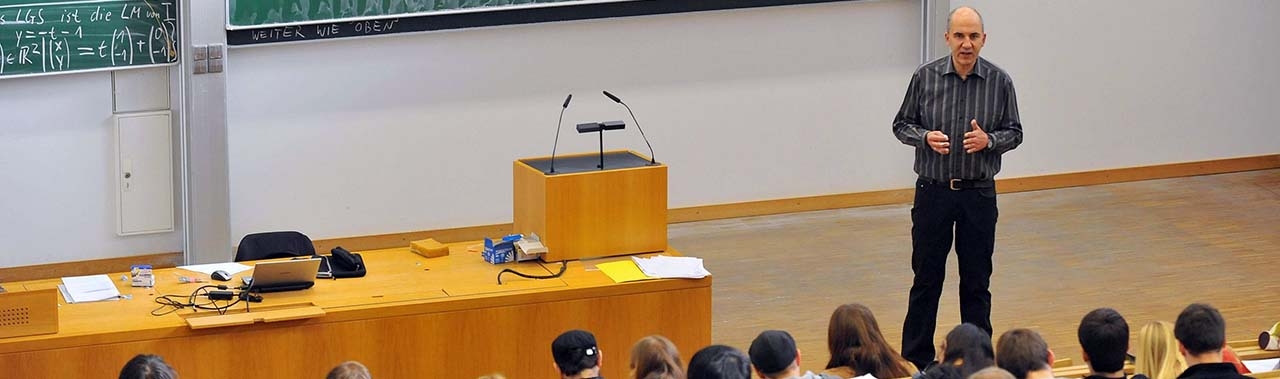
Prof. Dr. Andreas Filler is a Professor at the Institute of Mathematics, Humboldt University of Berlin, specializing in Mathematics Education with a focus on Geometry Didactics, Analytical Geometry, and Linear Algebra. He serves as an academic advisor for mathematics teacher training and heads the Berlin network of schools with a mathematical and scientific profile. His research emphasizes geometry education in secondary schools, modeling in mathematics, and technology integration in teaching, particularly using computer graphics and dynamic geometry tools. Professional Roles: Head of Berlin School Network, Spokesperson of Geometry Working Group (GDM), Board Member of Berlin Mathematical Society. Teaching: Supervises teaching internships, coordinates mathematical student societies, and teaches courses in Linear Algebra, Geometry, and Stochastics didactics. Projects: Involved in initiatives like the German Center for Teacher Education in Mathematics (DZLM) and international collaborations (CENTRAL project with Hungary). Research interests include functional reasoning, parametric equations visualization, and spatial geometry education. He actively contributes to teacher training programs through Humboldt-ProMINT, integrating STEM industry insights via internships at Adlershof institutions.
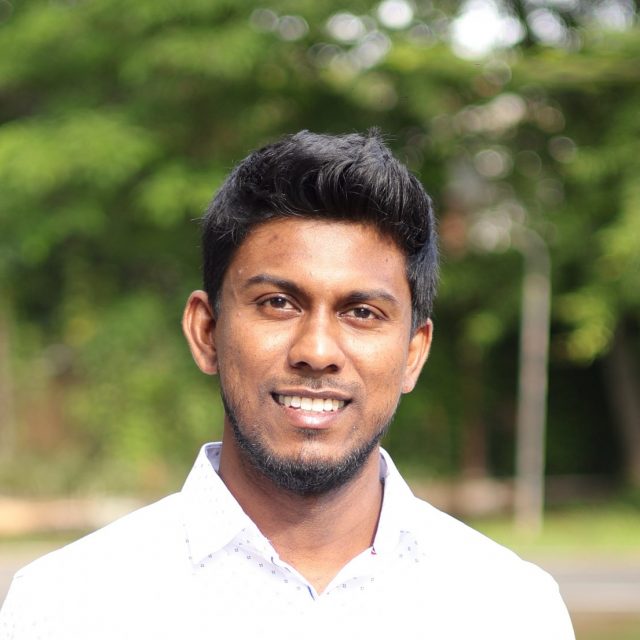
Malintha Fernando is a Digital Futures Postdoctoral Fellow at KTH Royal Institute of Technology in Stockholm, Sweden. His current project focuses on Designing Interaction-Aware Heterogeneous Multi-Robot Systems , aiming to develop scalable distributed control policies for multi-robot systems in dynamic environments. He holds a PhD from Indiana University (2023) and an undergraduate degree from the University of Moratuwa, Sri Lanka. Prior to KTH, he served as a visiting lecturer in Machine Learning at Indiana University and completed an internship at Open Robotics. Education: PhD in Robotics/Control Systems, Indiana University, Bloomington, USA (2023) Bachelor’s degree in Engineering, University of Moratuwa, Sri Lanka Research Interests: Malintha’s work emphasizes cooperative control policies for multi-drone systems, particularly in scenarios with communication failures or dynamic environments. His research addresses challenges in humanitarian aid, disaster response, and urban air mobility (UAM) applications. He explores frameworks to balance task prioritization in real-time, minimizing human bias in system design. Key areas include: Decentralized decision-making in multi-agent systems Swarm intelligence and UAV coordination Robust control under uncertainty Grants & Supervision: His fellowship is hosted by KTH’s Department of Mathematics, under the supervision of Assistant Professor Silun Zhang (Optimization and System Theory) and Professor Petter Ögren (Robotics, Perception and Learning). The project aligns with Digital Futures’ mission to address societal challenges through digital innovation. Labs & Teams: Malintha is affiliated with the Division of Optimization and System Theory and the Robotics, Perception and Learning (RPL) group at KTH, contributing to cross-disciplinary research in robotics and control systems.
Dr. John C. Russ is a Visiting Professor at North Carolina State University, specializing in image processing, analysis, and microscopy. His work bridges computer science, engineering, and applied sciences, focusing on quantitative techniques for structural characterization in foods, materials, and forensics. Research interests include forensic imaging, stereology, and the development of algorithms for microscopy. He has authored numerous books on image analysis, including The Image Processing Handbook and Forensic Uses of Digital Imaging . Recipient of the Ernst Abbe Memorial Award (2006) and August Kohler Award (2017), Dr. Russ provides consulting services in forensic analysis and expert witness testimony. His expertise spans over five decades, with contributions to microscopy, software tools (e.g., Photoshop plug-ins), and food microstructure analysis. Consulting and training services are offered through DrJohnRuss.com .
Dr. Andy Yeh is a Senior Lecturer in the School of Education at Queensland University of Technology (QUT). His primary roles include teaching pre-service teachers in Mathematics and ICT Education and supervising higher-degree research students. He has held academic positions since 2007, focusing on teacher education and innovative STEM education practices. Dr. Yeh's research emphasizes ICT integration in education, particularly through virtual reality (VR) tools like VRMath2 and makerspace learning environments (MLE). His work explores Web 2.0, Web3D, and mobile sensor technologies to enhance STEM education. He advocates for computational thinking and maker culture as integral to 21st-century skills. Key research areas include: Virtual Reality in Education STEAM Integration Makerspace Pedagogy Semiotics in Learning His publications highlight innovative teaching methods, such as using 3D modeling and coding in classrooms. He has conducted workshops for gifted students, trained over 400 teachers in China, and contributed to international conferences on STEM and ICT in education. Dr. Yeh founded MakerClubQUT to foster cross-disciplinary maker projects and leads the development of VRMath2, an online platform for collaborative STEM learning.
Jules Hedges is a mathematics and computer science researcher affiliated with the Institute for Categorical Cybernetics and the Mathematically Structured Programming group at the University of Strathclyde. As of September 2024, he is working 90% for the CyberCat Institute and 10% for the University of Strathclyde, focusing on applying category theory across various interdisciplinary domains. Hedges completed his PhD at Queen Mary University of London in 2016 with a thesis titled "Towards compositional game theory," which established foundational work for his ongoing research program. His academic journey spans from early work on game theory to current developments in categorical cybernetics. His primary research involves applying category theory in economics, machine learning, and control theory, with a view towards what was historically called cybernetics. Hedges is particularly known for developing compositional game theory, which provides a categorical framework for understanding strategic interactions through concepts like "open games" and "selection functions." His other research interests include graphical calculi for visual representation of categorical structures, functional programming paradigms, proof theory, and the semantics of natural language. He has made significant contributions to understanding how complex systems can be built from simpler components while preserving mathematical properties. Hedges' publication record reveals a consistent trajectory toward developing compositional frameworks for complex systems, with recent work increasingly focused on categorical cybernetics—the application of category theory to systems with feedback loops and goal-directed behavior. His research often bridges abstract mathematical concepts with practical applications in economics and artificial intelligence, particularly in reinforcement learning where he has demonstrated connections between value iteration algorithms and categorical optic composition. Hedges is a signatory of the "No Free View? No Review!" pledge, indicating his strong commitment to open access publishing. He has publicly stated he will not peer review for closed access or hybrid venues, reflecting his principled stance on making academic research freely available. While specific details about his advising activities are not documented in the provided text, his extensive publication record with numerous co-authors suggests active research collaboration and likely mentorship of junior researchers. His work spans multiple institutions and involves collaborators across mathematics, computer science, and economics. Hedges is a founding member of the Institute for Categorical Cybernetics, formally incorporated in October 2023, which represents the primary focus of his current work (90% of his professional time as of September 2024). This institute serves as a hub for researchers working at the intersection of category theory, cybernetics, and their applications to complex adaptive systems, potentially supporting collaborative projects, workshops, and publications in this emerging field.
Robert Kropholler is an Associate Professor in the Mathematics Institute at the University of Warwick. His research focuses on Geometric Group Theory, Geometric Topology, and Formal Language Theory. He teaches courses such as MA138 Sets and Numbers and MA473 Reflection Groups. His work explores hyperbolic groups, CAT(0) spaces, and the interplay between geometric structures and algebraic properties of groups. Notable contributions include studies on right-angled Artin groups, quasi-isometry classes of groups, and coarse geometric curvature. His research often combines techniques from combinatorial group theory, topology, and geometric analysis. While his publications frequently address foundational questions in geometric group theory, no specific scientific awards or grants are explicitly mentioned in the provided texts. He maintains a personal homepage and collaborates on international projects.
Bettina Speckmann is a full Professor in the Department of Mathematics and Computer Science at Eindhoven University of Technology (TU Eindhoven), where she leads the Applied Geometric Algorithms group. She holds additional appointments as EAISI Health Professor and EAISI Foundational Professor, and is affiliated with the Data Science Center Eindhoven. Her research bridges theoretical algorithm design with practical applications in spatial computing. Her research interests lie primarily in computational geometry and geometric algorithms, with strong applications in GIScience, Smart Mobility (including moving object analysis and automated cartography), geo-visualization, visual analytics, and e-Humanities. She focuses on developing efficient algorithms and data structures for spatial data, combining rigorous theoretical methods with practical engineering for real-world impact. Her recent publications (2025) show a strong trend in geometric data processing, particularly in polycube segmentations, dual loop algorithms, density estimation for moving groups, and topological analysis using merge trees and Fréchet distances. These works reflect her interdisciplinary focus on computational geometry, visualization, and data structures. Scientific awards received include: Netherlands Prize for ICT Research (2011) NWO Vici Award (2012) PEriTiA Prize (2020) Bettina Speckmann has advised numerous students and researchers through her group and has secured major grants, including the NWO Vici. She has served in leadership roles such as PC co-chair for Graph Drawing (GD 2011), PC chair for ICALP Track A (2015), and PC co-chair for SoCG (2018). She teaches courses such as Data Structures and Heuristic Algorithms. She leads the Applied Geometric Algorithms group, which actively collaborates with industry partners like HERE Global B.V., Fugro NL Land B.V., and OCLC B.V., and contributes to UN Sustainable Development Goals in areas related to data and mobility.
Lachlan Grose is a Research Fellow at Monash University's School of Earth Atmosphere and Environment, specializing in advanced geological and geophysical modeling. His work focuses on integrating machine learning, 3D structural analysis, and geophysical inversion techniques to address challenges in subsurface resource management and tectonic understanding. Key projects include the Three-dimensional Bayesian Modelling of Geological and Geophysical data (ARC-funded) and development of the LoopStructural software, a time-aware 3D geological modeling platform. Grose also contributes to industry collaborations like the AMIRA P1249 project on ore body knowledge modeling. Research interests span structural geology, igneous intrusion modeling, FAIR data principles, and geophysical inversion methods. He has led efforts to improve usability of Loop3D and pioneered machine learning applications for geological structure imaging. Leading developer of LoopStructural (open-source 3D modeling framework) Primary investigator on usability improvements for geoscientific workflows Recipient of ARC and industry grants totaling over AUD 3M Supervises PhD candidates focusing on interdisciplinary geoscience problems Recent publications emphasize transdimensional inversion methods, FAIR data integration, and application of machine learning to geophysical datasets. His work bridges academic research with industrial subsurface resource challenges.
Prof. Dr. Tim Nikolai Hoffmann is a Professor of Geometry I at the Technical University of Munich (TUM), holding positions in both the TUM School of Computation, Information and Technology and the Department of Mathematics. His academic career includes a Heisenberg Fellowship from the German Research Foundation (DFG), professorships at Kyushu University (Japan), and visiting roles at institutions in Jena, Munich, and Berlin. His research focuses on discrete differential geometry and mathematical visualization , with applications in computational mathematics and geometric modeling. Notable contributions include work on discrete geodesic nets, developable surfaces, and minimal surface theory derived from combinatorial structures. Scientific achievements include the Heisenberg Fellowship and publications in top-tier journals like ACM Transactions on Graphics and Annals of Mathematics . His work bridges theoretical geometry and computational methods, influencing fields such as computer graphics and geometric design. Education: Doctorate (2000), Habilitation (2003) Postdoctoral work at UMASS Amherst, USA Grants & Collaborations: Heisenberg Fellowship (DFG) Visiting Professorships at Kyushu University (ongoing) Labs/Teams: Active in TUM's Department of Mathematics research groups, including Discrete Differential Geometry and Scientific Computing.
Arne Sachtler is a researcher at the Technical University of Munich (TUM) and the German Aerospace Center (DLR), affiliated with the Chair of Sensor-Based Robot Systems and Intelligent Assistance Systems under Prof. Alin Albu-Schäffer. His research focuses on applying differential geometry and nonlinear dynamics to robotics, particularly in areas like elastic robots, energy-efficient locomotion principles, and intrinsic dynamics of mechanical systems. He specializes in robot control strategies, including impedance control and eigenmanifold-based model predictive control (EigenMPC). Education details are not explicitly listed, but his work indicates expertise in robotics and mathematical physics. Key research interests include robot kinematics, multi-body dynamics, and the integration of geometric principles into control frameworks. His publications span topics such as nonlinear normal modes, redundant manipulator control, and autonomous robotic assembly with visual-tactile sensing. Dr. Sachtler collaborates with institutions like DLR, contributing to both academic and industrial robotics research. His work emphasizes theoretical foundations with practical applications in energy-efficient robotics and human-robot interaction. Contact him via arne.sachtler@tum.de or arne.sachtler@dlr.de for inquiries.
Biljana Jović is an Associate Professor at the Department of Landscape Architecture and Horticulture, University of Belgrade’s Faculty of Forestry. She holds a PhD in Technical Sciences (2012) from the Faculty of Architecture, specializing in geometric education and visualization. As department president since 2022, she leads academic and research initiatives in landscape architecture and horticulture. Her education includes a master’s degree in geometry and architectural form from the Faculty of Architecture, with postgraduate studies in Serbia and specialization at TU Vienna and TU Dresden. Her research focuses on biomimetics, geometric modeling, and digital visualization in design. She founded the Geometry Workshop, a creative platform fostering interdisciplinary design exploration. Jović’s work bridges art and engineering through projects like bio-inspired installations and sustainable urban designs. Notable contributions include light art installations based on endemic plants and solar lamps modeled after flowers. She actively participates in international conferences (e.g., AFGS, ICGG) and collaborates with institutions like the Museum of Science and Technology. Awards include being a finalist in the Asian Design Modeling Contest and a Cumulus+ grantee. Her teaching spans undergraduate and graduate courses in descriptive geometry, digital visualization, and parametric modeling. She advises on EU projects (e.g., Worth Partnership) and contributes to global design networks via Cumulus Association. Research collaborations include biomimetic studies with international teams, emphasizing sustainable and innovative design solutions.
Dr Edwin Flikkema is a Lecturer in the Department of Physics at Aberystwyth University. His research focuses on theoretical chemistry and computational modeling of oxide systems, particularly silica clusters and hydroxylated structures. He employs methods like global optimization, molecular dynamics, and Monte Carlo simulations. His work includes determining optimal geometrical configurations of nanoscale silica clusters using Density Functional Theory, with recent interests in two-dimensional foams. Education: BSc and PhD in Theoretical Physics and Polymer Simulation from the University of Groningen (Netherlands). Postdoctoral research includes Delft University of Technology (silica clusters), Cambridge University (Marie Curie Fellowship on energy landscapes with Prof. David Wales), and a brief stint at the University of Barcelona. Joined Aberystwyth as an RCUK fellow in 2008, becoming a lecturer in 2012. Research Interests: Energy landscapes, computational materials science, nanocluster structures, hydroxylation effects, and foam modeling. His work bridges theoretical physics and applied chemistry, with contributions to understanding atomic configurations in confined systems. Key Achievements: Over 30 peer-reviewed publications, including studies on silicate oligomer interconversion and minimal perimeter partitioning. Active in interdisciplinary collaborations, combining computational methods with visualization techniques for material behavior analysis.
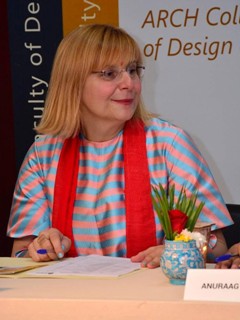
Sergio Gonzalo Besuievsky is an Associate Professor in the Department of Computer Science, Applied Mathematics and Statistics at the University of Girona, where he is also a member of the Research Group in Geometry and Graphics. His work bridges computer science and applied physics, focusing on visual computing applications in urban environments. His research centers on computer graphics, particularly geometric modeling and light simulation in urban settings. These interests reflect a strong interdisciplinary approach combining software development, physics-based rendering, and computational geometry to model real-world environments with high visual fidelity. His background in physics and software underpins his technical contributions to visual simulation systems. The publications listed in his profile indicate a consistent focus on computer graphics and geometric modeling, although specific titles are not detailed in the provided text. This suggests a long-term engagement with visual computing applications in architecture, urban planning, and simulation technologies. No scientific awards were explicitly listed in the provided text. As a member of the Research Group in Geometry and Graphics, he contributes to collaborative projects and likely supervises students, though no specific advisees are named. There is no mention of external grants, but his participation in research projects and conferences implies active involvement in funded or institutional research activities. He is affiliated with the Research Group in Geometry and Graphics at the University of Girona, which focuses on geometric algorithms, computer graphics, and visualization techniques for scientific and engineering applications.
Kumari Pooja is a Marie Curie Doctoral Researcher and PhD Student at the Technical University of Denmark (DTU), affiliated with the Department of Applied Mathematics and Computer Science Visual Computing. She contributes to open-source computational tools and geometric modeling. Research Interests: Machine Learning and Deep Learning for imaging 3D Visualization and Fiber Tracking Medical Imaging and Hyperspectral Data Analysis Optimizing Computational Efficiency in Image Reconstruction Scientific Contributions: Her work spans 3D Python tool development , deep unrolled neural networks , and hyperspectral classification architectures , with a focus on robustness to noise and multi-scale analysis. Awards: Marie Curie Doctoral Researcher Fellowship Contact: pooja@dtu.dk
Asuka Ohsawa is a part-time lecturer at the School of the Museum of Fine Arts (SMFA) at Tufts University. A visual storyteller specializing in printmaking, artist books, and drawing, her work merges popular culture, found images, and comics to explore personal narratives. BFA from California State University, Long Beach MFA from SMFA at Tufts University Former assistant professor and printmaking department chair at San Francisco Art Institute (2014-2018) Her research interests focus on the intersection of mathematics and art through geometric patterns, particularly inspired by traditional Japanese Uroko textile design . She extensively uses public domain materials and explores urban ecology themes through zines like the Pigeon Confidential series. Recent projects demonstrate a strong engagement with grid-based pattern systems (2025's work in progress), collaborative book arts (2024's exhibition piece), and science communication through visual media (2023-2022 publications). Her work has been featured in international exhibitions including the 32nd Graphic Arts Biennale in Slovenia. Notable grants include the Daynard Microgrants for Collaborations in Racial Justice (2021) and SVA RisoLAB support (2019). She actively collaborates with printers like Carolyn Muskat (Muskat Studios) and craftsmen like John Medley (wooden toy production). Her artistic practice incorporates multiple printmaking techniques including pochoir , letterpress , and laser-cut linoleum . She maintains a strong connection to both Japanese cultural roots and Bay Area creative networks , with works held in collections at the Center for Book Arts in NYC and Emily Carr University in Vancouver.