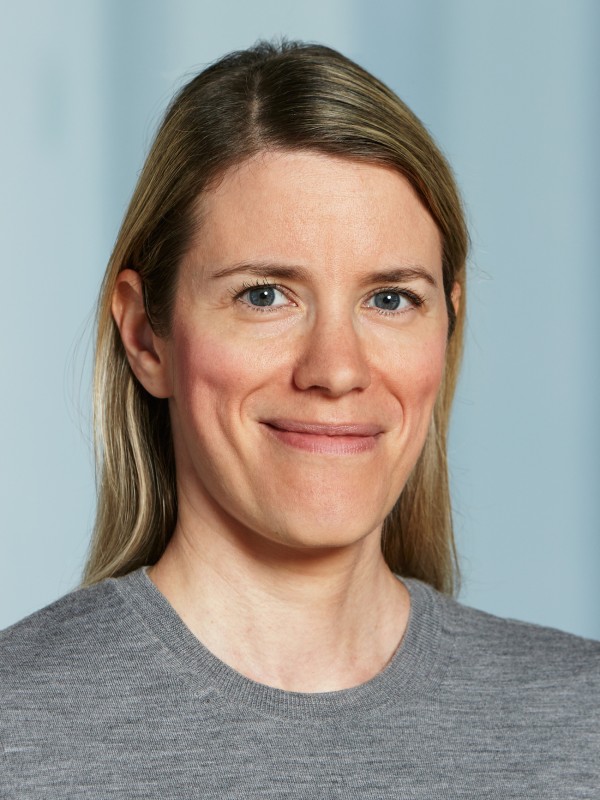
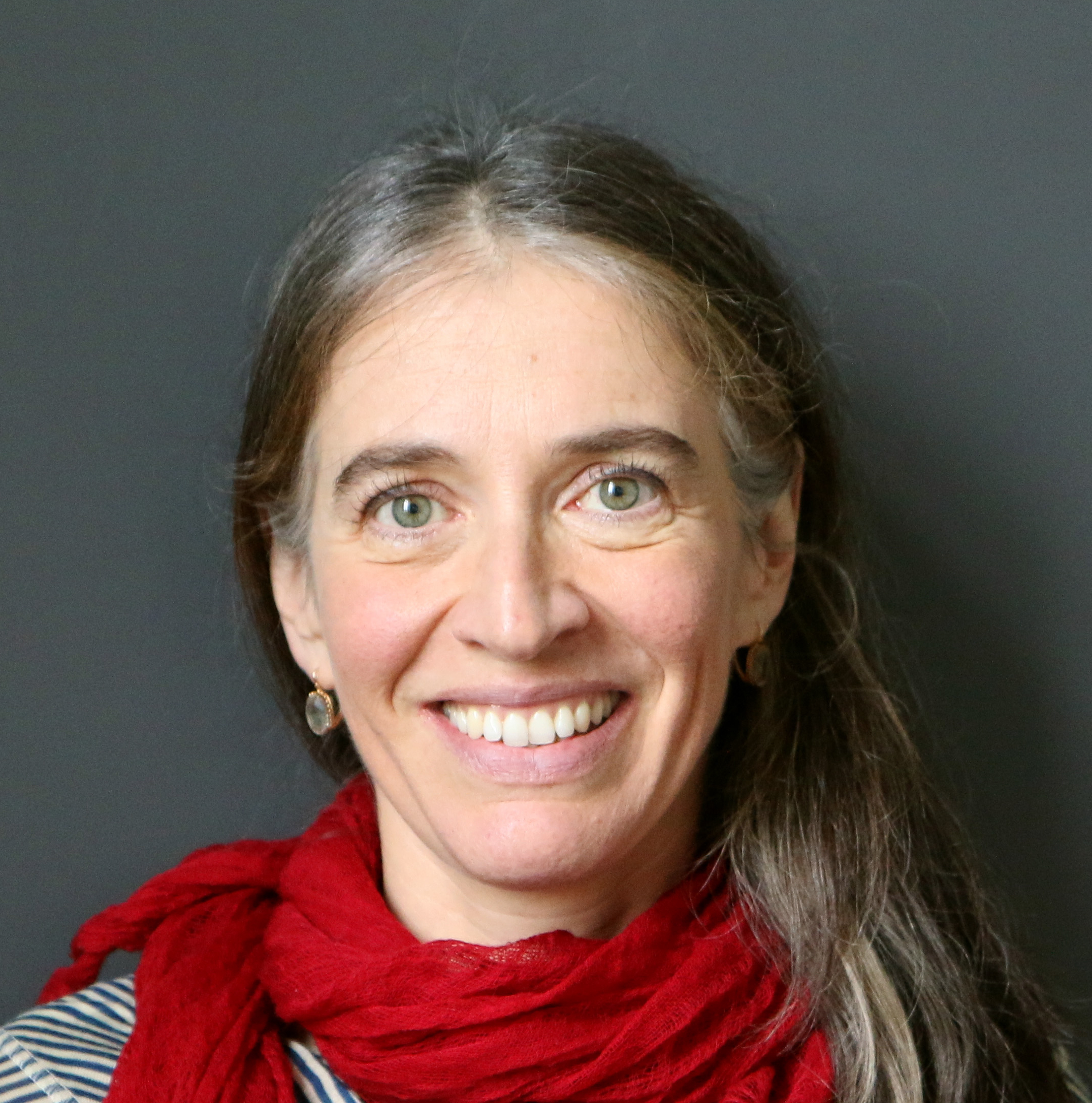
Prof. Olga Sorkine Hornung is a Full Professor of Computer Science at ETH Zürich, leading the Interactive Geometry Lab. She holds a BSc and PhD from Tel Aviv University (2000 and 2006) and conducted postdoctoral research at Technical University Berlin. Her research focuses on computer graphics, geometric modeling, and geometry processing, with applications in shape editing, digital fabrication, and animation. She has received numerous accolades, including the ACM Fellowship (2020), ERC Consolidator Grant (2020), and the Golden Owl Teaching Award (2021). Her work bridges theoretical foundations and practical algorithms, addressing challenges in parameterization, surface compression, and interactive design tools. Her research interests span: Computer Graphics & Visualization Geometric Modeling & Processing 3D Content Creation & Digital Fabrication Garment Design & Simulation Human Motion Analysis & Animation Awards and grants include: 2024: Best Paper Honorable Mention (EUROGRAPHICS) 2023: Member of Swiss Academy of Engineering Sciences (SATW) 2020: ERC Consolidator Grant 2017: Rössler Prize (ETH Zurich) Her lab focuses on developing novel methods for interactive geometry processing, with recent advancements in garment modeling (e.g., AIpparel, Rags2Riches) and motion retargeting systems like WalkTheDog. She actively collaborates on interdisciplinary projects, including biomedical applications and sustainable fashion technology.
Swiss Federal Institute of Technology in LausanneSwitzerland
Pierre Vandergheynst is a Full Professor at the Swiss Federal Institute of Technology Lausanne (EPFL) in the Department of Electrical Engineering, with a courtesy appointment in Computer and Communication Sciences. He serves as EPFL’s Vice-Provost for Education since 2015 and leads the Signal Processing Laboratory 2 (LTS2). His research spans harmonic analysis, sparse approximations, mathematical data processing, and applications in signal/image processing, computer vision, machine learning, and graph-based data analysis. PhD in Mathematical Physics (1998), Université catholique de Louvain Postdoctoral Researcher at EPFL (1998-2001) Assistant Professor at EPFL (2002-2007) His research explores geometry/symmetry in high-dimensional data, redundant dictionaries for dimensionality reduction, and computational harmonic analysis on manifolds. Recent work focuses on protein structure modeling, geometric deep learning, and graph-based signal processing. Key article trends include graph neural networks for protein analysis, geometric deep learning in neuroscience, and structured knowledge priors in neural models. His 2023-2025 publications emphasize interpretable AI, long-range dependencies in graphs, and molecular representation learning. Scientific Awards: IEEE Signal Processing Magazine Best Paper Award (2023) Signal Processing Society Best Paper Award (2022) Apple ARTS Award (2007) De Boelpaepe Prize, Royal Academy of Sciences of Belgium (2009-2010) He has supervised over 30 PhD theses and contributed to foundational work in graph signal processing, compressive sensing, and geometric deep learning. His lab develops tools for data science on non-Euclidean structures, with applications in medicine, astronomy, and wireless systems.
Alexander Gorodnik is a Professor of Mathematics at the University of Zurich, focusing on the interplay between dynamical systems and number theory. His work bridges ergodic theory, homogeneous dynamics, and Diophantine approximation, with applications to arithmetic counting problems and geometric distribution of lattice orbits. Current lectures include MAT121: Analysis I and MAT221: Analysis III at the University of Zurich Co-author of the book The ergodic theory of lattice subgroups (Princeton University Press, 2010) Editor of the journal Ergodic Theory and Dynamical Systems His research explores Diophantine approximation through dynamical systems, investigating how orbits of group actions distribute in homogeneous spaces. Key topics include mixing properties , central limit theorems , and metric theorems for multiplicative approximation. Recent publications address automorphic density estimates , discrepancy in intrinsic Diophantine approximation , and effective equidistribution of translated measures. His work often employs tools from representation theory and spectral analysis . Current working group members include Zhiyuan Deng , Zouhair Ouaggag , and Yuval Yifrach . He has taught courses at institutions in Zurich, Bristol, Princeton, and Mumbai, with lecture materials covering topics from ergodic theorems to Každan's property (T) .
Swiss Federal Institute of Technology in LausanneSwitzerland
Josie Hughes is a Tenure Track Assistant Professor at the Swiss Federal Institute of Technology Lausanne (EPFL) within the School of Engineering's Institute of Mechanical Engineering. She leads the Computer Robot Design and Fabrication Laboratory (CREATE Lab) and serves on the doctoral program committee for Robotics, Control and Intelligent Systems. Her roles include teaching courses in product development, engineering design, and data-driven manufacturing methods while maintaining active research and student supervision. Her research centers on soft robotics with emphasis on adaptive design, fabrication techniques, and real-world applications. Key areas include agricultural robotics (exemplified by the GraspBerry raspberry harvester), biomimetic materials like self-healing e-skins, and developmental robotics (BabyBot project). She pioneers approaches integrating morphological computation, variable stiffness mechanisms, and machine learning for robotic control, while championing open-source principles and diversity in robotics through accessible educational initiatives like balloon robot kits. Analysis of her recent publications reveals dominant trends in soft robotics adaptability, particularly in variable-stiffness structures, sensor integration, and task-specific optimization. Her work bridges fundamental material science with practical applications in agriculture, food science, and human-robot interaction, frequently employing computational methods like Bayesian optimization and neural networks for design and control. Scientific awards: No specific awards were mentioned in the source materials. Dr. Hughes actively supervises 16 doctoral students across diverse projects including soft grippers for agriculture, biomimetic locomotion, and robotic manipulation systems. Her advising portfolio shows strong alignment with her research themes, with current students working on topics like modular soft arms, agricultural automation, and developmental robotics. While grant details weren't specified, her high publication volume indicates robust research funding. The CREATE Lab under her leadership focuses on holistic co-design of hardware and software for soft robotic systems, with notable projects including the GraspBerry agricultural harvester and BabyBot developmental platform. The lab emphasizes open-source development and educational outreach, maintaining strong industry and academic collaborations while pushing boundaries in reconfigurable robotics and human-centered applications.
Urs Lang is a Full Professor at the Department of Mathematics, ETH Zurich, where he has held a professorship since 2001. His academic journey began with mathematics studies at the University of Berne and the University of Freiburg i.Br., culminating in a doctoral degree focused on hyperbolic geometry and minimal surfaces. Education: University of Berne (undergraduate) University of Freiburg i.Br. (doctoral degree) Lang's research lies at the intersection of differential geometry , metric geometry , and geometric group theory . His work explores non-positive curvature spaces, geometric measure theory, and large-scale Lipschitz analysis. Recent publications examine combinatorial hyperbolicity, isoperimetric inequalities, and rank-rigidity phenomena. The publications overview reveals a consistent focus on geometric structures, including: Higher-rank hyperbolicity in singular spaces Convex geodesic bicombings Injective hulls in geometric group theory Nonlinear potential theory on hyperbolic metric spaces Lipschitz extension problems Curvature comparison theorems Lang actively contributes to academic discourse through editorial roles at journals like Geometry and Topology and Analysis and Geometry in Metric Spaces , as well as organizing major conferences including the 2025 Metric Analysis Trimester Program at Bonn's Hausdorff Institute.
Swiss Federal Institute of Technology in LausanneSwitzerland
Konstantinos Karapiperis is a Tenure Track Assistant Professor at EPFL's Laboratory of Multiscale Modeling of Materials (LMD), within the School of Architecture, Civil and Environmental Engineering (ENAC). His research integrates mechanics , multiscale modeling , and data science to study geomaterials and structural materials. PhD in Applied Mechanics (minor in Applied Mathematics), Caltech Postdoctoral Researcher & Lecturer, ETH Zürich (Marie Skłodowska-Curie Fellowship) Research focuses on granular materials , architected materials , and nonlocal modeling using techniques like Level-Set Discrete Element Method (LS-DEM) and machine learning . Recent work explores fracture control via graph neural networks and thermodynamics-informed models. Selected scientific award: Marie Skłodowska-Curie Fellowship Teaches courses in Soil Mechanics and Multiscale Modeling . PhD students include Thomas Henzel and Hrishikesh Gopakumar Menon. His Data-Driven Mechanics Laboratory (LMD) develops predictive tools for granular and structured material behavior.
Manfred Einsiedler is a Professor in the Department of Mathematics at ETH Zurich, Switzerland, with office HG G 64.2 at Rämistrasse 101, 8092 Zurich. He teaches undergraduate and graduate courses including Linear Algebra (HS 2019), Analysis I/II, and Functional Analysis I/II, using his co-authored textbook Functional Analysis, Spectral Theory, and Applications . His research centers on dynamical and equidistribution problems in homogeneous spaces, with focus on closed horocycle orbits, geodesic orbits on the modular surface, and measure rigidity. Key contributions include work on effective equidistribution, entropy methods, and connections between ergodic theory and number theory. He has co-authored foundational texts: Ergodic Theory with a view towards Number Theory and Functional Analysis, Spectral Theory, and Applications in Springer's Graduate Texts in Mathematics series, alongside multiple in-progress volumes on entropy, homogeneous dynamics, and unitary representations. Recent publications explore integer points on spheres, rigidity of invariant measures, and Diophantine approximation on fractals, emphasizing collaborations with Lindenstrauss, Ward, Margulis, and Venkatesh. His work demonstrates consistent focus on homogeneous dynamics with applications to arithmetic problems, particularly through effective methods and measure classification theorems. While no specific awards or student lists are documented in the source, his extensive publication record and textbook authorship establish significant scholarly impact.
Swiss Federal Institute of Technology in LausanneSwitzerland
Kay Severin is a full professor at the Laboratory of Supramolecular Chemistry (LCS) within École Polytechnique Fédérale de Lausanne (EPFL) , Switzerland. His research focuses on the design and reactivity of metal-ligand assemblies, including coordination cages, metalloligands, and supramolecular receptors. He has pioneered the use of metalloligands for constructing heterometallic architectures and developed systems for anion extraction and stimuli-responsive hydrogels. Key funder: Swiss National Science Foundation (FNS) Collaborative work with Rosario Scopelliti and Farzaneh Fadaei Tirani Research Interests: Severin's work spans supramolecular chemistry, organometallic synthesis, and functional materials. Recent projects include: Dynamic palladium-based hydrogels with anion-responsive crosslinks Gold(I)-driven nano-onion structures via π-stacking Triazene-derived ligands for Sandmeyer-type reactions Metalloligand assembly of Fe/Pd/Au heterotrimetallic cages Publication Trends: Over 300 publications since 1994, with recent emphasis on: Coordination-driven self-assembly (2024: 6 articles) Triazene and diazoolefin reactivity (2025: 4 articles) Metal-ligand interactions in nanogels and vesicles (2024-2025: 3 articles) Environmental applications in anion extraction (2025: 1 article)
Prof. Jeroen Anton van Bokhoven is a Full Professor at ETH Zurich's Department of Chemistry and Applied Biosciences and Head of the Laboratory for Catalysis and Sustainable Chemistry at Paul Scherrer Institute. His research focuses on establishing structure-performance relationships in heterogeneous catalysts to enable sustainable chemical processes through advanced catalyst design. Education: B.Sc. in Chemistry, Utrecht University (1995) Ph.D. in Inorganic Chemistry and Catalysis (with honours), Utrecht University (2000) Research Focus: Van Bokhoven's group pioneers operando characterization techniques, particularly X-ray absorption spectroscopy and scattering methods, to study catalysts under realistic reaction conditions. Key research thrusts include methane conversion to value-added products (methanol, methyl esters), zeolite catalysis for olefin production, and design of stable catalysts for high-temperature oxidation processes. His work bridges fundamental surface science with industrial applications in sustainable energy and chemical manufacturing. Scientific Recognition: Swiss Chemical Society Werner Prize (2008) Academic Leadership: Van Bokhoven leads a multidisciplinary research group spanning ETH Zurich and Paul Scherrer Institute, supervising doctoral candidates and postdoctoral researchers. His group maintains strategic partnerships with industrial catalyst manufacturers and operates specialized facilities for in situ spectroscopy at the Swiss Light Source synchrotron. Current projects address carbon dioxide utilization, biomass conversion, and fundamental mechanisms of catalyst deactivation. Research Infrastructure: The group leverages state-of-the-art capabilities at the Laboratory for Catalysis and Sustainable Chemistry (PSI), including custom operando cells for XAS, XPS, and electron microscopy under reactive gas environments, enabling atomic-scale observation of catalytic transformations.
Swiss Federal Institute of Technology in LausanneSwitzerland
Jérôme Scherer is a researcher at the École Polytechnique Fédérale de Lausanne (EPFL) affiliated with the Laboratory for Topology and Neuroscience under Prof. Kathryn Hess Bellwald. He has supervised multiple PhD students including Kay Werndli, Lyne Moser, Samuel Lavenir, Olivia Monjon, and Virgile Constantin. His research focuses on algebraic topology, homotopy theory, category theory, and homological algebra, with notable contributions to localization functors, crossed modules, conjugation spaces, and homotopy nilpotent groups. His recent publications analyze fiberwise localization, admissible reflections, and cohomological purity in topological spaces. He previously coordinated the Euler course program for gifted youth in French-speaking regions and taught Linear Algebra at EPFL until 2018. He serves on the editorial board of Algebraic and Geometric Topology and has organized international conferences like the Arolla Conference on Algebraic Topology.
Ana Cannas da Silva is a Lecturer in the Department of Mathematics at ETH Zurich (Switzerland). She specializes in Symplectic Geometry , Geometric Topology , and Geometric Analysis . Her academic work includes research on symplectic toric manifolds, folded symplectic structures, and geometric quantization, with notable publications in journals like Pure and Applied Mathematics Quarterly and Mathematical Research Letters . Research Interests Symplectic Geometry Geometric Topology Geometric Analysis Hamiltonian Group Actions Toric Manifolds Recent Academic Activities Co-organized Symplectic Geometry Seminar (2021-2023) Supervised student theses on topics like contact toric manifolds, Hamiltonian actions, and symplectic linear algebra Authored research on Dedekind sums via Atiyah-Bott-Lefschetz theory (2023) and symplectic origami (2011) Teaching Lecturer for Mathematics I (2024), covering differential calculus and linear algebra Lecturer for Mathematics II (2024), focusing on multivariable calculus and partial differential equations Co-taught seminars on symplectic/contact geometry with Bahar Acu Academic Contributions Advised 20+ MSc/BSc theses at ETH Zurich since 2012 Co-organized conferences like D-Days (2013) and LP-60 (2023) Authored outreach book: Step by Step Symmetry (2016)
Swiss Federal Institute of Technology in LausanneSwitzerland
Martin Rajman is a Senior Scientist at École Polytechnique Fédérale de Lausanne (EPFL) with multiple affiliations across the institution. He holds positions in the School of Computer and Communication Sciences (SIN - Teaching, SCI IC MR Group, SSC - Teaching) as well as in the Vice Presidency for Strategic Development (VPS Artificial Intelligence) and the Vice Presidency for Academic Affairs (SNAI Administration). He serves as the Executive Director of Nano-tera.ch, a large Swiss Research Program funding collaborative multi-disciplinary projects in Health and the Environment. Rajman's research spans the intersection of artificial intelligence, natural language processing, and information retrieval. His work demonstrates a consistent focus on developing practical applications of computational linguistics and machine learning techniques. Early in his career, he contributed significantly to syntactic parsing, stochastic language models, and vector space representations for text. More recently, his research has expanded into deep learning applications for 3D reconstruction, empathetic conversational agents, and distributed analytics systems. His publications reveal a trajectory from foundational NLP research toward increasingly applied and interdisciplinary work connecting AI with healthcare, environmental monitoring, and human-computer interaction. Analysis of his recent publications (2015-2024) shows a clear evolution toward more applied AI research with strong interdisciplinary connections. While maintaining his core expertise in natural language processing and information retrieval, his work has expanded into computer vision, healthcare applications, and sustainable computing. The publications demonstrate increasing collaboration across disciplines, with applications in medical imaging, mental health support systems, environmental monitoring, and human-centered AI. His leadership role in the Nano-tera.ch program reflects this interdisciplinary approach, connecting computing research with real-world challenges in health and environmental contexts. Rajman has mentored several PhD students including Ailomaa Marita, Eckard Emmanuel, Melichar Miroslav, and Veselý Martin. His research has been supported through the Nano-tera.ch program, which has funded more than 100 research projects with over 95 million CHF in public funding. He has also managed more than 20 European projects during his tenure as Director of the EPFL Global Computing Center. As Executive Director of Nano-tera.ch, Rajman leads a significant research initiative connecting EPFL with national and international partners. His work bridges academic research with industry applications, notably through collaborations with eBay on product ranking technology and with Elsevier on article recommendation systems. His leadership extends to managing large-scale research programs while maintaining an active research agenda and mentoring the next generation of computer scientists.
Paulina Agata Piotrowska-Motyka is a Professor of Geometric Topology at the University of Sydney (since 2020) and currently serves as Executive Director of the Sydney Mathematical Research Institute (2022–2025). She also held roles as Deputy Director of the Australian Mathematical Sciences Institute (2021–2023) and has extensive service in academic leadership, including roles in curriculum development, conference organization, and editorial work. Education: Ph.D. in Mathematics, University of Melbourne, Australia (2002) Bachelor of Science (Honours) (First Class), University of Melbourne, Australia (1997) Zwischenprüfung in Mathematics and Philosophy (Equivalent to Bachelor's degree), Johannes Gutenberg-Universität, Mainz (1996) Research Interests: Her work focuses on geometric topology, low-dimensional topology, and computational methods in topology. She explores topics such as triangulations of manifolds, geometric structures, and algorithmic approaches to topological problems. Her research bridges pure mathematics and computational geometry, with applications in understanding complex geometric configurations. Grants & Awards: Major grants include projects on triangulations of 3-manifolds, moduli spaces of geometric structures, and educational initiatives in mathematics. Her awards include the Friedrich Wilhelm Bessel Research Award (2021) and the Faculty of Science Teaching Award (2015). Service & Leadership: She has organized numerous conferences and workshops, including the 2024 Geometry and Topology in Low Dimensions conference and the 2021 Computational & Algorithmic Topology event. She co-founded the Australian Geometric Topology Webinar and led the Geometry & Topology seminar at the University of Sydney (2014–2020).
Grigory Mikhalkin is a Full Professor at the University of Geneva, where he has been a faculty member since 2008. He is considered one of the founders of Tropical Geometry, a domain of algebraic geometry governed by (max,+)-calculus where geometric objects degenerate to their piecewise-linear limits. He leads the "ALGEBRA AND GEOMETRY" research group at the university. Mikhalkin studied at Leningrad and Michigan State University under the supervision of Oleg Viro and Selman Akbulut. After receiving his PhD in 1993, he completed postdoctoral training at Princeton, Bonn, Toronto, Berkeley, and Harvard (1993-2000). He served as associate and then full Professor at the University of Utah before moving to the University of Toronto, eventually joining the University of Geneva in 2008. Mikhalkin's primary research areas are Geometry and Topology, with a particular focus on Tropical Geometry. His work bridges algebraic geometry with combinatorial structures, exploring how complex geometric objects can be understood through their piecewise-linear tropical counterparts. This approach has proven fruitful in solving problems in enumerative geometry and has connections to mathematical physics through the study of sandpile models and self-organized criticality. His research group actively explores the connections between tropical geometry, symplectic geometry, and real algebraic geometry, organizing regular seminars including the "Séminaire Fables Géométriques." The recent publications of Professor Mikhalkin demonstrate a strong focus on the intersection of tropical geometry with sandpile models and self-organized criticality. His work has evolved to examine tropical aspects of number theory, lattice sums, and even applications to economics through auction theory. A significant portion of his recent research explores the patterns and structures that emerge in sandpile models across various lattices and dimensions, connecting discrete mathematics with continuum limits through tropical techniques. Prize of the St. Petersburg Mathematical Society (1999) Silver Medal of the Mexican Mathematical Society (2011) Canada Research Chair (2004-2009) Friedrich-Wilhelm-Bessel Research Award of the Alexander-von-Humboldt Foundation (2007-2008) European Research Council Advanced Grant (2010-2015) Chair of Fondation Sciences Mathématiques de Paris (2013-2015) Mikhalkin has successfully advised several PhD students to completion, including Kristin Shaw (2011), Lionel Lang (2014), Nikita Kalinin (2015), Mikhail Shkolnikov (2017), and Johannes Josi (2018). His research has been supported by prestigious grants including the ERC Advanced Grant and the Canada Research Chair. He presented his work at the Bourbaki seminar in 2003 and was selected as a Geometry speaker at the International Congress of Mathematicians in 2006, highlighting the significance of his contributions to the field. Professor Mikhalkin leads the "ALGEBRA AND GEOMETRY" research group at the University of Geneva, which includes current members Thomas Blomme, Francesca Carocci, Aloïs Demory, Gurvan Mével, and Antoine Toussaint. The group has a strong track record of postdoctoral fellows and alumni, including notable researchers such as Ivan Bazhov, Johan Bjorklund, Rémi Crétois, and others. They organize several seminars including the "Séminaire Fables Géométriques" and have historical connections to the Battelle Seminar and Tropical working group Seminar.
Ralf Hiptmair is a Full Professor at ETH Zürich, serving as Head of the Seminar for Applied Mathematics and Deputy Head of the Department of Mathematics. He also holds the position of Director of Studies for ETH BSc and MSc in Computational Sciences and Engineering (CSE). His research spans computational mathematics, numerical analysis, finite element methods, boundary element methods, computational electromagnetism, multigrid methods, discrete differential forms, shape optimization, wave propagation, and kinetic equations. Hiptmair's work on auxiliary space methods was recognized as a breakthrough in computational science in the 2008 DOE Report on recent significant advancements in computational science. His research focuses on developing and analyzing numerical methods for partial differential equations, with particular emphasis on structure-preserving discretizations, computational electromagnetism, and boundary integral equations. His work has significant applications in engineering, physics, and computational science. Hiptmair's publications demonstrate a strong focus on advancing numerical techniques for electromagnetic problems, wave propagation, and shape optimization. His recent work shows increasing interest in computational topology, geometric numerical integration, and interdisciplinary applications of numerical methods. Featured as breakthrough in computational science in the 2008 DOE Report on recent significant advancements in computational science (for Auxiliary space methods) Hiptmair has supervised numerous doctoral, master's, and bachelor's students across mathematics, computational science and engineering, and related fields. His research group has received funding for developing advanced numerical methods with applications in electromagnetism, fluid dynamics, and computational physics. He is actively involved in teaching numerical methods courses at both undergraduate and graduate levels. Hiptmair leads research efforts in the Seminar for Applied Mathematics, collaborating with industry partners like ABB Corporate Research and Siemens on practical applications of computational methods. His work bridges theoretical numerical analysis with real-world engineering challenges.