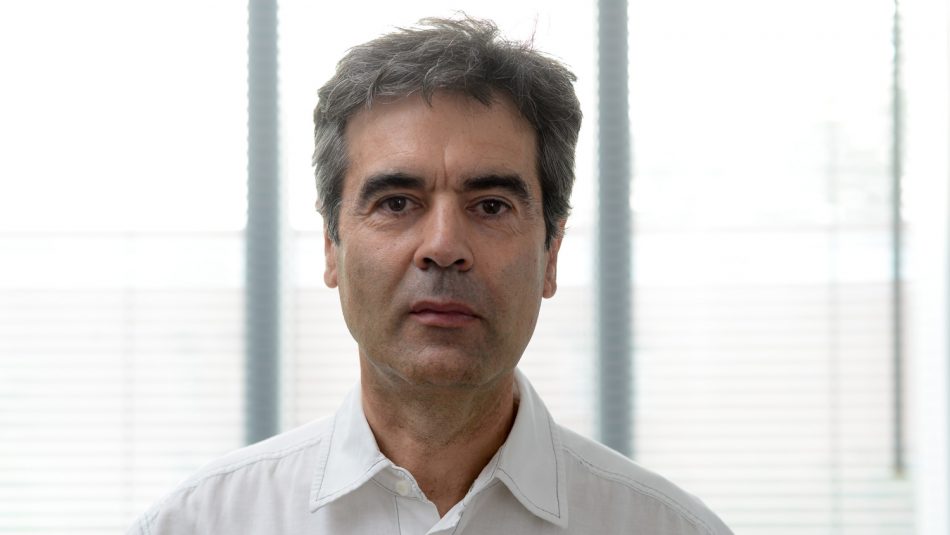
Nicolas ROUGON is an Associate Professor at Telecom SudParis, affiliated with the SAMOVAR laboratory and the ARMEDIA team. His research focuses on medical imaging and computational methods, particularly in MRI, image registration, and cardiovascular analysis. He has contributed to non-rigid registration techniques for myocardial contraction quantification and developed information-theoretic approaches for segmentation and alignment. His work spans cardiovascular imaging (myocardial perfusion, deformation analysis), multimodal image fusion (PET/MRI), and mathematical foundations of medical image processing. Notable applications include lesion segmentation in neurological disorders and dynamic statistical modeling of cardiac motion. Publications emphasize clinical translation of algorithms, with applications in cardiology and oncology. No awards are explicitly mentioned but his work has been presented globally at conferences like MICCAI, SPIE, and ISBI. Active since 1998, his research bridges signal processing theory and practical medical diagnostics.
Professor Wen Tang is a leading academic in Digital Games Technology at Bournemouth University, appointed as Professor in 2016. She holds a PhD in Computer Science from the University of Leeds, UK, with prior roles as a Research Fellow at Leeds and Bradford Universities. Her expertise spans Virtual Reality (VR), Augmented Reality (AR), AI, and medical applications, focusing on surgical robotics and endoscopy. She leads major research projects, including the Horizon-MSCA-2024-IP-01-01:3D-Intel Surgery initiative starting in 2025. Her research integrates VR/AR algorithms, AI-driven medical imaging, and robotics. Notable grants include EPSRC, Innovate UK, EU H2020, and Royal Academy of Engineering funding, totaling over £2 million. She serves on the EPSRC Peer Review College and has published extensively in journals like IEEE Transactions on Medical Imaging and Neurocomputing. Key projects include developing interactive surgical simulation tools, point cloud registration methods, and gamified health interventions. Her work aligns with UN SDGs for Quality Education, Decent Work, and Sustainable Innovation. Future work emphasizes 3D medical visualization and healthcare technology integration. Publications highlight advancements in medical image fusion, AI for surgical robotics, and VR safety training. She collaborates widely, mentoring teams in digital health and extended reality applications.
Djamila Aouada is an Assistant Professor and Senior Research Scientist at the University of Luxembourg's Interdisciplinary Centre for Security, Reliability and Trust (SnT), where she heads the Computer Vision, Imaging, and Machine Intelligence (CVI2) research group. She earned her State Engineering degree from École Nationale Polytechnique, Algeria, and PhD from North Carolina State University. Her research spans computer vision, signal processing, pattern recognition, and data modeling. Dr. Aouada leads several national and European projects including FNR FAVE, 3D-Act, and H2020 STARR, focusing on AI-driven solutions for industrial and security applications. She has received four IEEE Best Paper Awards for her contributions. Dr. Aouada has supervised 5 completed PhD theses and currently mentors 5 PhD candidates, while maintaining collaborations with Los Alamos National Laboratory and Mitsubishi Electric Research Labs. She serves as Senior IEEE Member and previously chaired IEEE Benelux Women in Engineering.
Dr. Russell Herman is a Professor in the Department of Physics and Physical Oceanography at the University of North Carolina Wilmington. He has been actively involved in physics education, particularly teaching PHY 101 (College Physics), and has developed extensive lecture materials and video content for undergraduate instruction. His departmental contributions include serving as chair of the Technology Committee, implementing graphing calculators in lower-level classes, and acting as Web Master for the Mathematics and Statistics Department. Dr. Herman's research interests span mathematical physics, differential equations, and educational technology applications. He has made significant contributions to open source software for mathematics education, reviewing numerous tools to make mathematical resources more accessible, especially for students in resource-constrained environments. His work with VPython for mathematical modeling and mobile computing environments demonstrates his commitment to innovative teaching approaches. He has attended the International Conference on Technology in Collegiate Mathematics (ICTCM) continuously since 1993, reflecting his longstanding engagement with educational technology. His publication record shows a strong focus on mathematical methods, particularly differential equations, with recent work on the Lane-Emden-Fowler equation, soliton solutions, and Fourier analysis. Many publications bridge mathematical theory with educational applications, including textbooks and articles on using computational tools like Simulink for solving differential equations. His 'Letter from the Editor-in-Chief' series addresses contemporary issues in academic life, from digital distractions to social media applications in education. Dr. Herman has secured funding for multiple significant projects including the MCP Project (Multimedia Instruction in Mathematics, Chemistry, and Physics), the iLumina Digital Library (part of the National Science Digital Library), the Numina Project (exploring handheld devices in science education), and the Laboratory for Research on Mobile Learning Environments. These projects reflect his innovative approach to integrating technology into STEM education. He has developed several classroom software applications including GraphData 2002 for handheld devices, Menten-Michaelis Reaction software for biochemistry, Geometric Optics lab software, and LRC Circuit Laboratory tools. With over 116 items contributed to the iLumina Digital Library, his work has reached a broad educational audience. His expertise spans programming languages from Fortran and Pascal to modern computational environments, demonstrating both historical perspective and current relevance in computational physics education.
S. Shankar Sastry is a distinguished academic and researcher holding the title of Professor in the Departments of Electrical Engineering and Computer Sciences, Bioengineering, and Mechanical Engineering at the University of California, Berkeley. He served as Dean of the College of Engineering from 2007 to 2018 and previously directed CITRIS (Center for Information Technology Research in the Interest of Society), the EECS Department, and the DARPA Information Technology Office. His academic journey includes a B.Tech. from IIT Bombay (1977) and advanced degrees from UC Berkeley (M.S. EECS 1979, M.A. Mathematics 1980, Ph.D. EECS 1981). Research interests span artificial intelligence, control systems, robotics, cyber-physical systems, and security. He leads initiatives at the Berkeley Artificial Intelligence Research Lab (BAIR), Berkeley Center for New Media, and the Blum Center for Developing Economies. Notable contributions include work on sparse representation for face recognition, hybrid system analysis, and biomimetic robotics. His publications (15+ highlighted here) showcase expertise in dynamic games, networked control, and quantum computing. Awards include the Rufus Oldenburger Medal (2021), Berkeley Citation (2018), and multiple fellowships. Sastry has advised numerous students and oversees labs focusing on autonomous systems and human-robot interaction. Teaching includes courses on feedback control and linear system theory.
Ed Cohen is an Associate Professor in Statistics at Imperial College London's Department of Mathematics (Faculty of Natural Sciences). His research focuses on statistical methodologies for analyzing signals and images, including point processes, time series analysis, and change-point detection. Applications span biological imaging, networks, and manifold-based domains. He leads the EPSRC Centre for Doctoral Training in Statistics and Machine Learning (StatML) and contributes to the EPSRC NeST Programme. His work integrates mathematical theory with computational tools for microscopy data analysis and interdisciplinary collaborations. Education & Professional Roles: Joint Director, EPSRC StatML CDT (Imperial/Oxford) Investigator, EPSRC NeST Programme Associate Editor, Statistics and Computing Vice-Chair, Royal Statistical Society's Emerging Applications Section Research Interests: Statistical methods for spatial and temporal data Bioimaging applications (e.g., super-resolution microscopy) Network analysis and community detection Bayesian online estimation and changepoint detection Interdisciplinary projects in neuroscience and microbiology PhD Opportunities: Current openings focus on computational/statistical methods for neuronal protein organization using microscopy data, with collaboration between Imperial College London and Bordeaux's Institute of Interdisciplinary Neuroscience. Labs & Teams: Active in Mathematics in Medicine and Time Series/Signal Processing groups at Imperial, contributing to collaborative projects bridging statistics, computer science, and biology.
Geoffrey Schiebinger is an Associate Professor of Mathematics at the University of British Columbia. His work bridges theoretical mathematics and experimental biology, focusing on optimal transport theory applied to high-dimensional gene expression data. He leads a research group developing mathematical tools for analyzing single-cell RNA sequencing and spatial omics data. Education: PhD in Statistics, UC Berkeley (2016), advised by Benjamin Recht M.S. in Electrical Engineering, Stanford University (2011) B.S. in Mathematics (minor in Physics), Stanford University Research interests center on understanding cellular differentiation processes, such as how stem cells transform into specialized cell types. His group applies optimal transport theory to model transcriptional landscapes and lineage trajectories, with applications in immunology, developmental biology, and cancer research. Key projects include the Waddington-OT framework for trajectory inference and DNA-GPS spatial genomics methodology. Notable awards include the 2022 Michael Smith Health Research BC Scholar Award and 2021 Maud Menten Prize. His grants include top rankings in Canadian genomics funding (CIHR Project Grant 1st place, 2021) and support from the Chan Zuckerberg Initiative. Advising: Supervises postdocs (Matthieu Heitz, Andrew Warren) and graduate students (e.g., Cole Boyle). Alumni include faculty at Wake Forest and Chinese University of Hong Kong. Active hiring: Postdoctoral and graduate positions available in mathematical biology and statistical genomics. Labs/Teams: Leads the Schiebinger Lab at UBC, collaborating with Philippe Rigollet (MIT) on Human Cell Atlas projects. Active in developing open-source tools for single-cell analysis.
Maani Ghaffari is an Assistant Professor in the Department of Naval Architecture and Marine Engineering and Robotics at the University of Michigan. His work focuses on robotics, autonomous systems, and the integration of applied mathematics with machine learning. He leads the Computational Autonomy and Robotics Laboratory, advancing research in sensor fusion, state estimation, and geometric control. Ghaffari teaches courses such as NA/EECS 568: Mobile Robotics and ROB 101: Computational Linear Algebra . His research interests include robotic perception, planning under uncertainty, and invariant filtering techniques for navigation systems. He has developed frameworks like GPS-DRIFT for marine robotics and contributed to SLAM algorithms for surgical and underwater applications. Ghaffari's work emphasizes robustness in dynamic environments, leveraging Lie algebraic methods and equivariant neural networks. Notable contributions include correspondence-free point cloud registration, Bayesian semantic mapping, and energy-based terrain modeling for legged robots. His research bridges theory and practice, with applications in surgery navigation, autonomous vehicles, and industrial anomaly detection.
Jose Rafael Magdalena Benedicto is an Associate Professor in the Department of Electronic Engineering at the School of Engineering, University of Valencia, Spain. He is a core member of the Intelligent Data Analysis Laboratory (IDAL), where he leads research in machine learning, biomedical signal processing, and data science applications in health and industry. Doctorate: Universitat de València (2000) His research interests span machine learning , intelligent data analysis , biomedical engineering , neurocognitive disorders in metabolic and psychiatric diseases , algebraic geometry , and quantum machine learning . His work bridges theoretical advances in symbolic computation and applied AI with real-world problems in medicine and industrial systems. Recent publications show a strong trend in applying machine learning to anomaly detection in enterprise systems, asymptotic analysis of algebraic curves and surfaces, and identifying inflammatory and metabolic biomarkers for cognitive impairment in diabetes and psychiatric disorders. He also explores multimodal video analysis for public safety and quantum reinforcement learning. While no scientific awards are listed in the provided text, his extensive publication record and leadership in research projects indicate significant scholarly contributions. He has supervised doctoral students, including Dr. Juan Francisco Guerrero Martínez and Dr. Javier Calpe Maravilla. His research is supported by ongoing projects in intelligent data analysis, though specific grants are not detailed. He contributes to educational innovation, having developed tools like BiomedChallenge to enhance data science learning. He is actively involved in the Intelligent Data Analysis Laboratory (IDAL) , which focuses on developing and applying advanced data analysis techniques to real-life applications in biomedicine, education, and industry.
Wouter Tavernier is an Associate Professor at Ghent University and a Postdoctoral researcher at IMEC, affiliated with the Faculty of Engineering and Architecture's Department of Information Technology (EA05). He leads research at the Internet Technology and Data Science Lab, focusing on networking innovations for future communication systems. His research explores: Network architectures for 5G/6G, HPC, and deterministic systems SDN/NFV orchestration for cloud/edge services Optical networking including programmable photonics and routing optimization Network resilience through fault-tolerant protocols and traffic engineering Publications (2020–2025) emphasize: Deterministic networking for real-time systems and industrial IoT Resource optimization in HPC/cloud networks Convergence of optical/wireless technologies in 6G Decentralized edge intelligence via programmable swarm solutions He advises doctoral researchers on projects including: QoS Optimization in 6G Networks (Jakob Miserez) Control Strategies for Network-Cloud Services (Abhinaba Chakraborty) Software-Based Networking for 6G (Mohammadreza Heydarian) and secured grants such as Network optimization for HPC workloads (Special Research Fund). At the Internet Technology and Data Science Lab, he collaborates on EU-US initiatives like the Next Generation Internet program, advancing open internet architectures.
Dr. Richard Glor is an Associate Professor and Associate Curator in the Department of Ecology & Evolutionary Biology at the University of Kansas. His research focuses on the evolutionary mechanisms driving biological diversity, particularly adaptive radiation in Anolis lizards and other reptiles. Key research areas include phylogenetic systematics, speciation processes, and macroevolutionary patterns in herpetological systems. His work integrates field studies, genomic analyses, and computational modeling to explore topics such as genetic diversity in invasive species, the role of ecological niches in speciation, and the evolution of sexual signals like dewlap coloration in Anolis. Dr. Glor has contributed to seminal studies on Caribbean lizard radiations, including discoveries of new species and insights into the genomic basis of adaptive traits. His publications span diverse topics from molecular phylogenetics to ecological niche modeling, with a focus on Caribbean and Neotropical reptiles. He has developed tools like ENMTools for comparative biogeography analyses and contributed to large-scale biodiversity initiatives such as the oVert 3D digitization project. Collaborative research includes investigations into the genetic and environmental drivers of morphological and physiological adaptation in lizards. Dr. Glor's work has been supported by grants exploring topics like the diversification dynamics of Anolis lizards and the impact of gene flow on speciation. His research emphasizes both theoretical and applied aspects of evolutionary biology, bridging foundational science with conservation applications in reptile biodiversity.
Professor Victor Solo serves as Director of Research with the School of Electrical Engineering and Telecommunications at the University of New South Wales (UNSW). With an extensive academic career spanning over four decades since earning his PhD from the Australian National University in 1979, he has established himself as a leading expert in multiple interdisciplinary fields. University: University of New South Wales School: School of Electrical Engineering and Telecommunications Department: Electrical Engineering and Telecommunications Position: Professor and Director of Research Professor Solo received his BSc from the University of Queensland, followed by a BSc (first class honors) and BE (first class honors) from UNSW, culminating in a PhD from ANU in 1979. His educational background provided the foundation for his diverse research career spanning engineering, mathematics, and biomedical applications. His research interests encompass a wide range of theoretical and applied topics, with particular emphasis on Systems and Signal Processing, Control Theory, and Ill-Conditioned Inverse Problems. He has made significant contributions to Econometrics and Time Series Analysis, developing innovative approaches to System Identification. His work extends into biomedical domains through research in Medical Imaging and Computer Vision, as well as Neuroengineering through studies of Neural Coding and Point Processes. Professor Solo's interdisciplinary approach bridges theoretical mathematics with practical applications across engineering and medical fields. Analysis of Professor Solo's recent publications reveals a strong focus on advanced statistical modeling techniques, particularly in time series analysis and point process modeling. His work consistently addresses stability and identifiability challenges in complex models, with recent publications exploring Vector Autoregressive models, Hawkes processes, and stochastic differential equations on manifolds. The research demonstrates a progression from foundational theoretical work to increasingly sophisticated applications in network modeling and biomedical signal processing. Professor Solo has maintained an exceptionally productive research career with publications spanning from 1981 to the present, demonstrating remarkable longevity and adaptability in his research focus. His work shows consistent contributions across multiple high-impact journals including IEEE Transactions on Signal Processing, Automatica, and Neural Computation. While specific awards are not listed in the available information, his sustained publication record in top-tier journals indicates significant recognition within his fields of expertise. As Director of Research, Professor Solo likely oversees research strategy and development within the School of Electrical Engineering and Telecommunications. His extensive publication record suggests active supervision of graduate students and postdoctoral researchers, though specific names of advisees are not provided in the available information. His research has likely attracted substantial grant funding given the scope and duration of his work across multiple domains.
Costas Papadopoulos serves as a Research Associate at the KIOS Research and Innovation Centre of Excellence, University of Cyprus, specializing in Smart Water Networks and Water Distribution Systems. He holds a BEng (1989) and PhD (1994) in Electrical and Electronic Engineering from King's College London, with doctoral research focused on 2nd Order Geometric Transformations for Motion Compensation in Video Data Compression. His career bridges academic research and extensive industry experience in telecommunications infrastructure. His educational background includes: BEng in Electrical and Electronic Engineering, King's College London (1989) PhD in Electrical and Electronic Engineering, King's College London (1994) Research interests emphasize applied engineering solutions across two distinct domains: current work centers on sensor-driven optimization of urban water infrastructure through Smart Water Networks, while foundational expertise spans video compression algorithms and telecommunications systems including CRM, CTI, and IVR applications. This interdisciplinary profile reflects a trajectory from theoretical signal processing to critical infrastructure management. As a core member of the KIOS Research Centre, he contributes to national water security initiatives through data-driven modeling of distribution networks. His industry background in telecommunication networks and business support systems provides unique cross-sector perspective for smart infrastructure development, though specific project details remain undisclosed in available materials.
Patrick L. Combettes is a Professor in the Department of Mathematics at North Carolina State University , where he was hired in 2016 as part of the Chancellor’s Faculty Excellence Program in Data-Driven Science . His work centers on numerical nonlinear analysis and optimization , particularly applications to data science , signal processing , and image recovery . Prior to NC State, he held positions at the City University of New York (1990–1999) and Université Pierre et Marie Curie in Paris (1999–2016), where he achieved the rank of Professeur de Classe Exceptionnelle . Education : PhD in Mathematics (1989) from NC State, Habilitation from Université Paris Sud (1996) Research Interests : Convex optimization, proximal algorithms, monotone operator theory, and their applications to high-dimensional data analysis, signal/image processing, and inverse problems. Scientific Awards : SIAM Fellow (2024) for contributions to convex optimization IEEE Fellow (2005) for signal/image processing Best Paper Award (IEEE Signal Processing Society, 1993) Grants and Leadership : Founding director of the CNRS research consortium MOA (2009–2013), focusing on mathematical optimization and applications. His recent publications highlight advancements in proximal methods , stochastic iterations , and monotone operator splitting , with applications to image decomposition , signal reconstruction , and statistical modeling . Collaborations span institutions in France, the U.S., and Chile, emphasizing cross-disciplinary approaches to data science and computational mathematics .
Scott Hansen is an Associate Professor in the Department of Chemistry & Biochemistry at the University of Oregon , affiliated with the College of Arts and Sciences . His research focuses on the molecular mechanisms of membrane proximal signaling , integrating biochemistry, quantitative cell biology, material science, and theoretical approaches . He leads the Hansen Lab , which investigates phosphatidylinositol phosphate (PIP) lipid kinases and phosphatases , their role in cellular organization , and spatial pattern formation in signaling networks. Education: Ph.D., Biochemistry, University of California, San Francisco B.S., Biochemistry, University of California, Davis Key research areas include: Reductionist biochemical reconstitution of signaling pathways Single-molecule biophysics of lipid-modifying enzymes Competitive kinase-phosphatase reactions driving bistability and symmetry breaking Interdisciplinary team science combining material science and theoretical modeling Recent publications highlight emergent properties of membrane signaling (e.g., stochastic geometry sensing , positive feedback in PIP lipid synthesis ), enzymology of PIP5K and PI3K , and actin-cytoskeleton interactions . Notable collaborations span Stanford, OHSU, and Northwestern University . The lab trains Ph.D. students in advanced biochemical techniques and interdisciplinary research , with alumni pursuing academic and industry careers . Teaching responsibilities include CH461/561 Biochemistry: Structure and Function of Macromolecules (Fall 2024) and CH468/568 Cellular Biochemistry (Spring 2025).