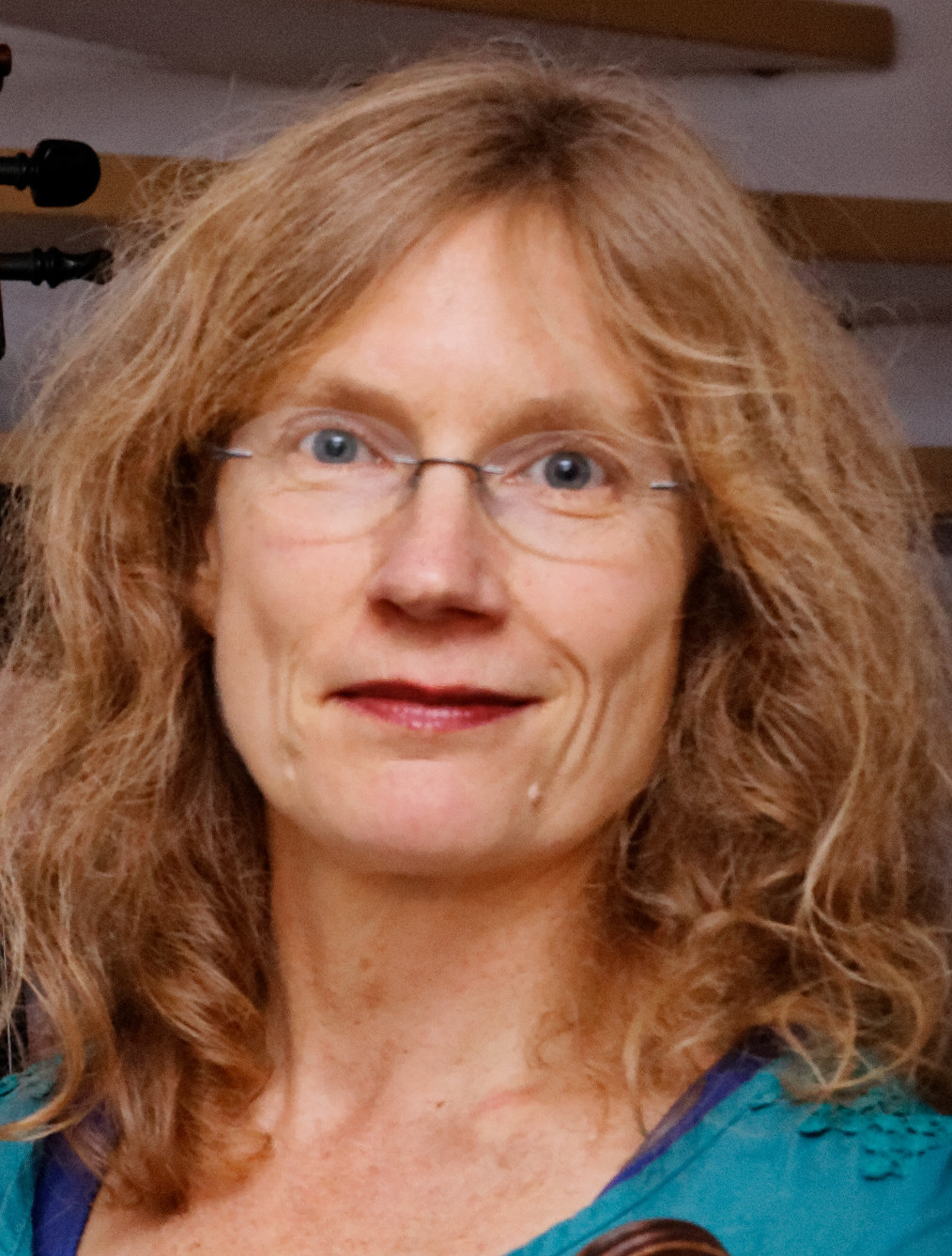
Anna Levina is an Assistant Professor for Computational Neuroscience at the University of Tübingen , affiliated with the Department of Computer Science under the Faculty of Science. Her research focuses on the self-organization of neuronal activity, critical dynamics in neural networks, and the excitation/inhibition balance in cortical circuits. Current positions: Assistant Professor (since 2018), Group Leader (2017-2018), Equality Officer (Computer Science) Previous roles: IST Fellow (2015-2017), Associated Researcher (2011-2015), Postdoc/PI (2011-2015), Postdoc (2008-2011) Her research integrates mathematical modeling , statistical physics , and computational neuroscience to study criticality phenomena, neural avalanches, and adaptive network dynamics. Key interests include: Self-organized criticality in neural systems Excitation/Inhibition balance mechanisms Network topology and dynamics Timescale analysis in neural processing Stochastic modeling of neural activity Recent publications reveal trends in understanding critical dynamics across biological and artificial networks, with applications to memory systems, sensorimotor integration, and disease modeling. She has received recognition as an IST Fellow .
Kord Eickmeyer is a Lecturer at Technische Universität Darmstadt in the Department of Mathematics, specializing in the mathematical logic group. He holds a PhD in mathematics from Humboldt University Berlin and has held postdoctoral positions at TU Darmstadt (2011–2017) and the National Institute of Informatics in Tokyo (2011–2013). His research focuses on finite model theory, graph structure theory, and computational complexity, particularly in descriptive and parameterized complexity, as well as randomization and derandomization techniques. Research interests include exploring the boundaries of computational complexity through logical frameworks, analyzing graph structures for efficient algorithm design, and investigating the role of randomness in computation. His work bridges theoretical computer science and mathematical logic, with applications in algorithm design and formal methods. Publications span topics from model-checking on ordered structures to gap-planar graphs and randomized logics. Collaborations include prominent institutions like the National Institute of Informatics and Humboldt University Berlin. No scientific awards are explicitly listed, but his extensive academic contributions reflect a strong research trajectory. Advising and grants are not detailed in the provided text, though his academic career includes supervision roles during his PhD and postdoctoral phases. His involvement with the mathematical logic group at TU Darmstadt highlights collaborative research efforts in foundational areas of computer science and mathematics.
Professor Katrin Tent is a distinguished mathematician specializing in mathematical logic at the University of Münster, where she holds a professorship in the Faculty of Mathematics and Computer Science within the Institute for Mathematical Logic and Foundations Research. She is an active researcher in Mathematics Münster, an investigator in CRC 1442 Geometry: Deformations and Rigidity, and contributes to multiple research projects including Topics in Mathematics Münster T3: Models and universes, T4: Groups and actions, and T8: Random discrete structures and their limits. PhD in Linguistics, Christian-Albrechts-Universität zu Kiel (1988) Diplom in Mathematics, Christian-Albrechts-Universität zu Kiel (1989) PhD in Mathematics, University of Notre Dame (1994) Habilitation, "Model theory of groups and BN-pairs" (2000) Professor Tent's research bridges model theory, group theory, and geometry, with particular focus on finite Morley rank structures, BN-pairs, and sharply multiply transitive groups. Her work often combines methods from these areas to prove unexpected results, either constructing groups or incidence geometries with surprising model theoretic properties or using model theory to construct new and interesting geometries or groups. Her recent publications reveal a consistent trajectory connecting model theory with group-theoretic structures. She has made significant contributions to understanding sharply 2- and 3-transitive groups, finite Morley rank geometries, and the model theory of generalized polygons. Her work demonstrates how model-theoretic techniques can solve deep problems in group theory and geometry, particularly through the study of BN-pairs and incidence structures. DFG Research Fellowship (1996-1998) Bayerischer Habilitationsförderpreis (1998-2001) Heisenberg-Stipendium (2001-2004) ERC Consolidator Grants expert panel (2016, 2018) Elected to DFG Senate (2019) Professor Tent leads an active research group with current members including Marco Amelio, Dr. Benjamin Brück, Anna Cascioli, Lukas Jonuska, Silke Meissner, Zahra Mohammadi Khangheshlaghi, and Dr. Sam Shepherd. Her former research group members include Dr. Simon Andre, Dr. Isabel Müller, and Dr. Tim Clausen, among others. Her supervisory work spans both theoretical foundations and specific applications in geometric group theory and model theory. Her research group operates within the Institute for Mathematical Logic and Foundations Research at the University of Münster, collaborating closely with other researchers in the Mathematics Münster cluster. The group participates in various projects including CRC 1442 - C04: Group theoretic aspects of negative curvature, contributing to the vibrant mathematical research environment at one of Germany's leading mathematics institutions.
Ron Peled is a Full Professor in the School of Mathematical Sciences at Tel Aviv University , currently on leave to serve as the Brin Professor in the Department of Mathematics at the University of Maryland starting summer 2024. During 2022–2024 he was a Member at Princeton University and the Institute for Advanced Study . Education & Career: While explicit degrees are not listed, his trajectory shows appointments at NYU (2009–2010), UC Berkeley and Tel Aviv University as a teaching assistant, followed by faculty positions culminating in full professorship. Research Interests: His work lies at the intersection of probability theory, statistical physics, and combinatorics . Key themes include: Disordered systems and random environments (random-field Ising, spin glasses) First-passage percolation and random metrics Random surfaces and height functions Loop models and critical phenomena Random matrices and band matrices Geometric probability and allocation problems Publications & Impact: With over 70 papers in top journals such as Annals of Mathematics , Annals of Probability , Inventiones Mathematicae , and Communications in Mathematical Physics , his recent work explores minimal surfaces in random environments, localization in random band matrices, and quantitative disorder effects in low-dimensional spin systems. Grants & Awards: Research has been continuously funded by: Israel Science Foundation (grants 1048/11, 861/15, 1971/19, 2340/23) ERC Starting Grant LocalOrder ERC Consolidator Grant Transitions Marie Skłodowska-Curie International Reintegration Grant SPTRF Teaching & Mentoring: Prof. Peled has taught a broad spectrum of courses at Tel Aviv University (Brownian motion, probability, percolation, random matrices, stochastic calculus) and NYU (combinatorics, discrete mathematics). He has supervised 13 post-doctoral fellows and 8 graduate students (PhD & MSc) to date. Service & Outreach: He co-organizes the Joint Israeli Probability Seminar and has organized numerous international workshops and conferences including at Oberwolfach, Technion, and Tel Aviv University.
Prof. Dr. Daniel Hug is a Professor at the Karlsruhe Institute of Technology (KIT) , affiliated with the Department of Mathematics and the Institute of Stochastics . His research focuses on Probability , Geometry , Convex geometric analysis , Stochastic geometry , and Educational mathematics . He contributes to the DFG Priority Program Random Geometric Systems and previously participated in the DFG research unit Geometry and Physics of Spatial Random Systems . Prof. Hug has co-authored two influential monographs: Poisson Hyperplane Tessellations (Springer Monographs in Mathematics) and Lectures on Convex Geometry (Springer Graduate Texts in Mathematics, 2020). His work spans theoretical advancements in convex and stochastic geometry , including integral geometry, random mosaics, and tensor valuations, alongside applied studies in digital microstructures and Minkowski tensors . His publications from 2025–2024 emphasize hyperbolic space , Boolean models , and Minkowski tensor estimators , reflecting ongoing collaborations with researchers like M. Klatt, C. Thäle, and R. Schneider. Prof. Hug leads courses such as Stochastic Geometry and seminars on Random graphs and tessellations , and is actively involved in working groups like AG Stochastische Geometrie and AG Stochastik .
Professor Stefan Glock is an Assistant Professor of Discrete Mathematics at the University of Passau's Faculty of Computer Science and Mathematics, a position he has held since September 2022. Prior to this appointment, he spent three years as a Junior Fellow at the Institute for Theoretical Studies at ETH Zurich, following the completion of his doctorate at the University of Birmingham. Stefan Glock received his mathematics education at Technische Universität Ilmenau from 2009 to 2014, then pursued his PhD at the University of Birmingham, which he completed in 2018. His doctoral dissertation, "Decompositions of Graphs and Hypergraphs," was the runner-up for the Richard-Rado-Preis 2018. Professor Glock's research focuses on discrete mathematical structures, with particular emphasis on their asymptotic properties. His work spans several interconnected fields of combinatorics: Extremal Combinatorics : Investigating the maximum or minimum possible size of mathematical structures satisfying certain properties Probabilistic Combinatorics : Applying probability theory to solve combinatorial problems Graph Theory : Studying properties of graphs and networks Ramsey Theory : Examining conditions under which order must appear in large structures Design Theory : Creating arrangements of elements satisfying specific balance properties Discrete Geometry : Analyzing geometric problems with discrete structures Analysis of Professor Glock's recent publications reveals a consistent focus on solving long-standing open problems in combinatorics using innovative methods that combine probabilistic techniques with structural insights. His work often bridges theoretical mathematics with applications in theoretical computer science, particularly in the analysis of algorithms and network structures. A significant portion of his research addresses fundamental questions about graph and hypergraph decompositions, which have implications for coding theory, cryptography, and network design. Professor Glock has received notable recognition for his contributions to mathematics: Runner-up for the Richard-Rado-Preis 2018 for his dissertation "Decompositions of Graphs and Hypergraphs" Awarded funding through the prestigious DFG Emmy Noether Programme in 2024 for his research group on "the interplay of structure and randomness in mathematics" As a faculty member at the University of Passau, Professor Glock leads the Discrete Mathematics research group and actively collaborates with mathematicians worldwide. He has established a strong research program that has attracted funding for academic visitors and supports multiple research projects. His approach to mathematical problems emphasizes developing new methods that have far-reaching implications beyond the specific problems being solved. Professor Glock's research group at the University of Passau focuses on the interplay between structure and randomness in discrete mathematics. The group maintains active collaborations with leading institutions including ETH Zurich, University of Birmingham, and various research centers across Europe. Through the DFG Emmy Noether Programme funding, his group is expanding its research on combinatorial structures and their applications.
Riddhipratim Basu is an Associate Professor at the International Centre for Theoretical Sciences (ICTS-TIFR) in Bengaluru, India, since September 2017. Previously, he was a Szegö Assistant Professor of Mathematics at Stanford University (2015–2017) and a Ph.D. graduate in Statistics from UC Berkeley (2015), supervised by Allan Sly. Research focuses on Probability Theory, with emphasis on First/Last Passage Percolation, Interacting Particle Systems, Large Deviations, and Random Matrix Theory. Key collaborators include Allan Sly, Shirshendu Ganguly, Mahan Mj, and Manan Bhatia. Publications span journals like Communications on Pure and Applied Mathematics , Annals of Probability , and Comm. Math. Phys. His work explores geodesic structures in percolation models, scaling exponents in KPZ universality, and geometric properties of stochastic processes. Recent studies include Liouville Quantum Gravity and Airy process fluctuations.
Max Wardetzky is a Professor at the Institute for Numerical and Applied Mathematics within the Faculty of Mathematics and Computer Science at the University of Göttingen, Germany. His office is located at Lotzestraße 16-18, 37083 Göttingen, and he can be reached via email at wardetzky@math.uni-goettingen.de or by phone at +49 551 39 26778. Professor Wardetzky leads the Discrete Differential Geometry Lab at the University of Göttingen, where he conducts research at the intersection of mathematics, computer science, and geometry processing. His work bridges theoretical foundations with practical applications in computer graphics and scientific computing. His primary research interests include: Applied Geometry Discrete Differential Geometry Numerical Analysis Geometry Processing Physical Simulation Computer Graphics Professor Wardetzky's extensive publication record demonstrates significant contributions to the field of discrete differential geometry and its applications. His work shows a consistent focus on developing mathematically rigorous yet computationally efficient methods for geometric problems. Key trends in his research include the development of discrete analogues of smooth geometric objects, the study of convergence properties between discrete and continuous models, and the application of these methods to problems in computer graphics and physical simulation. Professor Wardetzky has made substantial contributions to the theoretical foundations of discrete differential geometry while maintaining strong connections to practical applications. His work on discrete Laplacians, curvature approximations, and geometric flows has influenced both theoretical mathematics and practical geometry processing algorithms.
Rupert Frank is a Professor of Mathematics at the University of Munich (LMU Munich) . He has held academic positions at Caltech (2013–2021) and Princeton University (2009–2013). His research spans Mathematical Physics , Spectral Theory , and Functional Inequalities , with a focus on quantum many-body systems, stability of matter, and nonlocal operators. Research Themes : Analysis of eigenvalues for Schrödinger and Pauli operators with complex potentials Semi-classical spectral asymptotics and effective theories for quantum systems Matrix inequalities and quantum information theory Calculus of variations in models like the liquid drop problem Geometric inequalities and their applications to quantum mechanics Magnetic field effects on spectral properties Recent Publications : 2025: Sharp stability for Sobolev/log-Sobolev inequalities with dimensional dependence 2025: Endpoint Schatten class properties of commutators 2024: Degenerate stability of Caffarelli-Kohn-Nirenberg inequality 2024: Hardy inequalities for large fermionic systems 2023: Review on Scott conjecture for Coulomb systems Scientific Awards : Young Scientist Prize in Mathematical Physics (2009) Grants and Collaborations : Principal Investigator in CRC TRR 352 (2023–) PI in Munich Center for Quantum Science and Technology (2019–) Multiple NSF grants (2009–2020) DFG and DAAD grants Editorial and Conference Leadership : Editorial boards: Communications in Mathematical Physics , Journal in Mathematical Physics , Journal of Spectral Theory , SIAM Journal on Mathematical Analysis , Springer Lecture Notes Organized conferences/workshops on quantum many-body systems, spectral methods, and functional inequalities (2018–2025)
László Kozma is an Assistant Professor at the Theoretical Computer Science group of the Institute of Computer Science (Freie Universität Berlin). He obtained his PhD from Saarland University under Raimund Seidel, followed by postdoctoral positions at Tel Aviv University and TU Eindhoven. His research focuses on self-adjusting data structures , adaptive algorithms , and combinatorial optimization with applications to problems like the Traveling Salesman Problem, binary search trees, and geometric data structures. Academic Affiliation: Freie Universität Berlin (since 2018) Education: PhD in Computer Science (Saarland University, 2016); postdoc at Tel Aviv University and TU Eindhoven. His work explores the intersection of data structures, combinatorial algorithms, and geometric methods. He has made significant contributions to problems involving pattern-avoidance in inputs, saddlepoint detection , and self-adjusting heaps . Key areas include: Adaptive algorithms for pattern-avoiding inputs Optimal tree and heap structures Geometric and stochastic approaches to optimization Complexity analysis of classical algorithms Recent publications highlight efficient solutions for exponential cut problems (ESA 2025), balanced TSP partitioning (EuroCG 2025), and randomized saddlepoint algorithms (ESA 2024). His research often bridges theory and practice, exemplified by the smooth heap implementation and fun projects like Recursi and Cuckoo Hashing visualization.
Raimund Seidel is a Professor in the Department of Computer Science at Universität des Saarlandes, leading the Chair of Theoretical Computer Science. He is actively involved in research and teaching, focusing on foundational aspects of algorithms and data structures, particularly in computational geometry. His primary research interests include theoretical computer science , design and analysis of efficient algorithms , geometric data structures , randomized algorithms , and combinatorial geometry . His work addresses fundamental problems such as planar point location, convex hull computation, and efficient encoding of triangulations. He also investigates geometric algorithms under the transdichotomous model, leveraging word-level parallelism. The selected publications reflect a long-standing contribution to computational geometry and data structure theory , with a focus on randomized methods and exact complexity analysis. His research combines theoretical rigor with practical implications for algorithm design. Award or honor not found in the provided text. Prof. Seidel has advised several students, including Alexander Malkis , Ralf Osbild , Udo Adamy , Christian Sohler , and others, many of whom have gone on to academic and research careers. No explicit information about grants or funding is available in the text. He leads a research group within the Department of Computer Science at Universität des Saarlandes, mentoring current staff such as László Kozma , Giorgi Nadiradze , and Lavinia Dinu . The group maintains active research in theoretical computer science and computational geometry.
Ulrich Meyer is a Professor at the Institute for Computer Science at Goethe University Frankfurt. He serves as a prominent researcher in algorithms for big data, with extensive contributions to parallel and external-memory graph algorithms. His work spans theoretical foundations and practical implementations for processing large-scale data sets. Spokesperson of the DFG priority program (SPP 1736) on Algorithms for Big Data in Germany SEA23 Symposium on Experimental Algorithms, Steering Committee Chair ALENEX23 Algorithm Engineering and Experiments, Program Committee Member Professor Meyer's research interests focus on the theoretical and experimental aspects of processing large data sets on advanced computational models. His work particularly emphasizes parallel and external-memory graph algorithms, with recent focus on efficient large-scale network generation according to various stochastic models. His research has produced significant contributions including the parallel Delta-Stepping algorithm (which received the ESA Test of Time Award in 2019) and the first BFS approach with sublinear I/O. He has also explored more specialized topics like energy-efficient sorting (with records in the JouleSort competition 2009/10 and the Germany Land of Ideas Award) and fragile computing (which earned him a best-paper award at ESA 2019). His recent publications demonstrate a strong focus on graph algorithms, network generation, and parallel computing techniques. The research trends show consistent advancement in scalable algorithms for massive graphs, with particular emphasis on efficient sampling methods, shortcutting techniques, and communication-free distributed approaches. His work bridges theoretical computer science with practical engineering considerations for real-world big data applications. ESA Test of Time Award 2019 for Parallel Delta-Stepping algorithm Records in the JouleSort competition 2009/10 Germany Land of Ideas Award Best-paper award at ESA 2019 for fragile computing research Professor Meyer has made substantial contributions to the academic community through his leadership in the DFG priority program on Algorithms for Big Data, which has fostered significant research collaborations across Germany. His extensive publication record in top venues demonstrates sustained research productivity and impact in the algorithms community. While specific grant details aren't provided in the text, his role as spokesperson for a major DFG priority program indicates substantial research funding and leadership responsibilities. His work appears to be conducted within collaborative research environments focused on algorithm engineering and experimental evaluation. His research appears to be conducted within the Institute for Computer Science at Goethe University Frankfurt, likely involving collaborations with other researchers in the Algorithms for Big Data priority program. The extensive list of co-authored publications suggests active participation in research teams focused on parallel algorithms, graph processing, and network generation.
Sebastian Hensel is a Professor of Pure Mathematics at the Mathematical Institute of Ludwig Maximilian University of Munich (LMU), where he also serves as the Dean of Studies. His research focuses on the intersection of low-dimensional topology and geometric group theory, with emphasis on mapping class groups, handlebody groups, and diffeomorphism groups of surfaces. He leads the Geometry and Topology Working Group and is actively involved in teaching advanced seminars. Hensel received his PhD from the University of Bonn in 2011 under Ursula Hamenstädt. Before joining LMU, he held positions as a Dickson Instructor at the University of Chicago and as a temporary academic councilor in Bonn. His research employs geometric methods to study algebraic structures in topological spaces, particularly surfaces and 3-manifolds. Scientific Awards: Dickson Instructor Fellowship, University of Chicago Teaching & Advising: Hensel regularly teaches courses on Riemannian geometry, geometric group theory, and manifold topology. He currently advises bachelor and master's theses in geometry/topology and organizes block seminars. As Dean of Studies, he oversees academic programs at the Mathematical Institute. Affiliations: Member of the Geometry and Topology Group at LMU, with collaborations spanning multiple institutions including TUM and international partners.
Prof. Sebastian Hensel is a Professor of Pure Mathematics at Ludwig Maximilian University of Munich (LMU), serving as Dean of Studies at the Mathematical Institute. His research focuses on low-dimensional topology, geometric group theory, and their interplay with mapping class groups, handlebody groups, and diffeomorphism groups of surfaces. He holds a PhD from the University of Bonn (2011) and has held positions at the University of Chicago as a Dickson Instructor and in Bonn before joining LMU. Research interests include algebraic and geometric properties of mapping class groups, handlebody groups, and their actions on geometric spaces. Recent work explores applications of geometric group theory to surface diffeomorphism groups. Preprints and publications span topics like thick laminations, curve graphs, and handlebody group rigidity. Teaching responsibilities include courses on geometric group theory, Riemannian geometry, and topology. He co-organizes advanced seminars such as the Geometry and Dynamics of Homeomorphisms and Representation Theory block seminars. His work also extends to pedagogical projects, including a textbook on representation theory for students and translations of foundational papers like Hilbert's ninth-degree equation. Current sabbatical (Winter 2024/25) involves collaboration on seminars while maintaining research output. The Geometry and Topology Working Group at LMU is central to his academic activities.
Manuel Penschuck is a Research Fellow at the Institute of Computer Science , Goethe University Frankfurt, Germany. His research focuses on algorithm engineering, graph theory, and scalable network generation, with emphasis on parallel computing, I/O-efficient algorithms, and random graph models. He actively contributes to conferences like ESA, SEA, and IPDPS, and has co-authored publications in top venues including LIPIcs , IEEE Transactions , and SIAM . His work includes engineering algorithms for non-linear preferential attachment , parallel shuffling , and hyperbolic graph generation . He has co-organized program committees for ESA, EuroPar, and SEA, and his collaborations span institutions such as MPI-INF, TU Darmstadt, and Australian National University. Recent publications highlight advances in uniform graph sampling, geometric network models, and distributed systems. His research integrates theoretical rigor with practical implementation, addressing challenges in big data and high-performance computing. He is a key contributor to the Networkit toolkit for large-scale network analysis.