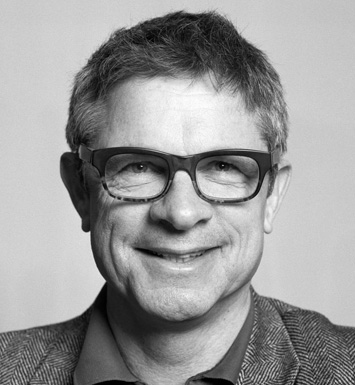
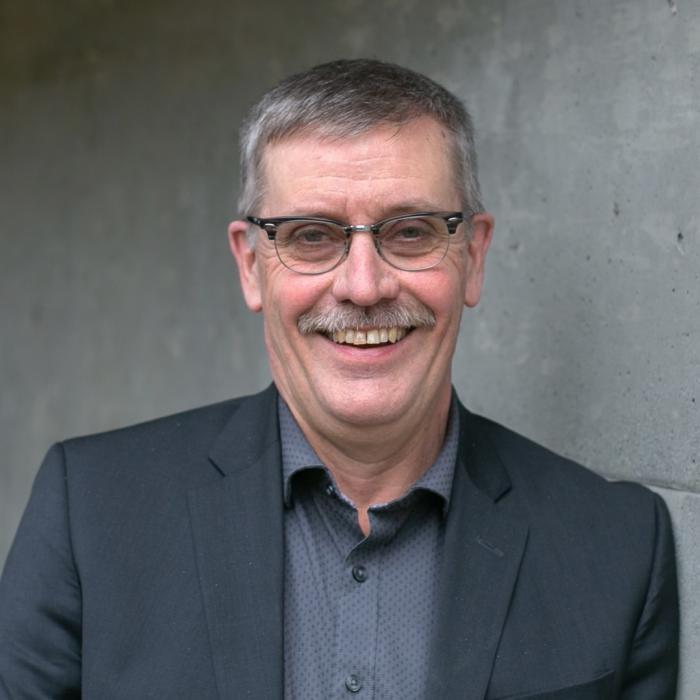
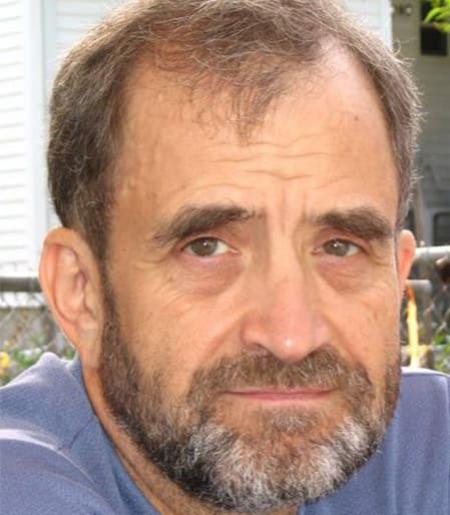
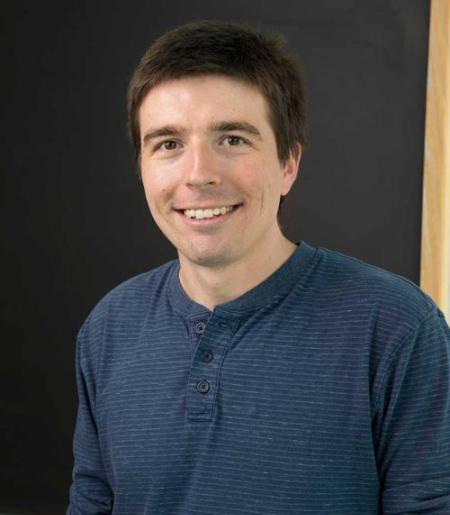
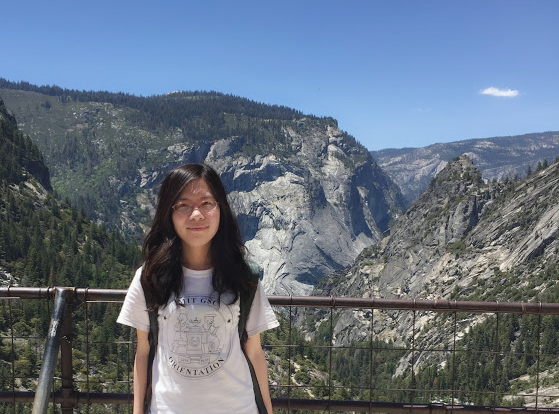
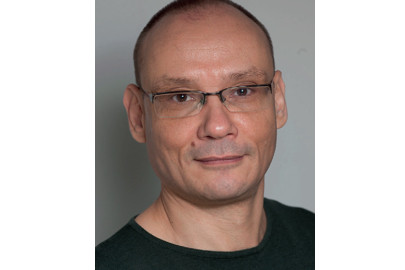
Pietro Longhi is Senior Lecturer/Associate Professor at Uppsala University's Centre for Geometry and Physics, with cross-appointments in Theoretical Physics. His research bridges mathematics and theoretical physics. Research Focus: Investigates non-perturbative dynamics in supersymmetric quantum field theories through spectral networks, wall-crossing phenomena, and homological mirror symmetry. Publications: Develops mathematical frameworks for BPS spectra analysis, knot invariants, and quantum integrable systems using geometric and topological methods.
Andrew Strominger is the Gwill E. York Professor of Physics at Harvard University. His research addresses fundamental problems in quantum gravity, string theory, and black hole physics through mathematical physics approaches. Research breakthroughs include microscopic derivation of black hole entropy using string theory, development of the Kerr/CFT correspondence, and establishing connections between asymptotic symmetries and infrared physics. Current work explores celestial holography and quantum aspects of spacetime geometry. Contributions to mathematical physics include the SYZ conjecture for mirror symmetry and formulations relating Einstein's equations to fluid dynamics. Honors include the Breakthrough Prize and Dirac Medal.
Professor Michael Marc Wolf is a faculty member at the Technical University of Munich , affiliated with the School of Computation, Information and Technology and the Department of Mathematics . His research focuses on the mathematical and conceptual foundations of quantum theory and quantum information. Current research group: Quantum Information Theory Ongoing collaborations: Munich Center for Quantum Science and Technology, Munich Quantum Center, CRC TRR 352 Research Interests: Wolf works at the intersection of quantum information theory , quantum many-body physics , and mathematical physics . His work explores undecidability in physics, quantum tomography, spectral gaps, and quantum channel theory. Recent trends in his publications include entropy-constrained sets, quantum complexity, and differential forms applied to quantum systems. Teaching: Currently teaching Mathematics for Physicists 2 (Analysis 1) and advanced quantum information experiments in Winter 2024/25 and Summer 2025.
Dr. Ioannis Ivrissimtzis is an Associate Professor in the Department of Computer Science at Durham University. He holds a BSc in Mathematics from the University of Thessaloniki and a PhD in Mathematics from the University of Southampton. Before joining Durham, he was a lecturer at Coventry University's Department of Creative Computing, and previously conducted research at the Max-Planck Institut für Informatik and Cambridge University's Computer Laboratory. His research focuses on computer graphics, including subdivision surfaces, polygonal mesh encoding, and statistical learning methods for surface reconstruction from scan data. Key areas of interest include 3D model security (steganography/steganalysis), statistical surface reconstruction techniques, discrete geometry, and spectral graph theory. Notable contributions include work on 3D steganalysis, mesh quantization, and geometric algorithms. He has supervised multiple postgraduate students including Elizabeth Callander and Jindi Wang. His publications span conferences like ACM SIGGRAPH and journals such as IEEE TVCG and ACM TOMCCAP.
Dr. Chris Willcocks is an Associate Professor in the Department of Computer Science at Durham University, specializing in generative models and machine reasoning. He has authored over 35 peer-reviewed publications in top-tier venues including ICLR, TPAMI, CVPR, and IEEE TIFS. His research group has made significant contributions to theoretical generative modeling, including ∞-Diff for infinite-resolution synthesis and anomaly detection techniques like AnoDDPM. His research interests focus on theoretical generative modeling, machine reasoning frameworks, and AI safety. Key projects include diffusion models in Hilbert spaces, gradient origin networks, and applications in medical anomaly detection and security threat analysis. Teaching responsibilities include deep learning, reinforcement learning, and cybersecurity modules. Industry collaborations span multinational corporations (P&G, Unilever, Dyson) and public sector organizations (NHS, DSTL), with over 15 invited talks on AI ethics and cybersecurity. Awards include fellowship of the Higher Education Academy. Professional activities include serving as area chair for BMVC and admissions tutor for computer science. Willcocks supervises multiple postgraduate students including Jonathan Frawley and Rita Liu, and maintains a YouTube channel with educational content on deep learning.
Dr. William Robert Wood is a Professor at Trinity Western University (TWU), returning to faculty after serving as Provost from 2012 to 2022. He joined TWU in 1992 with a PhD in Theoretical Physics from the University of Regina, contributing to building the Physics program and later transitioning into academic leadership. His roles included Undergraduate Academic Council participation, Tenure and Promotion Committee, and coordination of the Physics program. As Provost, he oversaw TWU’s academic strategy, policy development, and institutional resilience during the pandemic, leading transitions to remote learning. He established key initiatives like the Aboriginal Partnership Council and the Institute of Indigenous Issues and Perspectives, fostering interdisciplinary research through centers such as The Inklings Institute of Canada. Dr. Wood’s expertise spans Theoretical Physics (General Relativity, Quantum Theory) and academic leadership. His publications focus on Weyl space dynamics, quantum interpretations, and geometric phase transitions. Notable awards include Who’s Who in Canada (2009) and promotion to Full Professor (2008). He played pivotal roles in launching TWU’s PhD in Nursing (2021) and MA in Special Education (2014). His academic administration legacy includes the Academic Advising Office, Learning Commons, and policy frameworks enhancing academic quality and equity. Dr. Wood’s educational background includes a PhD (1992), MSc (1986), and BSc (1982) from the University of Saskatchewan and Regina. His teaching spans Physics, Mathematics, and Leadership courses, reflecting his dual commitment to STEM and institutional governance.
Dan M. Barbasch is a Professor in the Department of Mathematics at Cornell University, affiliated with the College of Arts and Sciences. He holds a Ph.D. from the University of Illinois (1976). His research focuses on representation theory of reductive Lie groups, particularly the classification of unitary duals and their connections to orbit structures of Lie algebras, automorphic forms, and number theory. He has contributed to areas like Dirac cohomology, affine Hecke algebras, and spherical unitary duals. Recent teaching includes courses on number theory, differential geometry, and supervised research. Research highlights include foundational work on unipotent representations, Langlands classification, and collaborations with experts like Pandzic, Vogan, and Trapa. His work bridges algebraic and geometric approaches in representation theory. Current courses (2025) include MATH 3320 (Number Theory), MATH 3210 (Manifolds/Differential Forms), and graduate-level supervised research. Professional activities include organizing conferences, mentoring students, and contributing to the Lie Groups Seminar. His publications explore topics such as Dirac index, spherical unitary duals, and infinitesimal character reductions.
Daniel Stern is an Assistant Professor at the Department of Mathematics, Cornell University, within the College of Arts and Sciences. He earned his Ph.D. in 2019 from Princeton University, advised by Fernando Codá Marques. His research bridges geometric analysis with mathematical physics, focusing on partial differential equations and variational problems. Research Interests: Differential Geometry, Partial Differential Equations, Calculus of Variations, Geometric Analysis, Minimal Submanifolds, Harmonic Maps, Gauge Theory, Spectral Geometry, Ginzburg-Landau Equations Teaching: Courses include Math 2210 (Linear Algebra), Math 6160 (Partial Differential Equations), and Math 3210 (Manifolds and Differential Forms) at Cornell, alongside previous teaching at the University of Chicago and University of Toronto.
Nicola Sansonetto is an Associate Professor in Mathematical Physics at the Department of Computer Science, University of Verona. His research focuses on geometric methods in nonholonomic mechanics, integrable systems, vortex dynamics in quantum fluids, and geometric quantization, with applications to robotics and control theory. He has held leadership roles in academic governance, including President of the Paritetica Docenti-Studenti Commission and membership in interuniversity PhD councils. His teaching portfolio includes Analytical Mechanics, Dynamical Systems, and Mathematical Analysis courses for undergraduate and graduate programs. Research areas: Nonholonomic dynamics, Hamiltonian systems, Quantum vortices, Geometric control Key projects: Controllability in nonholonomic mechanics, Autonomous Robotic Surgery (ARS), geometric quantization of non-commutative systems Office: Ca' Vignal 2, Floor 2, Room 18. Office hours: Monday 10:30-11:30 (appointment via email).
Dr. Alfonso Agnew is a Professor in the Department of Mathematics at California State University, Fullerton. He holds a PhD in Mathematics from Oregon State University (1999), an MS from the same institution (1996), and dual BA/BS degrees in Mathematics and Physics from CSUF (1994). His research focuses on theoretical physics and mathematical physics, with emphasis on quantum gravity, general relativity, twistor theory, and affine differential geometry. Notable contributions include work on gravitational wave analysis using LIGO data, twistor structures in biquaternionic spaces, and historical studies of geometric theorists like Gheorghe Tzitzeica. Recent publications (2001–2022) explore topics such as matrix projective spaces, semiclassical density of states in quantum systems, and applications of twistor theory. He regularly teaches advanced courses like Vector & Tensor Analysis and General Relativity. Though no specific awards or grants are listed, his extensive publication record reflects deep contributions to mathematical physics. No student advisees are documented in the provided materials.
Sergiu Vacaru is an Adjunct Professor in the Department of Physics at the College of Science and Mathematics, Fresno State. His research focuses on theoretical physics, cosmology, modified gravity theories, geometric flows, and nonassociative geometric structures. Vacaru explores topics such as black hole physics, dark energy and dark matter configurations, Finsler geometry, and quantum gravity phenomenology. His work frequently integrates geometric flows, star products, and R-flux deformations into models of relativistic systems and cosmological scenarios. Key research interests include the application of geometric flow thermodynamics (e.g., Perelman entropy), nonmetric Ricci flows, and solitonic hierarchies to understand gravitational systems. He investigates how such frameworks can explain dark matter, dark energy, and black hole dynamics, often within the context of Einstein gravity and its extensions (e.g., f(R)-gravity, massive gravity, and bi-metric theories). Vacaru’s recent publications emphasize nonassociative gauge gravity theories, quasicrystalline spacetime structures, and the interplay between quantum information flows and gravitational physics. His work addresses foundational questions in cosmology, including inflationary dynamics and anisotropic spacetime configurations. While no specific awards or grants are highlighted in the provided materials, his extensive publication record reflects sustained contributions to theoretical physics and cosmology. Vacaru’s research often bridges geometric formalisms and physical applications, offering novel insights into the structure and evolution of spacetime.
Xuwen Zhu is an Assistant Professor of Mathematics at Northeastern University, affiliated with the College of Science. His research focuses on geometric analysis, differential geometry, and mathematical physics, with particular emphasis on conical metrics, spectral theory, and gravitational instantons. He has received notable recognition, including the 2023 COS Excellence in Equity, Diversity, Inclusion, and Justice Faculty Award for his contributions to fostering inclusive academic environments. Dr. Zhu’s work bridges geometric analysis and theoretical physics, addressing problems such as the construction of ALF gravitational instantons, spectral properties of singular metrics, and the realization of branched covers in spherical geometries. His research often intersects with moduli spaces, edge manifolds, and supergravity equations. His publications span topics from spherical conical metrics to eleven-dimensional supergravity, demonstrating a deep engagement with both classical and modern geometric challenges. Notable recent work includes studies on degenerating hyperbolic surfaces and spectral gaps, as well as the resolution of canonical fiber metrics in Lefschetz fibrations. Awards: COS Excellence in Equity, Diversity, Inclusion, and Justice Faculty Award (2023) Advising: No current advisees listed Labs/Teams: Collaborates on interdisciplinary projects at the intersection of geometry and physics
Prof. Roger Bielawski is a Professor at the Institute of Differential Geometry within the Faculty of Mathematics and Physics at Leibniz University Hannover. He serves as Spokesperson of the Riemann Center for Geometry and Physics and is a member of its leadership. His research focuses on differential geometry, mathematical physics, and hyperkähler manifolds, with contributions to monopole theory, complex geometry, and geometric analysis. He has organized major conferences such as the 2019 'Geometric and Analytic Aspects of Moduli Spaces' and the 2011 'Variational Problems in Differential Geometry.' His work bridges algebraic geometry, geometric analysis, and theoretical physics, emphasizing structures like spectral curves, integrable systems, and geometric moduli spaces. Roles: Spokesperson (Riemann Center), Professor (Institute of Differential Geometry), Deputy Representative (Faculty Council). Research Interests: Hyperkähler metrics, monopole dynamics, geometric structures in algebraic geometry, and integrable systems. Publications span over three decades, with recent works addressing vector bundles on real curves, quiver representations, and hypercomplex limits. He actively contributes to academic governance and maintains collaborative networks through the Riemann Center and Institute initiatives.
Guy Bouchitté is a Full Professor at Université du Sud Toulon-Var. His research focuses on Calculus of Variations, Optimal Transport, Density Functional Theory, and Homogenization. He has contributed to theoretical advancements in optimal design, shape optimization, and multi-marginal transport problems. His work bridges mathematical analysis with applications in quantum chemistry, structural mechanics, and material science. Key research areas include asymptotic analysis of variational problems, optimal transport with non-linear costs, and the interplay between geometry and functional inequalities. Recent studies address dissociation limits in Density Functional Theory and quantization effects in many-body systems. He has organized seminars on Geometric Measure Theory and Frontiers of the Calculus of Variations. His contributions span over 35 publications, including works on Monge-Kantorovich duality, compliance sensitivity, and spectral optimization for Schrödinger operators. Professional activities include participation in workshops such as 'Variational Challenges in Materials Science' and 'Calculus of Variations and Applications'.
Eugene Stepanov is a Full Professor at the St. Petersburg Branch of the Steklov Research Institute of Mathematics of the Russian Academy of Sciences. His research focuses on geometric measure theory, optimal transportation, and calculus of variations. He has contributed extensively to studies on metric measure spaces, isoperimetric problems, and differential equations. Key research interests include the structure of metric cycles, branched transportation networks, and the application of geometric integration techniques to nonsmooth systems. His work bridges pure mathematics with applied areas such as control theory and stochastic analysis. Stepanov has authored 56+ publications, with recent trends emphasizing multidimensional scaling, fractal geometry, and constructive controllability. His articles frequently explore the intersection of geometry and optimization, addressing problems like Steiner tree configurations and functional quantization. He has participated in conferences on optimal transport, geometric analysis, and measure theory, often contributing to seminar discussions on topics ranging from nonholonomic systems to invariant measures. His research also involves collaborations with international scholars, evident in co-authored works on eigenvalue problems, self-contracted curves, and operator theory. Despite no listed awards, his prolific publication record highlights sustained contributions to foundational mathematical theories.