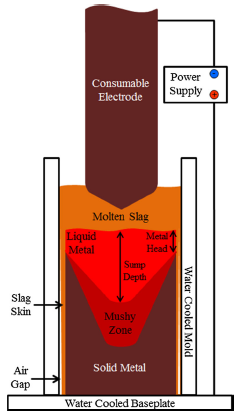
Dr. Matthew John M. Krane is a Professor in the Department of Materials Engineering at Purdue University and a member of the Purdue Center for Metal Casting Research. His work focuses on the design, development, and modeling of materials processes , particularly solidification and thermal processing of metal alloys, with strong emphasis on defect prevention and uncertainty quantification in numerical models. Current projects include grain-refined particle transport in DC casting , exergy optimization in copper smelting , and boron segregation in continuous casting . Past research includes through-process modeling of Al alloys , microsegregation studies , and laser hardening techniques . Scientific awards include an invited keynote lecture at the 2015 International Symposium on Liquid Metal Processing and Casting and multiple invited papers in high-impact journals.
Jorge Camba is an Associate Professor at the School of Engineering Technology and holds a courtesy appointment in the Department of Computer Graphics Technology at Purdue University . He also serves as a Senior Research Scientist (by courtesy) in the Department of Industrial Engineering at the University of Naples Federico II , Italy. PhD in Systems and Engineering Management (Universidad Politécnica de Valencia, Spain) MSc in Digital Media (East Tennessee State University) MSc in Computer Science (Universidad de Vigo, Spain) His research explores intelligent CAD systems , digital manufacturing , and mixed reality environments , focusing on model quality assurance , design intent communication , and collaborative design tools . Recent work investigates spatial cognition in CAD education , geometric variability analysis , and annotation-driven knowledge management . Key trends in his publications include parametric modeling strategies , 3D annotation systems , and XR applications in design evaluation. Awards include the Purdue Faculty Scholar (2021) and I3B Fellow (2021). He has presented at conferences on topics like Industry 4.0 , space habitat design , and digital product quality .
Nancy A. Lynch is the NEC Professor of Software Science and Engineering and Professor of Electrical Engineering and Computer Science at the Massachusetts Institute of Technology, where she heads the Theory of Distributed Systems (TDS) group within CSAIL. Research Interests Distributed computing algorithms and lower bounds Real-time and fault-tolerant systems Formal modelling and verification Wireless network algorithms Biological distributed algorithms Neural computation and spiking networks Across her work, Lynch blends rigorous theoretical analysis with practical relevance, tackling problems ranging from consensus and leader election in unreliable networks to modelling decision-making circuits in the brain. Publications & Trends Since 2020 she has published extensively on distributed algorithms , swarm robotics , neuromorphic architectures , and biologically-inspired computation . Notable recent directions include hierarchical concept learning in spiking neural networks, nanobot locomotion modelling for cancer detection, and superconducting nanowire platforms for energy-efficient neural hardware. Scientific Awards & Honors Best Paper Award, OPODIS 2018 Best Paper Award, IEEE NCA 2014 Highlight Paper, Neuromorphic Computing and Engineering 2022 Teaching & Advising Lynch teaches core graduate and undergraduate subjects at MIT including 6.042J Mathematics for Computer Science , 6.852J/18.437 Distributed Algorithms , and 6.885/6.006 Algorithms . She has supervised dozens of PhD students and post-docs whose names are listed on her Past Students page. Laboratory & Teams She leads the Theory of Distributed Systems (TDS) Group , a vibrant research team within MIT CSAIL . TDS is part of the larger Theory of Computation group and hosts weekly seminars, reading groups, and collaborative projects with partners across MIT and worldwide.
Malgorzata Zboinska is an Associate Professor at Chalmers University of Technology within the Department of Architecture and Civil Engineering . She is a licensed architect and member of the Swedish Association of Architects and National Chamber of Architects of Poland . Hybrid architecture-technology-art research Focus on bio-based materials , digital fabrication , and creative robotics Development Leader of Chalmers' Robotic Fabrication Laboratory Editorial board member of TAD | Technology, Architecture + Design journal Research Themes bridge architecture , digital technology , and art , with expertise in: Sustainable and circular architectural practices 3D printing and robotic construction Material bioinnovation and upcycling Interactive and kinetic architectural solutions Her publications demonstrate strong output in digital fabrication , bio-material applications , and environmental architecture , with international exhibitions at Tempe Center for the Arts (USA) , Dutch Design Week (NL) , and Färgfabriken (Sweden) .
Dr Smitha Gopinath is a Lecturer in the School of Chemical, Materials and Biological Engineering at the University of Sheffield , where she leads research in sustainable engineering systems within the Sustainable Design Laboratory (SDL) . Education & Career Path PhD in Chemical Engineering, Imperial College London Post-doctoral researcher, Applied Mathematics and Plasma Physics Group, Los Alamos National Laboratory Research Focus Dr Gopinath’s interdisciplinary work centres on the design, calibration and operation of sustainable engineering systems . She develops high-fidelity models and large-scale optimisation algorithms tailored to energy and materials challenges. Core interests include: Thermo-mechanical energy conversion devices (heat pumps, organic Rankine cycles) Carbon-capture utilisation and storage (CCUS) via novel solvents and separation systems Power-grid expansion and operation for renewable integration and decarbonisation Methodologically, she integrates Integrated Molecular and Process Synthesis (IMPS) with Optimisation Accelerated by domain Knowledge (OAK) to co-design molecules, materials and flowsheets that meet stringent energy and environmental targets. Publication Landscape Across 2015–2025 her publications reveal a clear trajectory from fundamental thermodynamic measurements and molecular design toward rigorous optimisation of large-scale energy systems. Early work concentrated on CO₂ solubility and carbonation kinetics of steel slag, providing essential data for carbon-sequestration schemes. Subsequent papers introduced advanced optimisation frameworks—outer-approximation algorithms, exact reformulations and feasibility-based methods—applied to solvent-based CO₂ capture, organic Rankine cycle working-fluid selection and AC optimal power flow (ACOPF). Recent contributions benchmark global optimality certificates for ACOPF problems, underscoring her drive to bridge chemical process systems engineering with electrical power systems optimisation. Teaching & Mentoring Dr Gopinath teaches undergraduate modules: CPE440 (Particle Technology) CPE170 (Particle Technology) She actively invites prospective PhD students to join the Sustainable Design Laboratory, offering supervision on projects spanning sustainable process design, renewable energy systems and algorithmic optimisation. Laboratory & Collaborative Networks She directs the Sustainable Design Laboratory (SDL), a multidisciplinary team leveraging systems engineering, multi-scale modelling, process simulation and optimisation to re-imagine a sustainable chemical and energy industry. The SDL collaborates with international partners, including Los Alamos National Laboratory and leading researchers in applied mathematics and power systems engineering.
Shu Yang is the Joseph Bordogna Professor and Department Chair of Materials Science and Engineering at the University of Pennsylvania's School of Engineering and Applied Science. Her research spans multiple departments, with primary appointments in both Materials Science and Engineering and Chemical and Biomolecular Engineering. She directs the Yang Lab, which operates at the intersection of multi-materials synthesis, nano-/microfabrication, and device processing, backed by deep understanding of physical, mechanical and biological principles. Director, Center for Analyzing Evolved Structures as Optimized Products (AESOP) Principal Investigator, NSF NRT: Climate Action and Resilience for Extreme Urban Heat (CLIMATE-CARE) Member of the Engineering Research Visioning Alliance (ERVA) Professor Yang's research focuses on developing novel materials synthesis, assembly and eco-manufacturing of complex, multi-functional, nano- to macrostructured soft, sustainable materials and composites. Her lab addresses fundamental questions centered around surface/interface, actuation mechanisms, and structure-property relationships. Through directed assembly of oligomers, polymers, gels, colloids, liquid crystals, amphiphiles, and their composites with inorganic materials and biomolecules across nano- to macroscales, her team creates complex, multi-functional nano- and microstructures with unique surface, optical, and mechanical properties. Analysis of Professor Yang's recent publications reveals a strong trend toward environmentally responsive materials with applications in sustainability, water harvesting, carbon capture, and climate resilience. Her work increasingly integrates kirigami engineering principles with liquid crystal elastomers to create programmable, shape-morphing materials. The research shows a clear trajectory from fundamental materials science toward real-world applications addressing global challenges, particularly in climate action and sustainable infrastructure. Inaugural Nat Geo 33 Extraordinary Changemaker List 2022 Cozzarelli Prize from PNAS for Class III: Engineering and Applied Sciences Advanced Materials Hall of Fame collection recognition Multiple highly cited papers according to Web of Science Professor Yang's research group has secured significant funding for projects addressing climate change, sustainable materials, and advanced manufacturing. Her lab has developed numerous technologies with potential applications in coatings, adhesives, smart windows, displays, sensors, soft robotics, biomedical devices, dehumidifiers, and carbon-absorbing concrete. The Yang Lab maintains a strong mentoring record with numerous students and postdocs who have gone on to successful careers in academia and industry. Her group actively collaborates across disciplines, working with biologists, physicists, environmental scientists, and engineers to tackle complex challenges. The Yang Lab operates state-of-the-art facilities for materials synthesis, characterization, and fabrication. The lab is particularly known for its expertise in liquid crystal elastomers, kirigami engineering, and biomimetic materials. The group maintains strong industry partnerships and has filed multiple patents based on their research. Their facilities enable everything from molecular-scale synthesis to macro-scale manufacturing of functional materials, with particular strength in bridging these scales through innovative design principles.
Chris Thachuk is an Assistant Professor in the Paul G. Allen School of Computer Science & Engineering at the University of Washington . His research bridges computer science with molecular programming and synthetic biology, focusing on programmable matter at the nanoscale using bio-molecules like DNA. Current Position: Assistant Professor, University of Washington (2020–Present) Previous Positions: Senior Postdoctoral Researcher at Caltech (2014–2020), Postdoctoral Research Assistant & James Martin Fellow at Oxford (2012–2014) Education: PhD in Computer Science (2013), University of British Columbia MSc in Computer Science & Bioinformatics (2007), Simon Fraser University & CIHR/MSFHR Bioinformatics Training Program BCS in Computer Science (2005), University of Windsor Thachuk’s research spans computing + biology , with expertise in molecular programming , synthetic biology , and bioinformatics . His work includes algorithm design for DNA-based systems, thermodynamic modeling, and leakless strand displacement systems. Recent publications focus on DNA origami alignment , leakless strand displacement , compiler-aided DNA circuit design , and thermodynamic binding networks , reflecting interdisciplinary research in computer science, synthetic biology, and nanotechnology. Scientific Awards: James Martin Fellow at the Institute for the Future of Computing, Oxford Thachuk contributes to the Molecular Information Systems Lab (MISL) , collaborating with researchers like Erik Winfree and David Soloveichik. His work emphasizes integrating molecular biosensors with electronics for applications such as protein concentration measurement and DNA sequencing.
Manuela De Maddis is a Tenured Researcher at the Department of Management and Production Engineering (DIGEP) of the Polytechnic of Turin (PoliTo), where she has worked since 2005. She is also a member of the Interdepartmental Center J-Tech@PoliTo. PhD in Industrial Production System Engineering (2004), Polytechnic of Turin MSc in Management Engineering (2001), University of Calabria Her research focuses on Manufacturing Technologies , particularly Welding Processes and Infrared Thermography for non-destructive testing. She leads projects like TECNOPROTEO (2024-2027) and NDTxW (2024-2025) as Scientific Manager. Her work integrates Machine Learning and High-Fidelity Modeling for digital manufacturing systems. Recent publications analyze active thermography in weld quality, electrode degradation in spot welding, and probabilistic tolerancing methods. She supervises PhD students in Materials Science and Production Engineering . Mentoring Polito Project (M2P) (2023) Learning to Teach (L2T) (2023) Manuela teaches courses like Industrial Welding Processes , Advanced Manufacturing Technologies , and Ergonomics in Production Innovation at both undergraduate and graduate levels. She contributes to interdisciplinary labs focused on Manufacturing Process Innovation and Technological Validation .
Michael DeWeese is an Associate Professor of Physics and Neuroscience at the University of California, Berkeley. His research spans nonequilibrium statistical mechanics, machine learning theory, and systems neuroscience. He holds a BA in Physics from UC Santa Cruz (1988) and a PhD in Physics from Princeton (1995). Before joining UC Berkeley in 2007, he held postdoctoral positions at the Salk Institute and Cold Spring Harbor Laboratory. His work integrates principles from physics, neuroscience, and machine learning to address fundamental questions in theoretical and experimental biology, computation, and statistical mechanics. DeWeese Lab Website provides further details on ongoing projects and collaborations. Education: BA in Physics, UC Santa Cruz (1988) PhD in Physics, Princeton University (1995) Research Interests: Nonequilibrium Statistical Mechanics: Focuses on thermodynamic optimization, active matter, and non-equilibrium processes. Machine Learning Theory: Develops first-principles models to explain neural network performance and efficient algorithms for probabilistic models. Systems Neuroscience: Uses biologically inspired models to understand neural coding, sensory processing, and computational roles of neural networks. Advising & Grants: While no formal student advisees are listed, his lab actively collaborates across disciplines. Funding sources are not explicitly mentioned but likely involve NSF, NIH, or DOE grants based on research themes. His work on quantum control and neural networks suggests potential ties to interdisciplinary funding initiatives. Labs & Teams: Directs the DeWeese Lab, which bridges physics, neuroscience, and machine learning. Collaborations include institutions like the Helen Wills Neuroscience Institute (UC Berkeley).
Sheldon Howard Jacobson is a Founder Professor at the Siebel School of Computing and Data Science, University of Illinois at Urbana-Champaign. He holds cross-appointments in Electrical and Computer Engineering, Industrial and Enterprise Systems Engineering, Biomedical and Translational Sciences, Mathematics, and Statistics. His research focuses on operations research, optimization, and security systems, with notable contributions to aviation security, pediatric vaccines, and homeland security. Jacobson has been recognized with prestigious awards including the AAAS Fellowship (2019), George E. Kimball Medal (2020), and Guggenheim Fellowship (2003). His work bridges theoretical and applied domains, addressing real-world challenges in public health, policy, and technology. He has contributed to media discussions on topics like pandemic impacts and coronavirus safety measures. In research, Jacobson emphasizes interdisciplinary approaches, combining mathematical modeling with policy analysis. His recent work includes optimizing political redistricting and analyzing viral transmission risks in aviation. Collaborations span multiple disciplines, reflecting his role as a bridge between academia and practical problem-solving.
Professor Minh N. Do is the Thomas and Margaret Huang Endowed Professor in Signal Processing & Data Science at the University of Illinois at Urbana-Champaign (UIUC), with primary appointment in the Department of Electrical and Computer Engineering. He holds multiple affiliate appointments across campus including with the Coordinated Science Laboratory, Beckman Institute for Advanced Science and Technology, Department of Bioengineering, Department of Computer Science, Institute for Genomic Biology, College of Medicine, and School of Computing and Data Science. Additionally, he serves as Director of the joint VinUni-Illinois Smart Health Center and holds an Honorary Vice-Provost position at VinUniversity. Professor Do received his B.Eng. in Computer Engineering (First Class Honors) from the University of Canberra, Australia in 1997, followed by his Dr.Sci. in Communication Systems from the Swiss Federal Institute of Technology Lausanne (EPFL) in 2001. His educational journey was marked by exceptional achievement, earning the University Medal from the University of Canberra and a Silver Medal from the 32nd International Mathematical Olympiad. Professor Do's research focuses on developing new multidimensional signal processing tools with applications across several domains. His primary research interests include smart health, data science, computational imaging, and signal processing. His work spans biomedical imaging, machine learning, computer vision, and robotics, with particular emphasis on geometric image representations, integrating image formation and processing, and image processing from multiple sensors. His research bridges theoretical investigations with practical applications, creating impactful solutions in healthcare, diagnostics, and AI systems. His recent publications demonstrate a consistent trajectory toward multimodal AI systems, robust learning frameworks, and healthcare applications. Professor Do's work increasingly integrates signal processing with deep learning approaches to address challenges in medical imaging, cross-modal transfer, and real-world deployment of AI systems. His research shows strong emphasis on practical applications with societal impact, particularly in healthcare diagnostics and smart health technologies. Professor Do's scientific achievements have been recognized with numerous prestigious awards: Member of the National Academy of Artificial Intelligence (2025) Fellow of Asia-Pacific Artificial Intelligence Association (2023) Thomas and Margaret Huang Endowed Professor, UIUC (2020-present) Fellow of IEEE (2014) Young Author Best Paper Award, IEEE Signal Processing Society (2008) CAREER award from the National Science Foundation (2003) Best Doctoral Thesis Award from EPFL (2001) As an educator, Professor Do has taught numerous courses spanning digital signal processing, probability, data science, and image processing. His teaching excellence has been recognized with multiple "Teachers Ranked as Excellent" awards at UIUC. He also maintains active industry connections through tech-transfer efforts, having co-founded Personify and served as Chief Scientist of Misfit. His leadership extends to administrative roles, having served as Vice-Provost for VinUniversity during 2020-2021. Professor Do leads research initiatives at the intersection of signal processing and healthcare applications, with particular focus on the Smart Health Center collaboration between UIUC and VinUniversity. His lab develops innovative solutions for medical diagnostics, point-of-care testing, and neurological assessment using advanced signal processing and AI techniques.
Maxim Raginsky is a Professor at the University of Illinois at Urbana-Champaign, holding appointments in the Department of Electrical and Computer Engineering, Coordinated Science Laboratory, and a courtesy appointment in Computer Science. His work bridges probability, stochastic processes, control theory, machine learning, optimization, and information theory , focusing on modeling, learning, and simulation of nonlinear dynamical systems with applications to advanced electronics, autonomy, and artificial intelligence. Research Interests Nonlinear dynamical systems in machine learning and control Statistical machine learning theory Information-theoretic methods in learning Stochastic control and filtering Scientific Contributions Co-author of foundational monographs on concentration inequalities and generalization bounds Recipient of the NSF CAREER Award (2013) , IEEE Fellow (2025) , and Roberto Tempo Best CDC Paper Award (2024) Editorial roles in Foundations and Trends in Machine Learning , Journal of Machine Learning Research , and SIAM Journal on Mathematics of Data Science Academic Leadership Advising 15+ graduate students and postdocs including Joshua Hanson, Belinda Tzen, and Tanya Veeravalli Teaching core graduate courses: Control of Stochastic Systems , Statistical Learning Theory , Optimization by Vector Space Methods
Nicola Bezzo serves as an Associate Professor at the University of Virginia with dual appointments in the Department of Systems Engineering and the Department of Electrical and Computer Engineering. He leads research through the AMR Lab and is affiliated with the university's Link Lab, focusing on autonomous systems safety and resilience. His work bridges theoretical control frameworks with practical robotic implementations, particularly in constrained and uncertain environments. Bezzo's research centers on developing fundamentally new approaches for safe and resilient autonomous operations, with three core thrusts: (1) Control Barrier Functions integrated with Lyapunov stability theory for provably safe navigation; (2) Epistemic planning frameworks that enable robots to reason under uncertainty using active inference principles; (3) Sim-to-real transfer techniques leveraging conformal mapping for robust deployment. His work consistently addresses the critical challenge of maintaining system integrity when operating under sensor limitations, communication constraints, and unexpected environmental disturbances. Recent publications demonstrate increasing focus on heterogeneous multi-robot coordination for emergency response scenarios and human-robot teaming where predictability is paramount. Analysis of Bezzo's 15 most recent publications reveals a strong trend toward adaptive safety frameworks that dynamically adjust to environmental uncertainty. Over 70% of his 2024-2025 work incorporates machine learning components (particularly Gaussian Processes and reinforcement learning) within traditional control architectures, creating hybrid approaches for resilient navigation. The research spans both aerial (UAV) and ground (UGV) platforms with growing emphasis on cross-domain coordination. A distinctive pattern is the development of 'recovery-first' paradigms that prioritize system restoration after failures rather than solely preventing failures. Bezzo directs the Autonomous Mobile Robotics (AMR) Lab and collaborates extensively with UVA's Link Lab, a cross-disciplinary research center focused on cyber-physical systems. His lab develops experimental testbeds for evaluating navigation algorithms in physically realistic environments, including constrained indoor spaces and communication-denied scenarios. Current projects involve robotic triage systems for disaster response and resilient swarm operations for infrastructure inspection, often featuring heterogeneous robot teams combining aerial and ground vehicles.
PD Dr. Kaspar Riesen is the Head of the Pattern Recognition Group at the Institute of Computer Science, University of Bern. His research focuses on graph-based methods for pattern recognition, with applications in document analysis, environmental modeling, and healthcare. Key interests include graph matching, neural networks, and spatio-temporal modeling. His work spans structural pattern recognition, graph embeddings, and keyword spotting in historical documents. Recent projects involve river network analysis using graph regression and hypoglycemia prediction via LSTM-GNN hybrid models. Publications emphasize graph theory advancements, such as normalized graph compression and geometric similarity learning. Collaborations include developing specialized algorithms for automated error detection and improving decision-making in simulated sports. Labs/Teams: Pattern Recognition Group (PRG) at the University of Bern.
Zhongguo Li is a Lecturer in Robotics, Control, Communication & AI at the University of Manchester. He holds a B.Eng. (2017) and Ph.D. (2021) in Electrical and Electronic Engineering from the University of Manchester. Prior to his current role, he was a Lecturer at University College London (2022-2023) and a Research Associate at Loughborough University (2020-2022). His research focuses on distributed control, optimization, and reinforcement learning, particularly in robotics and autonomous systems. Key areas include multi-agent coordination, networked systems, and applications in autonomous vehicles. He has authored over 40 papers in top journals/conferences and co-authored a book on Distributed Optimization and Learning (2024). Teaching responsibilities include courses such as Control Systems II, Nonlinear and Adaptive Control, and Embedded Systems Project. He serves as an Associate Editor for Drones and Autonomous Vehicles and Guest Editor for Machines and Frontiers in Control Engineering. Dr. Li actively mentors PhD students, offering guidance on funding opportunities and research projects in distributed algorithms, robotics, and control systems. His work aligns with UN Sustainable Development Goals related to innovation and infrastructure.