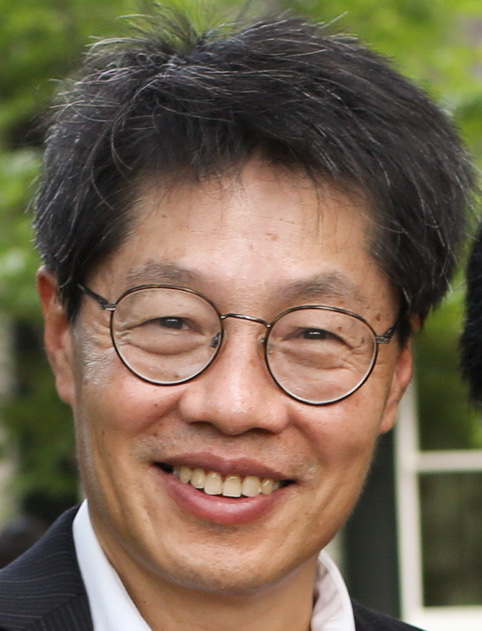
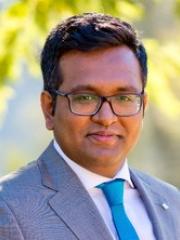
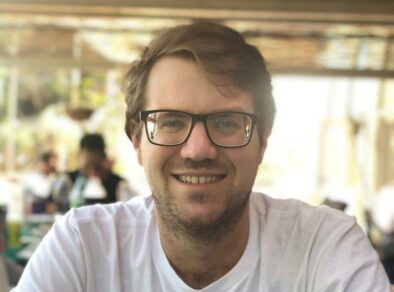
Franco Tomarelli is a Full Professor at the Department of Mathematics, Polytechnic University of Milan , with a focus on Calculus of Variations, Differential Equations, and Applied Mathematics . His research explores mathematical modeling of discontinuous structures , multi-scale problems , and materials science through variational methods and geometric measure theory. Books Authored : Complex Analysis, Transforms, and Differential Equations (2023), Variational Problems in Materials Science (2006). His publications address advanced mathematical techniques for boundary value problems , distributions , and engineering applications . He contributes to academic dissemination through the Milan Journal of Mathematics and workshops like VARMET2001 . No explicit awards, students, or lab affiliations are mentioned in the provided texts.
Bastian Goldlücke serves as an Associate Professor in the Department of Computer Science at the University of Konstanz since 2014. His academic journey includes postdoctoral positions at the University of Heidelberg (2011), TU Munich (2010), and the University of Bonn (2009), following a Ph.D. from the Max Planck Institute for Computer Science in Saarbrücken (2006). His research centers on variational methods and their applications in computer vision, with specialized focus on light field analysis and inverse problems . Key contributions include novel frameworks for light field decomposition, real-time 3D reconstruction, and attention-based neural representations. His work bridges mathematical optimization with practical computer vision challenges in autonomous systems and 3D imaging. Notable scientific recognition includes: ERC Starting Grant 'Light Field Imaging and Analysis' (2013) Funding through SFB Transregio 'Quantitative Methods for Visual Computing' Prof. Goldlücke actively contributes to the academic community as a reviewer for major conferences and journals, co-organizer of the 'Light Fields for Computer Vision' workshops at ECCV 2014 and CVPR 2017, and area chair for ACCV 2014 and 3DV 2016. His current research is supported by significant European and German research grants focusing on computational imaging and visual analysis.
Jian-Guo Liu is a Professor of Mathematics and Physics at Duke University, with primary affiliations in the Departments of Mathematics and Physics. His research encompasses applied mathematics, partial differential equations, kinetic theory, computational fluid dynamics, and stochastic algorithms. Professor Liu's work bridges theoretical modeling and numerical methods, particularly in complex systems involving nonlinear dynamics, fluid behavior, and emergent phenomena. Research interests focus on multiscale modeling of physical systems, including stochastic processes in chemical reactions, fluid-structure interactions, and materials science. Recent publications demonstrate strong emphasis on mathematical foundations of biological and physical systems, with recurring themes in Fokker-Planck dynamics, mean-field games, tumor growth modeling, and computational methods for interfacial phenomena. Publications showcase consistent focus on analytical and numerical solutions to high-dimensional problems, with applications ranging from medical imaging to electrochemistry. The work exhibits advanced techniques in asymptotic analysis, stochastic approximations, and geometric evolution equations.
Dr Adnan Sufian is an Honorary Lecturer at the School of Civil Engineering, University of Queensland, with expertise in multiscale mechanics of granular materials. His research bridges geotechnical engineering and computational modeling, focusing on fluid-soil interactions and civil infrastructure resilience. PhD from UNSW Sydney Visiting scholar at MIT Postdoctoral work at Imperial College London Industry experience with SMEC Australia His research addresses granular material behavior under complex conditions, including internal erosion dynamics in dams, particle migration in gap-graded soils, and seismic stability of engineered landfills. Methodologically, he employs CFD-DEM coupling , pore network models , and Voronoi tessellation for granular simulations. The 15 most recent publications highlight a focus on erosion mechanisms , filter design , seismic stability , and microcapsule retention in granular media. These works utilize computational methods (CFD-DEM, PNM-DEM) and experimental techniques (X-ray CT, time domain reflectometry) to analyze soil-fluid interactions. Dr Sufian is available for supervision, with current projects on resilient infrastructure and past completions investigating micro-scale erosion conditions and particle migration dynamics . His research has been supported by grants from ARC and UQ, including projects on real-time erosion prediction and geotechnical data integration. Key collaborations span physicists, mathematicians, and engineers , reflecting the interdisciplinary nature of his work on granular material behavior. The ARC Advance Timber Hub and partnerships with institutions like Imperial College London and UNSW Sydney further contextualize his academic network.
Dr. Vladimir Golkov is a Postdoctoral Researcher at the Technical University of Munich (TUM) within the School of Computation, Information and Technology, specifically in Informatics 9 (Computer Vision Group). He works under the supervision of Prof. Dr. Daniel Cremers and maintains an active research profile in deep learning applications for medical imaging and biomedical data analysis. His primary research interests focus on deep learning since 2014, with specialization in high-dimensional and geometric data structures, data-processing goals beyond supervised learning (including clustering and anomaly detection), and applications in biomedicine and physics. Dr. Golkov has successfully mentored students who have gone on to pursue PhD studies at prestigious institutions including TUM, LMU, Mila, ETHZ, Cambridge, and Stanford. Analysis of his recent publications reveals a strong trend toward medical imaging applications, particularly in MRI technology, where he combines deep learning approaches with traditional physics-based methods. His work frequently bridges the gap between theoretical machine learning advances and practical medical applications, with significant contributions to diffusion MRI, sequence optimization, and 3D data processing. He has also expanded into emerging areas including large language models for medical applications and equivariant deep learning architectures. Dr. Golkov receives grant support from the Deutsche Telekom Foundation and maintains an active publication record with numerous contributions to leading conferences including ISMRM, MICCAI, and NeurIPS workshops. His research demonstrates a consistent trajectory of innovation at the intersection of computer vision, deep learning, and biomedical applications. He is actively involved in teaching and mentoring, with students from his projects advancing to top PhD programs worldwide. His office is located at Boltzmannstrasse 3, 85748 Garching, Germany (Office: 02.09.061), and he can be contacted at vladimir.golkov@tum.de.
Antonio Algaba Duran is a Professor at the Higher Technical School of Engineering within the University of Seville , specializing in Applied Mathematics at the Center for Advanced Studies in Physics, Mathematics, and Computing . His research focuses on dynamical systems , nonlinear differential equations , and bifurcation theory , with significant contributions to the analysis of nilpotent singularities , homoclinic/heteroclinic orbits , and chaotic behavior in systems like the Lorenz , Chen , and Lü systems . Education : PhD from University of Seville (1996), thesis on Hypernormal forms and bifurcations in flat and three-dimensional systems , supervised by Emilio Freire Macías and Estanislao Gamero Gutiérrez. Research Highlights : 131+ publications since 1998, including 2 preprints Developed algorithms for normal forms and nonlinear time transformations to analyze canard explosions and homoclinic bifurcations Key work on Z2-symmetric systems , inverse integrating factors , and geometric criteria for centers Collaborators : Cristóbal García, Alejandro J. Rodríguez-Luis, Manuel Merino, Estanislao Gamero, and others. His scientific work spans applications in electronic circuits, biological systems, and physical models, with a focus on structural stability , analytic integrability , and global bifurcations .
Domagoj Ševerdija is an Assistant Professor at the School of Applied Mathematics and Informatics at Josip Juraj Strossmayer University of Osijek, where he leads the Computer Science and Machine Learning Research Group. He holds a PhD in Electrical Engineering (2013) and a dual BS in Mathematics and Computer Science (2007) from the University of Osijek. His research spans computational linguistics, natural language processing, machine learning, and combinatorial optimization, with applications in bioinformatics, robotics, and energy systems. Recent work focuses on neural language models, domain adaptation techniques, and efficient algorithm design. Publications show strong interdisciplinary trends: computational linguistics (Croatian morphology, sentence embeddings), bioinformatics (cell typing, RNA splicing), and algorithm optimization (terrain guarding, matrix operations). Recent papers emphasize knowledge distillation, domain adaptation, and compressed representations. Awards: Best paper award in AIS - Artificial Intelligence Systems track (MIPRO 2023) Research funding includes: Computer-Assisted Corpus Linguistics (UNIOS, 2019-2020) Croatian Identity Network Framework (Adris Foundation, 2020-2021) Croatian Language in Global Cloud (Adris Foundation, 2019-2020) Leads the Computer Science and Machine Learning Research Group, coordinating projects in NLP, computational geometry, and AI applications.
RAZAFINDRALANDY Dina is a Teacher-Researcher at the University of La Rochelle, affiliated with the E1 - M2N team. Her research focuses on fluid mechanics, turbulence analysis, and geometric integration methods in applied mathematics. Fluid mechanics and turbulence modeling via symmetry groups Differential geometry applications to partial differential equations Development of time integrators using divergent series resummation Her recent work explores advanced techniques like Lie symmetry groups and discrete exterior calculus to preserve physical properties in numerical simulations. She has contributed to geometric integrators for stiff/non-stiff problems and turbulence model construction. RAZAFINDRALANDY collaborates with researchers such as Aziz Hamdouni and Rama Ayoub, with publications spanning Discrete and Continuous Dynamical Systems , HAL , and conference proceedings. She is actively involved in computational mechanics and numerical physics research.
Jarmila Robová is an Associate Professor at the Department of Mathematics Didactics , affiliated with the Faculty of Mathematics and Physics at Charles University in Prague. Her work focuses on enhancing mathematics education through digital technologies and geometric conceptual understanding. Role: Associate Professor University: Charles University School: Faculty of Mathematics and Physics Department: Department of Mathematics Didactics Email: Jarmila.Robova@mff.cuni.cz Office: Karlín Campus, Room K456 Her research interests include: Geometry Education Digital Technologies in Mathematics Education Professional Development of Mathematics Teachers Recent publications highlight the integration of GeoGebra, analysis of geometric misconceptions, and technology-driven pedagogical strategies. She has supervised numerous theses on topics like digital tools in geometry, financial literacy, and innovative teaching methods. Current supervised works explore areas such as: ICT integration in secondary education Web applications for calculus and algebra Student conceptual knowledge in geometry
Martin Koutecký is an Associate Professor at the Institute of Informatics, Faculty of Mathematics and Physics, Charles University in Prague, Czech Republic. His research primarily focuses on parameterized complexity of integer programming, combinatorial optimization, and computational social choice. He completed his PhD under Petr Kolman at Charles University and conducted postdoctoral research at Technion (Haifa, Israel) under Asaf Levin and Shmuel Onn. Research Interests: Koutecký's work bridges theoretical computer science and optimization, with emphasis on: Designing efficient algorithms for integer programming under structural constraints Applying optimization techniques to computational social choice problems Developing parameterized approaches for combinatorial optimization Exploring geometric perspectives in election modeling and bribery problems Publication Focus: His recent articles (2020-2025) demonstrate consistent work in algorithm design for optimization problems, particularly in integer programming variants and computational social choice. Key themes include block-structured IP, parameterized complexity, election modeling, and convex optimization. Methodological innovations frequently involve polyhedral theory, approximation algorithms, and complexity analysis.
Prof. Dr. Martin E. Müller is a Professor in the Department of Computer Science at Bonn-Rhein-Sieg University of Applied Sciences, specializing in the mathematical and theoretical foundations of informatics. His research bridges abstract algebraic structures with practical computational applications, particularly in knowledge representation and reasoning systems. Dr. Müller's primary research interests include Algebraic Logic , Modal Logic , Relational Algebra , Universal Algebra , and Logic Knowledge Discovery (also known as explainable machine learning). His work demonstrates how theoretical mathematical frameworks can provide robust foundations for practical computational problems, particularly in the areas of rough set theory, formal concept analysis, and inductive logic programming. He approaches machine learning through logical structures, emphasizing transparency and explainability in AI systems. Analysis of his publication record shows a consistent scholarly trajectory from 1994 through 2023, with increasing emphasis on applying formal logical methods to contemporary machine learning challenges. His work spans theoretical foundations of computing, relational methods in program semantics, and practical applications in user modeling and knowledge discovery. Recent publications demonstrate growing interest in making machine learning more interpretable through logical frameworks. Among his professional recognitions is the Seahorse award from 1975 . Dr. Müller serves as a reviewer for numerous academic journals and conferences and is an active member of several professional associations in computer science and logic. Dr. Müller has led significant research projects including PARIA (2004-2008), which developed the PACME architecture for concurrent processes; Rela-X (2010-2019), which implemented libraries for efficient relation calculus with the R-Lang programming language; and the ongoing COMPARE project (2024-) focusing on pairwise multidimensional comparisons for survey analysis. His current work with the 'Sets, Structures, Semantics' project (2018-) aims to create a comprehensive resource on discrete mathematics and logics. His research group maintains strong international collaborations, particularly with researchers in the relational and algebraic methods community, including notable figures like Tony Hoare, Peter Höfner, Peter Jipsen, and Bernhard Möller. The Rela-X project established a productive student working group environment that produced both theoretical insights and practical software tools for relational calculus visualization.
Dr. Chris Goodrich is a Senior Lecturer at the School of Mathematics and Statistics, UNSW Sydney. He holds a PhD in Mathematics from the University of Nebraska-Lincoln. His research focuses on analytical and theoretical aspects of nonlocal differential equations, fractional calculus, and variational problems, with particular emphasis on operator theory and regularity analysis. Education: PhD Mathematics, University of Nebraska-Lincoln Research Interests: Dr. Goodrich specializes in nonlocal operators and fractional calculus applied to differential/difference equations. His work investigates existence theory, monotonicity properties, and topological analysis of solutions. Key areas include convolution equations, (p,q)-growth conditions in PDEs, and applications of Sobolev inequalities to Kirchhoff-type problems. He maintains strong collaborations with international researchers in fractional analysis and discrete calculus. Publications: His recent articles (2023-2025) demonstrate consistent focus on nonlocal operators, fractional differences, and convolution equations. Predominant themes include topological methods for elliptic equations, monotonicity analysis of fractional operators, and existence/nonexistence theorems for Kirchhoff systems. Analytical techniques leverage convexity, variational principles, and asymptotic characterization across both continuous and discrete frameworks.
Quentin Mérigot is a Professor in Applied Mathematics at the University of Paris-Saclay, affiliated with the Faculty of Science at Orsay and the Institut de Mathématique d'Orsay. He serves as the Director of the Master in Optimization program, a joint initiative between University of Paris-Saclay and Institut Polytechnique de Paris. Dr. Mérigot completed his Doctoral Thesis at the University of Nice Sophia-Antipolis in 2009, followed by a Habilitation à diriger les recherches at the University of Grenoble in 2014. His research focuses on the intersection of optimal transport theory, numerical analysis, and geometric methods for data analysis. Mérigot has made significant contributions to the development of numerical methods that leverage optimization and computational geometry techniques. His work spans theoretical foundations and practical applications, including seismic tomography, reflector design, and crowd motion modeling. He is particularly known for his work on stability properties of optimal transport maps and the development of efficient algorithms for solving optimal transport problems. Analysis of Mérigot's recent publications reveals a strong focus on quantitative stability properties of optimal transport maps, with applications spanning from machine learning to optics and fluid dynamics. His work demonstrates a consistent theme of bridging theoretical mathematical analysis with computational methods, particularly through the development of Lagrangian discretization techniques and Newton-type algorithms for solving complex geometric problems. Junior member of the Institut universitaire de France (IUF) Professor Mérigot has supervised numerous PhD students including Alex Delalande, Anatole Gallouët, Clément Sarrazin, Jocelyn Meyron, and Julien André. He has also hosted several postdoctoral researchers such as Jean-Baptiste Keck, Andrea Natale, Federico Stra, Thomas Gallouët, and Hiba Abdallah. His current research projects include PEPR PDE-AI and OT @ Lagrange, which likely represent significant collaborative efforts with funding support. Mérigot is an active member of the mathematical community, with his research bridging pure mathematical analysis, computational methods, and practical applications across various scientific domains. His work demonstrates the power of optimal transport theory as a unifying framework for diverse problems in mathematics and its applications.
Ulrike Bücking serves as a Senior Lecturer in the Department of Mathematics and Computer Science at Free University of Berlin, where she is Deputy Head of the Primary School Mathematics Group within the Discrete Methods in Algebraic Geometry & Mathematics for Teacher Training working group. Her academic responsibilities include teaching mathematical professional knowledge courses for primary school teacher candidates since 2019, with recent expansion to advanced specialized instruction for mathematics-focused teacher trainees. Her research spans two interconnected domains: theoretical discrete differential geometry focusing on convergence of discrete conformal mappings, rigidity of planar patterns, and discrete minimal surfaces; and mathematics education specifically tailored for primary school teacher preparation. This dual expertise manifests in publications ranging from pure mathematical investigations of circle patterns and discrete Riemann surfaces to innovative pedagogical frameworks for mathematics teacher education. Analysis of her 15 most recent publications reveals a consistent trajectory in discrete complex analysis with increasing integration of mathematics education research since 2020. Her geometric work demonstrates methodological evolution from foundational circle pattern theory toward sophisticated discrete surface constructions, while her educational publications address practical curriculum development for teacher training programs. The 2023 MatheProfIL paper exemplifies her applied approach to bridging theoretical mathematics with classroom pedagogy. Dr. Bücking maintained continuous research activity through her decade-long participation (2012-2024) in the Collaborative Research Center/Transregio 'Discretization in Geometry and Dynamics' (Project A01: Discrete Riemann Surfaces). Her teaching portfolio shows significant evolution from advanced mathematics courses for physicists at TU Berlin (2002-2018) to specialized mathematics education for primary teachers at Free University of Berlin. She actively contributes to the Primary School Mathematics Group and collaborates within the Discrete Methods in Algebraic Geometry & Mathematics for Teacher Training working group, maintaining an office at Arnimallee 3 in Berlin's mathematics institute where she supervises course development and coordinates teacher education initiatives.
Henrik Wallén is a Senior Lecturer at the Department of Electronics and Nanoengineering, Aalto University, Finland. His research focuses on electromagnetism, optical physics, and characteristic mode theory, with recent publications in Journal of Biophotonics , IEEE Transactions on Antennas and Propagation , and Journal of the Optical Society of America B . He collaborates closely with researchers like Ari Sihvola, Pasi Ylä-Oijala, and Beibei Kong, contributing to advancements in wave scattering, polarizability, and active material interactions. Research Highlights: Developed novel formulations for electromagnetic characteristic modes in material and lossy structures. Investigated backscattering enhancement and non-positive extinction cross-sections in active scatterers. Contributed to infrared transmission microspectroscopy and polarization modeling of dielectric shapes. Collaborated on Janus particles and their electromagnetic responses. His work bridges theoretical electromagnetics with practical applications in photonics and antenna design.