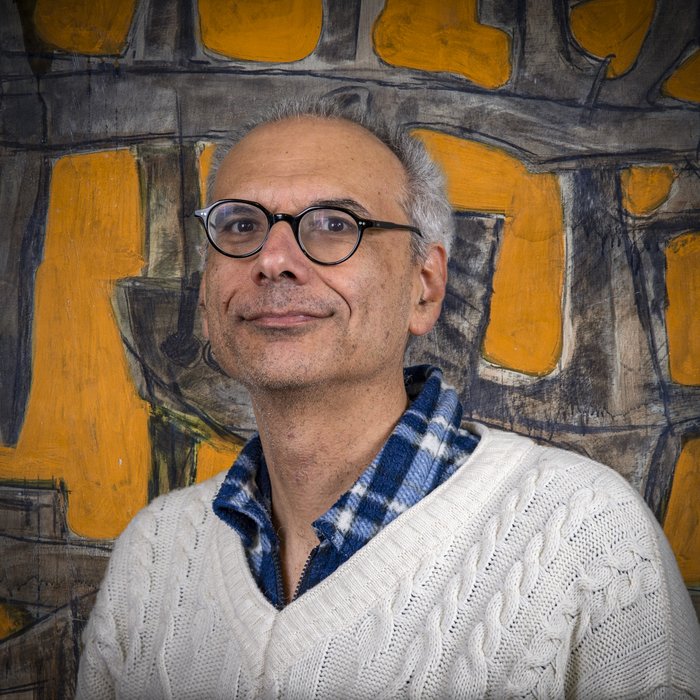
Alfonso Sorrentino is a full professor of mathematical analysis at the Department of Mathematics, University of Rome Tor Vergata. He specializes in Hamiltonian dynamical systems, with expertise in nonlinear analysis, differential geometry, and mathematical physics. He earned his Ph.D. in mathematics from Princeton University (2008) and held academic positions at the Fondation des Sciences Mathématiques de Paris (2008–2009) and the University of Cambridge (2009–2012). His research focuses on invariant structures in Hamiltonian systems, billiard dynamics, and spectral rigidity. Key recognitions include the Fubini Prize (2018), Barcelona Dynamical Systems Prize (2019), Best Paper Award (Gold medal, 2020), and Frontiers of Science Award (2023). His work bridges pure mathematics and applications, emphasizing geometric and analytic approaches to dynamical systems. Recent studies explore topics like invariant Lagrangian graphs, spectral properties of billiards, and homogenization of Hamilton-Jacobi equations on networks. His contributions reflect a commitment to advancing theoretical frameworks in dynamical systems and their interdisciplinary implications.
Professor Masatoshi Okutomi is affiliated with the Department of Systems and Control Engineering at the School of Engineering, Institute of Science Tokyo. His research focuses on advanced medical imaging techniques, particularly in endoscopy and 3D reconstruction, leveraging deep learning and neural networks. Key interests include virtual chromoendoscopy for cancer detection, image restoration, and stereo matching under challenging conditions. His work bridges computer vision and healthcare, addressing real-world applications such as MRI reconstruction and foggy stereo matching. Notable contributions include developing lightweight medical segmentation networks for edge devices and advancing neural radiance fields (NeRF) for novel view synthesis. His research spans diverse domains: from improving video quality assessment to enhancing object detection in high-dynamic-range images. Collaborative projects emphasize practical solutions for medical diagnostics and robust image processing in adverse environments. Recent articles highlight advancements in temporally-consistent video restoration, few-shot view synthesis, and degraded image classification using knowledge distillation. These innovations underscore his commitment to pushing boundaries in both theoretical computer vision and applied medical technology.
Prof. Dr. Andreas Gastel is a Professor in the Faculty of Mathematics at the University of Duisburg-Essen. His research specializes in geometric analysis, partial differential equations, and differential geometry. He leads a research group working on mathematical modeling and optimization problems, particularly in gas network applications. His recent publications focus on nonlinear material models, conservation laws in polyharmonic systems, and gauge theory applications. He maintains active collaborations with researchers across mathematical physics and applied mathematics disciplines.
M. Hadi Amini is an Assistant Professor at Florida International University's Knight Foundation School of Computing and Information Sciences. He founded and directs the Sustainability, Optimization, and Learning for InterDependent networks (SOLID) laboratory, focusing on cyber-physical-social systems and distributed AI applications. Ph.D., Electrical and Computer Engineering (2019), Carnegie Mellon University M.Sc., Electrical and Computer Engineering (2015), Carnegie Mellon University M.Sc. (2013), Tarbiat Modares University B.Sc. (2011), Sharif University of Technology His research spans federated learning, interdependent network optimization, and AI applications in smart cities , energy systems , and healthcare . Recent work emphasizes privacy-preserving techniques, quantum encryption, and blockchain integration for secure distributed learning. The 15 most recent publications highlight trends in large language models , edge computing , medical imaging security , and infrastructure resilience , with interdisciplinary emphasis across computer science, systems engineering, and urban planning. Best Paper Award, IEEE Conference on Computational Science & Computational Intelligence (2019) Best Journal Paper Award, Springer Nature Operations Research Forum (2021) Excellence in Teaching Award, FIU (2020) Multiple Best Reviewer Awards, IEEE Transactions NSF Travel Awards (2019) As Associate Editor for Frontiers in Communications and Networks and book series editor for Sustainable Interdependent Networks , he actively shapes research discourse. His lab has secured $3.6M in federal/state funding for AI-driven infrastructure projects.
Dr. Daniel Grady is an Assistant Professor at Wichita State University. His research focuses on algebraic topology, mathematical physics, and differential geometry, with a particular emphasis on advanced topics such as K-theory, cobordism, and topological field theories. He explores the interplay between differential cohomology and geometric structures in theoretical physics, including applications to M-theory and string compactifications. His work often involves sophisticated tools like spectral sequences, stacks, and equivariant constructions, reflecting a deep engagement with both pure and applied aspects of topology. Notable contributions include studies on the Freed–Hopkins conjecture, geometric cobordism hypotheses, and twisted differential cohomology theories. Grady’s research bridges abstract algebraic frameworks with concrete geometric and physical models, advancing foundational understanding in modern theoretical mathematics.
Dori Bejleri is an Assistant Professor in the Department of Mathematics at the University of Maryland, College Park. Prior to this, he was a Benjamin Peirce and NSF postdoctoral fellow at Harvard University (2019–2023) and an NSF postdoctoral fellow at MIT (2018–2019). He earned his PhD in 2018 from Brown University under Dan Abramovich's supervision. His research focuses on algebraic geometry, particularly moduli spaces and birational geometry, with connections to number theory, enumerative geometry, combinatorics, and geometric representation theory. His work is supported by NSF grant DMS-2401483. He has organized several academic events, including the JHU-UMD Algebra and Number Theory Day (2024) and the Perspectives on Moduli in Algebraic Geometry conference (2025). Bejleri has taught graduate courses such as Rationality Questions in Algebraic Geometry (Spring 2022), Birational Geometry of Algebraic Varieties (Fall 2020), and Moduli Spaces in Algebraic Geometry (Fall 2019). His research spans topics like wall-crossing phenomena in moduli spaces, compactifications of elliptic surfaces, and motivic Hilbert zeta functions. He has also contributed to the study of stable log pairs and geometric representation theory. His teaching and research reflect a commitment to advancing foundational questions in algebraic geometry while engaging with interdisciplinary connections. His academic contributions include organizing seminars and mentoring students through advanced topics in geometry and topology.
Duncan J. Irschick is a Professor of Biology at the University of Massachusetts Amherst, leading the Irschick Lab and co-founding initiatives like Digital Life and the Center for Evolutionary Materials. His research integrates evolutionary biology, biomechanics, and technology to study animal movement, adhesion systems, and 3D imaging. He earned a B.S. from UC Davis (1991) and a Ph.D. from Washington University, St. Louis (1996). Research focuses on gecko adhesion (GeckskinTM), 3D imaging (BeastcamTM), and bioinspired technologies. He explores how animal form and function inform synthetic design, with applications in conservation, robotics, and material science. His work spans diverse taxa, including sharks, salamanders, and reptiles, emphasizing functional morphology and evolutionary adaptation. Key achievements include over 137 peer-reviewed publications, patents on adhesives, and global media recognition. Awards include UMass Amherst's Outstanding Research Award (2014), Chancellor's Medal (2014), and Distinguished Faculty Lecture (2016). He has delivered 76 invited talks worldwide and collaborates with engineers, computer scientists, and conservationists. His lab develops open-access 3D models via Digital Life, aiding education and conservation. Current projects include studying elasmobranch energetics, reptile locomotion, and biomimetic materials. Grants from NIH, NSF, and private foundations fund this multidisciplinary work.
Bassam Bamieh is a Professor of Mechanical Engineering at the University of California, Santa Barbara (UCSB), with affiliate roles in Electrical and Computer Engineering and the Center for Control, Dynamical Systems and Computation (CCDC). His research focuses on control systems, dynamical systems, and their applications in fluid mechanics, quantum control, and network science. He holds fellowships from IEEE and IFAC and has received accolades such as the NSF Early Career Award and IEEE Distinguished Lecturer designation. Education: B.Sc. in Electrical Engineering and Physics from Valparaiso University (1983), M.Sc. and Ph.D. in Electrical and Computer Engineering from Rice University (1986, 1992). Formerly an Assistant Professor at the University of Illinois at Urbana-Champaign (1991–98). Research interests span robust and optimal control, distributed systems, shear flow turbulence, and thermoacoustic energy conversion. He has authored over 200 publications and pioneered work in spatially invariant systems and network controllability. His teaching includes courses on linear systems, vibrations, and control systems design. Awards include the IEEE Axelby Award (twice), Hugo Schuck Best Paper Award, and recognition for student research mentorship (e.g., Outstanding Student Paper Awards at CDC and IFAC NecSys22). His group collaborates across disciplines, integrating mathematical analysis with engineering applications.
Dr. Minglun Gong is a Professor and Director of the School of Computer Science at the University of Guelph (since 2019). Previously, he served as Professor and Head of the Department of Computer Science at Memorial University of Newfoundland. He holds a Ph.D. from the University of Alberta (2003), M.Sc. from Tsinghua University (1997), and B.Engr. from Harbin Engineering University (1994). His research focuses on visual computing, including computer graphics, computer vision, visualization, image processing, and pattern recognition. He has authored over 150 referred papers and holds patents in the field. He is an Associate Editor for Pattern Recognition and IEEE Signal Processing Letters , and has received awards such as the Izaak Walton Killam Memorial Award and multiple best paper awards. Dr. Gong has advised numerous students, including Ph.D./M.Sc. candidates and visiting scholars. His lab's recent work includes UAV path planning for urban reconstruction, image stylization techniques, and 3D human pose estimation. He actively participates in academic service, including editorial roles, conference program committees, and administrative roles at multiple institutions. His teaching spans courses in image processing, computational photography, and technical communication. He is also involved in administrative committees, such as Graduate Studies and Promotion at Memorial University. Key research contributions include advancements in transparent object modeling, underwater 3D reconstruction, and image-to-image translation. His work emphasizes practical applications in fields like medical imaging, autonomous systems, and environmental modeling.
Prof. Dr. Martin Hils is a Professor of Mathematical Logic at the University of Münster's Faculty of Mathematics and Computer Science, affiliated with the Institut für Mathematische Logik und Grundlagenforschung. His expertise lies in model theory and set theory, focusing on geometric stability, simplicity theory, valued fields with automorphisms, and Hrushovski amalgamation. Education: Habilitation in Mathematics (2013, Université Paris Diderot) PhD in Mathematics (2006, Université Paris 7 and Lyon 1) Master (DEA) in Logic and Computer Science (2002, Paris 7) Diploma in Mathematics with Philosophy (2001, University of Bonn) Research Interests: Model theory of valued fields, geometric stability/simplicity theories, Hrushovski amalgamation techniques, and applications to algebraic geometry and differential fields. His work bridges abstract model theory with concrete mathematical structures. Recent Research Trends: Focus on non-archimedean geometry, separably closed valued fields, Lang-Weil estimates in difference fields, and definable retraction principles. His articles explore topics like Ax-Kochen-Ershov principles, domination monoids in valued fields, and beautiful pairs in unstable theories. Grants & Projects: Lead investigator in DFG Cluster of Excellence EXC 2044 (Groups, Model Theory and Sets) Principal investigator in 'Model Theory of Valued Fields with Endomorphism' (DFG 2022-2025) GeoMod project (geometric/combinatorial configurations in model theory, DFG 2020-2024) Contributor to SFB 878 (model theory of valued fields and definable groups) Teaching & Supervision: Current courses include Model Theory of Pseudofinite Fields and Logic Foundations. Supervised PhD students include Pierre Touchard (2020) and Rémi Jaoui (2017). Jointly supervises Simone Ramello and Zixuan Zhu. Editorial Work: Editor-in-chief of Model Theory journal. Authored textbook A First Journey through Logic (AMS 2019).
Duong H. Phong is a Professor of Mathematics at Columbia University, specializing in complex geometry and geometric analysis. He earned his Ph.D. from Princeton University (1977) under Elias M. Stein. His research focuses on nonlinear partial differential equations, Kähler-Ricci flow, and mathematical physics. He has advised over 25 doctoral students, including notable figures like Jian Song and Tristan Collins. Phong serves as Editor-in-Chief of Mathematics Research Letters and sits on editorial boards for journals such as Annals of PDE and Asian Journal of Mathematics . He organizes conferences on analysis and geometry, including the 2013 Analysis, Complex Geometry, and Mathematical Physics event. His teaching includes advanced courses on complex analysis and Riemann surfaces. Phong collaborates internationally and maintains active research in geometric evolution equations, Calabi-Yau manifolds, and boundary value problems in statistical mechanics.
Geoffroy Horel is a Lecturer at the University of Paris 13 , affiliated with the Institut Galilée in France. His research spans algebraic topology, operads, and geometric topology, with a focus on homotopy theory and formality theorems. He can be contacted at horel@math.univ-paris13.fr . Research Interests : Algebraic topology, operads, homotopy theory, motivic homology, Galois representations, and knot theory. Projects : Member of the ANR HighAGT project and the Algebraic and Geometric Topology Thematic Network. Advising : Supervises PhD and Master’s students including Nicolas Guès, Coline Emprin, Jinwen Xu, and others. His publications (15 recent works) explore topics like little disks operads, motivic stability, and Galois symmetries.
Mihyun Kang is a Professor in the Institute of Discrete Mathematics at Graz University of Technology (TU Graz), leading the Combinatorics Group. She holds significant academic positions and has been recognized with a Heisenberg Fellowship (German Research Foundation) and a Friedrich Wilhelm Bessel Research Award (Alexander von Humboldt Foundation). Her research focuses on combinatorics, discrete probability, and algorithms, with a specialization in random graph theory. She contributes to editorial boards, including Random Structures & Algorithms . Her research interests emphasize high-dimensional graphs, percolation processes, and structural properties of random graphs. She explores topics such as phase transitions, graph enumeration, and algorithmic applications in combinatorial problems. Her work bridges theoretical foundations with practical applications in algorithm design and probabilistic modeling. Dr. Kang’s scientific achievements include pioneering studies on hypergraphs, bootstrap percolation, and the evolution of random graph processes. Her recent publications highlight advancements in understanding graph components, connectivity thresholds, and universality phenomena in random structures. She collaborates widely, contributing to conferences and international initiatives like the SFB “Discrete random structures: enumeration and scaling limits.” Her professional activities include advising doctoral students and supervising research projects at TU Graz. She leads the Combinatorics Group, which hosts the Graz Combinatorics Seminar and actively engages in academic outreach. Her contributions extend to textbook authorship, including Diskrete Mathematik für die Informatik , and she maintains an active presence in discrete mathematics education and research.
David E. Breen is a Professor in the Department of Computer Science within the College of Computing & Informatics (CCI) at Drexel University. He leads the Geometric Biomedical Computing Group and is affiliated with the Metadata Research Center and the Center for Biological Discovery from Big Data. His research spans interdisciplinary domains including biomedical image informatics, geometric modeling, textile modeling, and bio-inspired self-organization algorithms. Education: PhD, Computer and Systems Engineering, Rensselaer Polytechnic Institute MS, Computer and Systems Engineering, Rensselaer Polytechnic Institute BA, Physics, Colgate University His research interests focus on computational methods for biomedical applications, including shape and image analysis for cancer diagnosis, 3D reconstruction of biological tissues, and video analysis of animal behavior. He also investigates geometric modeling techniques for textiles and self-organizing systems. His work integrates computer science with biology, medicine, and engineering to solve complex problems in biomedical computing. The recent publications highlight a strong trend in computational modeling of textiles, biomedical image informatics, and AI-driven data analysis. Key themes include geometric modeling of knitted fabrics, deep learning for medical image classification, agent-based modeling of cancer metastasis, and metadata generation for biological image collections. His work bridges fundamental geometric algorithms with practical applications in healthcare and digital archives. Scientific Awards: No specific awards mentioned in the provided text. Breen has advised numerous students and collaborators across multiple domains, particularly in biomedical computing and textile modeling. His research has been supported through affiliations with major centers and collaborations with institutions such as Johns Hopkins University and the Max Planck Institute. He has been involved in projects related to NSF Center for Visual & Decision Informatics and has contributed to over 100 technical publications. He leads the Geometric Biomedical Computing Group , which conducts research at the intersection of biology, medicine, engineering, and computer science. The group develops algorithms and software for geometry-related computing problems in biomedical applications. Collaborations include the Drexel Integrated Laboratory for Cellular Tissue Engineering, Dr. Dan Marenda's Lab, and Dr. Aleister Saunder's Lab in Drexel's Biology Department.
Paolo Bussotti is an Associate Professor of History of Science and Technology at the University of Udine's DIUM department. His academic career includes roles at Ludwig Maximilian University (Munich), Bayerische Akademie der Wissenschaften, and Berlin-Brandenburg Academy of Sciences through Humboldt Fellowships. He holds a PhD in Historical Sciences from the University of San Marino (1996). Education : Bachelor of History of Science and Technology, University of Pisa (1991) PhD in Historical Sciences, University of San Marino (1996) Research Interests : 17th-Century Physics/Astronomy (Kepler, Galileo, Descartes, Leibniz, Newton) Mathematics History: Number Theory (Fermat-Gauss), Projective Geometry Philosophy of Mathematics: Foundations at the turn of the 20th century Science Education: Integrating history into math teaching Key Projects : Galileo's Sidereus Nuncius translation (2001) Kepler Commission collaboration (2005) Enriques Study Center directorship (2008-2010) Grants/Awards : Three Humboldt Fellowships (2003, 2013-2014, 2019) Research grants from DIUM and DMIF (Udine) Labs/Teams : Collaborations with Munich Center for Mathematical Philosophy, Berlin-Brandenburg Academy, and Bayerische Akademie der Wissenschaften.