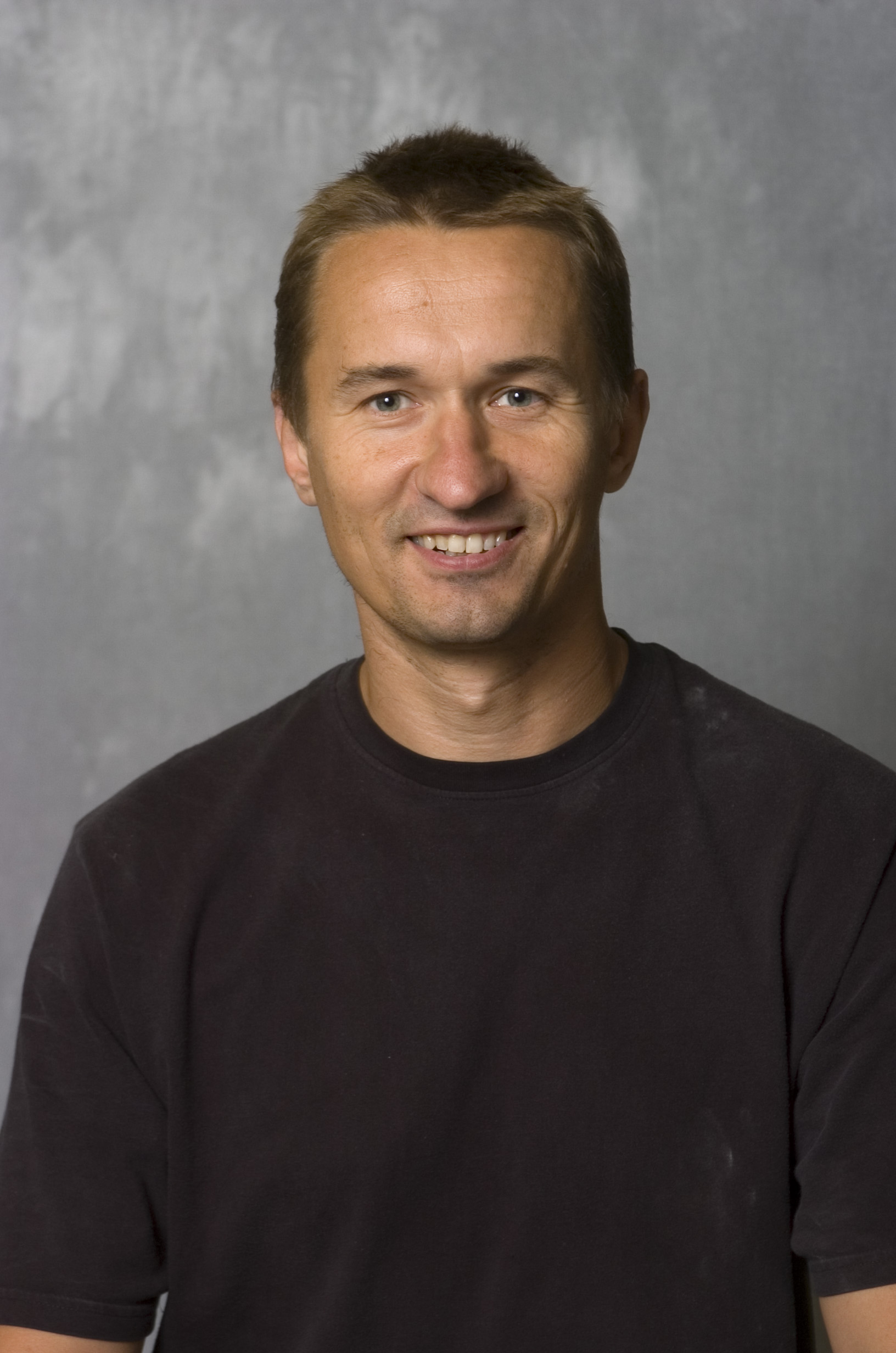
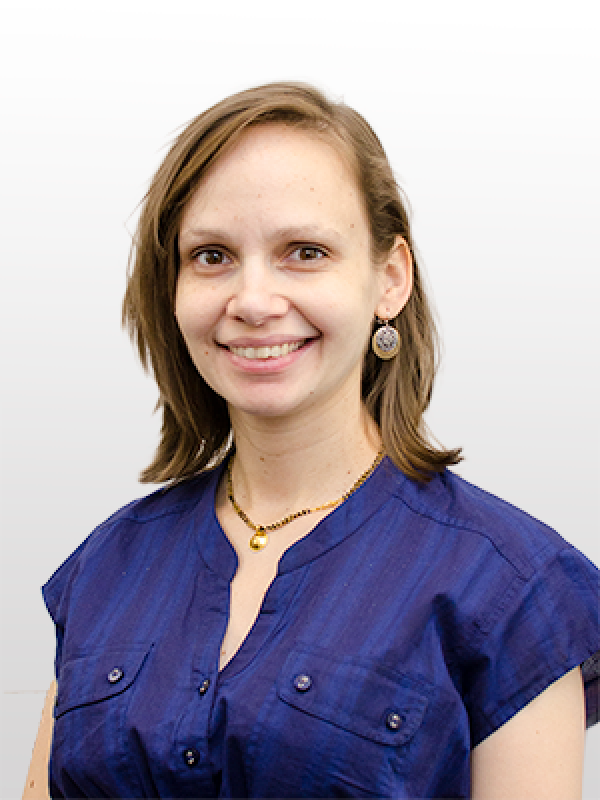
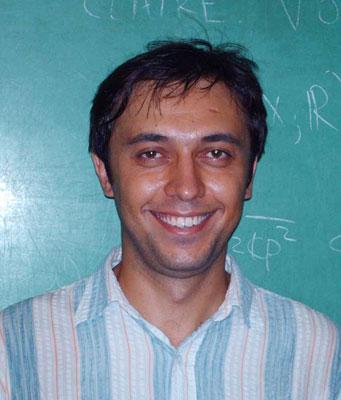
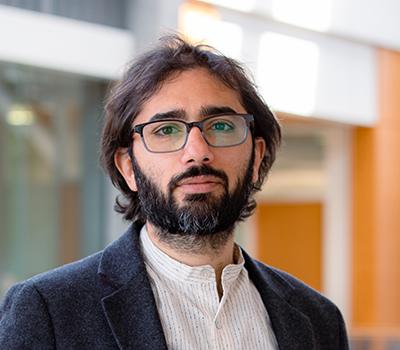
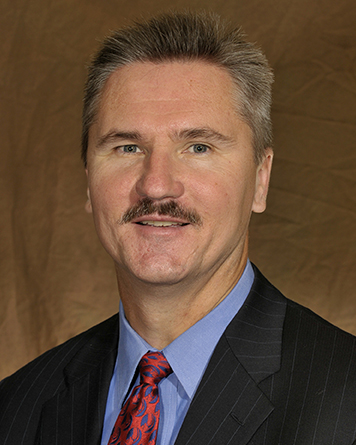
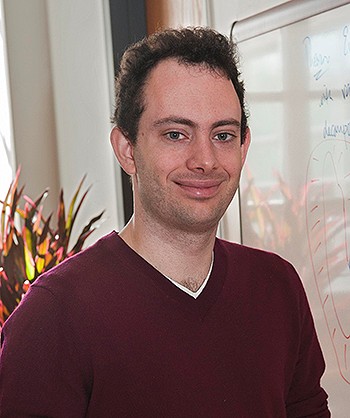
Xiuhao Deng is an Associate Research Fellow and PhD Supervisor at the Institute of Quantum Science and Engineering, Southern University of Science and Technology (SUSTech), with adjunct positions at Pengcheng Lab and Hefei Lab. He obtained his B.S. in Modern Physics from University of Science and Technology of China (USTC) in 2005, followed by an M.S. in Atomic and Molecular Physics from USTC (2009) and a Ph.D. in Physics from University of California, Merced (2015). Research Interests: Driven quantum systems Quantum control theory and open quantum systems Superconducting and spin qubits Quantum error correction Quantum simulation Quantum computing His work focuses on robust quantum gate engineering, scalable quantum control, and error mitigation in multi-qubit systems. Recent publications emphasize geometric correspondence methods, noise resilience, and hardware optimization. Academic Activities: Organized QIP 2020 (international quantum conference) Reviewer for Phys. Rev. X , Phys. Rev. Lett. , and other journals Transferred to Shenzhen International Quantum Academy in 2025 after tenure at SUSTech
Tomi Sebastian Koivisto is a Visiting Professor at the University of Tartu, Faculty of Science and Technology, Institute of Physics. His distinguished career includes previous appointments as Associate Professor (2021-2023), Senior Research Fellow (2019-2020), and Assistant Professor at Nordita - Nordic Institute for Theoretical Physics (2013-2019), with postdoctoral experience at leading institutions including the University of Oslo, University of Utrecht, and University of Heidelberg. Dr. Koivisto earned his PhD in theoretical physics from the University of Helsinki in 2006 with his dissertation 'Formation of structure in dark energy cosmologies' supervised by Hannu Kurki-Suonio and Finn Ravndal. His academic credentials include the title of Adjunct Professor (Docent) in Physics at the University of Helsinki (2015). His research focuses on the geometrical foundations of gravitational physics, with groundbreaking work in teleparallel gravity, metric-affine gravity, and the geometrical trinity of gravity. Koivisto investigates how modifications to general relativity can address cosmological tensions and explain dark energy phenomena. His theoretical framework explores the connections between gauge theories and gravity, with applications ranging from black hole physics to cosmological evolution. His approach combines rigorous mathematical formalism with observational implications, making significant contributions to both theoretical foundations and potential experimental tests of alternative gravity theories. Dr. Koivisto has received notable recognition including the Estonian National Research Award in exact sciences (2023, shared with Luca Marzola) for his contributions to theoretical physics. His current research is supported by substantial funding, including the 'Space-Time-Matter' project (PRG2608, 2025-2029) with 270,000 EUR from the Estonian Research Council and his role as principal investigator on the 'Foundations of the Universe' project (2024-2030) with 636,363 EUR funding. He has supervised six postdoctoral researchers and currently advises three doctoral students, establishing a productive research group focused on advancing gravitational theory. His supervision record includes notable researchers such as Miguel Zumalacarregui, now a prominent cosmologist, and current doctoral candidates Luxi Zheng, Ernest Michael Priidik Gallagher, and Roald Heinrich Ivask working on unification theories, gauge gravity, and spacetime thermodynamics respectively. At the University of Tartu, Koivisto leads a research team within the Institute of Physics that collaborates extensively with Nordita and other European theoretical physics centers. His group specializes in developing mathematical frameworks for modified gravity theories while maintaining connections to observational cosmology and potential experimental signatures. The team participates in international collaborations addressing fundamental questions about the nature of spacetime, dark energy, and the early universe.
Elena Grigorescu is an Adjunct Associate Professor in the Department of Computer Science at Purdue University, where she has been a faculty member since Fall 2012. Her research program spans theoretical computer science with a focus on foundational algorithmic challenges in large-scale data processing and computational limits, maintaining strong connections to cryptography, communications, and optimization applications. Her educational background includes a PhD from the Massachusetts Institute of Technology (MIT), establishing her expertise in rigorous theoretical frameworks. Professor Grigorescu's research emphasizes designing algorithms that operate in sublinear time or space for massive datasets, analyzing complexity of error-correcting codes and lattices, and exploring information-theoretical computation limits. Current investigations integrate differential privacy with learning-augmented techniques to solve online optimization problems, network design challenges, and data stream processing bottlenecks. Her work bridges abstract theory with practical implementations in cryptographic systems and quantum computing paradigms, demonstrating consistent innovation in algorithmic foundations. Analysis of her recent publications (2022-2025) reveals a dominant focus on sublinear-time algorithms, particularly at the intersection with differential privacy and machine learning augmentation. Key contributions include novel spanner constructions for network design, privacy-preserving clustering frameworks, and breakthroughs in trace reconstruction and coding theory. A pronounced trend shows increasing integration of learning-based predictions to enhance classical online algorithms for packing/covering problems while maintaining theoretical guarantees, alongside sustained contributions to error-correcting code analysis and graph-theoretic foundations. No specific scientific awards or major fellowships were documented in the provided materials, though her publication record in premier venues like STOC, FOCS, and APPROX/RANDOM indicates significant peer recognition. Professor Grigorescu actively mentors graduate students in theoretical computer science research, guiding investigations in sublinear algorithms, complexity theory, and coding theory. Her collaborative projects involve interdisciplinary teams across institutions, focusing on cryptographic applications and quantum information theory, though specific grant details were not included in the source texts. Ongoing work suggests expansion into quantum algorithm design and privacy-preserving machine learning frameworks. While dedicated laboratory facilities were not specified, her research operates within Purdue's theoretical computer science group, leveraging university-wide computational resources and fostering collaborations through conference participation and workshop organization.
Jaroslaw Wlodarczyk is a Professor of Mathematics at Purdue University's Department of Mathematics within the College of Science. His research focuses on Birational Algebraic Geometry, Resolution of Singularities, Foliations, and Toric Varieties. He holds a prominent position in the field with significant contributions to geometric resolution algorithms and factorization theorems. His recent teaching includes MA 453 Contemporary Algebra (Fall 2024) and MA 353 Differential Equations and Linear Algebra (Spring 2025). His publications emphasize foundational work in birational geometry, toric varieties, and algebraic structures. While no scientific awards are explicitly listed, his impactful research has likely garnered recognition in the academic community. Wlodarczyk's work often bridges geometric and algebraic methods, addressing singularities and birational transformations. His preprints explore topics like stably-toroidal varieties and implicit equations in algebraic geometry.
Dena Asta is an Associate Professor of Statistics at Ohio State University's College of Arts and Sciences, Department of Statistics. She holds a PhD from Carnegie Mellon University and is affiliated with the Translational Data Analytics Institute. Her NSF-funded research focuses on applying geometric methods to non-parametric inference, network analysis, and manifold learning. Dr. Asta investigates how network structures emerge as finite approximations of latent spaces, studying the interplay between geometric properties (like curvature) and statistical inference challenges. Her work has applications in diverse areas including medical imaging and social network analysis. Her recent publications demonstrate consistent focus on developing statistical methods for non-Euclidean data, particularly in network modeling and spatial statistics. Research often involves collaborations across disciplines and addresses fundamental challenges in inference on structured spaces.
Sergei Chmutov is a Professor of Mathematics at The Ohio State University, holding positions at both the Mansfield Campus and the Columbus Campus. He earned his PhD from Moscow State University in 1985. His primary research interests include Algebraic Geometry, Knot Theory, Graph Theory, and Topology, with a focus on Vassiliev invariants, low-dimensional topology, and combinatorial methods in algebraic geometry. Chmutov has taught a wide range of courses, including Partial Differential Equations, Abstract Algebra II, Linear Algebra, and Honors Differential Geometry. He has led working groups on Knots and Graphs for over a decade, fostering collaborative research among students and colleagues. His publications span foundational work in knot theory, topology, and algebraic geometry, including a book on Vassiliev knot invariants and numerous preprints exploring topics like virtual links, ribbon graphs, and topological diagrams. His research frequently bridges algebraic and geometric approaches to solving problems in these fields. Chmutov actively participates in academic seminars, including an online knot theory seminar series led by Roger Fenn and Louis Kauffman, where he presented on Thompson's group links and other advanced topics.
Keenan Crane is the Michael B. Donohue Associate Professor of Computer Science and Robotics at Carnegie Mellon University , with membership in the Center for Nonlinear Analysis and mentorship in the Geometry Collective . His research bridges differential geometry and computer science to develop fundamental algorithms for geometric data processing. Education : BS from University of Illinois at Urbana-Champaign, PhD from Caltech Fellowships : Google PhD Fellow, NSF Mathematical Sciences Postdoctoral Fellow Research focuses on Discrete Differential Geometry , addressing PDE solutions, mesh processing, and geometric modeling through methods like: Walk on Spheres for PDEs Intrinsic Triangulations for robust geometry Repulsive Energy formulations for collision avoidance Recent publications span 2025–2021 , emphasizing grid-free algorithms , anisotropic mesh generation , and differentiable systems . Scientific accolades include Packard Fellowship and NSF CAREER Award . Students include Nicole Feng , Olga Gutan , and Zoë Marschner . During his 2024 sabbatical at Roblox , he does not accept new researchers. Key software contributions include Penrose (math diagram generation) and I♥Mesh (domain-specific language for mesh algorithms).
Aleksandra Slavković is a Professor of Statistics and Associate Dean for Graduate Education at Pennsylvania State University's Eberly College of Science. She holds a PhD in Statistics from Carnegie Mellon University (2004) and has held academic roles since 2004, including appointments at the Institute for Computational and Data Sciences and Penn State College of Medicine. Her research focuses on statistical data privacy, differential privacy, algebraic statistics, and applications in social and health sciences. She has authored over 50 peer-reviewed publications and serves on editorial boards of top journals like Journal of Privacy and Confidentiality and Annals of Applied Statistics . Slavković has received major honors including Fellowships from the Institute of Mathematical Statistics (2021) and American Statistical Association (2018). She leads initiatives to enhance graduate education, including the Science Achievement Graduate Fellows Program, and actively promotes diversity in STEM through her leadership roles. Her recent work emphasizes privacy-preserving techniques for genomic, healthcare, and network data, with contributions to synthetic data generation and secure multiparty computation protocols. Her academic service includes chairing ASA committees and advising at the National Academy of Sciences. She maintains collaborative ties with institutions like Cornell University and UC Berkeley through visiting scholar programs, and her research bridges statistics, computer science, and applied mathematics.
Marcelo Santos is a Professor in the Department of Geodesy and Geomatics Engineering at the University of New Brunswick (UNB), where he has been a faculty member since 2000. He holds a PhD in Geodesy (1995, UNB), M.Sc. in Geophysics (1990, Rio de Janeiro National Observatory), and B.Sc.E. in Cartographic Engineering (1982, Rio de Janeiro State University). His academic career includes roles such as Head of the Department (2012–2017) and international leadership in organizations like the International Association of Geodesy (IAG), where he served as President of Commission 4 (2015–2019) and Senior National Delegate of Canada (2007–2011). Research interests focus on Space and Physical Geodesy, GNSS navigation, and atmospheric delay modeling. His work emphasizes rigorous height systems, geoid determination, and integration of geodetic techniques with numerical weather models. Key contributions include the development of UNB’s atmospheric delay models and the Stokes-Helmert geoid computation methodology. Professional activities include chairing IAG commissions, directing UNB’s Space Geodesy Laboratory (1996–1999), and advising on geodetic infrastructure projects in Brazil and Canada. His publications span over 150 peer-reviewed articles, covering topics like tropospheric modeling, geoid determination, and GNSS applications in environmental monitoring. Led research grants include projects on global topographical density models and climate applications of GNSS-derived tropospheric parameters. Collaborations involve institutions like NASA, ESA, and Brazil’s IBGE. Current projects focus on enhancing geoid models and improving vertical datum systems for precision geomatics applications.
Hari Sundar is an Associate Professor in the Department of Computer Science at Tufts University, holding the Ada Lovelace Associate Professorship. Previously, he served as an Associate Professor at the Kahlert School of Computing, University of Utah. His research focuses on developing parallel algorithms for computational sciences and high-performance computing, addressing challenges in biosciences, geophysics, computational fluid dynamics, and computational relativity. He leads efforts in adaptive mesh refinement, geometric multigrid methods, and scalable scientific computing frameworks like Dendro-GR for numerical relativity. Education: Ph.D. in Computer Science from the University of Pennsylvania (2009), and a Bachelor of Engineering from the University of Delhi (2000). Postdoctoral work at the Oden Institute, University of Texas at Austin. Research Interests: Parallel algorithms, high-performance computing architectures, computational relativity (binary black hole simulations), multiphase flow modeling, and domain-specific languages for scientific computing. His work emphasizes scalability and efficiency on modern supercomputers. Key Contributions: Development of the Dendro-GR platform for gravitational wave simulations, scalable PDE solvers, and GPU-optimized algorithms for phonon transport and genomic sequence alignment. His recent work includes advancements in gravitational waveform modeling for LISA space missions and thermodynamically consistent two-phase flow simulations. Grants & Collaborations: Active in NSF-funded projects on computational relativity, multiphase flow algorithms, and scalable PDE solvers. Collaborates across disciplines in astrophysics, materials science, and bioinformatics.
Maria José Serna Iglesias is a Full Professor at the Departament de Ciències de la Computació of the Universitat Politècnica de Catalunya (UPC), Barcelona Tech . She leads the research group ALBCOM (Algorithmics, Bioinformatics, Complexity and Formal Methods) and coordinates doctoral programs in Computing. Her research focuses on algorithmics, computational complexity, social network analysis, and game theory. She actively participates in conferences such as SEA 2023-2025 , CIAC , and Algorithmic Decision Theory . Teaching includes advanced algorithmics courses for undergraduate and master’s programs. Current projects include the MOTION initiative (PID2020-112581GB-C21) on large-scale data processing. Past projects involve EU initiatives like WISEBED and DELIS . Her work bridges theoretical computer science with applications in networks and social systems, emphasizing algorithmic solutions for complex problems.
Mahir Can is a Professor of Mathematics at Tulane University, affiliated with the School of Science & Engineering. His research focuses on Algebraic Combinatorics and Geometry, with particular emphasis on algebraic structures, monoid theory, and geometric representation theory. He holds a Ph.D. in Mathematics from the University of Pennsylvania (2006) and a B.S. in Mathematics from Middle East Technical University (2001). His work explores intersections between combinatorics, algebraic geometry, and coding theory, including studies on Schubert varieties, toric varieties, and error-correcting codes derived from algebraic structures. Recent research highlights include investigations into irreducible numerical monoids, spherical varieties, and the geometry of flag manifolds. Publications span topics such as metric space constructions via directed graphs, applications of homogeneous fiber bundles, and generalized conjectures in combinatorial monoid theory. No scientific awards or grants are explicitly listed in the provided text. Dr. Can’s advising record and lab affiliations are not detailed here, though his academic profile reflects active engagement in advanced mathematical research and education.
Houssam Abbas is an Assistant Professor in the School of Electrical Engineering and Computer Science at Oregon State University. He holds a Ph.D. in Electrical Engineering from Arizona State University and has professional experience in SoC verification at Intel and postdoctoral research at the University of Pennsylvania. His work focuses on computational ethics for AI agents, design/verification of cyber-physical systems, and autonomous systems like self-driving cars and drones. Education: Ph.D., Electrical Engineering, Arizona State University (2015) M.Sc., Electrical Engineering, Arizona State University (2006) B.Eng., Computer and Communications Engineering, American University of Beirut (2004) Abbas' research integrates deontic logic for ethical obligations in AI, distributed verification techniques for autonomous systems, and fair control algorithms for aerial missions. He co-leads the F1/10 autonomous racing initiative and teaches hands-on courses on self-driving cars. Awards: 2022 NSF CAREER Award 2022 Grainger Foundation Frontiers of Engineering Symposium Participant Grants & Projects: NSF CCRI Grant for F1/10 Racecar platforms (with Penn and Clemson) FAA ASSURE project on UAV cybersecurity Lab/Teams: His work involves the Autonomous Systems Lab , focusing on ethical AI, robotics, and formal verification tools like the F1/10 platform.
Richard D. Komistek serves as the Fred M. Roddy Professor of Biomedical Engineering and Co-Director of the Center for Musculoskeletal Research at the University of Tennessee, Knoxville, positions he has held since 2007 and 2003 respectively. His academic career spans over three decades with significant contributions to orthopaedic biomechanics and joint replacement technology. Dr. Komistek earned his PhD (1992), MSME (1989), and BSME (1988) from the University of Memphis, establishing a strong foundation in mechanical engineering principles applied to biomedical challenges. His research program focuses on advanced biomechanical modeling of the musculoskeletal system, with particular expertise in in vivo kinematic analysis of total joint replacements. Key research areas include failure mode analysis of arthroplasty implants, closed-loop control systems of human movement, and mathematical modeling of joint mechanics. His work bridges engineering principles with clinical orthopaedics to improve implant design and patient outcomes. Analysis of his publication record reveals consistent innovation in total knee arthroplasty research, with emphasis on tri-condylar designs, mobile-bearing systems, and in vivo measurement techniques. His work demonstrates evolving trends toward high-flexion implants, gender-specific considerations, and advanced fluoroscopic tracking methods to optimize joint replacement performance. Dr. Komistek's contributions have been recognized through prestigious awards including: University of Tennessee Research and Creative Achievement Award (2015) Multiple Research Fellow Awards (2005-2012) Knee Society Conventry Award (2003) ESB Clinical Biomechanics Award (1996-1998) Multiple Clinical Orthopedics Multimedia Awards Journal of Clinical Biomechanics Award (2007) As Co-Director of the Center for Musculoskeletal Research, he leads interdisciplinary teams developing next-generation diagnostic tools including mobile tracking fluoroscopy and implant diagnostic devices. His patented technologies focus on improving total hip and knee arthroplasty through innovations in load sensing, infection detection, and wear monitoring.
Ian Biringer is a Professor in the Math Department at Boston College, where he specializes in hyperbolic geometry, low-dimensional topology, and geometric group theory. He holds a Ph.D. from the University of Chicago and actively contributes to academic leadership, including co-organizing the Geometry/Topology seminar. His educational materials include an online book, Geometry in Two Dimensions , and lecture notes on ergodic theory, mapping class groups, and proof-based mathematics. His research explores hyperbolic 3-manifolds, invariant random subgroups, unimodular measures, and geometric convergence, with applications to group theory and dynamical systems. Recent work focuses on curve graphs, surface covers, and L2-invariants, often employing combinatorial and measurable methods. Publications demonstrate a consistent emphasis on topological invariants, subgroup dynamics, and Riemannian structures. He has advised six PhD students, including four graduates (Nick Vlamis, Tommaso Cremaschi, Cristina Mullican, Sangsan Warakkagun) and two current advisees (Mujie Wang, Matthew Zevenbergen). No scientific awards are mentioned in the source text.