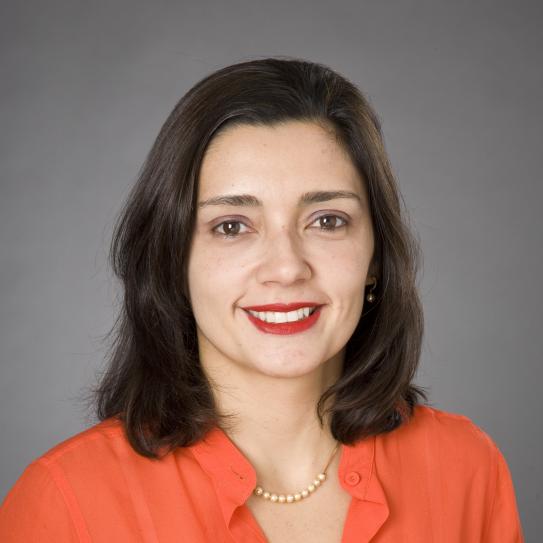
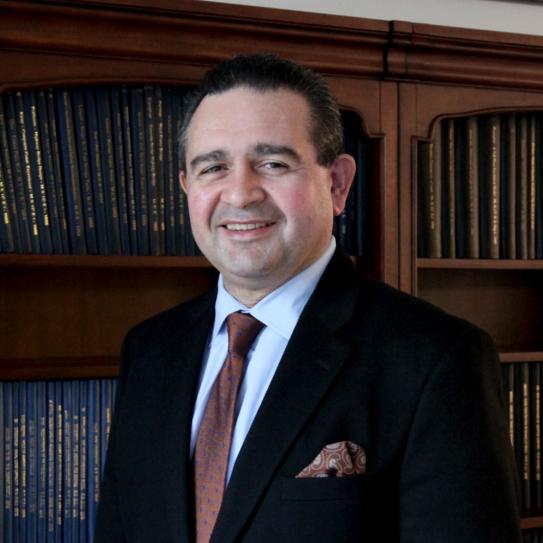
Juliana Freire is an Institute Professor at NYU Tandon School of Engineering and Professor of Computer Science and Data Science. She co-directs the VIDA Center and leads research in data science, provenance management, and computational reproducibility. Her research develops methods for trustworthy data insight generation spanning large-scale data analysis, visualization, machine learning, and web information discovery. Applications include urban analytics and wildlife trafficking disruption. Publications demonstrate innovations in data exploration tools, provenance systems, and machine learning pipelines, with work appearing in SIGMOD, VLDB, and IEEE Transactions. ACM Fellow AAAS Fellow NSF CAREER Award IBM Faculty Award (2) Google Faculty Research Award ACM SIGMOD Contributions Award Advises graduate researchers and has secured funding from NSF, DARPA, Moore Foundation, and Sloan Foundation for data science infrastructure development. Leads the Moore-Sloan Data Science Environment at NYU and co-directs the Visualization Imaging and Data Analysis Center (VIDA).
Magued Iskander is the Department Chair and Professor in the Civil and Urban Engineering Department at the NYU Tandon School of Engineering. With over 25 years of expertise, he focuses on geotechnical engineering, including foundation design, soil-structure interaction, and sustainable materials. His research emphasizes transparent soil modeling, high-strain rate soil behavior, and offshore geotechnology. He leads projects on machine learning applications for geotechnical analysis, pile capacity prediction, and UXO (unexploded ordnance) penetration studies. Research Interests: Transparent soil modeling for soil-structure interaction Sustainable piling using recycled polymers Geotechnical instrumentation and monitoring Offshore/marine foundation design High-strain rate soil mechanics Penetrating dynamics in granular media Publications highlight advancements in machine learning for geotechnical data analysis, projectile penetration mechanics, and tunneling-induced ground settlements. His work bridges experimental, computational, and AI-driven approaches to solve complex geotechnical challenges. He advises NYU Tandon’s Concrete Canoe and Steel Bridge teams, fostering student engagement in competitive engineering projects.
Thomas Chadefaux is a Professor of Political Science at Trinity College Dublin, The University of Dublin. He holds a Ph.D. in Political Science from the University of Michigan and an M.A. from the Graduate Institute of International Studies in Geneva. Prior to his current role, he served as a Visiting Assistant Professor at the University of Rochester and a Postdoctoral Researcher at ETH Zurich. His research focuses on the predictability of interstate conflict, leveraging advanced statistical methods, machine learning, and big data (e.g., satellite imagery, financial markets, news archives). He investigates decision-makers’ anticipation of war risks, the dynamics of conflict escalation, and the application of early warning systems. His work bridges empirical analysis with theoretical insights from game theory, contributing to top journals like the American Political Science Review and advising institutions such as the German Department of Foreign Affairs and the EU. Key achievements include awards for best paper (American Political Science Review, 2018), best conference paper (Oxford, 2012), and best visualization (Journal of Peace Research, 2014). His methodologies emphasize time-series clustering and pattern-based approaches to improve conflict forecasts. Chadefaux collaborates internationally on projects like the VIEWS Prediction Challenge and employs innovative tools such as dynamic synthetic controls for causal inference. His research underscores the interplay between public and private information in diplomatic crises, with implications for policy and international relations.
Mary L. Marazita, PhD, is a Distinguished Professor at the University of Pittsburgh School of Dental Medicine and Co-Director of the Center for Craniofacial and Dental Genetics. She holds secondary appointments in the Department of Human Genetics (Graduate School of Public Health), Clinical and Translational Science Institute, and Department of Psychiatry (School of Medicine). Her research focuses on the genetics of complex craniofacial and oral traits, including cleft lip/palate, dental caries, and malocclusion. Dr. Marazita’s work involves large-scale genomic studies, international collaborations, and translational research to improve understanding of birth defects and oral health disparities. Education: PhD in Genetics from UNC Chapel Hill (1980), postdoctoral training in Craniofacial Biology at USC (1980-1982). Administrative roles include past Director of the Cleft Palate-Craniofacial Center and Associate Dean for Research at Pitt’s Dental School. Research interests span genetic epidemiology, GWAS, and interdisciplinary approaches to craniofacial anomalies. Notable contributions include identifying genetic loci for cleft palate and developing tools for standardized data collection (e.g., PhenX Toolkit). Awards include the Chancellor’s Distinguished Researcher Award and Walter J Gies Award. Her grants total ~$6M annually, primarily from NIDCR. Key collaborations involve multiethnic cohorts and global partnerships. Dr. Marazita also co-leads the FaceBase Consortium Hub and studies gene-environment interactions in oral diseases. Current projects include 3D facial morphology analysis using geometric deep learning and investigations into the role of microbiome-genetics interactions in early childhood caries. Her team explores both clinical and basic science aspects of craniofacial genetics, aiming to bridge research and patient care.
Peter Cholak is a Professor and Associate Chair in the Department of Mathematics at the University of Notre Dame. He holds a B.S. from Union College (1984), and M.S., M.A., and Ph.D. from the University of Wisconsin (1988, 1991). His research group specializes in logic and computability theory. Cholak's research explores the relationship between computability and definability, with focus areas including automorphisms of computably enumerable sets, Ramsey theory, reverse mathematics, and algorithmic randomness. His work establishes deep connections between computational complexity and definability in arithmetic, such as the classification of orbits in c.e. sets and the computational strength of combinatorial principles. His publications demonstrate consistent focus on computability-theoretic problems with recent expansions into machine learning theory. Key trends include definability in c.e. sets, reverse mathematics of combinatorial theorems, and computational aspects of geometric measure theory. Unifying themes include lattice automorphisms, degree structures, and the limits of formal systems. He has supervised 12 doctoral dissertations in computability theory and related areas. Students have explored topics including algorithmic randomness, lattice embeddings, reverse mathematics, and applications to computer science. Cholak leads the Logic Research Group at Notre Dame, collaborating with researchers globally on problems at the intersection of computability, combinatorics, and foundations of mathematics. Recent work includes computability-theoretic analysis of geometric projections and transformer network expressivity.
Giuseppe Vinci is an Assistant Professor at the Department of Applied and Computational Mathematics and Statistics (ACMS) at the University of Notre Dame, within the College of Science. His research focuses on probabilistic graphical models, particularly in neuroscience and genomics applications. He holds a Ph.D. in Statistics from Carnegie Mellon University (2017), and completed postdoctoral research and lecturing at Rice University (2017–2020). Vinci’s expertise spans astrostatistics, forensic science, and geometric data analysis. Education: Ph.D. in Statistics, Carnegie Mellon University (2017) M.Sc. in Statistics, Carnegie Mellon University (2013) M.Sc. in Economics and Social Sciences, Bocconi University (2012) B.Sc. in Economics, University of Catania (2009) Research Interests: High-dimensional statistical theory of graphical models, matrix completion, astrostatistics, neuroscience, genomics, forensic science, and geometric data analysis. His work addresses challenges in neuronal functional connectivity, genomic networks, and climate science. Awards: NeuroNex Postdoctoral Trainee (NSF) Rice Academy Postdoctoral Fellow Three-minute thesis competition (Top-10, Carnegie Mellon University) Advising & Grants: Vinci mentors multiple Ph.D., MSc, and undergraduate students in projects spanning forensic statistics, genomics, and astrostatistics. He has secured funding for undergraduate research programs and participated in NIH-funded interdisciplinary training. Labs/Teams: Involved in collaborative projects with institutions like Baylor College of Medicine and Rice University, focusing on neurotheory and statistical methods in neuroscience.
Bojko Bakalov is a Professor in the Department of Mathematics at North Carolina State University (NC State), serving as Director of Graduate Programs in Mathematics and Applied Mathematics. He also holds the role of Associate Director of the NC State Quantum Initiative. His research focuses on mathematical physics, quantum computing, representation theory, signal processing, and integrable systems. Bakalov earned his PhD in Mathematics from the Massachusetts Institute of Technology (MIT) in 2000. He has made significant contributions to quantum information processing, including work on barren plateaus in quantum circuits and geometric quantum machine learning. He leads a $10M DOE-backed quantum computing research project and is involved in organizing the Quantum Information Processing conference series. His research is supported by grants such as the NSF-funded Quantum Information Science initiative. Education: PhD in Mathematics, MIT (2000) His research interests span quantum computing algorithms, representation theory of vertex algebras, and applications of algebraic methods to integrable systems. Notable achievements include the development of quantum coherent state transforms and the classification of dynamical Lie algebras in spin systems. Bakalov is actively involved in advancing quantum technologies through interdisciplinary collaborations. His publications explore topics such as logarithmic vertex algebras, Poisson pseudoalgebras, and quantum signal processing. He is affiliated with the Algebra and Combinatorics Research Group and the Topology, Geometry, and Mathematical Physics Research Group at NC State. Grants and Leadership: Leads DOE quantum computing projects and directs graduate programs, shaping the next generation of mathematicians and quantum scientists. Labs/Teams: Part of the NC State Quantum Initiative, fostering collaborative research in quantum technologies.
Mohammed Shafae is an Assistant Professor in the Department of Systems and Industrial Engineering at the University of Arizona, where he has been serving since 2018. He is also a member of the Graduate Faculty, contributing to advanced research and mentorship in engineering disciplines. Education: PhD in Industrial and Systems Engineering, Virginia Tech, Blacksburg, Virginia, United States MS in Industrial and Systems Engineering, Virginia Tech, Blacksburg, Virginia, United States MS in Production Engineering, Alexandria University, Alexandria, Egypt BS in Production Engineering, Alexandria University, Alexandria, Egypt His research centers on cyber-physical systems security , smart manufacturing systems , and data-driven quality control , with a strong emphasis on leveraging manufacturing data for process monitoring, modeling, and securing machining and additive manufacturing systems. His work integrates statistical process monitoring, machine learning, and advanced metrology to enhance manufacturing resilience and efficiency. His recent publications (2022–2025) reflect a clear trend toward securing Industry 4.0 systems, with a focus on digital twin security, attack detection in machining, and anomaly detection in additive manufacturing using photodiode and thermal data. He also explores futuristic applications such as in-situ lunar manufacturing using regolith-based materials. Scientific Awards: First Place in the ASCEND Propel Pitch Competition (AIAA, Fall 2020) Virginia Tech Teaching Excellence Award (Spring 2017) Harold Schneikert Graduate Fellowship (Spring 2016) David H. Burrows Graduate Fellowship (Fall 2015) Best Track Paper Award (IEOM 2012) Prize for Excellence in Senior Design Project (Cairo, 2009) Dr. Shafae actively mentors graduate students, co-authoring numerous publications with advisees in areas such as cybersecurity, additive manufacturing, and process monitoring. While specific grant details are not listed, his research is clearly funded through competitive fellowships and likely external grants given the volume and quality of his outputs. He has no listed labs or teams in the provided text, but his collaborative work suggests active participation in research groups focused on smart manufacturing and cybersecurity.
Elena Celledoni is a Professor of Mathematics at the Department of Mathematical Sciences, Norwegian University of Science and Technology (NTNU), where she has been employed since 2004. She leads the research group on differential equations and numerical analysis. Her academic background includes a Master’s degree (1993) and Ph.D. (1997) in mathematics from the Universities of Trieste and Padua, Italy, respectively. She has held postdoctoral positions at the University of Cambridge (UK), the Mathematical Sciences Research Institute (MSRI, Berkeley, CA), and NTNU. Her research focuses on numerical analysis, particularly structure-preserving algorithms for differential equations and geometric numerical integration. Recent work includes applications of neural networks in computational mechanics and data-driven modeling. She has co-authored over 100 peer-reviewed articles in journals such as Journal of Computational Physics , SIAM Journal on Scientific Computing , and Physica D . Her research interests span computational methods for dynamical systems, machine learning integration with numerical analysis, and geometric algorithms for shape analysis. She actively collaborates with international researchers, including contributions to conferences like NeurIPS and workshops on theoretical aspects of computational dynamics. Elena is a member of the editorial boards of Journal of Computational Dynamics and has organized workshops on structure-preserving integrators. Her work emphasizes preserving geometric properties in numerical methods, with applications in fluid dynamics, mechanical systems, and image processing.
Kirill Simonov is an Associate Professor in the Department of Informatics at the University of Bergen. His research focuses on parameterized complexity, algorithm design, and graph theory, with particular emphasis on clustering algorithms, graph modification problems, and algorithmic graph theory. He has contributed to foundational work in fair clustering, approximate algorithms for graph cycles, and structural analysis of sparse graphs. His notable contributions include studies on coresets for fair clustering, algorithmic extensions of Dirac's theorem, and techniques for building large k-cores from sparse graphs. His work is supported by the Research Council of Norway (Project 314528). He frequently collaborates with leading researchers like Fedor Fomin and Petr Golovach on topics such as parameterized algorithms and combinatorial optimization. Simonov's publications span venues like the Journal of Computer and System Sciences and Leibniz International Proceedings in Informatics. His research bridges theoretical computer science with practical algorithmic solutions for graph problems and data clustering challenges.
Emma Lejeune is an Assistant Professor of Mechanical Engineering at Boston University, affiliated with the Synthetic Biology and Tissue Engineering & Mechanobiology research groups. Her office is located at 730 Commonwealth Ave., EMA 209, and she can be reached at elejeune@bu.edu . She leads the Lejeune Lab , focusing on computational mechanics applied to biological systems. Education: Ph.D., Stanford University Research interests center on leveraging computational mechanics to study multiscale phenomena in biological systems, particularly integrating data-driven and physics-based models. Key areas include heterogeneous soft tissue mechanics, biomechanics, and machine learning applications in mechanics. Her work emphasizes open science, with contributions to benchmark datasets like the Mechanical MNIST collections and open-source software tools such as SarcGraph and MicroBundleCompute . Notable awards include the American Heart Association Career Development Award and the David R. Dalton Career Development Professorship . Her research is supported by grants from the NSF, Office of Naval Research, and Boston University’s Dean’s Catalyst Award. Lab activities include hosting Closer Look Journal Club and contributing to open-access datasets. Current projects explore mechanics of cardiac microtissues, fracture simulations, and machine learning in material science.
Prof. Laura Leal-Taixé is an Associate Professor at the Technical University of Munich (TUM) leading the Dynamic Vision and Learning group. She holds the Rudolf Mößbauer Tenure Track Chair, promoted from a 2017 Tenure Track Assistant Professorship. Her work focuses on advancing computer vision and machine learning, particularly in video analysis, multi-object tracking, and autonomous systems. She received a Sofja Kovalevskaja Award (2017) for her project socialMaps, which integrates dynamic social data into traffic modeling. Education: B.Sc./M.Sc. in Telecommunications Engineering, Technical University of Catalonia (UPC), Barcelona Ph.D. in Information Processing, Leibniz University Hannover (2014) Postdoc at ETH Zurich (2014–2016), and Senior Researcher at TUM’s Computer Vision Group (2016–2019) Research Interests: Multi-object tracking and segmentation in videos Motion analysis and semantic segmentation for autonomous driving Deep learning for video understanding Social dynamics modeling in urban environments Awards & Grants: €1.65M Sofja Kovalevskaja Award (Humboldt Foundation, 2017) DAAD Australia-German Joint Research Scheme (2017) Multiple travel grants from CVPR and Women in Computer Vision Labs & Collaborations: Dynamic Vision and Learning Group at TUM Collaborations with ETH Zurich, Northeastern University, and NVIDIA
Cesar Ruiz is an Assistant Professor in the Department of Industrial & Systems Engineering at The University of Oklahoma. His research focuses on integrating domain knowledge with machine learning and stochastic modeling for engineering applications, particularly in metal additive manufacturing, predictive maintenance, and quality control. He holds a Ph.D. and M.S. in Industrial Engineering from the University of Arkansas and a B.A. in Business Engineering from the Higher School of Economics and Business in El Salvador. His research domains include metal additive manufacturing processes, process-informed machine learning frameworks, and reliability evaluation in complex systems. Notable works address challenges in layer segmentation for quality assessment, predictive maintenance strategies, and degradation-based reliability analysis. Ruiz has received prestigious awards such as the RAMS Golomski Award (2020, 2022), ASQ Best Reliability Paper (2021), and IEEE CASE Best Conference Paper (2021). His affiliations include SRE, INFORMS, and ASME. His research spans aerospace and defense systems, with recent publications emphasizing advanced manufacturing techniques, functional data analysis, and Bayesian modeling for reliability growth. He collaborates on projects involving biosensor optimization and large-scale system maintenance frameworks.
Justin Solomon is an Associate Professor in the Department of Electrical Engineering & Computer Science at Massachusetts Institute of Technology, where he serves as Principal Investigator of the Geometric Data Processing Group. He maintains dual affiliations with the Computer Science and Artificial Intelligence Laboratory (CSAIL) and the MIT Center for Computational Science and Engineering (CCSE), reflecting his interdisciplinary research bridging theoretical mathematics with practical applications in graphics and machine learning. His research interests center around geometric data processing, computational geometry, and optimal transport theory, with significant contributions to computer graphics, machine learning, and computer vision. Solomon's work spans fundamental mathematical theory to practical implementations, particularly in shape analysis, 3D reconstruction, and geometric deep learning. His research demonstrates consistent innovation in developing algorithms that bridge discrete and continuous geometry with applications in graphics, vision, and AI. The publication trends reveal Solomon's evolving research trajectory from foundational work in geometry processing toward increasing integration with modern machine learning techniques. His recent work shows strong emphasis on diffusion models, geometric deep learning, and applications of optimal transport in AI, with significant contributions to SIGGRAPH, NeurIPS, and ICML proceedings. The research demonstrates both mathematical rigor and practical impact, with applications spanning character animation, 3D reconstruction, and generative AI. Amazon Research Award (2017) for Large-Scale Geometrically-Structured Sampling Amazon Research Award (2023) for Lightweight Algorithms for Generative AI Ben Wegbreit Prize for Best Undergraduate Honors Thesis Firestone Medal for Excellence in Undergraduate Research Boothe Prize for Excellence in Writing 2nd place, SGP best paper awards (2010) Solomon has secured substantial research funding through awards like the Amazon Research Awards and maintains active collaborations across academia and industry. His group has produced numerous influential publications with students and collaborators, contributing significantly to both theoretical foundations and practical implementations in geometric data analysis. His textbook "Numerical Algorithms" demonstrates his commitment to education alongside research. As Principal Investigator of the Geometric Data Processing Group, Solomon leads a research team focused on developing mathematical foundations for analyzing and processing geometric data. The group maintains strong connections with both theoretical mathematics and practical applications, working at the intersection of computer graphics, machine learning, and computational geometry. Their work has significant implications for fields ranging from computer animation to medical imaging and scientific computing.
Dario Anastasio is a Fixed-term Assistant Professor in the Department of Mechanical and Aerospace Engineering (DIMEAS) at Politecnico di Torino. He is affiliated with the College of Mechanical, Aerospace, and Automotive Engineering and actively contributes to both teaching and research activities in mechanical engineering. Dr. Anastasio's research focuses on several key areas within mechanical engineering and dynamics. His primary interests include: Nonlinear dynamics and structural dynamics System identification and modal analysis Energy harvesting, particularly vibration energy harvesting Dynamics of mechanical systems with nonlinear characteristics Pantograph-catenary dynamic interaction in railway systems His work spans both theoretical modeling and experimental validation, with particular emphasis on negative stiffness oscillators, railway contact line dynamics, and nonlinear system identification techniques. Dr. Anastasio applies advanced methodologies including subspace identification, Bayesian model selection, and signal processing to solve complex mechanical engineering problems related to vibration analysis and structural dynamics. Analysis of Dr. Anastasio's publications reveals a strong focus on nonlinear dynamics, particularly in mechanical systems with complex behaviors. His research consistently bridges theoretical modeling with experimental validation across multiple domains including railway systems, energy harvesting devices, and nonlinear oscillators. The publications demonstrate progression from fundamental nonlinear dynamics research toward practical applications in railway engineering and vibration-based energy harvesting systems. Dr. Anastasio has received notable recognition for his work: Quality Award 2019 conferred by Politecnico di Torino, Italy (2020) Dr. Anastasio actively contributes to the academic community through extensive teaching activities across multiple programs. He serves as a Teaching Assistant for "Dynamics and Identification of Nonlinear Systems" and as a Course Collaborator for "Dynamics of Mechanical Systems" and "Vibration Mechanics" at both Master's and Bachelor's levels. His teaching spans from 2019/20 through the upcoming 2025/26 academic year, demonstrating his ongoing commitment to mechanical engineering education. Additionally, he contributes to PhD-level instruction in "Rotordynamics of High-Speed Rotating Machinery." Dr. Anastasio is a key member of the "Dynamics of mechanical systems and identification" research group within DIMEAS. His research integrates multiple ERC sectors including Mechanical and manufacturing engineering, ODE and dynamical systems, Signal processing, and Simulation engineering and modelling. His work aligns with Sustainable Development Goals 7 (Affordable and clean energy) and 9 (Industry, Innovation, and Infrastructure).